
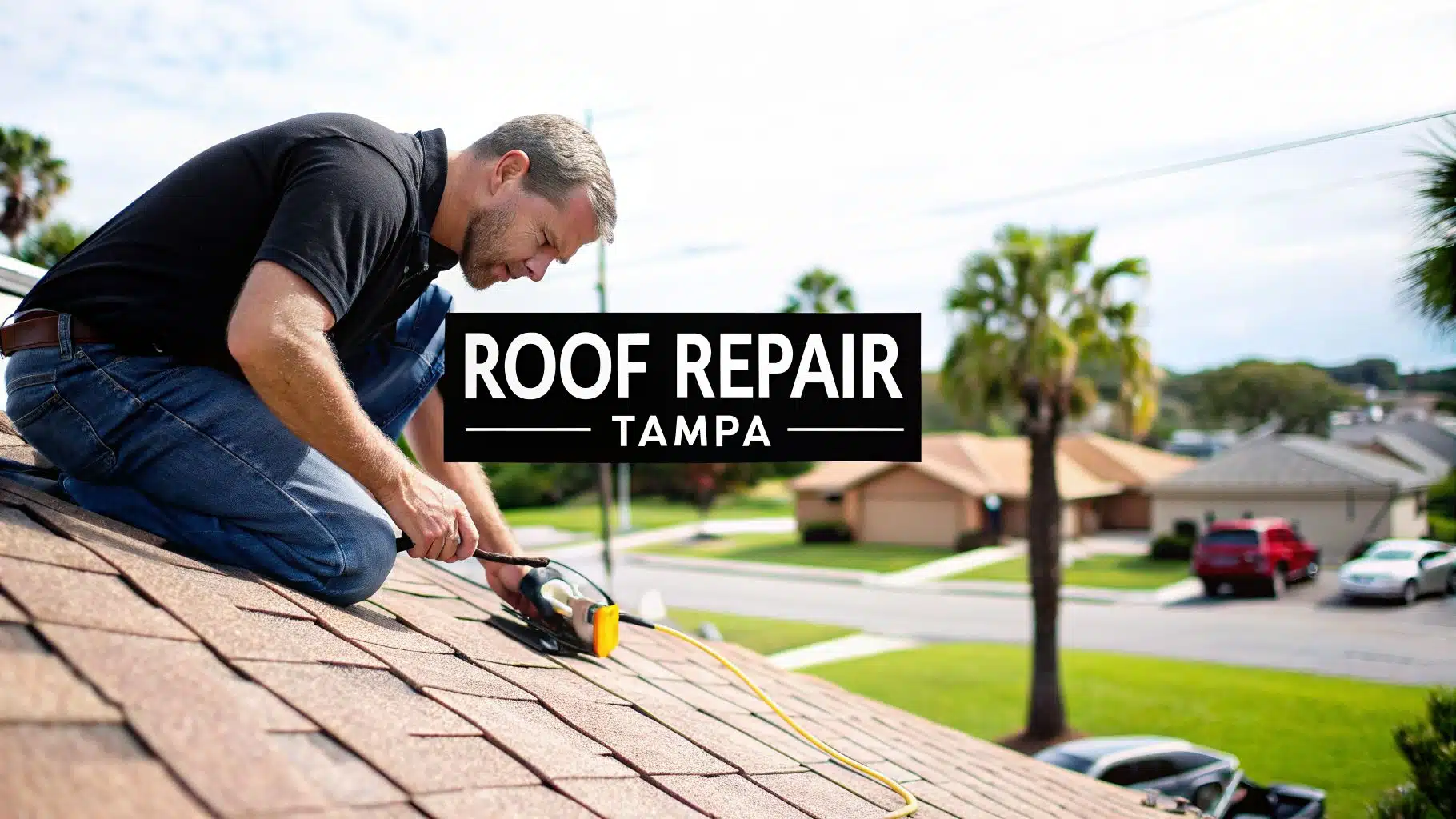
For anyone living in the Tampa Bay area, you know that a sturdy roof isn't a luxury—it's your home's primary shield against Florida's relentless weather. Putting off what seems like a minor fix is a gamble, which is why timely roof repair in Tampa is one of the smartest investments you can make. It's about protecting your home's value and its very structure from the day-in, day-out stress of our climate.
Signs Your Tampa Roof Needs Attention
Your roof puts up with a lot here in Florida. From Pinellas County all the way to Orlando, it's constantly battling intense UV radiation, thick humidity, and those sudden, torrential downpours we know so well. These aren't just minor annoyances; they're powerful forces that work to break down your roofing materials faster than almost anywhere else in the country.
One missing shingle or a small piece of lifted flashing might not look like much. But in reality, it's an open door for water to work its way into your home's structure. And that's where the real trouble begins.

A Small Leak’s Big Impact
Once moisture gets past that outer layer, it sets off a destructive chain reaction. What starts as a tiny drip can quickly snowball into much bigger headaches:
- Rotted Decking: The wood sheathing under your shingles soaks up water like a sponge. It gets soft, starts to rot, and compromises the strength of your entire roof.
- Useless Insulation: When attic insulation gets wet, it can't do its job. Your energy bills will creep up, and you've just created a perfect breeding ground for mold.
- Ceiling and Wall Damage: Those ugly brown water stains on your ceiling are usually the last sign of a problem. By the time you see them, the leak has likely been causing hidden damage for a while.
- Mold and Mildew: Combine moisture with Florida's heat and humidity, and you have the ideal recipe for mold to flourish in your attic and behind your walls, which can be a serious health concern.
The constant need for repairs in our climate is huge. The demand for qualified roofers is high simply to keep up with weather damage and normal wear, which shows how essential professional upkeep is for residential and commercial properties in Central Florida.
Quick Guide To Spotting Roof Problems In Tampa
Most roof problems start small and are easy to miss from the ground. Use this quick reference guide to identify common issues before they turn into a major crisis.
| Problem | What To Look For | Potential Consequence If Ignored |
|---|---|---|
| Cracked or Missing Shingles | Bare patches, dark spots, or shingles on the ground after a storm. | Direct water entry, leading to decking rot and interior leaks. |
| Curling or Clawing Shingles | Shingle edges are curled up or the corners are lifting. | High risk of wind uplift and water infiltration during heavy rain. |
| Damaged Flashing | Rusted, bent, or separated metal strips around chimneys, vents, and skylights. | Leaks in the most vulnerable areas of your roof. |
| Granules in Gutters | Looks like coarse, black sand accumulating in your downspouts. | Shingles are aging and losing their protective layer, becoming brittle. |
| Water Stains on Ceiling | Discolored brown or yellow spots on your interior ceilings or walls. | An active leak that has already penetrated your roof and attic. |
| Sagging Roof Deck | A visible dip, bow, or "saddleback" in the roofline. | A serious structural problem, often caused by long-term water damage. |
Catching any of these signs early is the key to a simple, affordable repair instead of a costly, complicated one.
From Minor Fix to Major Overhaul
Putting off a repair is how a simple, affordable task turns into a massive, expensive project. The cost of replacing a few shingles is nothing compared to tearing out drywall, remediating mold, and replacing rotted structural beams.
This is exactly why understanding the benefits of regular roof inspections is so important for any homeowner who wants to stay ahead of the curve.
Ultimately, tackling roof repairs immediately is the best financial move you can make for your property. It’s not just an expense—it's an investment in the long-term safety, health, and value of your home. By giving your roof the attention it needs, you’re protecting your biggest asset from everything the Florida weather can throw at it.
What’s Really Damaging Your Tampa Roof?
When you need a roof repair in Tampa, it’s rarely because of a single, random event. The damage we see every day is a direct result of the relentless conditions unique to Central Florida. Your roof acts as a shield, but it takes a constant beating from our specific climate—something property owners in other parts of the country never have to worry about.
The culprits are familiar: intense sun, driving rain, high winds, and the occasional hailstorm. But it's how they work together that really does a number on your roof. Understanding these specific threats is the first step in knowing what to look for and why a local expert’s diagnosis is so crucial.
The Unrelenting Florida Sun
That beautiful sunshine we love is surprisingly one of the biggest threats to your roof. It's not just the heat, but a process we call thermal cycling.
During the day, your roof’s surface temperature can easily climb above 150 degrees, causing the materials to expand. Then, as it cools off at night, it contracts. This daily cycle of expansion and contraction puts incredible stress on every component of your roofing system.
- Granule Loss: Those sand-like granules on your asphalt shingles act like sunscreen, protecting the asphalt layer from UV rays. Thermal cycling slowly breaks their bond, and you’ll start seeing them wash into your gutters. Once they’re gone, the shingle becomes brittle and ages much faster.
- Cracked Tiles: Even durable concrete and clay tiles aren't immune. Over many years, this constant stress can create hairline cracks, giving moisture a tiny entry point that only gets worse over time.
- Sealant Failure: The flexible sealants around flashing, vents, and pipes are especially vulnerable. The sun essentially bakes them, causing them to dry out, shrink, and pull away from the surfaces they’re supposed to protect. This creates a direct path for leaks.
Wind and Rain: A Powerful Combination
Here in the Tampa Bay area, strong winds and torrential downpours are a fact of life, especially during our summer storm season. Wind doesn’t just blow over your roof; it’s always trying to get under it.
When that wind is driving the rain sideways, it becomes a much more destructive force. Instead of just rolling down, water is forced into every tiny gap and crevice. It's like finding a weak spot with a pressure washer.
An asphalt shingle is designed to shed water that flows downward. But when wind speeds exceed 40 mph, that rain is driven horizontally, forcing its way under the shingle tabs and past the sealant strips. This is how a perfectly good-looking roof can suddenly develop a leak during a severe storm.
This one-two punch of wind and water is responsible for a lot of the damage that requires immediate attention.
The Impact of Hail and Debris
While not as constant as the sun and rain, hailstorms are a primary cause of sudden, widespread roof damage in our region. Hailstones act like thousands of tiny hammers, leaving behind distinct damage that often requires a professional eye to spot.
Likewise, heavy branches from our beautiful oak and pine trees can snap during high winds, puncturing materials, cracking tiles, and denting metal panels.
- Shingle "Bruising": Hail often doesn't crack a shingle on the surface. Instead, it fractures the fiberglass mat inside the shingle, creating a soft "bruise." This hidden damage compromises the shingle and is a common source of future leaks.
- Cracked and Shattered Tiles: Clay and concrete tiles can easily shatter on impact from large hailstones or falling limbs. This requires immediate replacement to keep water from soaking the underlayment beneath.
- Dented Metal and Flashing: Hail leaves obvious cosmetic dents on metal roofs, but the real problem is when it damages flashing. A dented piece of flashing around a chimney or vent can easily break the watertight seal.
Knowing these causes helps make sense of why a professional roof repair in Tampa is about more than just slapping a patch on a leak. It’s about diagnosing how our local weather is attacking your roof and ensuring the fix addresses the root cause, not just the symptom.
Your Step-By-Step Guide to the Repair Process
Discovering a roof problem can be stressful, but getting it fixed shouldn't be. A professional roof repair in Tampa follows a clear, predictable path from the moment you pick up the phone to the final handshake. When you know what to expect, the whole experience feels less like a chaotic disruption and more like a controlled, well-managed service.
Think of it as a clear roadmap. Each step is designed to keep you informed and protect your property, ensuring the project runs smoothly and efficiently.
Step 1: The Initial Call and Free Inspection
It all starts with a phone call. When you contact a reputable roofer like Hi Low Roofing, the first objective is to schedule a thorough, no-obligation inspection. This isn't a quick glance from your driveway; a real pro gets on the roof for a hands-on assessment.
They'll examine every part of your roofing system up close. Just as important, they'll check your attic—a step that's often skipped but is absolutely critical. Telltale signs of moisture, poor ventilation, or waterlogged insulation inside can pinpoint the true source of a leak that isn't obvious from the outside.
A proper initial assessment always covers:
- Shingles or Tiles: Looking for any cracks, bruising from hail, granule loss, or lifted edges.
- Flashing: Carefully checking the metal seals around chimneys, vents, and roof valleys, which are the most common leak spots.
- Underlayment and Decking: Feeling for soft spots that indicate water has soaked through to the roof's wooden structure.
- Interior Spaces: A quick look in the attic and at ceilings for any water stains or hidden moisture.
Step 2: Understanding Your Detailed Estimate
After the inspection, you’ll get a detailed estimate. This is much more than a price tag; it's the game plan for your repair. A good, honest estimate breaks down the entire scope of work, lists the exact materials being used, details the labor costs, and gives you a realistic timeline.
You shouldn't see any vague line items or hidden fees. It needs to explain what’s being done and why. For example, instead of a vague "fix leak," a proper quote will specify something like, "replace 10 square feet of water-damaged decking, install new synthetic underlayment, and replace with matching asphalt shingles." That level of detail gives you the confidence of knowing precisely what you’re paying for.
A professional roofing estimate is your project's blueprint. It should lay out a clear path forward, detailing every material and action needed to get your roof back in shape, so there are no surprises on the final bill.
Step 3: Site Preparation and the Repair Work
Once you give the green light, the crew gets to work. But first, they protect your property. This is a non-negotiable step. They'll lay down tarps to shield your landscaping and pool, move patio furniture, and secure the work area to keep everyone safe.
The repair work follows the exact plan from your estimate. The team will carefully remove the damaged materials, then inspect the underlying structure one more time to make sure no hidden issues have cropped up. New, high-quality materials are then installed according to the manufacturer’s specs and local building codes, which is key for a durable, watertight fix. A project manager should be on-site or a phone call away to answer any questions you have during the process.
Step 4: Meticulous Cleanup and Final Inspection
The job isn’t done when the last shingle is nailed down. The true mark of a professional roof repair in Tampa is how they leave your property. The crew should make it look like they were never there—or even better.
This means:
- Hauling away all old materials and construction debris.
- Using powerful magnetic rollers to sweep your lawn and driveway for stray nails.
- Walking you through a final inspection to show you the finished work.
This final walkthrough is your chance to see the repair up close, ask any last-minute questions, and confirm that everything meets your expectations. This step-by-step process ensures a predictable outcome, turning a potential disaster into a managed solution.

Whether it’s the blunt force of hail, the lifting power of wind, or the slow-burn damage from our Florida sun, each threat requires a specific approach. This is why a thorough inspection is the foundation of a successful, long-lasting repair.
Understanding Roof Repair Costs And Financing
Alright, let's get right to the question on every property owner's mind: what's this going to cost? The truth is, there's no single price tag for a roof repair in Tampa. The final number really comes down to a few key things that determine how complex the job will be.
Once you know what drives the cost, you can look at an estimate with a critical eye. It helps you tell the difference between a fair price for quality work and a suspiciously low bid that could cost you more in the long run.
What Drives The Cost Of Roof Repairs
Think of it like a mechanic looking under the hood—the final bill depends on what they find. Several variables will shape the price of your roof repair.
- How Bad is the Damage? This is the biggest factor, hands down. Replacing a few shingles that a storm tore off is a completely different job than fixing a large patch of rotted-out roof decking from a leak that went unnoticed for months.
- Your Roofing Material: The type of roof you have makes a huge difference. Asphalt shingles are usually the most budget-friendly to repair. Materials like clay tile, concrete tile, or metal, on the other hand, demand specialized skills and more expensive parts.
- Roof Steepness and Access: A steep, high-pitched roof is trickier and more dangerous for a crew to navigate, so it requires extra safety gear and time. The same goes for properties with complex designs or limited yard space that makes it hard to get equipment in place.
For a minor roof repair in Tampa—say, sealing some flashing or replacing a handful of shingles—you might be looking at a few hundred dollars. For more moderate repairs, like fixing a specific leak and the underlayment beneath it, the cost often falls between $500 and $1,500. If we uncover major structural issues, the price can climb significantly higher based on what we find.
Making Urgent Repairs Affordable With Financing
Even a moderate repair bill can be a hit to the budget, especially when it's unexpected. That’s where financing can be a lifesaver. It turns a large, stressful upfront cost into predictable monthly payments, letting you fix a critical problem now before it gets a whole lot worse.
Don't think of financing as just taking on debt. See it as a strategic move to protect your biggest investment—your home or business. It prevents a small issue from becoming a catastrophic, wallet-draining disaster.
Putting off a necessary repair because you don't have the cash on hand is a gamble you don't want to take. A tiny leak can quietly compromise your property's entire structure, leading to thousands in damages. Flexible payment options close that gap, keeping your home, family, or business safe.
This is a smart approach that’s becoming more common across Central Florida, from Pinellas to Orlando. As you can learn more about trends in the local roofing market, it’s a clear sign that property owners are using these tools to get work done faster and protect their property values.
When you work with a contractor who offers these options, like Hi Low Roofing, you're partnering with a team that gets the financial reality of property ownership. They can help you find a payment plan that works for you, so you can secure your roof without wiping out your savings. It makes protecting your property possible for everyone, right when it's needed most.
Navigating Florida Roof Repair Insurance Claims
After a big storm blows through, dealing with your insurance company can feel even more stressful than the weather itself. The whole process seems designed to be confusing. But if you have a solid plan, you can successfully file your claim for a roof repair in Tampa and get the coverage you're owed. Let's walk through the steps, from that first look at the damage to understanding your final settlement.
When you're looking at a damaged roof, getting a handle on the insurance maze is your first priority. A good homeowner's guide to insurance claims assistance can be a huge help here. It's best not to think of this as a fight, but more like a negotiation where solid proof is your best friend.
Your First Steps After A Storm
What you do in the first few hours and days after a storm can make or break your claim. You need to act fast and document everything.
- Safety First: Before you do anything else, make sure the area is safe. Stay clear of any downed power lines and watch your step around unstable debris or structures.
- Document Everything: Now, grab your phone. Before you move a single shingle, take tons of photos and videos of the damage from every angle you can think of. Get close-ups of cracked tiles, dented flashing, or missing shingles, but also take wider shots to show the full picture. This visual proof is absolutely critical.
- Mitigate the Damage: Your policy actually requires you to prevent things from getting worse. This just means taking common-sense steps, like throwing a tarp over a hole in the roof to keep rain out. Just be sure to keep the receipts for any supplies you buy for these quick fixes.
The Power Of A Professional Damage Assessment
This next step is one that a lot of property owners unfortunately skip: call a trusted local roofer before you call your insurance adjuster. A seasoned contractor like Hi Low Roofing becomes your advocate, giving you a detailed, professional report that acts as powerful leverage for your claim.
An insurance adjuster works for the insurance company. A professional roofing contractor works for you. Their detailed inspection report, complete with photos and specific technical language, gives your claim instant credibility and helps ensure nothing is overlooked.
An adjuster might only spend a few minutes on your roof, but a good roofer will perform a deep dive. They’ll spot things like hail "bruising" or wind-lifted shingles that are easy to miss but can lead to big problems later. This professional report is the bedrock of a strong claim. You can learn more about insurance claims for roof damage in Winter Haven to see how this plays out for property owners in Central Florida.
From Filing The Claim To The Final Settlement
With your roofer's report in hand, it's time to officially file your claim. You'll need to schedule a meeting with the insurance adjuster, and it's a very good idea to have your contractor there with you. Your roofer can physically point out the damage noted in their report, making sure the adjuster sees the full scope of what’s needed for a proper roof repair in Tampa.
Having that professional partnership has never been more important. With wild weather and economic pressures, the roofing industry is facing unique challenges, especially in major Florida markets like Tampa and Orlando.
Having an expert on your team is the best way to ensure you get a fair assessment. Once the adjuster inspects the damage, they'll give you a settlement offer. Your contractor can review it with you to make sure it truly covers the costs for both quality materials and labor. This transforms a stressful situation into a managed process, all aimed at one thing: getting your property, and your life, back to normal as quickly as possible.
Integrating Solar With Your Roof Repair

A major roof repair in Tampa is more than just a fix—it's a golden opportunity. If you've ever considered going solar, the absolute best and most cost-effective time to do it is when your roof is already being repaired or replaced.
Bundling these two big projects together is just plain smart. You’re streamlining everything from the permits and inspections to the labor itself. This approach ensures your new roof and solar system are installed to work together seamlessly, often covered by a single, comprehensive warranty from one trusted company like Hi Low Roofing.
The Perfect Timing For Solar
Think of it this way: installing solar panels involves drilling dozens of mounts directly into your roof’s structure. Putting a brand-new, expensive solar array on top of an old or damaged roof is like building a deck on a rotten foundation. You're just asking for trouble down the line.
When you pair a roof replacement with a solar installation, you get a completely fresh start. Our roofing crew preps a perfect, solid surface, and the solar team follows right behind, installing your panels with the confidence that the roof underneath is good for decades. This completely avoids the costly scenario of having to pay someone to remove and reinstall your entire solar array just a few years later because the old roof finally failed.
Lowering Your Bills And Gaining Independence
Here in Central Florida, the constant creep of local energy bills is a real concern for homeowners and business owners alike. A solar panel system can slash those monthly energy costs, giving you real savings and a predictable, lower payment for years to come. This isn't a niche idea anymore; it's a major reason why local property owners are making the switch.
Many local roofing contractors are adapting to this demand, offering integrated solar services to meet the growing focus on energy savings.
A solar installation isn't just about saving money; it’s about building a more resilient property. In a region where hurricane-related power outages are a constant threat, energy independence is a game-changer.
To get the most out of your system, it helps to understand concepts like active vs passive solar energy as you plan your project. When you pair your solar panels with a battery backup, you can keep the lights on, the A/C humming, and business operations running long after the grid goes down. That kind of peace of mind is priceless during Florida's unpredictable storm season. We have a lot of experience with this, and you can see how we handle solar panel and roof integration in Orlando for a better idea of the process.
Frequently Asked Questions About Tampa Roof Repair
Property owners have a lot of questions when their roof is in trouble, and that's completely understandable. Here are some of the most common ones we hear, with straight-to-the-point answers to help you navigate your roof repair with confidence.
How Long Does A Typical Roof Repair In Tampa Take?
That’s a great question, and the answer really depends on what we’re dealing with. A straightforward fix, like replacing a few shingles that a storm ripped off, can be wrapped up in just a couple of hours.
But for more complex jobs, we might need a full day. For example, if we’re tracking down a leak that has caused water damage to the wooden decking underneath your shingles, that takes more time to fix properly. Any good contractor will give you a firm timeline right in the estimate, so you know exactly what to expect.
Should I Repair Or Replace My Roof?
This is the big one we get all the time. The right answer really comes down to a few key things: the age of your roof, how bad the damage is, and your plans for the property.
- Age: If your roof is still on the younger side and the problem is isolated to one spot, a targeted, professional repair is usually the smartest and most affordable option.
- Damage: On the other hand, if you're seeing widespread issues or new leaks keep popping up, those are classic signs that the whole roofing system is starting to fail.
- Goals: For a roof that's already getting close to the end of its lifespan, a full replacement is a much better long-term investment, especially if you plan on staying in your property for years to come.
A roofer worth their salt will inspect your roof thoroughly and give you an honest recommendation based on what’s best for your home or business, not what makes them the most money.
What Happens If You Find More Damage During The Repair?
Sometimes, what looks like a simple issue on the surface is hiding a bigger problem underneath, like rotted wood decking that we can't see until we pull up the old shingles. This is where a contractor's integrity really shows.
Our process is simple: We immediately stop work, take clear photos to show you exactly what we've found, and call you. We'll explain the new issue, walk you through the solution, and only move forward once you've approved the plan in a written change order.
You should never be surprised by extra charges on the final bill. Constant, clear communication is the key to keeping you in control of the project and the budget from start to finish.
Ready to get answers about your roof? For a professional assessment and transparent guidance on any roof repair in Tampa, trust the experts at Hi Low Roofing. We offer free, no-obligation inspections for residential and commercial properties across Central Florida, from Pinellas County to Orlando. Schedule your free inspection today!
