Solar & battery storage · Central Florida

Turn Florida suninto home power.

Solar panels and battery storage, designed and installed by a team that started as roofers. The roof under your panels is part of the plan from day one, not an afterthought.

  • $0Down-payment financing and leasing options
  • 25yrWarranty: panels, inverters, roof penetrations & workmanship
  • 140mphWind rating for panels and roof attachments
  • 1teamFor the roof and the solar, when you need both
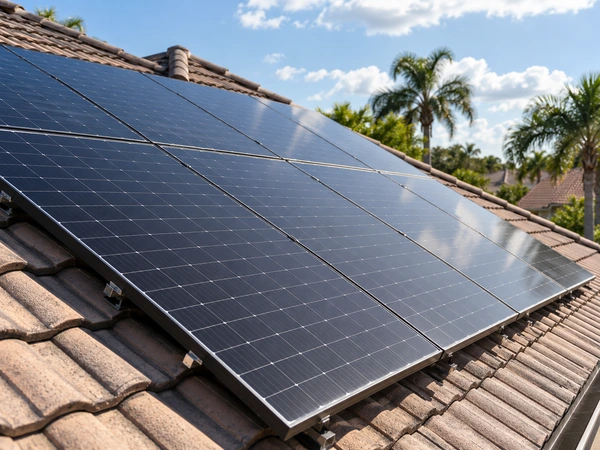
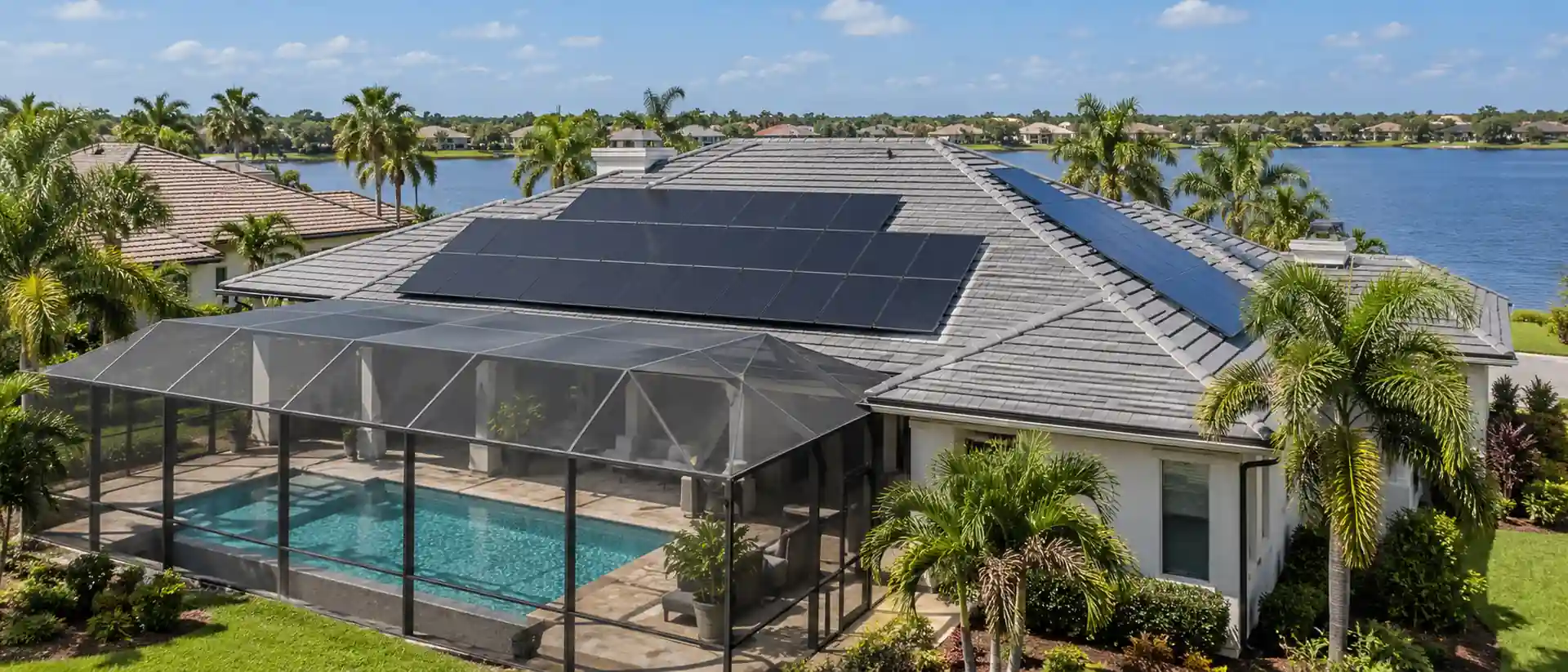
Central Florida home with a rooftop solar array

A DAY ON A SOLAR HOME

Follow the
power.

Drag through the day to see where your electricity comes from and where the extra goes, including what happens when the grid goes down.

Illustration of a home with rooftop solar panels, a wall-mounted battery and a utility pole, showing how electricity flows at different times of day.

About 11 a.m. – 3 p.m.

More than the house needs

Production peaks. The house runs on solar, a battery charges if you have one, and the surplus flows out to the grid. With an investor-owned utility such as Duke Energy Florida or FPL, net metering credits that exported energy on your bill.

  • Solar → home
  • Solar → battery
  • Solar → grid, earning credits

WHY A ROOFER SHOULD INSTALL YOUR SOLAR

Panels last decades.
So should the roof
under them.

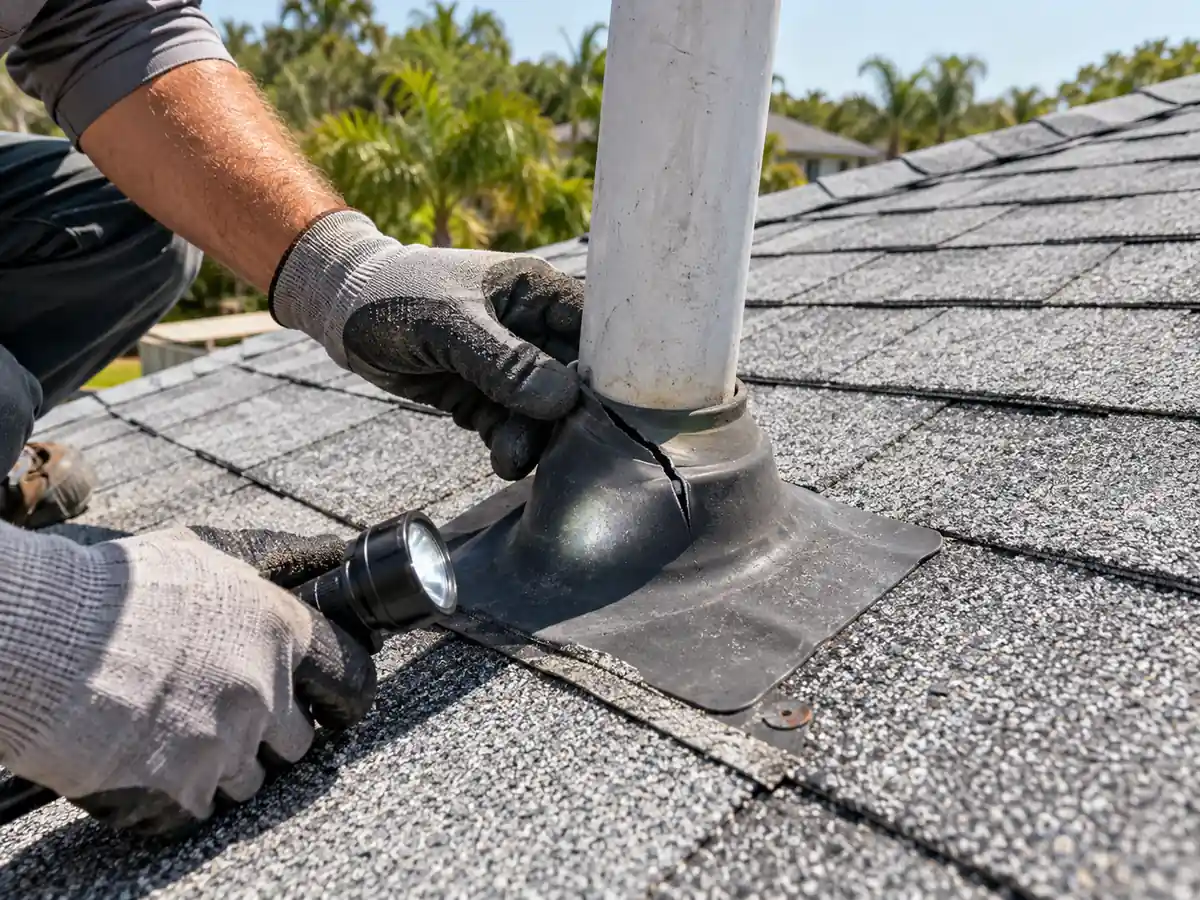
Roofer installing a flashed solar mount on a shingle roof

We check the roof first

Solar panels are designed to last 25 years or more. If your roof will need replacing in a few years, removing and reinstalling the panels later adds cost. We inspect the roof before designing the system and tell you honestly whether it should be replaced first.

Roof and solar in one project

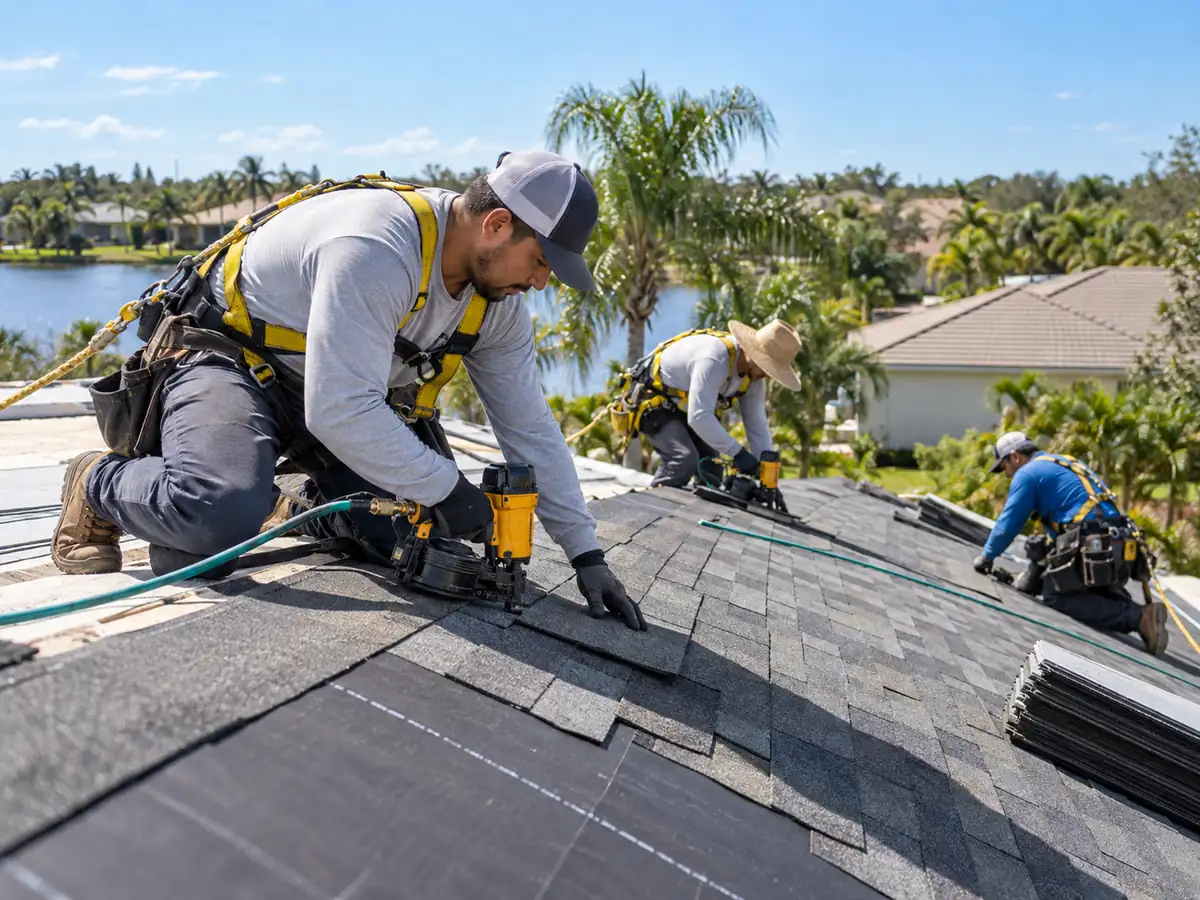
Hi Low started as a roofing company. When a home needs both, we replace the roof and install the solar system in one coordinated process, with one team responsible for the result.

Penetrations done by roofers

Every mount that attaches panels to your roof is a penetration. Ours are flashed and sealed the way a roofer would do it, and roof penetrations are included in the 25-year warranty along with the panels, inverters and workmanship.

Future roof work, handled

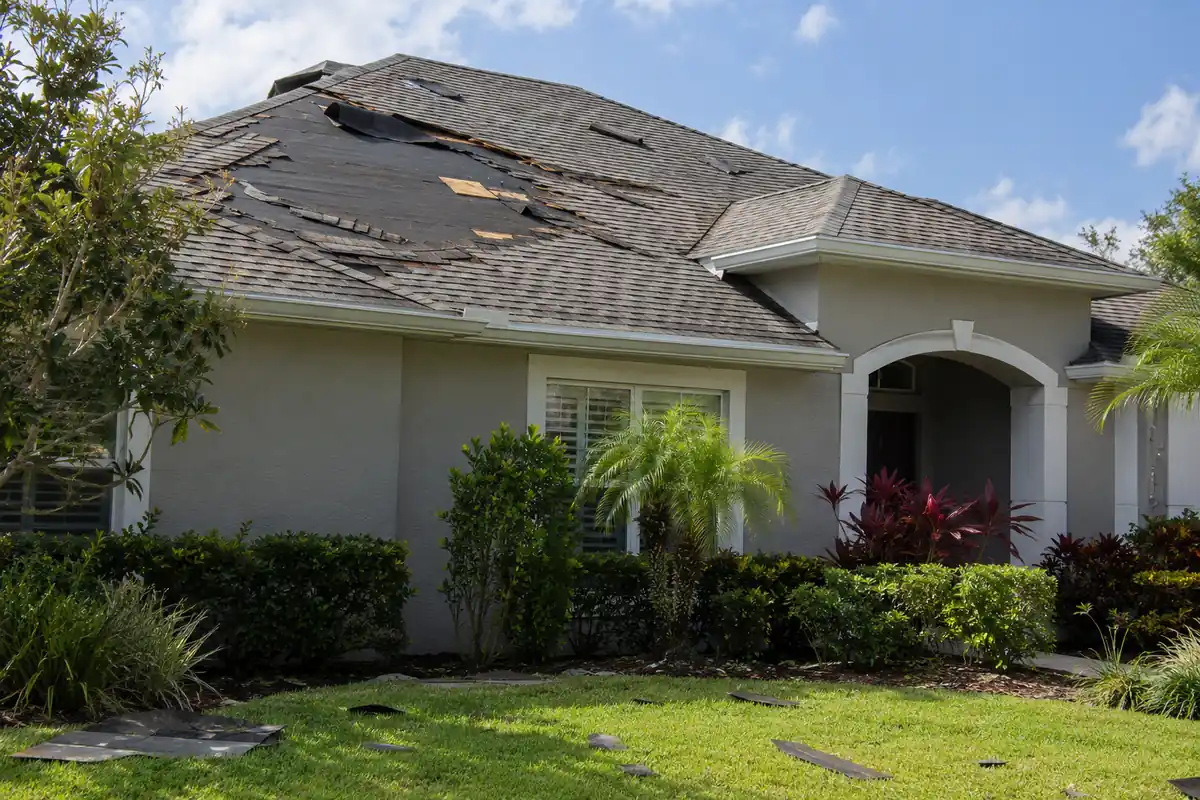
If storm damage or a future reroof means the panels have to come off, the same company that installed them can remove and reinstall them, so there is no finger-pointing between a roofer and a solar installer.

WHAT GOES ON YOUR HOME

The equipment.

Hi Low installs high-efficiency panels, panel-level microinverters and battery storage from established brands, with a clean installation and no bulky boxes on the roof.

Close-up of solar panels on a roof

Solar panels

High-efficiency panels sized to your roof and your energy use. Brands we work with include Silfab Solar, REC and Qcells.

Generation
Microinverter mounted beneath a solar panel

Microinverters

Enphase microinverter technology converts power at each panel, so shade or dirt on one panel doesn’t drag down the whole array, and each panel’s production can be monitored.

Conversion
Home battery storage unit on a garage wall

Battery storage

Batteries such as Tesla Powerwall and Enphase storage provide backup power during outages and can cover evening use when rates are highest.

Storage
Integrated solar roof tiles on a home

Integrated solar roofing

For homeowners who want the roof itself to generate power, ask about Tesla Solar Roof. Hi Low also holds the CertainTeed Select Solar Master credential.

Roof + solar

INCENTIVES & SAVINGS · 2026

What still applies
in Florida.

Solar incentives changed at the end of 2025. Here is where things stand, so you can plan with accurate numbers.

Federal residential clean energy credit (Section 25D)

Ended

The 30% federal credit for homeowner-owned systems is no longer available for systems paid for after December 31, 2025. Systems purchased and paid for in 2025 or earlier may still be claimed on that year’s return. Some leased or third-party-owned systems are treated differently; ask us about lease options and consult a tax professional.

Net metering with investor-owned utilities

Available

Florida requires investor-owned utilities, including Duke Energy Florida, FPL and TECO, to offer net metering. Energy you send to the grid earns credits on your bill, credits roll over month to month, and unused credits are settled once a year.

Municipal utilities and co-ops

Varies

Municipal utilities such as OUC set their own export rules, and those rules have changed in recent years. We base your savings estimate on your utility’s current tariff, not a statewide assumption.

Property tax exemption

Available

Under Florida Statute 193.624, the value a residential solar system adds to your home is excluded from its assessed value for property taxes.

Sales tax exemption

Available

Under Florida Statute 212.08(7)(hh), qualifying solar energy equipment is exempt from Florida sales and use tax.

Financing

Available

$0-down financing and leasing options are available, with payments that begin after installation. Whether your payment comes in below your current electric bill depends on your usage, system size, utility rates and terms; your proposal shows the comparison.

This summary is general information, not tax or legal advice. Incentives and utility rules change; confirm details with a tax professional and your utility.

Built for hurricane season

Engineered for
Florida wind.

Panels and roof attachments are engineered to exceed local building codes and rated for winds up to 140 mph, the range of a Category 4 hurricane. Solar panels have no moving parts and need little to no maintenance over 25 to 30 years; manufacturers typically replace defective panels under warranty.

140mph

Wind rating for panels and roof attachments

25yrs

Warranty on panels, inverters, roof penetrations and workmanship

FROM DESIGN TO POWER

Sunrise to
switch-on.

  1. Free design & estimate

    We review your roof, shading, electric bills and utility, then design a system and estimate its production.

  2. Proposal & financing

    You see the system, the cost, the expected savings and the financing or leasing options side by side.

  3. Roof check & permits

    Any roof work is scheduled first. We handle the building permit and the utility interconnection application.

  4. Installation

    Mounts are flashed and sealed, panels and microinverters installed, and the battery and backup equipment wired in if included.

  5. Inspection & approval

    The building department inspects the system and the utility grants permission to operate.

  6. Switch on & monitor

    Your system goes live, and panel-level monitoring lets you see what it produces every day.

Central Florida home with a rooftop solar array

Selling the house later?

A solar loan or lease can usually be transferred to the buyer through the lender, or the remaining balance can be paid off at closing. Owned systems add to a home’s appeal, and under Florida law they don’t add to its assessed value for property taxes.

Explore financing options

SOLAR QUESTIONS

Solar, answered
straight.

Costs, net metering, batteries, hurricanes, incentives in 2026 and what happens if you sell the house.

Call 407-287-6171 15 questions answered
What are the upfront costs of solar?

With financing or leasing, solar can start at $0 upfront, with payments that begin after installation. If you prefer to buy the system outright, the price depends on the system size, equipment, roof type and whether you add battery storage. Your free proposal shows the cash price, the financed and leased options and how each compares with your current electric bill.

Is the 30% federal solar tax credit still available in 2026?

Not for homeowner-owned systems. The federal residential clean energy credit (Section 25D) ended for systems paid for after December 31, 2025. If you bought and paid for a system in 2025 or earlier, you may still be able to claim it on that year’s return.

Leased and other third-party-owned systems are treated differently under federal law, so ask our team about lease options. For anything involving your taxes, consult a tax professional.

How does net metering work in Florida?

When your panels produce more electricity than your home is using, the extra flows to the grid and your utility credits your bill. Those credits offset the grid power you use at night and on cloudy days. Florida requires investor-owned utilities such as Duke Energy Florida, FPL and TECO to offer net metering; credits roll over monthly and unused credits are settled once a year. Municipal utilities such as OUC and electric cooperatives set their own rules, so we use your utility’s current tariff in your savings estimate.

What happens to my solar system when the power goes out?

For the safety of utility workers, grid-tied solar systems shut off automatically when the grid goes down, so no power flows onto the lines. If you add battery storage with backup equipment, your home disconnects from the grid and the battery keeps essential appliances and lights running, while the panels recharge the battery during daylight.

Is a battery worth adding?

A battery makes the most sense if you want backup power during outages, if your utility credits exported energy at less than the retail rate, or if you use a lot of electricity in the evening. During your design consultation we look at your utility, usage and goals and show you the system with and without storage.

Does my roof need to be replaced before installing solar?

Not always, but it’s the first thing we check. Panels are designed to last 25 years or more, so if your roof is close to the end of its life, it’s usually better to replace it first. Because Hi Low is a roofing company, we can replace the roof and install the solar system in one coordinated process.

Can you install solar on a tile or metal roof?

Yes. Tile and metal roofs use mounting hardware designed for those materials. On tile, mounts are installed so tiles can be cut or replaced around them and the underlayment is properly flashed; on standing-seam metal, panels can often be attached to the seams without penetrating the roof.

What happens to solar panels in a hurricane?

Hi Low engineers panels and roof attachments to exceed local building codes, with installations rated to withstand winds up to 140 mph, the range of a Category 4 hurricane. After a major storm, we can inspect the system and the roof together.

What does the warranty cover?

Hi Low’s solar installations include a 25-year warranty covering panels, inverters, roof penetrations and workmanship, so the roof attachments are covered along with the equipment.

Do solar panels need maintenance?

Very little. Solar panels have no moving parts and typically need little to no maintenance for 25 to 30 years. Florida rain helps keep them clean. With panel-level monitoring, you can see if a panel is underperforming, and manufacturers typically replace defective panels under warranty.

How long does it take to start saving?

It depends on the system cost, your electricity use, your utility’s rates and export rules, and how you pay for the system. With $0-down financing, many homeowners see the monthly loan or lease payment replace part of their electric bill from the start. Your proposal shows the projected numbers for your home.

What happens if I sell my house?

A solar loan or lease can usually be transferred to the new homeowner through the lender, or the remaining balance can be paid off at closing, often by including it in the sale price. Under Florida Statute 193.624, the value a residential solar system adds to your home isn’t counted in its assessed value for property taxes.

Can my HOA stop me from installing solar?

Florida Statute 163.04 prevents homeowners associations from prohibiting solar collectors. An association can set reasonable rules on where panels go on the roof, within limits that don’t impair the system’s performance. We design systems with your HOA’s guidelines in mind and can provide the information your board needs.

How long does a solar installation take?

Installation itself is usually quick once permits are approved. Most of the timeline is design, permitting, the utility interconnection application, inspections and the utility’s permission to operate. If roof work is needed first, that is scheduled before the solar installation. We give you a timeline with your proposal.

Which areas do you serve for solar?

Hi Low designs and installs solar and battery systems across Greater Orlando, including Orlando, Winter Garden, Windermere, Ocoee, Apopka, Winter Park, Maitland, Horizon West, Dr. Phillips, Lake Nona, Kissimmee, St. Cloud, Clermont, Davenport, Sanford, Lake Mary, Altamonte Springs, Oviedo, Winter Springs, Casselberry, Longwood and Deltona, and in Tampa Bay: Tampa, St. Petersburg, Clearwater, Brandon, Riverview, Wesley Chapel, Largo, Palm Harbor, Plant City and Lakeland.
SEE YOUR NUMBERS

Get a free solar
design & estimate.

We’ll look at your roof, your electric bills and your utility, then design a system and show you the expected production, the cost and the financing options. If your roof needs work first, we’ll tell you.

Request my solar design

Prefer to talk? 407-287-6171
13330 W Colonial Dr, Suite 110
Winter Garden, FL 34787