

Thinking about solar panel roof integration in Orlando? You’re in the right place. Orlando's year-round sunshine isn't just great for theme parks; it creates the perfect conditions for your roof to become a serious power-generating asset.
It's about more than just a lower electricity bill. It's about protecting your roof's integrity while turning it into a smart, long-term investment.
Why Orlando Is a Prime Location for Solar Integration
For those of us in Orlando, going solar is a no-brainer. We’re leveraging Central Florida's greatest natural resource—the sun—to produce clean, reliable energy right from our own rooftops. This makes solar panel roof integration in Orlando less of a question and more of a strategic move for your property's future.
The impact goes beyond just one home or business. Imagine the collective power if more of us made the switch. Orlando's rooftop solar potential is staggering; we could meet more than double the city's future energy needs just by using the roof space we already have. It’s a huge part of the city’s vision for a renewable future.
Turning Sunshine into Savings
So, what does all that sunshine actually do for you? It translates directly into real-world benefits that you'll feel almost immediately.
- Slash Your Energy Bills: When you generate your own electricity, you can dramatically reduce—or even completely wipe out—your monthly utility payments.
- Boost Your Property Value: In Orlando's competitive real estate market, a home with a solar installation is a major selling point.
- Gain Energy Independence: You're no longer completely at the mercy of the grid, which is a huge relief during power outages or hurricane season.
Here in Orlando, our sunny climate makes rooftop solar a perfect fit, aligning with the core ideas behind creating environmentally friendly homes and sustainable living.
When you integrate solar panels into your roof, you're not just adding equipment. You're adopting a smarter, more resilient way to power your life, backed by Florida's endless sunshine.
Ultimately, choosing to integrate solar is a forward-thinking decision, both financially and environmentally. Before jumping in, it's always smart to get the full picture. Our guide on whether solar panels are worth it takes a closer look at the long-term value for property owners right here in Central Florida.
Decoding Orlando Solar Permits and Building Codes
Let's be honest, the words "permits" and "building codes" can make any homeowner's eyes glaze over. When it comes to a solar panel roof integration in Orlando, it might seem like a maze of paperwork, but it’s a crucial part of the journey. These rules are in place for a good reason: to make sure your system is safe, structurally sound, and built to last.
The big one here is the Florida Building Code. In Central Florida, we don't mess around with hurricanes, and neither does the code. It has incredibly strict wind-load standards to ensure that your panels and their mounting hardware can handle serious gusts without turning into a neighborhood problem. A professional installation isn’t just about making power; it’s about engineering a system that becomes a secure, permanent part of your roof.
Getting Ready for the Permitting Process
So, what does it take to get that green light from the city? As your solar installer, we handle the nitty-gritty, but knowing what's involved can give you a lot of confidence in the process.
The permit application is essentially a detailed project blueprint. It's not one form, but a package of documents, usually including:
- Detailed Site Plans: Think of these as the architectural drawings for your solar project. They show the exact placement of every panel on your roof.
- Structural Engineering Documents: This is the proof. A licensed engineer has to sign off, certifying that your roof can handle the extra weight and that the mounting system is tough enough for Florida's weather.
- Electrical Schematics: This is the wiring diagram. It shows exactly how your panels, inverter, and other gear will connect to your home’s electrical panel and, eventually, to the power grid.
Here’s a pro tip: Working with an installer who knows the City of Orlando and Orange County permitting offices inside and out is invaluable. At Hi Low Roofing, our established relationships with local staff and deep understanding of the process are the secret to avoiding frustrating delays.
This diagram breaks down how all that Orlando sunshine gets turned into electricity for your home.
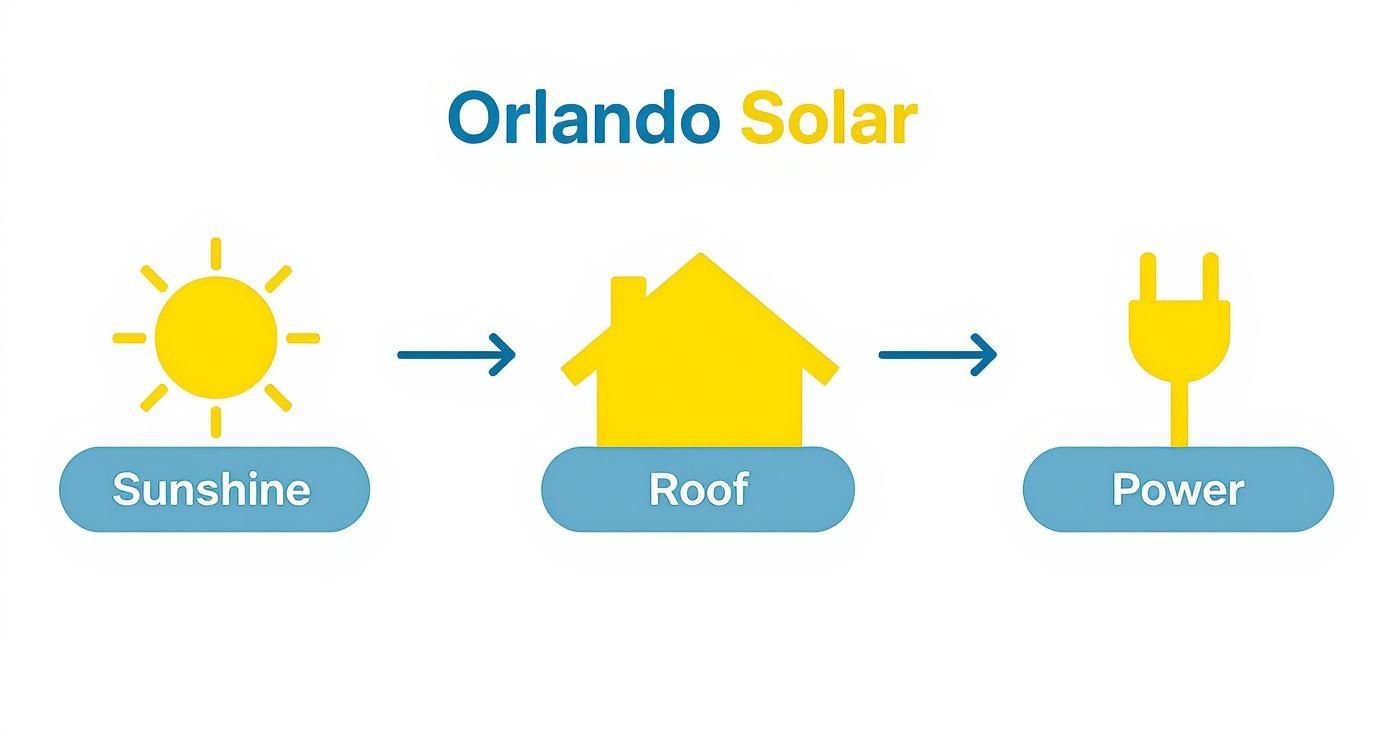
It’s a great visual for understanding how your roof becomes the key player in your home's new energy story.
Why Local Know-How is a Must for Compliance
Every city and county has its own little quirks and specific requirements. An installer who’s in the trenches here in Central Florida every day knows exactly what local utility companies demand for interconnection. That kind of on-the-ground experience is priceless.
A seasoned local pro like Hi Low Roofing will manage the entire submission, double-checking every detail before it even leaves their desk. This prevents those common mistakes—like a missing engineering seal or an incorrect form—that can bring a project to a screeching halt. Ultimately, our expertise is what ensures your solar panel roof integration in Orlando is done right and fully compliant, giving you total peace of mind.
Choosing the Right Solar System for Your Roof
When it comes to solar panel roof integration in Orlando, there’s no such thing as a one-size-fits-all solution. Every residential or commercial property is different. Your roof’s unique shape, the material it’s made of, and even your personal taste all factor into finding the perfect solar setup.
This isn’t just about slapping some panels on top to get the most power. It’s about making a smart choice that protects the long-term health of your roof while keeping your property looking great.
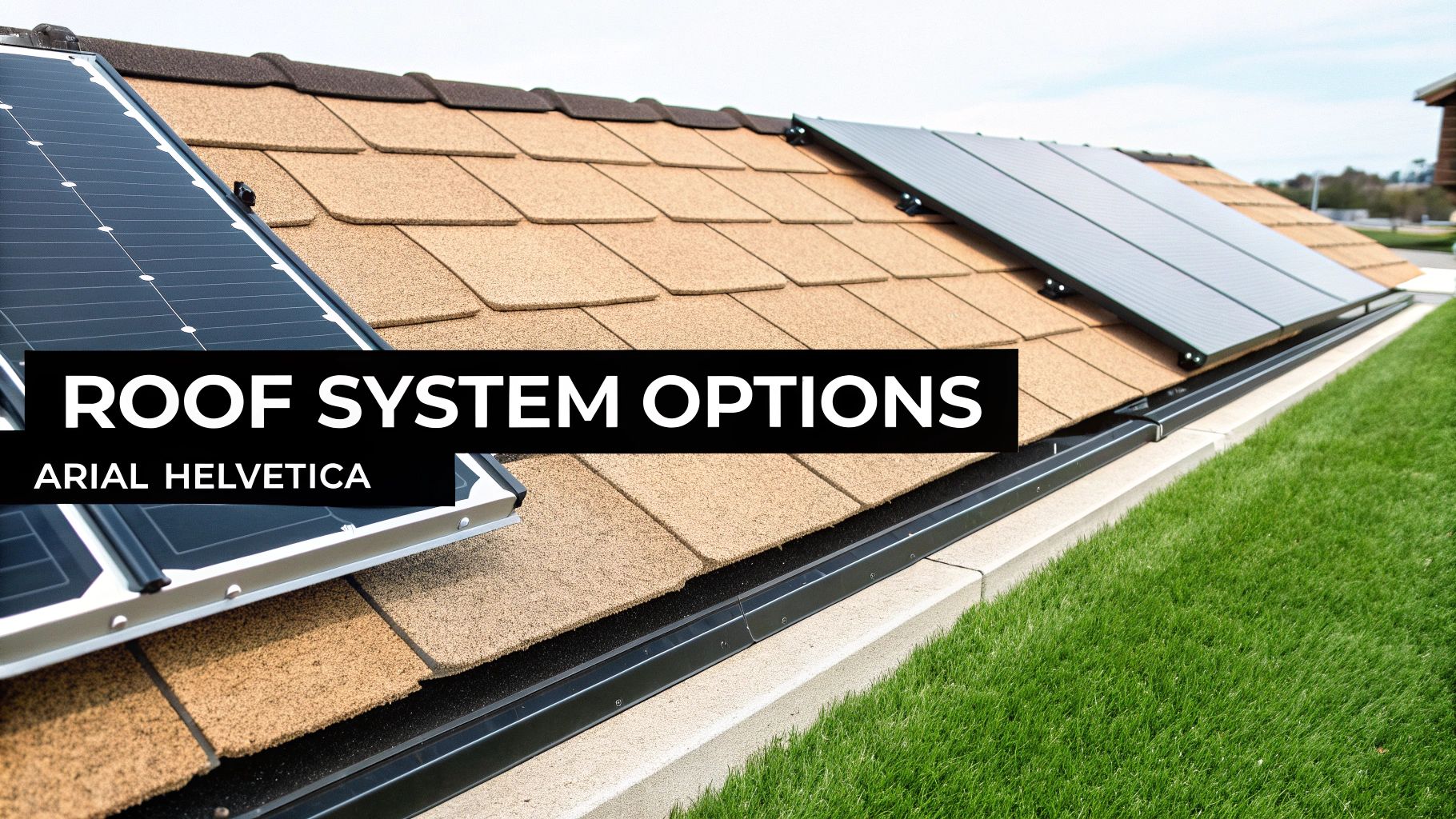
At its core, there are two main ways to go: systems that penetrate your roof and those that don't. The most common approach you’ll see is the traditional rack-mounted system. These are bolted securely through your roofing material and into the structural rafters below. When a seasoned pro handles the job, these penetration points are sealed with specialized flashing, creating a watertight barrier that stands up to Florida’s intense downpours without a problem.
Matching the System to Your Roof Type
The material on your roof dictates the entire game plan. A roofer who truly knows their stuff will tailor the mounting technique specifically for asphalt, tile, or metal to keep everything protected and secure.
- Asphalt Shingles: As Orlando's most popular roofing material, asphalt shingles are a perfect match for standard penetrating mounts. The secret sauce is using top-tier flashing that slips right into the shingle layers for a seamless, leak-proof seal.
- Tile Roofs (Clay or Concrete): These require a delicate touch. Installers use specialized tile hooks or mounts that slide under the tiles, avoiding cracks and preserving the roof's natural water-shedding design.
- Metal Roofs: If you have a standing-seam metal roof, you're in luck. They are ideal for solar because they often allow for non-penetrating clamps that grip onto the raised seams. This means zero new holes in your roof.
Before any solar equipment ever touches your roof, a comprehensive professional assessment is non-negotiable. At Hi Low Roofing, this inspection spots any hidden issues like soft spots or worn-out materials, confirming your roof is ready to support a solar system for the next 25+ years.
Skipping this step is a recipe for disaster. It can quickly turn your smart energy investment into an expensive roofing nightmare. Think of this initial checkup as the foundation for a successful, worry-free solar installation.
Comparing Solar Integration Methods for Orlando Homes
To make sense of the options, it helps to see how they stack up against each other. Here’s a quick comparison of the common mounting systems we work with here in Orlando.
| Integration Method | Best For Roof Type | Installation Cost | Aesthetics | Roof Integrity Impact |
|---|---|---|---|---|
| Rack-Mounted (Penetrating) | Asphalt Shingle, Tile | Moderate | Panels sit above roof surface | Minimal when installed with proper flashing |
| Non-Penetrating Clamps | Standing Seam Metal | Moderate | Panels sit above roof surface | None; no holes drilled into the roof |
| Ballasted Mounts | Flat Roofs | High | Panels are tilted on racks held by weights | High; significant weight added to the roof structure |
| BIPV (Solar Shingles/Tiles) | Asphalt Shingle, Tile | Very High | Seamless, integrated look | Minimal; replaces existing roofing material |
Each method has its place, but the right choice depends entirely on your specific roof, budget, and desired outcome.
The Critical Role of a Roof Assessment
That initial roof assessment is your best defense against future problems. A qualified expert will get up there and inspect everything—the structural integrity, the condition of the shingles or tiles, and the state of the flashing and underlayment.
This isn’t just about preventing leaks. It’s about ensuring your roof can handle the added weight and wind load from a solar array, especially when a hurricane is on the horizon.
Once the roof gets the green light, the next step is figuring out the right system size and layout. To get a handle on your specific energy consumption, our guide on what size solar system you need offers clear insights to help you make a confident decision. Getting it right from the start ensures your new system is perfectly matched to your property and how you live.
The Real Financials of Going Solar in Orlando
Let's talk numbers. Beyond the environmental perks, a solar panel roof integration in Orlando is a serious financial move. To really grasp the value, you have to look past the sticker price and understand the actual costs, the powerful incentives available, and how quickly this investment starts putting money back in your pocket.
The initial quote for a solar system can feel like a huge hurdle. But when you break it down, the picture becomes a lot clearer. The final cost really depends on how much power you need (system size), the quality of the panels you choose, and the unique layout of your roof.
The good news is that the market has gotten incredibly competitive. The average cost for a solar panel system in Florida has dropped significantly. For a typical family home, you're looking at a manageable starting point before any incentives kick in. Considering these panels are built to last 25 to 30 years, that upfront cost is a long-term play on your energy future. If you're curious about where the market is headed, you can get more insight into the Florida solar market in 2025.
Unlocking Florida's Powerful Solar Incentives
This is where the math really starts to work in your favor. Orlando property owners have access to some fantastic incentives that can dramatically cut the net cost of going solar and seriously speed up your return on investment.
These aren't just minor discounts; they're game-changers.
- Federal Solar Investment Tax Credit (ITC): This is the big one. It's a dollar-for-dollar credit on your federal income taxes for a huge chunk of your system's total cost. For most property owners, this incentive alone can slice thousands off the final price tag.
- Florida Property Tax Exemption: One common worry is, "Will this make my property taxes shoot up?" Nope. Florida law ensures that the value your solar system adds to your property is completely exempt from property tax assessments. You get the added home value without the tax hit.
- Net Metering Program: This is how the utility company literally pays you. When your panels produce more electricity than your property is using, that extra power flows back to the grid. Your utility credits your account for that energy, which you can use later—effectively making your meter spin backward.
Think of these incentives as a partnership. The government is actively rewarding you for making a smart energy choice that helps take the strain off the entire electrical grid for the whole community.
Calculating Your Solar Payback Period
So, how long until the system pays for itself? We call this the payback period—the point where your accumulated energy savings match your initial investment. Here in Central Florida, with our year-round sunshine and great incentives, that timeline is often much shorter than people realize.
The exact number of years will hinge on your energy consumption, the final system size, and your net cost after incentives. For many, it's just a handful of years. After that, every bit of power your roof generates is pure profit.
For property owners who want true energy independence, especially when hurricane season rolls around, a battery backup is a fantastic addition. To see how that fits into the financial picture, check out our guide on the cost of solar battery backup systems. Adding storage not only builds resilience but can also improve your long-term financial returns.
How Solar Panels Boost Your Property Value
When you install solar panels, you're doing a lot more than just shrinking your monthly power bill. You're making a direct, powerful investment in your Orlando property's bottom line. In a hot real estate market like Central Florida's, a home or commercial building that generates its own electricity instantly gets noticed by savvy buyers.
Think beyond the immediate utility savings. Solar panels are a major upgrade that seriously boosts your property's market appeal and can help to increase home value when you're ready to sell. In a state where high A/C bills are a given and grid stability is a real concern, properties offering a slice of energy independence are in high demand.
Gaining a Competitive Edge in the Orlando Market
When that "For Sale" sign goes up, having a professionally installed solar system sets your property apart from the rest. It’s a clear signal to potential buyers that your property is modern, efficient, and well-cared-for. This isn't just a nice-to-have anymore; it's becoming a must-have for many buyers.
The numbers back this up. Fresh data from 2025 shows that Orlando-area homes with solar panels are selling about 4.6% faster than comparable homes without them. On top of that, they're fetching a higher price. One study found an average 6.9% price premium, which translates to an extra $29,000 for a median-priced U.S. home. If you're interested in the nitty-gritty, you can find more details on how solar impacts home sales.
A solar panel system is a tangible asset that adds immediate and long-term financial worth. It’s not just a home improvement; it's a strategic upgrade that delivers a strong return on investment when you sell.
Framing Solar as a Long-Term Asset
Your solar project isn't just another weekend DIY. It’s a smart, long-term asset that cuts your living expenses right away and provides a big financial payoff down the road. Buyers immediately grasp the value of moving into a property where they won't have to worry about a massive electricity bill from day one.
Here are a few of the key selling points that make a solar-powered property so attractive:
- Lower Ownership Costs: Buyers know that a tiny (or nonexistent) power bill means more money in their pocket every month. That makes your property fundamentally more affordable to own.
- Protection Against Rising Energy Rates: Your property offers a built-in shield against ever-increasing utility costs, which is a huge financial relief.
- Enhanced Resilience: This is Central Florida. When hurricane season rolls around, the appeal of energy independence—especially with a battery backup—is a massive selling point that offers genuine peace of mind.
At the end of the day, a solar panel roof integration in Orlando is a clear indicator of a premium, future-ready property. It's an investment that pays you back every month and then pays you back again when you sell. It’s one of the smartest upgrades an Orlando property owner can make.
Got Questions About Going Solar in Orlando? We’ve Got Answers.
Deciding to integrate solar panels into your roof is a big step, and it's completely normal to have a list of questions. We hear them all the time from property owners across Central Florida. From how it impacts your insurance to what happens if the roof underneath needs work, getting solid answers is key to feeling good about your decision.
We've pulled together the most common questions we get right here in our service area, which covers every city from Pinellas County all the way to Orlando. The goal is to clear up the confusion so you can see the whole process for what it is: a straightforward and valuable property upgrade.
How Will Solar Panels Affect My Homeowner's Insurance?
This is a big one, and it's smart to tackle it early. Before you do anything else, give your insurance agent a call. You’ll absolutely want to add the solar system to your homeowner's or commercial property policy to protect what is a significant investment.
Yes, this will likely bump up your premium a bit, but that extra coverage is non-negotiable, especially with Florida’s hurricane season on our minds every year.
It's best practice to let your insurer know before any installation work starts. A seasoned installer like Hi Low Roofing will have all the system specs and engineering documents your insurance company needs. In fact, showing them that your system is designed to meet—or even beat—Florida's tough wind-load codes can be a real plus in their eyes.
What if My Roof Needs Repairs Down the Road?
This is where hiring a single, expert team for both roofing and solar really pays off. If your roof needs work after the panels are installed, the entire solar array has to be carefully detached and then reinstalled once the repairs are done.
When one company like Hi Low Roofing handles both your roof and your solar, you sidestep a world of potential frustration. You won't get caught in the middle of a roofer and a solar company pointing fingers at each other. Instead, you have one trusted team accountable for the whole system, from the shingles to the solar cells.
This integrated approach keeps your warranties intact and makes sure the entire process is handled correctly, protecting your property and your investment for years to come.
How Long Does the Whole Solar Integration Process Take?
From our first handshake to your system generating power, a typical solar panel roof integration in Orlando usually takes about one to three months. Interestingly, the physical work on your roof is the fastest part; it's the paperwork and approvals that often take the most time.
Here's a realistic look at the timeline:
- Design & Engineering: First, we map everything out. Creating the custom blueprint for your specific property and roof generally takes about 1-2 weeks.
- Permitting: This is often the longest waiting period. Getting the necessary permits from the City of Orlando or Orange County can take anywhere from 4 to 8 weeks.
- On-Site Installation: You’ll be amazed at how quickly this happens. Our crews can typically have the entire system physically installed on your roof in just 1-3 days.
- Utility Interconnection: The final piece of the puzzle. We work with your utility company to get the final approval to connect your system to the grid, which can take another few weeks.
Having an experienced local installer who knows the ins and outs of local permitting is the key to moving things along as smoothly as possible.
Ready to see how your Orlando roof can become a power-generating asset? The team at Hi Low Roofing has the expertise to manage your entire project for your residential or commercial property, from a comprehensive roof inspection to a flawless solar installation. Contact us today for a free, no-obligation consultation.
