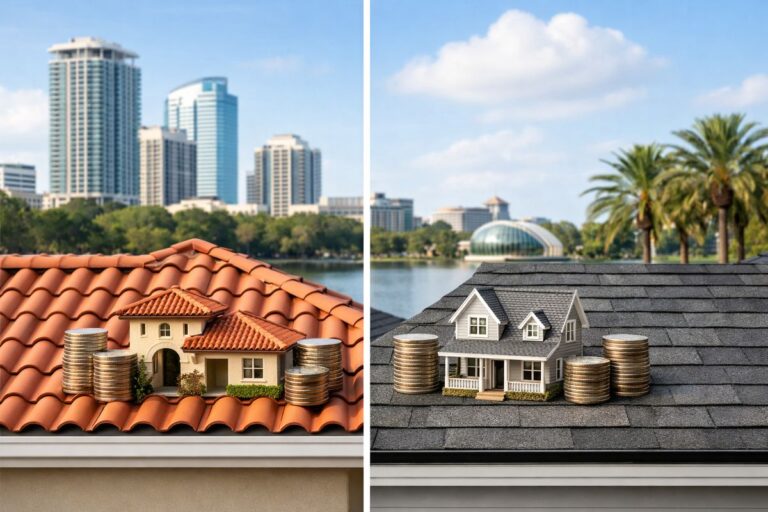
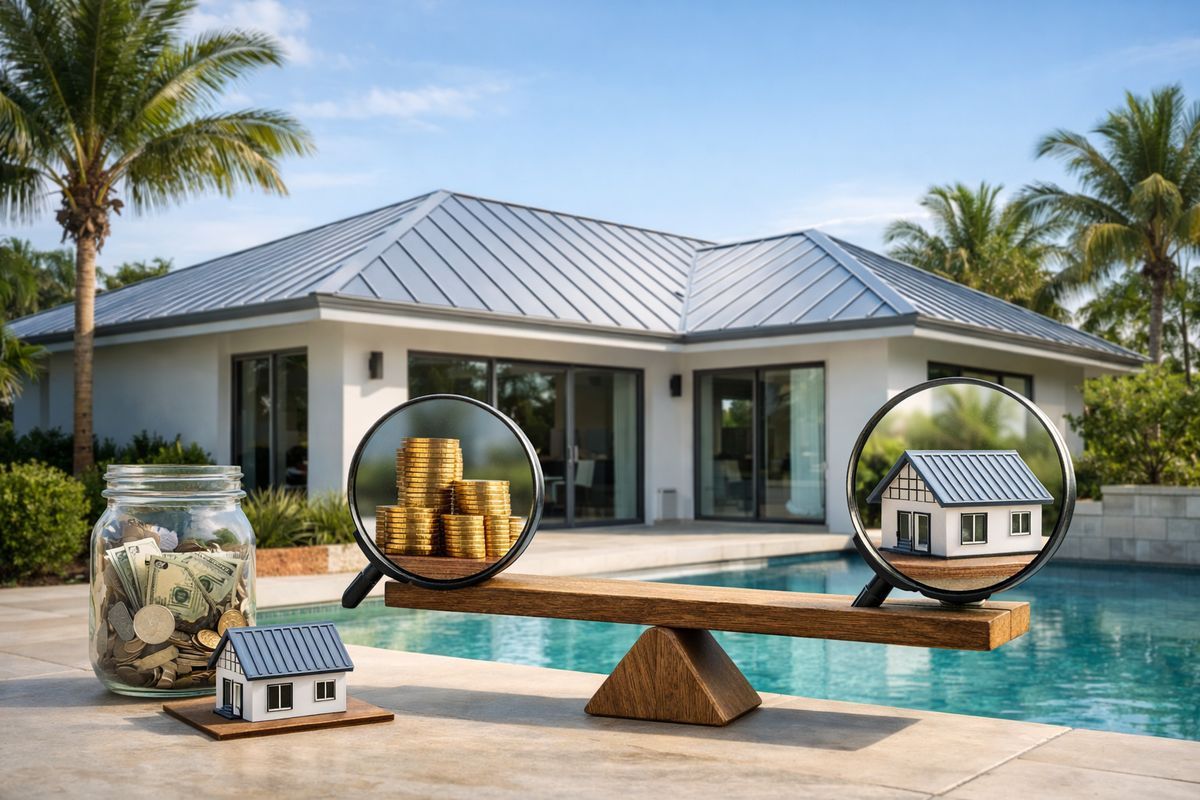
A roof replacement in Central Florida is rarely a style decision first. For many owners, the real question is simple: is a metal roof worth it when an older roof has leaks, wear, or a second replacement cycle coming up. The answer depends on cost, time horizon, and how much value they place on service life, storm performance, and lower repair frequency.
Check the main tradeoff
Metal roofing costs more at installation. Metal roofing also tends to last far longer than asphalt shingles.
That is the tradeoff. A homeowner pays more now to reduce the chance of another full replacement in the same ownership period.
This matters most for older homes in Winter Garden, Ocoee, Apopka, and Orlando. Many of these homes already have roofs near the end of their useful life, or they have a pattern of patching leaks and replacing shingles after storms.
For owners already comparing repair against full replacement, the better starting point is often how contractors judge repair versus full reroofing. A metal roof makes the most sense when patching no longer solves the larger problem.
Compare metal to asphalt shingles
Asphalt shingles remain the lower-cost standard for single-family homes. They install faster, more crews work with them, and replacement parts are easy to source.
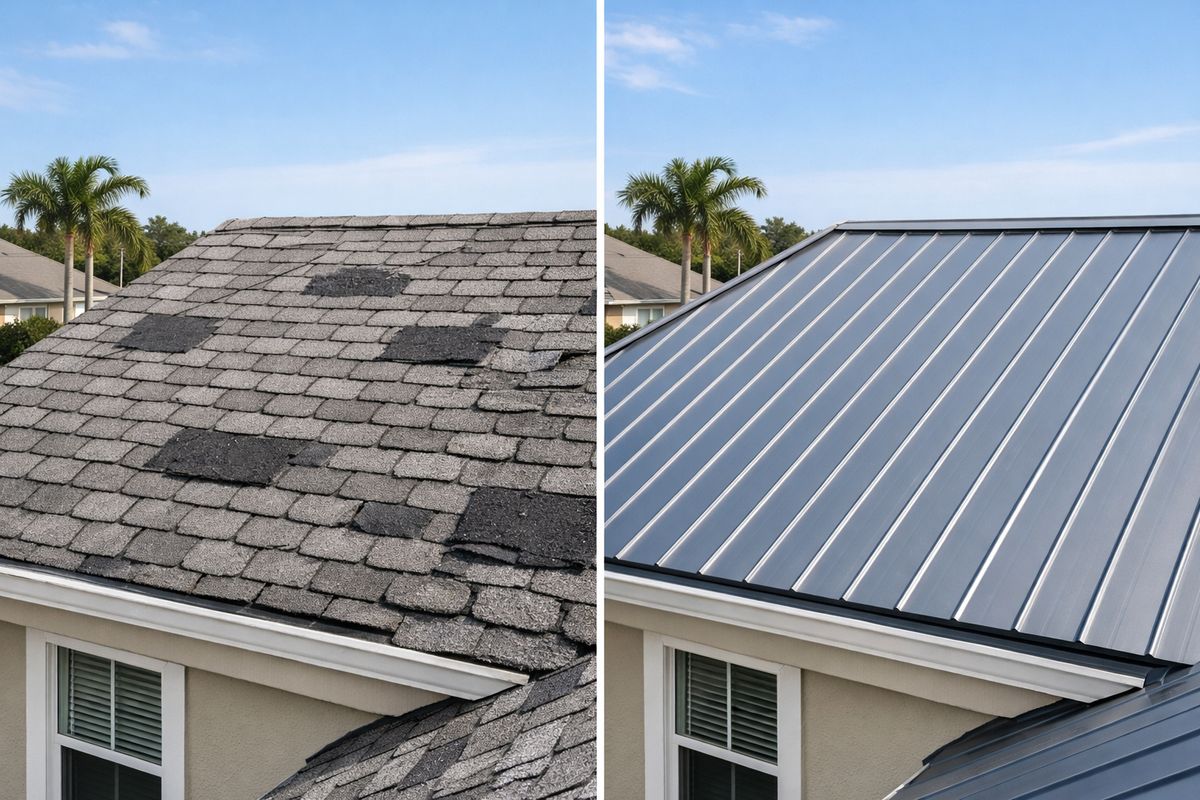
Metal roofs usually outlast shingles by decades when the system is installed well. They also resist wind uplift better in many configurations, shed rain fast, and hold up better against sun exposure. Shingles usually need more repair attention over time, especially on aging roofs with granule loss, lifted tabs, or repeated leak points.
Heat performance also differs. Reflective metal finishes can reduce roof surface heat gain. Shingles can still perform well, but they generally absorb more heat unless the attic system does more of the work.
The replacement cycle is the largest divide. A homeowner may go through two or even three shingle roofs over the life span of one metal roof.
Weigh the main benefits
Metal earns attention in Florida because the climate is hard on roofs. Heat, ultraviolet exposure, wind-driven rain, and hurricane season shorten the margin for weak materials or weak installation.
The best case for metal is long ownership. The owner pays more once and spends less time dealing with recurring roof problems.
Longer service life
A properly installed metal roof can last several decades longer than a typical shingle roof. That changes the math for owners who plan to stay in the house.
This is often the strongest argument for homes with aging roofs. If the house already had one replacement and is heading toward another, metal may remove the need for a third cycle.
Service life still depends on the full system. Underlayment, flashing, ventilation, and deck condition all matter. A long-life panel on a poorly detailed roof will not deliver long-life results.
For owners comparing life span across materials, how Florida roofs age in real conditions gives useful context beyond brochure numbers.
Better wind and weather performance
Metal roofs can perform well in high wind when the panel system, fastening pattern, and edge details meet code and manufacturer requirements. That is one reason they remain a common option in coastal and storm-prone regions.
Rain shedding is another strength. Panels move water off the roof quickly, which helps on steep-slope homes during heavy summer downpours.
Metal also does not rot. It does not invite insects the way wood-based products can. It also offers strong fire resistance as a material category.
The condition is simple. These benefits depend on the assembly, not the panel alone. Weak flashing, poor underlayment, or incorrect fastener spacing can erase the expected advantage.
Lower cooling load
Reflective coatings can reduce solar heat gain. That can lower attic temperatures and reduce cooling demand in some homes.
The savings are real but not unlimited. Insulation levels, attic ventilation, duct location, and shade still shape the electric bill. A metal roof will not fix poor attic design.
This point matters most on homes with direct sun exposure and older, dark roofs. Owners weighing roof materials across heat and storm factors may also want a broader Florida material comparison.
Lower upkeep over time
Metal roofs usually need fewer patch jobs than aging shingle roofs. They also avoid the cycle of brittle tabs, missing shingles, and recurring seal strip failures.
That does not mean no maintenance. Flashing, sealants, penetrations, and transitions still need inspection. Exposed-fastener systems need even closer attention because screws and washers age in the sun.
The result is lower upkeep over time, not zero upkeep.
Count the main drawbacks
Metal has limits. A buyer’s guide is not useful without them.
Some owners will gain enough value to justify the cost. Others will not.
Higher upfront cost
Metal usually costs more than architectural shingles at installation. The gap can be large.
Panel type drives much of that difference. Standing seam systems usually cost more than exposed-fastener panels. Trim complexity, underlayment upgrades, tear-off labor, and roof access also affect the number.
Older homes can add another layer of cost. Once the old roof comes off, damaged decking may need repair or replacement before the new system can go on.
Owners who want a fuller view of estimate ranges can review what typically shapes metal roofing prices in Florida.
Noise, denting, and appearance fit
Noise is one of the most common objections. In most single-family homes with solid roof decking, attic space, and insulation, the sound difference is smaller than many assume.
Denting is a real issue in some systems. Thinner panels and certain profile types show impact more easily than thicker or more rigid systems. Large hail is less common in Central Florida than in some states, but branch strikes and debris still matter.
Appearance is more subjective. Some neighborhoods suit metal well. Others were built around shingle or tile patterns. HOA rules may narrow the acceptable options before pricing even starts.
Repair and contractor limits
Shingle crews are easier to find than skilled metal crews. That affects both installation quality and future repairs.
This matters because metal rewards precision. Flashing at valleys, chimneys, skylights, walls, and penetrations must be done correctly. A poor detail at one transition can create leaks on an otherwise durable roof.
Owners dealing with active water entry should separate immediate damage control from material choice. What to do after water gets through the roof covers the first priority.
Pick the right metal roof type
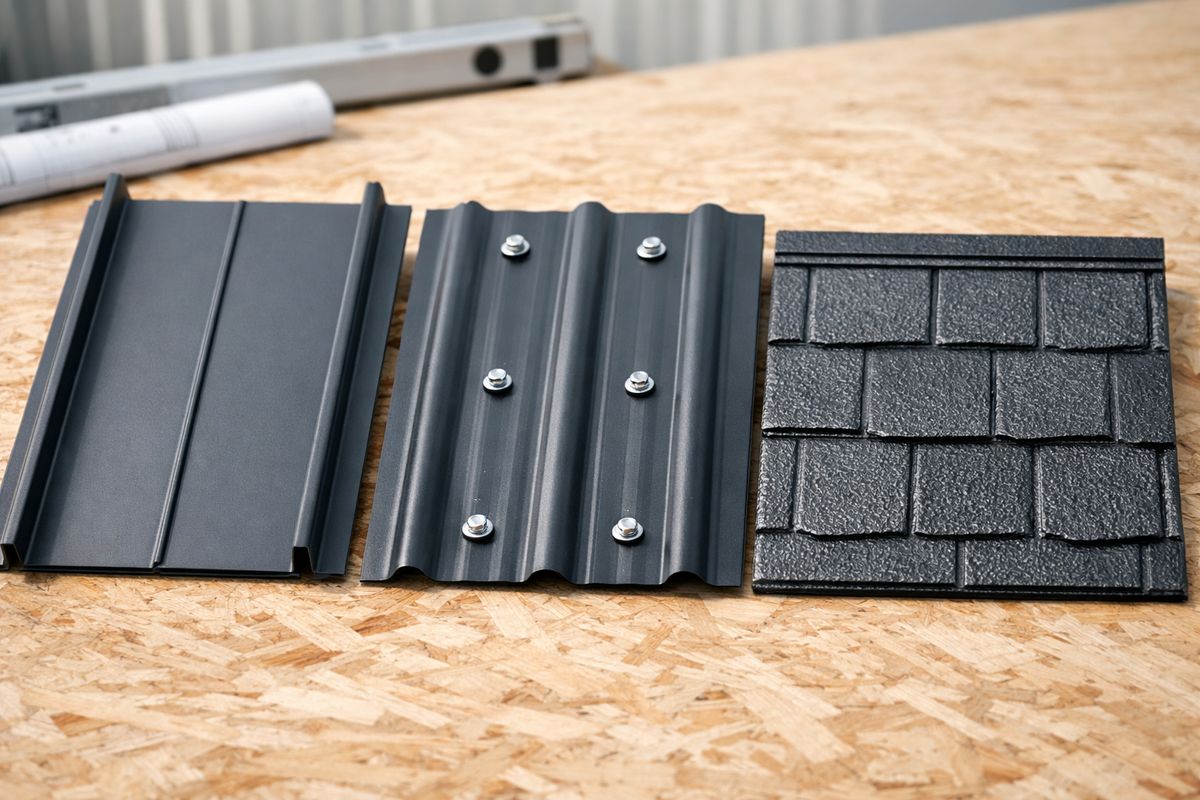
Metal is not one product. The category includes several systems with different costs, maintenance needs, and long-term value.
For most homeowners, the main comparison comes down to panel attachment and profile design.
Standing seam
Standing seam is often the benchmark for long-term value. The fasteners are concealed, which reduces exposure to sun and water at the attachment points.
It also offers a cleaner appearance. The raised seams create strong lines and a more finished look on many homes.
This system usually costs more. The higher price reflects both material design and installation skill.
Exposed fastener panels
Exposed-fastener panels cost less than standing seam in many cases. That lower entry cost makes them attractive when the budget is firm.
The tradeoff is maintenance. The screws and washers remain exposed to heat, rain, and ultraviolet light. Over time, those parts can loosen, age, or need replacement.
This type can still work well when installed correctly. It is simply not the same low-maintenance package as concealed-fastener systems.
Metal shingles and stamped profiles
Metal shingles and stamped profiles aim for a different look. Some mimic tile, shake, or traditional shingles.
That can help in neighborhoods where appearance matters as much as durability. These systems may fit homes that would look out of place with long vertical panels.
Pricing often lands between basic exposed-fastener systems and premium standing seam, though product design and accessory detail can move the number either way.
Price the project and the payback
The financial case for metal depends on ownership length. A short horizon changes the math. A long horizon improves it.
This is why two neighbors can face the same estimate and reach different conclusions.
Break down what drives cost
Roof size sets the base cost. Roof slope, height, and access change labor.
Tear-off adds cost. Deck repairs add more, especially on older homes with hidden moisture damage.
Panel profile changes pricing. Coatings, trim details, valleys, hips, ridges, and penetration count also matter. Permit costs and code-required components belong in the total, not as afterthoughts.
A low estimate may exclude items that appear later as change orders. Owners comparing bids should look for deck repair allowances, underlayment type, and flashing scope in writing.
Storm history should also be part of the review. The signs contractors look for after high winds and heavy rain often explain why one estimate includes more replacement work than another.
Estimate value over time
A metal roof often costs more now and less later. A shingle roof often costs less now and more often.
Over a long enough period, one metal replacement may compete well against two shingle replacement cycles, plus more frequent repair visits between them. That does not guarantee savings on every house. It does make the long-term comparison more honest.
Insurance effects vary by carrier and policy. Some owners may see benefits tied to system ratings or reduced risk profiles. Others may see little change. The same caution applies to resale. A metal roof can improve buyer perception, but it should not be treated as a guaranteed payback line item.
Owners reviewing policy details can compare how Florida roof claims and coverage limits tend to work.
Decide based on the house and the owner
The right decision comes from fit. The house condition matters. The ownership plan matters. The budget matters.
Metal is not automatically better. It is better in certain cases.
Cases where metal is worth it
Metal often makes sense for long-term owners. The longer they stay, the more they can use the extra service life.
It also fits houses with repeated shingle failures, heavy sun exposure, or storm concerns. If an owner wants to avoid another full replacement cycle, metal becomes easier to justify.
This is often true for older roofs already showing broad wear, not isolated damage. In those cases, the decision is less about one leak and more about ending a pattern.
Cases where shingles may make more sense
Shingles may be the better fit for short ownership horizons. A seller planning to move soon may not recover the extra upfront spend.
A tight budget can also make shingles the practical choice. The same applies to homes with complicated retrofit limits or neighborhoods where appearance rules narrow acceptable metal profiles.
Some owners also prefer shingles because contractor availability is broader. That can simplify both installation and future spot repairs.
Questions to ask before signing an estimate
A strong estimate should answer the basic system questions in plain terms. The owner should know the panel type, fastener system, underlayment, wind rating, flashing details, warranty terms, permit scope, crew experience, and how deck repairs will be handled.
If those details are vague, the estimate is incomplete. Roofing value comes from the system and the workmanship, not the brochure headline.
Frequently asked questions
Does a metal roof add value to a home in florida?
It can. Buyers often view metal as a long-life upgrade with better storm performance. Added value depends on roof age, neighborhood norms, and overall home condition.
Is a metal roof too loud during rain?
In most homes, no. Solid decking, attic space, and insulation reduce sound. Poor assembly creates more noise than the material itself.
How long does a metal roof usually last in central florida?
Many metal roofs last decades longer than shingles. Actual life depends on panel type, coating, underlayment, flashing, ventilation, and installation quality.
Is standing seam worth the extra cost?
For long-term owners, often yes. Concealed fasteners reduce maintenance points and usually improve weather performance. The higher price does not fit every budget.
Can a metal roof help with homeowners insurance?
Sometimes. Results vary by carrier, policy terms, and the rated system installed. No owner should assume premium savings without checking the policy.
When does metal make less sense than shingles?
It makes less sense with a short ownership plan, a tight budget, limited contractor options, or HOA rules that restrict the look. In those cases, shingles may offer the better balance of cost and fit.
A metal roof is worth it when the owner plans to stay, the house needs a long-term solution, and the estimate reflects a complete system with skilled installation. Ready to protect your home? Get in touch with the Hi Low Roofing team for your free estimate. https://hilowroofing.com/free-estimate/