

Figuring out if you need a new roof can feel like a huge, daunting decision. But for many homeowners, a full residential roof re-roofing in Tampa is the smartest way to protect your home from Florida’s wild weather for the long haul. This isn't just about patching up a problem; a re-roof means tearing everything off down to the deck and installing a brand-new, unified system built to handle whatever the sun, rain, and wind throw at it.
When to Consider Re-Roofing Your Tampa Home
Your roof is the first line of defense for your family and your biggest investment. Here in Tampa, that shield takes a relentless beating from scorching UV rays, torrential downpours, and the ever-present threat of hurricane-force winds. Over the years, this isn't just about a shingle getting loose here or there—the entire system slowly breaks down.
Think of it this way: a roof repair is like putting a patch on a leaky tire. It solves the immediate problem. A full re-roof, on the other hand, is like getting a whole new set of tires. It addresses widespread wear and restores the safety and integrity of the entire system for years to come.
Differentiating Repair from Replacement
The real trick is knowing when it's time to stop patching and start over. A few shingles blown off in a storm? That’s usually a straightforward repair. But when you start seeing problems pop up all over the place, a full re-roof becomes the only sensible, and often more cost-effective, choice.
A complete re-roof is more than just new shingles. It’s a full system overhaul. It gives a professional the chance to inspect the underlying wood deck for hidden rot or damage, ensuring the very foundation of your new roof is sound.
Putting off a necessary replacement is a gamble. It can lead to much bigger headaches down the road, from structural damage and attic mold to ruined insulation. Making the right call at the right time is key to saving money and stress.
Signs It Is Time for a Full Re-Roof
As a Tampa homeowner, learning to spot the warning signs is your best bet for staying ahead of major issues. While nothing beats a professional inspection, there are several things you can look for that scream your roof is on its last legs.
To make it easier, here’s a quick rundown of the most common signs of roof failure. If you spot these, it’s probably time to call in a pro.
Quick Guide to Spotting Roof Failure in Tampa
| Warning Sign | What It Looks Like | Why It's a Major Concern |
|---|---|---|
| Widespread Granule Loss | Piles of "sand" or black grit in your gutters and downspouts. | This is the shingle's protective top layer. Without it, the sun bakes and cracks the asphalt underneath. |
| Curling or Clawing Shingles | Shingle edges are turning upward, or the middle is buckling like a claw. | This is a classic sign of advanced aging and heat damage. The shingles are brittle and can no longer seal properly. |
| Persistent Leaks | You've fixed a leak in one spot, only to have another appear somewhere else. | Multiple leaks are a clear sign of systemic failure. The underlayment and shingles are failing across the board. |
| Visible Sagging | The roofline looks droopy, wavy, or like it has a dip in the middle. | This is a serious structural red flag. It could mean the underlying roof deck is rotting and needs immediate attention. |
These are the big ones. Each sign on its own is a reason for concern, but if you're seeing more than one, don't wait.
If any of this sounds familiar, it's time to take action. You can dig deeper by checking out our guide on the signs you need roof replacement in Tampa. At Hi Low Roofing, we provide expert inspections across Central Florida, from Pinellas County all the way to Orlando, to give homeowners a clear, honest assessment of their roof's health and help them find the best path forward.
Budgeting for Your Tampa Roof Replacement
Let’s talk numbers. Figuring out the real cost of a residential roof re-roofing in Tampa is the first step toward making a smart decision you can feel good about. This isn't just another home repair bill; it's a major investment in your home's safety, structure, and future value. A solid budget means looking past the bottom-line price and truly understanding what you're paying for.
A full roof replacement is about way more than just new shingles. The final cost is a mix of materials, skilled labor, permits, and proper project management. A trustworthy contractor will build an estimate that covers every single phase, making sure your new roof is durable, up to code, and professionally installed from tear-off to final cleanup.
Key Factors That Influence Your Final Cost
No two roofing jobs are the same, especially with all the different home styles you see around the Tampa Bay area. Several key things will directly shape your project's budget.
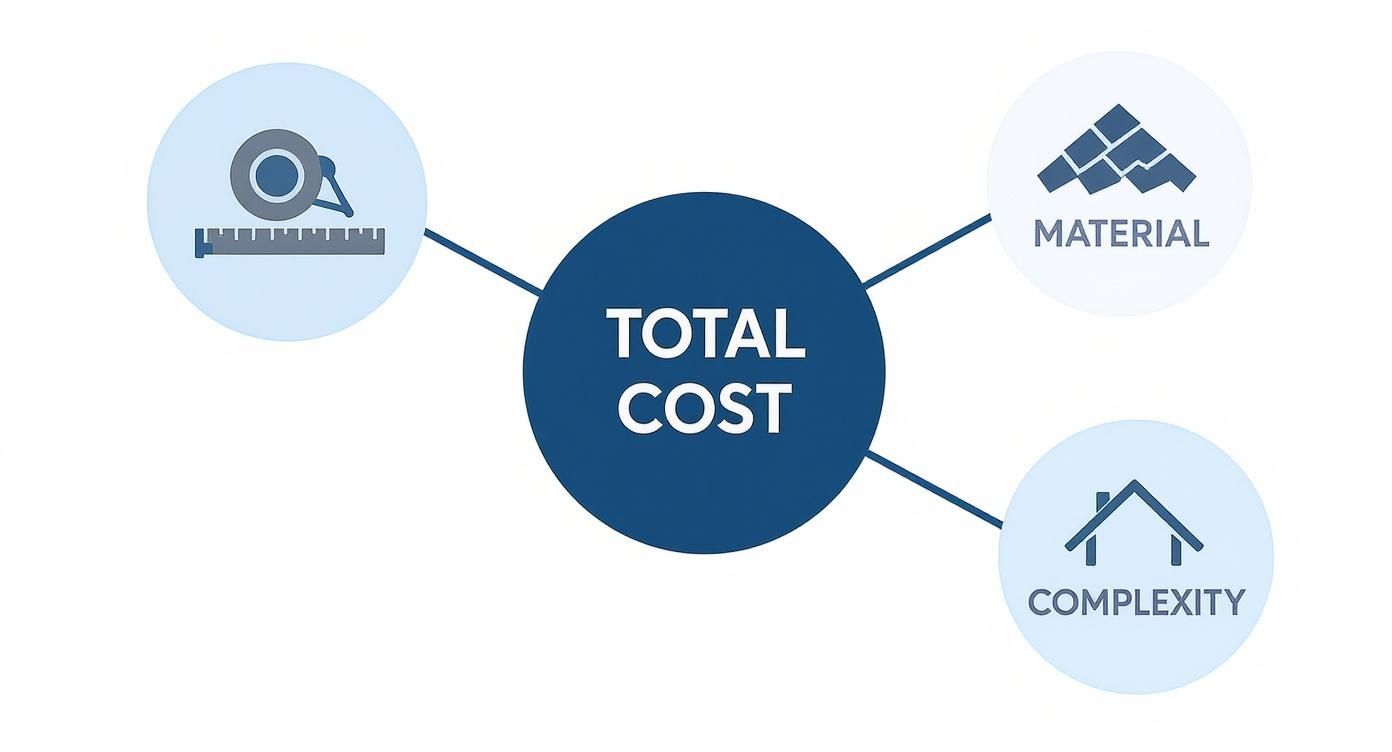
- Roof Size and Square Footage: This one’s pretty straightforward. A bigger roof needs more materials and more hours of labor, which naturally drives up the cost.
- Roof Pitch and Complexity: Is your roof steep? Does it have a lot of angles, valleys, dormers, or skylights? These features demand more skill, special safety gear, and more time to get right. That complexity adds to the labor cost compared to a simple, low-slope roof.
- Choice of Roofing Materials: The material you pick is a huge part of the final price. Standard asphalt shingles are the most common budget-friendly choice. On the other hand, premium materials like a standing seam metal roof or classic clay tiles cost more upfront but often deliver a longer lifespan and other unique perks.
- Labor and Installation Quality: You’re not just paying for materials; you’re investing in expertise. Highly skilled, insured, and certified roofers charge more, but their precision ensures your roof is built to handle Florida's wild weather and that your warranty stays valid.
Understanding Typical Cost Ranges in Tampa
Getting a new roof in Tampa has become more common—and more expensive—over the last decade. Looking at recent industry data, the average cost for a full roof replacement in the area falls somewhere between $7,000 and $25,000. Most homeowners with a typical 2,000-square-foot home will likely spend in the $10,000 to $16,000 range.
Of course, that’s a big window. The final number really depends on the factors we just talked about. A smaller 1,500-square-foot home might cost $7,500 to $12,000, while a larger 3,000-square-foot house could easily be $15,000 to $25,000 or more.
A good, transparent estimate won't just give you a single number. It should break everything down, from the big-ticket items to the "hidden" essentials like underlayment, flashing, ventilation, and dumpster fees.
For homeowners weighing their options, seeing a direct comparison can be a huge help. To get a better sense of how materials impact your budget, check out our guide on the cost difference between metal roofs and shingles.
Beyond the Basics: What Your Budget Covers
When you get a quote from a reputable Tampa roofer, it should be all-inclusive. A comprehensive budget means no surprise charges halfway through the job.
Your re-roofing budget should typically include:
- Permitting Fees: The cost to file and secure the required permits from the City of Tampa or Hillsborough County.
- Tear-Off and Disposal: All the labor and fees for safely removing your old roof materials and hauling away the debris.
- Deck Inspection and Repair: This is a critical step where the crew inspects the underlying wood deck for rot or damage and makes necessary repairs.
- New Roofing System Installation: This covers all the new materials—underlayment, shingles or tiles, flashing, vents—and the expert labor to put it all together.
- Site Cleanup: A professional crew will leave your property spotless, often using magnetic rollers to find any stray nails in the yard.
- Workmanship Warranty: This is the contractor's promise, guaranteeing the quality of their installation for years to come.
Getting your finances in order is a key part of any big home project. If you need some help, this practical guide on how to budget for home renovation is a great resource. It will help you approach your new roof with confidence, knowing you’re making a sound investment in your home.
Choosing the Best Roofing Materials for Florida's Climate
Your roof is the single most important shield protecting your Tampa home from intense sun, torrential rain, and hurricane-force winds. Picking the right material isn't just about looks; it's a strategic investment in your home's safety and ability to weather the storm. The best material for a residential roof re-roofing in Tampa is one that can stand up to our unique climate challenges, year after year.
Let’s break down the top contenders for Tampa homes: asphalt shingles, metal, and tile. Each one comes with its own set of pros and cons in terms of durability, lifespan, and performance under the blistering Florida sun. Getting to know these differences is the key to making a smart choice that fits your budget and long-term goals.
Asphalt Shingles: The Popular and Practical Choice
It’s no surprise that asphalt shingles are the most common roofing material you'll see across Central Florida. They hit that sweet spot of affordability, reliability, and style, which makes them a fantastic choice for many homeowners. Today's architectural shingles aren't flat, boring strips; they're designed with multiple layers to create a dimensional, textured look that seriously boosts curb appeal.
Engineered to handle Florida's heat and downpours, they typically have a lifespan of 20 to 30 years with proper installation and a little upkeep. While they might not outlast metal or tile, their lower upfront cost makes them a dependable and accessible option when it's time for a new roof.
Metal Roofing: The Durable and Resilient Champion
If your top priorities are longevity and storm resistance, metal roofing is an absolute powerhouse. Systems like standing seam metal are incredibly tough, built to withstand wind uplift of 140 mph or more—a critical feature when a hurricane is on the horizon. On top of that, they're highly resistant to fire, rot, and insects.
But their strength isn't the only story. Metal roofs are also champions of energy efficiency. Many come with reflective coatings that bounce the sun's harsh rays away from your house, which can slash your cooling costs by up to 25%. The initial investment is higher, no doubt, but a metal roof can easily last 50 years or longer. For many, it’s the last roof they’ll ever need to buy.
Tile Roofing: The Timeless and Elegant Protector
There's a reason tile roofing—whether clay or concrete—is so deeply connected to Florida's classic architectural style. It offers a timeless, upscale beauty that's hard to beat. These roofs are also incredibly durable, capable of lasting for 50 years or even a century with proper care. They naturally resist fire, rot, and insects, and their substantial weight helps them stand firm against powerful winds.
The way tile handles heat is another huge plus. The individual tiles and the air pocket beneath them create a natural ventilation system, insulating your home from the summer swelter. This can lead to big energy savings over the roof's incredibly long life. While tile is one of the pricier options, its stunning appearance and longevity make it a premium investment in your home's value.
Comparing Top Roofing Materials for Tampa
This side-by-side analysis of popular roofing materials can help you decide which is the best fit for your home's style, budget, and protection needs.
| Material | Cost per Sq. Ft. | Lifespan (Years) | Best For |
|---|---|---|---|
| Asphalt Shingles | $4.50 – $7.50 | 20 – 30 | Homeowners looking for a balance of affordability, style, and solid performance. |
| Metal | $9 – $16 | 50+ | Those prioritizing extreme durability, storm resistance, and long-term energy efficiency. |
| Tile (Clay/Concrete) | $12 – $25 | 50 – 100+ | Homeowners seeking timeless aesthetics, premium longevity, and superior heat resistance. |
Ultimately, the right material comes down to your specific needs. Balancing the upfront cost with the long-term benefits in durability and energy savings will point you toward the perfect choice for your Tampa home.
And while they're less common for sloped roofs, some homes have flat or low-slope sections that need a special touch. For these unique situations, you can explore options with our team and learn more about our residential TPO roofing solutions designed for maximum durability.
Thinking About Solar? Plan Ahead With Your New Roof
For many Florida homeowners, going solar is a big part of the plan. The good news is that modern roofing and solar technology are designed to work together perfectly. When you work with a team like Hi Low Roofing, which has deep expertise in both fields, you can ensure your new roof is the ideal platform for a solar panel system.
Whether you land on shingles, metal, or tile, a professionally installed new roof provides a secure, warrantied foundation for your solar array. This allows you to confidently maximize your home's energy independence and shrink your utility bills for decades to come.
What to Expect During the Re-Roofing Process
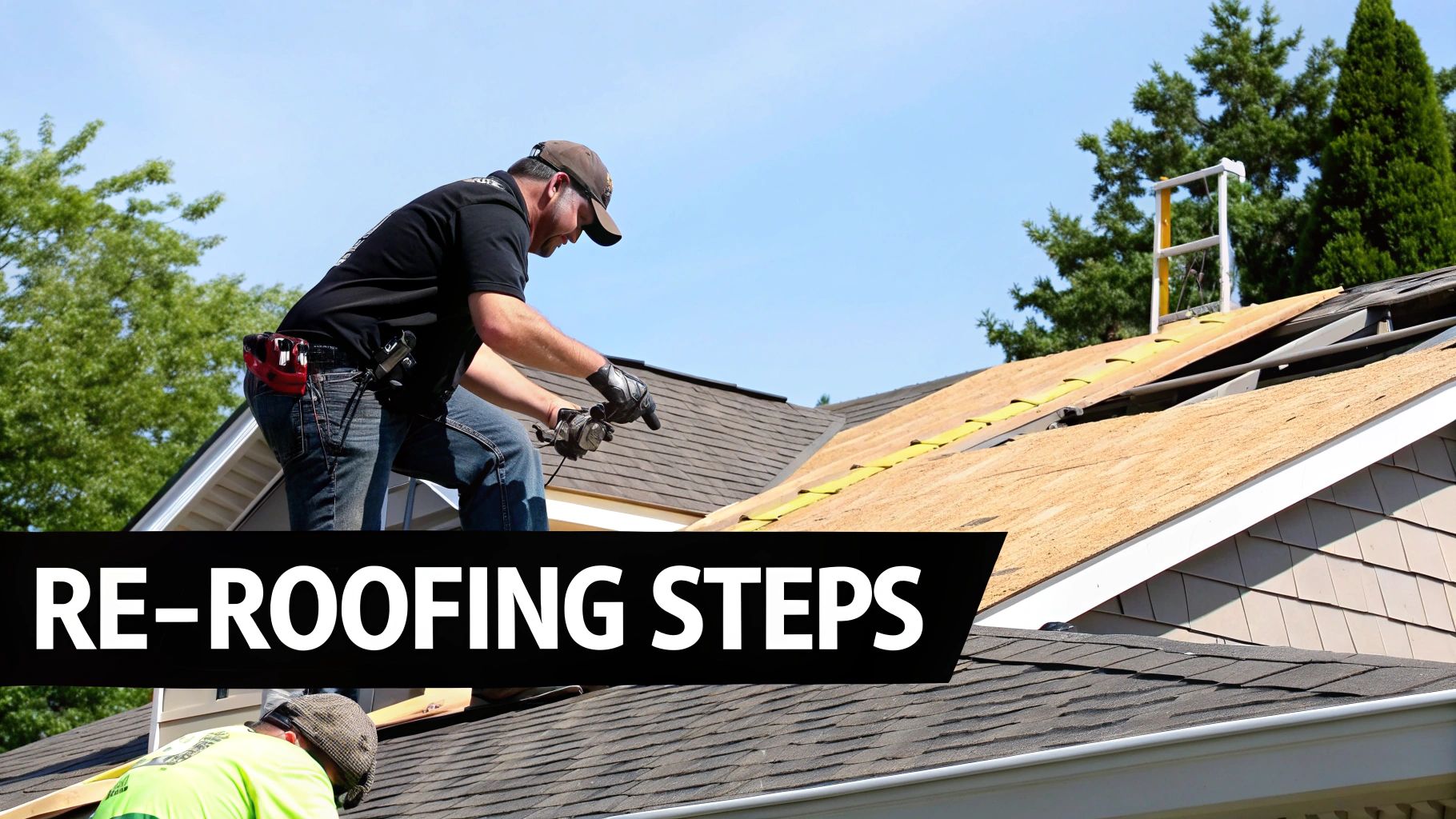
Getting a new roof is a big deal, but it doesn’t have to be a big mystery. When you understand the playbook a professional crew follows, the whole project transforms from a major disruption into a predictable, manageable event. Knowing what's coming each day puts you in control and helps the entire job run smoothly.
Any professional residential roof re-roofing in Tampa follows a specific, time-tested sequence. Each step logically builds on the last, from prepping your property to hammering the final nail. This methodical approach is all about safety, efficiency, and delivering a top-quality roof that will protect your home for decades.
Phase 1: The Initial Setup and Tear-Off
The first day is all about preparation. Before a single shingle is touched, the roofing crew will focus on protecting your property. They'll cover your landscaping, AC units, and patio furniture with heavy-duty tarps to shield them from falling debris. You can also expect a dumpster to be delivered and carefully placed, usually on the driveway, to manage the waste.
Once your home is prepped, the tear-off begins. Be ready for some noise—this is easily the loudest part of the job. The crew will systematically strip everything off your roof: old shingles, felt paper, and flashing, taking it all the way down to the bare wood sheathing. This complete removal is absolutely essential; it's the only way to get a true look at the structural foundation of your roof.
Phase 2: Deck Inspection and Dry-In
With the old roof gone, the crew has a clear view of your roof's underlying wood deck. This is a critical inspection point. They’ll be on the lookout for soft spots, water stains, or any signs of rot that were hiding beneath the old layers.
Any damaged plywood or decking boards must be replaced to ensure the new roof has a solid, stable base. This isn't an optional step—it's foundational to a long-lasting roof. Next, the crew will "dry-in" the roof by rolling out a new layer of synthetic underlayment over the entire deck. This material is your home's secondary water barrier. New metal drip edge is also installed along the perimeter to guide water into the gutters and away from the fascia.
Communication is key during this time. A professional contractor like Hi Low Roofing will keep you informed about the condition of your deck and any necessary repairs before proceeding, ensuring there are no surprises.
Phase 3: New Roof Installation and Flashing
Now for the exciting part—seeing your new roof come to life. The crew begins laying your chosen material, whether it’s asphalt shingles, tile, or metal panels. They'll start at the bottom and work their way up, making sure each course precisely overlaps the one below it to create that weather-tight seal.
At the same time, they install brand-new flashing. Flashing consists of metal pieces that protect the most leak-prone areas of your roof. Think of it as the detailed waterproofing for critical joints and penetrations.
This includes:
- Valleys: Where two sloping roof sections meet.
- Chimneys: Sealing the gap around the base of the chimney.
- Vents and Pipes: Creating a watertight seal around every pipe or vent that sticks through the roof.
- Skylights: Ensuring water can't get in around the edges of skylights.
Expertly installed flashing is just as crucial as the shingles themselves for keeping your home dry.
Phase 4: The Final Touches and Cleanup
With the main field of the roof installed, the crew focuses on the finishing details. They'll install a ridge cap along the peaks of your roof, which not only provides a finished look but also incorporates ventilation to help your attic breathe. All vents and pipe boots are sealed and painted to perfectly match your new roof color.
The job isn't done until your property is spotless. The crew performs a meticulous cleanup, clearing all debris from the roof and gutters. They'll then scour your yard, driveway, and garden beds, using large magnetic rollers to pick up any stray nails or metal scraps. The goal is simple: leave your property looking as good as, or even better than, when they arrived.
Navigating Tampa Roofing Permits and Insurance
The physical work of hammering shingles and laying underlayment is only half the story. The other half? A whole lot of paperwork. For any residential re-roofing in Tampa, homeowners have to navigate two big players: the city's permitting office and their homeowner's insurance company. It might sound daunting, but knowing what to expect makes the whole process a lot less stressful.
Think of a roofing permit as the city's official stamp of approval. It’s not just bureaucracy for bureaucracy's sake—it’s a critical safety net. A permit ensures your new roof meets the rigorous Florida Building Code, which is specifically designed to protect your home from shoddy work and, most importantly, stand up to hurricane-force winds.
The Permit Process in Tampa and Hillsborough County
Let's be crystal clear: in Tampa and the rest of Hillsborough County, getting a roofing permit isn't optional. It's the law. Trying to skirt this step is a recipe for disaster, often leading to hefty fines, stop-work orders, and massive headaches when you eventually try to sell your home or file an insurance claim.
The good news? This is one part of the project you shouldn't have to handle yourself. A professional contractor takes the wheel here. Any reputable company, like Hi Low Roofing, will manage the entire permitting process for you from start to finish.
Here’s a look at what goes on behind the scenes:
- Preparing Documentation: Your roofer will assemble all the required paperwork, which includes detailed project plans, proof of their license and insurance, and the specs for all the materials being used.
- Submitting the Application: They'll take that complete package and file it with the local building department to get it reviewed and approved.
- Scheduling Inspections: Once the permit is issued, your contractor is on the hook for scheduling the mandatory city inspections. These happen at critical moments, like after the old roof is torn off and once the entire job is done.
Having your contractor manage this takes a huge weight off your shoulders. It lets you focus on the actual project, confident that everything is being done correctly and legally.
Working with Your Homeowner's Insurance
If a recent storm is the reason you're replacing your roof, your homeowner's insurance policy is about to become your best friend. A successful claim hinges on good documentation and a solid partnership with your roofer. It can feel like a lot to juggle, but your contractor should be your expert guide through it all.
A great roofer doesn't just swing a hammer. They build the case your insurance adjuster needs to see, providing detailed evidence and a professional assessment to get your claim approved. Their ability to spot and document wind or hail damage is absolutely essential.
Your first move should always be to document everything. As soon as it's safe, grab your phone and take clear photos of any leaks inside your house and all the visible damage on the roof outside. Your contractor will follow up with their own thorough inspection, creating a detailed report that will become the cornerstone of your insurance claim.
From there, your roofer will meet the insurance adjuster right at your property. They’ll walk the roof with them, pointing out the damage firsthand and explaining why a full replacement is required by industry standards and local building codes. This teamwork is what ensures your claim is handled fairly, covering the full cost of getting your home properly protected again.
How to Hire the Right Tampa Roofing Contractor
Let’s be honest: the success of your entire re-roofing project comes down to one thing—choosing the right contractor. You can pick the best shingles money can buy, but if the installation is sloppy, you've just wasted a major investment. In a crowded market like Tampa Bay, knowing how to properly vet roofing companies is your single best defense against shoddy work and future headaches.
You aren’t just hiring a crew to nail down shingles; you’re looking for a partner. This means finding a local company that is fully licensed, properly insured, and has a verifiable history of doing excellent work right here in Central Florida. A real pro is transparent, communicates clearly, and is obsessed with quality and safety from the first meeting to the final cleanup.
Your Non-Negotiable Contractor Checklist
Before you even consider signing a contract, any roofer you talk to must check every single one of these boxes. These aren't just suggestions—they are the bare minimum for any legitimate roofing business in Florida. If they're missing even one, walk away.
- State Licensing and Insurance: Your contractor absolutely must hold a valid Florida State Certified Roofing Contractor license. Just as crucial, they need to carry both general liability insurance and workers' compensation coverage. Don't just take their word for it; ask to see the certificates. A reputable company will hand them over without a second thought.
- Local Experience and Reviews: You want a contractor with a physical office and a long, proven track record in the Tampa area. Dig into their recent reviews on sites like Google. Look for a consistent pattern of happy local homeowners who praise their communication, craftsmanship, and the final outcome.
- A Comprehensive Written Estimate: A vague, one-page quote just won't cut it. You need a detailed, itemized estimate that clearly breaks down all the costs: materials, labor, permits, and dumpster fees for debris. This level of transparency is what protects you from surprise charges down the line.
- Strong Workmanship Warranty: The shingles themselves will come with a manufacturer's warranty, but that won't cover mistakes made during installation. A solid workmanship warranty is the contractor's personal guarantee on their own work, and it should last for several years.
Red Flags to Watch Out For
Knowing what to look for is only half the battle; you also need to know what to avoid. Certain sales tactics should have you running for the hills. Be especially wary of anyone pressuring you to sign a contract on the spot or offering a "special discount" that expires today.
A professional roofing contractor will never rush you. They know this is a huge decision for you and will provide all the information and time you need to feel 100% comfortable before moving forward.
Also, be skeptical of any bid that seems too good to be true. While getting a fair price is important, a quote that is drastically lower than the competition is a massive red flag. It often means they're cutting corners somewhere—using cheap materials, hiring uninsured labor, or skipping critical steps like inspecting your roof decking. Partnering with a trusted local expert like Hi Low Roofing, which serves communities from Pinellas all the way to Orlando, ensures you're working with a company that prioritizes quality and integrity above all else.
Your Top Re-Roofing Questions Answered
Even with a good grasp of the re-roofing process, it's natural to have a few lingering questions. Let's tackle some of the most common ones we hear from Tampa homeowners. Getting straight answers will help you feel much more comfortable as you move forward.
How Long Does a Typical Re-Roofing Project Take?
For most homes in the Tampa Bay area, we can get the entire re-roofing job done in about 2 to 5 days. Of course, that timeframe can shift a bit. A larger, more complex roof or certain materials might add a day or two, and we always have to keep an eye on Florida's unpredictable weather. A good contractor will walk you through a realistic schedule from the start.
Can I Stay in My House During the Installation?
Absolutely. You can definitely stay home while we work. Just be prepared for the noise! Tearing off the old roof is the loudest part of the job, but our crew will always keep you in the loop on their daily schedule. We take every precaution to protect your landscaping and property, ensuring the site is safe and clean from start to finish.
A key point to remember: A "re-roof" in Florida means a complete tear-off. We remove everything down to the wood deck before installing the new roof system. This isn't just best practice—it's essential for the integrity of your new roof.
What Is the Difference Between a Re-Roof and an Overlay?
This is a critical distinction every homeowner should understand. A true "re-roof" involves stripping away every layer of your old roof until we get to the bare wood deck. This is the only way to properly inspect for rot or damage, make necessary repairs, and build a brand-new, watertight system from the ground up.
An "overlay," on the other hand, is just putting new shingles on top of the old ones. Think of it as a band-aid. This shortcut is almost never a good idea (or even permitted) here in Florida. A full tear-off is the only approach that guarantees your new roof will perform as it should for decades to come.
Ready to get answers to your specific roofing questions? The team at Hi Low Roofing & Solar provides free, no-obligation inspections and detailed consultations to help you understand your options. Protect your home with a team that has served Central Florida for over 15 years. Schedule your free inspection today!
