

In Tampa, our roofs endure a relentless cycle of intense sun, torrential downpours, and the constant threat of hurricane-force winds. This unique Central Florida climate accelerates wear and tear far faster than in other parts of the country, turning what might seem like minor issues into major structural threats almost overnight. Ignoring the subtle warnings can lead to catastrophic water damage, dangerous mold growth, and a severely compromised home structure.
But how can you tell the difference between normal aging and a critical failure about to happen? This guide cuts through the confusion, detailing the eight most important signs you need roof replacement in Tampa. We will move beyond generic advice and focus on specific, local indicators that every homeowner from Pinellas County to Orlando must recognize.
We'll explore everything from coastal corrosion affecting your flashing to the specific impact marks left by our notorious hail storms. Understanding these signs is the first step toward securing a durable, long-lasting roof. Beyond identifying current problems, understanding proactive care through preventive maintenance that will keep your roof in shape can extend its lifespan. This list will give you the knowledge to protect your property and make an informed decision when it's time to partner with a trusted local expert like Hi Low Roofing.
1. Missing or Damaged Shingles
One of the most straightforward and telling signs you need a roof replacement in Tampa is the visible condition of your shingles. In Florida's demanding subtropical climate, shingles are your property's first line of defense against intense UV radiation, high humidity, and powerful storm systems. When they start to fail, your entire building is at risk.
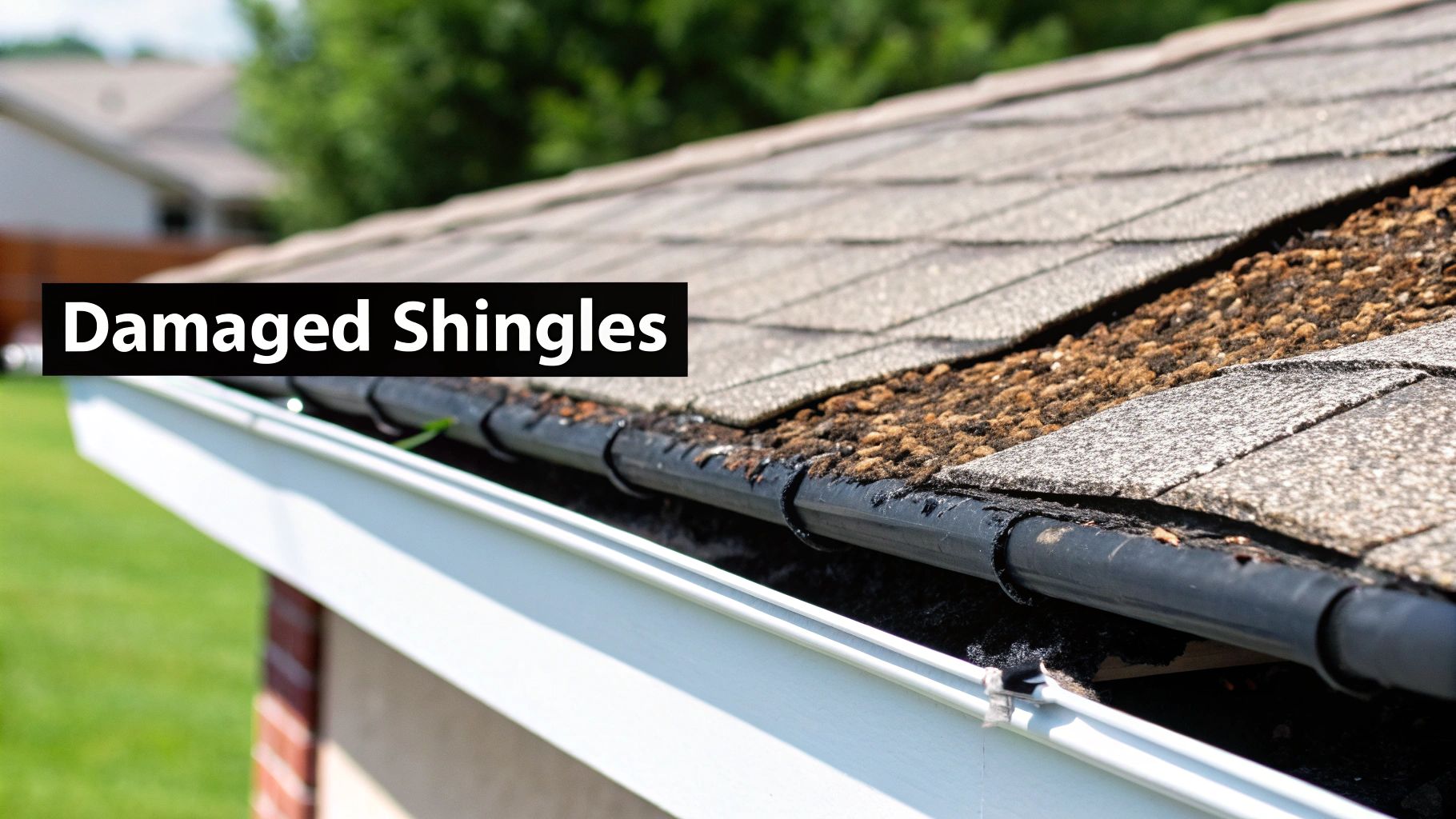
Compromised shingles aren't just a cosmetic issue; they are a critical structural liability. A missing shingle exposes the underlayment to direct sunlight and rain, accelerating its decay. Curled or cracked shingles create channels for water to seep underneath, leading to wood rot, mold growth, and interior leaks that can damage your ceilings and walls.
Why Tampa's Climate Is So Hard on Shingles
The Tampa Bay area's weather patterns create a perfect storm for shingle degradation. The relentless summer sun bakes asphalt shingles, causing them to lose their protective granules and become brittle. Then, sudden, heavy downpours during our rainy season can exploit any weakness, and the high winds from tropical storms can easily lift and tear away already-weakened shingles. This cycle of intense heat followed by high winds and torrential rain is why regular inspections are non-negotiable for local property owners.
Pro Tip: After a significant storm or hurricane passes through Pinellas County or the greater Tampa area, a visual inspection from the ground is a smart first step. Look for any shingles that have been lifted, creased, or completely blown off.
Actionable Steps for Property Owners
If you spot shingle damage, it's crucial to act quickly. A few missing shingles might be repairable, but widespread damage is a clear indicator that your roof's lifespan is nearing its end. Here’s what you can do:
- Perform Biannual Inspections: At a minimum, check your roof from the ground each spring and fall. Pay extra attention after any major weather event.
- Document Everything: Use your smartphone to take clear, dated photos of any cracked, curling, or missing shingles. This documentation is vital for insurance claims.
- Assess the Scope: If the damage is isolated to a small area, a repair might suffice. However, if you see widespread issues or granules collecting in your gutters, it’s a strong sign of systemic failure, signaling it's time for a full roof replacement.
When the damage is significant, don't delay. Contacting a professional Tampa roofer like Hi Low Roofing for a thorough inspection will provide a clear path forward and protect your property from further harm.
2. Sagging or Uneven Roof Line
While missing shingles are easy to spot, a sagging roof line is a far more ominous sign that points to deep-seated structural issues. This is not a cosmetic flaw; it is a critical warning that the framework supporting your entire roof is compromised. For Tampa property owners, this is one of the most urgent signs you need roof replacement, often indicating severe underlying water damage.
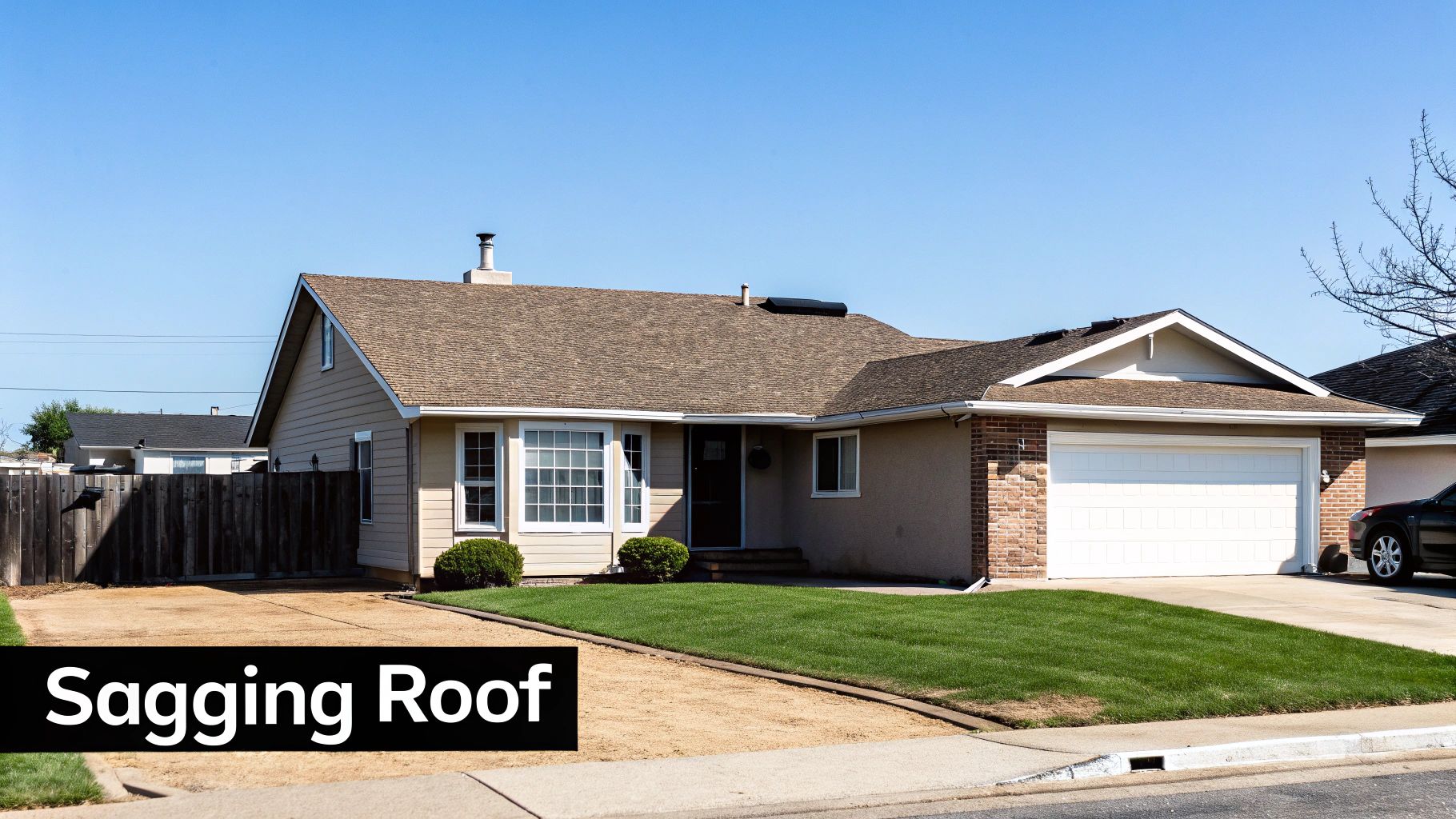
A sagging roof, which may look like a dip or curve in the ridgeline, suggests that the sheathing or rafters have weakened. This is frequently caused by prolonged exposure to moisture, which leads to wood rot. In older Tampa buildings, years of high humidity and unnoticed leaks can slowly degrade these essential supports until they can no longer bear the roof's weight.
How Tampa's Climate Causes Structural Failure
Tampa's relentless humidity is the primary culprit behind a sagging roof. Moisture constantly permeates attic spaces, and when combined with a small, persistent leak from a damaged shingle or flashing, it creates the perfect environment for wood rot. The heavy, waterlogged decking loses its structural integrity, causing it to bend and warp under its own weight. This problem is often exacerbated by the torrential downpours common in our region, which can add immense weight to an already-weakened structure.
Pro Tip: If you notice a sag, however slight, go into your attic during the daytime with the lights off. Look for any visible beams of light coming through the roof, which indicate holes. Also, check for damp, dark, or stained wood on the underside of the roof deck.
Actionable Steps for Property Owners
A sagging roof is a structural emergency that requires immediate professional attention. It is not a DIY-friendly problem and poses a significant safety risk. Here’s what you must do:
- Prioritize Safety: Do not walk on a sagging roof or spend extended time in the attic directly underneath the affected area.
- Schedule an Urgent Inspection: Immediately contact a qualified Tampa roofing professional. A structural engineer may also be needed to assess the integrity of the trusses and decking.
- Document for Insurance: Safely take photos from the ground showing the sag. If you can access the attic without risk, document any visible water damage, rot, or broken supports.
- Prepare for Major Repairs: A sagging roof almost always requires a full roof replacement, along with significant structural repairs to the underlying framework. This is not a situation where a simple patch will suffice.
Ignoring a sagging roof can lead to a catastrophic collapse. Reaching out to an expert like Hi Low Roofing ensures a comprehensive assessment of both the roof and its underlying structure, protecting your residential or commercial property.
3. Granule Loss and Bald Spots
One of the more subtle yet critical signs you need a roof replacement in Tampa is finding excessive asphalt granules in your gutters. These sandpaper-like granules are the primary protective layer for your shingles, shielding them from the sun's harsh UV rays and physical damage. When they start to come loose, your roof’s ability to protect your property is significantly diminished.
This granule shedding isn't merely a sign of aging; it's an indicator of active deterioration. Without this protective coating, the underlying asphalt is exposed directly to the elements, causing shingles to become brittle, crack, and fail much faster. In essence, "bald spots" on your roof are a clear warning that its structural integrity is compromised.
Why Tampa's Sun Accelerates Granule Loss
The intense, year-round sun in Tampa is a major catalyst for granule loss. The constant UV bombardment breaks down the adhesive that holds the granules to the asphalt, while the heat causes the shingles to expand and contract. This thermal cycling, combined with the force of heavy rain from afternoon storms, effectively sandblasts the granules off your roof, washing them directly into your gutter system. A roof that might last 20 years in a milder climate can show significant granule loss in Tampa in half that time.
Pro Tip: While a small amount of granule loss is normal for a new roof (called "shedding"), finding large accumulations of dark, sand-like material in your downspouts years later is a red flag. It indicates the roof is nearing the end of its effective lifespan.
Actionable Steps for Property Owners
Noticing granule buildup requires a proactive approach to prevent more severe damage. Here's a simple plan to follow:
- Check Your Gutters: After a heavy rain, inspect your gutters and downspout outlets for granule accumulation. If you find handfuls of granules, it’s a problem.
- Look for Bald Spots: From the ground, use binoculars to look for dark, inconsistent patches on your roof where granules are missing.
- Document and Compare: Take photos of the granule buildup in your gutters and any visible bald spots. Comparing these photos every six months can reveal the rate of deterioration. Widespread, accelerating loss is a key sign that a replacement is imminent.
If you observe significant granule shedding, it's time to act. This is a clear indicator of systemic roof aging, and contacting a professional Tampa roofer like Hi Low Roofing for an expert assessment is the best way to understand the remaining lifespan of your roof and plan for a necessary replacement.
4. Active Leaks and Water Stains
Perhaps the most urgent and undeniable sign you need a roof replacement in Tampa is evidence of water intrusion inside your property. Active leaks during a storm or the appearance of discolored stains on your ceilings and walls are direct proof that your roof's waterproofing barrier has been breached. Ignoring these signals is not an option in Florida's humid climate.
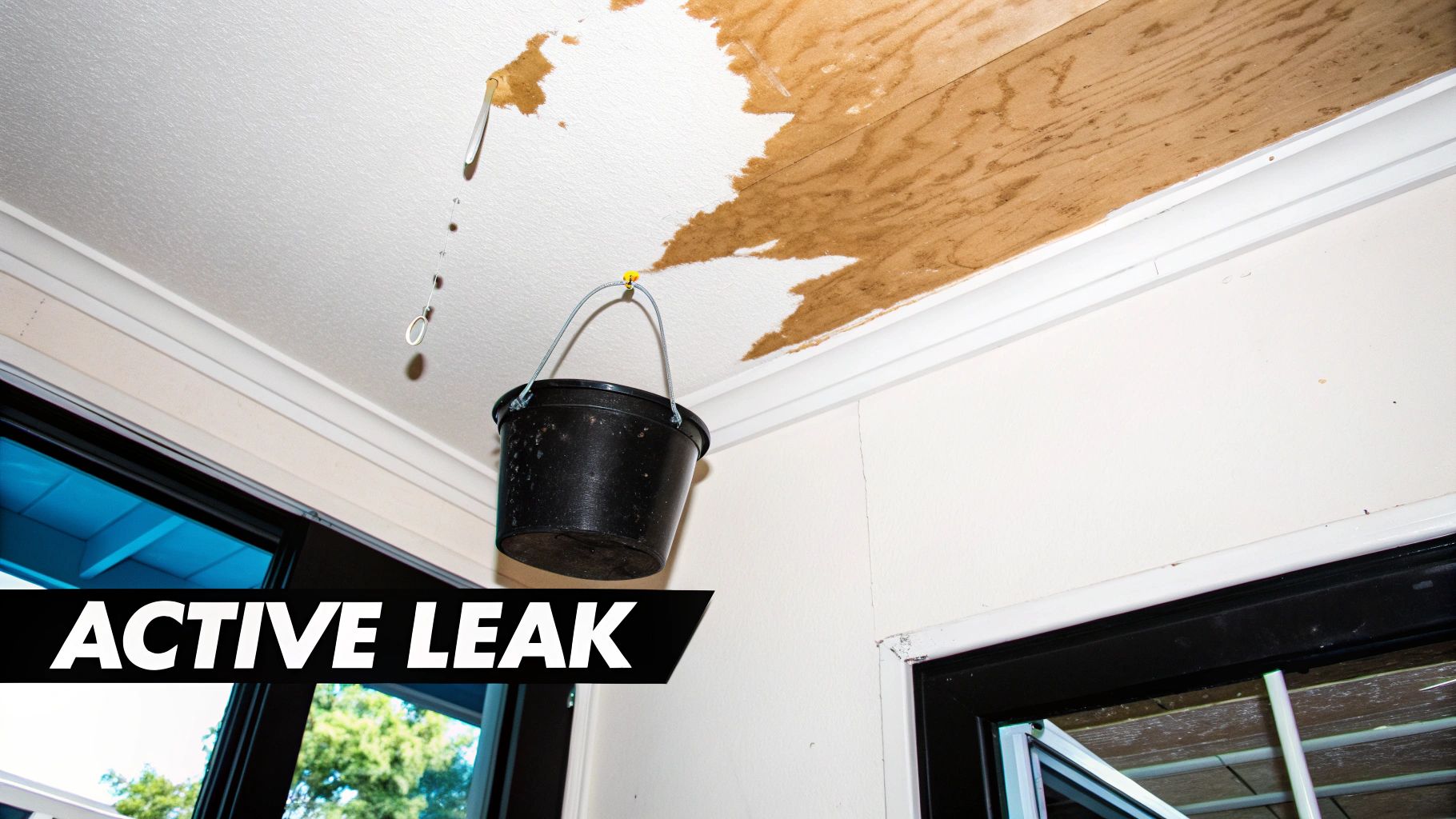
A water stain is more than a simple cosmetic blemish; it’s the visible symptom of a much larger problem. By the time water travels through your attic, insulation, and drywall, the initial point of failure on the roof could be widespread. This moisture is the perfect catalyst for mold growth, wood rot in your roof deck and trusses, and significant structural damage.
Why Tampa's Humidity Makes Leaks More Dangerous
In the Tampa Bay area, our high humidity and frequent, heavy rains create an environment where water damage escalates quickly. A small, slow leak might go unnoticed for months, but all that time, moisture is saturating your attic insulation and wooden framework. This constant dampness fosters aggressive mold and mildew growth, which can compromise your building's air quality and lead to costly remediation efforts far beyond the roof itself.
Pro Tip: If you notice a new water stain, place a piece of painter's tape along its edge. This allows you to accurately track if the stain grows after the next rainstorm, providing valuable information for your roofer and insurance adjuster.
Actionable Steps for Property Owners
Discovering a leak requires immediate action to mitigate damage. What you do in the first few hours can save you thousands in secondary repairs. Here’s how to respond:
- Document Everything: Use your phone to take clear, dated photos and videos of the active leak and any resulting water stains. This is crucial for insurance claims.
- Contain the Water: Place a bucket directly under the drip to protect your floors and belongings. If the ceiling is bulging, carefully puncture the center with a small tool to release the pressure and prevent a larger collapse.
- Assess the Attic (If Safe): During a break in the rain, check your attic with a flashlight to try and locate the water's entry point. Look for damp insulation or water trails on the underside of the roof deck.
- Don't Delay Professional Help: A leak is a clear sign of roof failure. A small repair may not address the systemic issues causing it, especially on an older roof. For a comprehensive guide on next steps, learn more about what to do when you have a leaking roof on hilowroofing.com.
5. Flashing Deterioration and Rust
While shingles cover the broad surfaces of your roof, the flashing is what protects its most vulnerable points. Flashing is the thin metal material installed around chimneys, vents, skylights, and valleys, designed to direct water away from seams and penetrations. When it fails, it provides a direct entry point for water into your property's structure.
Deteriorated flashing is a leading cause of roof leaks, but it can be subtle. Small cracks in the sealant, rust spots, or sections that have pulled away from the structure might not look dramatic, yet they can allow significant water intrusion over time. This leads to wood rot, attic mold, and stains on your interior ceilings.
Why Tampa's Salty Air Is a Flashing Killer
The humid, salt-laden air in the Tampa Bay area, especially in coastal communities from St. Pete to Clearwater, creates an extremely corrosive environment for metal flashing. The combination of moisture and salt accelerates the rusting process, compromising the integrity of steel and even aluminum flashing materials much faster than in inland climates. Hurricane-force winds can also bend, lift, or tear this metal, breaking the watertight seal it’s meant to create.
Pro Tip: When examining your roof, pay close attention to the areas around your chimney or vent pipes. Look for any signs of rust streaks, cracked caulk, or gaps between the flashing and the roof surface. These are urgent red flags.
Actionable Steps for Property Owners
Identifying flashing issues early is key to preventing major damage. A failing flashing system is a critical sign you need a roof replacement in Tampa, as it often indicates the entire roofing system is reaching the end of its life.
- Conduct Targeted Inspections: Annually, and after every major storm, specifically inspect the flashing around all roof penetrations. Use binoculars from the ground for a safe initial check.
- Look for Interior Clues: Water stains on ceilings or walls near fireplaces, vents, or skylights are often the first visible signs of flashing failure.
- Consider Upgraded Materials: For coastal properties, ask your roofer about using more corrosion-resistant materials like copper or specialized marine-grade coated metals for your next roof replacement.
If you spot rust or separation, don't wait for a leak to appear. Contact a professional roofer like Hi Low Roofing to assess whether a simple repair will suffice or if the widespread deterioration signals the need for a full replacement.
6. Moss, Algae, and Lichen Growth
While often dismissed as a purely cosmetic issue, the sight of moss, algae, or lichen on your roof is a significant warning sign. In Tampa's humid, subtropical environment, these organisms thrive, and their presence indicates your roof is retaining excess moisture, a condition that accelerates its decline and is a clear sign you need a roof replacement in Tampa.
This organic growth isn't just an ugly stain; it's a destructive force. Moss acts like a sponge, holding water against your shingles and underlayment, which leads to rot and granule loss. Algae, often seen as dark black streaks, feeds on the limestone filler in asphalt shingles, breaking them down over time. This sustained moisture retention is a primary contributor to premature roof failure.
Why Tampa's Humidity Is a Breeding Ground for Roof Growth
The combination of frequent rain, high humidity, and warm temperatures across the entire service area from Pinellas to Orlando creates the perfect environment for moss and algae to flourish. Shaded areas, particularly north-facing roof slopes that receive less direct sunlight, are especially vulnerable. Large oak trees common in Central Florida neighborhoods can exacerbate the problem by dropping organic debris and casting long shadows that prevent moisture from evaporating.
Pro Tip: Do not attempt to pressure wash your roof to remove growth. This high-pressure stream will strip away the protective granules from your shingles, causing far more damage than the algae itself and likely voiding your roof's warranty.
Actionable Steps for Property Owners
If you notice significant growth, it's a sign your roof is aging and holding moisture. Here’s a strategic approach:
- Assess the Extent: Minor, new growth might be treatable with professional, low-pressure cleaning solutions. However, extensive, thick moss is a strong indicator that the shingles are already compromised underneath.
- Improve Sunlight and Airflow: Trim overhanging tree branches to allow more sunlight to reach your roof's surface and dry it out. Ensure your attic has proper ventilation to help reduce moisture from below.
- Plan for Replacement: Widespread, long-term moss or algae growth is often a symptom of an older roof nearing the end of its functional life. Consider this a critical signal to start budgeting and planning for a full replacement to prevent underlying structural damage.
When you see this level of organic growth, it’s a wise move to contact a professional Tampa roofer like Hi Low Roofing. An expert inspection can determine if the shingles are salvageable or if the growth is a sign of systemic failure requiring replacement.
7. Roof Age Over 20 Years
While visible damage provides clear evidence, one of the most reliable indicators that you need a roof replacement in Tampa is simply its age. In ideal conditions, an asphalt shingle roof might last 20-25 years. However, the punishing Central Florida climate of intense sun, high humidity, and frequent storm activity significantly shortens that lifespan.
A roof approaching or surpassing the 20-year mark is operating on borrowed time. Even if it looks acceptable from the ground, the underlying components like the underlayment and decking are likely deteriorating. Multiple failure mechanisms may be present simultaneously, setting the stage for a sudden, catastrophic failure during the next major storm.
Why Tampa's Climate Accelerates Roof Aging
The constant cycle of extreme weather in the Tampa area acts as a powerful aging agent. Decades of UV radiation from the Florida sun make shingles brittle and cause them to lose their protective granules. High humidity traps moisture, promoting the growth of algae and potentially compromising the roof deck. When a roof has surpassed two decades, materials used in its original construction might pose unique challenges, such as understanding what homeowners need to know about asbestos in older homes. This combination of factors means a 20-year-old roof in Florida is far more degraded than one of the same age in a milder climate.
Pro Tip: If you've recently purchased an older property, check the seller's disclosures or the inspection report for information on the last roof replacement. This documentation is key for planning and insurance purposes.
Actionable Steps for Property Owners
For a roof nearing its third decade, proactive planning is essential to avoid an emergency replacement. If your roof is 18 years or older, it's time to start preparing.
- Budget Proactively: Don't wait for a leak. Begin budgeting for a replacement once your roof hits the 18-year mark. Central Florida market pricing can be higher than the national average, so early financial planning is critical.
- Get a Professional Evaluation: A professional inspection can confirm your roof's age and assess the remaining serviceable life. This is often a requirement for securing or renewing property insurance on older roofs.
- Gather Quotes in Advance: Start obtaining quotes from reputable Central Florida roofers 6-12 months before you anticipate needing the replacement. This gives you time to vet contractors without the pressure of an active leak.
An aging roof is a liability. By taking these steps, you can manage the replacement process on your own terms, protecting your investment and ensuring your property is ready for whatever the Florida weather brings.
8. Storm Damage and Impact Marks
As a Central Florida property owner, you are acutely aware that your roof is on the front lines during hurricane season. Significant storm damage, including impact marks from flying debris or widespread wind uplift, is one of the most urgent signs you need a roof replacement in Tampa. This type of damage goes far beyond aesthetics, representing a severe compromise of your property's entire protective barrier.
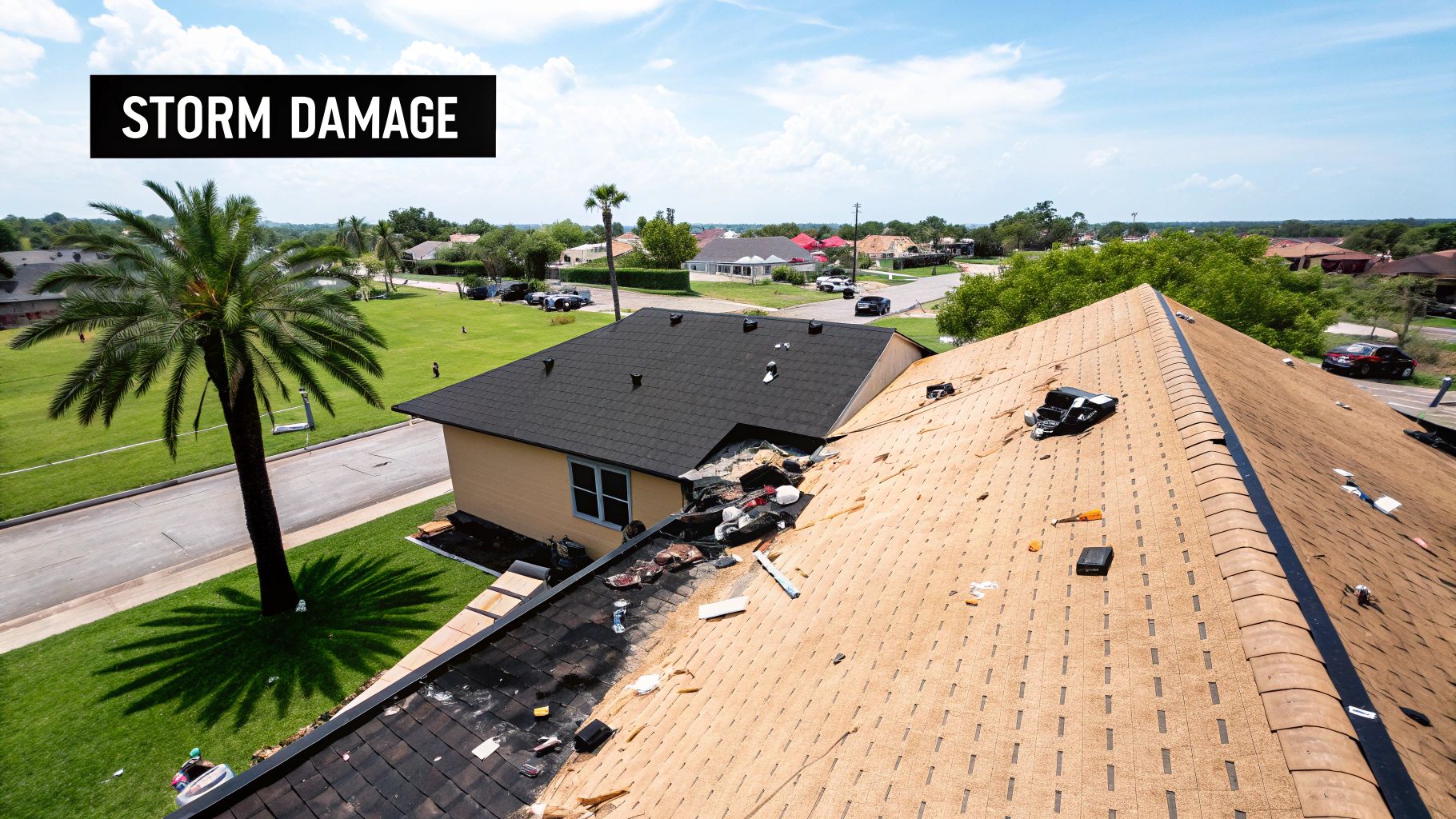
After a major weather event like a hurricane or a severe summer thunderstorm, your roof may have punctures, dents, or entire sections of shingles torn away. Even if you don't see an active leak inside, this damage has critically weakened the roof's structural integrity, leaving your building vulnerable to the next downpour.
Why Central Florida Storms Are a Roof's Worst Enemy
Tampa’s position on the Gulf Coast makes it a prime target for tropical systems, while inland cities like Orlando face severe thunderstorms and tornadoes. The combination of sustained high-velocity winds, torrential rain, and airborne debris creates a brutal test for any roofing system. Hurricane Ian was a stark reminder of how quickly a storm can cause catastrophic failures across thousands of homes and businesses. Even non-hurricane events, like a strong summer squall line, can produce hail that pummels asphalt shingles, dislodging their protective granules and creating weak spots.
Pro Tip: After any severe storm, your first call should be to your insurance provider to report potential damage, and your second should be to a trusted roofer for an emergency inspection. Do not climb on the roof yourself; it can be unsafe and may even void certain insurance coverages.
Actionable Steps for Property Owners
Immediate and proper action after a storm is critical for both your safety and your insurance claim. A damaged roof that is left exposed will lead to much more expensive interior water damage. Here’s what you need to do:
- Document Everything: Safely take photos and videos of the damage from the ground and, if possible, from second-story windows. Capture images of downed tree limbs, impact marks, and any visible interior water spots.
- Mitigate Further Damage: If there is a visible hole or major leak, arrange for a professional to install a temporary tarp. Keep the receipt for this service, as it's often reimbursable by your insurance.
- Preserve the Evidence: Do not remove any debris, like tree branches, that may be on your roof. The insurance adjuster needs to see the scene as it was immediately after the storm to accurately assess the cause of damage.
If you suspect your roof has been compromised, it's crucial to get a professional assessment to understand the full extent of the damage. This is a clear signal that it might be time for a full replacement, especially if you are interested in exploring more resilient options. Discover more about hurricane-proof roofing solutions in Florida to better protect your property in the future.
8 Key Signs You Need a Roof Replacement in Tampa
| Issue | 🔄 Implementation complexity | ⚡ Resource requirements / Cost | 📊 Expected outcomes / Impact | 💡 Ideal action / Use case | ⭐ Key advantage |
|---|---|---|---|---|---|
| Missing or Damaged Shingles | Low–Moderate, often spot repairs; more complex if widespread | Low–Moderate: replacement shingles + labor; matching older roofs may increase cost | Prevents leaks if repaired; unchecked leads to water intrusion and rot | Inspect twice yearly and after storms; repair small areas, hire pro if >10% damaged | Easy to detect early, cost-effective to address |
| Sagging or Uneven Roof Line | High — structural assessment and repair required 🔄 | High: structural reinforcement or full replacement, possible permit/contractor costs | High impact: safety hazard, likely extensive structural damage if not addressed | Immediate professional evaluation; document for insurance; prioritize structural fixes | Identifies critical structural failure needing urgent attention |
| Granule Loss and Bald Spots | Low–Moderate to assess; severity needs pro inspection | Low immediate (gutter cleanup), high if replacement required soon | Indicator of accelerated aging; predicts imminent need for roof replacement | Check gutters quarterly, photograph debris, schedule pro inspection when significant | Reliable early warning of shingle end-of-life |
| Active Leaks and Water Stains | Moderate–High, urgent water entry remediation and repair | Moderate–High: emergency tarping, roof repair/replacement, interior restoration possible | High impact: ongoing interior damage, mold risk, structural rot if delayed | Emergency action within 24–48 hrs, document for insurance, temporary tarping, hire pros | Clear, actionable evidence that roof system is compromised |
| Flashing Deterioration and Rust | Moderate — localized repair or replacement of metal flashings | Low–Moderate: resealing or replacing flashing; coastal properties may need specialty materials | Localized leaks common; can lead to interior staining if ignored | Inspect penetrations annually and after storms; reseal or upgrade flashing (marine-grade near coast) | Often repairable without full roof replacement |
| Moss, Algae, and Lichen Growth | Low — cleaning and preventive measures; improper cleaning can cause damage | Low: professional low-pressure cleaning, zinc/copper strips, pruning, ventilation improvements | Accelerates shingle deterioration and moisture retention if untreated | Hire low-pressure cleaners, install metal strips, trim trees, improve attic ventilation | Visible, treatable sign that prolonging roof life is possible with care |
| Roof Age Over 20 Years | Variable but typically high — full replacement recommended | High: full replacement ($8k–$15k+ in Tampa), planning and budgeting required | High likelihood of multiple failure modes; replacement reduces emergency risk | Annual inspections after 15 yrs, budget replacement by 18–20 yrs, get multiple quotes | Predictable lifecycle milestone for planning and insurance considerations |
| Storm Damage and Impact Marks | Moderate–High: assessment and often rapid large-scale repairs | Moderate–High: insurance may cover; deductibles and claim backlog affect timeline | Immediate compromise of integrity; may necessitate full replacement or emergency repairs | Document damage, do not remove debris, notify insurer within 24–48 hrs, tarp temporarily | Usually insurable event and opportunity to upgrade to impact-resistant materials |
Protect Your Central Florida Property with a Proactive Roof Replacement
Your roof serves as the primary shield for your property, standing resilient against Central Florida’s intense sun, torrential downpours, and the ever-present threat of hurricane-force winds. Recognizing the critical signs you need roof replacement in Tampa discussed throughout this guide is more than just property maintenance; it's a proactive strategy to safeguard your family, your business, your assets, and your peace of mind.
Ignoring seemingly minor issues like a few missing shingles, dark streaks from algae, or deteriorating flashing can quickly escalate. What starts as a small vulnerability can lead to catastrophic water damage, mold infestation, and structural compromise, especially when a major storm rolls in from the Gulf. Moving from a reactive, emergency-driven repair mindset to a planned, preventative replacement approach is the most responsible and cost-effective way to manage your property.
Key Takeaways for Central Florida Property Owners
- Don't Underestimate "Minor" Signs: Granule loss, moss growth, and slightly curled shingles are early warnings. Addressing them before they lead to active leaks saves you from expensive interior repairs down the line.
- Age is a Critical Factor: Even a well-maintained roof has a finite lifespan. In Florida's harsh climate, asphalt shingle roofs over 20 years old are operating on borrowed time and require a professional evaluation.
- Proactivity Prevents Disaster: A planned roof replacement allows you to control the timeline, budget, and materials. An emergency replacement after a storm often means rushed work, limited contractor availability, and inflated costs.
The ultimate goal is to ensure your property’s structural integrity is never compromised. By learning to spot these telltale signs, you empower yourself to make informed decisions before a small problem becomes a devastating failure. A professional inspection is the definitive next step to confirm your suspicions and understand the precise condition of your roofing system. An expert can identify underlying issues that aren't visible from the ground and provide a clear roadmap for securing your home or business.
This proactive investment not only protects your property from the elements but also enhances its curb appeal, increases its market value, and can even lower your property insurance premiums. Don't wait for a water stain to appear on your ceiling. Take control of your property’s future today by ensuring its most vital protector is in peak condition. The confidence that comes with knowing your building is secure against whatever Central Florida's weather brings is an invaluable asset.
Ready to get a clear, honest assessment of your roof's health? The experts at Hi Low Roofing & Solar provide comprehensive inspections and transparent estimates for homeowners and businesses across Central Florida, from Pinellas County to Orlando. Schedule your free, no-obligation consultation today at Hi Low Roofing & Solar and take the first step toward securing your property for years to come.
