

Those dark, ugly streaks and green patches on your roof are more than just an eyesore—they're a direct threat to your property. Here in St. Petersburg and across Central Florida, our combination of high humidity, frequent rain, and intense sun creates the perfect storm for moss and algae to take hold. If you let it go, you're looking at a shorter roof lifespan and some seriously expensive repairs down the road for your home or business.
Why St. Petersburg Roofs Are a Magnet for Moss and Algae
If you own a property in St. Pete, you know the struggle is real. Our unique coastal climate is the number one reason so many local roofs develop those tell-tale black streaks and fuzzy green growth. This isn't just about curb appeal; these organisms are actively eating away at your shingles.
The humid, subtropical air provides the constant moisture that moss and algae absolutely love. Your roof basically becomes a giant petri dish, getting watered daily by rain and morning dew. In places with climates like ours, it's not uncommon to see 40-60% of an untreated roof covered in growth within just a few years.
The Destructive Nature of Roof Organisms
Knowing what's growing up there is the first step to getting rid of it for good. We're dealing with two main culprits in our area, from Pinellas County to Orlando, and they each have their own destructive way of doing things.
- Gloeocapsa Magma (Algae): This is the organism behind those ugly black streaks. It’s a type of blue-green algae that feeds on the limestone filler in asphalt shingles. It's literally eating the protective granules that shield your roof from harsh UV rays.
- Moss: The green, plant-like growth you see is a different beast. It acts like a tiny sponge, trapping moisture right against the surface of your shingles. In the rare event of a freeze, that trapped water can expand, lifting the edges of your shingles and creating tiny cracks for water to seep through to the roof deck.
This constant moisture doesn't just speed up shingle decay; it can lead to wood rot in the underlying structure, putting your entire roofing system at risk. Proper water runoff is your first line of defense, which is why understanding gutter and roof integration is so critical.
The longer you ignore it, the deeper the roots get, making moss and algae removal from roofs in St. Petersburg that much harder. A little proactive cleaning and maintenance now will save you a massive headache later.
How Algae and Moss Damage Common Florida Roofs
It's one thing to talk about damage in general, but the risk really depends on what kind of roof you have. Each material has its own vulnerabilities when it comes to unchecked organic growth on both residential and commercial buildings.
| Roof Material | Primary Threat from Algae & Moss | Warning Signs to Look For |
|---|---|---|
| Asphalt Shingles | Algae feeds on limestone filler, dislodging protective granules. Moss traps water, leading to shingle curling and cracking. | Dark black or green streaks, fuzzy green patches, granules collecting in gutters. |
| Tile (Clay/Concrete) | Moss grows in the gaps between tiles, lifting them and allowing water underneath. Algae creates slippery, hazardous surfaces. | Green or black discoloration, visible plant growth in barrel gaps, cracked or shifted tiles. |
| Metal Roofs | While resistant to "eating," algae and moss can trap moisture against the protective coating, accelerating corrosion or paint failure over time. | Discolored patches, especially in shaded areas or where debris collects. Early signs of rust or peeling paint. |
Seeing these signs on your roof is a clear signal that it's time to take action. The damage doesn't happen overnight, but it is cumulative and will eventually lead to bigger problems.
Let's Talk Safety: Your Non-Negotiable Roof Checklist
Before you even think about grabbing a ladder, we need to have a serious talk about safety. A roof coated in algae and moss isn't just an eyesore; it's a legitimate hazard, especially here in Florida after a morning dew or one of our infamous surprise showers.
This isn't about being overly dramatic. It's about making sure your DIY moss and algae removal from roofs in St. Petersburg doesn't end with a trip to the ER. Trying to walk on a wet, algae-covered roof is like trying to navigate a sheet of ice. One wrong move, and you're going down.
The Right Gear Isn't Optional
Your first and best line of defense against a fall is having the right equipment. Seriously, don't try to wing it or cut corners here. This stuff is non-negotiable.
-
A Solid Ladder Setup: Make sure your ladder is on firm, level ground. If you're dealing with our typical sandy, uneven soil, use a ladder leveler to create a rock-solid base. The ladder needs to extend at least three feet above the roof's edge so you have something to hold onto when getting on and off.
-
Proper Shoes: Forget the heavy work boots—they can tear up your shingles. You need soft-soled shoes with excellent grip. Think skate shoes or high-quality sneakers, something that lets you feel the roof under your feet.
-
A Safety Harness: If your roof has any kind of noticeable slope, a safety harness and rope system isn't just a good idea, it's a must. This is literally your lifeline if you lose your footing.
Look, the goal here is to clean your roof, not to test the laws of physics. A fall from a single-story home can change your life in an instant. The cost of proper safety gear is nothing compared to the cost of an accident.
Watching Out for Florida-Specific Dangers
Working on a roof in Central Florida throws a few extra curveballs your way. You have to be smart about our local weather, or you'll find yourself in a bad spot fast.
First off, stay off the roof during the peak heat of the day. The intense Florida sun can lead to heatstroke quicker than you think, especially when you're doing physical work. Plus, that heat bakes your shingles, making them soft and easy to damage underfoot. Early morning is your best bet.
You also have to become a part-time meteorologist. We all know how fast our afternoon thunderstorms can pop up. One minute it's sunny, the next you're in a downpour that turns your roof into a slip-n-slide. If you see dark clouds rolling in or hear a distant rumble, pack it in. No question. The risk from lightning and a slick surface just isn't worth it. It's always better to pause and finish another day.
Proven Methods for Removing Moss and Algae
With your safety gear sorted, it's time to get down to the cleaning itself. The approach you take here is critical—we've seen more roofs damaged by well-intentioned but improper cleaning than by the algae itself. Choosing the right method for moss and algae removal from roofs in St. Petersburg really comes down to what you're dealing with and what kind of roof you have.
You've got two main options: getting hands-on with manual removal or using a chemical soft wash. If you have thick, clumpy moss, you'll need to gently brush or scrape it off first before any cleaning solution can do its job. But for those ugly black streaks from algae, a soft wash is the only way to go.
Being so close to the Gulf means we get a ton of moisture in the air, which is exactly what this stuff loves. As moss thrives on surfaces that trap moisture and debris, keeping gutters clean and trees trimmed back has become a huge part of basic roof maintenance for property owners all the way to Orlando.
The Critical Difference Between Soft Washing and Pressure Washing
If you take only one thing away from this guide, let it be this: never use a high-pressure washer on your asphalt shingle roof. Seriously. It's a recipe for disaster. That intense blast of water will strip the protective granules right off your shingles, essentially taking years off your roof's life in a single afternoon.
A pressure washer doesn't just damage shingles; it can force water up underneath them, leading to rot in your roof deck. It can even void your manufacturer's warranty. It's just too aggressive for most roofing materials.
A soft wash, which is the professional industry standard, uses very low pressure—think garden hose strength. The magic isn't in the force of the water, but in the cleaning solution that does the work. It’s effective, and more importantly, it's safe for your roof. Now, tile roofs are a different beast and have their own set of rules, so it's worth understanding the specific times you might power wash a tile roof versus using a soft wash.
A DIY-Safe Cleaning Solution Recipe
For a small patch of algae or a minor cleanup job, you can absolutely mix up your own cleaning solution. We recommend staying away from chlorine bleach. It's tough on your shingles and can wreak havoc on your landscaping. An oxygen-based bleach powder is a much safer bet.
Here’s a simple recipe that works well:
- The Mix: Just combine one cup of powdered oxygen bleach (like OxiClean) with one gallon of water.
- How to Apply: Pour it into a pump-style garden sprayer and apply it to a dry roof. Always start at the bottom and work your way up to prevent streaking.
- Let it Work: Let the solution sit for about 15-20 minutes. The key is to keep it wet—don't let it dry on the surface.
- The Rinse: Gently rinse everything off from the top down with a regular garden hose.
Before you spray a single drop, give all your plants, bushes, and grass below a good soaking with water. For extra protection, throwing a tarp over any delicate plants is a smart move. The basic logic here applies to more than just houses; learning how to safely and effectively clean an RV roof uses many of the same principles.
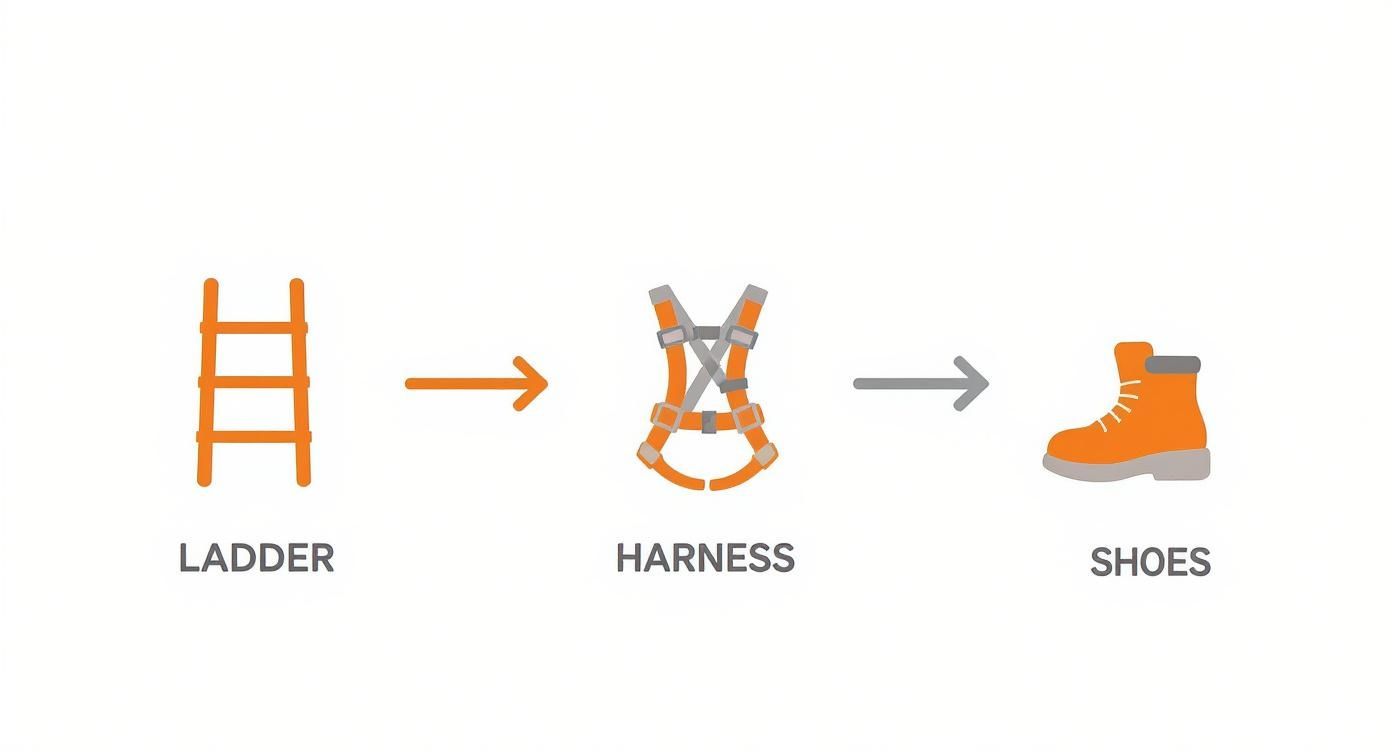
Think of safety as a sequence: it starts with a solid ladder, moves to wearing proper fall protection, and finishes with having the right non-slip boots on your feet. Getting any one of those wrong compromises the entire job.
Keeping Your Roof Clean for the Long Haul
Getting your roof clean is a great first step, but keeping it that way is the real win. After all the work of removing moss and algae, the last thing you want is for those green and black streaks to creep back in a year or two. The key is to be proactive, especially here in St. Pete where our humid climate creates a perfect breeding ground for this stuff.
Luckily, long-term prevention isn't rocket science. It's really about making your roof an unwelcoming place for moss and algae to set up shop. A lot of that work actually starts in your yard.
Smart Landscaping as a First Defense
Some of the best preventative work you can do happens on the ground, not on a ladder. Those beautiful oak trees that are all over Central Florida give us great shade, but they also cast a shadow that creates the damp, cool environment where moss thrives.
By trimming back overhanging branches, you achieve a couple of really important things:
- More Sunlight: You let the sun hit your roof directly. Sunlight is the number one enemy of moss and algae, and it helps your roof dry out much faster after our daily summer downpours.
- Less Debris: Fewer branches above means fewer leaves, pine needles, and other organic bits clogging up your roof and gutters. That debris is basically a buffet for new growth.
A clean, well-maintained roof doesn't just protect your property—it boosts curb appeal in a big way. Keeping it free of growth is a major part of that, and you can find more strategies to raise property value that make a real difference.
Installing a Permanent Protective Barrier
If you’re looking for a more hands-off, long-term solution, installing metallic strips along the ridge of your roof is a game-changer. It’s a passive system that works for years without you having to think about it.
The go-to materials for this are zinc and copper strips. We install them right at the peak of the roof. When it rains, trace amounts of metallic ions wash down over the shingles. While these ions are totally harmless to your roofing material, they create a surface where moss, algae, and lichens simply can't survive.
Think of it as creating a permanent, invisible shield for your roof. It stops new spores from ever taking hold, which means you can go much, much longer between cleanings. It’s a smart investment in prevention.
When you combine these proactive measures with routine upkeep, you’re really protecting your investment. You can spot the little issues that encourage algae growth early on, which highlights the benefits of regular roof inspections for keeping everything in top shape year-round.
When to Skip the DIY and Call a Roofing Pro
Look, we get it. The satisfaction of tackling a home project yourself is a great feeling. But when it comes to your roof, knowing when to put the ladder away and call a professional is probably the smartest decision you can make. Especially with moss and algae removal from roofs in St. Petersburg, some situations just aren't worth the risk.
If you're looking up at a second-story roof or one with a steep, tricky pitch, the danger factor goes through the roof, literally. A fall from that height is a life-changing event. Beyond the safety issue, if you're seeing thick, widespread mats of moss, that's often a sign of a deeper moisture problem that a simple surface spray just won't fix.
Red Flags That Demand an Expert Eye
Sometimes what looks like a simple cleaning job is really just the tip of the iceberg. If you spot any of these issues, it's time to stop what you're doing and get a professional roofing team like Hi Low Roofing on the phone.
- Curled or Buckling Shingles: This is a dead giveaway that moisture has already worked its way underneath, warping the shingles and compromising their integrity.
- Soft or Spongy Spots: If the roof feels soft or has any "give" when you (carefully) walk on it, you could be dealing with rot in the underlying roof deck. That’s a serious structural problem.
- Widespread Granule Loss: Finding a ton of shingle granules—the sandy stuff—in your gutters means your roof's main layer of UV protection is washing away.
These aren't just cosmetic issues; they're signs of real damage. An experienced roofer has a trained eye and knows exactly what to look for, spotting problems a homeowner or property manager would easily overlook.
Hiring a professional isn't just about saving yourself the hassle. It's a strategic investment in your property's safety and long-term value. They have the right low-pressure equipment, the proper safety gear, and the know-how to diagnose the real cause of all that green stuff.
The Professional Advantage in Central Florida
Bringing in a professional roof cleaning crew means the job gets done efficiently and, most importantly, safely. They know how to protect your landscaping from chemical runoff and use techniques that won't strip your shingles or void your manufacturer's warranty.
It’s not just a one-and-done deal, either. Research shows that a single professional treatment can slash biomass coverage by about 85%. But keeping it clean is an ongoing battle. In a humid climate like ours, data suggests that roofs without any kind of preventive treatment can have a 30-40% shorter lifespan. You can actually explore detailed findings on roof maintenance benefits if you want to dig into the science.
At the end of the day, calling a pro is about peace of mind. You know the job is done right, protecting one of your biggest investments for years to come.
Got Questions About St. Pete Roof Cleaning? We’ve Got Answers.
Even with a solid plan, it's natural to have a few more questions pop up. Your roof is a huge investment, and you want to be sure you're doing the right thing. Let's dig into some of the most common questions we hear from folks in St. Petersburg dealing with moss and algae.
Here are some quick, straightforward answers to help you feel confident about your roof maintenance.
How Often Should I Get My Roof Cleaned in This St. Pete Climate?
Here in Pinellas County and across Central Florida, the humidity is no joke. Because of that, we always suggest getting a professional to take a look at your roof every year or two. This lets an expert spot any small issues before they snowball into costly problems.
For most properties in the area, a professional soft wash every two to three years is the sweet spot. This schedule keeps serious algae and moss from taking hold. Keep in mind, if your yard is full of large, shady oak trees, you'll likely need to clean it more often to stay ahead of the game.
Think of it this way: proactive cleaning is a minor maintenance cost. Putting it off until you see actual damage? That's when you start looking at much bigger repair bills.
Will Cleaning Blast the Granules Off My Asphalt Shingles?
This is a big one, and a totally valid concern. The short answer is no, not when it’s done the right way.
The real culprit here is high-pressure power washing. That method is way too aggressive and will absolutely strip the protective granules from your shingles, causing damage that can't be undone. A professional soft wash, on the other hand, is completely different. It uses very low pressure—about the same as your garden hose—and lets a specially designed cleaning solution do the heavy lifting by killing the algae at the root. It’s incredibly effective and, most importantly, safe for your shingles.
Is It Safe to Use Chlorine Bleach on My Roof?
You might see some DIY guides online suggesting a diluted bleach solution, but honestly, it’s a risky move we just can't recommend. Standard chlorine bleach can be far too harsh for asphalt shingles. It can speed up the aging process and might even void your roof’s warranty.
And it’s not just your roof you have to worry about. The runoff from chlorine bleach can completely destroy your lawn, flowerbeds, and other landscaping. The much safer bet is to use professional-grade, biodegradable roof cleaning products. If you're tackling a small spot yourself, look for an oxygen-based bleach formula. These are made to be tough on algae but gentle on your property.
Does Homeowners Insurance Cover Algae Removal?
In most cases, no. Insurance companies generally see algae and moss as a standard maintenance task, just like mowing the grass or cleaning out the gutters. It’s considered part of the normal upkeep that comes with owning a property, so the removal costs aren't covered.
But—and this is a big one—ignoring the problem can have serious insurance consequences. If that unchecked algae growth eventually causes a major roof leak and water damage inside your home or business (a covered event), your insurer could deny the claim. They'll likely argue that the damage was a result of your failure to perform routine maintenance. Staying on top of cleaning is the best policy for protecting both your property and your insurance coverage.
When you need to protect your roof, you want a team you can count on. For expert moss and algae removal from roofs in St. Petersburg and across Central Florida, reach out to Hi Low Roofing & Solar today. We’ll provide a free, no-obligation inspection and a clear plan to get your residential or commercial roof back in top shape.
