

When you start comparing roofing options for your Central Florida home, the first thing everyone asks is, "What's the price difference?" Let's be direct: the initial cost difference between a metal roof and shingles is substantial. But that first number on the estimate doesn't tell the whole story, especially here in the Orlando and Tampa Bay areas.
A new metal roof will cost you two to three times more upfront than traditional asphalt shingles. However, with a lifespan of 50+ years and incredible durability against our harsh sun and storms, it often ends up being the smarter financial move over the long haul.
The Real Cost Difference: Metal Roof vs. Shingles
For homeowners from Pinellas County all the way to Orlando, the upfront price tag on asphalt shingles is tempting. It’s the lower number, and who doesn't like saving money? The problem is, that initial saving is often short-lived. To understand the true financial picture, you have to look beyond the installation day invoice.
Let's break down why a metal roof's higher initial cost is really a long-term value play. Historically, the numbers look something like this:
- Asphalt shingles typically run between $3.50 and $5.50 per square foot.
- Metal roofs have a much wider range, from $4.00 to as high as $30.00 per square foot, depending on the material and style you choose.
Labor costs are also different because installing metal roofing is a specialized skill. If you want to dig deeper into how these figures are calculated, metalcon.com offers a comprehensive guide that explains the variables.
Quick Cost Comparison: Metal vs. Shingles
To give you a clear starting point, the table below provides a quick comparison of the key financial factors you need to consider before making a decision for your Central Florida home.
| Factor | Asphalt Shingles | Metal Roofs |
|---|---|---|
| Initial Installation Cost | Lower ($3.50 – $5.50 per sq. ft.) | Higher ($4.00 – $30.00+ per sq. ft.) |
| Lifespan in Florida | 15-20 Years | 50+ Years |
| Long-Term Value | Requires replacement, increasing lifetime cost | Higher ROI, lower lifetime cost |
| Maintenance Needs | Prone to algae, granule loss, and wind damage | Minimal maintenance required |
This table gives you the numbers at a glance, but the real story is how those numbers play out over time.
This chart really puts the long-term reality into perspective, showing the 20-year cost difference per square foot.
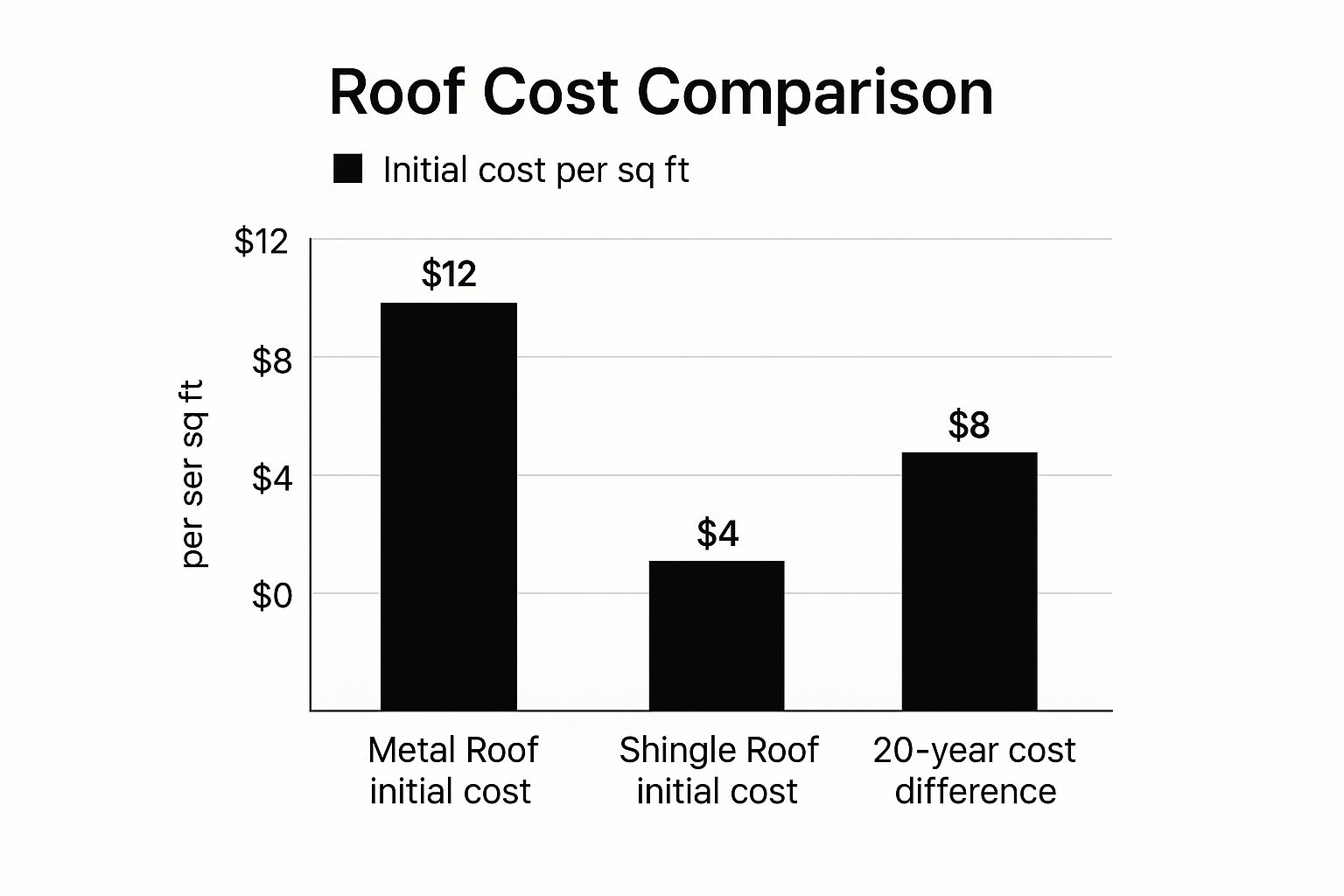
The data makes it crystal clear. While shingles are definitely cheaper on day one, the cost difference shrinks dramatically over the life of your home. Suddenly, that bigger price tag for a metal roof looks less like an expense and more like a smart investment in your home's future.
Breaking Down Material and Installation Expenses
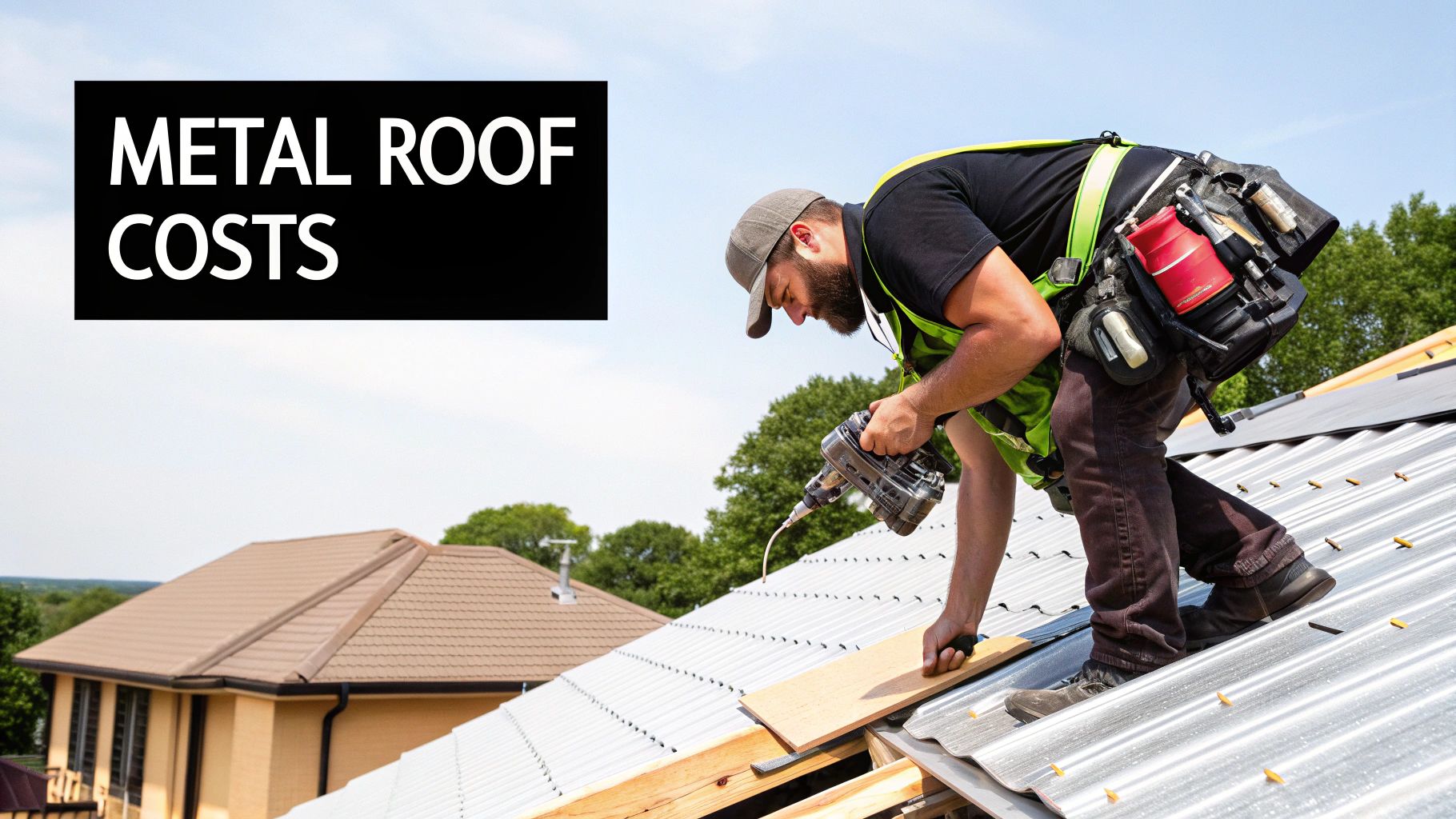
If you really want to understand the price difference between a metal roof and shingles, you have to look past the final quote and dig into what you're actually paying for. The two biggest line items are always materials and installation, and both can swing wildly depending on the quality and style you choose for your Central Florida home.
Take asphalt shingles, for instance. You've got your basic, budget-friendly 3-tab shingles on one end and the tougher, more dimensional architectural shingles on the other. While 3-tab is the cheapest ticket, it’s not really built for Florida’s volatile weather. That's why architectural shingles, with their superior wind resistance and longer lifespan, are the go-to choice for most homeowners from Tampa to Orlando.
It's the same story with metal roofing—it's not just one thing. You have different metals like aluminum and steel, each with its own price tag and its own set of advantages for handling our unique mix of coastal salt air and inland heat.
Comparing Shingle and Metal Material Grades
Not all roofing is created equal, and the grade of material you select is a huge factor in both your upfront cost and how well your roof performs down the road. A standard 3-tab shingle might look like a great deal at first, but its weakness against high winds can mean you're paying for repairs sooner than you think.
On the flip side, a premium standing-seam metal roof made from corrosion-resistant aluminum is a serious investment in your home's protection. It's specifically designed to handle hurricane-force winds and deflect that punishing Florida sun, offering a level of security that entry-level materials just can't touch. To get a better sense of the options, it helps to review the four popular materials for roof replacements and see how they stack up.
The Critical Role of Specialized Labor
Often, the biggest driver of the cost difference isn't the material itself—it's the labor. Installing a metal roof is a true craft, demanding a level of skill and precision that goes far beyond a standard shingle job. This is especially true here in Central Florida, where every seam and fastener needs to be perfect to stand up to our weather.
Specialized installation for metal roofs requires experienced contractors familiar with handling heavy metal panels and securing them properly, which raises labor rates—typically between $300 and $500 per 100 square feet.
By comparison, the more straightforward process of installing asphalt shingles means labor costs are often half that price. For a typical 1,800 sq. ft. home in our area, that difference can easily add up to thousands of dollars. You're not just paying for time; you're paying for the expertise that ensures your roof will last for decades.
Calculating Your Roof's Lifetime Value
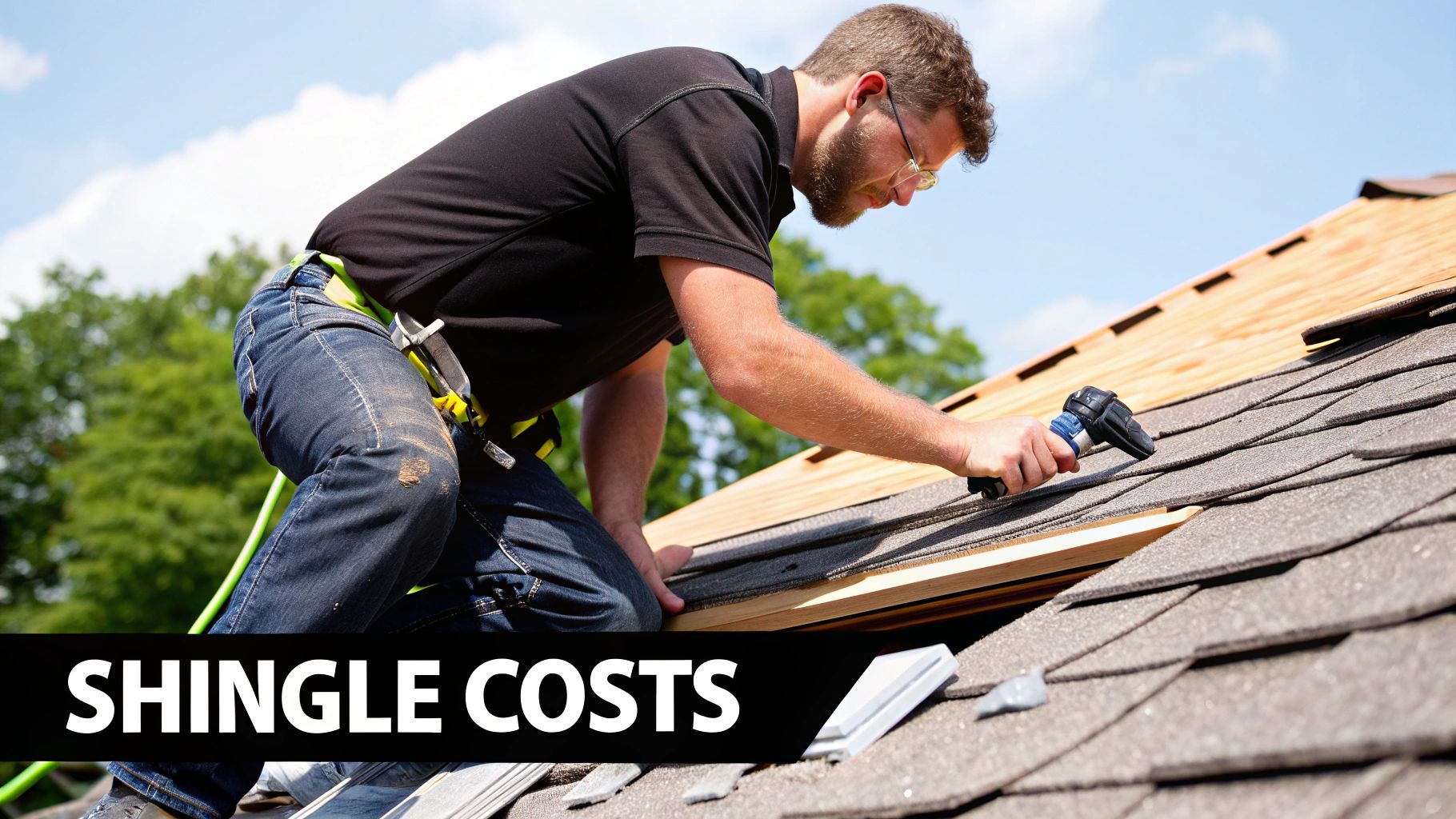
The real cost of a roof isn't what you pay on installation day. It’s what you pay over decades of protecting your home here in Central Florida. While the initial quote for shingles is tempting, the cost difference between a metal roof and shingles flips completely when you look at the total cost of ownership. It’s this long-term view that separates a simple purchase from a smart investment.
Let's be honest: Florida’s climate is brutal on roofs. The relentless sun, humidity, and hurricane seasons mean asphalt shingles rarely last as long as they do up north. You’re lucky to get 15 to 20 years out of them, meaning homeowners from Pinellas County to Orlando are often paying for a new roof two, sometimes even three, times over the life of a single metal roof. That cycle gets expensive, fast.
A metal roof, on the other hand, can easily last 50 years or more with very little fuss. When you start adding up the cost of replacing shingles again and again, the higher upfront price tag for metal suddenly doesn't just make sense—it looks like a bargain.
The Lifetime Cost Equation
To really get the full picture, you have to look past that first estimate. The lifetime cost involves several factors that, over time, almost always tip the scales in favor of metal.
- Replacement Costs: Every 15-20 years, a shingle roof needs a full tear-off and replacement. That’s labor, materials, and disposal fees all over again. A metal roof is a one-and-done deal.
- Maintenance Needs: Shingles are prone to ugly algae streaks and granule loss, which often means paying for cleanings and repairs. Metal roofs? They pretty much take care of themselves.
- Insurance Discounts: Here in Florida, many insurance carriers offer significant discounts for homes with wind-resistant metal roofs. Those are real savings you see on your premium every single year.
When you map it out, the numbers are pretty staggering. If you'd like to see a detailed breakdown of these long-term cost calculations, you can understand the savings for yourself.
Avoiding the Re-Roofing Cycle
Choosing a metal roof is really about breaking free from that expensive cycle of tear-offs and replacements that our climate forces on shingle roofs. You invest once and get peace of mind for decades, knowing you won't be dealing with another roofing project anytime soon.
A metal roof's superior durability translates directly into long-term savings. The higher initial cost is offset by avoiding the cumulative expenses of multiple shingle replacements, making it a lower lifetime cost solution for many Central Florida homeowners.
This long-term perspective changes the entire conversation. You're not just putting a lid on your house; you're making a strategic investment in your property that will save you a ton of money and headaches down the road.
How Florida Weather Influences Roofing Costs
Picking a roof in Central Florida goes way beyond just aesthetics. It’s a strategic choice heavily influenced by our one-of-a-kind climate. The brutal sun, suffocating humidity, and the constant threat of hurricanes have a massive say in how a roof performs, how long it lasts, and what it ultimately costs you.
Our weather is a relentless force, constantly putting your home's main line of defense to the test. Asphalt shingles, for instance, tend to soak up the intense solar heat. Over time, this causes the protective granules to degrade, which weakens the shingle and leaves it susceptible to cracking, curling, and failing when a big storm rolls through.
A metal roof, on the other hand, is built for this environment. It’s highly reflective, bouncing the sun's scorching rays back into the atmosphere instead of letting them bake your attic. This simple difference dramatically reduces the stress on the material, helping it keep its integrity and good looks for decades longer than shingles.
Resisting Humidity and Hurricane-Force Winds
Sunlight isn't the only challenge. Central Florida's notorious humidity creates the perfect environment for those ugly black and green algae streaks you see on so many shingle roofs. You can clean it, but that means more maintenance and more money out of your pocket. Metal roofs, especially with modern coatings, are naturally resistant to algae and fungus, so they stay looking clean without the extra work.
Then we have the big one: hurricanes. Asphalt shingles have wind ratings, but they have a clear weak point, especially as they get older and more brittle. All it takes is one shingle ripping off to start a catastrophic chain reaction. To see what that looks like, understanding the basics of storm damage roof repair is something every Florida homeowner should do.
Metal roofing systems are a different story. They're designed with interlocking panels and hidden fasteners that lock together to form a single, solid barrier against the wind. This design can handle much higher wind speeds than shingles, giving you far better protection when it matters most.
When you're getting ready for severe weather, a solid roof is your first line of defense. It’s a key item on any good Florida hurricane preparedness checklist for a reason.
Here’s a quick breakdown of how each roof type stacks up against our specific climate challenges.
Florida Climate Performance: Metal vs. Shingles
| Climate Challenge | Asphalt Shingles Performance | Metal Roof Performance |
|---|---|---|
| Intense UV/Sunlight | Granules break down, material becomes brittle, absorbs significant heat. | Highly reflective surface resists UV damage, reflects heat, maintains integrity. |
| High Humidity | Prone to algae and fungus growth (black streaks), requires regular cleaning. | Inherently resistant to algae and fungus growth, especially with Kynar coatings. |
| Hurricane Winds | Susceptible to uplift and tearing, especially individual shingles. Vulnerability increases with age. | Interlocking panels create a unified, highly wind-resistant system. Can withstand 140+ MPH winds. |
| Heavy Rain | Generally effective, but vulnerable at seams and around penetrations, especially if damaged. | Sheds water very efficiently with minimal seams. Less prone to leaks from wind-driven rain. |
| Salt Air (Coastal) | Granules can be eroded by salt spray over time, fasteners may corrode. | Requires specific coatings (like Galvalume) to prevent corrosion. Aluminum is a great rust-proof option. |
As you can see, while shingles offer baseline protection, metal is truly engineered to withstand the full force of a Florida climate year after year.
The Financial Impact of Energy Savings
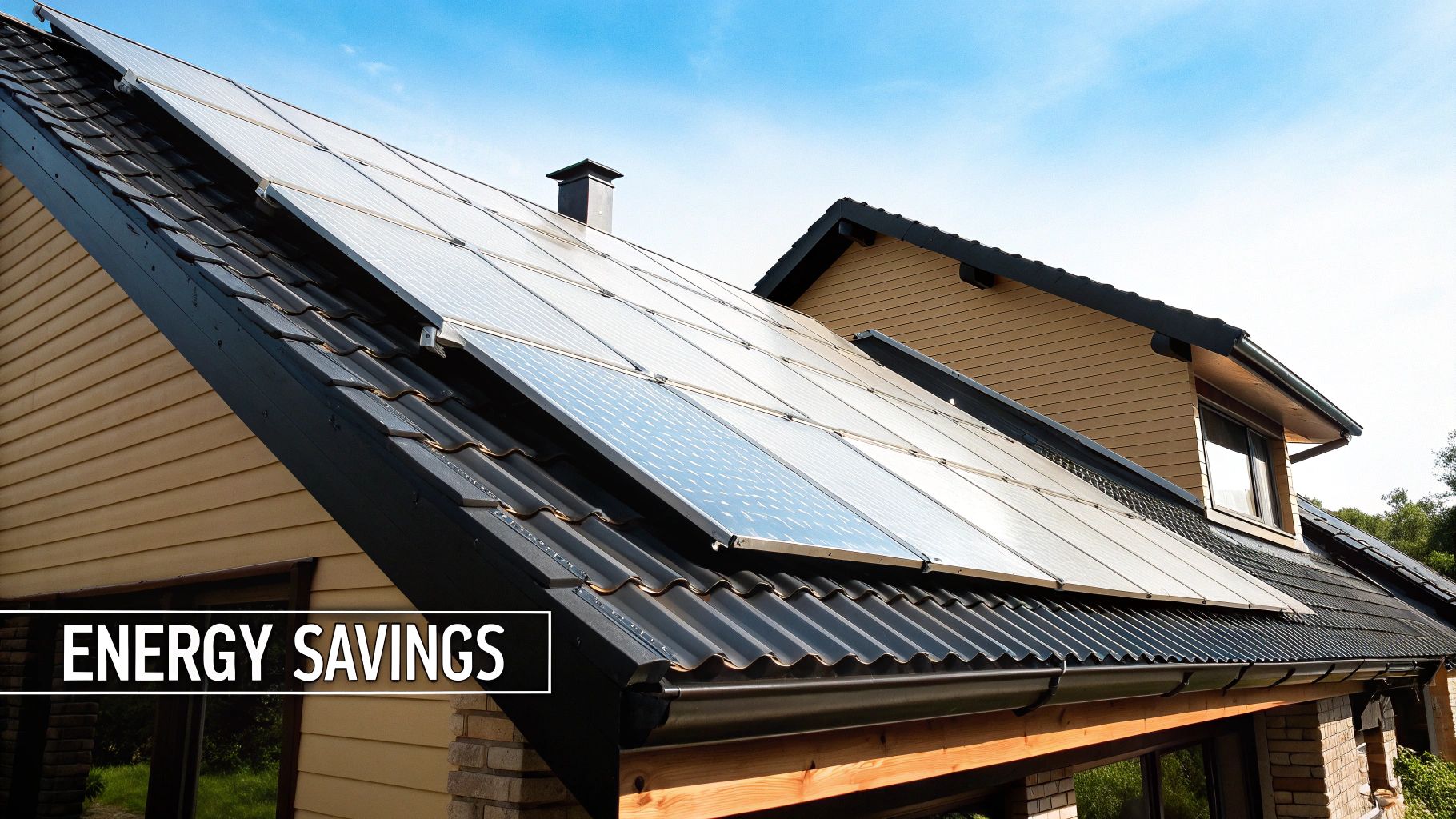
These performance differences show up directly in your bank account. A reflective metal roof can actually lower your attic's temperature by up to 70 degrees, which means your AC doesn't have to work nearly as hard. And with Hi Low Roofing's expertise in solar, integrating solar panels onto a durable metal roof is seamless, further enhancing your home's energy efficiency.
This combination can lead to a drop in your cooling bills by as much as 40%. In places like Orlando and Tampa where the air conditioning is humming most of the year, those savings add up fast. Over time, this can significantly offset the higher upfront cost, turning your roof from an expense into a smart investment in your home's durability and your own financial well-being.
Boosting Your Home's Resale Value
Your roof is one of the very first things a potential buyer notices. It's a huge part of your home’s curb appeal, and it speaks volumes about the property's overall condition. In a hot market like Central Florida, the type of roof you have can seriously influence your return on investment (ROI). The cost difference between a metal roof and shingles is critical here, because buyers tend to see one as a basic necessity and the other as a genuine, premium upgrade.
Think about it from a buyer's perspective. A new asphalt shingle roof is… nice. It means they won't have to deal with a replacement right away. It's a checkbox on the inspection report, a sign of recent maintenance that prevents them from trying to negotiate the price down. But it rarely makes them want to offer more.
A metal roof, on the other hand, sends a completely different message. It screams longevity, durability, and energy efficiency—three things every savvy Florida homebuyer is looking for. Suddenly, the conversation isn't about avoiding a costly repair; it's about a smart, long-term investment.
The ROI of a Premium Upgrade
In real estate, perception is reality. A metal roof isn’t just a roof; it's a powerful selling feature that helps justify a higher asking price.
A metal roof is often perceived by potential buyers as a significant upgrade, not just a necessary maintenance item. This distinction is key, as it can directly increase your home's equity and yield a tangible financial return when you sell.
This isn't just a feeling; the numbers back it up. Homeowners who install a metal roof often recoup a huge chunk of their initial cost when they sell. Why? Because buyers are willing to pay a premium for a home that won't need a new roof for 50+ years. They see the value in that peace of mind, especially with our yearly hurricane threats.
How Each Roof Type Influences Buyer Decisions
Put yourself in the shoes of someone house-hunting in Central Florida. They're juggling insurance costs, future maintenance budgets, and monthly energy bills. Your roof plays a role in all three.
- Asphalt Shingles: A buyer sees a new shingle roof and thinks, "Great, one less thing to worry about… for now." They know it has a 15-20 year lifespan and that the replacement cost will eventually fall on them.
- Metal Roof: A buyer sees a permanent solution. The promise of lower utility bills, potential insurance discounts, and no re-roofing expenses for decades makes your home stand out as a smarter, more secure investment.
At the end of the day, a metal roof is more than just an expense. It's a strategic investment in your home's equity. While the upfront cost is certainly higher, the impressive return you can get at the closing table often makes it one of the wisest upgrades a Florida homeowner can make.
So, Which Roof Is Right for Your Home?
Figuring out whether to go with metal or shingles really boils down to your own situation. Yes, the cost difference between a metal roof and shingles is a huge part of the conversation, but it's not the only thing that matters. The best roof for your Central Florida home depends entirely on your budget, how long you plan to be there, and what you value most in a roof.
Let's walk through a couple of real-world scenarios. Say you're thinking about selling your Orlando home in the next five years. In that case, a top-tier architectural shingle roof is almost always the smart play. It looks great, it’ll sail through an inspection, and you won't have to shell out the significant upfront cost of metal.
But what if this is your "forever home," especially if you're near the coast in a place like Pinellas County? A metal roof is an incredible long-term investment. Its ability to laugh off hurricane-force winds and shrug off corrosive salt air gives you a kind of security that shingles just can't offer over a 50-year lifespan.
Making the Final Call
When you get right down to it, your decision rests on three key pillars. You have to be honest with yourself about what’s most important for your home and your family.
- Your Immediate Budget: Can you comfortably absorb the higher initial cost of a metal roof? Or does the lower upfront price of shingles make more sense for your finances right now?
- Your Long-Term Plans: How many more years do you see yourself in this house? The longer you stay, the more a metal roof pays for itself by completely eliminating the need for a future replacement.
- Your Priorities: Are you looking for a "set it and forget it" roof with maximum storm protection? Or is keeping that initial investment low your number one goal?
Your roof is one of the most important systems protecting your home and everything in it. The right choice is simply the one that fits your life—whether that’s the immediate affordability of shingles or the lifetime performance of metal.
By weighing these factors, you can make a decision you'll feel good about for years to come. If you'd like to dig deeper into specific styles and materials, take a look at the various residential roofing systems available to get a clearer picture of what will work best for you.
Common Questions About Roofing Costs
When you’re weighing the pros and cons of a new roof in Central Florida, the conversation usually goes beyond the initial price. Homeowners we talk to are rightfully concerned about things like insurance, noise, and what happens down the road. Getting answers to these questions helps reveal the real cost difference between a metal roof and shingles over the life of your home.
Will a Metal Roof Lower My Insurance Bill?
This is a big one, and for good reason. Here in Florida, the answer is a resounding "yes" in most cases. Insurance carriers love the superior wind resistance of a metal roof. Because of that, they often offer substantial discounts on homeowner's insurance premiums, which absolutely helps chip away at the higher upfront installation cost over time.
Are Metal Roofs Noisy in the Rain?
We hear this concern a lot, and it's based on the old-school metal barns you might remember. The reality is that modern metal roofing systems are a world away from that. With today's installation methods, proper underlayment, and attic insulation, a new metal roof is often just as quiet as shingles during one of our classic Florida downpours.
How Easy Is It to Repair a Metal Roof?
So, what if a stray tree limb dings up a panel? While metal is incredibly tough, accidents can happen. Fortunately, repairs are usually quite straightforward. Unlike a shingle roof where damage in one spot might compromise a whole section, a professional can typically replace a single, isolated metal panel. This keeps the repair targeted, efficient, and less disruptive to the rest of the roof.
The ability to perform localized repairs is a huge, often overlooked, advantage of metal roofing. It frequently leads to lower long-term maintenance costs compared to shingles, where a small problem can easily spread and turn into a much bigger, more expensive job.
At the end of the day, both materials have their place. The right choice really hinges on your budget and how long you plan to stay in your home. If the initial investment is a concern, keep in mind there are excellent roofing financing options that can put a top-tier roof within reach. This lets you get the best possible protection for your home without draining your savings. When you look at the full picture—installation, insurance, maintenance, and longevity—you get a much clearer idea of the true lifetime investment.
Ready to get a clear, honest assessment of the best roofing option for your Central Florida home or commercial property? The experienced team at Hi Low Roofing provides free, no-obligation inspections and detailed estimates to help you make a confident decision. Protect your property with a trusted local expert by visiting https://hilowroofing.com to schedule your consultation today.
