

Imagine a single, seamless shield for your roof, custom-fit to handle everything the intense Florida climate throws at it. That's the best way to think about residential TPO roofing. It’s a modern, single-ply roofing material that’s become a go-to solution for homes with flat or low-slope roof sections, a signature of Florida architecture from Pinellas County all the way to Orlando.
What Is TPO Roofing for Florida Homes?
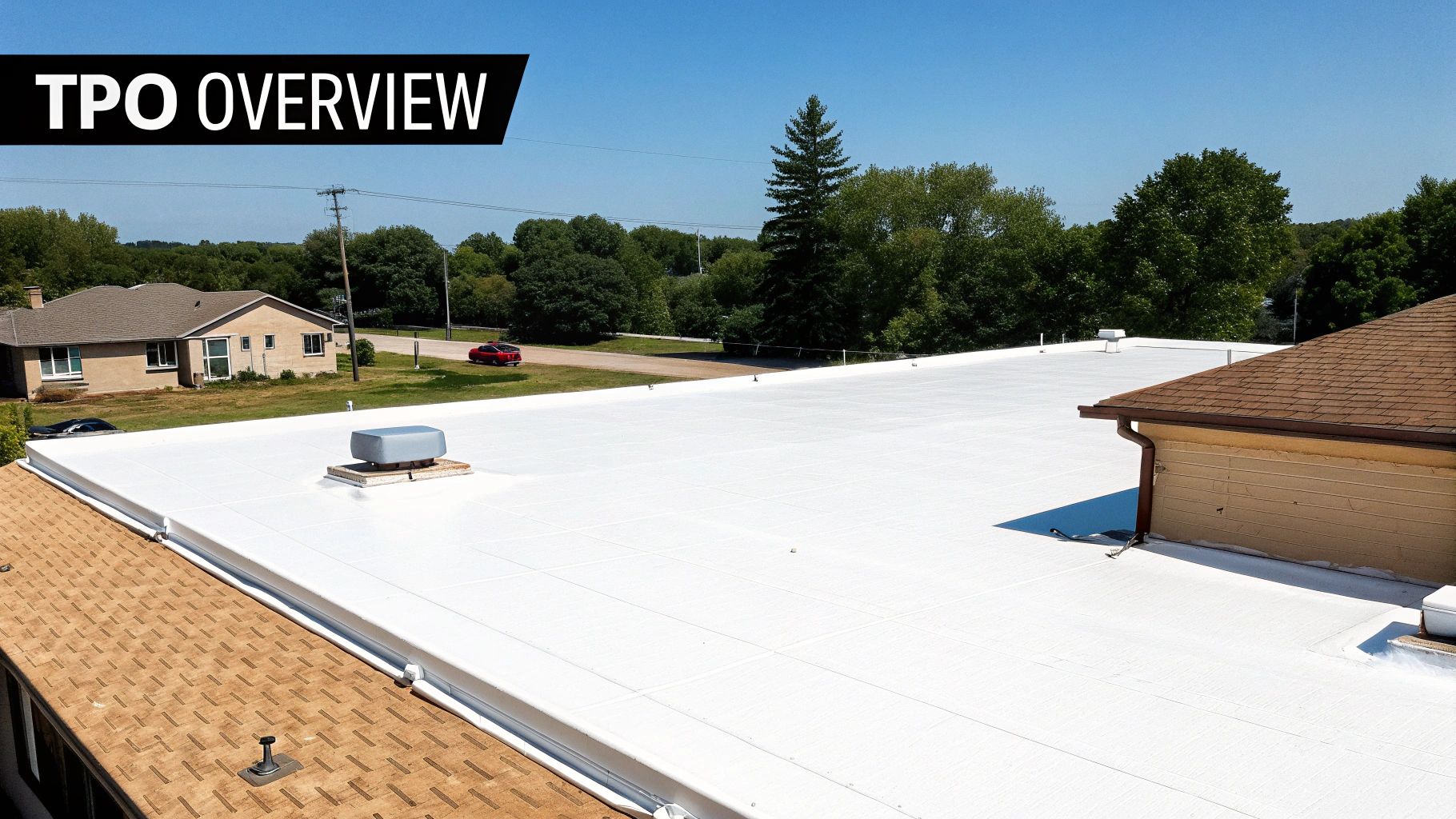
TPO, which stands for Thermoplastic Polyolefin, is a high-performance membrane that acts like a reflective, waterproof skin for your roof. It's engineered to beat back the intense sun, shrug off heavy downpours, and resist the constant humidity that can wreak havoc on other roofing materials.
For years, TPO was the unsung hero of commercial buildings, but homeowners are quickly catching on to its incredible benefits. It's now one of the fastest-growing roofing systems for property owners across Central Florida, and for good reason. Unlike traditional shingles that can fail on low-slope surfaces, TPO creates a unified, watertight barrier that’s perfect for the unique home styles you see from the Gulf Coast to the Orlando area.
The Modern Solution for Low-Slope Roofs
So many Florida homes—from sleek contemporary designs in Orlando to classic ranch-style houses in Pinellas County—have flat or gently sloped sections over garages, lanais, or additions. These spots are notorious for developing leaks with standard roofing materials.
Residential TPO roofing solves this problem by creating a continuous, heat-welded surface. The installation process actually fuses the seams together with hot air, turning multiple sheets into one single, impermeable membrane. This offers unmatched protection against pooling water and torrential rains.
This heat-welding technique is what truly sets TPO apart. The material isn't just tacked on; it's molecularly bonded into a custom-fit shield for your home, giving you real peace of mind during Florida's unpredictable storm seasons.
Key Characteristics of TPO for Your Home
For homeowners weighing their options, it’s important to see TPO as more than just a white sheet on a roof. It’s a complete system engineered for long-term resilience and incredible efficiency.
Here are the core traits that make it so powerful:
- Exceptional Durability: The membrane is formulated to resist punctures, tears, and impacts, so it holds up remarkably well against falling tree limbs or debris during a storm.
- Serious Energy Efficiency: Its bright white surface is a superstar at reflecting solar radiation, which dramatically reduces heat absorption. This keeps your home naturally cooler and can lead to noticeable savings on your A/C bills—a massive win in the Florida heat.
- Mold and Algae Resistance: TPO has a non-porous surface that doesn't give mold, mildew, or algae a place to grow. Your roof stays cleaner and performs better without needing constant chemical treatments.
For a quick overview, here's how TPO's features directly benefit a Florida home.
TPO Roofing at a Glance for Florida Homeowners
| Feature | Benefit for Your Florida Home |
|---|---|
| Heat-Welded Seams | Creates a monolithic, waterproof barrier that prevents leaks from heavy, wind-driven rain. |
| High Solar Reflectivity | Lowers roof temperatures, reduces cooling costs, and eases the strain on your AC unit. |
| Puncture Resistance | Stands up to impacts from flying debris during tropical storms and hurricanes. |
| Flexible Material | Accommodates the building's natural expansion and contraction in extreme temperature shifts. |
| Fungus & Algae Proof | Resists ugly stains and biological growth fueled by Florida's high humidity. |
Ultimately, TPO offers a powerful combination of protection and efficiency that is hard to beat in our climate.
Of course, the material is only as good as its installation. Because success hinges on precise, expert techniques, choosing a local roofer like Hi Low Roofing who understands our Central Florida climate is absolutely crucial. When installed correctly, a TPO system is built to perform for decades.
Key Benefits of Choosing TPO for Your Home
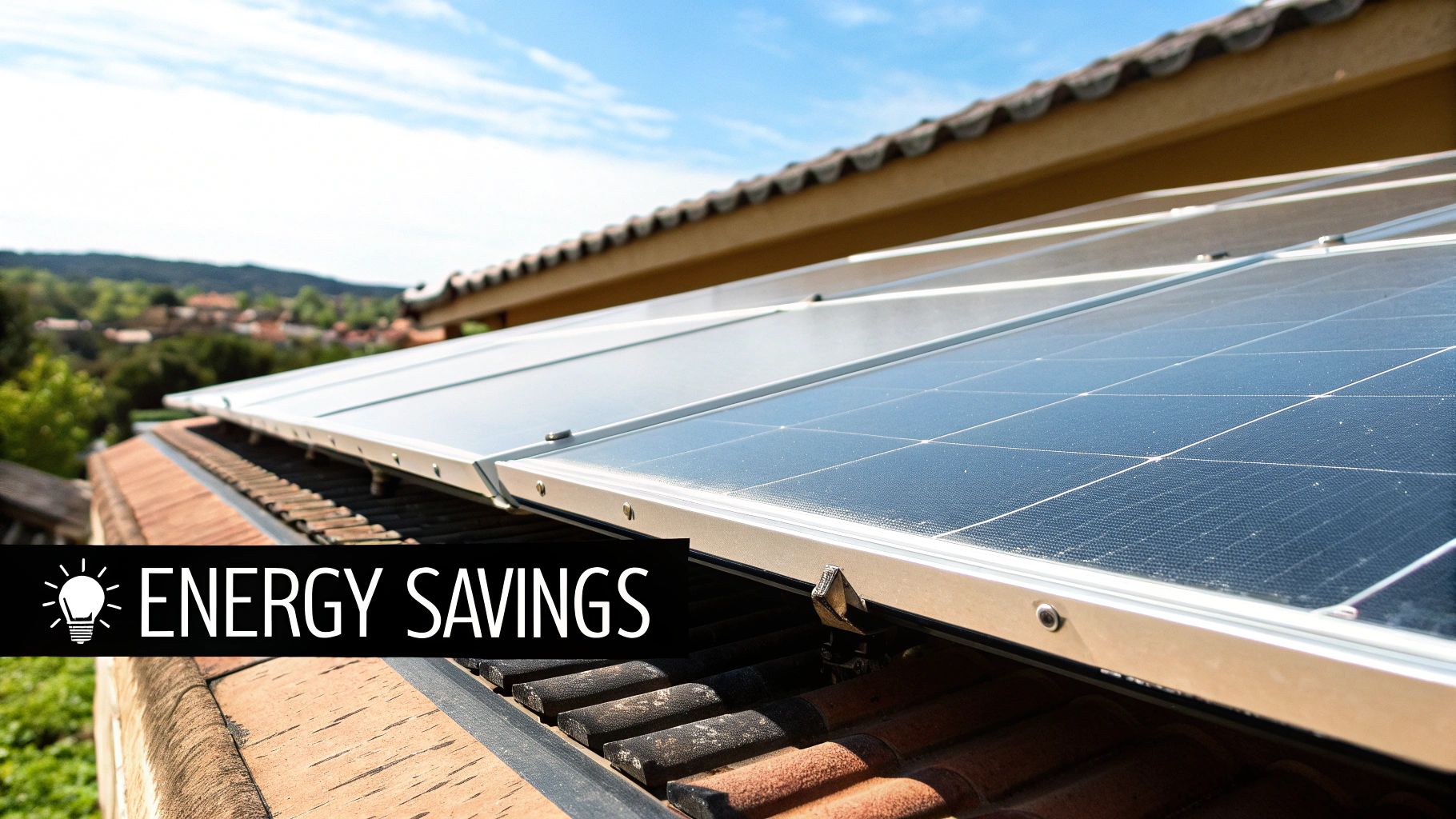
So, what makes a residential TPO roofing system such a smart move for Central Florida homeowners? It really boils down to three major wins that matter in our climate: serious energy efficiency, long-term durability, and overall cost-effectiveness. These aren't just separate features; they work together to deliver real, lasting value.
The benefit you'll feel the fastest—especially on your power bill—is TPO's incredible energy efficiency. That brilliant white surface is the star of the show, and in the Florida sun, it's a total game-changer.
Slash Your Cooling Costs
Picture your TPO roof as a giant reflector, bouncing the sun’s intense heat right back into the sky. Darker roofing materials absorb that heat, essentially baking your attic and forcing your A/C to run nonstop. TPO does the exact opposite.
By actively pushing solar heat away, it dramatically lowers the amount of heat seeping into your home. Your air conditioner gets a much-needed break, and you get a much-needed break on your cooling costs. For anyone living between Pinellas County and Orlando, this perk alone puts TPO at the top of the list.
A TPO roof's surface can stay up to 50-60 degrees Fahrenheit cooler than a traditional dark roof. That massive temperature difference means less work for your HVAC system and more money staying in your wallet.
On top of the savings, Thermoplastic Polyolefin (TPO) is also a more environmentally conscious choice. Its manufacturing process is chlorine-free, earning it a spot as a green roofing material. That reflective surface isn't just good for your budget; it's great for reducing a building's overall energy consumption. You can find more insights about green roofing materials and their growing popularity online.
Built to Withstand Florida's Weather
In a state known for its powerful storms and relentless humidity, durability isn't just a bonus—it's essential. A residential TPO roofing system is engineered from the ground up to handle exactly what Florida throws at it, year after year.
Its unique combination of strength and flexibility is what makes it so tough. It stands up incredibly well to the most common local threats:
- Puncture and Tear Resistance: The membrane is tough enough to resist damage from storm debris like falling branches.
- Algae and Mold Growth: Its smooth, non-porous surface doesn't give mold and algae a foothold, so you can say goodbye to those ugly black streaks you see on other roofs.
- UV Degradation: TPO is manufactured with powerful UV inhibitors that prevent the intense sun from breaking down the material over time.
A Smart Financial Investment
When you look at the whole picture, TPO roofing is simply a fantastic financial choice. The upfront installation cost is very competitive, and with a typical lifespan of 20 to 30 years, you won’t have to think about a replacement for a long, long time.
Factor in the long-term energy savings and the low maintenance needs, and the value is undeniable. A TPO roof is an investment that protects both your home and your finances for decades.
How TPO Stacks Up Against Other Roofing Materials
Picking the right roofing material can feel overwhelming, especially here in Central Florida where the sun, rain, and humidity are always part of the equation. When you’re looking at residential TPO roofing, it really helps to compare it directly with the other common players: traditional asphalt shingles and tough-as-nails metal roofing.
Every material has its own strengths, but TPO truly excels in very specific, and very common, scenarios.
Asphalt shingles are hands-down the most popular roofing choice across the country, mostly because they're affordable and come in tons of styles. But here's the catch: they simply aren't made for flat or low-slope roofs, which you see all over modern homes and ranch-style additions. On those surfaces, shingles just can't shed water effectively, which is a recipe for leaks and a drastically shorter lifespan.
Then you have metal roofing. It’s famous for its incredible durability and longevity, often lasting 50 years or more. Just like white TPO, it does a great job of reflecting solar heat, which is a big plus for energy efficiency. The main things to consider with metal are the higher initial investment and the fact that, like shingles, it really works best on sloped roofs. For a deeper look, check out our guide on the cost difference between metal roofs and shingles.
When TPO Is The Clear Winner
So where does TPO fit in? Its superpower is its performance on low-slope and flat roofs. It isn't just a good option for these tricky spots; it's the best option.
Where shingles would fail and metal would be a complicated install, TPO creates a single, seamless, waterproof sheet that offers total protection from the elements.
This makes it the perfect solution for:
- Modern Florida Homes: Many new designs are embracing flat rooflines and low-slope architectural details.
- Ranch-Style Houses: Think of those covered porches, lanais, or garages with gently pitched roofs.
- Home Additions: Creating a watertight seal between a sloped main roof and a new flat addition is absolutely critical.
For any roof pitch less than 2:12 (meaning the roof rises two inches for every 12 inches it runs horizontally), traditional shingles are simply not a safe bet. TPO is engineered from the ground up to handle these low-slope conditions, preventing the water pooling and leaks that are almost guaranteed with other materials.
Roofing Materials Comparison for Florida Homes
To make things even clearer, let's put these materials side-by-side, focusing on what matters most in our local climate, from Pinellas County to Orlando. This table provides a quick snapshot to help you compare your options at a glance.
| Material | Best For | Typical Lifespan | Energy Efficiency | Average Cost |
|---|---|---|---|---|
| TPO Roofing | Flat or low-slope roofs, energy savings | 20–30 years | Excellent (highly reflective) | Moderate |
| Asphalt Shingles | Budget-friendly sloped roofs | 15–25 years | Varies (cool-roof options exist) | Low to Moderate |
| Metal Roofing | Long-term durability on sloped roofs | 40–70+ years | Excellent (highly reflective) | High |
Ultimately, TPO holds a unique and vital spot in the residential roofing world. It’s the go-to choice for any low-slope section of a home, giving you a level of watertight security that other materials just can't match.
Its durable, seamless surface also makes it a fantastic base if you're thinking about adding solar panels down the road. It helps to understand the general solar panel roof requirements when planning for your home's energy future.
The TPO Roofing Installation Process
A fantastic roof is only as good as the crew that installs it. This is especially true for residential TPO roofing. It’s not just about rolling out some material; it’s a highly technical system that demands certified expertise to create a truly waterproof, long-lasting barrier over your home.
Let's walk through the key stages to see why professional workmanship is non-negotiable.
First, everything hinges on meticulous preparation of the roof deck. This isn’t a quick sweep-up. The surface has to be perfectly clean, dry, and structurally sound. A professional crew will fix any existing problems to create an ideal foundation, because the entire system's performance depends on what's underneath.
After that comes the high-performance insulation boards. These aren't just for keeping your home cooler (though they're great at that). They also create a smooth, stable surface for the TPO membrane, which is critical for the roof's energy efficiency and its overall lifespan.
Securing and Welding the Membrane
With the insulation down, the TPO membrane is carefully rolled out. How it's attached depends on your home's structure and local codes, whether you're in Orlando or over in Pinellas County. It can be mechanically fastened with screws and plates or fully adhered with a powerful bonding agent.
Now for the most important part: heat-welding the seams. Picture a blacksmith forging two pieces of metal into one. Using a specialized hot-air welder, a technician heats the overlapping edges of the TPO panels, literally melting them together to form a single, monolithic sheet.
This heat-welding process creates a bond that is actually stronger than the membrane itself. The result is a seamless, watertight barrier that can stand up to Florida’s torrential downpours and hurricane-force winds—a level of protection you just don't get with glues or tapes.
This graphic breaks down the essential workflow a professional team follows to get the job done right.
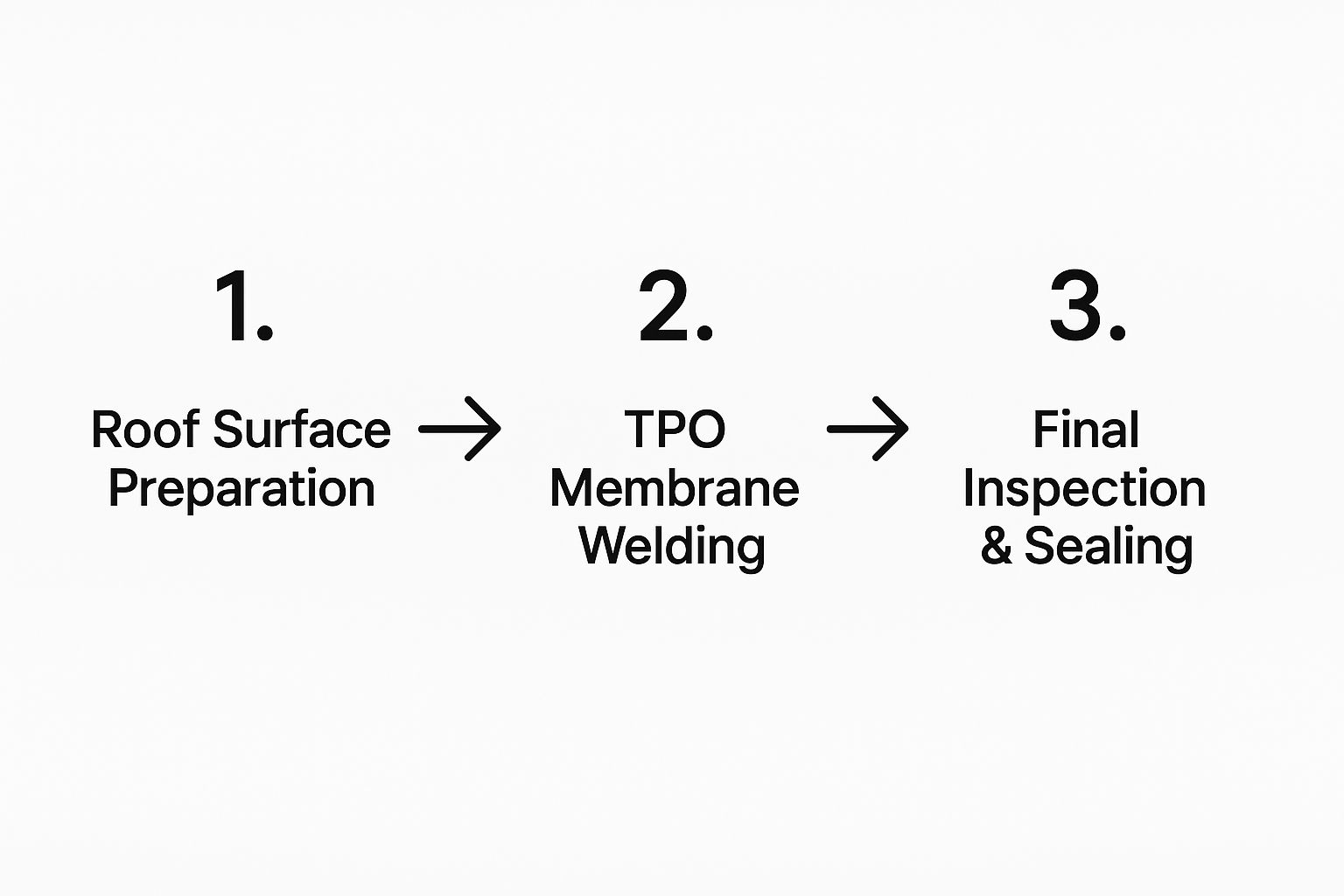
From the initial prep to the final weld, every step is designed to build a completely unified and resilient roofing system.
Final Inspection and Detailing
The job isn't done until every last detail is checked. The crew will meticulously inspect every inch of the welded seams, probing them by hand to confirm a perfect, continuous seal.
Then, they tackle all the little things that make a roof truly weatherproof:
- Flashings: Custom flashings are welded around every pipe, vent, and skylight.
- Perimeters: The roof's edges are expertly sealed to stop wind uplift and water from sneaking in.
- Curb Seals: Any AC units or other equipment on the roof are sealed with absolute precision.
This obsessive attention to detail is what separates a truly professional installation from an average one. The whole point is to leave zero chance for water to find a way in, keeping your home safe and dry for decades.
Long-Term Value and Maintenance for Your TPO Roof
Think of a residential TPO roofing system less as a simple cover and more as a long-term asset for your home. One of the best things about it is how long it lasts. When you have a team of pros who know the ins and outs of the Central Florida climate install it, you can expect your TPO roof to protect your home for a solid 20 to 30 years.
That kind of lifespan really adds up. You’re not just buying a roof; you’re investing in decades of durability and dodging the high costs of frequent repairs or a premature replacement. It’s about peace of mind, knowing your home is shielded by a modern material built to handle everything our local weather throws at it.
Keeping Your TPO Roof in Peak Condition
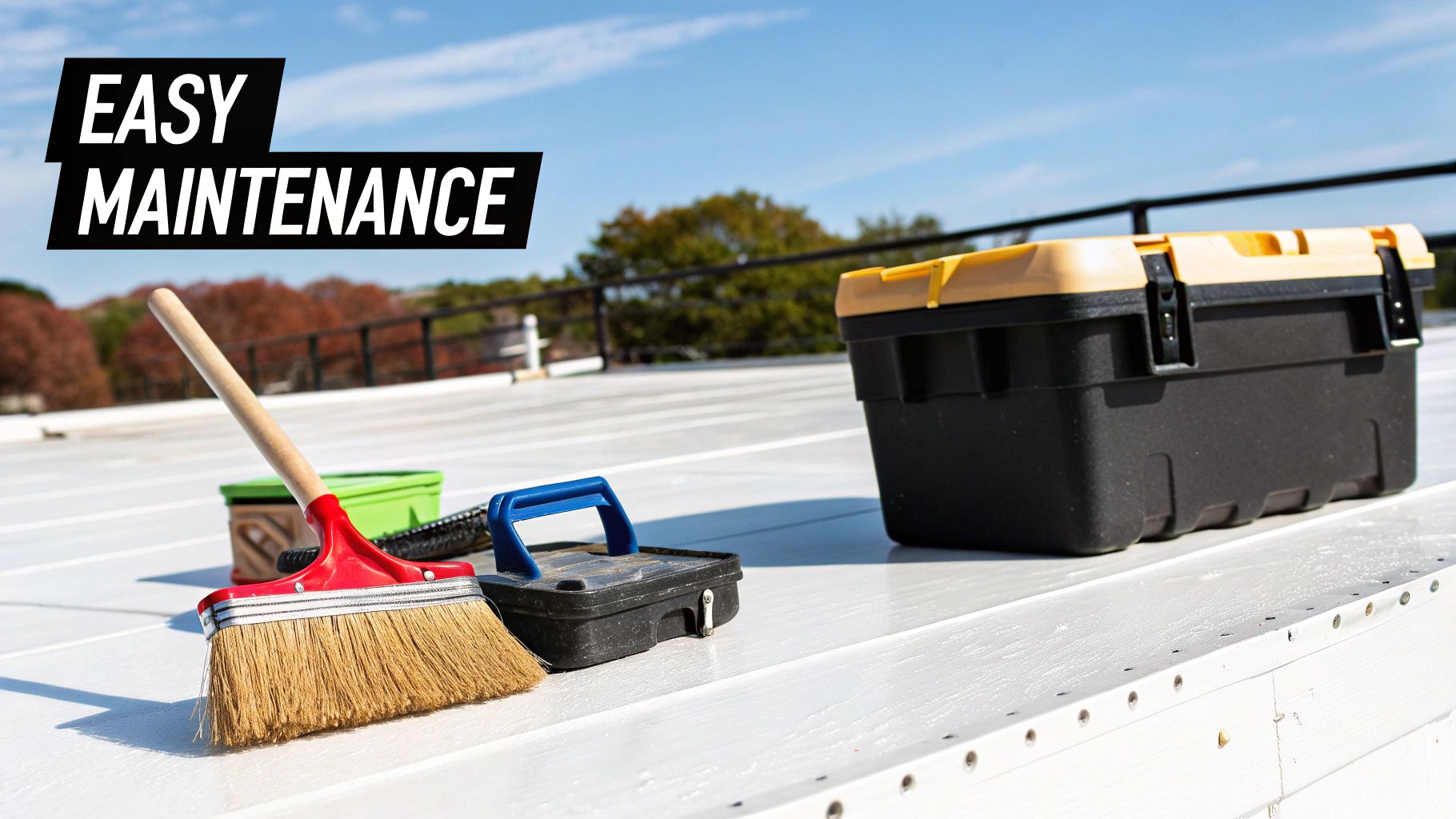
Another thing homeowners from Pinellas County to Orlando love about TPO is how easy it is to maintain. For anyone with a busy schedule, its low-upkeep nature is a game-changer. You can forget about constant treatments or complicated maintenance routines.
Instead, keeping a TPO roof in top shape is all about simple, proactive steps. This straightforward care ensures your roof keeps performing at its best, reflecting heat and protecting your home year after year.
Here’s what a typical maintenance plan looks like:
- Routine Cleaning: Every so often, having a professional clean the roof keeps that surface bright white. This is key to making sure it reflects sunlight effectively and keeps your cooling bills low.
- Debris Removal: After a big storm blows through, it’s always a good idea to clear off any leaves, branches, or other debris that might clog up your drainage.
- Annual Inspections: A yearly check-up with a professional is your best bet. They can inspect the seams, flashings, and the membrane itself to spot any small issues before they ever turn into big, expensive problems.
That’s really all it takes to help your TPO roof last its full lifespan. For a broader look at home upkeep that complements this roof care, resources like Your Ultimate Yearly House Maintenance Checklist can be incredibly helpful.
A Future-Ready Foundation for Solar Energy
If you're thinking about adding solar panels down the road, a TPO roof is the perfect partner for that project. Its flat, durable surface is practically tailor-made for a solar installation. The strong, heat-welded seams provide a stable and secure base that can easily handle the mounting equipment for a solar array.
You’re essentially creating a powerful one-two punch for energy savings. The TPO roof works from below to minimize heat absorption, while the solar panels work from above to generate clean electricity. It's a combination that leads to a remarkably efficient and sustainable home.
This perfect blend of durability, affordability, and energy efficiency is why residential TPO roofing is becoming so popular. Modern TPO isn’t just long-lasting; it stays highly reflective, which can drastically lower the temperature on your roof. This natural synergy with solar technology makes TPO a truly forward-thinking choice for any homeowner.
And remember, while routine care is crucial for a long and healthy roof life, storm damage requires immediate attention. If a severe storm hits, our team provides expert storm damage roof repair to get your home sealed and secure again, fast.
Why You Need a Local Expert for Your TPO Roof
Putting a residential TPO roofing system on a home in Florida isn't a job you can trust to just any roofer. Our climate is its own beast. Between the non-stop UV rays beating down and the ever-present threat of hurricane-force winds, a standard-issue installation just won't cut it. You need someone who gets it—someone with deep local expertise.
A contractor who’s spent years working in Central Florida knows the little things that make a big difference. They understand which membrane thickness is best for our sun, which attachment methods will actually hold up during a major storm, and how to navigate the maze of local building codes that seem to change with the seasons.
Your Go-To Partner from Pinellas County to Orlando
An experienced local roofer also knows which specific materials and techniques truly last in our brutal, humid heat. They plan for the way TPO expands and contracts in our climate, which is key to making sure those heat-welded seams stay watertight for decades to come. This kind of specialized knowledge is what separates a roof that just covers your house from one that truly protects it.
Think of it this way: choosing a local expert is the best investment you can make in your roof's long-term performance. A roofer with a proven track record right here in our area, like Hi Low Roofing, brings years of real-world experience fighting the exact battles your roof is about to face.
When you're ready to look into a roofing solution that’s both tough and energy-efficient, the next step is simple. Reach out to a trusted Orlando roofing contractor for a professional consultation and a detailed estimate. Our team is here and ready to help protect your home.
Your TPO Roofing Questions Answered
If you're considering TPO for your home, you probably have a few questions. Let's tackle some of the most common ones we hear from homeowners across Florida.
How Much Does a TPO Roof Cost in Florida?
This is usually the first question on everyone's mind, and the honest answer is: it depends. The final price tag for a residential TPO roofing system is tied to a few key things—the square footage of your roof, how complex its design is, and which material thickness you go with.
While TPO is known for being a fantastic long-term value, no two homes are the same.
The only way to get a real number is to have a professional take a look. An expert from Hi Low Roofing can measure your roof, assess its condition, and give you a detailed, no-pressure quote that’s built specifically for your home.
Can I Get a TPO Roof in Colors Other Than White?
You sure can. Bright white is definitely the crowd favorite, especially for homeowners from Pinellas County all the way to Orlando, and for good reason. Nothing beats its ability to reflect the harsh Florida sun and keep your cooling costs down.
But your style matters, too. TPO also comes in other great-looking colors like tan and grey. These shades still offer good solar reflectance and all the same durability, giving you the flexibility to match your home's exterior perfectly.
Is TPO Roofing Only for Flat Roofs?
Pretty much, yes. TPO was created specifically for flat and low-slope roofs—the kind of surfaces where traditional shingles just can't do the job. Shingles need a steep enough pitch for gravity to pull water off effectively; otherwise, you get pooling water and, eventually, leaks.
Think about the design of many modern Florida homes. You often see low-slope sections over porches, garages, or home additions. For these spots, TPO isn't just a good choice; it's really the only high-performance solution that can guarantee a truly watertight seal.
This makes TPO a critical material for protecting what are often the most leak-prone areas of a home.
Ready to see if a durable, energy-saving TPO roof is the right choice for your home? The team at Hi Low Roofing & Solar has the local expertise to protect your property for decades to come. Contact us today for a free, no-hassle inspection and estimate.
