

A roof leak always feels urgent, but the bigger question usually hits right after the bucket comes out: does homeowners insurance cover roof leaks? In Florida, the short answer is yes, sometimes, but coverage usually depends on what caused the leak, not just the fact that water came through your ceiling.
Does homeowners insurance cover roof leaks in florida?
Does homeowners insurance cover roof leaks in Florida? Yes, if the leak started because of a sudden covered event, like wind damage, hail, or a fallen branch. No, in many cases, if the leak happened because your roof got old, worn out, or went too long without repairs.
That distinction matters a lot in places like Winter Garden, Ocoee, Apopka, and Orlando, where roofs take a beating from hard rain, wind, heat, and long storm seasons. Insurance usually looks at the opening in the roof first. If a storm created that opening, your claim has a better shot. If the roof was already failing, the answer often changes fast.
When a roof leak is usually covered
Homeowners insurance usually helps when a covered peril caused the leak. “Covered peril” just means a type of event your policy insures against, such as wind or hail.
Think of it like a cracked window after a storm. Insurance is usually there for sudden damage, not for glass that got weak over ten years and finally gave up. Roof claims work much the same way.
Storm damage, wind, hail, and fallen debris
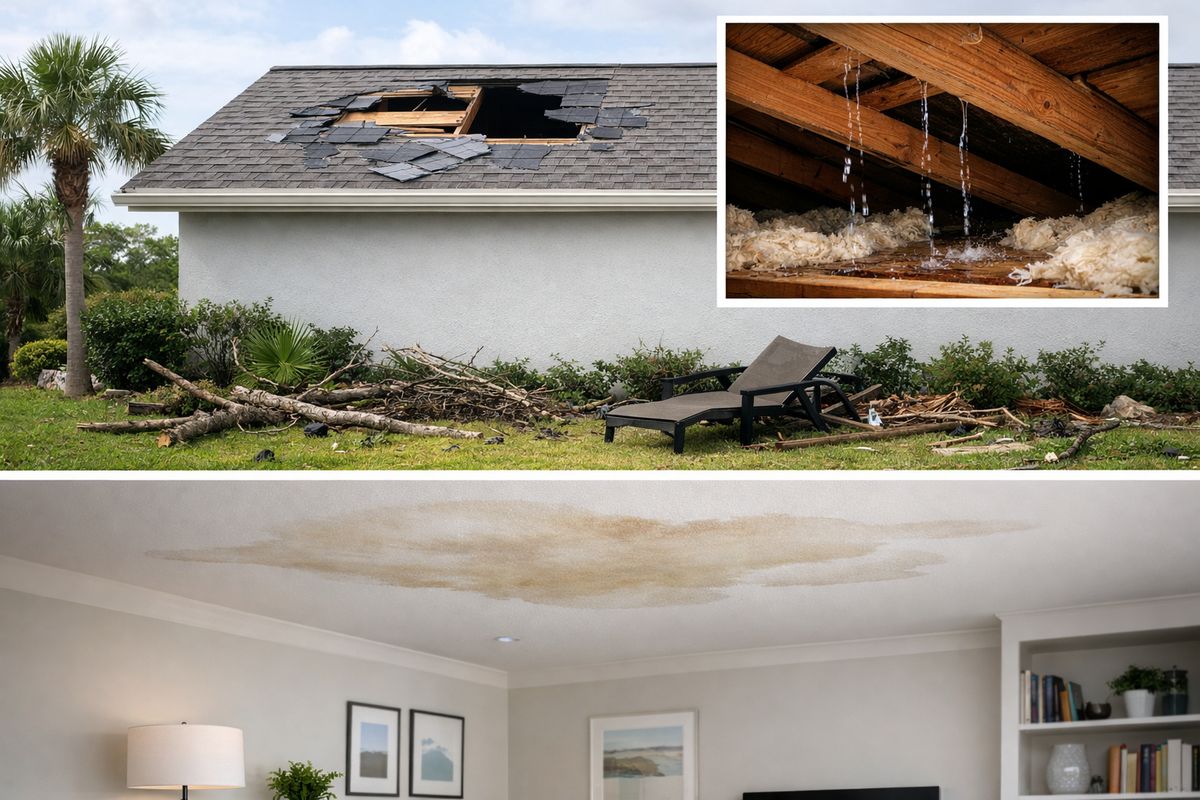
Florida claims often start with weather. A summer storm rolls through Orlando, wind lifts shingles, rain gets under them, and suddenly there is a stain spreading across the ceiling by breakfast. That kind of loss is often what insurance is built for.
The same goes for hail damage, a tree limb punching into the roof, or flying debris tearing up flashing. What matters most is the cause of the opening. Water itself is not the whole story. If wind, hail, or impact created a path inside, coverage is more likely. If you are trying to spot storm-related issues, it helps to know the warning signs that show up after rough weather.
Sudden accidental damage inside the home
Policies often cover resulting interior damage when the roof leak came from a covered event. “Resulting damage” is the damage that happened because water got in, such as soaked insulation, stained drywall, warped flooring, or a wet attic.
That does not always mean every part of the roof gets replaced. It means the insurer may review the ceiling damage, insulation damage, and related repairs if the original cause qualifies. A leak from a storm can lead to a roof claim and an interior damage claim at the same time.
When a roof leak is usually not covered
Here’s the thing: insurance is not a roof maintenance plan. That is the catch that frustrates a lot of homeowners.
If the roof leak happened because the roof was simply worn out or left in poor shape for too long, coverage is often denied. The policy is there for sudden accidents, not predictable aging.
Old age, wear and tear, and visible neglect
An older roof with curling shingles, granule loss, soft spots, cracked tiles, or sagging areas raises red flags fast. If you can already see the roof breaking down from the ground, the insurer may treat the leak as a maintenance issue instead of a covered loss.
That hits especially hard with older homes around Apopka, Ocoee, Winter Garden, and Orlando, where plenty of roofs are already deep into their later years. If your roof is showing broad wear, the smarter question may be less about coverage and more about how long roofs tend to hold up in Florida heat and storms.
Slow leaks, poor upkeep, and pre-existing damage
A slow leak that has been building for months is usually a different story from sudden storm damage. Repeated patch jobs, loose flashing, clogged valleys, and old penetrations around vents or chimneys can all point to a problem that developed over time.
Insurance companies look for signs like dark staining, long-term moisture, old repairs, and rotted decking. If the leak did not start from one identifiable event, it often lands in the not-covered category. That is why roof condition before the loss matters so much.
Mold, rot, and damage that grew over time
Mold and wood rot are often limited or excluded when the leak was not addressed quickly. In plain English, if water sat there for too long and the damage kept growing, insurance may pay little or nothing for those extra problems.
Even when part of a claim is covered, mold limits may be capped. The same goes for rot that clearly developed over time. Insurance tends to pay best for sudden damage, not for damage that had months to settle in.
What florida homeowners should know before filing a claim
Florida roof claims get extra scrutiny because weather losses are common and roof fraud has been a major issue across the state. That means you want the facts straight before filing.
A claim can still be worth it, but roof age, deductible size, and documentation all affect whether it makes sense.
Roof age matters more than most homeowners expect
Older roofs often face more questions. Some policies reduce payouts based on age or use actual cash value instead of replacement cost. That means depreciation gets subtracted, so the check may be smaller than expected.
You can read more about how Florida roof policies often handle age and payout rules. The short version is simple: the older your roof is, the more likely the insurer will look closely at wear, prior repairs, and overall condition before approving much of anything.
Hurricane season and named-storm deductibles
Florida policies may have separate hurricane or windstorm deductibles. A deductible is the amount you pay out of pocket before insurance starts paying.
That can change the math quickly. If your deductible is $2,500 and the roof repair is $3,200, filing a claim may not help much. During hurricane season, that separate deductible can be high enough that smaller claims are barely worth opening.
Why documentation can make or break a claim
Good documentation gives your claim a timeline, and that matters. If a hard rain hit at 2 a.m., you noticed a fresh ceiling stain that morning, and you took photos right away, that helps show a sudden event.
Try to keep photos, dates, weather notes, inspection records, and receipts for emergency work. Even one clear attic photo with wet insulation can help tell the story better than a vague description over the phone.
What to do when you notice a roof leak
When water starts coming in, speed matters. Not panic, just speed.
The goal is to stop more damage, document what happened, and get the roof checked before a small opening turns into a much bigger mess.
Protect the inside of your home first
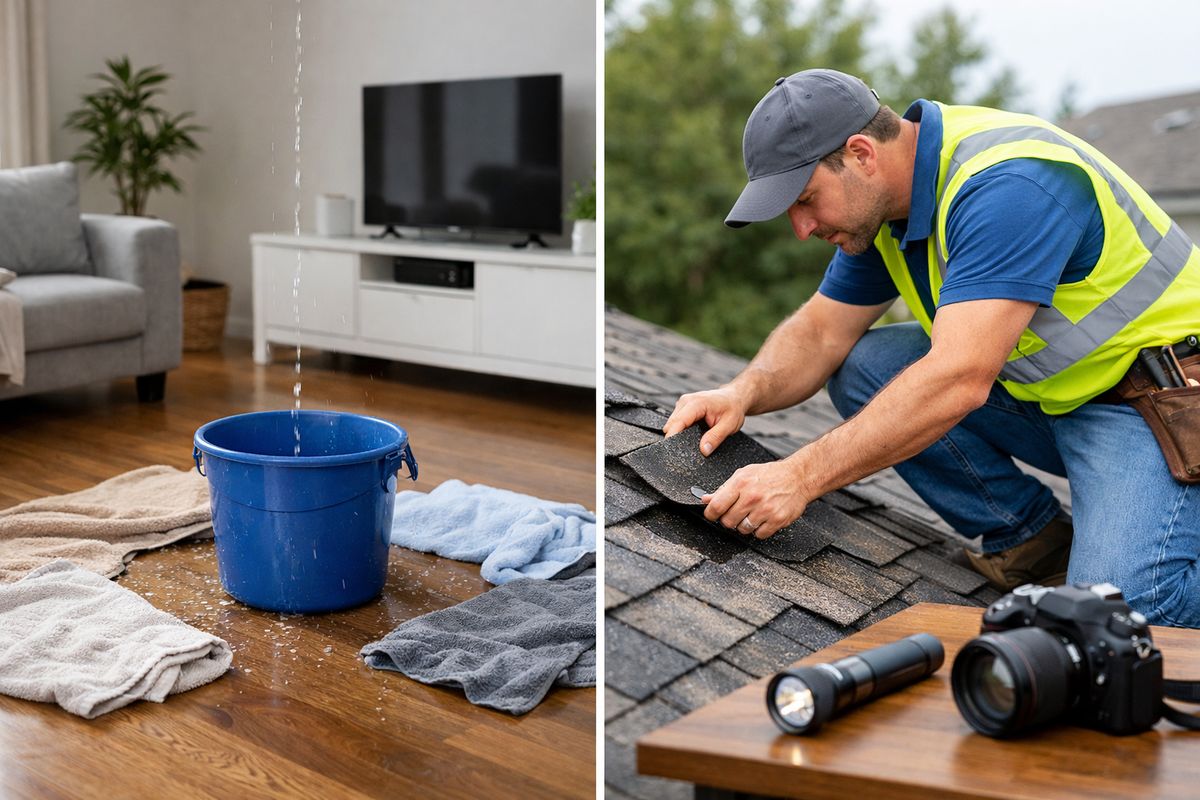
Start by catching the water and moving anything valuable out of the way. Put down buckets, move furniture, roll up rugs, and dry the area as much as you can.
This is called mitigation, which just means taking reasonable steps to keep the damage from getting worse. Insurance companies expect that. A simple fan, towels, and quick action can keep one ceiling stain from becoming ruined drywall and flooring.
Document the damage before cleanup goes too far
Take photos before the area looks tidy again. Get the ceiling stain, wet attic areas, insulation, damaged drywall, missing shingles, flashing issues, and any debris outside.
Save receipts for tarping, emergency dry-out work, or temporary repairs. If you want a more detailed walkthrough, this guide on what to handle right after a leak starts helps you avoid missing the obvious stuff.
Get the roof inspected and request an estimate
A prompt inspection helps identify where the leak started and whether the damage looks storm-related or age-related. That part matters more than most homeowners expect.
If your roof is older and already showing wear, an estimate can also help you see the bigger picture. Sometimes the issue is one damaged area. Sometimes it is a roof that has reached the point where patching just buys a little time. If you are weighing that choice, this breakdown of when a repair still makes sense and when it doesn’t is worth reading.
How the roof leak claim process usually works
The claims process is less mysterious once you know the sequence. Most of the stress comes from not knowing what happens next.
Filing the claim and meeting the adjuster
You report the loss to your insurance company, share basic details, and provide photos or emergency repair receipts. After that, an adjuster gets assigned. An adjuster is the person who inspects the damage for the insurance company and helps decide what the policy may cover.
Expect questions about when you first noticed the leak, what the weather was doing, and whether the roof had previous issues. Clear, consistent answers help.
How insurers decide what they will pay for
Insurers usually look at three things: the cause of damage, the policy language, and the condition of the roof before the leak. A claim might result in payment for a roof repair, interior repairs, both, or neither.
Sometimes the roof portion gets denied while interior resulting damage is still reviewed. Sometimes only a section of roof gets approved. For a closer look at what a Florida policy may actually pay after a leak, it helps to see how those pieces get separated.
When a repair estimate helps your case
A detailed roofing estimate can support your claim because it describes what failed. Missing shingles, lifted flashing, punctures, underlayment damage, and storm-created openings all help tie the damage to a specific cause.
A vague estimate is not nearly as useful. A clear one gives the adjuster something concrete to compare against the inspection findings.
Should you file a claim or pay for the repair yourself?
Not every leak should become an insurance claim. That is especially true if the damage is limited or your roof is already near the end of its life.
Compare the repair cost to your deductible
If your deductible is close to the repair cost, filing may not do much for you. A $1,900 repair with a $1,500 deductible may leave very little insurance benefit once the dust settles.
That is why it helps to know what roof repairs in the Orlando area often cost before making the call. Sometimes the smartest move is simply paying for the repair and moving on.
Think about the age and condition of the roof
A recent storm does not erase years of wear. If your roof already has broad shingle loss, old patches, soft decking, or visible deterioration, an insurer may push back even if the latest leak showed up after heavy wind.
Be honest about the overall condition. That clarity saves time and helps you choose the right path sooner.
Know when a full replacement is more practical
Sometimes patching is like putting tape on a cracked garden hose. It works for a minute, then the next weak spot shows up.
If leaks keep returning, shingles are failing across multiple slopes, or the roof is simply old and tired, replacement may be the better investment. You stop chasing leaks, protect the house properly, and avoid stacking repair after repair onto a roof that is already telling you it is done.
Frequently asked questions
Does homeowners insurance cover water damage from a leaking roof?
It can, if the leak started because of a covered event like wind damage or a fallen branch. If the roof simply wore out and let water in, interior water damage may be denied too.
Does homeowners insurance cover a full roof replacement?
Sometimes, but it is not automatic. Approval depends on the cause of damage, how much of the roof was affected, your policy terms, and the roof’s age and condition.
Will insurance cover a leak if the roof is 15 or 20 years old?
It still might, but older roofs usually get more scrutiny. The insurer may look closely at maintenance history, visible wear, and whether the damage was sudden or part of a longer decline.
What should you try first if you see a ceiling stain?
Document it right away, stop the water from spreading, and schedule a roof inspection fast. A fresh stain after a storm tells a very different story than a stain you wait weeks to check.
Is a small leak worth filing a claim for?
Not always. If the repair cost is close to your deductible, filing may bring little benefit. Small leaks on older roofs also face a higher chance of coverage disputes.
Ready to protect your home? Get in touch with the Hi Low Roofing team for your free estimate. https://hilowroofing.com/free-estimate/


