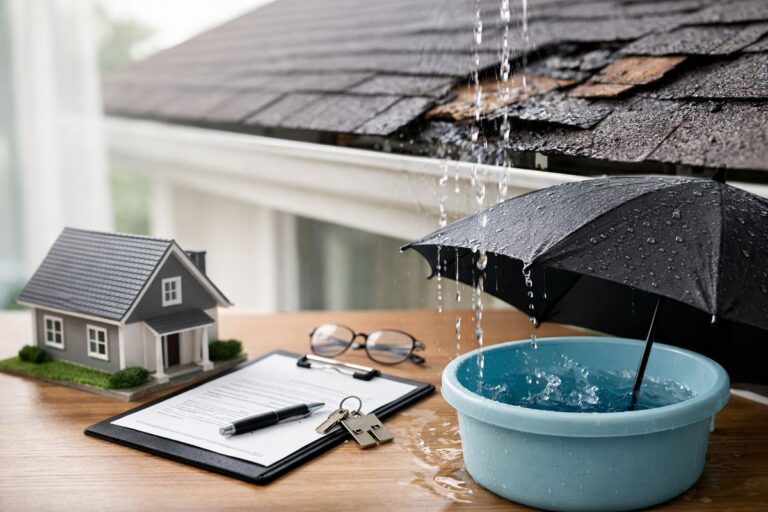
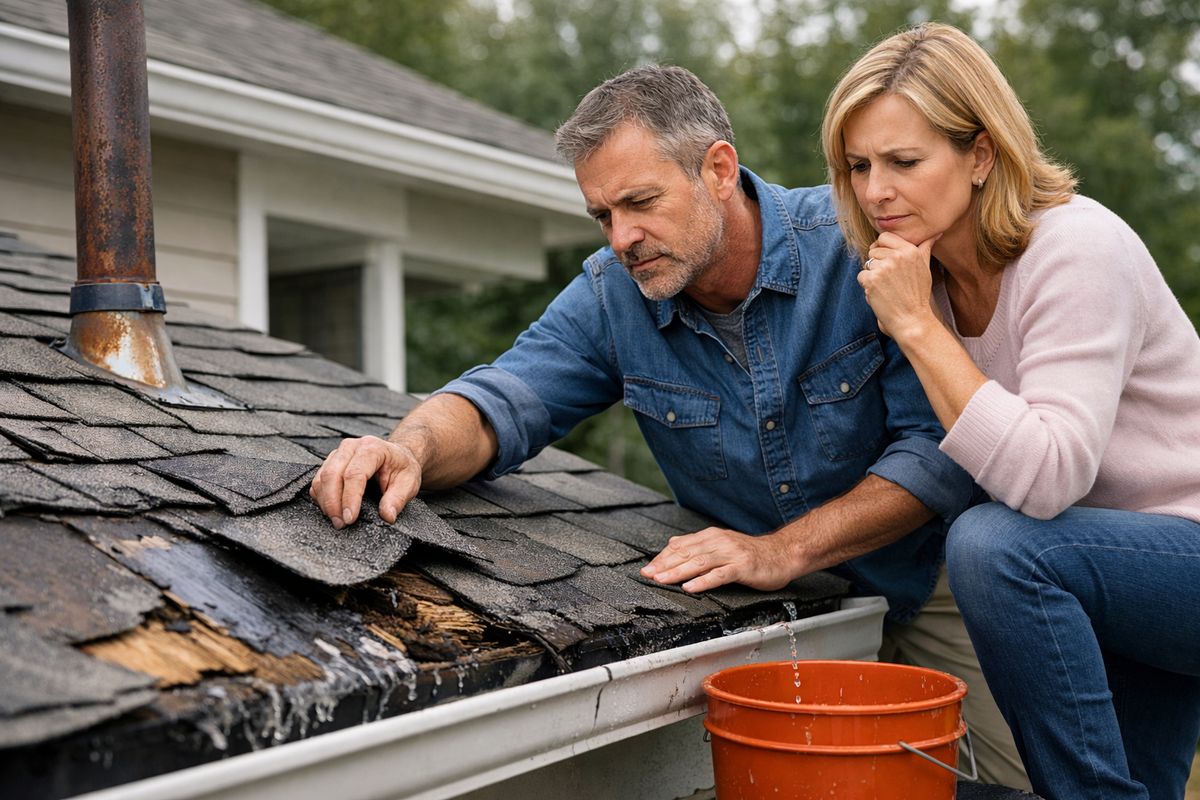
If you’re staring at a ceiling stain after one of those hard afternoon Florida downpours and wondering, do I need a new roof, you’re not overreacting. Roof problems have a way of going from “probably nothing” to “how is there water in the hallway?” fast, especially in places like Winter Garden, Ocoee, Apopka, and Orlando.
Do you need a new roof or just a repair?
That’s the real question, and it deserves a straight answer. Sometimes the fix is small: a few shingles blew off, flashing around a vent came loose, or one section took a hit from a branch. Other times, the leak is just the symptom, and the roof itself is worn out across the board.
Here’s the thing: age plus multiple warning signs usually points toward replacement, not another patch. If your roof is older, looks rough from the ground, and has already been repaired once or twice, that pattern matters more than any single stain on the ceiling.
A lot of homeowners get stuck because someone says the roof “looks old,” which is not very helpful. Old does not automatically mean failed. But old with visible wear, recurring leaks, granules washing out, and storm damage is a very different story. That’s when “Do I need a new roof?” becomes a serious question, not just a nervous one.
What “needing a new roof” actually means
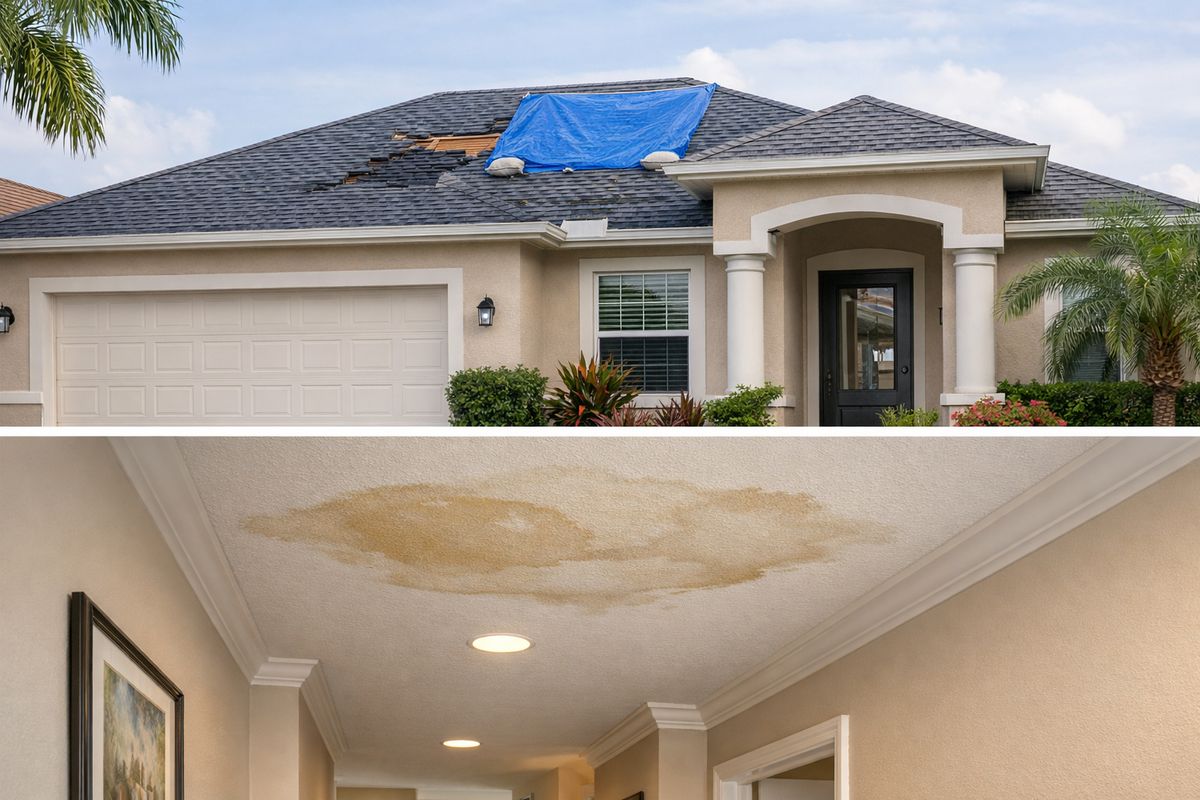
A new roof usually means a full roof replacement. In plain English, that means removing the existing roofing material, checking the wood underneath, replacing damaged sections if needed, and installing a new roofing system.
That’s different from a repair. A repair targets one problem area, like replacing a few missing shingles, sealing a flashing joint, or fixing a localized leak. Repairs make sense when the problem is isolated and the rest of the roof still has good life left.
You may also hear about a re-roof or overlay, which means installing a new layer over the old one instead of tearing everything off. The catch is that this does not solve hidden problems underneath. If there is trapped moisture, soft decking, or storm damage below the surface, covering it up is a little like painting over water damage on drywall and hoping nobody notices. It looks better for a while, but the problem is still there.
So when you ask if you need a new roof, the real question is this: is your roof dealing with one fixable issue, or is the whole system near the end of its useful life?
Start with the age of your roof
Age is one of the biggest clues you have. Roofing materials don’t age in a vacuum. In Central Florida, your roof deals with year-round UV exposure, humidity, pounding rain, sudden wind gusts, and storm seasons that test every weak spot.
If your roof is older and starting to show multiple problems, replacement often makes more sense than sinking money into patchwork. Not because every old roof is automatically bad, but because older roofs have less margin left. Once one part starts failing, other parts are usually right behind it.
That matters in neighborhoods across Orlando where plenty of single-family homes were built in waves and now have roofs in the same age range. You see it all the time: one house on the block gets replaced, then another, then another after the next storm.
Typical lifespans for common roofing materials
Asphalt three-tab shingles usually have the shortest life. In perfect conditions, you may hear 15 to 20 years. In Central Florida, many start showing real wear sooner.
Architectural shingles usually last longer, often around 20 to 30 years, depending on product quality, installation, and storm exposure. These are common on homes in Winter Garden and Ocoee because they offer a more dimensional look and generally hold up better than basic shingles.
Tile roofs can last much longer, often several decades, but that does not mean they are maintenance-free. Tiles can crack, shift, or break from impact, and the underlayment beneath them can wear out long before the tile itself looks done.
Metal roofs can also last a long time and handle Florida weather well when installed correctly. If you’re weighing that option for a future replacement, it helps to look at the trade-offs in this breakdown of how metal performs in Florida weather.
Flat or low-slope sections, which sometimes show up over porches, additions, or back patios, often have a shorter and more maintenance-heavy life than the main pitched roof. These areas tend to hold water longer, and even a small drainage problem can turn into a leak.
Why florida weather shortens the clock
Manufacturer lifespan numbers are not exactly lies, but they are optimistic. The brochure version of your roof lives in gentle conditions. Your actual roof lives under Orlando sun, through June humidity, and under the kind of afternoon storm that dumps rain sideways at 5:30 and leaves palm fronds in the yard by dinner.
UV rays dry out roofing materials over time. Heat causes expansion and contraction. Heavy rain tests every seam. Wind lifts edges, loosens tabs, and weakens seals. Add in hurricane season, and a roof that looked “fine enough” last spring can come out of one bad storm with damage that changes the whole equation.
That’s why age matters so much here. A 17-year-old roof in Central Florida is not the same as a 17-year-old roof in a milder climate. The weather is simply harder on it.
Visible signs on the roof you Shouldn’t ignore
You do not need to climb onto your roof to spot trouble. Honestly, you shouldn’t. Plenty of the biggest warning signs can be seen from the ground if you walk your property and look carefully.
The goal is not to diagnose every detail yourself. It’s to notice enough to know when something is off.
Missing, curling, cracked, or bald shingles
Missing shingles are the most obvious sign. If patches of roof look bare or uneven after a storm, that area is exposed and vulnerable to water intrusion.
Curling shingles usually mean age and heat have taken a toll. The edges may lift or cup upward, which makes it easier for wind to catch them and easier for water to work underneath.
Cracked shingles often show up after weather stress, repeated expansion and contraction, or simple old age. One cracked shingle may be repairable. Cracking across multiple slopes is a different conversation.
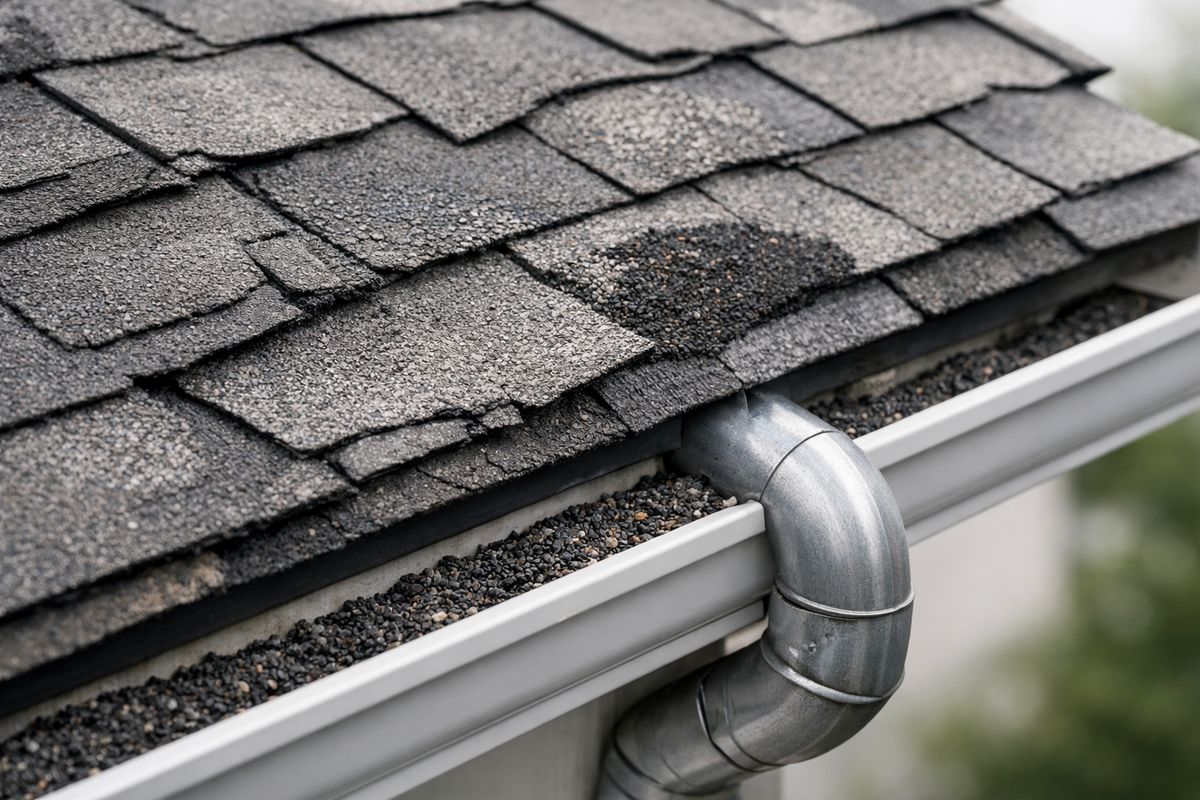
“Bald” shingles are shingles that have lost a lot of granules, the gritty coating on top. Granules protect the shingle from sun damage. Without that protective layer, the asphalt underneath breaks down faster. If your roof looks patchy, faded, or worn smooth in places, that wear is not cosmetic. It’s the roof losing protection.
If you want a clearer sense of what visible deterioration tends to look like before major failure, it helps to review common warning clues homeowners notice too late.
Granules in gutters or around downspouts
A small amount of granule shedding on a newer roof can be normal. Heavy granule buildup is not. If you notice gritty piles in gutters, near downspouts, or washed onto the driveway after storms, your shingles may be wearing out.
Think of granules like the tread on a tire. A little surface wear happens over time. But when the tread is wearing off in chunks, the tire is not in good shape anymore. Same idea here.
Granule loss matters because it usually points to broader aging, not just one little defect. The roof may still be keeping water out today, but it’s losing the layer that helps it survive tomorrow’s heat and rain.
Sagging roof lines or uneven areas
A roofline should look straight and consistent. If you notice dips, soft-looking spots, wavy sections, or any area that seems to sag, treat that as a serious sign.
Sagging can mean moisture has been trapped beneath the surface for a while. It can also point to rotting wood or structural stress. This is no longer just a “replace a few shingles” situation. Once the decking or support beneath the roof has weakened, the job gets bigger.
From the curb, a sagging section can be subtle. Sometimes you only notice it when sunlight hits the roof a certain way or when you stand across the street. But if you see it, pay attention.
Damaged flashing around chimneys, vents, and valleys
Flashing is the metal material installed around joints and transitions on the roof, like chimneys, plumbing vents, skylights, and valleys where roof sections meet. Its job is simple: keep water from sneaking into the gaps.
When flashing loosens, rusts, bends, or pulls away, leaks can show up even if the shingles still look decent. That’s why a roof can seem “mostly fine” from the driveway and still leak every time the wind blows rain in the right direction.
Flashing problems are often repairable when caught early. But if flashing failure is happening in multiple areas on an older roof, it may be part of a bigger pattern of decline.
Signs inside your home that the roof may be failing
Your ceiling often tells the story before the roof does. You live under it every day, so indoor clues can be some of the earliest and most useful signs.
Water stains, active leaks, and damp attic areas
Brown ceiling spots, peeling paint, bubbling drywall, drips during rain, damp insulation, and musty smells all point to moisture getting where it should not.
One leak does not always mean you need a whole new roof. A leak around a vent pipe, one damaged flashing section, or a localized storm hit can sometimes be repaired without replacing everything. But repeated leaks, multiple stains in different rooms, or attic moisture that keeps returning usually means the issue is broader than one weak spot.
The tricky part is that water does not always travel straight down. A leak that shows up over a bedroom ceiling may have started several feet away on the roof. That’s one reason guessing from inside the house only gets you so far.
If you’ve started noticing interior moisture clues, it’s worth comparing them with the leak patterns that tend to catch homeowners off guard.
Rising energy bills or rooms that suddenly feel hot
Sometimes a failing roof announces itself through comfort before it shows up as a leak. If an upstairs room suddenly feels harder to cool, or your AC seems to run longer than usual during an Orlando summer, the roof system could be part of the problem.
Wet insulation loses effectiveness. Poor attic ventilation traps heat. Gaps around penetrations or damaged roof areas can let outside air and moisture affect indoor temperatures more than you’d think. Your roof is not just a rain shield. It also plays a big part in how your home handles heat.
So if your utility bill is climbing and one side of the house feels like a toaster by late afternoon, do not assume the HVAC system is the only suspect.
Daylight coming through the attic
If you can see daylight through the attic boards, around vents, or near roof penetrations, water can often get through those same openings. This one is simple.
Light where it should be dark is a sign your roof system has gaps.
Storm damage in central florida: when one weather event changes the answer
Sometimes your roof is old but hanging on. Then one storm changes everything.
That’s common in Central Florida. A roof that was already worn can get pushed past the point of sensible repair by wind, hail, or flying debris. After that, the question is no longer “can this be patched?” but “is it worth patching?”
Wind damage after summer storms and hurricanes
Wind can do more than rip shingles completely off. It can lift them just enough to break the adhesive seal, crease them, or loosen the edges so the next storm does even more damage.
From the driveway, this may not look dramatic. That’s the catch. Wind damage often hides in plain sight, especially along roof edges and ridges. On a newer roof, a limited wind-damaged section may be repairable. On an older roof, wind damage often exposes how little life was left to begin with.
If your neighborhood just went through a summer storm or hurricane and your roof was already aging, assume the event may have changed the answer.
Hail or impact damage from debris
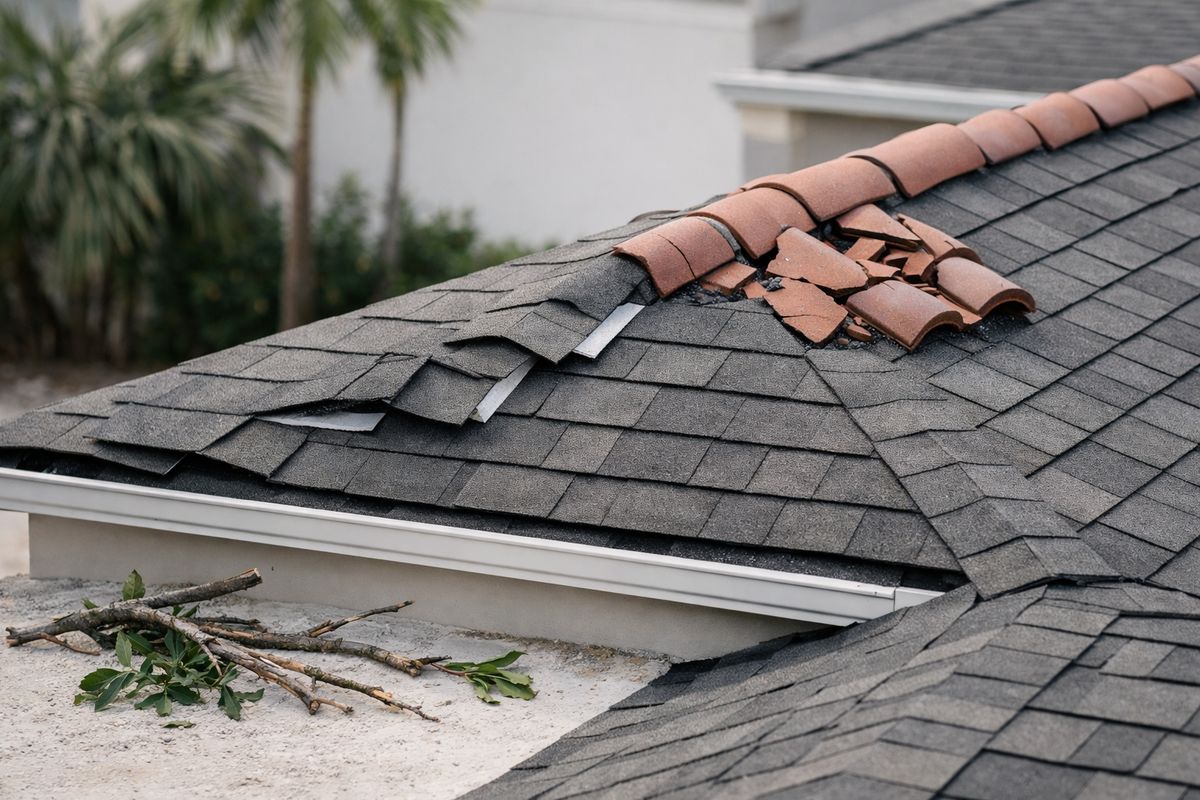
Hail can bruise shingles, crack tile, dent metal, and weaken roofing materials without causing an immediate leak. Flying branches and debris can puncture roofing surfaces or knock components out of place.
Impact damage is especially tricky because the roof can look “not too bad” from the ground while hidden damage develops underneath. A tile may crack but stay sitting in place. A shingle may bruise and lose integrity before any water shows up indoors.
That delay is what makes storm damage dangerous. By the time the leak starts, the damage has already been there for a while.
When repairs still make sense
Not every roof problem means replacement. That’s worth saying clearly, because panic leads to bad decisions.
Repairs still make sense when the issue is limited, the roof is not near the end of its life, and the rest of the system is in solid shape.
Damage is limited to one small area
If a few shingles blew off in one section, one flashing detail failed, or one small leak can be traced to a specific point, a repair is often the smarter move.
A localized repair works best when the roof is otherwise healthy and matching materials are still available. If the surrounding shingles are intact, the decking underneath is sound, and the problem is truly isolated, there is no reason to replace the whole roof just because one area had a problem.
The roof is still relatively new
A newer roof that takes storm damage is often a good repair candidate. Same goes for isolated installation mistakes that show up early.
Age changes the math. A repair on an 8-year-old roof can buy a lot of useful time. A repair on a 22-year-old roof may just delay the inevitable by a few months or one storm season.
The rest of the roof is in good shape
This is the bigger-picture test. If the shingles still have life, the roofline is straight, the attic is dry, and wear is not showing up all over the place, a repair can be a perfectly solid choice.
If you’re trying to compare the two paths without getting buried in vague opinions, this side-by-side explanation of fixing versus swapping the whole roof helps make the tipping points easier to see.
When a new roof is the better call
If your roof is old and showing problems in several places at once, replacement is usually the cheaper path in the long run. That’s the honest answer.
A lot of homeowners focus on the lower price of a repair without looking at what happens next. If the roof is broadly worn out, a repair is not really solving the problem. It is buying a little time at a bad rate.
Repeated leaks and ongoing patch jobs
If you keep fixing one area only to have another leak appear a few months later, your roof is telling you something. The system is wearing out.
It’s like patching an old tire over and over. One patch makes sense. Five patches mean the tire is done. Same logic here. Repeated patch jobs add up fast, and the stress of waiting for the next leak is its own cost.
Widespread wear across the whole roof
When damage is spread across multiple slopes, replacement usually makes more sense than selective repair. This includes lots of missing shingles, broad granule loss, curled or cracked shingles throughout, fading and wear on every side, or multiple trouble spots after storms.
Widespread wear means the roof is aging as a system, not failing in one random spot. Patching isolated pieces of a roof that is deteriorating everywhere else is rarely money well spent.
Structural issues, rot, or soft decking
Once the wood beneath the roofing material is soft, rotted, or water-damaged, the job moves beyond surface repair. The roof covering may be the part you see, but the decking underneath is what gives it a stable base.
Soft decking changes everything because a new patch over a weak base does not last. If there is widespread moisture damage under the shingles or tile, replacement becomes the practical fix, not the aggressive one.
Repair costs are getting too close to replacement
Price matters, but value matters more. If a major repair costs a large percentage of a replacement and your current roof has limited life left, replacement is often the smarter financial move.
That does not mean every expensive repair should automatically turn into a full replacement. It means you should look at what that money buys you. A repair that costs thousands but only gives you a short extension on an aging roof may not be the bargain it seems.
For that part of the decision, it helps to understand what usually drives the final price on a full replacement.
What a roof inspection should check
A good inspection should give you clarity, not just concern. You should come away knowing what was found, where it was found, how serious it is, and whether repair or replacement makes more sense.
Vague statements like “it’s old” or “you should probably replace it” are not enough.
Exterior condition
The exterior review should include shingles or tiles, ridge areas, valleys, flashing, roof penetrations, gutter lines, visible storm damage, and any signs of sagging or uneven wear.
An inspector should be looking for missing material, lifted edges, cracking, granule loss, damaged seals, exposed fasteners, and trouble spots around vents, skylights, chimneys, and transitions. The goal is not just to spot what is broken today, but to see where the roof is vulnerable next.
Interior and attic clues
The attic and interior matter just as much as the top side of the roof. Moisture stains, mold, damp insulation, poor ventilation, daylight intrusion, and musty odors can all change the answer.
Sometimes the outside wear looks moderate, but the attic tells a different story. Wet insulation, heat buildup, or recurring moisture around decking can reveal deeper roof failure that is not obvious from the yard.
Photos, clear findings, and straight options
You should expect photos. You should expect plain-English notes. And you should expect a clear explanation of whether the issue is isolated or widespread.
The best estimate conversations are the ones that leave you less confused than when you started. If you’re comparing bids, it also helps to know what to ask before hiring somebody for roof work in your area.
Common misconceptions about roof replacement
Roof advice gets weird fast. One neighbor says every leak means disaster. Another says a roof is fine until water pours through the ceiling. Both can steer you wrong.
“If It’s not leaking, It’s fine”
Not true. Hidden storm damage, broken shingle seals, flashing failure, soft decking, and heavy granule loss can all exist before interior leaks show up.
A roof can be compromised for months before water finds a visible path indoors. Waiting for a leak is a little like waiting for brake failure before checking worn brake pads. By the time the symptom gets obvious, the repair may be bigger.
“A leak means you always need a whole new roof”
Also not true. One leak can come from one issue, especially on a younger roof. A damaged vent boot, one flashing problem, or a small storm hit can often be repaired.
The leak matters, but the surrounding roof condition matters more. A single leak on a newer roof is very different from a single leak on a roof with broad aging and visible wear everywhere else.
“A new layer on top solves everything”
Overlay systems can sound appealing because they seem faster and cheaper. But adding a new layer over an old roof does not remove hidden damage underneath.
If the decking is soft, if moisture is trapped, or if the old roof has multiple failure points, covering it up does not fix it. It just delays the day you have to deal with it properly.
“All old roofs need immediate replacement”
Age matters, but condition still counts. Some older roofs are near the end but still functioning reasonably well. Some younger roofs are in rough shape after poor installation or storm damage.
An older roof deserves inspection, not panic. But if age comes with visible wear, repeated leaks, and storm stress, replacement should be on the table.
Questions to ask before you decide
A good estimate is not just a price. It’s a clearer picture of what is happening on your home and what each option actually gets you.
Is the problem isolated or widespread?
Ask this directly. Is the damage confined to one section, or is it showing up across multiple slopes and details?
That answer changes everything. Isolated problems lean toward repair. Widespread problems usually lean toward replacement.
How much life is left in the current roof?
“Your roof is old” is not enough. Ask for a realistic estimate of remaining service life.
Even a rough answer helps. If the roof likely has several good years left, a repair may be worth it. If the roof is limping into its final stretch, pouring money into it may not make sense.
What happens if you repair it and wait?
This is one of the best questions you can ask. What risk are you taking if you repair the current issue and wait six months, one storm season, or one year?
A good answer should be specific. Maybe waiting is reasonable. Maybe there is a strong chance of more leaks, more material loss, or more deck damage. That timeline matters.
What will the estimate include?
Make sure the estimate spells out materials, labor, permit details, cleanup, possible decking replacement if needed, and any ventilation updates.
A short number on a piece of paper is not enough. You need to know what is included, what is not, and what could change if hidden damage is found after tear-off.
A simple next step if You’re unsure
If you’ve noticed age, visible wear, water stains, or storm damage, the smartest move is simple: get clarity before the next big rain gets a vote. Walk your property this week, look at the roof from the ground, check the attic if it’s safe to do so, and make a short list of anything you notice.
That one small step makes estimate conversations a lot easier. You’ll know what to ask, what to mention, and what has changed since the last storm.
Frequently asked questions
How do you know if a roof needs replacement instead of repair?
The biggest difference is scope. If the problem is isolated, such as one small leak or a limited damaged area on a newer roof, repair often makes sense. If your roof is older and has repeated leaks, widespread shingle wear, sagging, soft decking, or storm damage across multiple areas, replacement is usually the better call.
How many leaks mean you need a new roof?
There is no magic number, but repeated leaks are a strong warning sign. One leak can come from one fixable issue. Leaks in different parts of the home, or the same leak returning after prior repairs, usually point to broader roof failure.
Can a 20-year-old roof still be okay in florida?
Sometimes, yes. But in Central Florida, 20 years is a serious age for many shingle roofs because sun, humidity, storms, and wind speed up wear. A 20-year-old roof should be inspected carefully, especially if you’re seeing granule loss, curling shingles, stains, or recent storm damage.
Should you replace a roof before it leaks?
In many cases, yes. Waiting for an active leak can mean hidden damage has already spread into decking, insulation, or drywall. If your roof is at the end of its expected life and showing visible wear, replacing it before interior damage starts can save money and stress.
Does homeowners insurance pay for a new roof?
Insurance may help if the roof was damaged by a covered event, such as wind or hail. It usually does not pay for age-related wear or long-term deterioration. The exact answer depends on your policy, the cause of damage, and the roof’s condition before the event.
Is it worth fixing an old roof one more time?
Sometimes, but only if the repair is small and buys meaningful time. If the roof is old, broadly worn, and the repair cost is starting to climb, another patch may just delay a bigger and more expensive problem.
Ready to protect your home? Get in touch with the Hi Low Roofing team for your free estimate. https://hilowroofing.com/free-estimate/