If you’ve searched how much should replacing a roof on a 2,000-square-foot Florida home cost, you’ve probably noticed something annoying fast: nobody gives the same number. That’s because roof pricing is not like buying flooring by the room. A 2,000-square-foot house does not automatically have a 2,000-square-foot roof, and until that part is clear, every quote is just a rough guess.
What a 2,000-Square-Foot florida roof replacement really costs
The big misunderstanding starts with the house size. Your home’s listed square footage measures the living space inside the walls, not the actual roofing surface sitting above it. Once you add pitch, overhangs, hips, valleys, and multiple roof sections, the roof is usually larger than the footprint below.
That matters because roofers price the roof, not the floor plan. A simple one-story rectangle in Orlando can price very differently from a cut-up two-story house with dormers, skylights, and a steep slope, even if both homes are listed at 2,000 square feet. Here’s the thing: the number on your real estate listing is useful for curiosity, but not for signing a contract.
The short answer: what You’ll likely pay right now
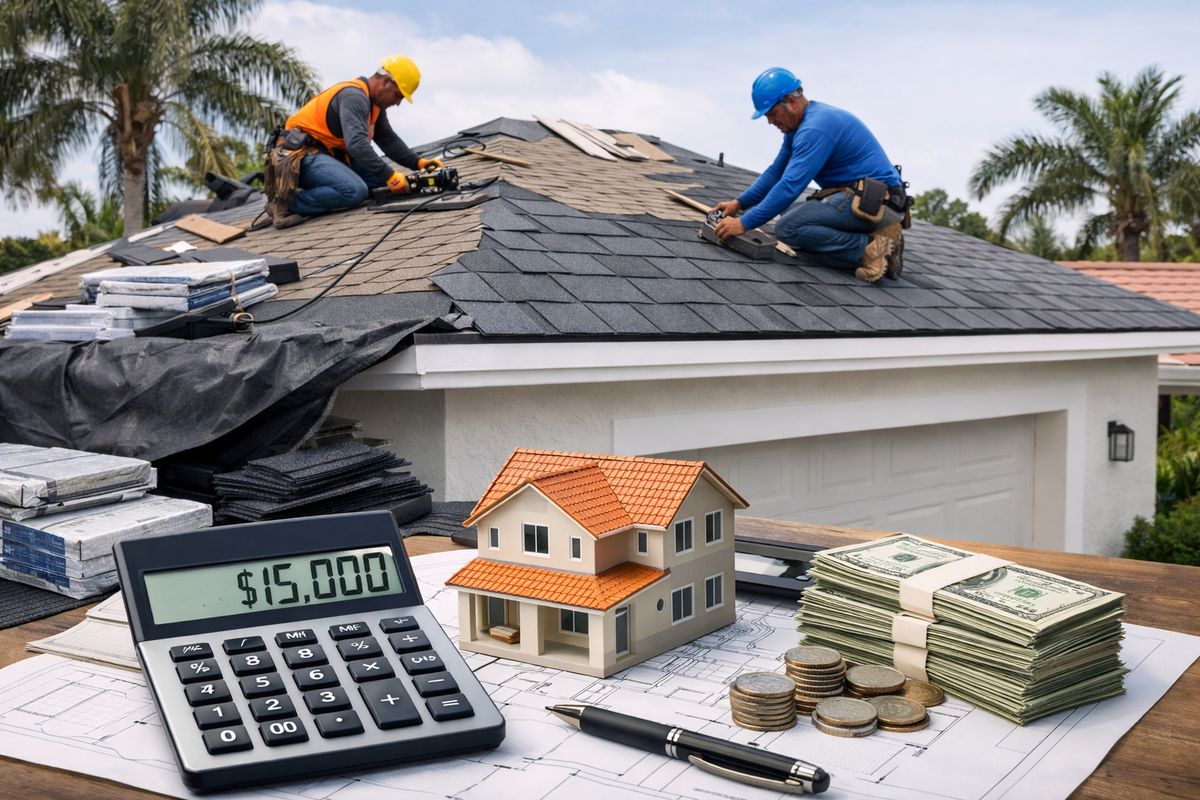
For a typical 2,000-square-foot Florida home, roof replacement often lands somewhere around the low five figures, with asphalt shingles usually at the lower end, metal in the middle-to-upper range, and tile well above both. In practical terms, many Florida homeowners see asphalt shingle quotes somewhere around $12,000 to $22,000, metal often around $18,000 to $35,000, and tile commonly much higher depending on structure, style, and complexity.
Those are ballpark numbers, not promises. The actual total changes with roof surface area, roof design, labor difficulty, tear-off work, permit costs, and what gets uncovered once the old roof comes off. If you want a broader sense of what drives roofing prices across the state, material choice and roof complexity usually explain the biggest swings.
Why your Home’s square footage is only a starting point
Roofers measure in “squares,” which is just roofing shorthand for 100 square feet of roof surface. So if your roof measures 24 squares, that means about 2,400 square feet of roofing area.
That number is often bigger than your home’s interior square footage. A steeper roof has more surface area. Wide overhangs add more. Hips, valleys, and multiple roof planes do too. Think of it like wrapping a gift box versus wrapping a bicycle. Same basic footprint on the floor, totally different amount of material once shape enters the picture.
What roofers mean by “squares,” waste, and tear-off
A few roofing terms show up in almost every estimate, and none of them are as mysterious as they sound. A “square” is 100 square feet of roof. “Waste” means extra material needed for cuts, trim pieces, starter rows, ridge caps, and the scraps created around valleys and penetrations. On shingle roofs, three bundles per square is a common rule of thumb, plus additional waste allowance.
“Tear-off” simply means removing the old roof before installing the new one. That includes labor, dumpster or haul-away costs, and disposal fees. If an estimate skips over tear-off details, that’s a problem, because old materials do not disappear by magic.
What actually changes the price in florida
Two quotes can differ by thousands of dollars and still both be legitimate. That sounds frustrating, but there is usually a reason behind it.
Florida adds its own layers to the price equation. Heat, heavy rain, storm exposure, code requirements, and permit handling all shape the final number. If you want a clearer picture of why some roofs cost so much more than others, look closely at the scope before you look at the total.
Roofing material: shingle, metal, tile, and flat roof systems
Material choice changes almost everything: upfront price, labor time, storm performance, lifespan, appearance, and long-term value. Asphalt shingles usually win on entry price. Metal costs more upfront but often makes more sense in Florida than people expect, especially if you care about wind resistance, heavy rain performance, and longevity. Tile carries a premium price and often comes with structural considerations because of the weight.
Flat or low-slope roof systems belong in a separate bucket. If part of your home has a flat section, the material and installation method can differ from the main sloped roof, which can raise both complexity and cost.
If you keep circling back to the same question, yes, a metal roof can be worth the extra money in Florida. Not for every house and not for every budget, but often yes. A deeper look at when the higher metal price pays off helps sort out when that upgrade makes sense and when it does not.
Roof shape, pitch, and height
A low, simple roof is faster and safer to replace. A steep roof slows everything down. A tall two-story roof adds labor, setup time, safety equipment, and material handling costs. A roof with lots of valleys, intersecting sections, dormers, skylights, chimneys, vents, and solar penetrations creates more cuts and more flashing work.
That extra complexity adds up fast. Even small details matter. One chimney can mean custom flashing work. A few plumbing vents can mean more boot replacements. Solar mounts or old satellite penetrations can turn into water-entry points that need repair before the new roof goes on.
Tear-off, decking repairs, and hidden damage
This is where “cheap” quotes often stop looking cheap.
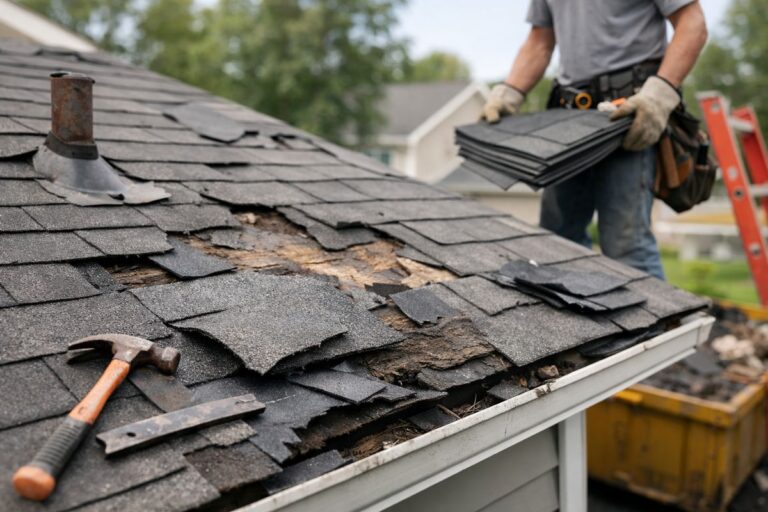
Once the old roof comes off, damaged decking can show up underneath. Decking is the wood surface your new roof attaches to. If it is rotten, soft, or water-damaged, it has to be replaced before roofing continues. Multiple old layers can also raise tear-off labor and disposal costs.
A quote that looks lower by $3,000 can end up higher later if it left out realistic repair allowances or glossed over existing damage. That is why an in-person inspection matters so much. It cannot predict every hidden issue, but it can catch a lot more than a satellite image ever will.
Permits, inspections, and florida code requirements
Permit costs are part of the real job cost, not an optional side note. Under Fla. Stat. § 553.79, work that requires a permit cannot legally be done without one. Roofing projects almost always fall into that category.
Permits also affect timing. In some places, review is quick. In others, not so much. The City of Miami notes that the first roofing permit review cycle may take up to 14 business days. If you are trying to schedule around storm season or an active leak, that delay matters just as much as price.
Cost by material: what you get for the money
Chasing the lowest number alone is how people end up buying the wrong roof. A better question is what you get for the money, and whether that matches your house, your plans, and your budget.
Asphalt shingles: lowest upfront cost
Shingles are usually the most affordable way to replace a roof on a Florida home. If your budget is tight, or if you do not plan to stay in the house for decades, shingles can make sense. Installation is familiar, materials are widely available, and the entry price is easier to stomach.
The trade-off is durability and lifespan. Florida sun is relentless, and wind-driven rain is rough on roofing materials. Shingles can still perform well, but usually not for as long as metal under the same conditions. If you are comparing the real-world differences between metal and shingles in Florida, the lower upfront cost is only one part of the story.
Metal roofing: higher price, strong florida fit
Metal roofing costs more at the start, sometimes a lot more. But Florida is one of the places where that extra cost has a real argument behind it. Metal handles rain well, sheds water fast, and tends to appeal to homeowners who want better long-term performance in wind-prone areas.
The catch is simple: you pay more now to avoid some future headaches later. If you expect to stay put, care about storm performance, or are already replacing an older roof that has struggled through a few rough summers, metal often deserves a serious look. It is not a magic roof, but it is a strong fit for Florida conditions.
Tile and other premium roofs
Clay tile, concrete tile, and other premium systems sit in a different price tier. These roofs can look fantastic and last a long time, but the installation is more specialized and the structure underneath may need to support more weight. That can mean additional engineering or framing work before roofing even begins.
This is rarely the budget choice. It is usually the style-and-longevity choice, and only if the house is built for it. If your home was not designed with tile in mind, the upgrade can become expensive in a hurry.
Repair or replace? Here’s the line
A leaking roof does not always mean full replacement. But patching a failing roof over and over is like topping off a tire with a nail in it. You get a little time, then you are right back where you started.
Use the 25% rule as a starting point, not the final answer
A common rule of thumb says that if repairs are getting close to about one-quarter of replacement cost, replacement deserves a hard look. That is useful, but not enough by itself.
Age matters. Repeat leaks matter. Storm history matters. If your roof is already near the end of its expected life and leaks keep showing up in new spots, sinking more money into repairs usually stops making sense. For a closer look at when a leak should push you toward replacement instead of another patch, focus on the pattern, not just the latest invoice.
Signs a repair is probably throwing good money after bad
Some patterns are hard to ignore. Repeated leaks in different areas, widespread shingle damage, sagging sections, soft decking, chronic flashing failures, and patchwork repairs across multiple slopes usually point toward replacement.
One isolated problem is different. A single damaged section after a storm can sometimes be repaired just fine. But when your roof starts behaving like a car that lives in the repair shop, the cheaper decision on paper stops being the cheaper decision in real life.
How to read a florida roofing estimate without getting burned
A roofing estimate should tell you what you are paying for, not ask you to trust a lump sum and hope for the best. If one quote is vague and another is detailed, the detailed one is usually the safer document even if the total is higher.
The line items you should expect to see
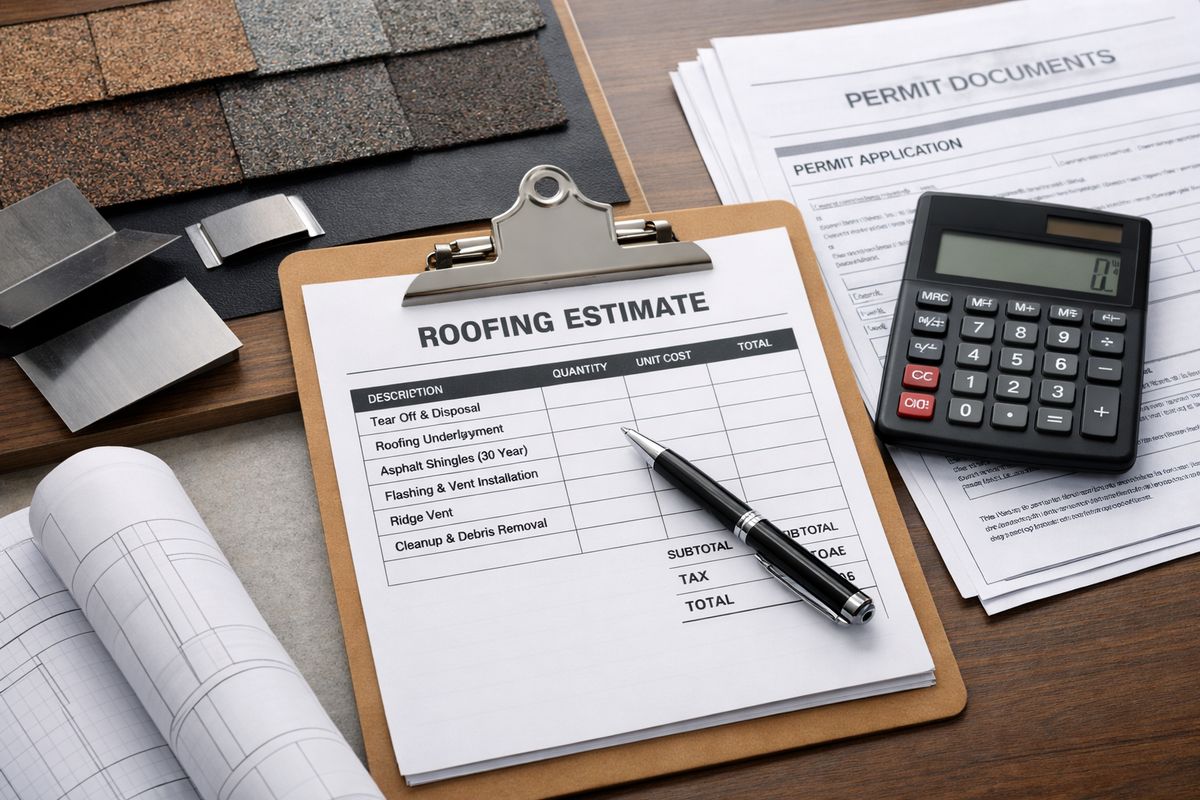
A proper estimate should separate materials, labor, tear-off, disposal, underlayment, flashing, ventilation, permits, and any decking replacement. That breakdown lets you compare bids apples to apples.
If one contractor includes upgraded underlayment, new flashing, permit handling, and ventilation corrections while another just writes “new roof, total price,” those are not equal quotes. One is a scope of work. The other is a gamble.
Florida-specific paperwork and legal details to notice
Florida adds another layer here. Under Fla. Stat. § 489.147, contractors handling insured repairs must provide a good-faith, itemized estimate before an insured signs an agreement authorizing repairs under a claim.
That itemization matters because it gives you something concrete to review. Miami-Dade also publishes roofing permit forms and hurricane-mitigation documents, which is a useful reminder that roofing in Florida is not just a materials purchase. It is a permitted construction project.
Red flags in a “too good to be true” quote
Some red flags are obvious once you know where to look. No permit line. Vague material descriptions. No mention of underlayment or flashing. No disposal detail. Pressure to sign before a full inspection. A suspiciously low total paired with very little scope.
The trick is to notice what is missing, not just what is present. The cheapest quote can stay cheap only by leaving something out.
How to choose the right roofing contractor in orlando or anywhere in florida
When bids are far apart, it is tempting to assume one contractor is just overpriced. Sometimes that is true. Often, the difference comes down to scope, materials, and how carefully the roof was inspected.
Ask for an in-person inspection, not a drive-by guess
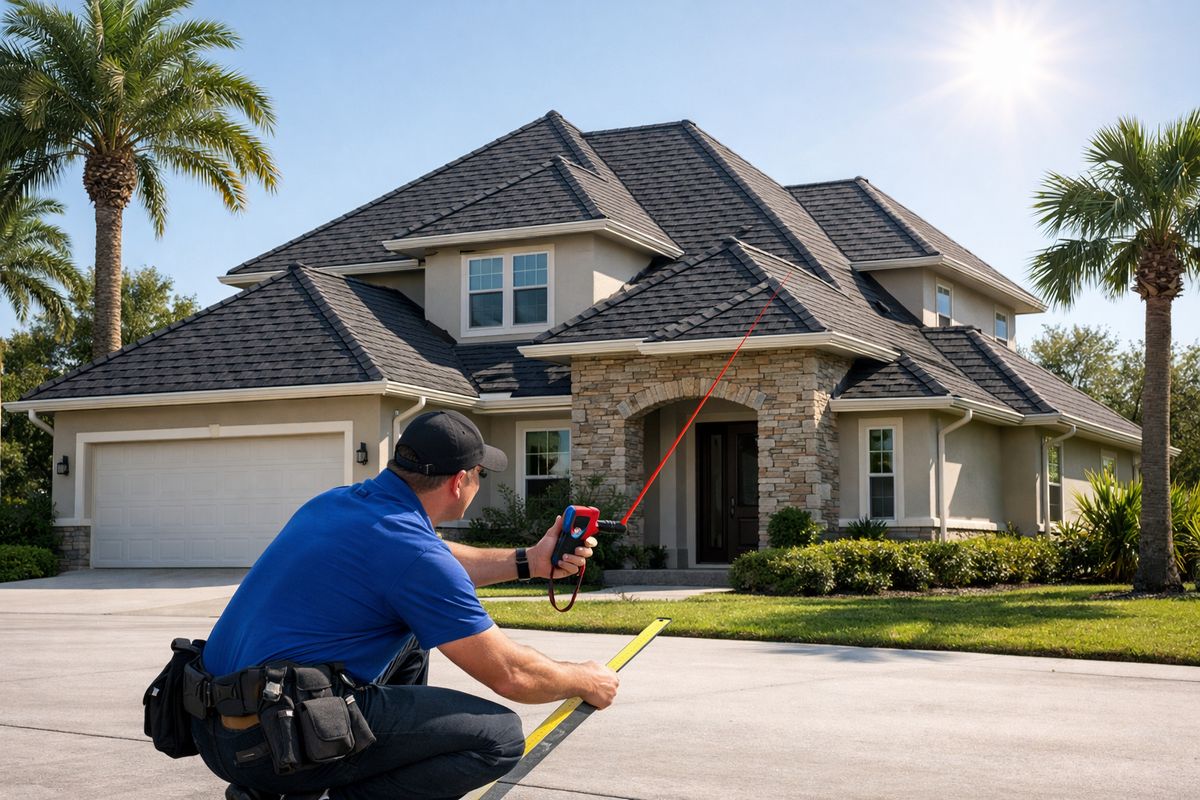
The most reliable estimate starts with real measurements and an actual inspection. That means checking the roof surface, the flashing, the penetrations, the visible deck condition, the number of existing layers, and the areas where leaks are most likely to hide.
Online calculators are fine for curiosity. They are not fine for a contract. If somebody prices your roof from a driveway photo and a property appraiser record, you still do not have a real number.
Compare bids the smart way
Get at least a few written estimates and compare the scope, not just the total. Look at material type, underlayment, flashing replacement, ventilation work, permit handling, warranty terms, cleanup, and timeline. If one bid is much lower, find out exactly what got cut.
It also helps to compare contractor explanations. The better estimate usually reads like somebody actually looked at your roof and thought through the job.
The best next step before you spend a dollar
Before you spend a cent, get one itemized, in-person estimate that lists roof squares, material type, tear-off, underlayment, flashing, ventilation, permits, and possible decking repairs. That single document turns a vague internet price question into a real decision you can work with.
Ready to protect your home? Get in touch with the Hi Low Roofing team for your free estimate. https://hilowroofing.com/free-estimate/
Frequently asked questions
How much should replacing a roof on a 2,000-square-foot florida home cost with shingles?
A shingle roof on a 2,000-square-foot Florida home often falls around $12,000 to $22,000, but the real total depends on roof surface area, tear-off needs, roof complexity, and permit costs. A simple one-story roof usually lands lower than a steep or cut-up design.
Why is my roof quote based on more than 2,000 square feet?
Because roofers price the actual roof surface, not your home’s interior size. Pitch, overhangs, hips, valleys, and multiple roof planes can push the roofing area well beyond 2,000 square feet.
Is a metal roof worth the extra cost in florida?
Often, yes. Metal costs more upfront, but it is a strong fit for Florida heat, rain, and storm conditions. If you plan to stay in your home for a long time or want stronger long-term performance, the higher initial price can make sense.
Should you repair a leaking roof or replace it?
If the roof is fairly new and the problem is isolated, a repair can be the smart move. If leaks keep returning, the roof is older, or repair costs are approaching about 25 percent of replacement cost, replacement usually deserves a serious look.
What should a florida roofing estimate include?
At minimum, expect line items for materials, labor, tear-off, disposal, underlayment, flashing, ventilation, permits, and decking replacement if needed. A lump-sum quote hides too much to compare safely.
How long can permits delay a roof replacement in florida?
It depends on the city or county. Some areas move quickly, while others take longer. In Miami, for example, the first roofing permit review cycle may take up to 14 business days, which can affect scheduling even before work begins.