

When it comes to protecting your Lakeland roof, the best choices are almost always the modern synthetic or self-adhered membranes. They simply offer superior protection against Central Florida's intense humidity, heavy rainfall, and high winds.
While traditional felt is still an option, its lower water resistance and durability make it a tough sell for our demanding local climate. Ultimately, your final decision will hinge on your specific roof type, your budget, and how long you want the system to last. As a leading roofing and solar contractor serving the entire I-4 corridor from Pinellas County to Orlando, Hi Low Roofing is here to guide you through these crucial choices for both residential and commercial properties.
Why Underlayment Is Your Roof's First Line of Defense
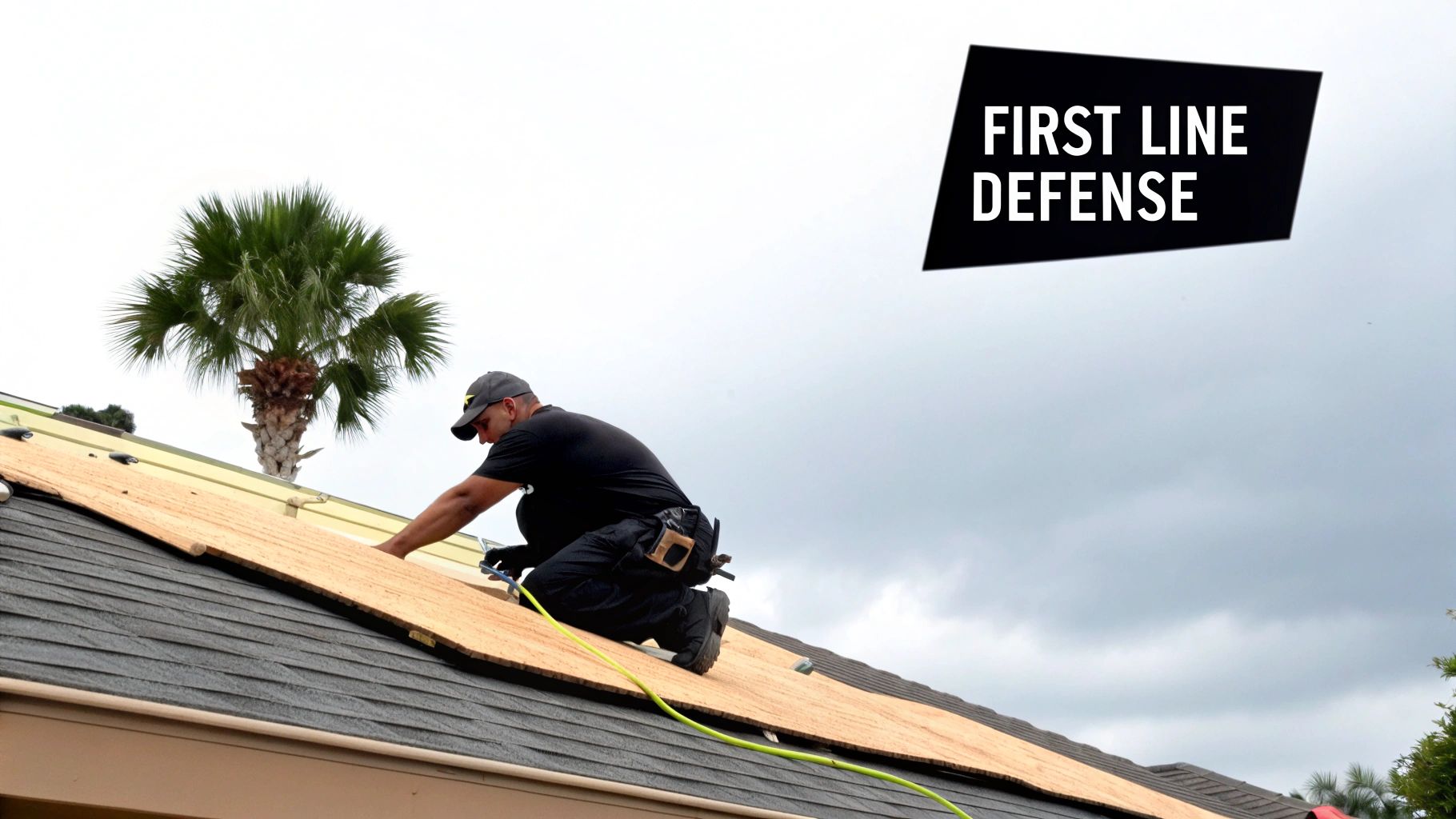
Most Central Florida homeowners naturally focus on the visible parts of their roof, like the shingles or tiles. But the hidden layer right beneath them—the roofing underlayment—is arguably more critical for keeping your property dry and safe. This water-resistant barrier acts as your home's last stand against moisture intrusion.
Think of it as your roof's secret weapon. If hurricane-force winds lift a shingle or a torrential downpour finds a tiny crack, the underlayment is what stops water from soaking your roof deck. Without it, you're looking at costly wood rot, mold, and serious interior leaks.
The Role of Underlayment in Central Florida
Here in Polk County and across the region, with our constant humidity and sudden thunderstorms, the right underlayment isn't just a building code requirement; it's non-negotiable for long-term protection. A properly installed underlayment system delivers a few key benefits:
- A Secondary Water Barrier: It protects the roof's structure from water damage, especially if the primary roofing material gets compromised during a storm.
- Enhanced Durability: It adds a crucial layer of defense against wind-driven rain, a constant threat during Florida’s hurricane season.
- Improved Energy Efficiency: Some modern underlayments are designed to reflect heat, which can reduce the thermal load on your attic and help lower those summer cooling bills.
The underlayment is truly the foundation of a resilient roofing system. Choosing the right material for the Lakeland area climate ensures your shingles or tiles perform as intended and your property stays dry for decades.
For a comprehensive look at your roof's condition, including the underlayment, tools like modern drone roofing inspection software can provide incredibly accurate assessments without someone having to walk every inch of your roof.
Now, let's explore the main underlayment choices—traditional felt, synthetic, and self-adhered membranes—to help you make the best call for your property.
A Breakdown of Your Underlayment Options
When it comes to protecting your Lakeland roof, you have to get familiar with the materials that do the real work under the shingles. We're talking about three main players: traditional felt, modern synthetics, and the premium self-adhered membranes. Each one brings something different to the table, especially when you consider Central Florida's weather.
Understanding what they're made of is the first step. This isn't just about brand names; it's about knowing the science behind what keeps your home dry during a summer downpour or a tropical storm.
Traditional Asphalt-Saturated Felt
For generations, asphalt-saturated felt was the go-to underlayment. It's essentially a mat of organic cellulose (wood fiber) or fiberglass that's been soaked in asphalt to make it water-resistant. You'll often hear it called #15 felt (the standard) or #30 felt, which is twice as thick and a lot tougher.
But here's the thing about felt: it's more of a sponge than a true barrier. It absorbs moisture, which causes it to wrinkle and buckle over time. Those wrinkles can eventually show through the shingles, which doesn't just look bad—it can create weak spots where water might get in.
Advanced Synthetic Underlayment
Synthetic underlayment is a huge step up in roofing technology. These are engineered from woven polypropylene or similar polymers, resulting in a material that's incredibly strong, lightweight, and almost impossible to tear by hand. Unlike felt, synthetics don't absorb water at all; they repel it completely. This means your roof deck stays bone-dry even if it gets rained on during the installation process.
In a place like Lakeland and across our service area, with its heavy rain and constant humidity, this is a big deal. Synthetics can offer superior durability, built-in UV protection, and a potential lifespan of 25 to 50 years. Their strength and light weight also make life easier for installers, who can cover more ground with fewer trips up the ladder. You can find more underlayment technology insights from roofing experts if you want to dig deeper.
Self-Adhered Waterproof Membranes
For the absolute best protection, you have self-adhered or "peel-and-stick" membranes. Think of this as a sheet of rubberized asphalt with a powerful adhesive backing. When it’s laid down on the roof deck, it bonds directly to it, creating a truly waterproof seal.
The real magic of this material is its ability to form a watertight gasket around every single nail or fastener that goes through it. This self-sealing quality is what makes it the best choice for the most vulnerable parts of your roof—like valleys, eaves, and around pipes—where water always tries to find a way in.
Because it's a premium product, it does cost more. That's why we at Hi Low Roofing often use it strategically. We'll install it in those high-risk areas and then use a high-quality synthetic underlayment for the rest of the roof. This hybrid approach gives your Central Florida property an incredibly tough defense system without breaking the bank.
Comparing Underlayment Performance in Florida Weather
When you're choosing an underlayment for your Lakeland roof, you're doing more than just picking a material. You're selecting your home's last line of defense against Florida’s unique brand of weather. The difference between old-school felt, modern synthetics, and premium self-adhered membranes becomes crystal clear once our intense sun, heavy humidity, and hurricane-force winds arrive.
To make the best call, we need to look at what really counts in Central Florida: how each material handles water, holds up to extreme heat, and resists physical stress like high winds.
The infographic below gives a great high-level overview of the three main players and their fundamental differences.
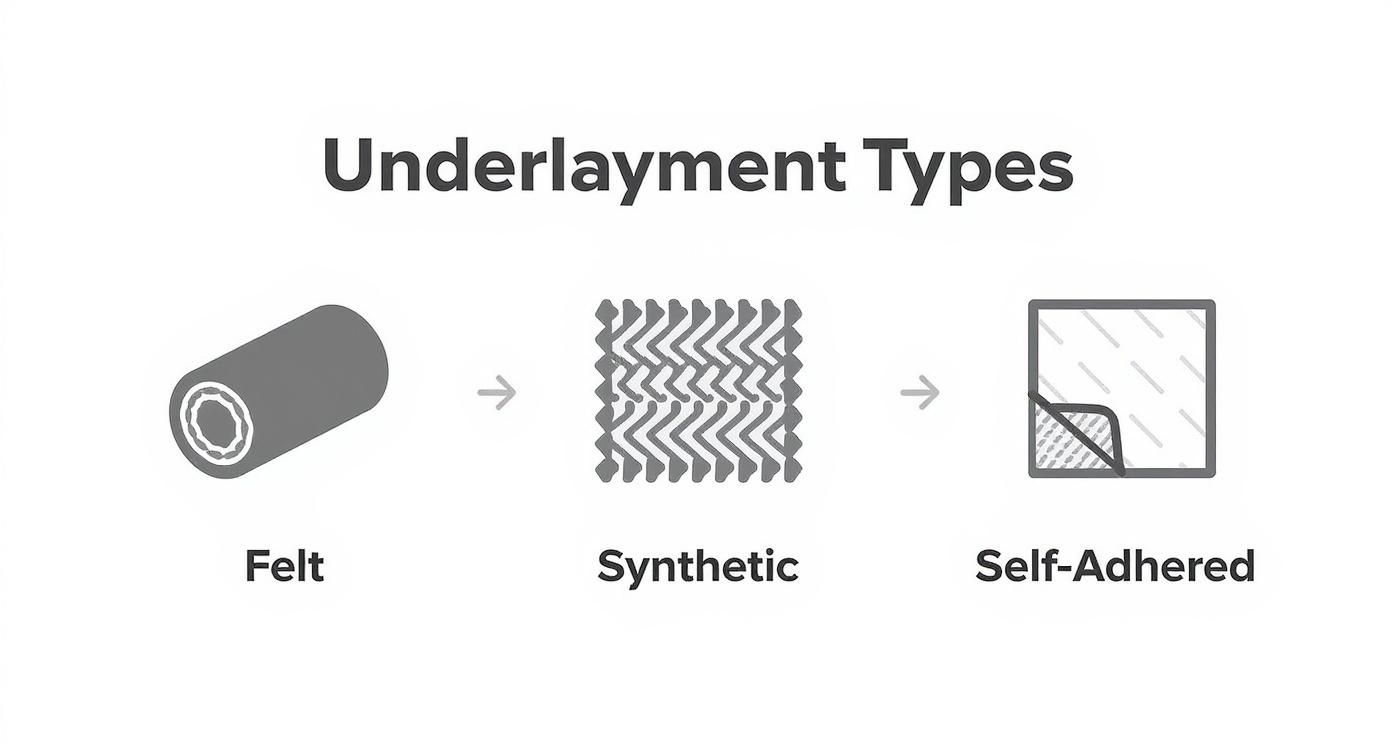
This visual helps set the stage, showing how we’ve moved from basic felt paper to advanced peel-and-stick technology.
Water Resistance Versus True Waterproofing
In an area that gets hammered with over 50 inches of rain a year, water management is everything. Traditional asphalt felt is water-resistant, which is a nice way of saying it sheds water but isn't foolproof. Felt paper will eventually absorb moisture, and in our relentless humidity, that leads to wrinkles, saturation, and rot.
Synthetic underlayment is a different beast entirely. Made from woven polypropylene, it’s hydrophobic—it literally repels water and can’t absorb it. This means it acts as a true moisture barrier, channeling water off your roof deck without ever getting waterlogged itself. This is a huge advantage, especially if a sudden storm hits during the installation process.
The key distinction for Central Florida property owners is this: felt manages moisture, while synthetic underlayment defeats it. During a prolonged summer rainstorm, a synthetic layer will remain stable and protective long after felt has become a soggy, compromised mess.
For the ultimate guard against water, self-adhered membranes are genuinely waterproof. Their sticky, rubberized asphalt base bonds directly to the roof deck, creating a seamless, watertight seal. That’s why they are non-negotiable for low-slope sections, valleys, and eaves where water loves to collect.
Durability Against UV and Heat Exposure
Let's talk about the Florida sun. It’s brutal. Before the shingles go on, your underlayment is often exposed to direct sunlight. Asphalt felt starts to break down fast under UV rays, getting brittle and losing its protective oils within just a few days. This puts a ton of pressure on scheduling.
On the other hand, synthetic underlayments are engineered with powerful UV inhibitors. Most can sit exposed for 30 to 180 days without losing an ounce of performance. This resilience gives roofing crews much-needed flexibility and ensures the material is at full strength before the final roof covering is installed.
Tear Strength and Wind Resistance
Roofing is a physical job, and installers are walking all over the underlayment. Felt tears easily, creating weak spots that are basically invitations for water to get in. Synthetics, with their woven construction, have incredible tear strength. They're tougher, safer to walk on, and simply more durable.
This strength becomes mission-critical during a hurricane. If high winds manage to lift a shingle, a flimsy felt underlayment will shred in an instant, leaving your roof deck completely exposed. The robust nature of synthetic materials provides a far superior secondary defense, an essential component of any true hurricane-proof roofing system.
For a clearer picture, let's put these materials side-by-side based on the factors that matter most here in Lakeland and the surrounding communities.
Underlayment Feature Comparison for Lakeland Homes
This table breaks down how each underlayment type stacks up against Central Florida's specific climate challenges.
| Feature | Asphalt-Saturated Felt | Synthetic Underlayment | Self-Adhered (Rubberized Asphalt) |
|---|---|---|---|
| Water Handling | Water-resistant; can absorb moisture | Water-repellent; does not absorb moisture | 100% Waterproof; creates a watertight seal |
| Tear Strength | Low; tears easily during installation | High; very durable and safe to walk on | Excellent; very tough and pliable |
| UV Resistance | Poor; degrades in a few days | Excellent; can be exposed for 30-180 days | Good; designed for immediate covering |
| Lifespan | 10-15 years | 25-50 years | 30-50+ years (part of a system) |
| Wind Resistance | Poor; can easily be ripped by high winds | Excellent; acts as a strong secondary barrier | Superior; adheres directly to the deck |
| Best Use Case | Budget-focused projects with quick installs | Standard on most quality shingle roofs | Valleys, eaves, low slopes, and premium roofs |
It's easy to see why synthetic underlayment has become the new standard in the Florida roofing market, pushing traditional felt aside with its superior, well-rounded performance. A premium system often uses both: synthetics across the main roof field and self-adhered membranes in the high-risk areas like valleys and penetrations. This hybrid approach gives you the best of both worlds.
Which Underlayment Works Best for Your Roof Type?
The technical specs are important, but choosing the best underlayment for your Lakeland roof really comes down to your specific property. A standard-pitch residential roof has completely different demands than a low-slope commercial patio cover. By looking at a few common local scenarios, we can zero in on the perfect material to give you the best protection and value.
The goal here isn't just about passing inspection; it's about building a complete roofing system that fits your building’s design and is ready for everything Central Florida’s weather can throw at it.
The Standard Central Florida Shingle Roof
For the majority of homes in Lakeland and across Central Florida with a standard-pitch roof and architectural shingles, a high-quality synthetic underlayment is the hands-down winner. It just hits the sweet spot, offering superior water resistance, incredible durability, and excellent long-term value.
Unlike old-school felt paper, synthetic underlayment doesn’t soak up moisture and wrinkle during our humid summers. This means your shingles lay perfectly flat and perform exactly how they were designed to. Plus, its tear strength is a huge advantage, providing a reliable secondary water barrier if a shingle ever gets blown off during a storm.
For a typical residential roof replacement in Polk County, upgrading to a robust synthetic underlayment is one of the smartest financial moves you can make. You get premium protection that lasts for decades, without the premium price tag of a full self-adhered system.
Thinking about the future is also key. If solar panels might be in your plans, you'll want to understand the specific roof requirements for solar panel installation to ensure your roof remains watertight and structurally sound for years to come. Hi Low Roofing is a solar provider and can help integrate your roofing and solar needs seamlessly.
Low-Slope Roofs and Patios
Plenty of Central Florida homes and businesses have low-slope or nearly flat roof sections over carports, Florida rooms, or back patios. On these surfaces, water doesn't run off quickly, which creates a prime opportunity for leaks. In these situations, a self-adhered waterproof membrane isn't just a good idea—it's absolutely essential.
These peel-and-stick membranes bond directly to the roof deck, creating a single, seamless, waterproof sheet. This is the only way to reliably prevent the slow, nagging leaks that plague low-slope areas. At Hi Low Roofing, we often install TPO systems for these tricky spots on both residential and commercial properties. You can see more about our approach at https://hilowroofing.com/residential-tpo-roofing/.
Addressing Budget-Focused Projects
We get it—budget is always a factor. For smaller projects like a shed, or in situations where cost is the absolute top priority, 30-lb asphalt-saturated felt might seem like the way to go. It does meet the minimum building code and has the lowest upfront cost.
But it’s critical to look at the bigger picture. While you might save a little bit of money today, felt’s shorter lifespan and weakness against moisture can easily lead to more repairs and even a premature roof replacement down the road. The small extra investment for a synthetic upgrade often saves thousands over the life of the roof by preventing water damage. For a Central Florida roof, that upgrade almost always pays for itself.
Understanding the Cost and Long-Term Value
When it comes to your roof, the underlayment is a direct investment in your property's future. It’s easy to get fixated on the initial price tag, but the real financial story unfolds over years of withstanding Florida’s weather. A cheaper material today can quickly become a much bigger, more expensive problem down the road.
Looking at the cost of underlayment for a Lakeland home or business means seeing beyond the price per square foot. The true value is a mix of the material's cost, how long it will last, and how well it can prevent catastrophic water damage during a hurricane or one of our intense summer thunderstorms.
Breaking Down the Investment
The initial cost varies quite a bit between the three main types of underlayment. Here’s a realistic look at what you can expect in the Central Florida market:
- Asphalt-Saturated Felt: This is the classic, budget-friendly choice. It’s appealing if the upfront cost is your main concern, but its shorter lifespan and tendency to degrade with moisture exposure mean you'll likely be dealing with it again sooner rather than later.
- Synthetic Underlayment: This is the sweet spot for most property owners, offering the best balance of cost and performance. It costs more than felt, but its incredible durability, tear resistance, and 25 to 50-year lifespan provide fantastic long-term value.
- Self-Adhered Membranes: As a premium product, this one has the highest initial cost. Its real worth comes from creating a completely waterproof seal in the most critical areas of your roof, like valleys and eaves.
The True Cost of a Cheaper Underlayment
Choosing a lower-grade underlayment like basic felt might save you a few hundred dollars on your initial roof replacement, but this can turn into a very costly gamble. Felt can absorb moisture and tears easily, leaving your roof deck exposed to water damage if even a single shingle is blown off or cracked. One leak can spiral into thousands of dollars in repairs for rotted sheathing, ruined insulation, and stained drywall inside your property.
The total cost of ownership for your roof isn't just the installation price—it's the cost of installation plus any future repairs. A robust synthetic underlayment dramatically reduces the likelihood of those expensive future repairs, making it a smarter financial choice.
This is why we're seeing a big shift in the industry. Market surveys show that while traditional felt is still out there, synthetic products are quickly becoming the standard for professional, quality-conscious contractors like Hi Low Roofing. This change reflects a growing understanding of just how vital superior water protection is in a climate like ours. You can read the full analysis on roofing underlayment trends to see how the market is evolving.
Ultimately, investing in a high-performance underlayment is one of the single biggest factors in your roof's overall lifespan. To get a better sense of this connection, our guide explains in detail how long roofs last in Florida when they're built with the right components from the start.
Let's Find the Right Underlayment for Your Project
Figuring out the best underlayment for a Lakeland roof can feel like a lot to take on, but you don’t have to go it alone. After walking through the options, it’s pretty clear that for most homes and businesses around here, modern synthetic underlayment hits the sweet spot. It gives you the performance, storm protection, and value you need to stand up to our Central Florida climate, outlasting old-school felt by a long shot.
Of course, knowing what you need is one thing; getting it done right is another. That’s where a good partner comes in. At Hi Low Roofing, we’ve spent years on roofs right here in the I-4 corridor, choosing and installing systems built for our specific weather challenges. We know Polk County's building codes inside and out, and we make sure every roof is ready for whatever a Florida summer can throw at it.
Your roof is the most important part of your property's defense system. A professional eye ensures every single component—especially that critical underlayment layer—is the right fit for decades of protection.
Don't leave it up to guesswork. Let our team take a look and give you a straightforward plan to make your home or commercial building secure.
Give Hi Low Roofing a call today to schedule your free, no-pressure consultation. Let's get you the peace of mind you deserve.
Alright, let's wrap this up by tackling some of the questions we hear most often from Central Florida property owners about roof underlayment. Getting the right answers can make all the difference in feeling confident about your investment. These are the kinds of details that separate a decent roof from one that truly lasts.
Is Synthetic Underlayment Required By Florida Code?
The Florida Building Code doesn't single out synthetic underlayment by name, but it does have very strict rules for wind and water resistance. This is where high-quality synthetics really shine—they are specifically designed to blow past those standards.
With their incredible tear strength and ability to shed water, they've become the go-to choice for making sure a roof is not just compliant, but genuinely ready for whatever a hurricane throws at it.
Can New Underlayment Be Installed Over an Old Layer?
We get this question a lot, and the answer is always a hard no. Putting a brand-new roof over an old, worn-out layer is just asking for trouble. It traps moisture, hides potential damage, and basically undermines your entire investment from the start.
At Hi Low Roofing, our standard is a complete tear-off of the old material, no exceptions. This is the only way to do the job right.
- It lets us inspect the roof deck. We can find and replace any soft spots or rotted wood that was hidden underneath.
- It creates a perfectly flat surface. This is crucial for making sure your new shingles or tiles lay correctly and look great.
- It ensures a solid seal. The new underlayment needs to bond directly to the wood deck to give you that seamless, waterproof barrier.
How Long Can Underlayment Be Exposed to the Sun?
This is one of the biggest practical advantages of going with a synthetic material. Old-school asphalt felt starts to break down in just a few days of Florida sun, getting brittle and losing its protective qualities.
In contrast, most modern synthetic underlayments are rated for 30 to 180 days of UV exposure without losing any of their strength. This gives roofing crews a much bigger, safer window to work in, ensuring your underlayment is in perfect condition when the final roofing material goes on.
Ready to make sure your Lakeland-area property has the best possible protection, starting from the deck up? The team at Hi Low Roofing & Solar has the local know-how to walk you through every decision, from underlayment to the final shingle. Contact us today for a free roof inspection and a detailed, no-nonsense estimate.
