

How long does a roof really last in Florida? That’s the million-dollar question, isn't it? While a manufacturer’s warranty might paint a picture of decades of durability, the reality here in Central Florida is often a different story. We see lifespans ranging from as little as 15 years for asphalt shingles to well over 50 years for a high-quality metal roof.
The difference-maker? Our relentless sun, oppressive humidity, and the ever-present threat of hurricanes.
Your Quick Guide to Florida Roof Lifespans
A roof in Orlando or Clearwater has a much tougher job than one in a milder, northern climate. Think of the manufacturer's estimated lifespan as the "best-case scenario"—achieved in a perfect lab setting. Florida's weather, on the other hand, is constantly working to shorten that lifespan from day one.
Getting familiar with the typical range for each material is the first step toward making a smart investment for your home. Different materials handle our unique environment in vastly different ways. For instance, asphalt shingles are popular because they're easy on the wallet upfront, but they're also the most susceptible to heat damage and wind uplift. On the flip side, materials like tile and metal are engineered to fight back against the elements, giving you much longer-lasting protection.
Lifespan of Common Roofing Materials
To give you a clearer picture, let's break down the expected lifespan for the most common roofing systems you'll find across Central Florida, from Pinellas County to Orlando.
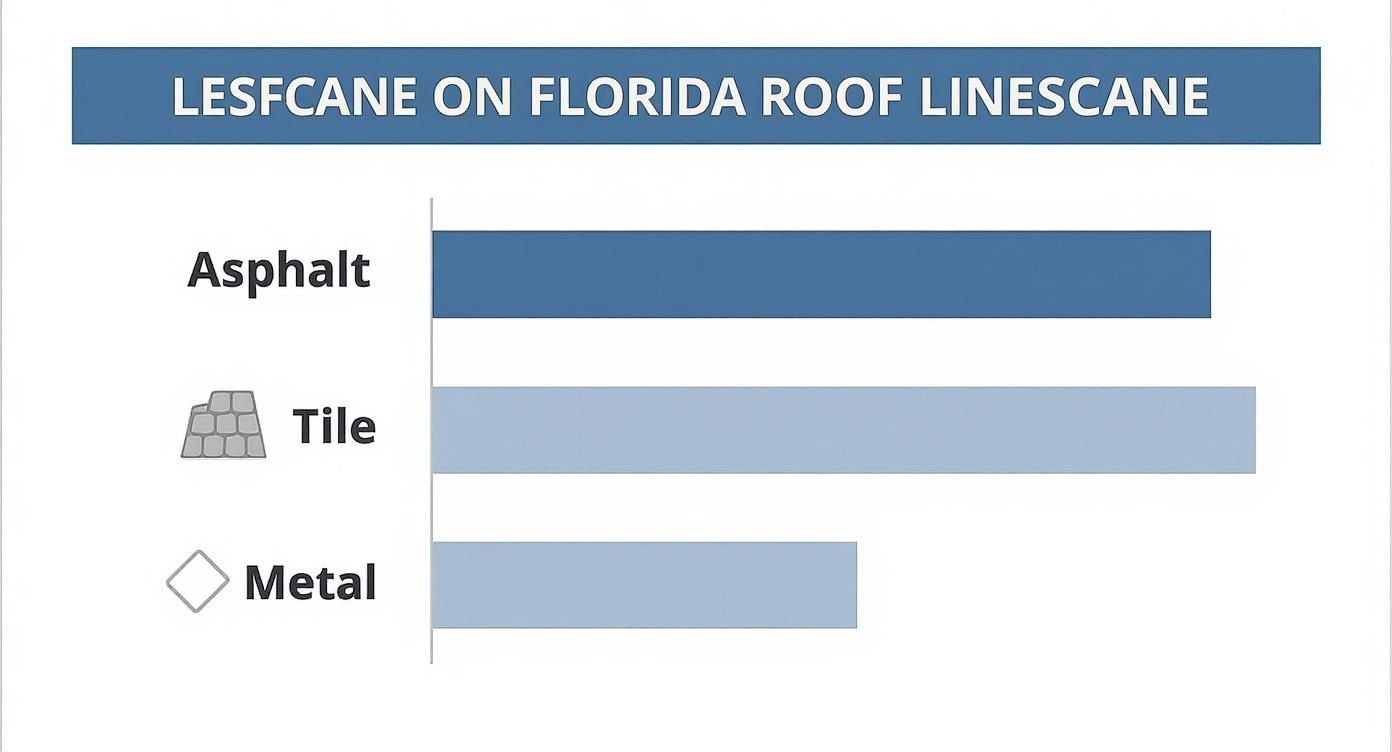
As you can see, while asphalt is a perfectly fine choice, both tile and metal roofs can easily offer more than double the durability. For homeowners from Pinellas County to Orange County, that makes them a far superior long-term investment.
Estimated Roof Lifespan in Florida by Material
Here’s a quick comparison of how common roofing materials hold up under Central Florida's unique and demanding weather conditions.
| Roofing Material | Typical Lifespan (Years) | Key Considerations for Florida |
|---|---|---|
| Asphalt Shingles | 15–25 Years | Prone to granule loss from UV rays and algae growth from humidity. Highly susceptible to wind uplift during storms. |
| Clay/Concrete Tile | 25–50 Years | Excellent resistance to fire and rot. Its weight requires a strong roof structure but offers superior durability. |
| Metal Roofing | 40–70+ Years | Unmatched wind resistance, making it ideal for hurricane zones. Reflects solar heat, leading to lower energy bills. |
It's clear that the more durable materials come with a higher price tag, but they also provide peace of mind and long-term value that can't be ignored.
The key takeaway is simple: the initial cost of a roof doesn't tell the whole story. A longer-lasting material like metal may have a higher upfront price but can save you from multiple expensive replacements over the life of your home.
Why Florida Weather Is Your Roof's Biggest Enemy
A roof in Florida doesn't just sit there—it's in a constant fight with our unique and punishing climate. While homes in other states might face a major weather challenge here and there, a roof in Tampa, Orlando, or St. Pete is under a year-round assault from multiple directions at once. This relentless stress is exactly why the question "how long do roofs last in Florida" is so much more complicated than it is anywhere else.
Think of it this way: your roof is a shield. In most places, that shield only sees action every now and then. Here in Central Florida, it’s defending against a siege, 24/7.
The Four Main Attackers of Florida Roofs
The weather in Central Florida isn’t just harsh; it's a perfect storm of elements that team up to break down roofing materials way ahead of schedule. Once you understand these attackers, it becomes crystal clear why a so-called "30-year shingle" almost never sees its 30th birthday here.
-
Intense UV Radiation: The Sunshine State lives up to its name, but that sun is brutal. Those relentless UV rays are constantly baking your roof, drying out the oils in asphalt shingles until they become brittle and crack. This UV assault also fades colors and burns off the protective granules—think of it as stripping away your roof's sunscreen and leaving it exposed.
-
Oppressive Humidity: Our thick, muggy air is an open invitation for things to start growing on your roof. You've seen it: those ugly black streaks of algae (Gloeocapsa magma), patches of green moss, and even mold. They don't just look bad; they trap moisture against your shingles and tiles, promoting rot and decay from the outside in.
-
Torrential Rain and High Winds: We don't do gentle drizzles. Florida rain is a sudden, heavy downpour, often driven sideways by powerful winds. This combination is a master at finding the single weakest point on your roof—a loose flashing, a raised nail, or a poorly sealed vent. One of our typical afternoon thunderstorms can turn a tiny issue into a major leak in minutes.
-
Hurricane Threats: This is the ultimate stress test. Nothing challenges a roof like a hurricane. The incredible wind uplift and cyclical pressure changes can literally peel shingles off, shatter tiles, and rip away entire sections of metal roofing. This is precisely why Florida has some of the strictest building codes in the nation.
Making smart, climate-appropriate choices for your home's exterior is critical, and the same logic applies inside. Choosing materials built to last in our environment is key, which is why many homeowners also research the best flooring choices for Florida homes to ensure their entire property is resilient.
The Florida Factor: It's not one thing—it's the tag team. The sun weakens a shingle, the humidity helps algae grow on it to trap moisture, and then a wind-driven storm hits that exact spot. This destructive cycle is why local roofing expertise isn't a luxury; it's a necessity.
Why Local Knowledge Is Essential
A roofer from up north might follow the book, but they won't understand the nuances of our climate. They might not know the specific nailing patterns needed to fight hurricane-force winds or which underlayment best resists the humid, salty air in Pinellas County.
Choosing a local, experienced contractor who serves the entire region from Pinellas County to Orlando means you're getting someone who knows the unwritten rules of building a roof that can survive Florida. They understand this compounding effect of sun, moisture, and wind, and they know how to build a defense that will actually last. This kind of specialized knowledge is what can turn a potential 15-year problem into a 25-year solution.
How Long Do Asphalt Shingle Roofs Really Last?
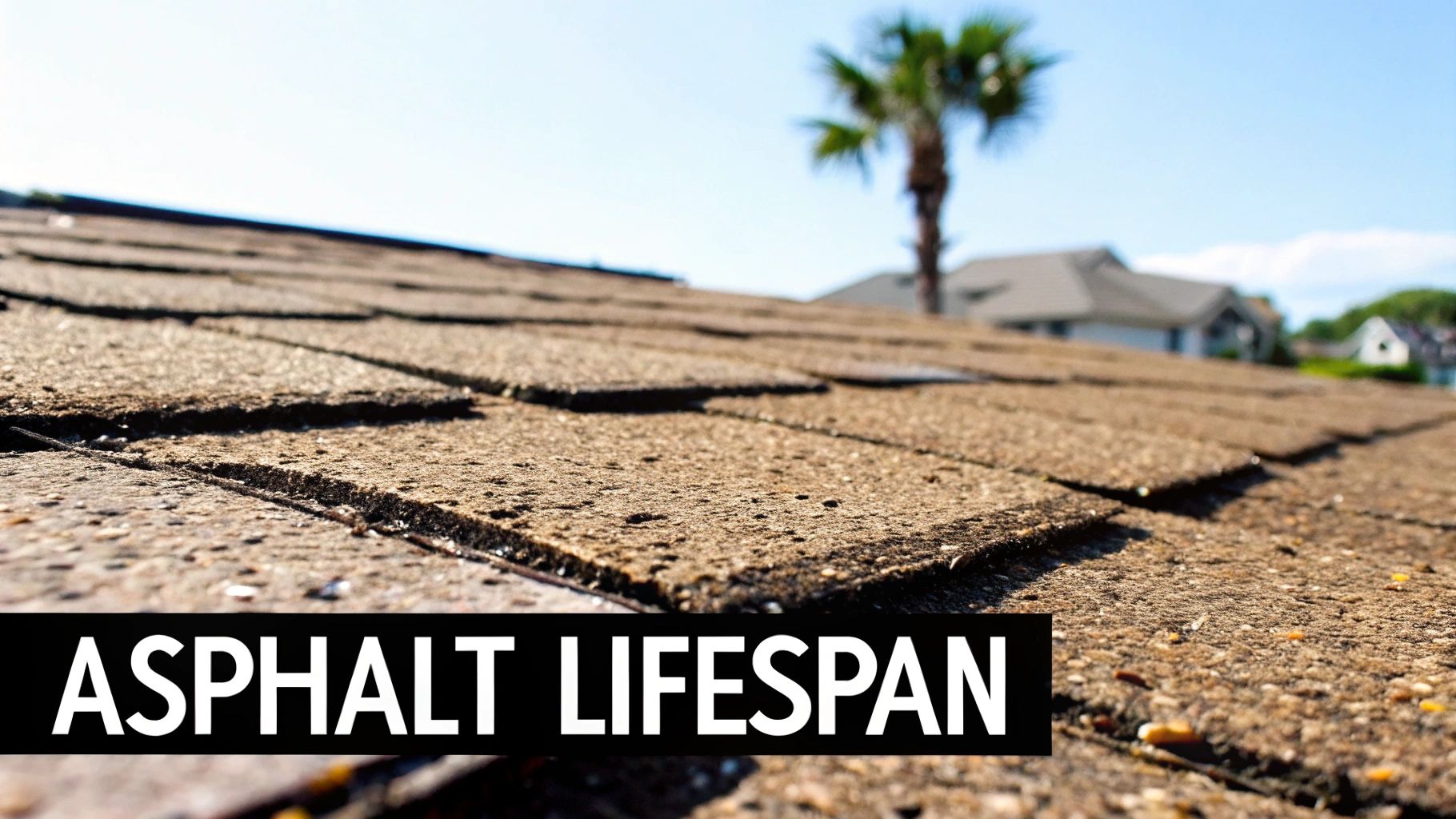
Drive through almost any neighborhood from Pinellas County to Orlando, and you'll see a sea of asphalt shingle roofs. They're everywhere. Their popularity boils down to a great balance of affordability and a classic look, making them the go-to for most homeowners and builders. But here's the catch: when it comes to how long they last in Florida, the number on the warranty can be pretty deceiving.
While shingle manufacturers love to advertise 30-year warranties, hitting that number in our climate is a long shot. The reality is that the constant assault of intense sun, high humidity, and torrential rain cuts that lifespan down significantly. Here in Central Florida, you can realistically expect an asphalt shingle roof to last somewhere between 15 to 25 years, and that's with proper maintenance. This isn't a defect in the product; it's a direct result of our unique and punishing weather.
The One-Two Punch: Florida's Heat and Storms
So, what’s actually happening up there? The main enemy of your asphalt shingles is the sun. The relentless UV radiation essentially bakes the shingles day after day, causing the essential oils in the asphalt to dry out. This makes them brittle, prone to cracking, and causes them to shed the protective granules that shield them from the elements.
Just as damaging is what the heat does to the adhesive. Every shingle has a tar strip on its underside designed to melt in the sun, sealing it to the shingle below. This creates a single, unified surface that can stand up to high winds. But our heat is a double-edged sword.
- Weakened Adhesive: Constant, extreme heat cycles can degrade this crucial adhesive over time, weakening the bond between shingles.
- Wind Uplift: When a strong thunderstorm or hurricane blows through, wind can easily get under those poorly sealed shingles, prying them up and ripping them right off the roof.
- Creased Shingles: Even if a shingle doesn't tear off completely, the violent flapping can create a permanent crease. This breaks the fiberglass mat inside, creating a direct pathway for water to get in.
It's a scenario we see all the time. A single, nasty afternoon thunderstorm in Tampa can expose weak points across an entire section of a roof, turning a few loose shingles into a major leak. Once a shingle is creased, it will never seal back down properly.
Why You Need to Know Florida's "25% Rule"
Now, let's talk about a critical piece of local building code that every Florida homeowner should know: the 25% Roof Rule. This regulation can turn a seemingly small repair into a much bigger project.
Simply put, the rule dictates that if more than 25% of your roof is damaged within a 12-month period, you can’t just patch it up. You are legally required to replace the entire roofing system to bring it up to the latest building codes.
This means that storm damage you thought might be a simple, localized repair could trigger a mandatory full roof replacement. This rule is exactly why proactive maintenance and choosing the right materials from the start is so important. If you’re looking at a new roof, it's wise to work with a pro who understands these local codes and conditions, which you can do by exploring an asphalt shingle installation in Clearwater.
Stepping Up to Durable Options: Tile and Metal
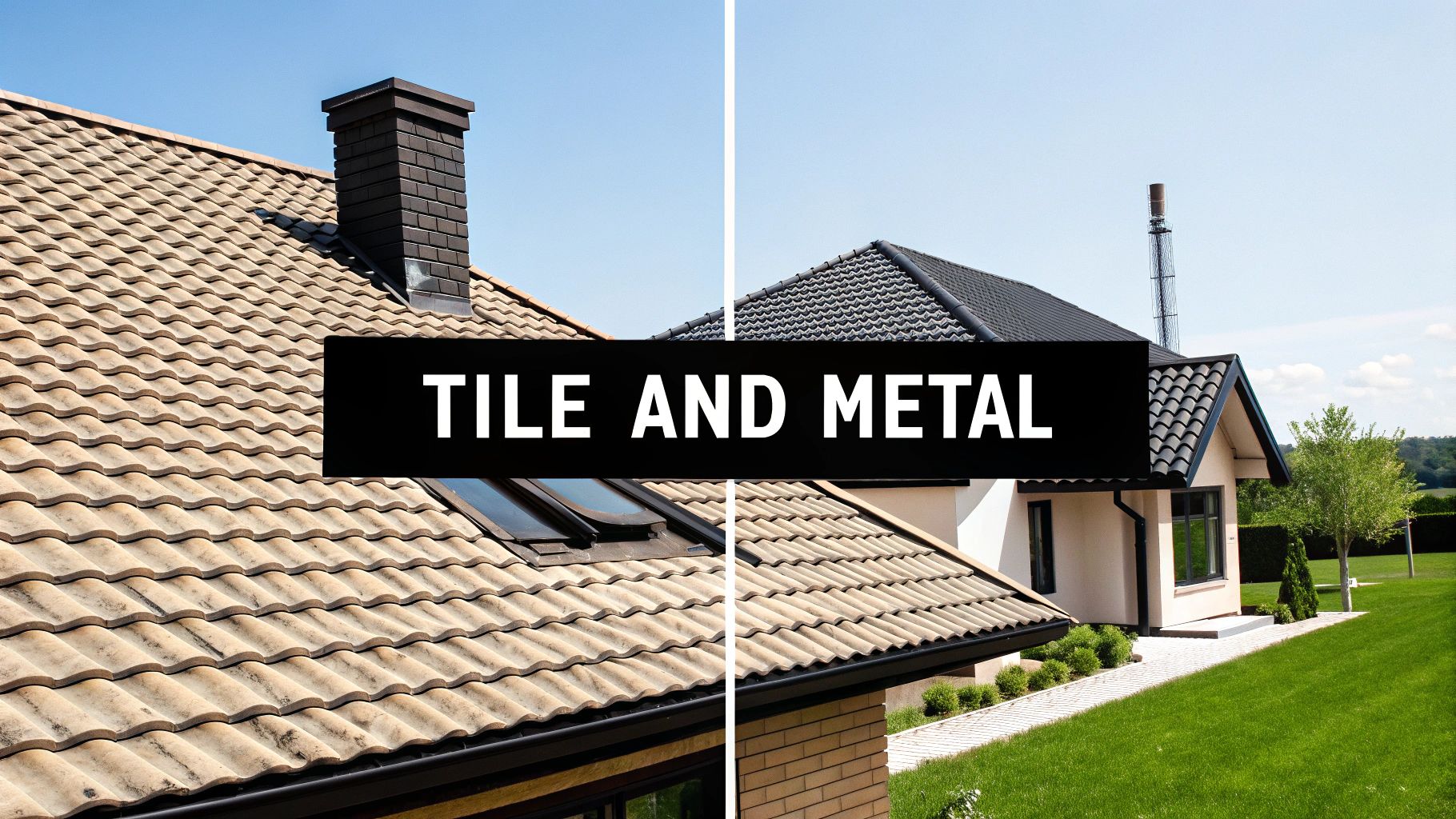
If you're tired of thinking about your roof every 15 years, it might be time to look beyond standard asphalt shingles. For homeowners who want real long-term value, tile and metal roofs are a serious upgrade. These aren't just roofing materials; they're complete systems designed from the ground up to handle everything the Central Florida climate throws at them.
Think of it as an investment in your property's future. When you choose tile or metal, you're buying decades of security. These systems are often a "one-and-done" solution, meaning they'll likely be the last roof you ever have to put on your home.
The Timeless Strength of Tile Roofing
There's a reason tile roofs, whether classic clay or modern concrete, are a staple of Florida architecture. Their natural strength and sheer weight give them an incredible advantage against our most common weather threats.
Here in Florida, you can generally expect a tile roof to last 25 to 50 years. With the right installation and a little bit of care, some can even push well past that half-century mark. Of course, the exact lifespan depends on the specific tile—clay versus concrete—and the craftsmanship of the install.
Why do people love tile? A few key reasons stand out:
- Fire Resistance: Tile is non-combustible, giving you a top-tier level of fire protection.
- Pest and Rot Proof: Unlike wood, it will never rot or get eaten by insects.
- Energy Efficiency: The natural air gap created under the curved tiles acts as an insulation barrier, helping to block heat from your attic and lower those summer cooling bills.
The heft of a tile roof is one of its biggest assets, helping it resist uplift during high winds. But all that weight means your home's structure needs to be able to handle the load, which is something a professional roofer will always verify.
The Unmatched Resilience of Metal Roofing
When your number one priority is a roof that can stand up to anything, metal is in a league of its own. A professionally installed metal roof can last an incredible 40 to 70 years—easily outliving the mortgage on the house itself.
This remarkable longevity comes from how well it performs against Florida's worst weather. Modern metal roofing, especially with today's advanced coatings, is practically immune to rust and corrosion, even in the salty air we get along the coast in Pinellas County. The interlocking panels create a watertight seal that's fantastic at resisting hurricane-force winds and driving rain.
On top of that, its reflective surface can cut your cooling costs by 10-25%, which is a huge deal under the relentless Florida sun. If you're considering this powerful option, our guide on the best metal roofing for St. Petersburg homes can help you sort through the choices.
Squeezing Every Last Year Out of Your Florida Roof
Knowing the average lifespan of a roofing material is one thing. Actually getting your roof to that finish line—or even pushing past it—is another challenge entirely. So, how do you do it? The secret isn't a secret at all: it's all about proactive care. A Florida roof takes a beating, so it needs a little more attention than one in a milder climate. But a few simple habits can add years to its life and help you dodge those costly, unexpected emergencies.
Think of your roof like your car. You wouldn’t just drive it until the engine seizes without ever changing the oil. Your roof is the same way. It’s your home's first line of defense, and a little preventative maintenance goes a very long way in keeping it strong.
Make Proactive Maintenance a Habit
Your best defense against a roof giving up too soon is consistency. Most of these tasks are pretty straightforward, but they're absolute game-changers for stopping water intrusion, which is the number one enemy of roofs here in Central Florida.
Here are a few essential habits every homeowner should get into:
-
Keep Your Gutters Flowing: When gutters get clogged with leaves and pine needles, rainwater has nowhere to go. It pools up along your roof's edge, seeping under shingles or tiles and slowly rotting out the wood decking and fascia boards. A good cleaning twice a year—especially after the spring pollen dump and autumn leaf drop—is critical.
-
Trim Back Those Trees: Overhanging branches are a direct threat. In the high winds of a thunderstorm or hurricane, a heavy limb can snap and become a battering ram, easily puncturing your roof. Keeping branches trimmed well away from your house not only removes this risk but also cuts down on the debris that collects on your roof and feeds algae growth.
-
Tackle Small Fixes Immediately: That tiny crack in the sealant around a vent pipe? That one shingle that lifted up in the last storm? Don't ignore them. These small imperfections are open doors for water. A quick, cheap repair today can save you from a massive interior leak and thousands in structural damage down the road.
Your most powerful tool is a professional inspection, especially after a major storm. A trained eye can spot subtle damage—like hail dings, creased shingles, or lifted flashing—that most homeowners would miss. Catching these issues early is the absolute key to making your roof last.
Get a Professional Eye on It Regularly
While your own diligence is crucial, you just can't replace the expertise of a professional. A trained roofer from a local company like Hi Low Roofing knows exactly what to look for and can spot trouble you’d walk right over. We recommend getting a full inspection at least once every two years, and always after a major named storm passes through our area.
This professional check-up gives you a clear, honest assessment of your roof's condition. It pinpoints weak spots before they become full-blown failures, letting you make targeted, preventive repairs. It's a small investment that pays off big time by ensuring your roof keeps your family and home protected for as long as possible.
Warning Signs Your Florida Roof Needs Replacement
Deciding between a roof repair and a full replacement is one of the biggest calls a Central Florida homeowner has to make. A roof on its last legs doesn't always give you a clear heads-up, like a sudden leak over the dining room table. More often, the signs are subtle, creeping in over time until a fierce storm finally pushes it past the breaking point.
Catching these early warnings is the key to preventing a small issue from turning into a catastrophic failure that damages your home's interior.
Think of it like the tires on your car. You don’t wait for a blowout on I-4 to decide you need new ones. You look for worn-down treads and cracks in the sidewall. Your roof gives you similar clues that its time is running out. It's all about spotting the trouble before it leaves you dealing with a much bigger mess.
Obvious Red Flags You Can See From the Ground
You don't need to be a roofing expert or even climb a ladder to spot some of the most glaring signs of trouble. A simple walk around your house can tell you a whole lot.
Keep your eyes peeled for these tell-tale indicators:
- Curling or Clawing Shingles: When you see the edges of your asphalt shingles starting to curl upwards or the middle of the tabs lifting, that's a classic sign of old age. The intense Florida sun has essentially baked the flexibility right out of them, making them prime targets to be ripped away by the next strong wind.
- Widespread Dark Streaks: A few dark algae streaks are just part of living in humid Central Florida. But when you see large, dark black stains covering huge sections of your roof, it’s a red flag for excessive moisture, which speeds up the decay of the shingle.
- A Shower of Granules in Your Gutters: Cleaning out your gutters and finding piles of what looks like coarse, dark sand? Those are the protective granules from your shingles. This is a serious warning sign. Those tiny stones are your roof's primary defense against UV rays; losing them is like a person going to the beach without sunscreen.
One of the most urgent signs is a sagging roof deck. If you look up at your roofline and see a noticeable dip, droop, or "saddleback" shape, it almost always points to a structural failure in the underlying wood. This is typically caused by trapped moisture over a long period and demands immediate professional attention.
Subtle Clues That Signal a Problem
Not all roofing problems scream for attention. Some are much quieter. For example, have your summer cooling bills suddenly shot through the roof? It could mean your attic's ventilation has been compromised by a failing roof system, trapping heat.
When Florida’s infamous winds hit, knowing the signs of damage is critical. It's also important to understand the process of navigating wind damage roof insurance claims to ensure you're covered. For a deeper dive, check out our complete guide on the top signs you need a new roof.
Got Questions About Your Florida Roof? We’ve Got Answers.
We've walked through the different materials, the brutal Florida weather, and the tell-tale signs of a roof in trouble. Now, let's clear up some of the most common questions we hear from homeowners all over Central Florida, from the coast in Pinellas County to the heart of Orlando.
Will My Homeowners Insurance Pay to Replace an Old Roof?
This is a big one, and unfortunately, the answer is almost always no. Standard homeowners insurance is there to cover sudden, unexpected damage—think a hurricane ripping off shingles or a tree branch crashing through. It's not designed to cover normal wear and tear or a roof that's simply lived out its natural life.
In fact, the situation in Florida is getting tougher. Many insurance companies are now refusing to insure homes with asphalt shingle roofs over 15 years old because the risk is just too high. It's crucial to read your policy carefully to understand exactly what is and isn't covered when it comes to your roof's age.
How Do Solar Panels Affect a Roof's Lifespan?
Adding solar can be a fantastic move, and the panels can actually act as a shield, protecting the shingles underneath from the sun's harsh UV rays. In theory, this could help those covered sections last longer.
But here’s the catch: it all comes down to the installation. A botched job can riddle your roof with holes, creating leaks that lead to rot and structural damage. You absolutely need to hire a team that is an expert in both roofing and solar, like Hi Low Roofing. We know how to mount panels without compromising your roof's integrity or voiding its warranty.
Are Metal Roofs Super Loud When it Rains?
We hear this myth all the time! That classic "rain on a tin roof" sound you're picturing comes from old-school installations on barns where the metal was placed right on the rafters with nothing underneath.
That's not how it works on a modern home. Today's metal roofs are installed over a solid layer of wood decking and a high-quality underlayment. Between that solid base and your attic insulation, the sound is completely deadened. A professionally installed metal roof is no louder during a classic Orlando thunderstorm than any other roof.
Ready to make sure your home is protected by a roof that can handle the Florida climate? The team at Hi Low Roofing offers free, no-pressure inspections across Central Florida. We give you honest answers and straightforward solutions for both roofing and solar. Schedule your free inspection today!
