

When a St. Petersburg storm hits, a small leak can quickly become a full-blown crisis. What you do in those first few moments is absolutely critical—it can mean the difference between a manageable repair and catastrophic damage to your home's interior, structure, and irreplaceable belongings.
What To Do Immediately When Your Roof Is Damaged
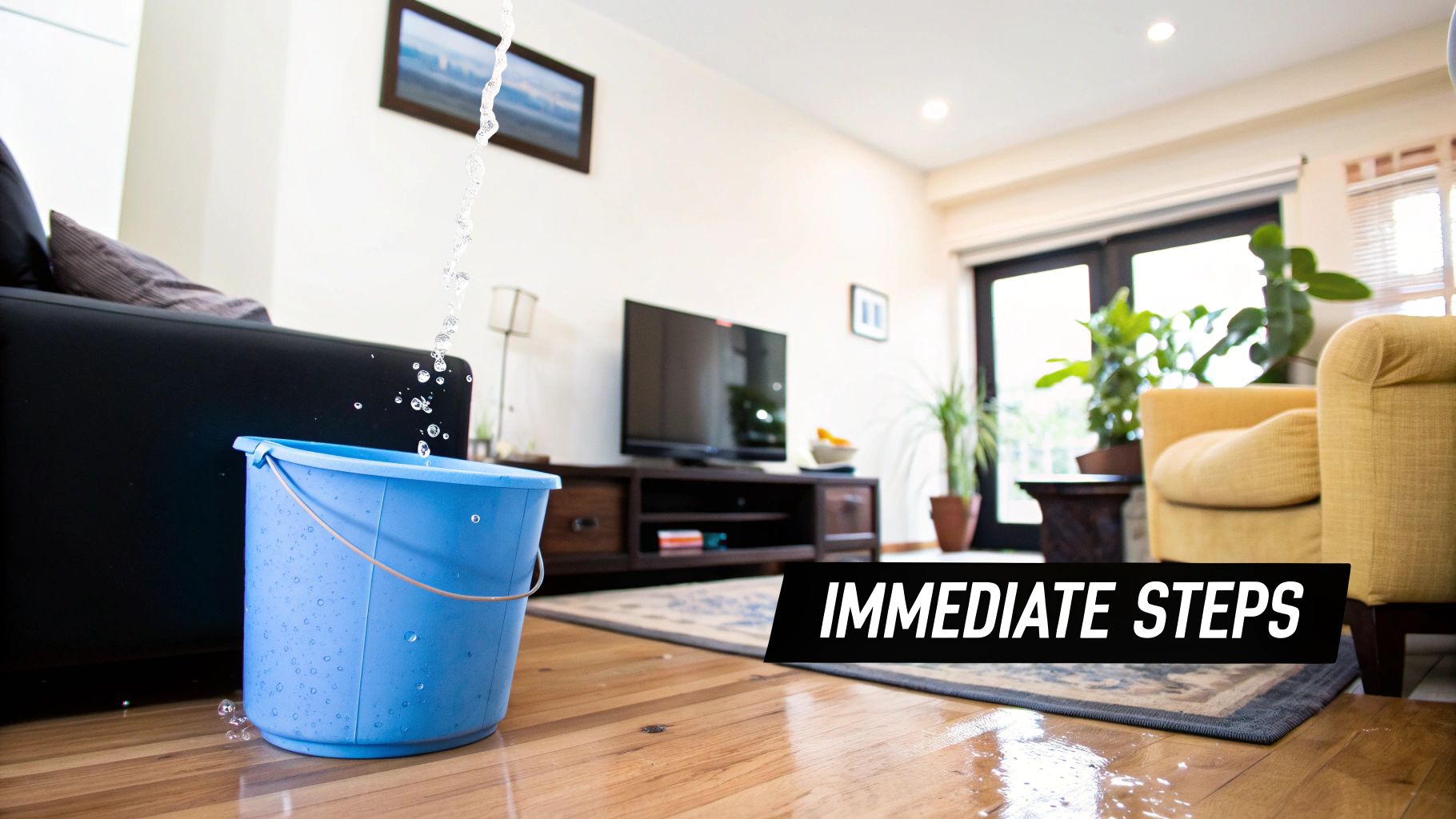
The sound of dripping water inside your home during a heavy Florida downpour is enough to make any homeowner's heart sink. It's easy to panic, but having a clear plan is your best defense.
The goal right now isn't to fix the roof—it's to control the chaos inside your house. By focusing on safety and containment, you can prevent a bad situation from spiraling into a disaster while you wait for emergency roof services in St. Petersburg.
Prioritize Safety and Damage Control
First things first: safety. Water and electricity are a lethal mix. If you see water dripping near light fixtures, outlets, or your breaker box, kill the power to that section of your house right away. Do not step in standing water if there's any chance it could be electrified.
Once you've secured the area, it's time to manage the water.
- Contain the Drips: Grab buckets, trash cans, anything that will hold water, and place them directly under the leak. If the dripping is causing a splash, toss an old towel in the bucket to absorb the force and stop the splatter.
- Move Your Valuables: Get furniture, electronics, rugs, and any sentimental items out of the way fast. Water damage happens in minutes, and you don't want a chunk of saturated drywall falling on your belongings.
- Relieve Water Pressure: See a bulge forming in your ceiling? That’s a bad sign. It means water is pooling up and the weight could bring the whole section down. Carefully and safely, take a screwdriver and poke a small hole in the center of the bulge to let the water drain into a bucket.
Document Everything for Your Insurance Claim
After you've got the immediate threat under control, switch gears and become a detective. Pull out your smartphone and start taking pictures and videos of everything—the source of the leak, the damaged ceiling, soaked carpets, and any ruined personal items.
The more evidence you have, the smoother your insurance claim will go.
A Critical Warning: Never, ever climb onto your roof during or immediately after a storm. It’s slick, unstable, and incredibly dangerous. Leave the inspection and emergency tarping to the pros who have the right safety gear and training. Your life isn't worth the risk.
How To Assess Roof Damage Safely From The Ground
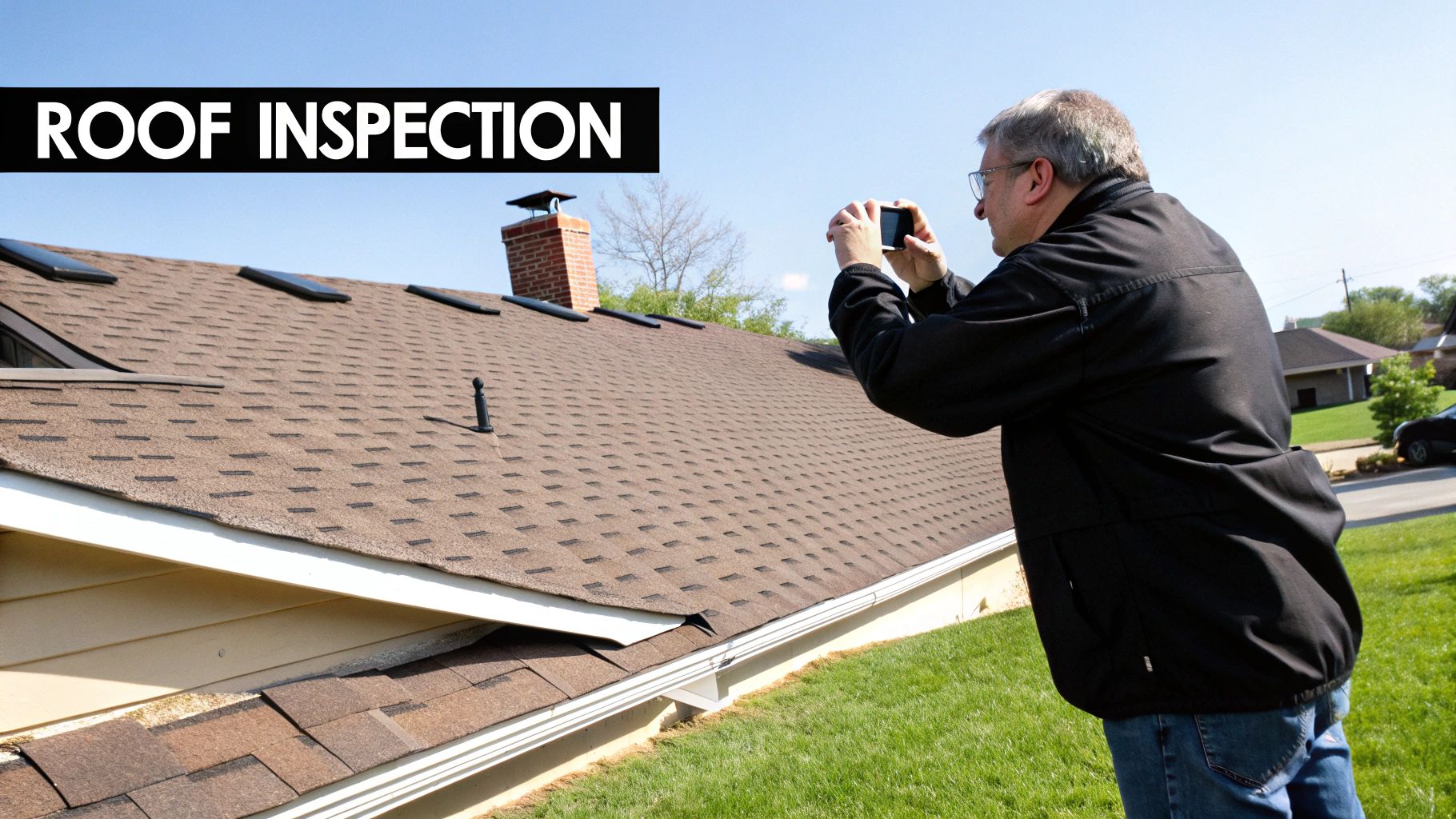
Once you’ve managed the immediate chaos of a leak inside, the next big question is, "How bad is it?" Figuring out the extent of the damage is the crucial next step, and the good news is you can learn a lot while keeping your feet firmly on the ground.
This initial assessment is incredibly valuable. It gives you the specific details you'll need when you call for emergency roof services in St. Petersburg and provides the first round of evidence for your insurance claim.
Let’s be clear about one thing: your safety is non-negotiable. Getting up on a wet, slippery, and potentially weakened roof is a job for trained professionals with the right safety gear. Period. Fortunately, a smart ground-level inspection can reveal most of what you need to know.
Start With an Exterior Walk-Around
Grab your phone to take plenty of photos and start walking the perimeter of your house. What you’re looking for are the obvious red flags—things that just don't look right. Even something that seems minor can point to a much bigger problem brewing overhead.
A systematic approach is best. Start at your front door and do a full lap around the property. It’s amazing what you’ll spot when you’re looking with intent.
Keep an eye out for these common culprits:
- Missing or Damaged Shingles: Scan your yard and garden beds for any shingles that have blown off. Then, look up at the roof itself. Are there dark patches or uneven spots that break the shingle pattern? That's a classic sign of trouble.
- Bent or Lifted Flashing: Flashing is the metal stripping that seals the seams around your chimney, vents, and skylights. If you see it dented, bent, or pulling away, you've found a major vulnerability for water to get in.
- Clogged and Damaged Gutters: Take a peek inside your gutters. If they’re full of shingle granules (the little sand-like specks), it’s a sign of significant wear or recent storm trauma. Also, note any gutters that are bent or pulling away from the house—that points to a heavy impact.
- Obvious Debris: A huge tree branch lying on your roof is hard to miss, but don't discount smaller debris. Even a modest-sized limb can puncture roofing materials. Document where it is and any impact marks you can see.
Now, Move the Investigation Indoors
Often, the most definitive proof of a roof problem is found inside your house, especially in the attic. If you can get into your attic safely, it’s time for a little detective work with a good flashlight.
Your attic is the first line of defense inside your home. It can reveal hidden leaks long before a water stain ever appears on your living room ceiling, making it an essential part of your damage assessment.
Here's a pro tip: once you're safely in the attic, turn off your flashlight and look up. Any little pinpricks of daylight you see are literally holes in your roof. It's that simple.
With your flashlight back on, look for these tell-tale signs:
- Wet Insulation: Is the insulation damp, clumpy, or matted down? That’s a dead giveaway that water has been there.
- Dark Stains or Mold: Scan the wooden rafters, joists, and the underside of the roof sheathing for any dark streaks or black, spotty patches.
- Sagging Deck: The plywood that forms the base of your roof should be perfectly flat. If you see it bowing or sagging, it means water has been pooling and soaking into the wood, compromising its strength.
To help you connect the dots, here is a quick guide to what you might be seeing and how serious it could be.
Common Signs of Roof Damage and What They Mean
| Symptom | What to Look For | Potential Urgency |
|---|---|---|
| Shingle Granules in Gutters | Sand-like particles from asphalt shingles collecting in downspouts or on the ground. | Moderate |
| Missing or Curled Shingles | Bare patches on the roof or shingles with upturned edges. | High |
| Water Stains on Interior Ceilings | Yellow or brown discoloration, often in corners or around fixtures. | High |
| Daylight Visible from Attic | Pinpricks of light shining through the roof deck. | Urgent |
| Sagging Roof Deck | A visible dip or bow in the roofline, best seen from a distance. | Urgent |
| Damaged Flashing | Bent, loose, or rusted metal strips around chimneys, vents, or skylights. | High |
This table is a starting point, but any of these signs warrant a professional opinion.
By taking the time to do this quick ground-level and attic check, you’re arming yourself with crucial information. When you call a 24/7 service like Hi Low Roofing & Solar, you can go from saying "my roof is leaking" to providing actionable details that will get you a faster and more effective emergency response.
Why Finding a Roofer in St. Petersburg Can Be a Challenge
If you've ever tried to find a roofer in St. Pete right after a storm, you know the feeling. The phone rings and rings, or you get put on a waiting list that seems a mile long. It’s a frustrating, frantic search, and it's not just you. The roofing market here is under a unique kind of pressure, especially when you need help right now.
The heart of the problem is Florida’s weather. When a hurricane or a major tropical storm barrels through Central Florida, it doesn't just damage one or two roofs. It can damage hundreds, sometimes thousands, all at once. This creates an insane, immediate demand for skilled roofers, and the best local companies are swamped overnight. Suddenly, finding emergency roof services in St. Petersburg feels less like making a call and more like trying to win the lottery.
The Post-Storm Scramble
After a big storm, the scramble is on. Every homeowner with a leak or missing shingles is calling the same short list of reputable companies. This isn't a small bump in business; it’s a full-blown market shock. The most established, trustworthy roofers are often booked solid within hours, prioritizing their existing customers and the most severe emergencies.
This is where things get tough if you don't already have a roofer you trust. You’re not just looking for a service; you’re directly competing with your neighbors for a handful of available, qualified professionals.
Central Florida: The Epicenter of Roofing Demand
What we experience in St. Pete is a super-concentrated version of what’s happening across Central Florida. The roofing industry is constantly under pressure from our relentless storm seasons. This high demand is also why so many homeowners are now looking into impact-rated materials to get ahead of the problem. You can dig deeper into the specifics of St. Petersburg roofing dynamics to see how these trends play out locally.
This chaotic demand unfortunately brings out the worst in the industry, too. "Storm chasers"—contractors from out of state who show up after a disaster—are a real problem. They roll into town, make big promises for a quick fix, and then disappear, leaving homeowners with shoddy work and no warranty. They prey on desperation, making it even harder to find a local, accountable expert you can count on.
Having a go-to, established local roofing company like Hi Low Roofing & Solar before a storm hits is one of the smartest decisions a St. Pete homeowner can make. It transforms a desperate search into a simple phone call.
Why Acting Fast Is Your Best Strategy
Knowing what you’re up against is half the battle. When water is coming into your house, waiting around isn’t just a bad idea—it’s a recipe for much bigger, more expensive problems. The longer you wait, the fewer pros are left to call. This is precisely why having access to a 24/7 emergency service is such a game-changer.
So, what does this all mean for you?
- Do Your Homework Early: The worst time to vet a roofer is when your ceiling is dripping. Find a licensed, insured, and well-reviewed local company before you need them.
- Speed Is Everything: The second you spot damage, get on the phone. Getting your name on a reputable crew’s list can be the difference between a small patch and a massive interior repair job.
- Local Knowledge Wins: A roofer who knows St. Pete’s building codes and unique weather patterns is invaluable. A Central Florida team like Hi Low Roofing & Solar has that on-the-ground experience to get the job done right, and fast.
You can't control the weather, but you can control how you prepare for it. By knowing who to call ahead of time, you can skip the post-storm chaos and get the help you need without the headache.
How to Choose the Right Emergency Roofer in Pinellas County
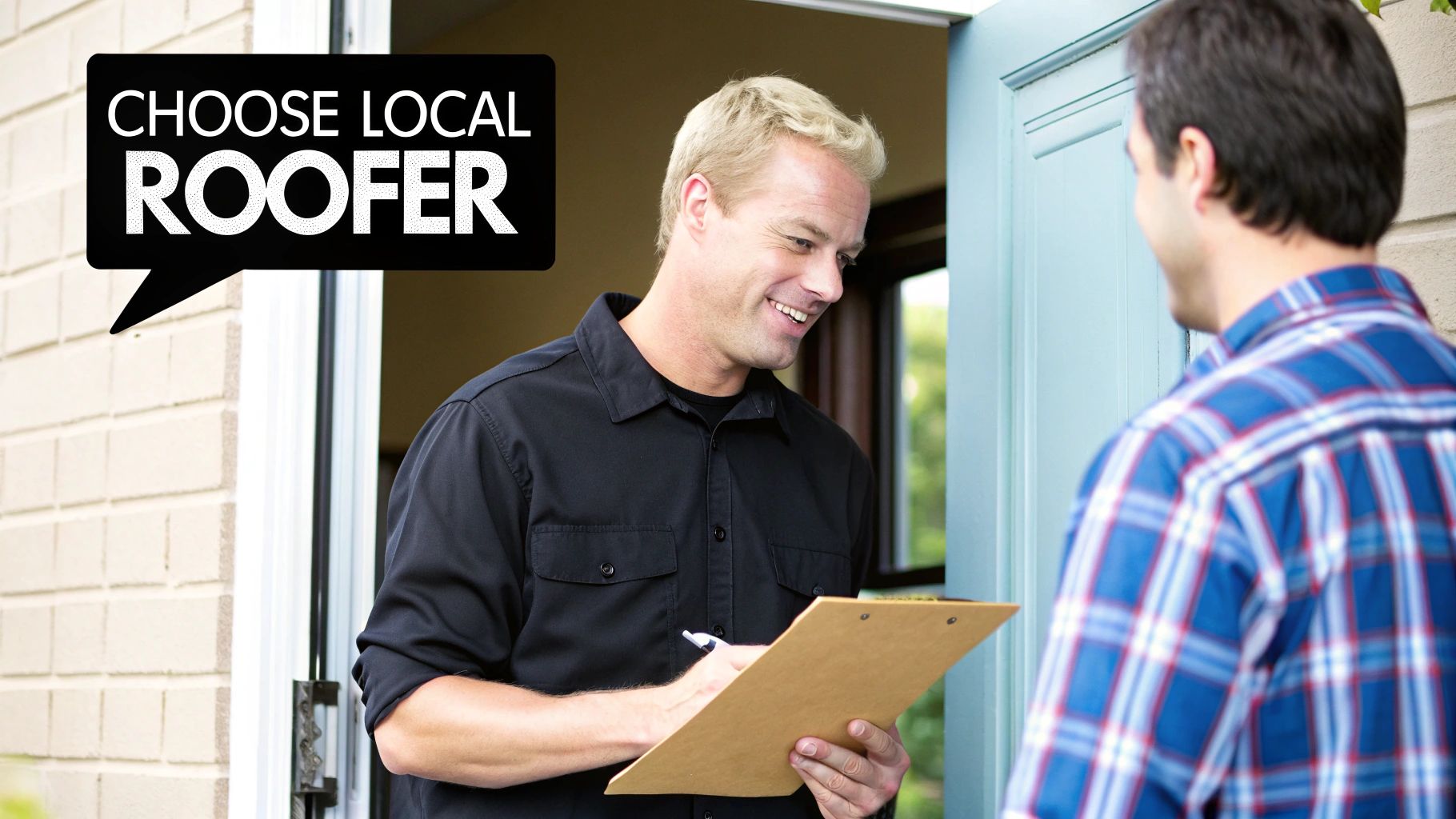
When you’ve got water pouring into your living room, the immediate instinct is to just get anyone out there to stop the leak. That panic is completely understandable. But a rushed decision, especially here in Pinellas County, can easily turn a bad situation into a total nightmare of shoddy work and future problems.
Finding the right contractor for emergency roof services in St. Petersburg isn’t just about getting a quick fix; it’s about finding a reliable partner you can trust under pressure. Taking just a few minutes to ask the right questions will save you from a world of hurt later on. You need someone who is not only fast but also legitimate, local, and accountable.
Non-Negotiable Roofer Credentials
Before you let anyone touch your roof—even for a temporary tarp—you absolutely must verify a few basics. Think of these as the bare minimum requirements to protect your residential or commercial property and your wallet.
- Florida License and Insurance: This is the big one. Your roofer must have a valid Florida roofing license, along with general liability and workers' compensation insurance. Why is this so crucial? If an uninsured worker gets injured on your property, you could be held financially responsible for their medical bills.
- A Real, Local Presence: Look for a company with an actual physical address in Central Florida. A local team like Hi Low Roofing & Solar serves communities from Pinellas County to Orlando and has a vested interest in the region and a reputation to protect.
- Genuine Local Reviews: Don't just look at star ratings. Read the Google reviews from homeowners right here in St. Pete and the surrounding Pinellas County area. Are people mentioning how quickly they responded? Were they professional? Did the repair actually hold up?
Running through this quick checklist is your best defense against unqualified operators and fly-by-night outfits.
Beware of Storm Chasers
After a big hurricane or a nasty thunderstorm rolls through, you'll inevitably see a flood of "storm chasers." These are often out-of-state crews who follow severe weather, looking to make a quick buck. They’re notorious for using aggressive sales tactics, offering suspiciously low prices, and demanding big cash payments upfront.
A classic storm chaser move is to knock on your door, point out "damage" they supposedly spotted from the street, and pressure you into an immediate cash deal for a repair. A reputable local roofer will almost never operate this way.
These crews are known for doing subpar work and then vanishing as quickly as they appeared. When their patch job fails in the next downpour, you’ll have no warranty and no one to call. Sticking with an established, full-service company like Hi Low Roofing & Solar means you have a partner for the long haul—from the emergency tarp all the way through the final repair or solar installation.
What Goes Into the Cost of an Emergency Roof Repair?
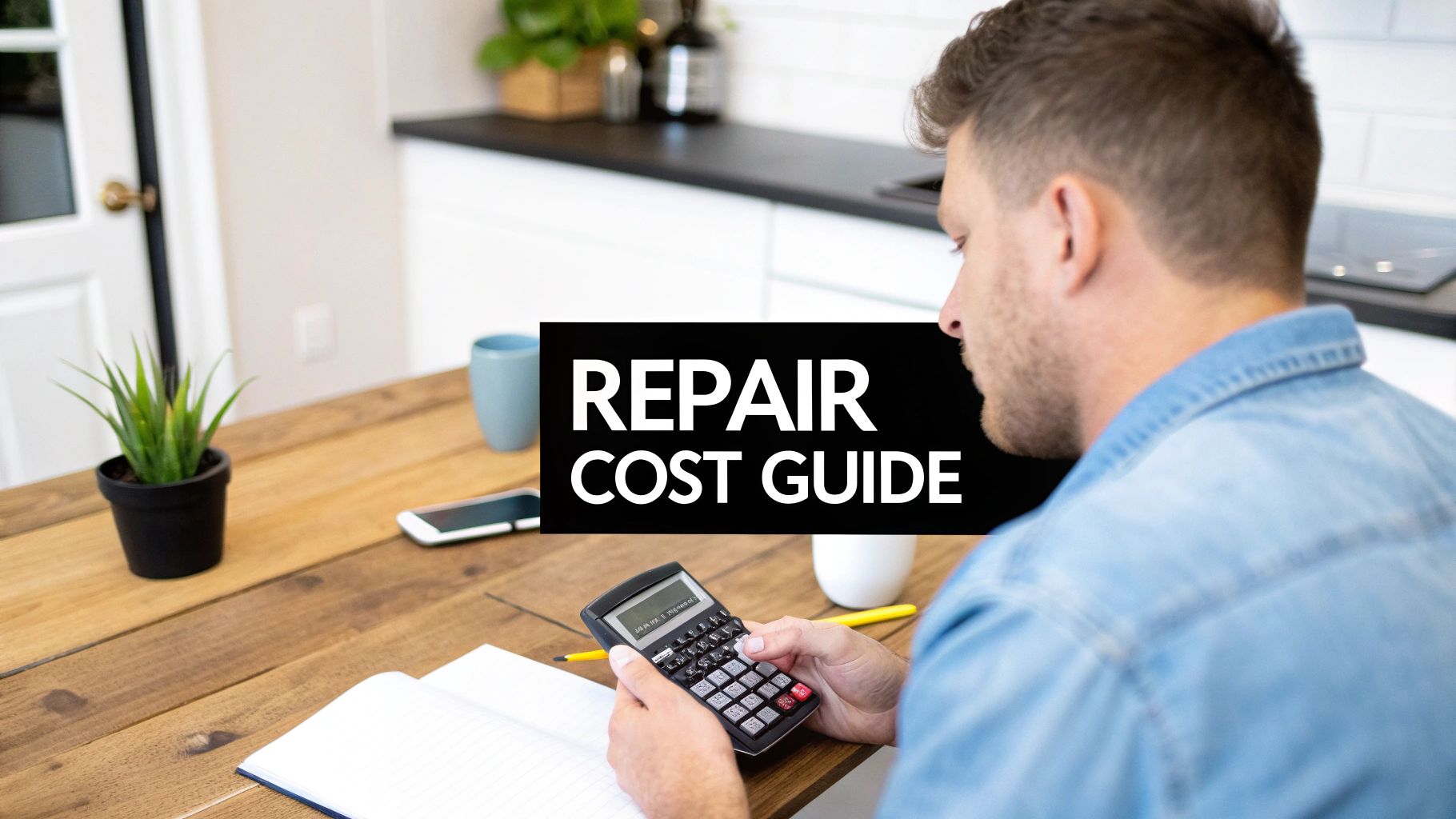
Let's be honest—nobody budgets for a roof emergency. It’s an expense that always shows up at the worst possible time. When you get a quote for emergency roof services in St. Petersburg, the numbers can feel a bit jarring. Knowing what factors drive that final price helps you make sense of the estimates and spot fair, transparent pricing when you're under pressure.
The final cost isn’t just a random number. It’s a careful calculation based on several key variables, and each one plays a part in what you can expect to pay for a fast, reliable fix.
The Big Things That Shape Repair Costs
First and foremost, the biggest driver of the price is the extent of the damage. It's a simple equation: patching a few shingles blown off in a storm is a much smaller job than fixing the gaping hole left by a fallen oak tree. The more area a roofer has to cover, the more materials and man-hours it's going to take.
Your roofing material is another huge piece of the puzzle.
- Asphalt Shingles: This is what most homes have, and luckily, it's usually the most straightforward and affordable material to repair.
- Metal Roofing: These repairs require a more specialized touch. You can't just slap a patch on a metal panel; it takes skill to fix it without compromising the integrity of the whole system.
- Tile or Flat Roofs: Both of these demand specific expertise. Tiles need to be replaced carefully to maintain the look and water seal, and flat roofs on residential or commercial buildings have their own unique challenges. You can get a better sense of the nuances by reading about the cost to repair a flat roof.
A roofer also has to consider how difficult it is to get to the damaged spot. A steep, two-story roof means more safety harnesses, more setup time, and more careful work, all of which gets factored into the labor cost.
Why Urgency and the Current Market Matter
It’s no secret that emergency services come at a premium. When you call for a 24/7 repair, you're often asking a crew to come out after hours or on a weekend. That immediate response has a higher labor rate built-in, but that "convenience fee" is what stops a small leak from turning into a catastrophic interior flood.
Think of a detailed estimate from a professional roofer as more than just a bill. It's a crucial piece of evidence for your insurance claim. It clearly outlines the damage and justifies the work needed, which is exactly what your provider needs to see to process your claim smoothly.
The roofing market here in St. Pete also has a say in the final price. We've all seen material costs go up lately, and the industry is dealing with labor shortages. This can mean that emergency jobs in a storm-heavy place like Pinellas County will naturally command a higher price for their speed and specialized skill.
Common Questions About St Pete Emergency Roofing
When your roof is suddenly compromised, a million questions race through your mind. In the middle of the chaos, it's tough to think straight, but you need answers, and you need them fast. Let's walk through some of the most common worries we hear from St. Petersburg homeowners when they're facing a roofing crisis.
Getting a handle on these key points can make a world of difference, helping you move forward with confidence instead of anxiety.
How Long Will a Temporary Roof Repair Last?
When a roofer gets out to a home for an emergency call, one of the first priorities is usually getting a temporary patch or tarp in place. It's an absolutely essential first step, but it's crucial to know what it is—and what it isn't.
A professionally installed roof tarp is meant to be a tough, temporary barrier to stop more water from getting in. Here in St. Pete, with our sun and storms, you can generally expect a good tarp to hold up for up to 90 days. This creates a vital buffer, giving you the breathing room needed to coordinate with your insurance adjuster and plan for a permanent, professional repair without feeling rushed.
Think of a temporary tarp as a tourniquet for your roof. It stops the immediate damage and buys you precious time to get the real, long-term fix sorted out with a pro.
Will My Homeowners Insurance Cover Emergency Services?
This is the big one for most people, and thankfully, the answer is usually yes. Most homeowners insurance policies are designed to cover the cost of emergency services meant to prevent further damage to your property. That means things like emergency tarping and the initial repairs after a hurricane, a tree falling on your house, or a major wind event are typically covered.
Of course, the fine print on every policy is a little different. The most important thing is to move quickly and smartly:
- Document Everything: Before anyone touches anything, get your phone out. Take clear photos and videos of the damage from every angle you can safely manage.
- Call Your Agent: As soon as you and your family are safe, your next call should be to your insurance agent. They'll walk you through what your specific policy covers and how to start the claims process.
- Prevent More Damage: Your policy actually requires you to take "reasonable steps" to mitigate damage. Calling for emergency roof services in St. Petersburg is exactly what they mean by that.
Can I Wait Until Morning for a Nighttime Leak?
It's late, it's dark, and you just want to go to bed. The temptation to just stick a bucket under the drip and deal with it in the morning is strong, but it's a gamble you don't want to take. Water is relentless, and it causes damage much faster than most people realize.
What seems like a minor drip overnight can easily soak through drywall, turn your attic insulation into a soggy mess, and start seeping into the structural wood of your home. That’s how you get dangerous mold growth and potential structural rot. A small roof issue can balloon into a massive and costly interior restoration project in just a few hours. At the very least, try to contain the water inside and call a 24/7 roofer to get a professional on their way to assess and secure the leak.
When a St. Petersburg storm strikes, you need a team that's ready to go, day or night. For fast, reliable emergency roof services, you can count on the experts at Hi Low Roofing & Solar to secure your home. Contact us 24/7 for a rapid response.
