

If you're thinking about adding a solar energy system to your home, one of the first questions you'll probably ask is, "how long do solar batteries last?" It's a great question. A modern solar battery—most likely a lithium-ion model—is built to last between 10 and 15 years.
While your solar panels can keep generating power for 25 years or even longer, it's best to think of your battery as a long-term appliance. You'll likely need to plan on replacing it at least once over the lifetime of your solar panel system.
Understanding Your Solar Battery's Lifespan
A great way to think about your solar battery is to compare it to the one in your smartphone. Every time you charge your phone up to 100% and run it down to empty, you’ve completed one "charge cycle." A solar battery's lifespan is measured in the exact same way. And just like your phone, its ability to hold a full charge will slowly decrease over thousands of cycles.
This is especially important for homeowners here in Central Florida, from Pinellas County all the way to Orlando. Our climate, with its intense heat and humidity, definitely plays a part in how well a battery performs and, ultimately, how long it will last.
The Science of Battery Life
Today, the most common batteries for home solar systems use lithium-ion chemistry. They hit a sweet spot, offering an excellent balance of performance and longevity. These modern systems are a massive leap forward from older lead-acid technologies, which often gave out in just 3–7 years.
In contrast, a quality lithium-ion battery is often rated for 5,000–6,000 cycles. When you do the math, that translates to about 13–16 years of reliable, daily use.
A solar battery is more than just an add-on; it's the key to true energy independence, providing backup power during storms and maximizing your savings day after day.
To really get a handle on how long your solar battery will power your home, it helps to understand the basic unit of energy it stores. You can learn how to calculate a kilowatt hour to get a better estimate of your family's energy needs. Planning for this investment is a critical step, and getting familiar with the cost of a solar battery backup system will help you make a smart, informed decision for your residential or commercial property.
Why Do Solar Batteries Fade Over Time?
Ever notice how your phone battery doesn't seem to hold a charge as long as it did when it was brand new? A fresh-out-of-the-box phone might last all day and then some, but two years in, you’re probably hunting for an outlet by 3 PM. Solar batteries go through a very similar, and completely normal, aging process.
This slow decline in performance is called degradation, and it's not a sign that your battery is broken. It's just a natural part of its lifecycle.
Think of it like a brand-new kitchen sponge. When you first use it, it soaks up an incredible amount of water. But after hundreds of cycles of soaking up spills and being wrung out, it starts to lose a bit of its absorbency. It still cleans the counter, but it just can't hold as much water as it used to. Your solar battery works the same way with the electricity it stores and releases.
So, What Is Capacity Degradation?
In the world of solar energy, we measure this aging process as capacity degradation. It’s simply the gradual loss of the total amount of energy a battery can hold. The day your battery is installed in your Orlando-area home, it starts with 100% of its original capacity. Over years of charging up with sunshine and powering your home at night, that maximum capacity will slowly tick down.
This leads to an important idea that manufacturers call the "end of useful life." This sounds dramatic, but it doesn't mean your battery suddenly dies. It's just the point where its storage capacity has fallen to a predetermined level—usually somewhere between 60% and 80% of its day-one performance.
For you as a homeowner, this has a real-world impact. A battery nearing the end of its useful life will provide fewer hours of backup power during an outage. Planning for this eventual replacement is just a standard part of owning a solar system long-term, not an unexpected emergency.
While battery degradation is inevitable, how fast it happens depends heavily on the battery's chemistry. Most of today's lithium-ion batteries are considered to have hit their end-of-life when they drop to that 60-80% capacity mark. For top-tier LFP (Lithium Iron Phosphate) batteries, this usually happens after an impressive 6,000 to 10,000 cycles.
Compare that to older lead-acid batteries, which could see a significant capacity drop after only 500 to 1,000 cycles, often lasting just a few years. If you're curious about how different battery technologies stack up, you can find additional insights on EcoFlow's blog.
What Determines a Solar Battery's Lifespan in Florida?
Think of a solar battery's lifespan less like a fixed expiration date and more like the life of your car's engine. How you drive it and where you park it makes all the difference. The same holds true for your battery, especially here in Central Florida, where our climate adds its own unique challenges. If you know what affects your battery, you can take steps to get the most out of your investment.
When it comes to getting the longest life from your system, two factors stand head and shoulders above the rest: heat and how much you drain the battery on a daily basis.
Florida's Heat is a Battery's Worst Enemy
For anyone living from Pinellas County to Orlando, you know the heat can be relentless. Well, your battery feels it, too. In fact, high temperature is the number one threat to its longevity. Batteries are happiest in the same sort of temperatures we are. When they get too hot, the chemical reactions inside go into overdrive, causing the internal components to wear out much faster. This isn't temporary—it permanently damages the battery's ability to hold a charge.
It's a bit like leaving a carton of milk out on the kitchen counter instead of putting it in the fridge. The warmth makes it spoil in a hurry. Now, imagine your battery installed in a stuffy, unventilated Tampa garage during a brutal August heatwave. That kind of environment can literally bake years off its life.
This is where a professional installation really shows its value. An experienced installer won't just stick your battery anywhere. At Hi Low Roofing, we find the best possible spot—a cool, well-ventilated location like an insulated garage or an exterior wall that's shaded from the harsh afternoon sun. This one decision is probably the single most effective thing you can do to protect your battery.
How Deeply You Drain Your Battery Matters
The next big factor is something called Depth of Discharge (DoD). Don't let the technical name throw you; it's just a simple way of saying how much energy you use before the battery starts charging again. Routinely running your battery down to completely empty is like driving your car until the gas tank is bone-dry every single time. It's tough on the equipment.
That's why most manufacturers recommend setting a DoD of 80-90%. All this means is that you're only using 80% or 90% of the battery's total stored power, always leaving a little bit in the tank. This simple buffer significantly reduces the wear and tear on the battery's cells.
The trade-off is straightforward: the less you drain it each time, the more times you can charge it up over its lifetime. Here’s a quick look at how that plays out:
- 100% DoD: If you drain the battery completely every day, you might get around 3,000 charge cycles out of it.
- 80% DoD: But if you leave a 20% buffer, that number can jump to 6,000 cycles or even more.
Our installation experts at Hi Low Roofing can easily program this setting for you. By making this one small adjustment, you can potentially double the working life of your battery. It’s a perfect example of how a minor tweak in how you use your system can pay off big time, giving you reliable power for many more years.
Choosing the Right Solar Battery Technology
Not all solar batteries are built the same. The chemistry inside that box is a huge factor, directly affecting how long your battery will last, how safe it is, and how well it performs day in and day out. Think of it like choosing an engine for a car—you need the right one for the job.
For a long time, old-school lead-acid batteries were the only game in town. But technology has moved on, and now the real debate is between two types of lithium-ion batteries: Lithium Iron Phosphate (LFP) and Lithium Nickel Manganese Cobalt Oxide (NMC). While both are great, LFP batteries are pulling ahead as the go-to choice for homeowners here in Florida, from Orlando to Tampa.
Why LFP Is a Smart Choice for Florida
Here in the Sunshine State, heat is a big deal, and that's where LFP technology really shines. LFP batteries are simply more stable and can handle higher temperatures before their performance starts to degrade. That built-in heat resistance is a massive plus during a sweltering Central Florida summer.
On top of that, LFP chemistry generally gives you a longer lifespan. You get more charge and discharge cycles, which means more years of reliable power and a better return on your investment. It’s built for the long haul.
While NMC batteries are fantastic—they're what power many electric cars because they pack a lot of energy into a small space—LFP’s focus on stability and longevity makes it a much more practical choice for a home energy storage system that just sits and works.
This infographic does a great job of showing how things like heat, how you use your battery, and basic upkeep all play a role in its lifespan.
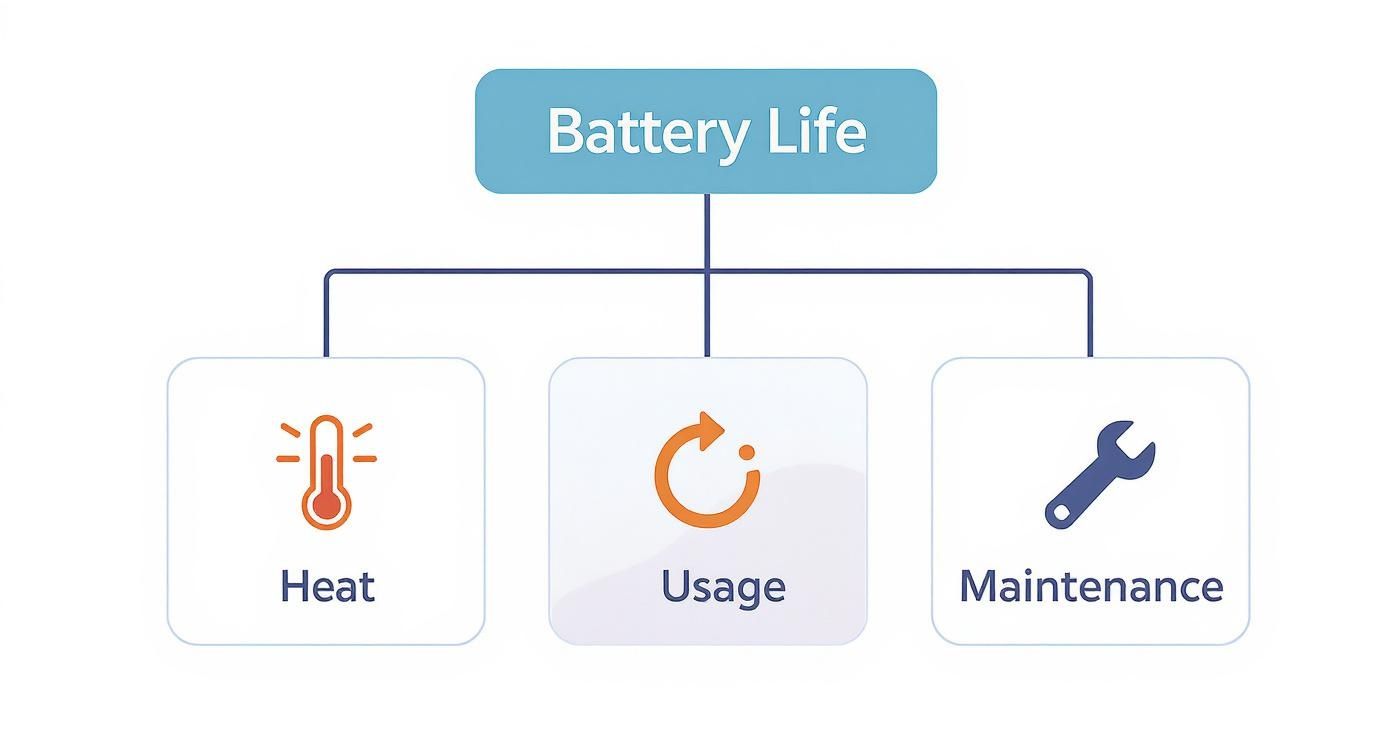
As you can see, keeping these factors in check is the key to getting the most out of whichever battery you choose.
Comparing Solar Battery Chemistries for Your Home
To make things a bit clearer, here's a quick rundown of how the main battery types stack up against each other.
| Feature | Lithium Iron Phosphate (LFP) | Lithium-Ion (NMC) | Lead-Acid |
|---|---|---|---|
| Typical Lifespan | 10-15+ years (4,000-8,000 cycles) | 8-12 years (2,000-5,000 cycles) | 3-7 years (500-1,000 cycles) |
| Safety | Excellent; very stable chemistry | Good; requires careful management | Poor; risk of gas leaks |
| Efficiency | High (90-95% round-trip) | High (85-95% round-trip) | Low (70-85% round-trip) |
| Upfront Cost | High | High | Low |
| Best For | Homeowners wanting safety, longevity, and value. | Applications needing high energy density. | Budget-conscious, short-term backup. |
Ultimately, LFP batteries offer the best balance of safety, a long service life, and overall value for most residential solar setups.
When you're shopping around, it's smart to look beyond just one brand. For example, exploring Tesla Powerwall alternatives can open your eyes to different features and price points you might not have considered.
The "best" battery really comes down to your family's specific needs. You have to find the right balance between cost, performance, and how long you expect it to last. The first step is figuring out what size solar system you need, as that will point you toward the right-sized battery. From there, a chat with a good local installer like Hi Low Roofing can help you sift through the options and find the perfect match for your home.
What to Expect from Your Solar Battery Warranty
A solar battery warranty is more than just a piece of paper; it’s the manufacturer's promise that your battery will perform as advertised for years to come. But wading through the technical details can feel like trying to read a foreign language. Let's break down what really matters so you can understand the true value of the guarantee protecting your investment.
Think of it like a new car warranty. The manufacturer doesn't just promise the car will exist for five years; they guarantee it will perform to a certain standard for a specific number of miles or a set period of time. A solar battery warranty operates on the same principle, protecting you against defects and, more importantly, guaranteeing a minimum level of performance.
The Three Pillars of a Strong Warranty
When you dig into the fine print of any battery warranty, you'll find three key metrics that really define its strength. Getting a handle on these will help you compare different models and know exactly what you're being promised.
You'll want to look for:
- Years Covered: This one's straightforward—it's the number of years the warranty is valid, which usually kicks in on the day of installation.
- Cycle Life: This is the total number of full charge-and-discharge cycles the battery is guaranteed to complete before its performance starts to noticeably drop off.
- Capacity Retention: This is the big one. It’s the guaranteed percentage of the battery's original storage capacity it will still hold at the end of the warranty period.
These three elements work together to paint a full picture of the manufacturer's commitment. A top-tier warranty will typically promise something like "10 years or 6,000 cycles, with 70% capacity retention." What this actually means is that the manufacturer guarantees that after a decade of daily use, your battery will still hold at least 70% of the energy it did when it was brand new.
This guaranteed performance is what really counts. It ensures that even ten years down the road, your battery will still provide meaningful backup power during one of Central Florida's notorious storm-related outages, keeping your family and home safe.
That capacity retention figure is the most practical answer to the question, "how long do solar batteries really last?" It’s not about the day the battery completely dies, but the point at which its performance drops below a truly useful level. For most homeowners, a battery that still holds 70% of its original charge after a decade is an incredibly valuable asset, still perfectly capable of running your essential appliances for hours. A strong warranty makes sure you get that long-term value.
Planning for Your Solar Battery Replacement
It’s a simple fact: your solar battery won't last as long as your solar panels. Thinking ahead and planning for its eventual replacement is one of the smartest things you can do. Instead of getting hit with a surprise expense down the line, you can treat it like any other major home appliance upgrade, like a new roof or an HVAC system.
This kind of forward-thinking puts you in the driver's seat of your home's energy future. When you budget for a replacement well in advance, you ensure your home in the Orlando or Tampa area stays protected from outages without any financial scrambling. And here's the good news: battery technology gets better and more affordable every single year.
Knowing When It's Time for an Upgrade
So, how do you know when your battery is getting tired? Don't worry, it will give you some pretty clear signals. The most obvious sign is a real, noticeable drop in performance, especially when you need it most during an outage.
Keep an eye out for these tell-tale signs:
- Shorter Backup Duration: If your battery used to easily power your essentials through the night but now only lasts a few hours, that’s the clearest sign of capacity loss.
- System Monitoring Alerts: Your solar monitoring app is your best friend here. It usually tracks the battery's "state of health" and will often flag it when it drops below a certain performance level.
- Frequent Charging Cycles: You might notice the battery seems to be charging and discharging much more often than it used to, even when your energy use hasn't changed.
Recognizing these indicators helps you get ahead of the curve. It’s also crucial to understand how your solar panels will function during a power outage, because your battery's health is the key to keeping the lights on.
From what we see in the field with our Central Florida customers, most homeowners should expect to replace their battery at least once over the 25- to 30-year life of their solar panels. Today’s batteries typically last anywhere from 5 to 15 years, with the newer LFP models lasting much closer to that 15-year mark.
This means a Florida family installing a solar storage system today might circle 2035–2040 on their calendar for a battery upgrade, all depending on how they use it. To dive deeper into these trends, you can learn more about home solar battery lifespans on Virtue Solar's blog.
Answering Your Questions About Solar Battery Life
When you're exploring solar energy, it's natural to have a few questions pop up, especially about the batteries. We hear a lot of the same queries from homeowners here in Central Florida, so let's get you some clear, straightforward answers.
Can I Make My Solar Battery Last Longer?
You absolutely can. A few simple, practical steps can go a long way in stretching out your battery's lifespan. The single biggest factor? A smart installation. Keeping the unit out of the blazing Florida sun, in a spot that's cool and has good airflow, is non-negotiable for its long-term health.
Beyond that, a good installer like our team at Hi Low Roofing can tweak the system's settings for you. For instance, programming the system to avoid deep discharges—that is, not letting it drain completely to zero—drastically reduces wear and tear on the internal components. Getting it set up correctly from day one by a pro in the Orlando area is the best way to ensure you get the most out of your investment.
Is a Solar Battery Worth It If It Only Lasts 10-15 Years?
For the vast majority of homeowners in Florida, the answer is a definite yes. Think of it this way: while the battery won't last as long as your solar panels, the value it provides during its life is massive. It's your safety net during hurricane season, your ticket to freedom from the utility grid, and the key to using every last drop of clean energy your panels generate.
The peace of mind and the real financial savings you'll see over its 10- to 15-year life almost always add up to a solid return on investment. It's a crucial piece of the puzzle for a truly independent home energy system.
How Will I Know It's Time to Replace My Solar Battery?
Your system's monitoring app is your window into the battery's health. The clearest sign of aging is a noticeable drop in how much energy it can hold. Maybe a battery that used to power your home through the night now only gets you a few hours—that's a tell-tale sign.
Most apps even give you a "state of health" percentage, offering a simple number to keep an eye on. Once you see a serious decline in performance, it's time to call your solar installer. They can run a few tests to confirm if a replacement is on the horizon.
Ready to take control of your power and protect your home from blackouts? The team at Hi Low Roofing has years of experience helping homeowners and business owners all over Central Florida, from Pinellas County to Orlando, install dependable solar and battery storage. Contact us today for a free, no-obligation consultation!
