
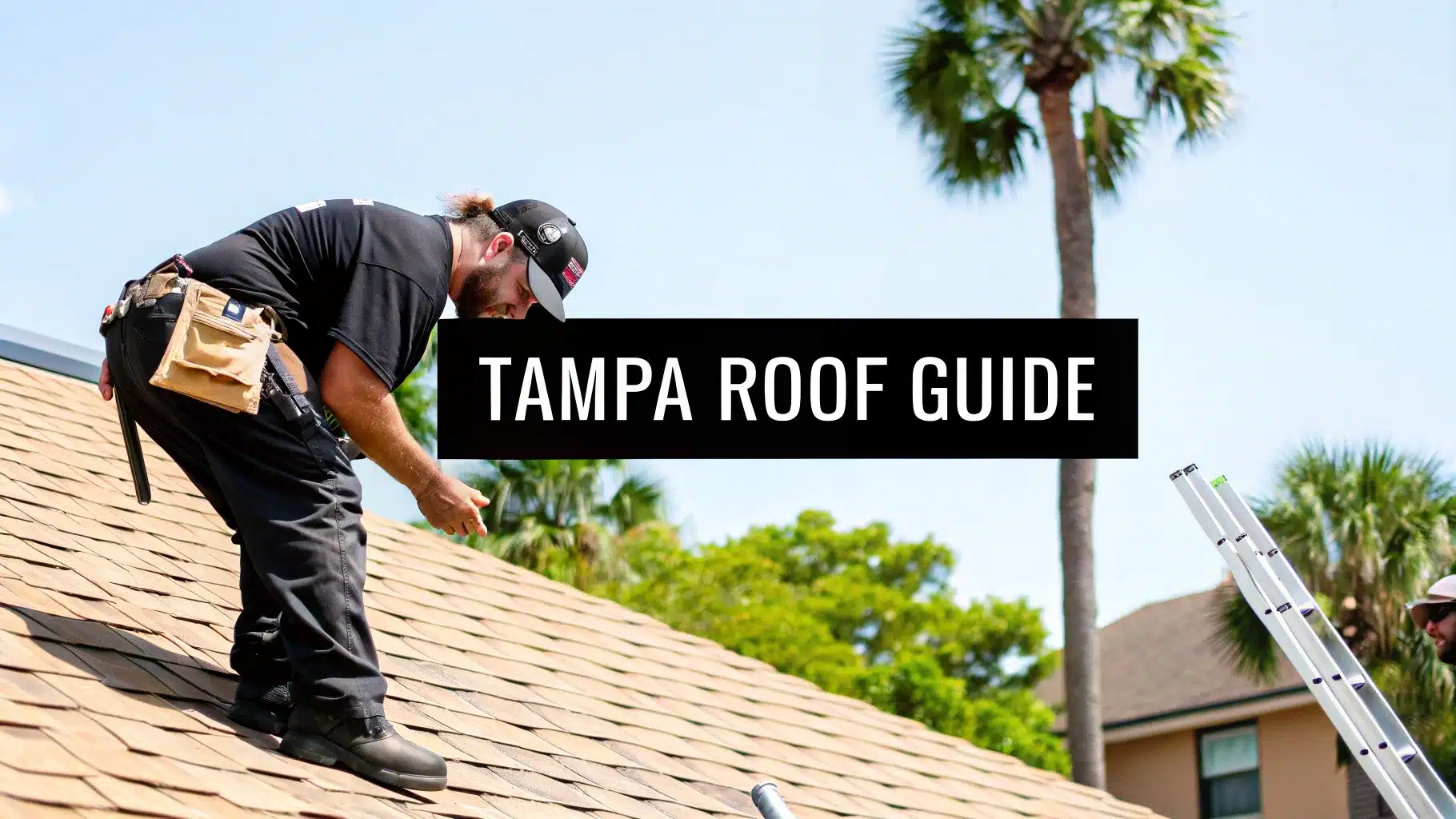
Finding the right roofing contractor in Tampa is about more than just getting a new roof; it's about finding a partner who truly understands how to protect your residential or commercial property from Florida’s brutal sun, relentless humidity, and hurricane-force winds. A good local roofer does more than just nail down shingles—they spot the subtle issues that, if missed, can quickly spiral into major structural headaches.
Spotting Tampa Roof Damage Before It Gets Serious
Your roof takes a beating here in Central Florida. Between the blistering UV rays, the oppressive humidity, and the violent storms that roll through, roofing materials just don't last as long as they do in milder climates. Catching the early warning signs is the single best thing you can do to avoid a catastrophic failure.
Most people don't think about their roof until a leak appears in the living room ceiling. But by then, the damage is already done. Often, the first clues are much quieter—a faint water stain you can barely see, or a musty odor in the attic you just can't track down.
The Subtle Clues Your Roof Is In Trouble
Forget the obvious stuff like a shingle blown into your yard. The real trouble starts with the little things.
Take a look at your shingles from the ground. Are the edges starting to lift and curl? That’s a classic sign of age and heat damage, and it means they can no longer seal properly against wind-driven rain.
Another dead giveaway is granule loss. Check inside your gutters or where your downspouts drain. If you see a pile of what looks like black sand, those are the protective granules from your shingles. Once they're gone, the shingle is exposed and deteriorates fast. Our guide on the top signs you need a new roof dives deeper into these visual cues.
In Florida's climate, a small problem gets big in a hurry. One compromised shingle lets moisture seep underneath, and with our humidity, mold and rot can take hold much faster than you’d think.
Why Central Florida's Roofing Market Is So Busy
This constant wear and tear means the demand for quality roofing work has exploded. Tampa's roofing industry has seen incredible growth, with companies like Hi Low Roofing scaling up to handle everything from storm repairs on older homes to new commercial construction across the region. It's a mix of weather-related damage, an influx of new residents, and thousands of roofs simply reaching the end of their lifespan. You can even see how local companies have grown to meet this demand on YouTube.
In such a crowded market, finding a trustworthy roofing contractor in Tampa who will give you an honest, thorough assessment is critical. To help you know what to look for, this resource on the signs you need a new roof is a great starting point. Knowing when to make that call can be the difference between a simple repair and a full, costly replacement.
How To Properly Vet Your Tampa Roofing Contractor
Picking the right roofer is hands-down the most important part of the whole project. A top-notch roofing contractor in Tampa will make sure your home is buttoned-up and protected for years, but the wrong one? That’s a fast track to leaks, code violations, and a whole lot of frustration. Vetting a roofer isn't just about finding the lowest bid; it’s about making sure they're legitimate, skilled, and reliable.
The absolute first thing you need to do is check their license. Florida has some of the toughest licensing requirements in the country for a reason—to protect property owners like you. Any roofer worth their salt will have a state-issued Certified Roofing Contractor license, which you'll see listed with a "CCC" or "CRC" prefix.
This is non-negotiable. You can—and should—verify their license number yourself on the state’s official portal. Never just take their word for it. This one simple check weeds out the fly-by-night operators who flock here after a storm, do a terrible job, and then disappear when you need them most.
Confirming Licensing and Insurance
After the license, you have to talk about insurance. It’s your safety net. There are two policies you absolutely must see proof of, and they cover very different things.
General Liability Insurance: This is what protects your property. If a crew member accidentally drops a bundle of shingles on your A/C unit or cracks your driveway, this policy covers the damage. Without it, you’re on the hook.
Worker's Compensation Insurance: This one protects you from getting sued. If a roofer gets hurt while working on your property and their employer doesn't have worker's comp, you could be held liable for their medical bills. It happens more than you think.
Don't just ask if they're insured. Ask for a physical copy of their insurance certificates. Once you have them, take a moment to call the insurance agency listed on the paperwork to confirm the policies are still active. It’s a small step that provides huge peace of mind.
My Two Cents: Any reputable contractor will have their license and insurance info ready to go. If you ask for it and they get defensive or start making excuses, that’s a giant red flag. Just walk away.
Reading Online Reviews with a Critical Eye
Online reviews are a great starting point, but you have to learn how to read between the lines. The overall star rating doesn't tell the whole story.
Dive into the actual comments and look for patterns. Do multiple people mention how clean the crew kept their yard? Or are there several complaints about poor communication and missed deadlines? These trends give you a real glimpse into how the company actually operates.
Even more telling is how a contractor responds to a bad review. Do they get defensive and argumentative, or do they offer to make things right? How a company handles problems says more about them than a bunch of five-star praise. You can find more tips on what to look for in our guide on how to choose a roofing contractor.
Knowing what to look for on your own roof is also helpful before you even make a call. This chart breaks down the key areas a professional will inspect.

It really shows that a thorough inspection goes beyond just the shingles—it includes checking the gutters for granules and even getting up in the attic to look for signs of leaks.
The Big Questions to Ask Before You Sign
When you have a contractor at your home for an estimate, it’s your chance to interview them. Don't be shy—this is a major investment. Having a list of questions ready ensures you cover all your bases and compare companies apples-to-apples.
Essential Questions for Any Central Florida Roofing Contractor
Use this checklist during your consultation to make sure you're hiring a qualified and reliable professional for your Florida property.
| Question Category | Specific Question to Ask | Why It Matters for Tampa Homeowners |
|---|---|---|
| Licensing & Insurance | "Can I see a copy of your state license (CCC/CRC) and your general liability and worker's comp insurance certificates?" | This is the most basic, non-negotiable proof that they are a legitimate and legally operating business in Florida, protecting you from liability. |
| Local Experience | "How many roofs have you installed from Pinellas County to Orlando, and can you provide local references I can call?" | Central Florida’s climate is brutal on roofs. You want a company that understands our specific challenges with heat, humidity, and hurricane-force winds. |
| Project Management | "Will there be a dedicated project manager on-site, and how will you communicate with me during the installation?" | Knowing who your point of contact is and how you'll get updates prevents miscommunication and ensures a smoother process. |
| Materials & Warranty | "What specific materials do you recommend for my property and why? What warranties cover both the materials and your workmanship?" | You need to understand the difference between a manufacturer's warranty (for shingle defects) and the contractor's labor warranty (for installation errors). |
| Storm Damage & Insurance | "How much experience do you have working with homeowner's insurance claims for storm damage?" | After a hurricane, you need a roofer who knows how to navigate the claims process and provide the right documentation for your insurer. |
Asking these questions upfront will tell you almost everything you need to know about a contractor's professionalism, experience, and commitment to quality.
Understanding Florida's Roofing Labor Market
It also helps to know what's happening behind the scenes. Like many trades, roofing is facing a major labor shortage here in Florida. Nationally, there are about 136,740 roofers, but the field is only expected to grow by 2% in the next decade.
To make matters tougher, 1 in 5 roofers is now over the age of 55, getting closer to retirement. This puts immense pressure on good companies to find and train new talent. For you as a property owner, this can sometimes mean longer wait times for a project to start.
A solid roofing contractor in Tampa who actively invests in training and retaining their crews is worth their weight in gold. It shows they're a stable company committed to quality, and they're far more likely to deliver a great roof on time, even when the market is tight.
Decoding Estimates and What a Tampa Roof Really Costs
Alright, you've done your homework and now there's a stack of roofing estimates sitting on your kitchen counter. It can feel like you're trying to compare apples and oranges. While getting several quotes is the right move, the real skill is knowing how to read between the lines.
A professional estimate from a good roofing contractor in Tampa isn't just a number—it’s the entire game plan for your project. If you get a quote that's just one big lump sum, that's a huge red flag. You need a transparent, line-by-line breakdown of exactly what you're paying for. Look for specifics on the materials, from the exact shingle model down to the type of underlayment and flashing.
The quote also needs to spell out the costs for labor, tearing off the old roof, and hauling away all the debris. These aren't optional extras; they're essential parts of the job. If they aren't listed, you can bet they’ll show up later as a surprise on the final bill.
Why the Cheapest Bid Is Almost Always a Trap
Let me be blunt: in the Tampa roofing world, the lowest price is usually a warning sign. It’s incredibly tempting to just go with the cheapest number, but that "savings" upfront can turn into a financial nightmare down the road. A suspiciously low bid means one thing: corners are being cut somewhere.
Maybe they're using cheap, builder-grade shingles that will get cooked by the Florida sun and curl up after a few years. Worse, they might be using an uninsured crew to slash their labor costs, which puts all the risk on you. If someone gets hurt on your property, you're the one on the hook. They might also be skipping steps required by Florida's strict building codes, which can cause massive headaches when you try to sell your property.
The Line Items That Actually Matter
To do a true apples-to-apples comparison, you need to zero in on a few key areas that reveal the quality behind the price.
- The Materials List: Does the quote just say "shingles," or does it specify the manufacturer and the exact product line? A pro will recommend materials built to handle our heat and storms.
- Labor & Workmanship: Look for details about the installation itself. A reputable roofer will always include their own workmanship warranty, which is totally separate from the manufacturer's warranty and covers any mistakes made during installation.
- Permits & Fees: Is the cost of pulling permits from the relevant county or city included? This is the contractor’s job, not yours, and it ensures the work gets inspected and passes code.
- Handling the "What Ifs": A good estimate will have a plan for unexpected problems. For example, it should explain how they price the replacement of rotten decking if it's discovered after the old roof comes off.
The real goal here is to invest in long-term value, not just the lowest initial cost. A roof installed correctly with high-quality materials will save you thousands in repairs and headaches over its lifetime.
Believe it or not, residential roofing is a huge piece of Florida's economy. Our state accounts for roughly 59.67% of the entire U.S. roofing industry's revenue. With recent average replacement costs here falling between $21,050 to $30,680, you're making a massive investment. Taking the time to properly vet each estimate is the best way to protect that investment. You can see more roofing industry statistics that show just how big this market is.
What to Expect for Roofing Costs in the Tampa Area
Every roof is different, but knowing the ballpark figures helps you spot a quote that's way out of line. Here are some typical price ranges for popular roofing materials around Tampa Bay. Just remember, these can shift based on your roof's size, pitch, and complexity.
| Roofing Material | Typical Cost Range (per square foot) | Why It Works for a Tampa Home |
|---|---|---|
| Architectural Shingles | $4.50 – $7.50 | By far the most popular choice. It's the best balance of durability, looks, and value for surviving the Florida climate. |
| Metal Roofing | $9.00 – $18.00+ | Extremely tough, energy-efficient, and fantastic in high winds. A top-tier choice for our hurricane-prone coast. |
| Tile Roofing (Clay/Concrete) | $12.00 – $25.00+ | The classic Florida look. Offers incredible longevity and is practically immune to fire, wind, and salt air. |
By breaking down each estimate and understanding what's behind the numbers, you can confidently pick a roofing contractor in Tampa who gives you a fair price for quality work that will last.
Navigating Storm Damage Insurance Claims in Tampa

After a hurricane rips through Tampa Bay, the last thing you want to deal with is a complicated insurance claim. But when your roof is damaged, navigating that process is exactly what you have to do. Acting quickly and, more importantly, smartly can be the difference between a smooth repair and a drawn-out battle with your insurance company.
As soon as the storm clears and it's safe, grab your phone. Walk the perimeter of your property and document everything. Take more photos and videos than you think you need—shingles in the yard, dented gutters, fallen branches on the roof. Get pictures from every angle. This is your initial evidence, and you can't have too much of it.
Your next immediate goal is damage control. This doesn't mean you should climb up on a slick, unstable roof. It's about preventing the problem from getting worse. Think simple things: put buckets under ceiling drips and move furniture out of the way. These small steps show your insurer you're being responsible.
First Steps After the Storm Passes
Here’s a piece of advice that might seem backward: don’t call your insurance company first.
Your first call should be to a trusted roofing contractor in Tampa who knows the ins and outs of storm damage. A pro will conduct a thorough inspection, identifying not just the obvious missing shingles but also the subtle hail impacts, creased flashing, and lifted seals that an adjuster might otherwise miss.
This detailed, professional report is your baseline. It documents the full scope of the damage, giving you a powerful tool before you even file the claim.
The biggest mistake we see property owners make is immediately calling their insurance provider. Get a professional roofer out there first. You'll go into the claims process knowing exactly what's wrong, putting you in a much stronger position.
Decoding Your Insurance Policy
Insurance paperwork is notoriously confusing. But understanding a few key terms will help you make sense of the estimates and settlement offers. If you run into trouble, it’s critical to know how to dispute a denied or underpaid roof insurance claim to get what you're owed.
Keep these three terms straight:
Deductible: This is your out-of-pocket cost. In Florida, you likely have a separate "hurricane deductible," which is much higher than your standard one. It’s typically a percentage of your property's total insured value, not a flat dollar amount.
Actual Cash Value (ACV): This is what your old roof was worth right before the storm. Insurers calculate this by figuring out the replacement cost and then subtracting years of wear and tear (depreciation). Your first check will usually be for this ACV amount, minus your deductible.
Replacement Cost Value (RCV): This is the total price to install a brand-new roof today. You don’t get this full amount upfront. After the work is done, you send the final invoice to your insurer, and they release the remaining funds (the depreciation they held back).
Partnering with the Right Contractor
Don’t just hire any roofer; find one who lives and breathes insurance claims. This is non-negotiable in Florida.
An experienced roofing contractor in Tampa becomes your advocate. They'll meet the adjuster at your property, walk the roof with them, and point out every single item from their inspection report. This ensures nothing gets overlooked and that everyone is on the same page from the start.
They will also write their estimate using the same software adjusters use, making it easy for the insurance company to review and approve the line items. This partnership takes the stress off your shoulders and dramatically improves your chances of getting a fair settlement to cover the full cost of the work.
Pairing Your New Roof with Solar and Battery Backup
If you're already replacing your roof, don't just think about shingles. This is, without a doubt, the single best time to consider adding solar panels and a battery backup system. Doing it all at once isn't just convenient; it's the smartest way to save a ton of money, avoid headaches, and set your property up for real energy independence.

When you find a single roofing contractor in Tampa that’s also a solar expert, like Hi Low Roofing, the whole project just flows. You avoid the nightmare of trying to coordinate two separate companies with different schedules and quality standards. Even more important, it keeps your new roof’s warranty completely intact. A combined team installs the solar mounts while the new roof is going on, creating one perfectly sealed system from day one.
The Financial Sense of a Combined Project
Let's talk about the money, because bundling a roof and solar together opens up some serious financial perks. The big one is the Federal Solar Tax Credit, which can knock a huge percentage off your total project cost. The best part? When you do them together, parts of your new roof can actually qualify for this credit, which means even more savings.
And it gets better. Here’s how the numbers really start to add up:
- Slashed Labor Costs: You have one crew doing everything—from tearing off the old roof to wiring the last solar panel. This shared labor makes a huge dent in the overall cost compared to hiring two separate teams.
- Lower Electric Bills: The moment those panels are active, they start generating power. You’ll see the drop in your utility bills right away.
- One Simple Loan: Instead of trying to manage two different loans, you can almost always roll the entire cost of the roof and solar system into a single, straightforward payment.
Bundling roof replacement and solar installation is the most efficient and cost-effective path to energy independence. It ensures a flawless installation where both systems are designed to work together, protecting your warranties and maximizing your long-term savings.
Why Battery Backup Is a Game-Changer in Central Florida
Anyone who’s sweated through a power outage during a Florida hurricane season gets this immediately. Solar panels are great at making power, but they can't store it. That’s what a battery backup is for.
This system saves up all the extra energy your panels produce during the sunny hours. Then, when a storm knocks out the grid, your property automatically flips over to that stored power. We're not just talking about keeping a few lamps on—we're talking about running the things that make Florida life possible.
Think about it: keeping your A/C, refrigerator, and any essential medical devices running for days while the rest of the neighborhood is dark. That kind of security is priceless. You can get a clear picture of the numbers by exploring the typical solar and battery backup cost and how it fits into a bundled project.
At the end of the day, pairing a new roof with solar and a battery is an investment in your property's resilience and its future value. By choosing a qualified roofing contractor in Tampa who can handle it all, you’re not just getting a roof—you’re getting a modern, self-sufficient power system ready for whatever our weather decides to throw at us.
Answering Your Top Tampa Roofing Questions
When it's time to think about your roof, especially here in Central Florida, you're going to have questions. It’s a huge investment, and our unique Florida climate adds a whole other layer to things. We get these questions all the time, so let's get you some straight answers from a team that works on these roofs every day.
How Long Should a New Roof Really Last in Tampa?
This is probably the number one question we hear, and the answer isn't what you see on the shingle wrapper. A manufacturer might advertise a 30-year lifespan for their architectural shingles, but that's based on tests in a perfect, mild climate—not the brutal reality of a Florida summer.
Between the intense UV exposure, constant humidity, and the threat of hurricane-force winds, a roof's life is just shorter here. For a well-installed, high-quality architectural shingle roof, you should realistically expect 15 to 20 years. If you're looking for a longer-term solution, materials like metal or tile are fantastic investments, often lasting 50 years or more. They're built to handle the heat and coastal conditions we face.
What's a Wind Mitigation Inspection, and Why Does My Insurance Company Care?
A wind mitigation inspection is your best friend when it comes to saving money on property insurance in Florida. It's a formal review by a certified inspector who checks how well your roof is built to withstand hurricane-force winds.
They look at key features like the shape of your roof, the nail pattern used on the decking, and whether you have hurricane clips or straps tying your roof trusses to the walls. A new roof installed to modern code should pass with flying colors. The report can lead to some serious discounts on your premium, making it a small investment that pays you back year after year.
After a Storm, Should I Repair or Replace My Roof?
The honest answer? It completely depends on the damage. If you just have a few missing shingles and the rest of the roof is in solid shape, a targeted repair from a pro is usually all you need.
But if the damage is widespread—think major granule loss from hail that looks like sand in your gutters, or if the roof was already nearing the end of its life—a full replacement is almost always the smarter, safer route.
The only way to know for sure is to get a professional set of eyes on it. A reputable contractor will give you an honest assessment. They won't push for a full replacement if a simple repair will do the job right.
What Are the Best Roofing Materials for Tampa's Climate?
Choosing the right material is a balancing act between your budget, the look you want, and what can stand up to our weather. Here are the top performers in our area:
- Architectural Shingles: The go-to for a reason. They offer a great mix of value and performance. Just make sure you're getting a product with a high wind rating and features like algae resistance.
- Metal Roofing: A true powerhouse for Florida. It's exceptional against high winds and is incredibly energy-efficient, as its reflective surface can significantly cut your cooling costs. That's a huge win in our climate.
- Tile (Clay or Concrete): This is the iconic Florida look. Tile is tough, fire-resistant, and handles the salty air near the coast better than almost anything else.
Your final decision will come down to what matters most to you—upfront cost, long-term durability, or energy savings.
How Can I Be Sure I'm Hiring a Legitimate Contractor?
This is the most important question you can ask. Getting this wrong can lead to headaches, lost money, and a faulty roof. Before you sign anything, you absolutely must verify a few key things to protect yourself.
First, check their license. Any legitimate roofing contractor in Tampa will have a Certified Roofing Contractor license (it will start with CCC or CRC). You can easily verify this on the Florida Department of Business and Professional Regulation (DBPR) website. Don't just take their word for it—look it up.
Next, confirm they are properly insured. Ask for a copy of their General Liability and Worker’s Compensation insurance certificates. Then, take the extra step and call the insurance agency listed on the document to make sure the policy is active. This protects you if someone gets hurt on your property.
Finally, look into their local reputation. Read online reviews and see what past customers say about their communication, how they kept the job site, and—most importantly—how they handled problems when they popped up.
Making the right choice for your roof means having the right information. If you're ready to work with a team that provides clear answers and exceptional results, Hi Low Roofing & Solar is here to help. Contact us today for a free, no-obligation inspection and a detailed estimate to protect your Central Florida property. Learn more at https://hilowroofing.com.
