
It’s a sound every Tampa homeowner dreads during a heavy downpour: the steady drip… drip… drip… from a new water stain blooming on your ceiling. That sinking feeling is real, but now isn't the time for panic.
When you need an emergency roof repair in Tampa, what you do in the first few minutes can save you from thousands of dollars in water damage. Your focus should be squarely on two things: safety and damage control.
What to Do the Moment You Discover a Roof Leak
The moments right after you spot a leak are absolutely critical. Quick, calm action can be the difference between a small repair and a full-blown disaster with ruined floors, soaked furniture, and dangerous electrical issues. Forget about getting on the roof—your first moves happen inside.
First things first, contain the water.
Grab the nearest bucket, trash can, or even a large cooking pot and place it directly under the drip. If the water is splattering, spread some old towels or a plastic tarp around the container to catch the spray and protect your floors. This one simple move stops the immediate problem from spreading.
Next, think about electricity. Water and wiring are a deadly combination.
Go straight to your home’s breaker box and turn off the power to any rooms affected by the leak. If you notice the ceiling bulging near a light fixture, or if water is dripping anywhere close to an outlet or switch, don't take any chances. Shut off the main breaker to the entire house.
Prioritize Safety Above All Else
I get it. Your first instinct might be to climb up and find the source of the leak yourself. Please, don't do it. A wet, slippery roof, especially during a storm, is incredibly dangerous. A fall can lead to devastating injuries.
Leave the outdoor inspection to the trained and insured professionals who have the proper safety gear. Your job is to make the inside of your home safe for your family. This quick plan sums it up perfectly.

Notice that calling for help is the final step, after you’ve secured the scene and made sure everyone is safe.
Once the water is contained and the electrical risk is handled, you can take a breath. You've successfully managed the immediate crisis and prevented a lot of secondary damage while you wait for a professional to arrive. For a more detailed breakdown, you can review our full guide on what to do when you have a leaking roof.
Key Takeaway: In the first 15 minutes of finding a roof leak, only two things matter: your safety and containing the damage inside. Finding the source can, and should, wait for a professional roofer.
Documenting the Damage and Calling in a Pro

Once the immediate chaos is under control and the area is safe, your next job is to become an evidence collector for your insurance company. This isn't just a suggestion—it's one of the most critical parts of the entire process. The thoroughness you show here can make a huge difference in your claim.
Your smartphone is your best friend right now. Start taking more photos and videos than you think you’ll ever need. Remember, the adjuster won't be there to see the water actively gushing in, so your documentation is the only way to prove how bad things really were in those first few hours.
Building Your Damage File
Your mission is to tell the complete story of the damage, from the drip in the ceiling to every single thing it affected.
- Get Close: Take detailed shots of the water stains, any drywall that’s starting to bubble or sag, and even the bucket as it fills with water.
- Go Wide: Pull back and capture the entire room. This shows the scale of the problem and helps document damage to furniture, rugs, and personal items.
- Record a Walkthrough: A slow, narrated video is incredibly powerful. Start where the leak is most obvious and walk through every affected area, explaining what you’re seeing as you go.
- Check the Exterior (Safely): From the ground, use your phone to zoom in on your roof. Look for anything obvious—missing shingles, a big tree limb, or other debris left by a storm.
If a fallen tree or large branches are the culprit, be sure to document that specifically. Getting details on professional storm-damaged tree removal can also add important context to your claim, showing you're taking all the necessary steps.
Finding an Emergency Roofer You Can Trust
With your initial evidence collected, it’s time to get a professional on the phone. This isn't the time for a "we'll call you back tomorrow" roofer. You need a contractor who understands the urgency and offers true 24/7 service. For an emergency roof repair in Tampa, settling for anything less is a gamble.
A company with a real local footprint, like Hi Low Roofing, has teams positioned across Central Florida. That deep presence, from Pinellas County all the way to Orlando, means they can actually mobilize a crew quickly, not just promise they can.
When you make that call, be direct.
"I have an active roof leak at my home in [Your Neighborhood]. I've got buckets under it, but I need an emergency crew out here to get a tarp on it as soon as possible."
This language cuts through the noise. It tells them this is an immediate dispatch situation, not a request for a routine estimate next week.
Thankfully, Florida’s intense weather has created a strong, experienced roofing industry. In fact, our state has the highest concentration of roofing jobs in the U.S., with 2.63 roofing employees per thousand jobs. This means there are skilled, qualified professionals ready to respond when disaster strikes. You can see more on what these industry trends mean for homeowners by reviewing these insightful statistics.
Getting a Handle on Emergency Tarping and Temporary Fixes

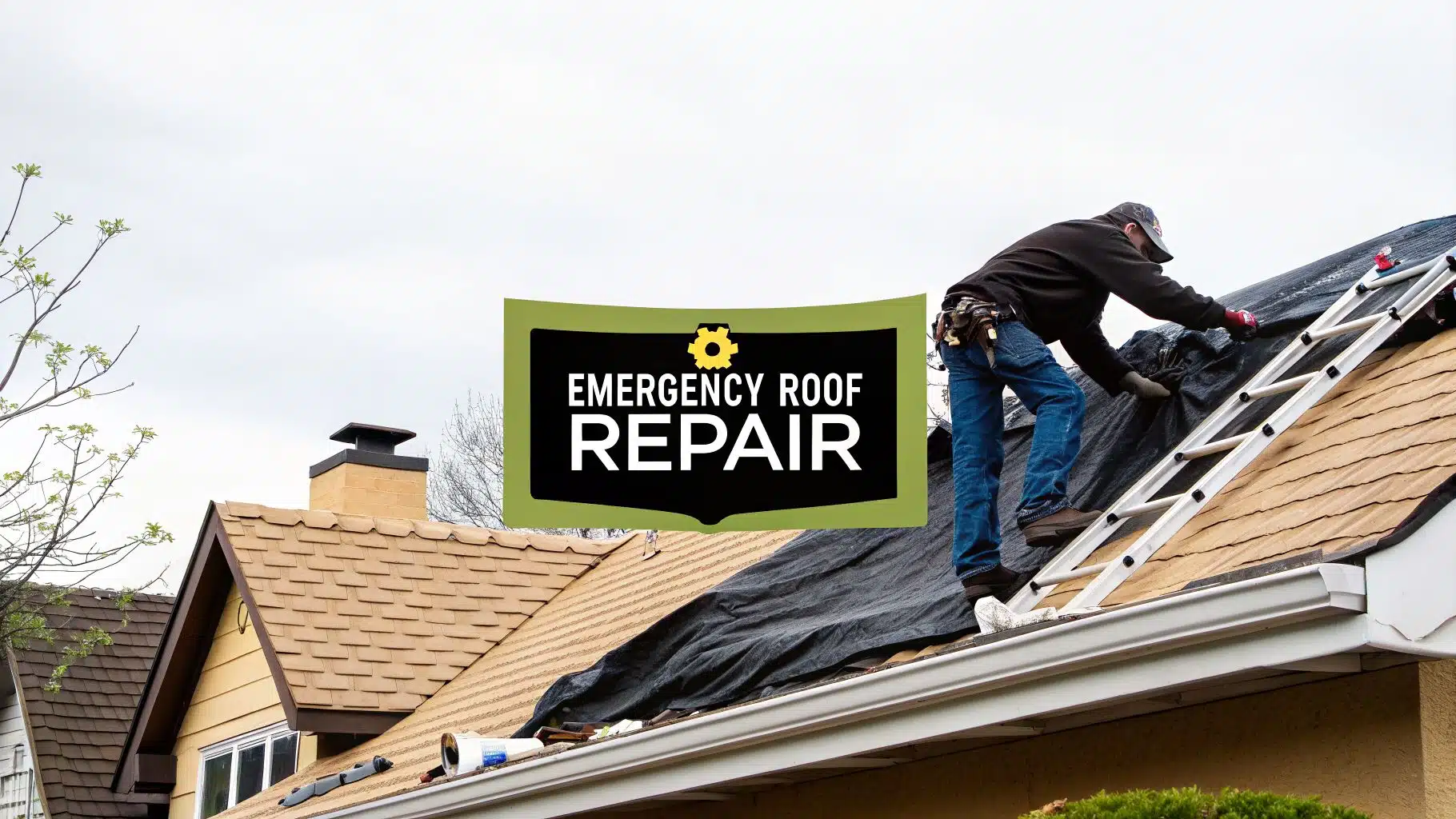
When an emergency roofer shows up at your Tampa home, especially if it's still raining, their primary mission isn't to start tearing off shingles for a full repair. Their first and only goal is damage mitigation. In plain English, that means stopping the water from coming in right now to protect your home from more harm.
The most common and effective way to do this is with professional-grade roof tarping. Forget those flimsy blue tarps you see at hardware stores. We're talking about heavy-duty, reinforced material specifically designed to withstand high winds and heavy rain, installed by a crew that knows exactly what they're doing.
How the Pros Tarp a Roof Correctly
There's a real science to tarping a roof properly. It's about more than just covering a hole; it’s about securing the material without causing new problems.
- The Right Anchoring: A pro will use wood furring strips and cap nails to fasten the tarp. This method distributes tension across the material, preventing the wind from ripping the tarp or—even worse—pulling out your shingles along with it.
- Controlling Water Flow: The tarp is carefully laid to shed water off the roof, working with gravity just like your shingles do. This prevents water from pooling on top or, more dangerously, getting channeled underneath the tarp.
- Avoiding Trapped Moisture: This is a classic DIY mistake. Sealing a tarp too tightly traps existing moisture against your roof deck. That creates a perfect breeding ground for wood rot and mold, turning a small leak into a massive headache. Professionals make sure the area can still breathe while keeping the rain out.
That initial visit is all about creating a strong, temporary shield. For homeowners staring down an active leak, understanding what to expect from different emergency roofing services near me can bring huge peace of mind.
To give you a clearer picture, here’s a quick rundown of what you should do immediately and what to expect from that first visit.
Immediate Actions for a Leaking Roof
| Action Item | Why It's Critical | Pro Tip |
|---|---|---|
| Move Valuables | Protect electronics, furniture, and sentimental items from water damage. Water can travel along beams and show up far from the actual leak. | Place buckets to catch drips, but also lay down towels or plastic sheeting in a wider area to protect flooring from splashes and spreading moisture. |
| Document Everything | Take photos and videos of the leak, interior damage, and exterior roof damage (if safe to do so). This is crucial evidence for your insurance claim. | Use your phone to record a video where you narrate what you see. For example: "It's 10 PM on Tuesday, and water is coming through the ceiling in the living room." |
| Call a 24/7 Roofer | A true emergency roofer is available around the clock. Getting them on-site quickly minimizes interior damage and shows your insurance company you acted fast. | Have the number for a trusted local roofer saved in your phone before a storm hits. When you call, be ready to describe the location and severity of the leak. |
| Expect Tarping/Sealing | The emergency crew's job is to stop the leak with a tarp or sealant. It's a temporary fix, not a permanent repair. | Don't be surprised if the crew works quickly to get the tarp on and leaves. The full assessment and repair plan will come later, once the storm has passed. |
This immediate response is designed to stabilize the situation, protecting your property until a permanent solution can be thoughtfully planned and executed.
A professional emergency tarping job is designed to stop the leak immediately without causing further structural damage. It’s a precise, temporary solution that buys you valuable time to plan the permanent repair.
Beyond the Tarp: Other Temporary Fixes
While tarping is the go-to for most storm damage and missing shingles, it's not the only tool in a roofer's emergency kit. Depending on the specific issue and if conditions are safe enough, they might perform other quick fixes.
For instance, sometimes the problem is a piece of roof flashing around a chimney or vent pipe that's come loose. If that's the case, a roofer might be able to apply a specialized, high-grade sealant as a temporary patch to stop water from getting in.
In other situations, like with tile roofs, a few tiles may have just shifted or cracked. If they can get to them safely, a roofer can often secure the loose tiles or apply a temporary sealant to a crack. Think of these actions as triage—they stabilize the patient until the real surgery can happen.
Talking Dollars and Cents: Repair Costs and Insurance in Florida
Once the initial shock of a roof leak subsides, two big questions always surface for Tampa homeowners: "How much is this going to cost?" and "Will my insurance even cover it?" It’s a gut-wrenching feeling, and the financial stress can be just as damaging as the water itself. Let's get real about what you can expect.
The costs for an emergency roof repair in Tampa really come in two waves. First, you have the immediate, stop-the-bleeding costs. Then comes the permanent fix.
The first bill you'll see is for the emergency service call. This covers a professional showing up—often after hours or on a weekend—and getting a tarp on your roof. This isn't just a guy with a blue tarp from the hardware store; professional tarping is installed to withstand the wind and rain until a permanent repair can happen.
The price for tarping is usually based on the square footage and how tricky your roof is to navigate. Think of it as a critical investment. Your insurance company expects to see this charge because it proves you took action to prevent further damage.
What Will the Final Repair Bill Look Like?
Once the immediate crisis is handled, you’ll get an estimate for the actual repair. The final number hinges on what kind of roof you have and just how bad the damage is. Tearing out and replacing a few wind-damaged asphalt shingles is a completely different ballgame than sourcing and installing matching clay tiles that shattered after a tree branch fell.
- Shingle Roofs: These are often the most straightforward to repair, but the cost climbs if the plywood decking underneath got soaked and rotted.
- Tile Roofs: Repairs can get pricey here. Matching older, discontinued tiles can be a challenge, and the labor is more intensive since each tile has to be handled with care.
- Metal Roofs: Costs can be all over the map. Sometimes it’s a simple matter of sealing a failed seam, but other times an entire panel needs to be replaced to maintain the roof's integrity.
Dealing with Your Homeowner's Insurance
Remember all those photos and videos you took? This is where they become your single most important tool. The insurance claim process kicks off the second you call your provider. They'll assign an adjuster to come out and inspect everything, and your detailed documentation is the hard proof they need to see the storm's true impact.
When you're looking at a huge repair bill, you absolutely need to know what your policy covers, especially when it comes to the water that got inside. Getting clear on Is Water Damage Covered by Homeowners Insurance in Florida? can save you a lot of confusion and anxiety right from the start.
A Tip from Experience: Get a notebook. Seriously. Write down every single conversation you have with your insurance company—the date, the time, and who you spoke to. This simple habit can be a lifesaver if there are disputes down the road.
Florida's insurance world has its own quirks, like hurricane deductibles. These aren't a flat dollar amount; they are often a percentage of your home's total insured value, which can be a shockingly high number. This is precisely why partnering with a roofer who knows the local insurance game is so important.
A seasoned local contractor, like our team at Hi Low Roofing, can take this burden off your shoulders. We speak the same language as insurance adjusters and know exactly what kind of documentation they need to approve a claim for both residential and commercial properties. We work with them directly, so you don't have to play middleman. For a more detailed guide on this, our article on managing insurance claims for roof damage is a great resource.
Choosing the Right Contractor for Your Permanent Repair
Once a professional tarp is securely in place, you can finally take a breath. The immediate danger is over, but that tarp is only a temporary bandage. Now comes the most critical decision in this whole process: picking the right local contractor to handle the permanent fix. This choice will define the health of your roof for years to come.
After a big storm blows through, the Tampa Bay area and the I-4 corridor can feel like the wild west. You'll see trucks with out-of-state plates and get knocks on your door from people making big promises. These are the "storm chasers." They often push for a quick signature, but the real risk comes later. They might use cheap materials or do a rush job, and by the time the next leak shows up, they're long gone—leaving you with a worthless warranty and a brand new problem.
Qualities of a Trustworthy Local Roofer
To avoid that nightmare, you need to be deliberate about hiring a true Central Florida roofer. A company with deep roots in the community has a reputation to protect. They live here, they work here, and they know firsthand what our weather can do to a home.
Here’s what you should demand from any contractor you consider:
- Proper Florida Licensing and Insurance: This is non-negotiable. A legitimate roofer will have a state-issued license, general liability insurance, and workers' compensation. Ask for the documents and actually verify them. This is what protects you if someone gets hurt on your property.
- A Strong Local Presence: Check their physical address. Is it a real office in Tampa or just a P.O. box? A stable, local business like Hi Low Roofing has a permanent footprint in the community. They aren't going anywhere.
- Positive, Verifiable Reviews: Don't just look at the star rating. Dig into recent reviews on Google and other platforms from homeowners right here in the area. You'll get a real sense of their communication, professionalism, and the quality of their finished work.
Turn a Crisis into an Opportunity
Believe it or not, a major repair can be more than just a fix—it can be a smart upgrade. If a large part of your roof is damaged, it’s the perfect time to think about materials that are better equipped for Florida's climate.
For instance, this could be your chance to move up from standard 3-tab shingles to impact-resistant architectural shingles, which hold up much better against hail and high winds. Or you could look into a durable, long-lasting metal roof, a fantastic option known for its hurricane performance and energy-saving reflective qualities.
Think of this moment of repair as a chance to invest in your home's future. A major roofing project is the ideal time to integrate a solar energy system, turning a necessary expense into a long-term asset.
This is a forward-thinking approach that more and more Florida homeowners are taking. Contractor adoption rates for solar have nearly doubled, with the 2026 State of the Roofing Industry Report finding that about 44% of residential roofing contractors now offer solar services. For someone already facing a big repair, this means you can work with one expert team to fix the damage and add a system that will slash your utility bills. You can discover more about this roofing industry trend and see how it's benefiting families across the state.
Answering Your Urgent Tampa Roof Emergency Questions
When your roof is suddenly leaking, your mind starts racing. We get it. After years of handling emergency calls all over Central Florida, from Tampa to Orlando, we've heard every question imaginable from homeowners in crisis. Here are the answers to the questions we hear most, so you can have some clarity when you need it most.
How Long Can a Tarp Stay on My Roof in Florida?
A properly installed, heavy-duty tarp is designed to hold up for as long as 90 days. But let's be realistic—this is Florida. Between the brutal sun, the relentless humidity, and the pop-up thunderstorms, you shouldn't push it that long.
Think of a tarp as a critical, short-term band-aid. It’s there to stop the bleeding and buy you time to coordinate a permanent repair. If you leave it on too long, you risk trapping moisture underneath. That can lead to wood rot and mold, creating a much bigger, more expensive problem that your insurance company might not cover.
Will My Homeowners Insurance Go Up After a Roof Claim?
It's a valid concern. Filing any claim can potentially impact your rates. But when you’re facing a major roof failure, the financial risk of not filing is almost always much, much higher.
Paying for a new roof, plus repairs for water damage to your attic, ceilings, and walls out-of-pocket, can be devastating. This is exactly what homeowners insurance is for—sudden, unforeseen events like storm damage or a fallen tree. A good roofer will meticulously document everything, showing that the damage was from a single, covered event, which is key to getting your claim approved.
What Is the Difference Between an Emergency Repair and a Normal Repair?
The distinction really comes down to urgency and the immediate goal.
An emergency repair is all about stopping the leak right now. It's the middle-of-the-night call to get a tarp on your roof to prevent further water from getting in. Think of it as triage or first aid for your house. The priority is to mitigate the damage, not perform a perfect, permanent fix in the dark or during a storm.
A standard roof repair is the scheduled, permanent solution. This happens once the storm has passed and conditions are safe. Your roofer can then properly diagnose the root cause and perform a complete, lasting repair. This is the "real" fix that follows the initial emergency response.
Do I Have to Pay for an Emergency Roof Inspection?
Absolutely not. Any trustworthy Central Florida roofer, including us at Hi Low Roofing, will provide a free inspection and estimate.
Once the immediate crisis is under control (usually with a tarp), the next step is a comprehensive inspection. This detailed assessment uncovers the full extent of the damage. The report we generate becomes the blueprint for the permanent repair quote and serves as crucial evidence for your insurance claim. If a company ever asks for money just to come out and look at your roof, it's a major red flag.
When your home and family are at risk, you need a team you can count on without hesitation. Hi Low Roofing provides a true 24/7 emergency response service for residential and commercial properties across Central Florida, from Tampa to Orlando, to make sure your property is protected. For a free inspection and an honest assessment, get in touch with our team today.
