

For residential and commercial property owners in Central Florida, from Pinellas County to the heart of Orlando, the roof is the single most important defense against intense sun, torrential downpours, and the ever-present threat of hurricane-force winds. But how can you tell when this critical shield is nearing the end of its life? Ignoring the subtle warnings can escalate quickly, leading to extensive interior water damage, complex structural issues, and costly emergency repairs. Recognizing the early signs you need a new roof is not just about maintenance; it's about protecting your property's value and ensuring your family's safety before the next storm season arrives.
This guide is designed to eliminate the guesswork. We will break down the seven most critical indicators that your roof requires professional attention, focusing on the specific challenges faced by homes and businesses in the Central Florida climate. You will learn how to spot everything from curling shingles and granule loss to hidden leaks in your attic. By the end of this article, you will have the knowledge to confidently assess your roof's condition, understand when it's time for a replacement, and know when to consult a trusted local expert like Hi Low Roofing & Solar for a thorough professional inspection.
1. Missing, Cracked, or Curling Shingles
The most apparent and critical signs you need a new roof are visible right on its surface. When you notice shingles that are missing entirely, cracked down the middle, or have edges that are curling upwards, your roof is sending a clear distress signal. In the intense Central Florida sun, this type of damage is common as asphalt shingles age. Over time, they lose their protective granules, become brittle, and lose the flexibility needed to withstand thermal shock and high winds.
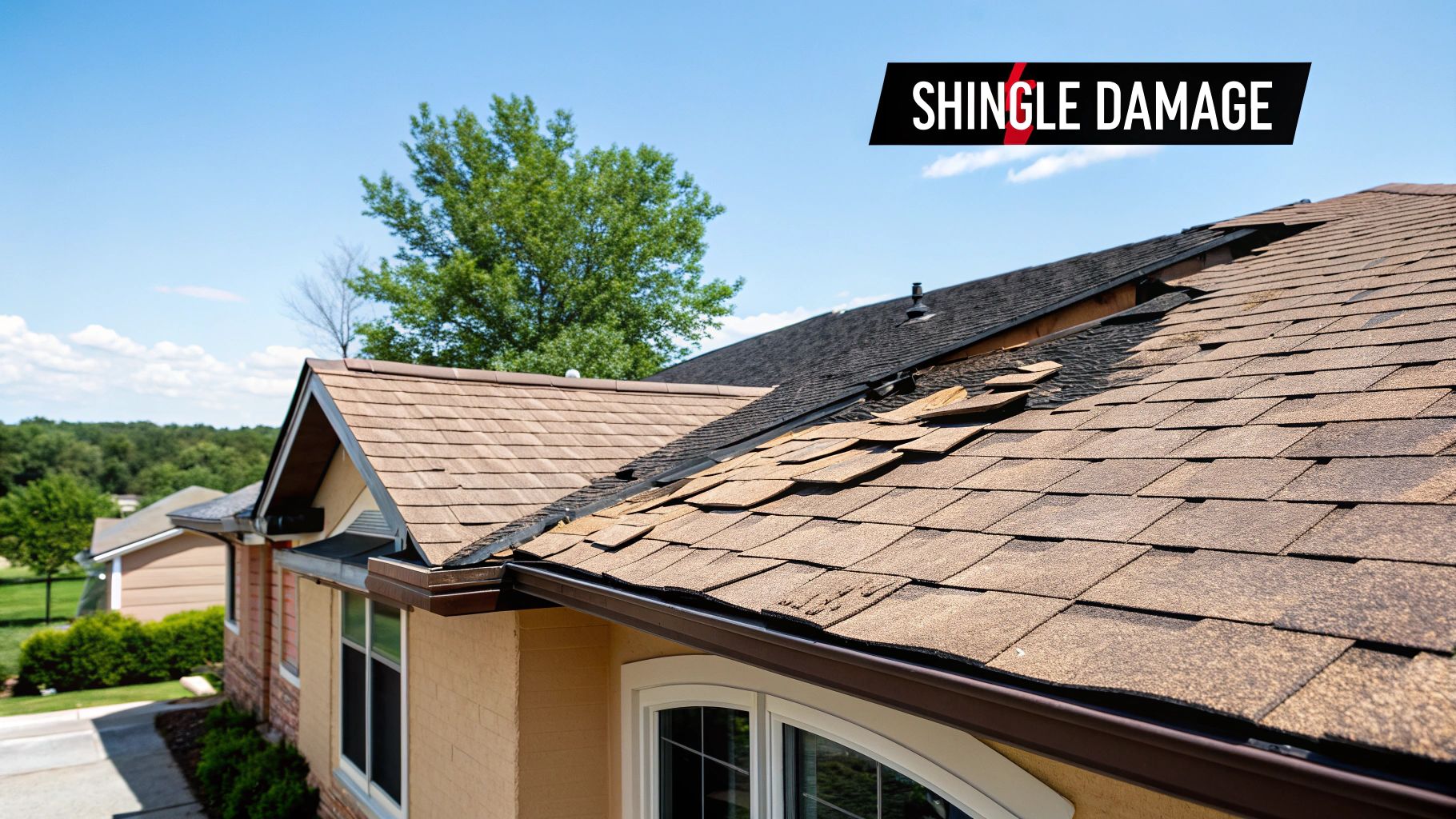
Missing shingles, often torn away by strong storms common from Pinellas all the way to Orlando, expose the underlying layers of your roof. This vulnerability allows Florida's frequent, heavy rains to infiltrate, leading to rapid water damage, rot, and mold growth inside your property. Similarly, damaged shingles fail to protect your home or commercial building effectively.
Common Types of Shingle Damage in Florida
- Curling: Shingle edges can either lift up (cupping) or the center can dip down (clawing). This is a direct result of prolonged heat and moisture absorption.
- Cracking: As asphalt shingles age under relentless UV exposure, they become brittle and can develop thermal cracks. These fractures create direct pathways for water to seep underneath.
- Missing Shingles: High winds from severe thunderstorms or hurricanes can easily rip aging or improperly installed shingles from the roof, leaving gaping holes in its defense. Following major weather events, it's crucial to assess for this kind of widespread damage, which may necessitate a comprehensive approach to storm damage roof repair.
Actionable Tips for Property Owners
To stay ahead of potential issues, perform regular visual inspections. Use a pair of binoculars to safely check your roof from the ground, especially after major storms. Pay close attention to the slopes that face south and west, as these receive the most direct sunlight and tend to deteriorate faster. Also, look for an accumulation of shingle granules in your gutters; this is an early warning sign that your shingles are nearing the end of their lifespan. If you spot any damage, be sure to document it with photos for your insurance provider and a trusted roofing contractor like Hi Low Roofing.
2. Granule Loss from Asphalt Shingles
Often overlooked, the discovery of loose granules in your gutters is one of the most reliable early signs you need a new roof. These small, sand-like particles are a critical component of your asphalt shingles. They are designed to protect the underlying asphalt layer from the harsh Central Florida sun, deflecting UV rays and providing fire resistance. While a small amount of granule shedding is normal for a brand-new roof as it settles, a significant or accelerating loss indicates your shingles are aging and losing their protective shield.
This shedding process, often called "balding," exposes the asphalt mat to direct sunlight. Without its granular protection, the asphalt will dry out, become brittle, and crack much faster. This accelerates the roof's overall deterioration, quickly leading to the types of shingle damage and leaks that plague property owners from Tampa to Orlando, especially on roofs over 15 years old.
Common Causes of Granule Loss in Florida
- Age and UV Exposure: After years under the relentless Florida sun, the adhesive bond holding the granules weakens, causing them to wash away during heavy rainstorms.
- Severe Weather: The impact from hail or the force of wind-driven rain during tropical storms can physically scrub granules from the shingle surface, drastically reducing its lifespan.
- Manufacturing Defects: Although rare, some shingles have been known to experience premature granule loss due to manufacturing issues, making it important to have a professional inspection if your roof is relatively new but showing this sign.
Actionable Tips for Property Owners
To proactively monitor this issue, pay close attention when cleaning your gutters. Notice if there are piles of what looks like coarse black sand accumulating in the troughs or near your downspout outlets. It can be helpful to collect a sample in a clear jar to show a roofing professional and to compare the amount you find from year to year. A sudden increase is a clear red flag. Using binoculars, you can also look for dark, "bald" patches or discoloration on the roof surface itself, which indicates advanced granule loss. If you see this kind of wear, it’s time to plan for a replacement before small issues become major leaks.
3. Sagging Roof Deck
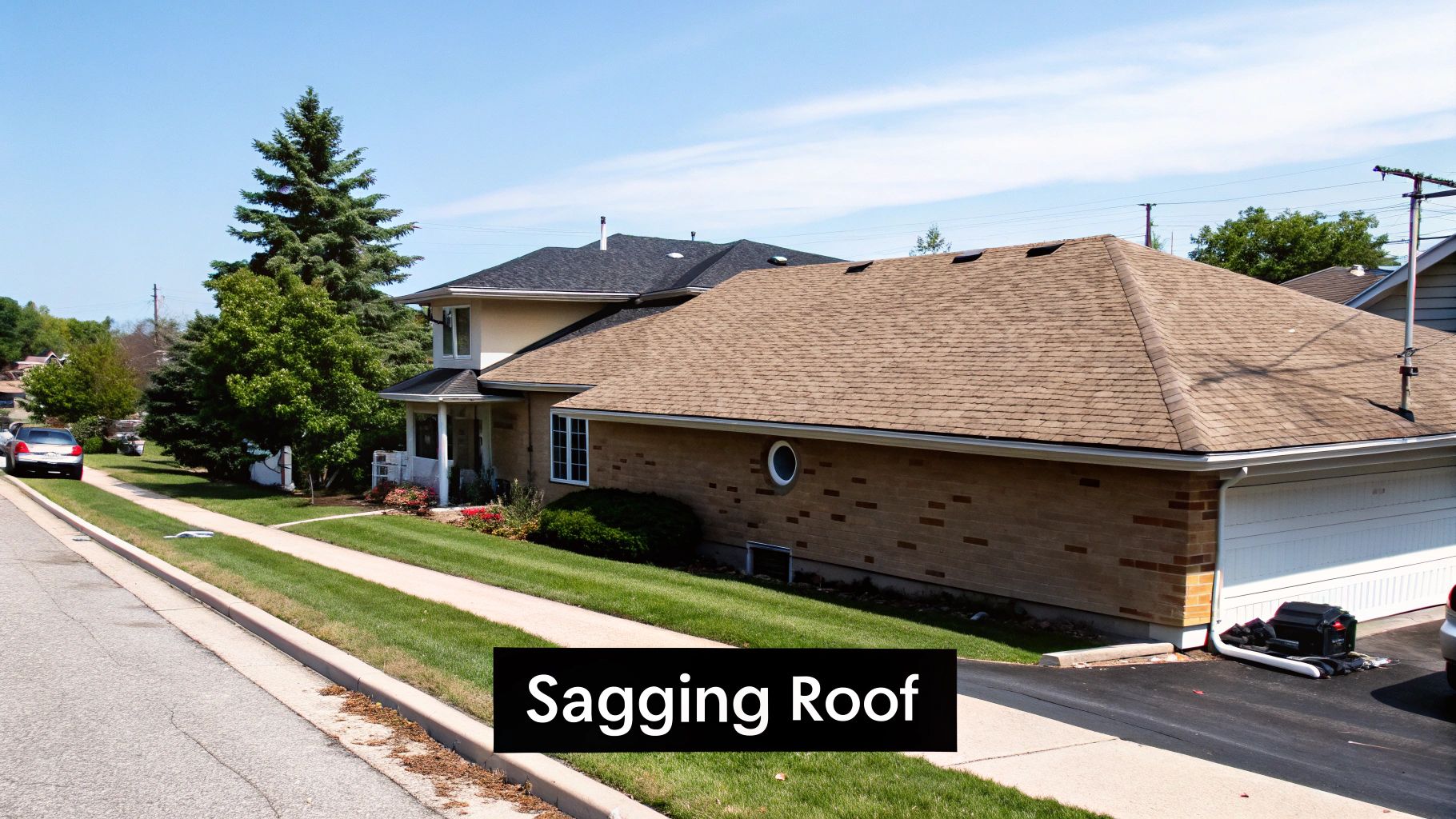
A sagging or drooping roofline is one of the most serious structural signs you need a new roof, indicating a deep-rooted failure that requires immediate attention for both residential and commercial buildings. Unlike surface-level shingle damage, a sag points to problems with the underlying roof deck, trusses, or rafters. This structural compromise is often the result of prolonged water absorption, which weakens the plywood or OSB sheathing common in Central Florida properties, causing it to lose its rigidity and dip between the supports.
This condition is not merely cosmetic; it represents a significant safety hazard. Excessive weight, such as multiple layers from previous re-roofing jobs, or even improperly installed heavy HVAC equipment on commercial roofs, can also contribute to the sag. Over time, the constant strain can lead to a catastrophic collapse, especially during the high winds and torrential downpours of a Florida hurricane season.
Common Causes of Roof Sagging
- Water Damage: Persistent leaks from damaged shingles or flashing saturate the roof decking, causing it to rot, soften, and bend under its own weight. This is a prevalent issue in the humid Orlando to Pinellas County climate.
- Inadequate Support: The building's original construction may have undersized rafters or trusses spaced too far apart, making them incapable of supporting the roof's load over the long term.
- Excessive Weight: Layers of old shingles that were roofed over instead of being removed can add thousands of pounds of stress to the structure, far exceeding its design capacity.
Actionable Tips for Property Owners
To identify a potential sag, it's best to view your property from a distance. Walk across the street to get a clear perspective of the roof's ridgeline and planes; they should be perfectly straight. You can also inspect from the inside by going into your attic with a flashlight. Look for any visible dips in the decking between rafters, water stains on the underside of the wood, or daylight peeking through. A sagging roof deck can also trap heat in your attic, reducing your property's efficiency. Considering modern materials can help, and you can explore options for energy-efficient roofing in Brandon that better manage thermal load. Never delay a professional evaluation if you suspect your roof is sagging, as the risk of collapse is real.
4. Water Stains or Leaks in Attic or Ceilings
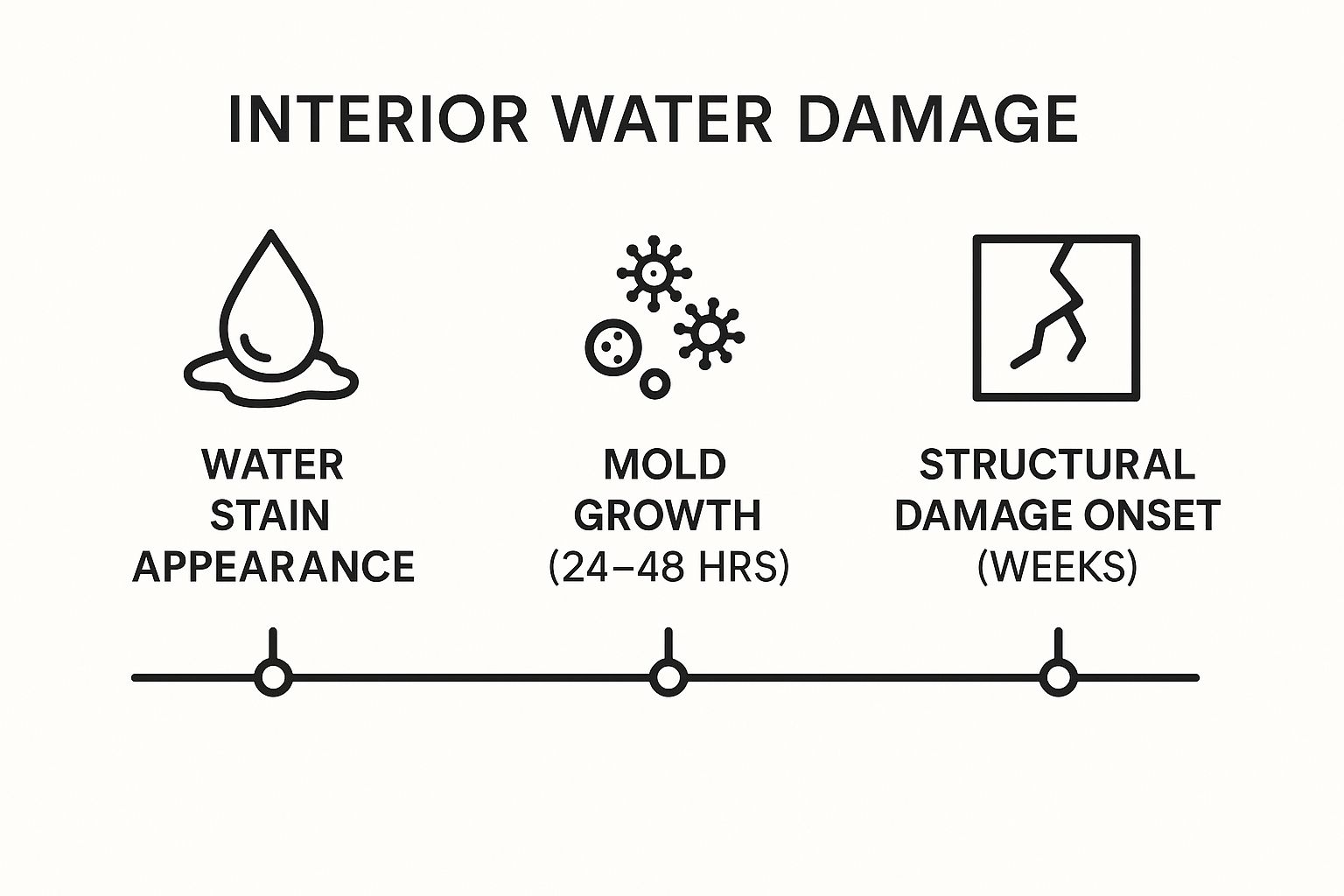
Perhaps the most alarming of all the signs you need a new roof are the ones that appear inside your property. Water stains on your ceilings, discoloration on your walls, or active leaks in the attic are undeniable proof that your roof's protective barrier has failed. These issues are more than cosmetic; they indicate that water has breached the shingles, underlayment, and decking to infiltrate your building's interior structure. In Central Florida, with its frequent heavy rains and high humidity, even a minor leak can escalate into major damage quickly.
These interior signs, which often appear as brown or yellow rings on drywall, mean water is not only entering but potentially saturating insulation, promoting dangerous mold growth, and even weakening wooden support beams. While a single, isolated leak might be fixable, multiple stains or widespread moisture are often symptoms of a systemic roofing failure that demands a full replacement to protect your property's value and integrity.
Common Causes of Interior Water Damage
- Compromised Flashing: The metal strips around chimneys, vents, and skylights are common failure points. As sealants degrade under the Florida sun, gaps can form, allowing wind-driven rain to seep inside and stain ceilings below.
- Aged Underlayment: The water-resistant barrier beneath your shingles becomes brittle and can tear over time. When shingles are damaged or missing, a failed underlayment offers no backup protection, leading to direct leaks into the attic.
- Widespread Shingle Failure: As a roof reaches the end of its lifespan, countless micro-cracks and granule loss can allow water to saturate the decking, leading to slow, persistent leaks that manifest as large, spreading stains on interior surfaces.
Actionable Tips for Property Owners
Your attic is the first line of defense for detecting roof leaks. After a heavy Central Florida downpour, take a flashlight and carefully inspect your attic space for any signs of moisture. Look for damp or compressed insulation, dark stains on the underside of the roof decking, or a musty odor, which indicates mold or mildew. If you see active dripping, place a bucket underneath to contain the damage and mark the location. Document everything with clear photos, as this will be crucial for both your insurance claim and for guiding a professional roofing contractor from Hi Low Roofing to the source of the problem. Addressing these leaks immediately is critical to prevent structural rot and costly interior repairs.
5. Roof Age Exceeding Expected Lifespan
While visible damage is a clear indicator, one of the most reliable signs you need a new roof is simply its age. Every roofing material is engineered with a projected service life, and as it approaches or surpasses that benchmark, its ability to protect your property diminishes significantly. In Central Florida, the combination of intense UV radiation, high humidity, and severe weather can often shorten these lifespans, making age a critical factor to monitor.
As a roof ages, its materials degrade, even if damage isn't immediately obvious. An older roof is more susceptible to wind uplift and water intrusion, which can lead to a cascade of interior problems. Proactively planning for a residential roof replacement before a failure occurs allows you to budget effectively and avoid the stress and expense of an emergency situation.
Typical Roofing Lifespans in Central Florida
- Asphalt Shingles: These are the most common roofing material in areas like Orlando and Tampa and typically last 20-25 years. However, factors like poor attic ventilation can reduce this by 5-7 years.
- Architectural Shingles: A more durable option, these generally last 25-30 years, offering enhanced resistance to Florida's high winds.
- Metal Roofing: A popular choice for longevity, metal roofs can last 40-70 years with proper maintenance, providing excellent protection against hurricanes.
- Tile or Slate: These premium materials can last 50-100 years or more, making them a long-term investment for historic or high-end properties.
Actionable Tips for Property Owners
To determine your roof's age, check building sale documents, permits, or look for a contractor's mark in the attic. If your asphalt shingle roof is approaching 15 years, it's wise to schedule a professional inspection to assess its remaining life. Remember that the quality of the original installation is as crucial as the material itself; a poorly installed roof will fail prematurely, regardless of its expected lifespan. Start budgeting for a replacement 3-5 years before the end of its projected service life to ensure you are prepared.
6. Daylight Visible Through Roof Boards or Attic
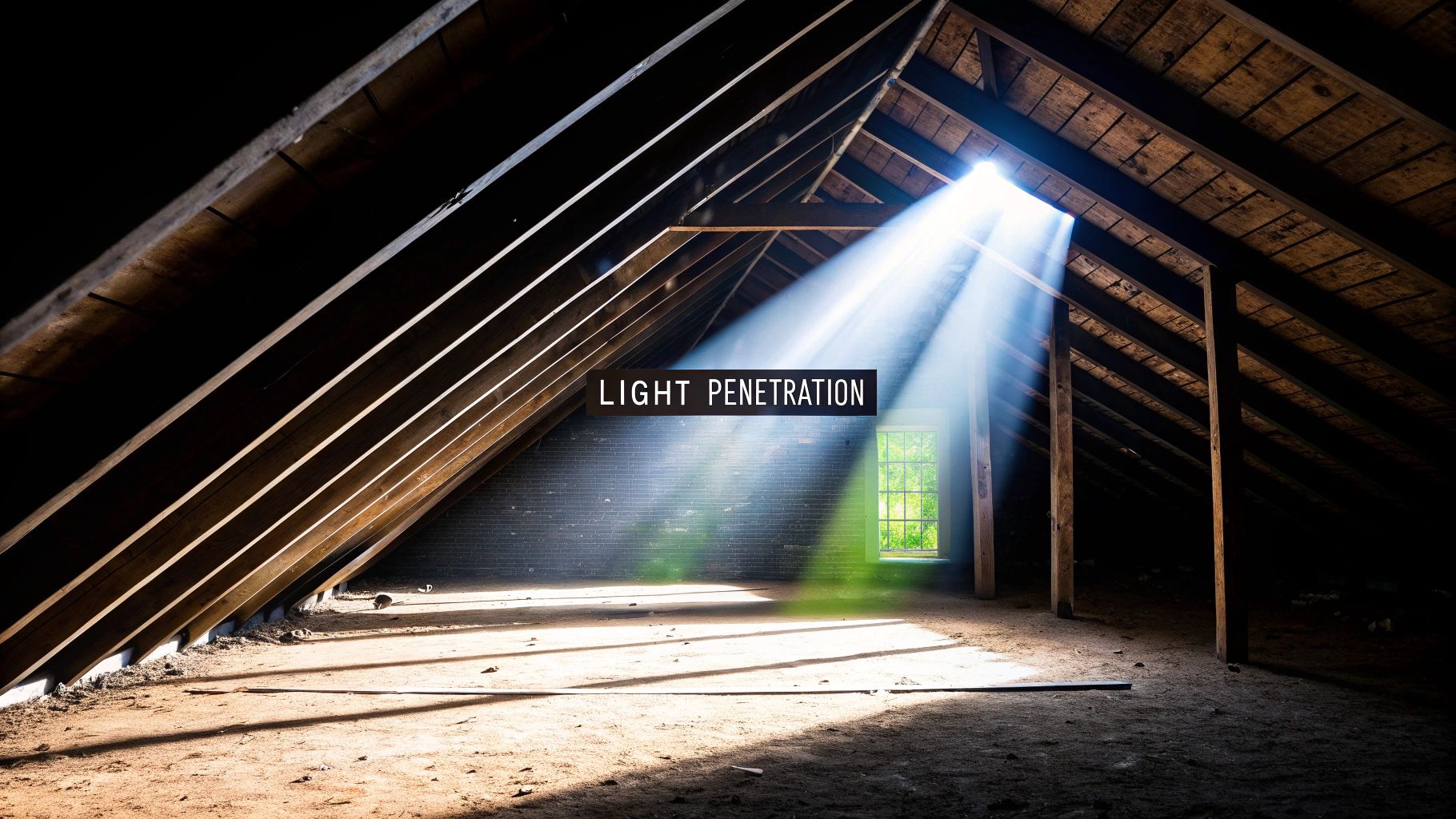
One of the most undeniable signs you need a new roof is when you can see daylight streaming through the roof boards from inside your attic. This isn't just a minor issue; it's a direct confirmation that your roof's primary weather barrier has been completely breached. These openings are an open invitation for Florida's torrential rains, humidity, and pests to enter your property.
Any gap large enough to let in light is also large enough to let in water. In Central Florida, where heavy downpours are a regular occurrence, even a tiny pinhole of light can signify a leak that leads to saturated insulation, rotted roof decking, and dangerous mold growth. Finding multiple points of light throughout your attic is a critical indicator of widespread roof failure.
Common Causes of Roof Gaps in Florida
- Storm Damage: High winds from severe thunderstorms or hurricanes can lift and tear away roofing materials, creating large, visible gaps. A property in an Orlando suburb might discover significant light penetration after a tropical storm has passed through.
- Pest Infestation: Animals like squirrels or raccoons are notorious for chewing through weakened roof decking to create nests, leaving behind holes that are easily visible from the attic.
- Deterioration: Over many years, the relentless Florida heat and humidity can cause roof sheathing to rot and fall apart, especially around improperly sealed penetrations like vents or chimneys. This creates small cracks that widen over time.
Actionable Tips for Property Owners
To perform this crucial check, safely enter your attic on a bright, sunny day and turn off all the lights. Allow your eyes a few minutes to adjust to the darkness. Scan the entire underside of the roof deck, paying special attention to seams, valleys, and areas around chimneys and vents. Mark any spots where you see light with chalk or a brightly colored ribbon. While a single, small hole might be patchable, discovering several points of light is one of the most serious signs you need a new roof and warrants an immediate professional inspection from a trusted company like Hi Low Roofing.
7. Damaged, Rusted, or Missing Flashing
One of the most frequent yet overlooked signs you need a new roof involves the failure of its flashing. Flashing consists of thin metal strips expertly installed around vulnerable areas like chimneys, vents, skylights, and in roof valleys. Its sole purpose is to create a waterproof barrier and direct water away from seams where it could otherwise penetrate. When this critical component is damaged, rusted, or missing, it creates a direct path for water intrusion.
In Central Florida, flashing is under constant assault from intense UV rays, high humidity, and torrential downpours. Over time, the sealants used can degrade, fasteners can loosen, and the metal itself can corrode or bend. While a minor flashing issue can sometimes be repaired, widespread or systemic failure is a clear indicator that the entire roofing system's integrity is compromised, often signaling that a full replacement is the most prudent solution.
Common Flashing Failure Points in Florida Properties
- Chimney Flashing: This is arguably the most common source of roof leaks. The junction between the chimney masonry and the roof deck is complex, and if the step flashing and counter-flashing are not perfectly integrated, water will find its way in.
- Valley Flashing: Roof valleys handle a large volume of concentrated water runoff. Any gaps, rust, or damage here can lead to significant water damage spreading quickly across the underlying roof deck.
- Vent Pipe Flashing: The rubber boot or collar around plumbing vents is highly susceptible to sun damage in the Orlando and Tampa Bay area, becoming brittle and cracking over time, which breaks the waterproof seal.
- Coastal Corrosion: Properties in Pinellas County and other coastal areas face accelerated corrosion of galvanized steel flashing due to the salty air, which can eat through the metal and cause premature failure.
Actionable Tips for Property Owners
It's vital to keep a close eye on your roof's flashing. From the ground, use binoculars to look for any visible signs of rust stains, separation, or bent pieces, especially after a storm. Inside your property, check the attic for water stains or damp insulation around chimneys, vents, and skylights, as these are telltale signs of a flashing leak. Never rely on caulk or roof cement as a long-term fix; these materials are temporary at best and will fail under the Florida sun. When it is time for a roof replacement, ensure your contractor, like Hi Low Roofing, replaces all old flashing to guarantee a completely sealed and protected system.
7 Key Signs Your Roof Needs Replacement
| Issue | Implementation Complexity 🔄 | Resource Requirements ⚡ | Expected Outcomes 📊 | Ideal Use Cases 💡 | Key Advantages ⭐ |
|---|---|---|---|---|---|
| Missing, Cracked, or Curling Shingles | Low – visual spotting, minor repairs possible | Moderate – possible shingle replacements | Early detection prevents major damage; may need partial or full replacement | Properties with visible shingle damage, storm-affected roofs | Easy to spot; small repairs can extend life |
| Granule Loss from Asphalt Shingles | Low – gutter inspection and observation | Low – routine cleaning and monitoring | Early warning before leaks; gradual degradation | Routine maintenance, aging roofs nearing end of life | Easy to detect during gutter cleaning; planned maintenance possible |
| Sagging Roof Deck | High – structural repairs, possible full deck replacement | High – structural expertise and materials required | Prevents collapse; addresses serious structural failure | Roofs with visible sagging or structural concerns | Critical visible sign; inspection may be insurance-covered |
| Water Stains or Leaks in Attic or Ceilings | Moderate – roof and interior repairs may be needed | Moderate to High – roofing and interior remediation | Prevents mold, interior damage, and structural issues | Properties with interior water damage or mold | Definitive sign needing repair; pinpoints leak location |
| Roof Age Exceeding Expected Lifespan | Low to Moderate – planning replacement based on age | Moderate – budgeting for full replacement | Proactive replacement avoids emergencies; improves value | Roofs nearing or beyond typical material lifespan | Predictable timeline; improves planning and budgeting |
| Daylight Visible Through Roof Boards or Attic | Moderate – requires attic inspection and repairs | Moderate to High – attic access and roofing repairs | Definitive sign of failure; urgent action prevents water/pest entry | Attics showing light penetration | Clear, unambiguous indicator; motivates timely repairs |
| Damaged, Rusted, or Missing Flashing | Moderate – flashing replacement or repair | Moderate – material and labor for flashing work | Prevents leak points; may extend roof life if caught early | Roof intersections, chimneys, valleys needing repairs | Flashing often repairable independently; visible rust/gaps help detection |
Protect Your Property: Take the Next Step with a Professional Roof Inspection
Navigating the complexities of property maintenance can be a significant undertaking, but understanding the health of your roof is one of the most critical responsibilities for any owner. Throughout this guide, we've detailed the seven most telling signs you need a new roof, moving beyond surface-level observations to provide you with a comprehensive checklist. From the subtle indicator of granule loss in your gutters to the unmistakable warning of a sagging roof deck, each sign tells a story about your roof's condition and its ability to protect your property.
Recognizing these issues is the crucial first step. Whether you're a homeowner in Orlando spotting cracked shingles after a storm, a real estate investor in Pinellas County assessing a property's long-term viability, or a commercial property manager in Central Florida evaluating multiple roofs, these indicators are universal signals that demand attention. Ignoring them isn't just a cosmetic concern; it's a gamble against Florida's harsh sun, heavy rains, and hurricane-force winds.
From Observation to Action: Securing Your Investment
The journey from identifying a potential problem to implementing a solution is where true peace of mind is found. A damaged or aging roof can lead to a cascade of expensive issues, including water damage, mold growth, compromised structural integrity, and decreased energy efficiency. Taking proactive steps not only prevents these catastrophic failures but also preserves your property's value and ensures the safety of those inside. The key takeaway is simple: your roof is your property's first line of defense. A small leak or a few missing shingles today can quickly evolve into a major structural and financial crisis tomorrow.
This is why a professional assessment is invaluable. While this guide equips you with the knowledge to perform a preliminary check, an expert eye can uncover underlying problems that aren't visible to the untrained observer. A thorough inspection provides a definitive diagnosis and a clear roadmap for the necessary next steps, whether that's a targeted repair, a full replacement, or an upgrade to an energy-efficient solar roofing system. Don't wait for a storm to reveal your roof's weaknesses. By acting on the warning signs you've learned to identify, you are taking control and making an informed decision to protect your most significant asset.
Ready to get a definitive answer on your roof's condition? The expert team at Hi Low Roofing & Solar provides comprehensive, no-obligation inspections for residential and commercial properties across Central Florida, from Pinellas to Orlando. Contact Hi Low Roofing & Solar today to schedule your free assessment and ensure your property is secure for years to come.
