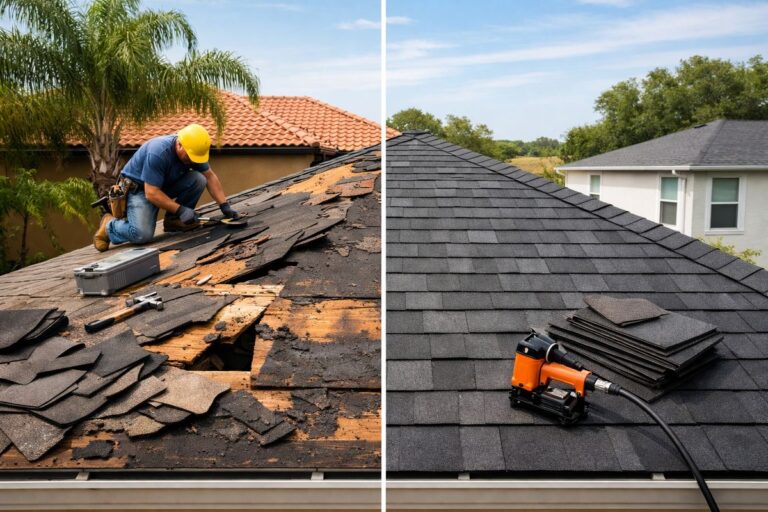
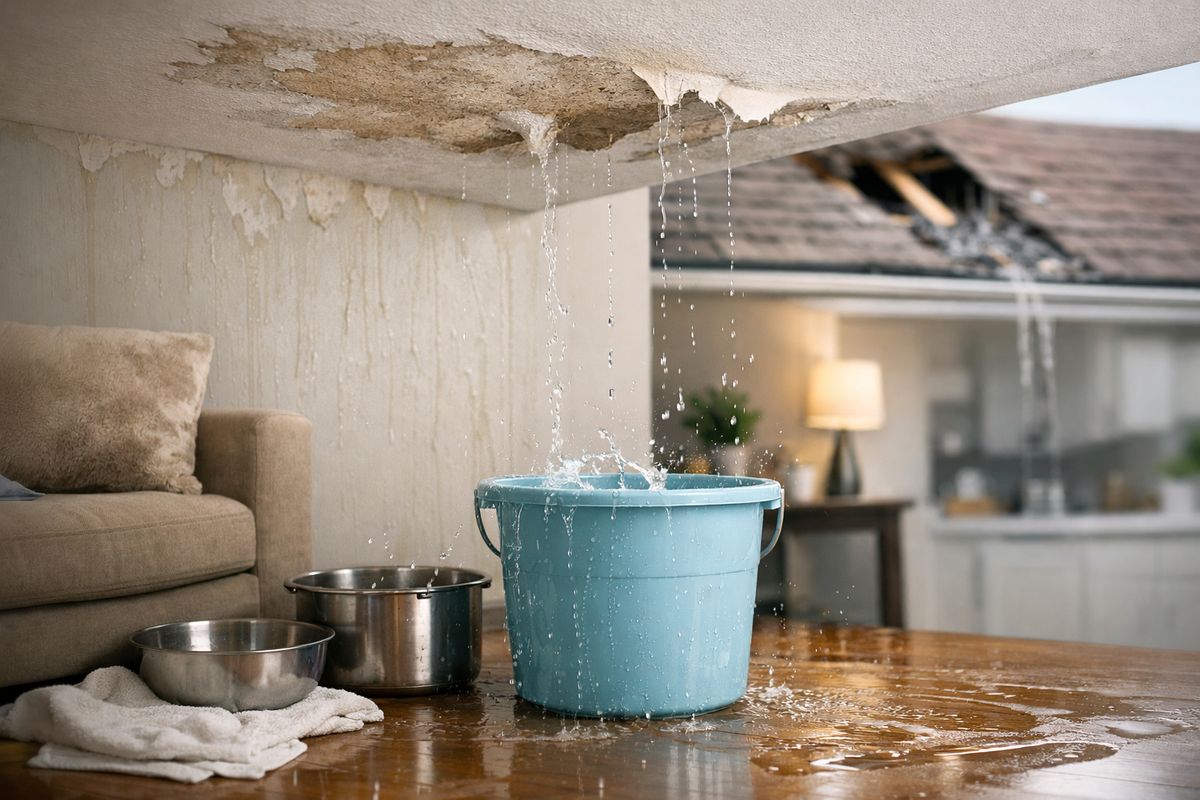
Most roof leak signs do not start with water dripping into a bucket. They start with something easy to brush off, like a faint spot on the ceiling after one of those hard 4 p.m. Orlando storms, a stale smell upstairs, or a shingle edge that suddenly looks a little off. If your roof is older or already showing wear, these are the warnings worth catching early, before a small repair turns into drywall, insulation, and framing damage.
Notice the small drip before it turns into a ceiling problem
A roof leak usually shows up quietly first. You notice a stain, a smell, or a patch of bubbling paint and assume it can wait. Here’s the thing: waiting never makes a roof leak cheaper to fix.
That is especially true around Winter Garden, Ocoee, Apopka, and Orlando, where heat, humidity, and fast-moving storms can push a minor weak spot into a real interior problem. Since asphalt shingles are the roof covering on nearly 69% of homes surveyed, most leak issues start with familiar wear patterns, not dramatic storm damage. The signs below are the ones homeowners often spot too late.
1. Brown ceiling spots that seem to “show up out of nowhere”
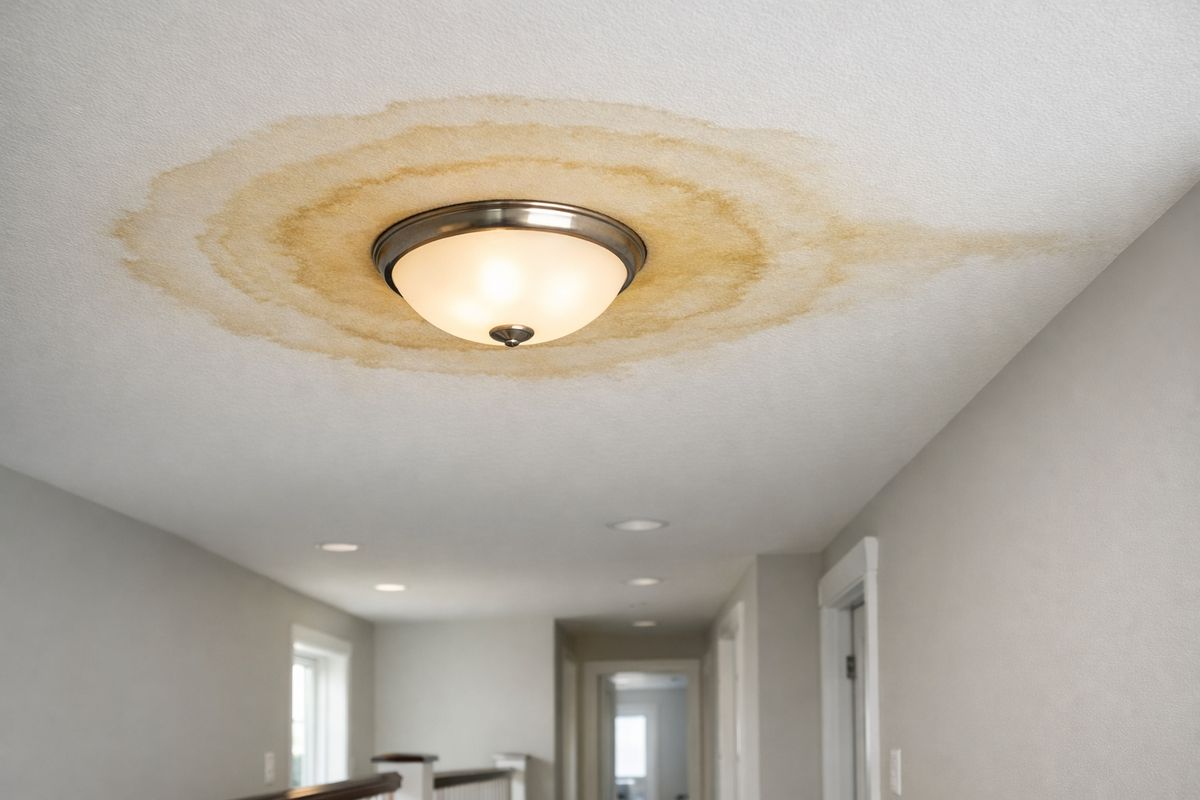
Ceiling stains are one of the most common roof leak signs, and also one of the most ignored. A leak stain may look yellow, tan, brown, or even a rusty copper color, depending on what the water passed through before reaching the drywall. It often shows up in upstairs bedrooms, hallways, and garage ceilings.
The tricky part is that the leak source is not always directly above the stain. Water can travel along roof decking, rafters, or the back side of drywall before finally settling in one visible spot. So the mark you see in the hallway could trace back to a roof issue several feet away.
What makes this easy to ignore
A dry stain feels harmless. If it is not actively dripping, it is easy to treat it like a paint problem and move on.
But stains rarely appear after one innocent splash of moisture. More often, that mark is proof that water has gotten in more than once. If your home already has a few other warning signals up top, that stain deserves a closer look, not a fresh coat of ceiling paint.
What to check next
Look at the spot after the next rain. If it grows, darkens, or feels soft when you gently touch around it, that is a strong sign the leak is still active. Also pay attention to the shape. Rings, spreading edges, and uneven discoloration usually mean repeated moisture, not a one-time event.
2. A musty smell in the attic or upstairs rooms
Sometimes your nose notices the leak before your eyes do. A musty smell is that damp, stale odor that hangs around even after you clean, open windows, or run the AC. It often comes from moisture trapped in insulation, wood, or drywall.
This is one of the easiest signs to dismiss because there is nothing dramatic to point at. No puddle. No drip. Just a room that smells off for no obvious reason.
Why smell matters more than people think
If an upstairs room or attic smells damp and you do not have an obvious plumbing issue nearby, the roof deserves attention. Hidden moisture tends to linger in enclosed spaces, and that smell is often the first clue that water has been getting in above the ceiling line.
The catch is that people get used to smells surprisingly fast. A space can slowly shift from normal to stale over a few weeks, and by then it barely registers until someone visits and notices it right away.
Local conditions that make this worse
Central Florida humidity makes hidden roof moisture harder to catch because damp air can feel normal when it is not. In places like Winter Garden and Apopka, attic spaces already run hot and sticky for much of the year. Add even a small leak, and that trapped moisture can spread through insulation and wood faster than expected.
If you are already comparing repair timing and price, it helps to get familiar with what local fixes usually run in this area so the issue does not keep getting pushed to the bottom of the list.
3. Curled, cracked, or missing shingles
Exterior wear is not just cosmetic. It is often the warning that a leak is already on the way, or has already started. From the ground, you can often spot shingles with lifted edges, cracked tabs, bare-looking patches, or sections that seem uneven after wind and rain.
Granules matter too. Those little sandy particles on asphalt shingles protect the surface from sun damage. When granules wash off, shingles wear down faster and hold up worse under heavy rain. Older roofs tend to show this as patchy color, thinning areas, or granules collecting near downspouts.
Why older roofs deserve extra attention
Aging shingles do not shed water the way new shingles do. After years of sun, heat, storms, and daily expansion and contraction, they get brittle. Once edges curl or cracks form, water has an easier path underneath.
That matters a lot on older Florida homes. If your roof has visible wear and you are already wondering how long it has left, it helps to compare the repair side with the bigger replace-or-repair decision before another storm season adds urgency.
What not to do
Do not climb onto a steep, wet, or visibly worn roof for a closer look. A ground-level inspection with binoculars is safer and often enough to spot obvious damage. If shingles are missing or visibly lifting, that is already enough information to take seriously.
4. Peeling paint or bubbling drywall near the roofline
Paint that peels, blisters, or bubbles near the top of a wall is often moisture trying to escape. The same goes for drywall that looks swollen, warped, or slightly raised near corners and ceiling joints. Common trouble spots include areas around skylights, chimney lines, ceiling corners, and any place where a wall meets the roof.
Water gets behind the surface, sits there, and starts breaking the bond between paint and drywall. At first it can look minor, almost like ordinary aging. It is not.
The catch with cosmetic “fixes”
Repainting without fixing the source is like throwing a towel over a spill and calling the floor clean. It may look better for a little while, but the moisture keeps working underneath.
If the bubbling comes back in the same area, the problem almost always goes deeper than the finish. At that point, the better move is not another paint job. It is finding the leak path.
5. Damp insulation or visible attic moisture
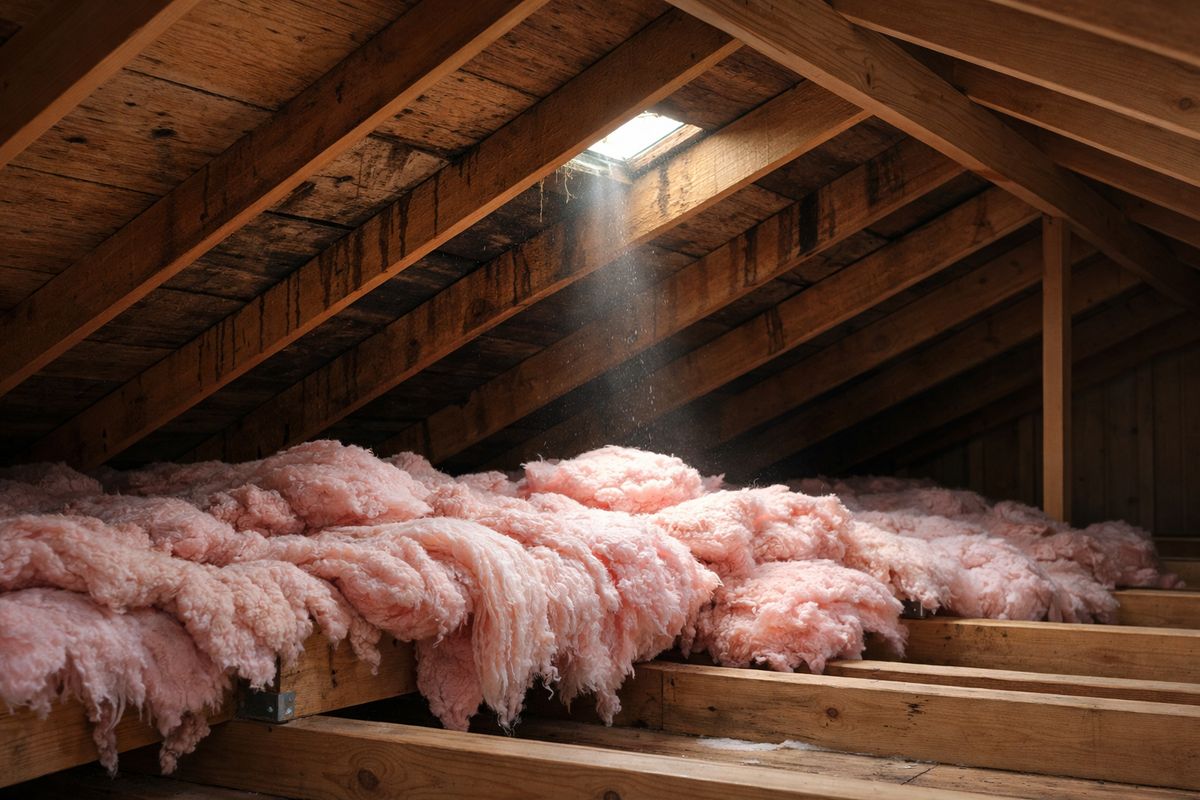
If you want the clearest truth about a roof leak, the attic usually tells it. Wet insulation, darkened wood, water marks on rafters, and a damp sheen on the decking, meaning the wood surface under the shingles, all point to moisture getting in from above.
Insulation is especially revealing. When it gets wet, it clumps, compresses, and loses a lot of its ability to slow heat transfer. So even a modest leak can quietly become two problems at once: water damage and higher cooling strain.
Best time to check
Check during daylight after rain. That is when staining and damp spots are easiest to see, especially if sunlight catches a darker patch on the wood. If you can safely access the attic, look for shiny nails, dark streaks, or sections where insulation looks matted down instead of fluffy.
Why this sign gets missed
Attics are easy to avoid. They are hot, cramped, dusty, and out of sight. So leaks can keep going for months without much attention, especially if nothing has made it through to the ceiling yet.
That delay gets expensive fast. If you are already seeing attic moisture on an older roof, it is smart to review what pushes total replacement pricing up or down because hidden damage can shift the scope more than expected.
6. Mold, mildew, or black spotting in upstairs areas
Mildew is usually a surface-level fuzzy or powdery growth. Mold tends to dig in deeper where moisture keeps sticking around. In real life, you may just notice black, green, or gray spotting on an upstairs ceiling, closet corner, vent area, or exterior-facing wall.
Either way, repeated growth in the same area is a moisture clue. Cleaning it off does not solve much if the surface keeps getting damp again.
When this points back to the roof
If spotting keeps returning in the same upper-floor location, especially after rain, the roof is a likely suspect. That is even more true if the area is near the ceiling, close to an exterior wall, or beneath a section of roof with visible wear.
People often assume it is just humidity. Sometimes it is. But when growth keeps reappearing in one stubborn spot, there is usually a reason that spot stays damp.
Why fast action matters
This is not just about looks. Persistent moisture can damage drywall, trim, insulation, and wood, and it can affect indoor air quality too. A room that smells damp and keeps growing black spotting is not one to monitor for another six months.
7. A soft or sagging spot in the ceiling or roofline
This is the sign that moves the issue from “should check soon” to “deal with it now.” A sagging area means water has likely been sitting long enough to weaken drywall, wood, or part of the roof structure. You may notice a ceiling dip, a spongy section overhead, or an uneven roofline when looking at your home from the yard.
At this stage, the leak is rarely new. The materials have already been absorbing moisture long enough to lose strength.
Signs this needs immediate attention
Bulging drywall, active dripping, or any area that looks ready to give way deserves immediate action. If the ceiling looks swollen, do not treat it like a stain. Treat it like a failure waiting to happen.
A soft section underfoot in the attic or a roofline that no longer looks straight also belongs in the urgent category. Those are not cosmetic issues.
What to do first
Move furniture and belongings out from underneath the area. Keep contact with the spot to a minimum. Then get a roofing estimate quickly before a smaller repair turns into interior rebuild work.
Speed matters here. Homeowners increasingly expect roof work to start quickly, and 88% of contractors surveyed say jobs begin within two weeks after a quote is accepted. If you are hiring someone for a leak issue, clear communication and fast scheduling are worth paying attention to. So is knowing what to ask before you book roof work.
What these signs usually mean when they show up together
One sign alone is worth checking. Two or three at once usually mean the leak has moved beyond the roof surface and into the house.
For example, a brown ceiling spot plus a musty attic smell plus curled shingles is not a coincidence. That combination usually points to active moisture entry, not old damage. Add bubbling paint or mold growth, and the leak has probably been there longer than you think.
That is the part people regret. Not the call for an estimate, but the months spent hoping the stain would stay the same.
Try this quick next step before the next storm
Take ten minutes this week and walk through the upstairs rooms, garage ceiling, and attic if you can safely get in. Look at ceilings and upper walls in daylight. Then step outside and scan the roof from the ground for curling shingles, missing sections, or uneven lines.
If anything looks off, act on it while the repair is still small. Older roofs in Ocoee, Orlando, Apopka, and Winter Garden do not get better with one more storm.
Frequently asked questions
Can a roof leak start without visible dripping?
Yes. Many leaks start with stains, odors, damp insulation, or bubbling paint long before water visibly drips into a room. That is why subtle changes upstairs matter.
Is a ceiling stain always caused by a roof leak?
No, but it is one of the most common causes if the stain is on an upper floor or near the roofline. Plumbing, HVAC issues, and condensation can also cause stains, so the location and timing matter.
How do you know if a roof leak is new or old?
A fresh leak often shows darker, active staining, damp materials, or visible dripping after rain. An older leak may leave dry rings, musty smells, warped drywall, mold growth, or sagging materials that have been wet more than once.
Should you go into the attic to check for a leak?
Only if you can do it safely. Daylight after rain is usually the best time to look for damp insulation, dark wood, and water marks. If the attic feels unsafe, too hot, or hard to access, skip it and get a professional inspection.
Are missing shingles always an emergency?
Not every missing shingle means major interior damage has already started, but it should never be ignored. On an older roof, one missing section can open the door to fast water intrusion during the next heavy rain.
When is it time to stop repairing and start thinking about replacement?
If leaks keep returning, shingles are badly worn across multiple areas, or the roof is older and showing widespread damage, replacement may make more sense than repeated patching. Cost, age, and condition all matter together.
Ready to protect your home? Get in touch with the Hi Low Roofing team for your free estimate. https://hilowroofing.com/free-estimate/