

Think of a TPO roof as a custom-made, heavy-duty raincoat for your building. It’s a single, seamless layer that’s both incredibly waterproof and surprisingly tough, designed specifically for the flat or low-slope roofs you see all over Central Florida.
That’s the simplest way to put it. The technical term is Thermoplastic Polyolefin, or TPO for short. It's a modern, single-ply roofing material that has quickly become a go-to for commercial properties and even some contemporary homes, especially here in the region stretching from Pinellas County to Orlando.
What Is a TPO Membrane, Really?
A TPO membrane does two critical jobs for a Florida building. First, it creates an absolutely watertight barrier against our notorious downpours. Second, its standard white surface acts like a giant reflector, bouncing the intense sun's rays away to help keep the inside of your building significantly cooler.
Unlike old-school roofing systems that relied on multiple layers, messy adhesives, and lots of seams (which are all just opportunities for leaks), TPO is different. We fuse the seams together with a hot-air welder, which basically melts them into one continuous, monolithic sheet.
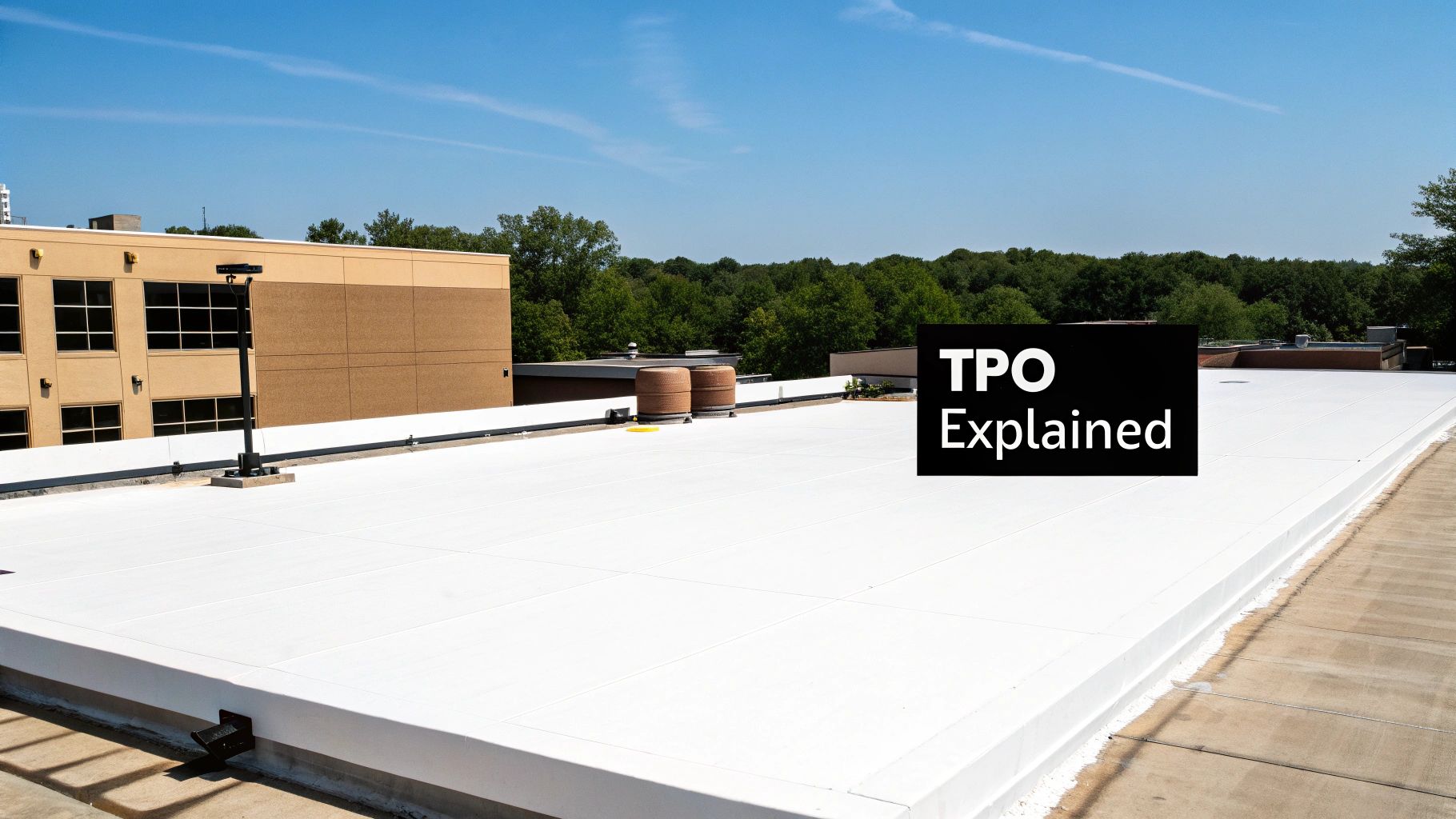
There's a reason TPO now dominates the commercial roofing market—it just plain works. It's not just a sheet of plastic; it's a complete engineered system built for performance and a long service life.
The magic is in the seams. When we weld TPO seams, the bond becomes stronger than the membrane material itself. For a place like Central Florida that gets battered by torrential rain, creating a virtually leak-proof surface is a game-changer.
This modern approach gives property owners some serious advantages:
- Tough as Nails: TPO is engineered to resist punctures and tears, which is a huge plus when you think about flying debris during a hurricane or even just routine foot traffic from HVAC maintenance.
- Keeps You Cool: That bright white surface isn't just for looks. It has a high Solar Reflective Index (SRI), meaning it reflects a massive amount of solar heat instead of absorbing it. This can make a real dent in your summer cooling bills in places like Orlando and Tampa.
- Stands Up to the Sun: TPO is formulated to handle constant, brutal UV exposure without becoming brittle or cracking over time—a non-negotiable feature for any roof in the Sunshine State.
For a quick summary, here's a look at the essential characteristics of TPO roofing.
TPO Roofing at a Glance
This table breaks down the core components of a TPO system to give you a clear, simple overview.
| Characteristic | Description |
|---|---|
| Material Type | Single-Ply Thermoplastic Polyolefin |
| Primary Color | Bright White (for high solar reflectivity) |
| Key Feature | Heat-welded seams for a monolithic surface |
| Best Application | Low-slope and flat commercial or residential roofs |
| Core Benefits | Waterproof, energy-efficient, and durable |
Understanding these fundamentals is the first step in deciding if TPO is the right fit for your property, whether it's a brand-new build or a much-needed roof replacement.
Want to dive deeper into other roofing materials and trends? We're always sharing our on-the-job insights and expertise over on the Hi Low Roofing blog. It's a great place to get the information you need to make a smart investment in your property.
How TPO Membranes Are Built for Durability
So, what makes a TPO roofing membrane so tough? It's not just a simple sheet of plastic. The real strength comes from its sophisticated, three-layer construction. Think of it less like a single piece of fabric and more like a high-tech composite engineered specifically for the kind of weather we get here in Florida.
This layered approach is the secret sauce behind its durability and long-term performance.
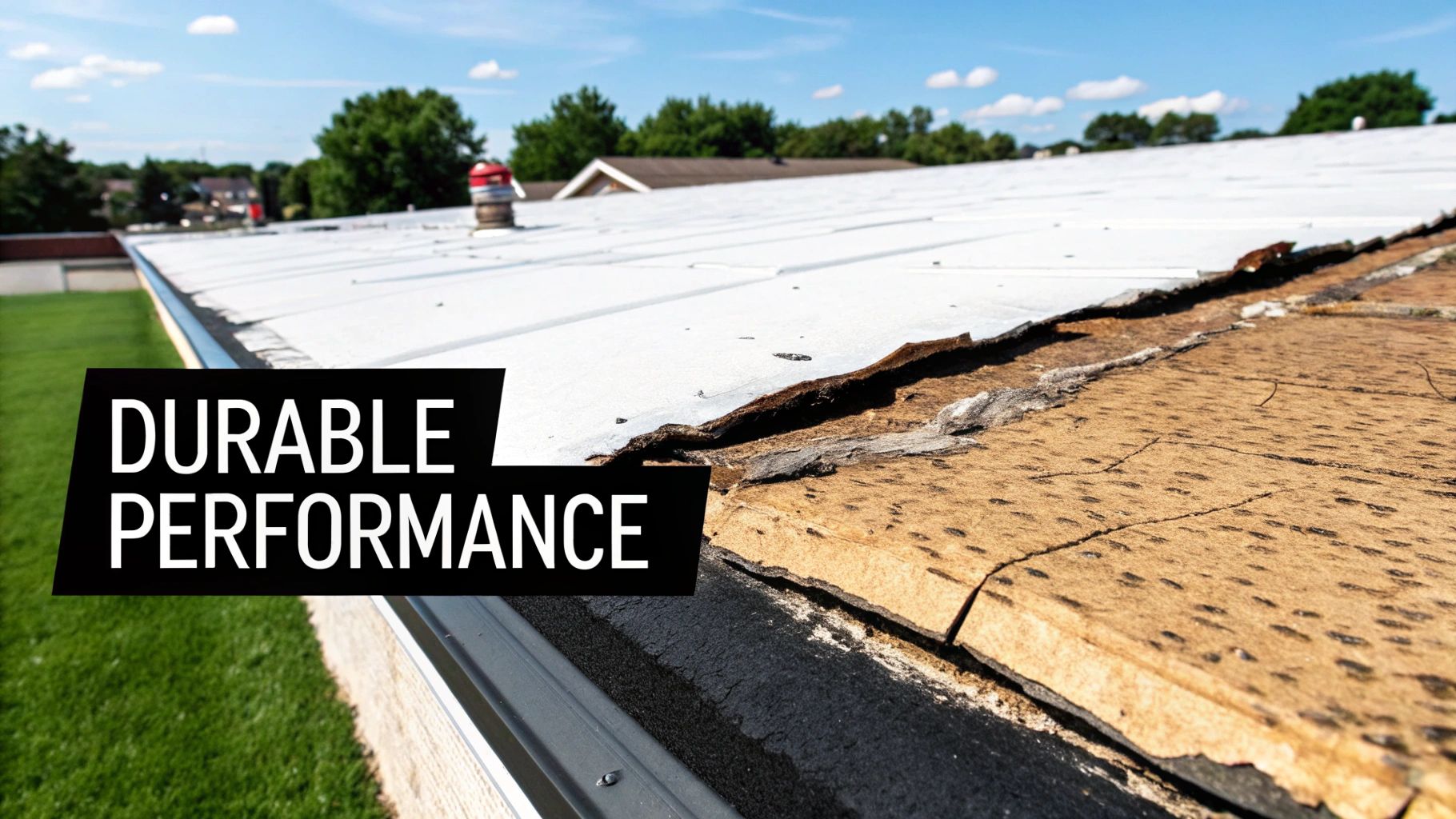
This powerful composition ensures your roof can handle everything from Central Florida's brutal sun to hail and debris during a summer storm. It's no surprise that property owners are increasingly choosing TPO; they're looking for exactly this kind of durable, energy-smart solution. Its long lifespan means fewer costly replacements down the road, and its reflective surface directly cuts down on cooling costs.
If you're interested in the market trends, you can find more TPO roofing solutions on archivemarketresearch.com. But for your building, what matters are the practical, day-to-day benefits of this construction.
The Three Layers of Protection
Each of the three layers has a distinct job to do. When they work together, they create a formidable, seamless barrier over your building.
- Top TPO Ply: This is the outermost layer, the one that’s going to be baking in the Florida sun. It’s loaded with UV inhibitors to prevent it from breaking down and is usually a brilliant white to reflect solar radiation. That reflection is what keeps your building cooler and your energy bills lower.
- Polyester-Reinforced Scrim: At the core of the membrane is a polyester-reinforced fabric, what we in the industry call the scrim. This is the backbone of the whole system. It provides incredible tear and puncture resistance, acting like a ripstop fabric that prevents a small nick from turning into a massive tear.
- TPO Polymer Base: The bottom layer serves as the foundation. It provides stability for the membrane and, critically, it’s the layer that allows for the heat-welding process that fuses the seams together into one continuous, monolithic sheet.
This multi-layer design is precisely why TPO is so resilient. It's engineered to stand up to maintenance crews walking on it, shrug off hail, and resist damage from tree limbs or other debris during Central Florida's intense storm season.
At the end of the day, this structure delivers a roof that isn’t just waterproof—it’s built to be fundamentally stronger. It's a smart investment in protecting your property for the long haul, designed from the inside out to last for decades.
Why TPO Is a Smart Choice for Florida Properties
When you're dealing with the Central Florida climate, your roof has to be more than just a cover—it has to be a frontline defense. TPO roofing membranes are practically tailor-made for our unique challenges, from the brutal Orlando summer sun to the storms that can impact Pinellas County. It's a modern, powerful solution for the flat and low-slope roofs common on both commercial and residential properties here.
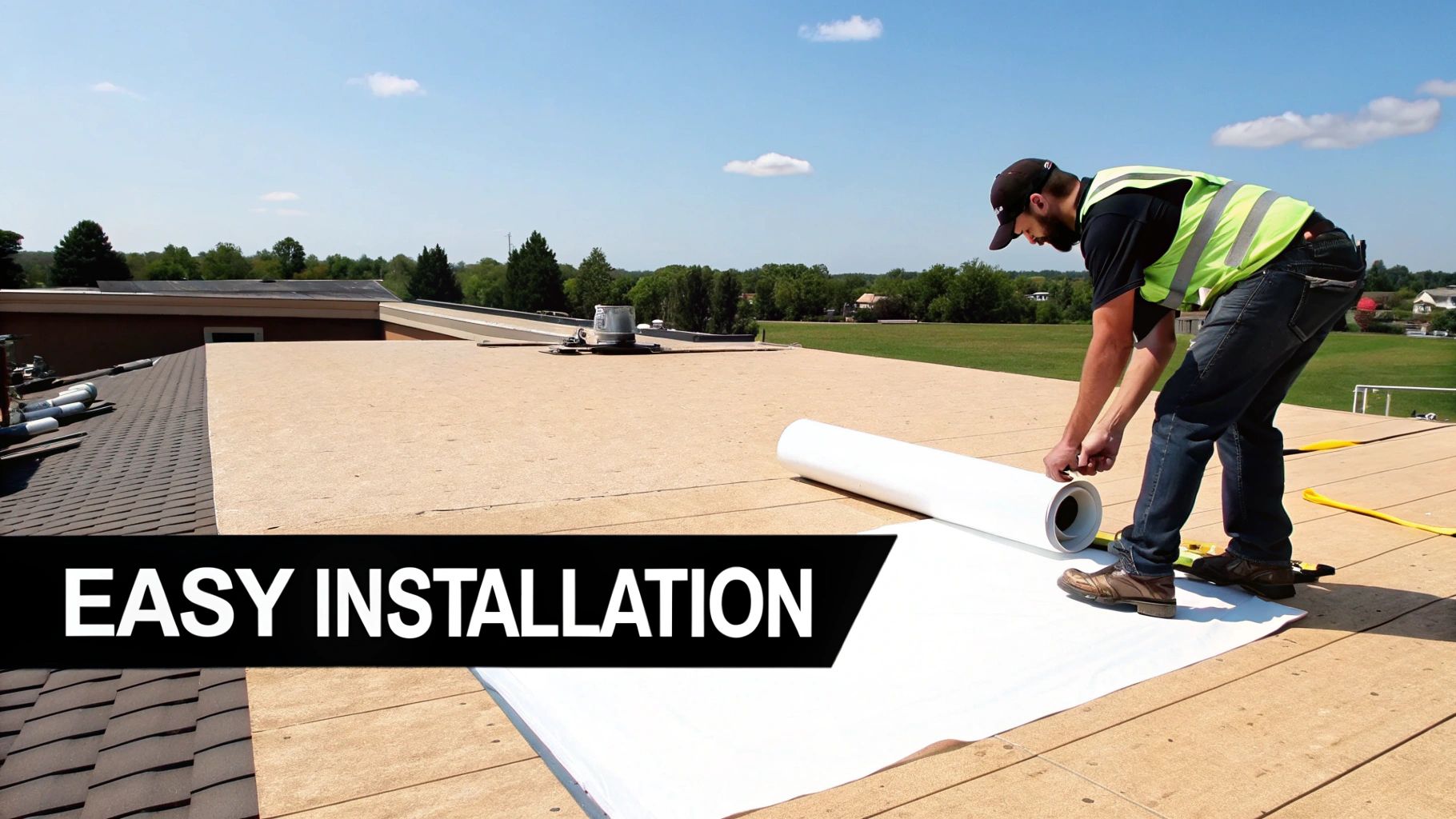
Its biggest win is its performance as a "cool roof." The standard bright white surface is incredibly reflective, acting like a giant shield against solar radiation. Instead of absorbing all that heat, it bounces the sunlight right back into the atmosphere.
What does that mean for you? Your air conditioning system doesn't have to run on overdrive all summer long. This translates directly into lower energy bills and a noticeably more comfortable building interior.
A Monolithic Barrier Against Storms
Heat is only half the battle in Florida. TPO also offers incredible protection against moisture. Unlike older roofing systems that depend on glues and adhesives, TPO seams are heat-welded. A roofer uses a hot-air gun to literally melt the overlapping panels together, fusing them into a single, continuous sheet across your roof.
This fusion creates a monolithic barrier where the seams are often stronger than the membrane itself. For anyone staring down hurricane season, this seamless protection is a game-changer for preventing leaks.
And let's not forget the humidity. TPO is naturally resistant to the algae and mold that love to grow in Florida's sticky air. This means your roof stays cleaner and whiter longer, continuing to reflect heat effectively without needing constant chemical treatments.
It's no surprise that TPO adoption has soared in places with extreme weather. For a deeper dive into this trend, you can explore the market research on TPO membranes on factmr.com.
Finally, while a TPO roof provides an incredible defense against rain, it's wise to have a complete protection strategy. A big part of that is understanding flood insurance versus homeowners insurance to make sure you're covered for every weather event our climate throws at us.
Comparing TPO to Other Flat Roof Materials
When you're looking at options for a flat or low-slope roof in Florida, you'll hear a few names come up again and again: TPO, EPDM, and Modified Bitumen. Each has been a go-to for commercial and residential buildings for years, but TPO's modern design gives it a serious advantage, especially in our relentless sun from Orlando to the Pinellas beaches.
The biggest win for TPO here in Florida is its energy efficiency. Think about it – traditional black EPDM (often called rubber roofing) and dark Modified Bitumen roofs literally bake in the sun, soaking up heat. TPO, on the other hand, is typically brilliant white, reflecting that intense solar radiation right back into the sky. This simple difference means your air conditioning doesn't have to work nearly as hard, which shows up as real savings on your monthly power bill.
Seam Strength and Longevity
It’s not just about staying cool. The way TPO is put together is a game-changer. We use a special hot-air welder to literally melt the seams together. This creates a single, monolithic sheet of material covering your entire roof. The resulting weld is actually stronger than the membrane itself, giving you incredible protection against leaks, even during our torrential summer downpours.
Compare that to EPDM, which relies on adhesives and tapes to seal its seams. Over years of brutal UV exposure and the constant expansion and contraction from our heat, those glued seams can become weak spots. Modified Bitumen is tough, for sure, but it's also heavy and its installation is a much more involved, labor-intensive process.
This infographic breaks down what you can typically expect in terms of lifespan.
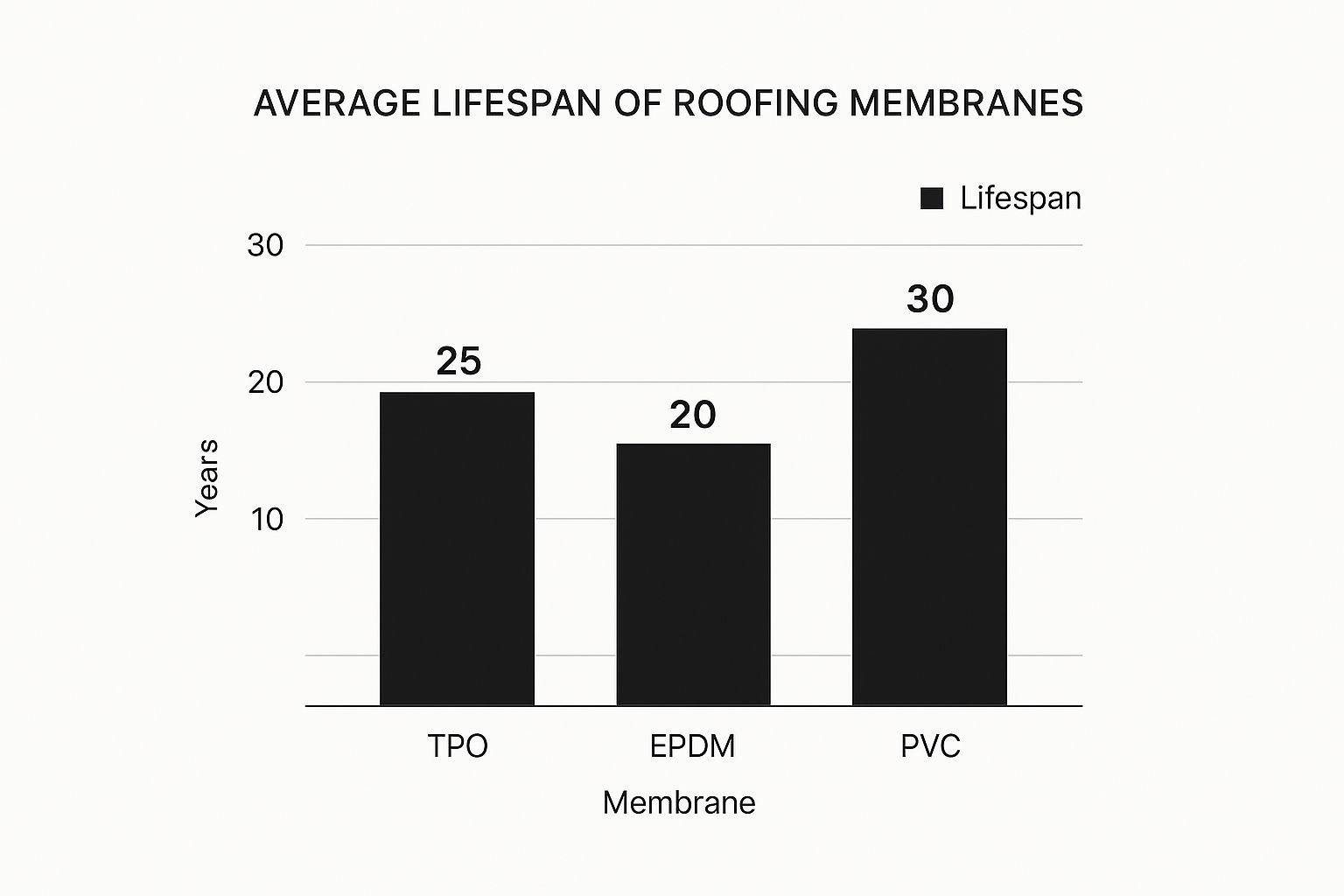
As you can see, TPO really holds its own, offering a long service life that makes it a smart long-term investment. While we're focused on flat roofs here, understanding the cost difference between metal roof and shingles can give you a wider view of how different roofing materials stack up financially.
TPO vs. EPDM vs. Modified Bitumen for Florida Roofs
To make the choice clearer, here’s a straightforward comparison of the three most common flat roofing materials we see in Central Florida.
| Feature | TPO Roofing | EPDM Roofing | Modified Bitumen |
|---|---|---|---|
| Energy Efficiency | Excellent. White surface reflects heat, lowering cooling costs significantly. | Poor to Fair. Typically black and absorbs heat. Lighter colors are available but cost more. | Poor. Dark granular surface absorbs a tremendous amount of solar heat. |
| Seam Strength | Excellent. Heat-welded seams create a monolithic, leak-resistant surface. | Fair. Relies on adhesives and seam tapes, which can degrade over time in UV light. | Good. Seams are typically heat-welded with a torch, creating a strong bond. |
| Durability | Very Good. Highly resistant to punctures, tears, and chemical exposure. | Good. Very durable and flexible, but susceptible to punctures from sharp objects. | Excellent. Often multi-layered and very tough, resistant to foot traffic. |
| Installation | Efficient & Safe. No open flames are needed; heat welding is clean and fast. | Relatively Simple. Often installed in large sheets, reducing labor time. | Labor-Intensive. Requires a torch-down application, which involves open flames. |
| Lifespan | 20-30 years | 20-30 years | 15-25 years |
Ultimately, while all three have their merits, TPO’s combination of energy savings, superior seam technology, and long-term durability makes it an increasingly popular and practical choice for Florida’s demanding climate.
Is TPO Roofing Right for Your Building?
So, is a TPO roofing membrane the right call for your property? It really depends on the building itself. TPO truly shines on those sprawling, low-slope commercial roofs you see everywhere in Central Florida—think warehouses, big-box stores, and office parks from Orlando out to Pinellas County. For these kinds of structures, it's a top-tier choice.
It’s also a fantastic option for modern homes with flat or low-slope roof sections. The clean, bright-white finish looks sharp and delivers a serious punch against the Florida sun, helping keep cooling costs down. But here’s the bottom line: a TPO roof is only as good as the team that installs it.
The Critical Role of Expert Installation
The magic of TPO lies in its heat-welded seams, a process that requires special equipment and a seasoned hand. Each seam is melted together to form one continuous, waterproof sheet. If a weld isn't perfect, it becomes a weak link, putting the whole roof at risk. This is why you absolutely cannot cut corners when choosing a roofing contractor.
TPO is not a weekend warrior project. The skill it takes to properly weld seams and flash around vents and pipes is the difference between a roof that lasts 25 years and one that fails during the first major storm.
There's a reason so many businesses and homeowners are turning to TPO. The global market was valued at a staggering $1.86 billion in 2024 and is on track to hit $3.5 billion by 2035, with North America leading the charge. You can dig into some of the data behind these TPO market trends on wiseguyreports.com. Companies are choosing it because it's a smart, cost-effective, and energy-efficient investment.
If you’re a property owner thinking about making the switch, the next step is to understand what a full commercial roof replacement involves. Once you weigh all the factors, you'll know if TPO is the right long-term solution to protect your building.
Common Questions About TPO Roofing in Florida
Making the right choice for your roof means asking the right questions. We've put together some of the most common ones we hear from property owners right here in Central Florida, from Pinellas County to Orlando. Our answers come from years of being on these roofs, dealing with the unique demands of our local climate.
How Long Does a TPO Roof Last in Florida?
You can realistically expect a professionally installed TPO roof to last anywhere from 20 to 30 years here in Florida. That's a solid lifespan, and it's no accident. The material is packed with UV inhibitors designed specifically to fight back against our intense, year-round sun, which keeps it from getting brittle and cracking.
Another huge factor is the heat-welded seams. Unlike glued or taped seams that can fail over time, these welded bonds are incredibly tough. They easily handle the constant expansion and contraction that comes with our daily temperature swings, which is where many other roofing systems tend to break down first. Of course, a quick check-up after a major storm is always a smart move to catch small issues early and make sure your roof hits that 30-year mark.
Is TPO Roofing More Expensive Than Other Flat Roofs?
When you look at the upfront installation cost, TPO is very competitive. It typically falls in the same ballpark as EPDM (rubber roofing) and is often a more budget-friendly option than older multi-ply systems like Modified Bitumen. But the real story with TPO is the long-term value.
Its highly reflective white surface is an absolute game-changer for energy bills. When you start adding up the savings on your cooling costs, year after year, TPO often proves to be one of the most cost-effective flat roofing choices you can make based on its total cost of ownership.
Can You Install Solar Panels on a TPO Roof?
Absolutely, and it's a fantastic pairing. TPO provides an ideal foundation for solar panel systems, which happens to be a specialty of ours at Hi Low Roofing. The membrane is smooth, durable, and provides a super stable base for all the mounting hardware.
There’s even a nice little bonus: the white TPO surface helps keep the roof itself cooler, which can actually boost the efficiency of your solar panels. It all works together to create a seamless system that helps you produce more of your own power.
Does TPO Roofing Only Come in White?
While that brilliant white is easily the most popular choice for its incredible energy-saving reflectivity, you're not limited to it. TPO membranes are also available in colors like gray and tan, giving you the flexibility to better match your building's aesthetic.
It's true they aren't quite as reflective as pure white, but they still deliver significant "cool roof" benefits. Compared to traditional dark materials like black EPDM or asphalt, they are worlds apart in terms of energy efficiency.
Ready to find out if a durable, energy-efficient TPO roof is the right solution for your Central Florida property? The experts at Hi Low Roofing are here to help. We provide free, no-obligation inspections and detailed estimates to give you the clear answers you need for both residential and commercial projects. Protect your investment and lower your energy costs by visiting us at https://hilowroofing.com to schedule your consultation today.
