

Yes, you absolutely can power wash a tile roof, but there's a huge catch: it has to be done the right way. This means using a low-pressure technique, often called soft washing. Blasting away with high pressure is a recipe for disaster—it can easily crack tiles, damage the underlayment, and even void your roof's warranty. For protecting a Central Florida home, getting this right is non-negotiable.
Why Florida's Climate Demands a Different Roof Cleaning Approach
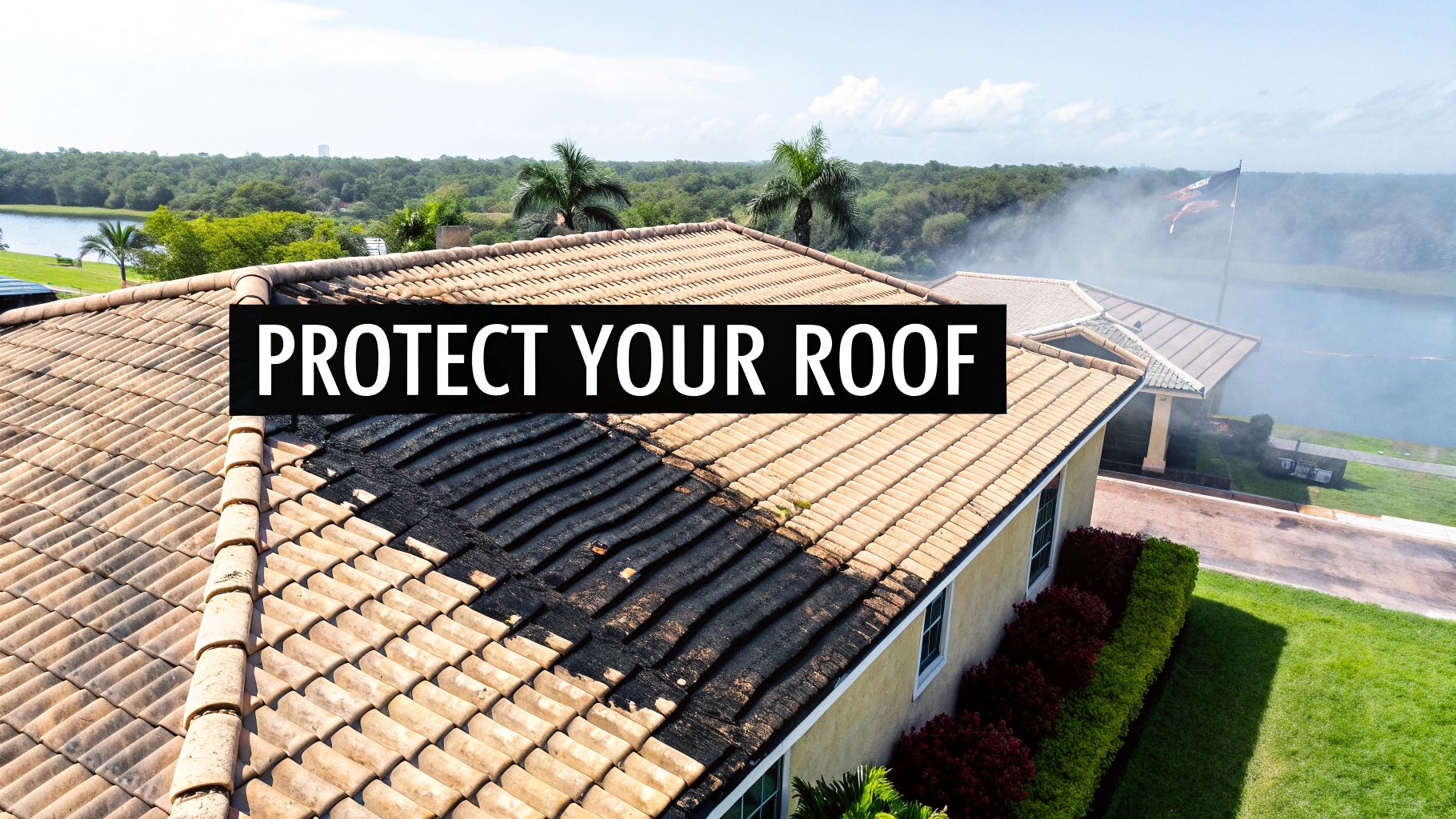
Living anywhere from Pinellas County to Orlando means your residential or commercial property is in a constant battle with the elements. Our unique environment—that relentless trio of intense sun, heavy rain, and suffocating humidity—is the perfect incubator for all sorts of organic growth on your tile roof.
Those dark streaks and green patches you’re seeing aren't just a layer of dirt. That’s a living colony of Gloeocapsa magma, a type of algae that actually feeds on the limestone filler used in many roofing materials. To protect itself from the sun's UV rays, this algae forms a dark outer shell, which is why it shows up as those ugly black or dark green stains.
More Than Just an Eyesore
This biological growth is much more than a cosmetic problem. It's an active threat to your roof's health and your property's overall efficiency. If you let it go, you're looking at some serious headaches down the line.
- Moisture Retention: Think of algae, moss, and mold as a giant sponge sitting on your roof. It traps moisture against your tiles day in and day out, which speeds up the breakdown of both the tiles and the critical waterproof membrane underneath, known as the underlayment.
- Structural Damage: Once moisture gets past the tiles and underlayment, it can lead to rot in the wooden roof deck. This compromises the structural integrity of your entire roof, turning a cleaning job into a major, expensive repair.
- Reduced Energy Efficiency: Many tile roofs, especially the lighter-colored ones, are chosen for their ability to reflect sunlight and keep your home cooler. But cover it in a dark blanket of algae, and your roof starts absorbing heat. This forces your AC to work overtime, and you'll see the difference in your energy bills.
The reality is that proactive roof maintenance is a crucial part of property ownership in Florida. It's not just about curb appeal; it's about protecting one of your most significant investments from our demanding climate.
Protecting a Growing Investment
There's a reason tile roofs are so popular here—they're built to withstand Florida's wild weather. In fact, the global market for roofing tiles was valued at around $30.4 billion back in 2019 and continues to grow, which speaks to their long-term value.
Protecting that investment starts with smart maintenance. This is especially true when you factor in the constant threat of storm damage. For more on that, check out our guide to hurricane-proof roofing solutions for Florida homes. By choosing the right cleaning method, you ensure your roof lasts as long as it's supposed to, preserving both its protective function and your property's value.
The Hidden Dangers of DIY Tile Roof Washing
The thought of renting a pressure washer and blasting away the grime on your roof over a sunny Florida weekend can be tempting. It feels productive, and who doesn't love a good DIY project? But when it comes to power washing a tile roof, that can-do spirit can lead you straight into some seriously expensive trouble. The real danger isn't just slipping off a ladder—it's the permanent damage a high-pressure stream can inflict on your property's first line of defense.
Most people in Central Florida don't realize that the pressure washer you rent from the local hardware store is powerful enough to shatter a clay or concrete tile instantly. One wrong move, one moment of misdirection, and you can cause a hairline fracture or crack a tile wide open. That's an open door for our famous afternoon downpours.
Beyond Cracked Tiles: The Threat of Water Intrusion and Rot
The most insidious risk, however, is forcing water into places it was never designed to go. Even if you manage not to break a single tile, a powerful jet of water can easily get under the lip of the tiles, blasting straight onto the underlayment. That’s the critical waterproof layer protecting your entire roof deck.
Once water gets trapped under there, you’ve created a dark, humid incubator for mold, mildew, and rot. This kind of damage can go unnoticed for months, slowly destroying your roof from the inside out.
Before you know it, you could be dealing with:
- A Rotting Roof Deck: The wood sheathing beneath your tiles starts to soften and decay, weakening the whole roof structure.
- Interior Leaks: Water eventually works its way into your attic and down to your ceilings, leaving ugly stains and setting the stage for major interior repairs.
- Unwanted Pests: Damp, decaying wood is practically a dinner bell for termites and other pests.
A well-intentioned DIY roof wash can spiral into a massive structural repair job. The few hundred dollars you might save by not calling a professional is nothing compared to the thousands it costs to fix widespread water damage.
Often, by the time a homeowner spots the evidence, the problem is already severe. To get a better idea of what to look for, check out these common signs you need a new roof and see how quickly small issues can escalate.
The Costly Ripple Effect of a DIY Gone Wrong
The potential for damage doesn’t stop at the roof itself. Many DIY attempts involve harsh chemicals like chlorine bleach to kill the algae and mold. When not handled by a pro, the runoff can be disastrous.
That chemical-laced water can scorch your prized landscaping, stain your driveway, and even eat away at the seals around your windows.
But the biggest financial blow often comes from voiding your roof's warranty. Almost every roofing manufacturer’s warranty explicitly states that damage from high-pressure washing is not covered. If you strip away the protective granules, crack tiles, or cause a leak yourself, the manufacturer won't cover the repairs. You're on the hook for the full cost. For property owners from Pinellas County to Orlando, it's crucial to understand these risks. Hiring a professional isn’t just about convenience; it’s about protecting your home, your warranty, and your wallet.
What a Professional Soft Wash Process Actually Looks Like
When our team from Hi Low Roofing pulls up to your Central Florida property, we aren't just there to blast your roof with a pressure washer. The proper, industry-standard technique is called soft washing, and it’s a much smarter, more calculated process. It’s less about brute force and more about the science of cleaning.
This entire approach is built around protecting the health and longevity of your tile roof. A trained technician won't even think about spraying until they've done a thorough inspection from the ground up, looking for any pre-existing issues like cracked tiles or loose flashing. This is non-negotiable; the last thing we want is for the cleaning process to worsen a problem you didn't even know you had.
Meticulous Property Preparation
Before a single drop of cleaning solution is mixed, the crew gets to work prepping the area around your property. This is one of those critical steps that often gets skipped in a DIY attempt, but it’s absolutely essential for protecting your building and landscaping.
- Protecting Your Landscaping: We start by giving all the surrounding plants, shrubs, and flower beds a deep drink of fresh water. This saturates the soil and foliage, creating a protective barrier so the cleaning solutions can't be absorbed.
- Covering Sensitive Areas: Next, we cover anything that shouldn't get wet. Think outdoor electrical outlets, fancy door hardware, or ornamental light fixtures. A little plastic sheeting and painter's tape go a long way.
- Managing the Runoff: We'll often disconnect or bag your downspouts. This gives us total control over where the runoff goes, steering it away from delicate garden beds, pools, or walkways.
A true professional's job isn't just to clean the roof. It's to leave your entire property looking as good as, or better than, when they arrived. That level of care is what separates the pros from the amateurs.
The Science of Low-Pressure Application
Once the property is fully prepped, the real work begins. Instead of using high-PSI jets that can shatter a tile, we use a specialized system to apply our cleaning solution at a pressure that’s no stronger than a garden hose. The specialized, eco-friendly algaecide is what does all the heavy lifting.
This infographic really drives home the destructive power of using high pressure instead of the professional soft wash method.
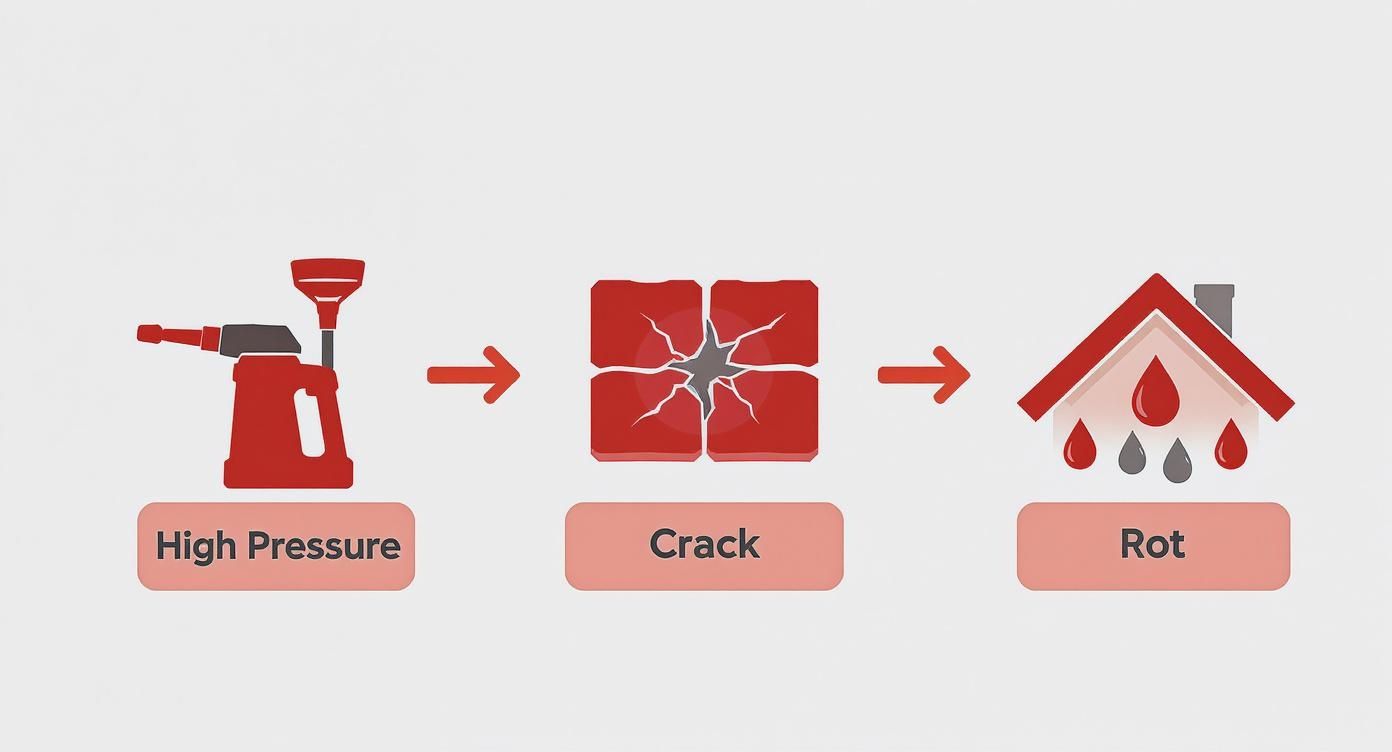
As you can see, the sheer force from a pressure washer can easily crack tiles, which is a direct path to water intrusion and hidden rot under the surface.
With our method, we let the solution dwell on the roof for a bit. This gives it time to work its magic, breaking down algae, mold, and mildew at a biological level. It lifts the stains right off the surface without any need for damaging, abrasive force.
After the solution has done its job, we finish with a gentle rinse of clean water. This washes away all the loosened grime and residue, revealing the vibrant, original color of your tiles. It’s a methodical approach, and it’s why the demand for professional exterior cleaning is climbing so fast.
In fact, the global power washing service market is projected to grow from around US$ 671 million in 2025 to US$ 981 million by 2031. More and more property owners are realizing that professional methods are an investment in protecting their property's value. You can read more about these market trends and what’s driving them in the full research.
How to Choose the Right Roof Cleaning Pro in Central Florida
Finding a solid contractor to clean your tile roof in Central Florida, whether for a home in Tampa or a business in Orlando, can feel like a shot in the dark. The market has many options, and not everyone has the experience or integrity your property deserves. To make sure you're protecting your biggest investment, you need to know what to look for and, just as importantly, what questions to ask.
Don't let price be your only guide. In this line of work, a quote that seems too good to be true almost always is. It’s often the biggest red flag, signaling a lack of proper insurance, cheap equipment, or someone who's just desperate for a job they aren't qualified to handle.
Vet Their Insurance and Licensing
This is non-negotiable. Before you let anyone set foot on your property, you need to confirm they have the right coverage. A true professional must carry two specific types of insurance, and you should always ask to see the paperwork.
- General Liability Insurance: This protects your home or commercial building from any accidental damage that might happen while they're working. Think a cracked tile or a broken window.
- Worker's Compensation: This one is huge. It covers their crew if someone gets hurt on your roof. If they don’t have it, you could find yourself on the hook for their medical bills.
Don't just take their word for it. Ask to see the actual certificates of insurance. Any legitimate, trustworthy company will have them on hand and will be more than happy to show you. This one simple step weeds out the amateurs fast.
Confirm Their Cleaning Method
Never assume a company that says "roof cleaning" uses the right technique for your tile roof. You need to ask one very specific question: "Do you use soft washing?" If they start talking about using high pressure, that's your cue to end the conversation and move on.
High-pressure washing is a guaranteed way to cause a world of hurt for a tile roof. It can easily crack expensive tiles, force water under the underlayment where it doesn't belong, and even void your roof’s warranty. A real pro knows the cleaning solution does the heavy lifting, not brute force from the water pressure.
A reputable expert will walk you through their soft washing process. They’ll tell you how they plan to prep the area and protect your landscaping from any runoff. This kind of attention to detail shows they respect your entire property, not just the roof they’re getting paid to clean.
Before you hire a roofer, it’s a good idea to understand the key differences between the methods they might use. High-pressure washing is often pitched as a quick fix, but the risks to a tile roof are just too high. Soft washing is the industry-standard method recommended by professionals for a reason: it's safe, effective, and protects your investment.
Pressure Washing Method Comparison for Tile Roofs
| Feature | High-Pressure Washing (DIY Risk) | Soft Washing (Professional Method) |
|---|---|---|
| Water Pressure | 2000-4000+ PSI | <500 PSI (garden hose level) |
| Primary Cleaner | Raw water force | Specialized cleaning solutions |
| Risk of Damage | Very High: cracks tiles, voids warranty | Extremely Low: gentle on all roof types |
| Effectiveness | Surface-level clean, algae returns quickly | Kills algae, mold, and mildew at the root |
| Longevity | Short-term results, needs frequent cleaning | Lasts 4-6 times longer |
| Recommended For | Concrete driveways only | All roofing materials, especially tile & asphalt |
Ultimately, the choice is clear. The potential for costly damage from high-pressure washing far outweighs any perceived short-term benefits.
Review Their Past Work and Local Reputation
A company’s portfolio is their track record. Always ask to see before-and-after photos of tile roof cleaning jobs they've done right here in Central Florida, from Pinellas County to Orlando.
You want to see crisp, high-quality pictures that show consistent, impressive results on residential and commercial roofs that look like yours. From there, head online and check their reviews on sites like Google to see what your neighbors are saying. A long history of positive feedback is a powerful sign that you’re dealing with a reliable company.
As a leading Orlando roofing contractor, we know that a strong local reputation is earned one successful project at a time. Taking these extra steps will give you peace of mind that you're hiring a true partner who will protect your property and deliver results that last.
Keeping Your Tile Roof Cleaner for Longer
So you've just had your tile roof soft washed and it looks brand new again. Fantastic. Now, how do you keep it looking that way for as long as possible? The last thing you want is to see those ugly black streaks from algae creeping back in just a few months.
With a little bit of proactive care, you can seriously extend the time between professional cleanings. It's all about making your roof a less welcoming place for the stuff that loves to grow on it here in Central Florida. Think about what causes the growth in the first place: moisture and shade. Tackle those two, and you’re way ahead of the game.
Proactive Maintenance You Can Do Yourself
You don't need to be a roofing expert to make a huge difference. A few simple habits can dramatically slow down the return of mold and algae, and you can handle most of them right from the ground or a secure ladder.
-
Trim Overhanging Tree Limbs: Take a look at the trees around your property. Any big branches hanging over the roof? They're casting shadows and dripping debris, preventing the tiles from drying out after our daily Florida downpours. Trimming them back lets the sun do its job as a natural algae inhibitor.
-
Keep Your Gutters Clear: This one is huge. When gutters get clogged with leaves and gunk, rainwater has nowhere to go but up and over the edge, spilling back onto your roof fascia and tiles. This creates a constant state of dampness that mold absolutely loves. A quick gutter clean-out a couple of times a year works wonders.
A clean roof isn't a one-and-done deal; it's just regular property maintenance. Putting in a little effort now saves you a lot of money and hassle down the road by preventing a major buildup.
Consider a Preventative Treatment Plan
For the ultimate peace of mind, a preventative treatment plan is your best bet. This is where a professional comes out periodically—way before the roof looks dirty again—and applies a gentle, specialized algaecide solution. It’s a quick application that stops new growth in its tracks before it ever becomes visible.
This kind of proactive care is a smart move, and more and more property owners are catching on. In fact, the global market for roof cleaning services was valued at around USD 2.5 billion in 2024, and it's set to grow as people realize that preserving their property's value is a worthwhile investment. You can learn more about the factors driving this growth and see for yourself why it makes financial sense.
For property owners from Pinellas County all the way to Orlando, taking these small steps is the key to protecting your investment and keeping that curb appeal locked in for years.
Answering Your Top Tile Roof Washing Questions
Over the years helping homeowners and business owners in Central Florida, a few questions about tile roof cleaning pop up time and time again. People want to know what's necessary, what's safe, and what's smart for their investment. Let's get right into the answers we give our clients every day.
How Often Should a Tile Roof Be Washed in Florida?
For most properties here in our humid climate, a professional soft wash every 2 to 3 years hits the sweet spot. That's typically enough to keep the algae and mildew from getting a serious foothold, which is what really damages your tiles and underlayment long-term.
But that's just a rule of thumb. Every property is different. If your building in Orlando or Pinellas County is tucked under a canopy of big oak trees or sits near a lake, you'll probably see that telltale green and black growth creep back faster. In those cases, you might be looking at a cleaning every 18 months.
Honestly, the best way to know is to just look up. When you start seeing those dark streaks reappearing, that's your roof's way of telling you it's time for a wash before things get out of control.
Can Power Washing Actually Damage My Tiles?
Yes, absolutely. In fact, pointing a high-pressure washer at a tile roof is one of the worst things you can do. The sheer force can easily crack concrete tiles or, just as bad, blast the protective glaze right off your clay tiles. Once that glaze is gone, they're exposed and vulnerable.
The real problem with high-pressure washing isn’t always the visible cracks. The biggest danger is the water it forces underneath the tiles and into the underlayment. That leads to hidden rot and decay you won’t see until it’s a massive, expensive problem.
This is exactly why any true professional will only use a low-pressure soft wash. That method lets specialized cleaning solutions do the heavy lifting, not brute force. It keeps your roof's integrity intact and ensures you don't accidentally cut its lifespan short with an aggressive cleaning—or void your roof’s warranty, which almost never covers damage from pressure washing.
Are the Cleaning Chemicals Safe for My Plants and Pets?
Any reputable company will tell you that protecting your property is just as important as cleaning the roof. We use biodegradable, professional-grade cleaning solutions designed specifically for roofs. They’re tough on algae but are perfectly safe for the environment when handled correctly. It’s a lot more involved than just spraying and rinsing.
Here’s what our standard safety protocol looks like on every job:
- Pre-Wetting Landscaping: We give all the plants, shrubs, and grass around your foundation a deep soak. This ensures they’re full of fresh water and won’t absorb any of the cleaning solution runoff.
- Covering Sensitive Areas: If you have a prized rose bush or a delicate garden, we’ll protect it with waterproof tarps.
- Post-Cleaning Rinse: After the job is done, we do a final, thorough rinse of your building's exterior and all the surrounding landscaping to dilute and wash away any remaining solution.
This careful, step-by-step process means your pets, plants, and property stay completely unharmed.
Is It Just Cheaper to Replace a Few Stained Tiles?
I get why this seems like a simple fix, but in my experience, it's a short-sighted strategy that rarely works out. First off, getting a perfect match for the color and weathering of your existing tiles is next to impossible. You almost always end up with a patchy-looking roof that actually hurts your property's curb appeal.
But more importantly, those few stained tiles are just the visible symptom. Algae and mold are microscopic, and if you see them in one spot, the spores are almost certainly all over the rest of your roof. A spot-fix doesn't solve the underlying problem.
A full, professional soft wash treats the root cause across the entire surface, giving you a clean, uniform look that truly protects your whole roof for the years to come.
Ready to restore your roof's beauty and protect your residential or commercial property? The experienced team at Hi Low Roofing & Solar provides safe, professional soft washing services across Central Florida, from Pinellas County to Orlando. Contact us today for a free, no-obligation inspection and estimate.
