

When it comes to protecting your Lakeland home from Florida's weather, nothing is more important than how your gutters and roof work together. This isn't just about channeling a bit of rain away from your siding. It’s a complete system designed to shield your foundation, fascia, and attic from the relentless downpours and hurricane-force winds we know all too well in Central Florida.
Getting that connection right is absolutely critical for preventing some of the most expensive water damage a homeowner can face.
The First Line of Defense Against Florida Weather
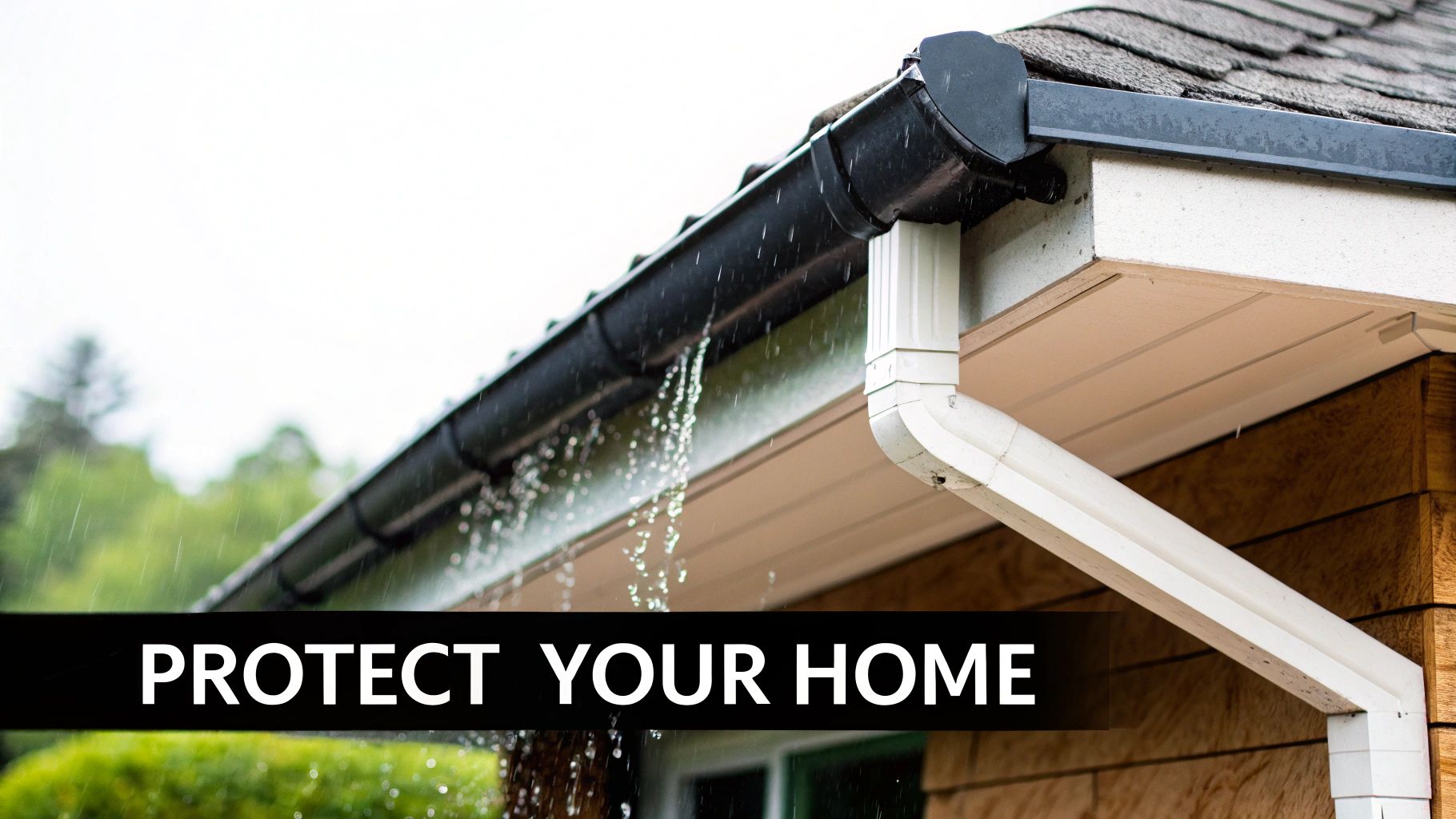
Here in Central Florida, from Pinellas to Orlando, we don’t get gentle showers. We get torrential downpours that can dump several inches of water in less than an hour. If your roof and gutters aren't functioning as a single, seamless unit, that incredible volume of water has nowhere to go but into the places it can cause the most harm.
This isn't just a minor hassle—it’s the starting point for major home repairs. The connection point between your roof and gutters is more than a simple construction detail; it’s fundamental to protecting your entire property from the top down.
Real-World Risks of a Poor Connection
When this system fails, the consequences for homeowners across Central Florida are both predictable and severe. We see the same issues pop up time and again, all stemming from a poorly planned or failing connection between the roof and its drainage system.
Here’s what our Hi Low Roofing team often finds:
- Foundation Damage: Water spills over the sides of clogged or improperly pitched gutters, pooling directly around your foundation. As the soil becomes saturated, it expands and contracts, eventually leading to cracks in your foundation.
- Fascia and Soffit Rot: Your gutters are mounted directly to the fascia board. When water gets trapped and backs up, it soaks the wood behind the gutter. This hidden moisture causes the fascia and soffit to rot, compromising the entire edge of your roof.
- Mysterious Attic Leaks: Even a small gap between the roof’s edge and the gutter is an invitation for trouble. Wind-driven rain gets forced upward and underneath your shingles, leading to persistent attic leaks that ruin insulation and create the perfect breeding ground for mold.
A properly integrated roof and gutter system doesn't just manage rain—it proactively prevents structural decay. Think of it as a shield, deflecting thousands of gallons of water away from your home's most vulnerable points, season after season.
Why Stronger Systems Are More Important Than Ever
This isn't just a local concern. The need for better water management is gaining attention worldwide, largely due to increasingly severe weather. Globally, the market for gutters and downspouts was valued at USD 6.3 billion in 2022 and is projected to keep growing.
This trend is a direct response to the demand for more robust solutions in areas like Lakeland that are on the front lines of heavy rainfall and powerful storms. You can dig deeper into the market's growth and what's driving it in this detailed report.
At the end of the day, thinking of your roof and gutters as separate components is a costly mistake. They are two halves of one system, and ensuring they are professionally integrated is the key to weathering Florida’s storm season with confidence.
Choosing Gutter Materials That Survive Florida Weather
Picking the right gutter material isn't just a minor detail for a Lakeland homeowner—it's a critical decision. What you choose will determine how well your home holds up to our unique brand of weather. We're talking about a relentless mix of blistering sun, soupy humidity, and wind-whipped rain that can turn on a dime. A material that works fine in Arizona or Ohio can fail spectacularly here.
The real challenge is finding that sweet spot between durability, cost, and looks. You need something that can handle Florida’s specific tests. With all the moisture in the air, rust and corrosion are public enemy number one. And with the constant threat of tropical storms, flimsy just won't cut it.
Comparing Your Best Options
Here in Lakeland and across Central Florida, the conversation almost always narrows down to three materials: aluminum, steel, and vinyl. Each one has its own set of strengths and weaknesses when faced with our climate.
- Aluminum: This is, hands down, the most popular choice in Florida. Why? It's lightweight, doesn't rust, and won't break the bank. In our humid air, that rust resistance is absolutely essential. Plus, modern aluminum gutters come in just about any color you can imagine.
- Steel: Galvanized steel is the tough guy of the group. It's much stronger than aluminum and can take a beating from ladders or flying debris during a storm. The catch? If that protective coating gets scratched—and it will—it becomes a sitting duck for rust. That’s a major risk in a place as wet as Lakeland.
- Vinyl: Vinyl is the cheapest option upfront and it’s totally immune to rust, which sounds great. But the intense Florida sun is its kryptonite. Over time, UV exposure makes vinyl brittle and prone to cracking. Its flimsy, sectional design also makes it a prime candidate for sagging or getting ripped right off the house by hurricane-force winds.
For the vast majority of residential and commercial properties we service from Pinellas to Orlando, seamless aluminum gutters deliver the best performance for the money. We form them on-site to the exact length of your roofline, which means no seams. No seams means no weak points where leaks almost always start.
Comparing Gutter Materials for Lakeland's Climate
To make it even clearer, let's break down how these materials stack up side-by-side in the context of a Central Florida home.
| Material | Pros in Lakeland | Cons in Lakeland | Average Lifespan |
|---|---|---|---|
| Aluminum | Excellent rust resistance, affordable, lightweight, available in many colors, ideal for seamless installation. | Can be dented by heavy impact (ladders, large hail). | 20-30 years |
| Steel | Very strong and durable, high resistance to impact and wind damage. | Prone to rust if the galvanized coating is scratched, heavier, and more expensive. | 20-40 years |
| Vinyl | Lowest cost, will never rust or corrode. | Becomes brittle and cracks under intense FL sun, sections can sag and leak, easily damaged by wind. | 10-20 years |
Ultimately, while steel has its place for certain commercial jobs, and vinyl might seem tempting for a tight budget, seamless aluminum consistently proves to be the most reliable and cost-effective choice for our area.
Why Seamless Aluminum Often Wins in Lakeland
The biggest win for seamless gutters is the elimination of those pesky weak spots. Every single seam in a traditional gutter system is a potential leak waiting to happen. During a classic Lakeland thunderstorm that dumps inches of rain in minutes, even a tiny drip can lead to serious water damage to your fascia and soffit over time.
Think about it this way: your gutters are part of a larger system. Their job is to work hand-in-hand with your roof's other protective layers. You wouldn't skimp on the roof deck or the underlayment, and the material that carries all that water away deserves the same careful consideration. To understand how all the pieces fit together, check out our guide on underlayment choices for Lakeland roofs. Taking this integrated approach is the only way to ensure every component is pulling its weight to keep your home bone-dry.
What a Professional Gutter Installation Actually Involves
You can have the best gutter materials money can buy, but they won't do you much good if the installation is botched. It’s the precision of the work—the measuring, the pitching, the securing—that truly determines whether your system will stand up to Lakeland's infamous downpours.
A true professional installation is a lot more involved than just tacking up some troughs along your roof's edge.
It all starts with a thorough plan. A good crew won't just pull up and start cutting metal. First, they'll walk the property, inspecting your entire roofline, checking the condition of the fascia boards, and even looking at the slope of your yard. This initial survey is vital for catching problems early, like rotted wood that needs to be replaced before a new gutter can even be attached.
Getting the Pitch Just Right
One of the most crucial parts of a gutter job is setting the right slope, or pitch. This is a game of fractions, not guesswork.
If the gutters are too level, water just sits there. That stagnant pool becomes a breeding ground for mosquitoes and adds a ton of weight, eventually pulling the gutter right off your house. But if the pitch is too steep, water will rocket past the downspouts during a heavy storm, defeating the whole purpose.
The professional standard is a gentle slope of at least a quarter-inch for every 10 feet of gutter. An experienced installer will snap a precise chalk line using a level to ensure that water flows exactly where it needs to go: straight to the downspouts.
This diagram breaks down the essential steps of a professional job: precise measurement, rock-solid attachment, and leak-proof sealing.
As you can see, each step is built on the one before it, creating a single, integrated system designed to handle whatever the sky throws at it.
Securing Gutters to Withstand Florida Storms
Once the slope is marked, it’s time to install the hangers. Think of these as the backbone of your gutter system. They carry the entire weight—not just of the metal, but of the hundreds of pounds of water that will fill them during a thunderstorm. Here in Central Florida, this is no place to skimp.
- Hanger Spacing: To prevent sagging, hangers should be installed no more than 24 to 32 inches apart. Any wider and you're asking for trouble.
- Solid Fastening: These aren't just attached to the decorative fascia. The screws must bite deep into the rafter tails behind the board. That's what gives them the strength to hold on during high winds.
When hurricane-force gusts start blowing, proper fastening is what keeps your gutters on your house instead of in your neighbor's yard.
The true sign of a quality installation isn't what you see from the street. It’s the details: the heavy-duty sealant in every seam, the perfectly mitered corners, and the smart placement of downspouts to direct water far away from your foundation.
Finally, the downspouts are fitted. Their location isn't random; it’s carefully planned to guide water away from your foundation, sidewalks, and landscaping. Splash blocks or underground extensions are the finishing touch, making sure all that water is discharged a safe distance from your home.
This whole process requires a skill set that only comes from years of experience. To make sure your project is in the right hands, it's worth knowing how to choose a roofing contractor who understands these critical details.
Integrating Solar Panels with Your Roof and Gutters
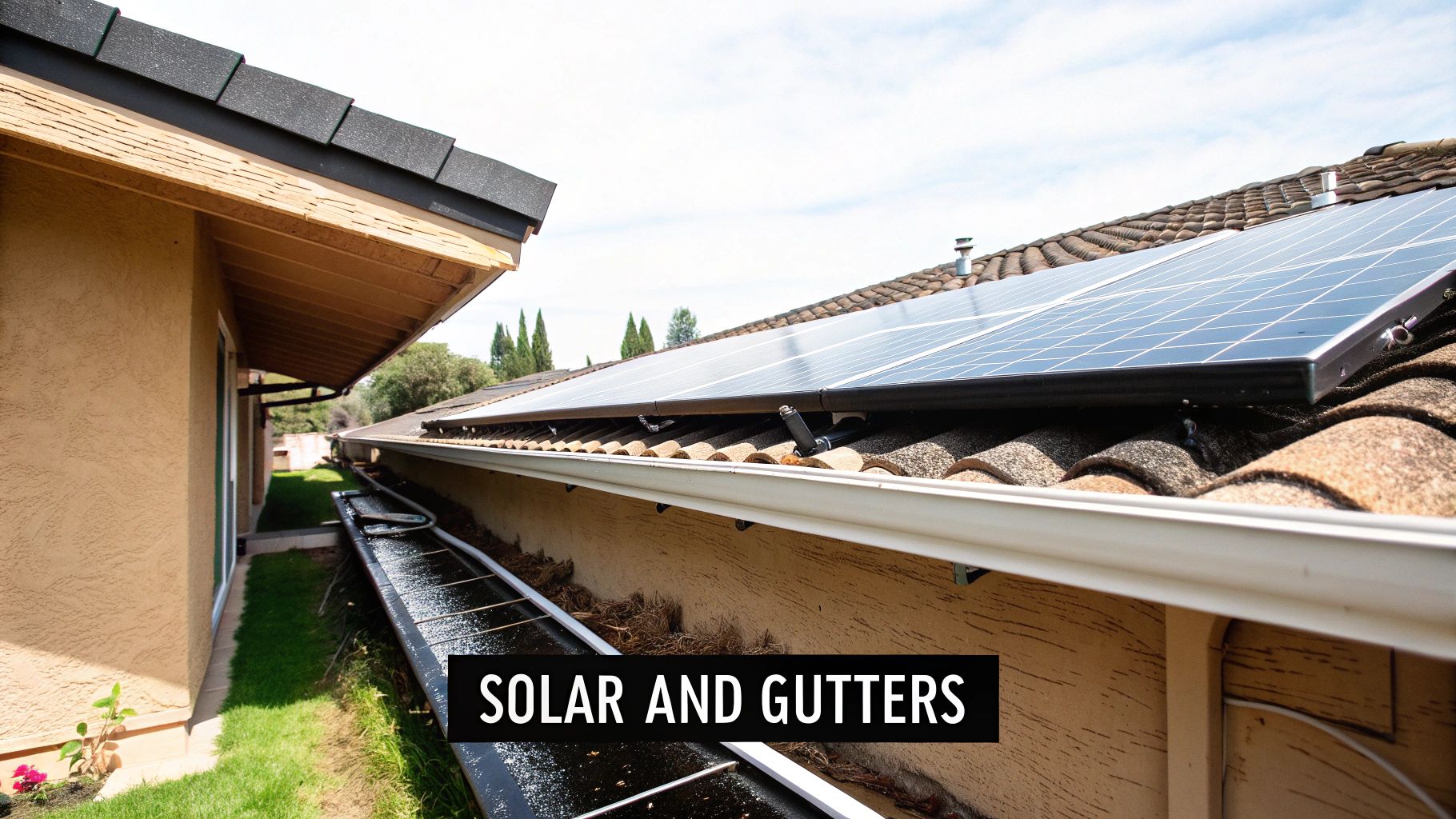
Adding solar panels is one of the best moves a Lakeland homeowner can make. With our year-round sunshine, it just makes sense. But this great investment introduces a new player into your home's water management game. You can't just bolt on the panels and call it a day; you have to make sure your roof, gutters, and the solar array all work together seamlessly.
Think about it: solar panels cover a huge part of your roof. When one of those classic Central Florida downpours hits, the water behaves differently. Instead of flowing evenly across the shingles, it now sheets across large, smooth panels and gets funneled into the narrow gaps between them. This creates concentrated, high-speed channels of water—like mini-waterfalls dumping directly into your gutters.
If your gutter system isn't ready for that kind of focused assault, you're going to have problems. You'll see overflows in specific spots, even if the gutters are perfectly clean. That powerful, concentrated runoff can easily overwhelm a section of your gutter, causing water to back up against the fascia and spill over right next to your foundation.
Proactive Solutions for Solar and Gutter Harmony
The trick is to get ahead of the problem. You need a coordinated plan that anticipates exactly how the panels will change the water flow and beefs up your gutter system to handle it. This usually means going beyond a standard gutter setup.
Here are a couple of things we often recommend:
- High-Flow Gutter Guards: Your average mesh guard just can't keep up with the velocity of water coming off solar panels. We recommend installing specialized, high-flow guards designed specifically to handle a heavy, fast-moving volume without letting it shoot right over the edge.
- Strategic Water Diverters: Sometimes, the best solution is the simplest. Small, carefully placed diverters on the roof can break up those concentrated streams of water, spreading the flow more evenly along the entire gutter run. This prevents any one spot from getting hammered.
It's no surprise that the global market for advanced roof drainage systems is booming—it's expected to hit USD 8.2 billion by 2033. This growth is all about the increasing need for smarter, more integrated water management on homes just like yours. You can read more about the growth of advanced roof drainage systems and the technology driving it.
A successful solar project looks at the entire roofing ecosystem from the very beginning. When you plan for water management before the first panel goes up, you ensure your energy savings aren't wiped out by expensive water damage repairs later.
Choosing the Right Foundation for Your Solar Array
Of course, the integration starts with the roof itself. The type of roofing material you have and its current condition are huge factors in how well it will support a solar installation without creating leaks or other issues.
For a closer look at this, check out our guide on the best roof type for solar panels. It breaks down how different materials, from metal to architectural shingles, work with solar mounting systems to keep your home protected.
At the end of the day, installing solar panels should improve your home, not introduce new headaches. By making sure your roofer and solar installer are on the same page, you can get the best of both worlds: a powerful new energy system and a home that's still perfectly defended against the elements.
Keeping Your Integrated Roofing System in Top Shape
Your roof and gutter system is your home’s first line of defense against Lakeland’s wild weather. It works around the clock, and just like anything that works that hard, it needs a little TLC to keep going strong. Staying on top of maintenance is what separates a system that lasts for decades from one that causes expensive water damage after just a few years.
Think of it as a quick check-up for your home's exterior. The idea is to spot the small stuff—a handful of leaves, a wobbly bracket—before it spirals into a major problem during a summer gusher. A little proactive care goes a seriously long way in protecting your home.
A Seasonal Checklist for Lakeland Homeowners
Central Florida’s weather throws something different at us every season, from spring pollen dumps to late-summer hurricane threats. A simple, season-by-season checklist helps you stay ahead of the game.
Spring (March – May):
- Tackle Oak Tassels & Pollen: This is clog season, plain and simple. Those oak tassels and thick blankets of yellow pollen mix with the first spring rain to form a sludge that’s practically concrete. It will stop water flow in its tracks.
- Look for Nests: Birds, squirrels, and other critters see your gutters as the perfect spot for a new home. You’ll want to gently clear these out before they create a serious blockage.
Summer (June – September):
- Do a Pre-Storm Check: Before the daily downpours become a regular thing, make sure your downspouts are clear. They should be dumping water at least three to five feet away from your foundation.
- Inspect Seals and Seams: That brutal Florida sun is tough on sealants. Take a quick look at the seals around end caps and corners to check for cracks or peeling before they start to leak.
A clean gutter system isn't just about avoiding clogs. It’s about protecting your home's foundation. Every gallon of water you properly channel away is one less gallon trying to create cracks and structural problems down the road.
What to Do Mid-Year and After a Storm
Beyond your regular seasonal clean-out, you need to give your system a once-over after any major storm. High winds can yank hangers loose, and flying debris can cause dings and dents you won't spot from the ground.
It's also a good idea to watch how your gutters perform during a rainstorm. Is water sheeting right over the edge even though they're clean? That could be a clue that the pitch is off or the gutters are simply too small for your roof.
It’s no surprise that homeowners here are investing more in stronger, more reliable water management. In fact, the rain gutter market in the US is projected to hit US$ 10.75 billion by 2031, largely because people are realizing how critical these systems are. You can read more about the growing importance of gutter systems on GlobeNewswire.
When It's Time to Call in a Pro
While cleaning out leaves is something most homeowners can handle, some problems really do need a professional. Here are the tell-tale signs that it’s time to pick up the phone:
- Gutters are sagging or pulling away from the house. This is a big one. It usually means the hangers have failed or, worse, the fascia board they’re attached to is rotting.
- You've got stubborn leaks. If seams, corners, or end caps are dripping even after you've cleaned them, the sealant has failed and needs to be redone properly.
- Water is pooling around your foundation. This means the downspouts aren't doing their job, which could be a problem with placement or even the grading of your yard.
A professional can spot issues like improper pitch that aren't obvious to the untrained eye. They'll make sure your gutter and roof integration in Lakeland is working exactly as it should to keep your home safe and dry.
Your Lakeland Gutter & Roof Questions, Answered
When it comes to taking care of your roof and gutters in Lakeland, a lot of the same questions pop up. It makes sense—we all deal with the same Central Florida weather challenges. Getting good answers from professionals who work here every day is key to protecting your home.
At Hi Low Roofing, we get these questions all the time. Here are some of the most common ones we hear from local homeowners, along with practical answers based on our experience in the field.
How Often Should I Really Be Cleaning My Gutters Here?
For just about any residential or commercial property in Lakeland, plan on cleaning your gutters twice a year at a bare minimum. You’ll want to do one cleaning in the late spring to get rid of all that oak pollen and those pesky tassels that turn into a thick, mucky paste. The second round should be in the late fall to clear out all the leaves and other debris that built up over storm season.
Now, if you've got a yard full of trees, especially big oaks or pines, you should probably bump that up to a quarterly cleaning. The last thing you want is a clog forming right before one of our infamous afternoon thunderstorms hits. Keeping them clear ensures the water goes where it’s supposed to, even during a downpour.
Are Seamless Gutters Worth the Hype for Florida Weather?
Yes, they absolutely are. Seamless gutters aren't pulled off a shelf; they're custom-made right at your house to fit its exact measurements. This eliminates all the joints and seams you see in standard sectional gutters. Why does that matter? Because those seams are always the weak spots where leaks start.
In a place like Lakeland, where rain comes down hard and fast, that single, continuous piece of metal is just stronger and far less likely to leak. For our climate, it's simply a more durable and reliable way to go.
Can I Put New Gutters on My Older Roof?
You definitely can install new gutters on an older roof, but there's a crucial first step. You have to get a professional to inspect the fascia and soffit—the wooden boards the gutters attach to—before anything else happens.
Over the years, these boards can suffer from water damage or rot. Our team will never just slap a new gutter system onto a weak foundation. We'll make sure any compromised wood is repaired first, so your new gutters have a solid, secure base to anchor to. It’s the only way to ensure they’ll last.
Do I Actually Need Gutter Guards in Central Florida?
Gutter guards aren't a building code requirement, but our experts highly recommend them to property owners here. Between the oak leaves, pine needles, and palm fronds, an unprotected gutter system can get clogged in just a few weeks.
Once they're clogged, the water spills over the sides, washing away your landscaping and even putting your home's foundation at risk. Gutter guards save you a ton of time on cleaning and, more importantly, make sure your system is always ready for that next sudden storm. It’s a smart investment for any home or commercial building in this area.
Your roof and gutters are your property's first line of defense. If you have more questions or want a professional to take a look at your property, the team at Hi Low Roofing is ready to help. Contact us for a free, no-obligation inspection and get the peace of mind that your home is properly protected.
