

Picking the right roof color is a balancing act. You have to consider your home's unique style, our intense Central Florida climate, and any local rules to boost curb appeal and keep your home efficient. The goal is to land on a shade that not only looks great with your siding but also performs well under the blazing sun.
Lighter colors are fantastic for reflecting heat, while darker tones can offer a timeless, bold contrast. At Hi Low Roofing, we help homeowners across the Orlando and Tampa Bay areas find that perfect balance every day.
Finding the Perfect Roof Color for Your Florida Home
Deciding on a new roof color is one of the biggest calls a Central Florida homeowner has to make. This isn't just about what you like; it’s a choice that directly affects your home's look, your comfort level, and even your monthly cooling bills. The perfect shade can pull your whole exterior design together, but the wrong one can stick out like a sore thumb.
Think of this as your roadmap to making a confident decision. We're going to get past just flipping through color samples and dive into the practical things every homeowner from Pinellas County all the way over to Orlando needs to think about.
Key Factors in Your Decision
Here in Florida, a few critical elements should guide your choice. Getting a handle on these from the get-go can save you from a costly mistake down the road.
- Architectural Style: The design of your home—whether it's Mediterranean, modern coastal, or a classic ranch—will heavily steer you toward certain color palettes.
- Florida's Climate: Our relentless sun and heat make roof color a functional decision, not just an aesthetic one. Lighter, more reflective shingles can make a real difference in keeping your attic and home cooler.
- Neighborhood and HOA Guidelines: This is a big one. Many communities from Tampa to Orlando have a list of pre-approved colors to keep the neighborhood looking unified. Checking those rules first isn't optional; it's essential.
This visual decision tree really helps break down the process, showing how your home's style, the climate, and local rules all point you toward the right color.
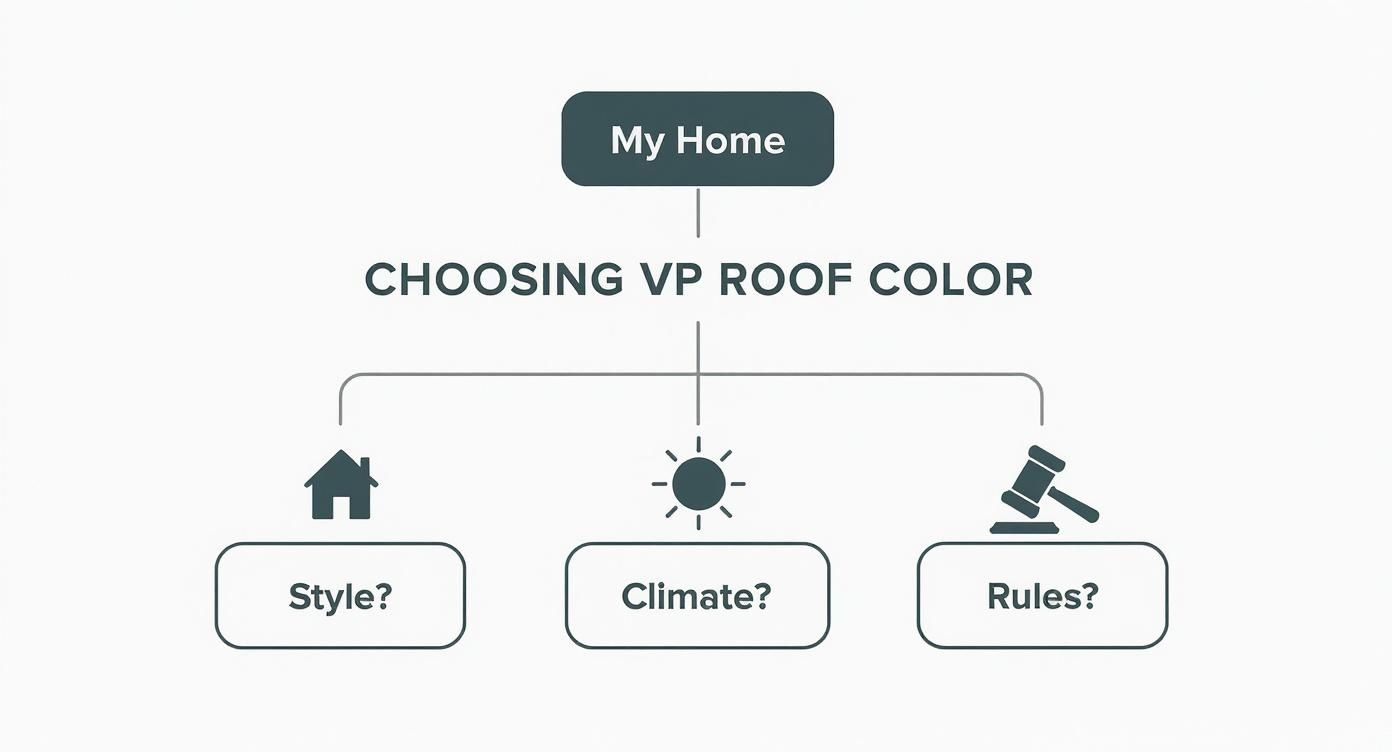
As the infographic shows, there’s no single "best" color for everyone. It’s all about finding the best fit for your specific situation. By weighing these three core considerations, you can quickly narrow down your choices. For more great advice on tying your whole exterior together, you can find helpful tips from professionals who offer expert paint color selection for your home.
Your roof can make up as much as 40% of your home's visible exterior, so its color is a major design feature. A thoughtfully chosen color doesn't just look good—it can actually boost your home's perceived value.
To simplify things, we've put together a quick reference table that zeroes in on the most important factors for homeowners right here in Central Florida.
Quick Guide to Choosing a Roof Color in Florida
| Key Factor | Why It's Critical in Florida | Top Color Considerations |
|---|---|---|
| Energy Efficiency | The intense sun can bake a dark roof, driving up A/C costs. Lighter colors reflect sunlight and reduce heat absorption significantly. | Cool Roof Colors (light gray, beige, white, light tan) are ideal for reflecting solar radiation and lowering cooling expenses. |
| Architectural Style | A modern home might look sleek with a charcoal roof, while a Mediterranean villa calls for earthy terra-cotta or brown tones. | Match the roof to your home's inherent design. Earth tones work well for ranches, while bold contrasts suit contemporary styles. |
| HOA & Local Vibe | Many Florida communities have strict rules to maintain a cohesive aesthetic. Ignoring them can lead to fines and rework. | Always get your HOA's approved color list before you start. Pay attention to what colors your neighbors have chosen. |
| Curb Appeal & Resale | A well-coordinated roof adds major curb appeal. Neutral, widely appealing colors are a safer bet for future resale value. | Grays, beiges, and muted browns are timeless choices that complement a wide range of siding colors and appeal to more buyers. |
This table should give you a solid foundation for your decision-making process, ensuring you pick a roof that's not only beautiful but also perfectly suited for the Florida lifestyle.
Your Home's Architecture Should Lead the Way
Think of your roof color as the finishing touch that ties your whole home together. The best choice won't just sit on top of your house; it'll look like it was always meant to be there. Your home's architectural style is the single best clue you have for picking the right roof color, giving you a natural palette that feels deliberate and polished.
Across Central Florida, from St. Petersburg to Winter Garden, you see certain styles again and again, and each one has colors that just work. A classic Mediterranean home with its warm stucco exterior, for example, just begs for the rich, earthy tones of a terracotta or reddish-brown tile roof. That pairing feels authentic and timeless. On the other hand, a modern coastal home with its crisp siding and clean lines looks incredible with a sleek, dark charcoal or deep gray shingle roof. The contrast is sharp, sophisticated, and striking.
Color Palettes for Popular Florida Home Styles
Every architectural style has a personality, and the roof color is a huge part of its expression. If you start by understanding the classic pairings, you can immediately narrow down your options and avoid choosing something that will clash with your home's fundamental design.
Here are a few common styles in our area and the roof colors that really make them shine:
- Florida Cracker Style: These homes are all about simplicity, so traditional colors are the way to go. Think light gray or weathered wood tones for asphalt shingles, or maybe the clean, bright look of a silver metal roof.
- Spanish-Mediterranean: This style is defined by warmth. You can't go wrong with rich browns, deep reds, and terracotta oranges on a classic tile roof. These hues perfectly complement the stucco and archways. Of course, over time, algae and dirt can dull that color, but a professional power wash for your tile roof can bring it right back to life.
- Modern & Contemporary: Here’s where you have a bit more freedom to be bold. Sleek charcoal, solid black, or even a metallic bronze can create a dramatic, high-end look that accentuates the home's minimalist features.
- Classic Ranch: This is the ultimate versatile canvas. Ranch homes look great with a huge range of colors, from muted driftwood and earthy brown shingles to darker shades of gray and black that help anchor the home's long, low profile.
When you're stuck, here’s a pro tip from our team at Hi Low Roofing: pick a roof color that is noticeably darker or lighter than the main color of your house. That simple contrast is all it takes to keep your home from looking flat and one-dimensional. It adds instant visual depth.
Don't Forget Siding, Trim, and Stone
Your roof is a huge part of your home's curb appeal, but it's still just one piece of the puzzle. For a truly cohesive exterior, your new roof has to harmonize with the existing siding, trim, and any stone or brick accents.
Start by looking closely at the undertones in these permanent features. Does your brick have little flecks of charcoal or brown in it? Does your stone siding have hints of cool gray or warm tan? Pulling one of those subtle colors out and using it for your roof is a foolproof way to create a unified look. For instance, if you have beige siding with a warm, yellow undertone, a roof in a warm brown will look much more natural than a cool-toned gray would. Looking at a wide range of architectural color choices can help you see how these elements work together to create a stunning final product.
Before you sign on the dotted line, get a full-sized sample of the actual shingle or tile. Don't rely on a tiny swatch in a brochure. Prop that sample up against your siding and look at it at different times of the day—in the harsh morning sun and in the softer evening light. You’ll be surprised how much the color can change, and it’s the only way to know for sure what you're getting.
How Your Roof Color Directly Affects Your Energy Bills
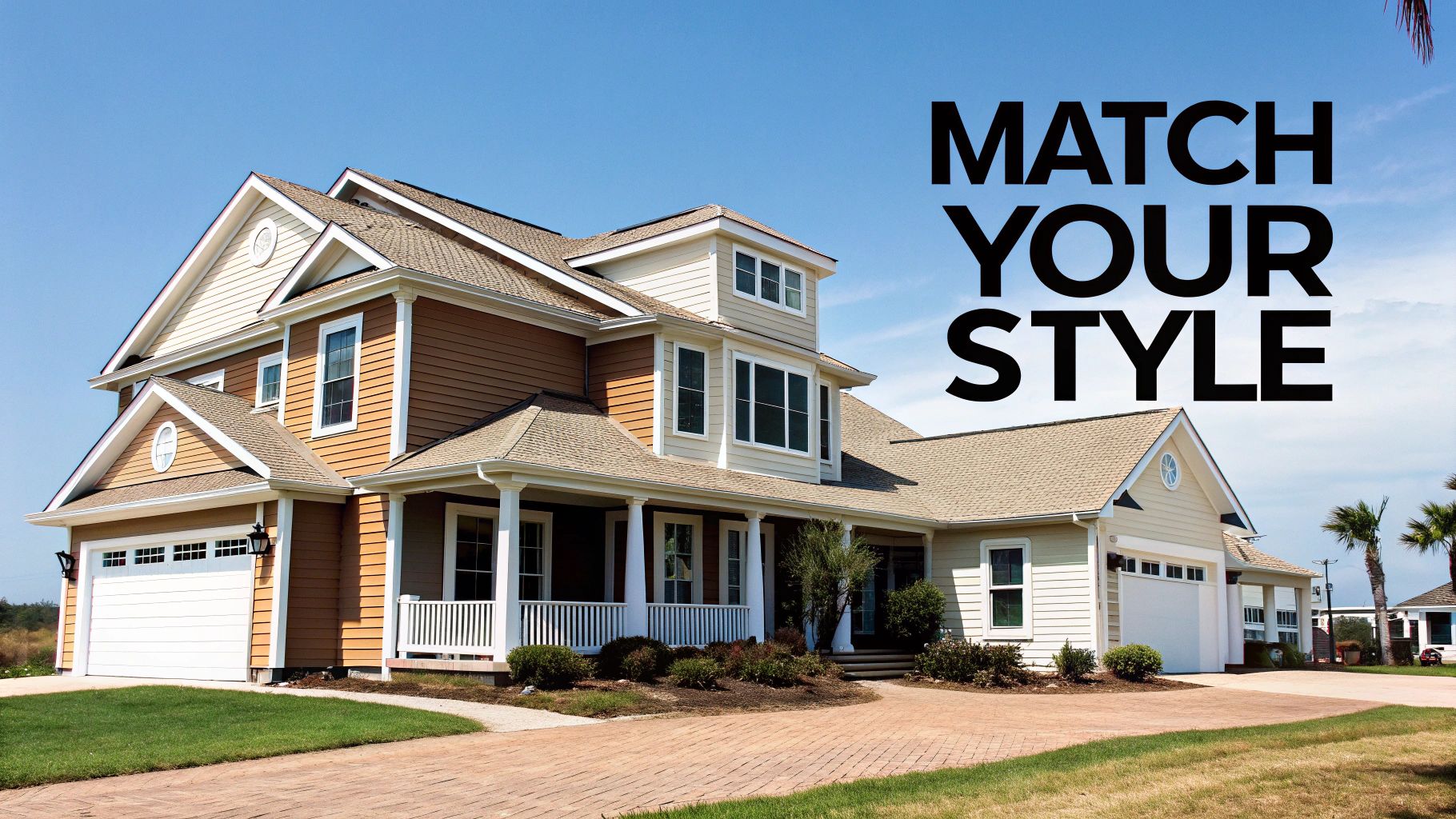
In Central Florida, we know the sun doesn't mess around. Your roof is your home's first line of defense against that intense, year-round heat. This is why picking a roof color isn't just about aesthetics—it's one of the most practical decisions you'll make for your home, with a real impact on your comfort and your monthly power bill.
A dark roof can literally turn your attic into an oven, which means your air conditioner is constantly fighting a losing battle. It has to work that much harder just to maintain a comfortable temperature inside. The right color, on the other hand, can make a world of difference.
The Simple Science of Cool Roofs
It all comes down to a basic principle we learned in science class: dark colors absorb heat, and light colors reflect it. Think about wearing a black t-shirt on a sunny day versus a white one. Your roof works the same way.
A dark charcoal or black shingle roof can soar to temperatures between 150-190°F on a hot Orlando afternoon. All that heat has to go somewhere, and it radiates straight down into your attic and living spaces, sending your AC unit into overdrive.
This is exactly why "cool roofs" have become so popular here. A cool roof is simply a roof designed to reflect more sunlight and absorb less heat. These are usually lighter shades—whites, beiges, light grays—and many are certified by programs like ENERGY STAR® for their superior solar reflectance. Combining a cool roof with a solar panel installation can maximize your home's energy efficiency.
A cool roof can stay more than 50°F cooler than a conventional dark roof in the peak summer heat. That’s a massive reduction in the heat penetrating your home, which is a total game-changer for homeowners in Florida.
This isn’t just a local trend; it's a smart financial decision. A recent industry analysis highlighted that homeowners are increasingly choosing materials based on long-term energy savings and durability, especially in sun-drenched climates like ours.
What This Means for Your Wallet and Your Home
Choosing a lighter, more reflective roof is a smart investment in your home's efficiency. The benefits are tangible, especially in a climate that puts our roofs through the wringer.
Here’s what you can expect:
- Lower Cooling Costs: This is the most immediate win. A cool roof can slash your home's cooling energy needs by 10-15%. That adds up to serious savings over the life of your roof.
- Longer Roof Lifespan: Intense heat is brutal on roofing materials, especially asphalt shingles. It causes them to break down and age prematurely. By keeping the surface temperature down, you reduce that thermal stress, helping your roof last longer with fewer repairs.
- A More Comfortable Home: When your attic isn't a furnace, your whole house feels cooler, particularly any upstairs rooms. You'll find yourself reaching for the thermostat a lot less often.
For any home in this region, switching to a lighter color is one of the wisest upgrades you can make. To see how this applies to different materials, check out our guide to energy-efficient roofing in Brandon. More and more Florida homeowners are realizing their roof can be both beautiful and a powerful, money-saving tool.
Consider Your Neighborhood and HOA Rules
Before you get your heart set on that perfect shade of charcoal or a rich terracotta brown, there’s one crucial step you can’t afford to skip, especially here in Central Florida. From the coastal communities in Pinellas County to the suburbs of Orlando, many of us live in neighborhoods governed by a Homeowners' Association (HOA). And believe us, they almost always have something to say about your roof.
Skipping this step isn't just a small mistake—it can be a costly one. We've seen homeowners hit with fines or, in the worst-case scenario, forced to tear off a brand-new roof and start over. Your very first move should be to track down a copy of your neighborhood's architectural guidelines.
Decode Your HOA's Approved Color List
Most HOAs maintain a pre-approved list of colors or even specific shingle models. It’s not about stifling your creativity; it's about maintaining a consistent, harmonious look that protects everyone's property values. A roof that sticks out like a sore thumb can hurt the curb appeal of the entire street.
Dig into those documents and find the section on roofing. The rules might be broad, like "neutral earth tones only," or incredibly specific, listing three exact shingle brands and their corresponding color names. If anything seems unclear, call your HOA board or property manager for clarification before you start getting quotes.
A quick heads-up: You'll almost certainly need to submit your final choice for official approval before any work begins. It might feel like an extra hoop to jump through, but this formal sign-off is your best protection against any future issues. It guarantees your investment is compliant from day one.
Think About Neighborhood Harmony
What if you don't have an HOA? You're not entirely off the hook. Choosing a roof color is also about being a good neighbor and making a smart decision for your home's long-term value. The goal is a color that looks fantastic on your house without clashing with the homes next door.
Take a slow walk or drive around your block. Pay attention to what’s already there. You'll probably start to see a pattern emerge.
- Look for common color families. Are most of the roofs in your area different shades of gray? Or do they lean toward browns and tans? This gives you a great starting point for what works visually.
- Try not to be that house. A bright red or deep blue roof might seem like a fun idea, but if you're surrounded by muted grays, it could be a detriment when it's time to sell.
- Get some real-world inspiration. This is the best part! Seeing a color on a full-sized roof is so much more helpful than looking at a tiny sample square. You might even spot a color on a house with similar siding to yours and realize it's the perfect fit.
When your home’s color palette fits in naturally with its surroundings, it creates a cohesive, high-end feel that elevates not just your property, but the entire neighborhood.
How Roofing Materials Influence Color Choices
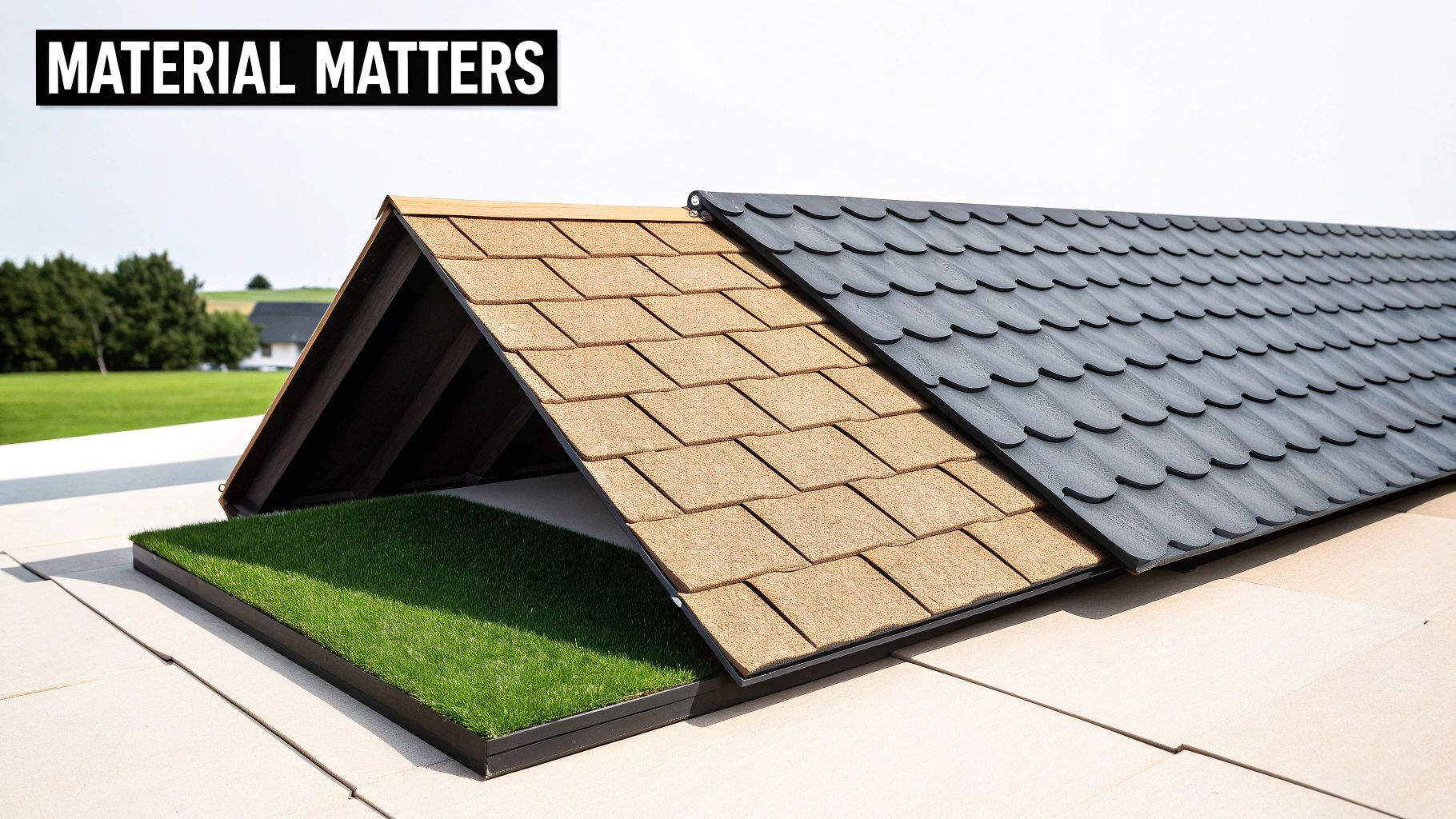
The material you choose for your roof does more than just protect your home—it opens up a whole world of color and texture possibilities. Here in Central Florida, the decision usually boils down to three main players: asphalt shingles, metal, or tile. Each one comes with its own distinct palette that can really define your home's character.
Getting a handle on how your material and color work together is a huge part of learning how to pick a roof color. This isn't just about looks; it's about making sure your choice holds up to our climate while fitting the aesthetic you're after.
Asphalt Shingles: The Classic Choice with Modern Depth
There's a reason asphalt shingles are on so many homes—they're incredibly versatile and come in a staggering range of colors. Forget the flat, single-tone shingles of the past. Today’s dimensional or architectural shingles use sophisticated color blends and varying granule depths to create texture, beautifully mimicking more expensive materials like slate or wood shake.
For instance, a simple blend of light and dark gray granules can give a roof that elegant, slate-like appearance, which works with almost any home style. These multi-tonal shingles are also fantastic at hiding minor imperfections and resisting stains, making them a smart and attractive choice for any home around Orlando.
The right roofing material isn't just about curb appeal; it's a major financial decision tied to durability and energy efficiency. Homeowners are thinking long-term, choosing materials and colors that save them money down the road, especially in markets from Pinellas County to Orange County.
Metal Roofing: Sleek Lines and Durable Hues
Metal roofing has absolutely taken off in Florida, and for good reason. It’s incredibly long-lasting and stands up to hurricanes like nothing else. The color on a metal roof isn't just a coat of paint; it’s a high-performance finish, often a Kynar 500® coating, that’s literally baked onto the panels. This process ensures the color won't fade, chalk, or chip for decades, even under our relentless Florida sun.
While you can always go with classic silver, modern metal roofs come in a fantastic array of sophisticated colors. We're talking deep bronze, matte black, and charcoal gray—all perfect for creating a clean, contemporary look. And don't worry about the heat; many of these darker tones are made with special reflective pigments to boost energy efficiency. You get that bold look without turning your attic into an oven. To see how these options work in our area, you can learn more about the best metal roofing for St. Petersburg homes.
Tile Roofing: Timeless Elegance and Cool Innovation
Nothing says "Florida" quite like a tile roof. Whether you go with concrete or clay, tile delivers a classic aesthetic that’s a perfect match for the Mediterranean and Spanish-style homes we see so often.
- Classic Terracotta: You can't go wrong with the warm, earthy reds and oranges of traditional clay tiles. It's a timeless, inviting look that's practically synonymous with our region.
- Modern Color Options: Tile isn't just red anymore. Manufacturers now offer a whole spectrum of colors, from cool grays and deep blues to multi-toned blends that look like aged slate.
- Cool-Color Technology: Many modern tiles, especially in lighter shades like white and beige, are designed with high solar reflectivity. This tech helps keep your home cooler and your energy bills lower, beautifully mixing classic style with modern performance.
Common Questions We Get About Choosing a Roof Color
Even with all the right information, picking a final roof color can feel a little daunting. It's a huge decision, and you want to feel great about it for years to come. It’s completely normal to have a few last-minute questions.
Here are some of the most common things homeowners in Orlando and Pinellas County ask us. We hope these answers give you that last bit of confidence you need to make the perfect choice.
Will a Dark Roof Make My Florida Home Hotter?
In a word, yes. The difference can be pretty dramatic, too. Dark roofs soak up the sun’s heat like a sponge. That heat doesn't just stay on the surface; it radiates down into your attic and through the rest of your home. Your AC unit ends up working overtime just to keep up.
In a place like Central Florida, this is a big deal. Choosing a lighter, more reflective color—often called a "cool roof"—is one of the smartest moves you can make. It's a practical investment that directly lowers your energy bills and makes your home feel more comfortable all year long.
A new roof in a neutral, appealing color is a huge plus for your home's value. In fact, a recent study found that 91% of real estate professionals agree that a color-coordinated exterior significantly boosts a property's worth.
Should My Roof Color Match My Shutters?
Not exactly. You're aiming for coordination, not a perfect match. Think of your roof and siding as the main canvas. The shutters, trim, and front door are the accent colors—they’re there to add a pop of personality and create visual interest.
A good strategy is to pick a roof that complements your home's primary color. Then, you can choose a shutter color that either pulls a subtle tone from the shingle blend or introduces a new, contrasting shade that ties everything together beautifully.
How Can I Be Sure I'll Like the Final Look?
This is a big one. The absolute worst thing you can do is make a final call based on a tiny swatch in a brochure or a picture online. Colors look completely different in real life, under the full sun.
To get it right, you have to see it in person. Here’s what we at Hi Low Roofing always recommend:
- Ask for local examples. Your roofer should have a list of addresses nearby with the exact shingles you're considering. Driving by to see a full roof is the best test there is.
- Get a full-sized sample. Don't settle for a small chip. Get a full shingle or tile sample and prop it up against your home's siding.
- Watch it all day. Look at the sample in the bright morning light, under the harsh midday sun, and as the sun sets. This is the only way to truly understand how the color will look on your home.
Does Roof Color Affect My Home's Resale Value?
It absolutely does. A roof is one of the first things potential buyers see, and it represents a huge expense they hope to avoid. A color that’s too trendy or unusual might be perfect for you, but it could be a deal-breaker for someone else.
If resale value is on your mind, your safest bet is to stick with classic, neutral colors. Versatile shades of gray, warm browns, and earthy beiges have broad appeal and stand the test of time. A beautiful, new roof in a timeless color is a powerful selling point that makes a great first impression.
Making the right choice for your roof is one of the most important decisions you'll make as a homeowner. If you're ready to explore your options with a team that gets the unique demands of the Central Florida climate, contact Hi Low Roofing & Solar. We offer free, no-pressure inspections and expert advice to help you find the perfect, long-lasting solution for your residential or commercial property.
