

When you see a leak stain on your ceiling or notice damage on your flat roof, the first question that pops into your head is usually, "How much is this going to cost me?" For property owners anywhere from Pinellas County to Orlando, getting a handle on the potential expense is the first step toward finding a fix.
The average flat roof repair cost in Central Florida can run anywhere from $350 for a simple patch to well over $1,500 for more complex jobs. But that's just a ballpark figure. The final bill for your residential or commercial property really comes down to the specific damage and the type of roofing material, which is why you can't get a real number without a professional inspection.
How Much Does Flat Roof Repair Cost in Central Florida
Unlike buying something off a shelf with a clear price tag, a flat roof repair isn't one-size-fits-all. The cost is a moving target, completely dependent on how severe the problem is.
Think of it like taking your car to the mechanic. A simple fix, like patching a tire, has a pretty predictable cost. But if you have a mysterious rattling sound coming from the engine, the mechanic needs to pop the hood and diagnose the real issue before they can give you a quote. A small puncture in your roof is that simple tire patch, but widespread blistering or standing water is the mystery engine noise—it requires a deeper look and a bigger budget.
A Quick Guide to Repair Costs
To give you a better idea of what to expect, we can break down repairs by their size and scope. It's simple: a minor issue you catch early is always going to be cheaper than a problem that's been festering for months. This is especially true here in Central Florida, where our intense sun and torrential downpours can turn a tiny flaw into a major headache in no time.
That's why getting a detailed, itemized quote from a trusted local expert is so important. The scope of work can change dramatically from one roof to another. To get a sense of how the pros diagnose and price these jobs, you can see what goes into a professional roof repair in Orlando and understand the steps involved.
A proactive approach is your best defense against high repair bills. Addressing small issues like cracked seams or minor punctures immediately can prevent them from escalating into structural damage or interior leaks, saving you thousands in the long run.
To give you a clearer starting point, here’s a quick overview of what you might expect to pay for common flat roof repairs in the Central Florida area, from St. Pete to Orlando.
Estimated Flat Roof Repair Costs in Central Florida
This table breaks down potential repair costs based on the severity of the damage, from small fixes to more significant projects.
| Repair Type | Common Issues Addressed | Estimated Cost Range |
|---|---|---|
| Minor Repair | Small punctures, sealing cracked seams, minor flashing fixes. | $350 – $750 |
| Moderate Repair | Addressing ponding water, fixing multiple leaks, repairing blisters. | $750 – $1,800 |
| Major Repair | Replacing damaged membrane sections, addressing structural issues. | $1,800 – $4,000+ |
Remember, these are just estimates. The actual cost will depend on a thorough inspection of your specific roof's condition.
What Really Drives Your Final Repair Bill
Ever look at two repair quotes for what seems like the same problem and wonder why the numbers are so far apart? Two buildings in Orlando with similar-looking leaks can get wildly different estimates. That final bill isn't just a number pulled from thin air; it’s a detailed calculation based on several critical factors a professional roofer sizes up during an inspection.
Getting a handle on these variables is the key to making sense of any quote. It's never just about slapping a patch on a hole. A roofer has to consider the specific material on your roof, figure out the true extent of the damage that might be hiding beneath the surface, and even account for logistical hurdles like the height of your building.
The Material Makeup of Your Roof
The first big piece of the puzzle is your roof's material. Think of it like working on a car—fixing the fender on a Honda Civic is a totally different ballgame than repairing the carbon fiber body of a Lamborghini. In the same way, different flat roofing materials demand unique tools, specialized skills, and specific repair techniques.
- TPO & PVC: These are single-ply membranes, and they're a popular choice for commercial and residential properties in Central Florida thanks to their ability to reflect heat. Fixing them usually involves heat-welding patches into place, which requires special equipment and a roofer who knows how to use it.
- EPDM (Rubber): This stuff is tough, but repairs typically rely on powerful adhesives and seam tapes. The process is less about welding and more about using special chemical compounds to create a perfect, watertight seal.
- Modified Bitumen: This is an asphalt-based system that’s often installed in layers with a torch. Repairing it can be a labor-intensive job, sometimes requiring a roofer to carefully heat and reseal entire sections.
Each of these materials comes with its own price tag and needs a specific repair method, which directly shapes both the material and labor costs on your quote.
Size and Complexity of the Damage
Next, a roofer has to figure out the real scope of the problem. A small, easy-to-spot puncture? That’s usually a straightforward fix. But widespread, systemic issues are a whole different beast. The complexity of the damage is a massive cost driver that can turn a simple task into a major project.
For instance, the repair method itself dramatically changes the final price. In 2025, simply patching a flat roof to fix small cracks or holes usually costs between $150 and $1,500, all depending on how many patches you need and how big they are.
On the other hand, resurfacing—a process often needed for older roofs showing signs of blistering or widespread wear—starts between $250 and $1,500 but can easily climb over $5,000 if the entire roof surface needs to be redone.
Key Takeaway: The deeper the damage, the higher the cost. A leak that has soaked through to the roof deck and saturated the insulation below requires way more than a simple patch. It means tearing out and replacing multiple layers of your roofing system.
Beyond the obvious labor and materials, other costs can sneak onto the final bill. For instance, significant repairs create a lot of old material that has to go somewhere. The costs associated with debris removal services can add another line item to the budget. By understanding all these moving parts, from the roofing material to the true scope of work, you’ll be able to read your next quote with a lot more confidence.
When you're trying to figure out the final price for a flat roof repair, you’ll quickly realize it’s not just one simple number. The final bill is a mix of two big things: what kind of damage you're dealing with and what your roof is actually made of.
After all, not all roof problems are created equal, and different materials behave differently, especially under the relentless Central Florida sun. A quick patch on a tiny puncture is a world away from fixing a massive area of ponding water that’s threatening the whole structure of your roof.
It’s the same story with the materials. Each one has its own price tag and needs a specific repair method. Fixing a TPO roof means heat-welding patches, which requires special tools and a roofer who knows how to use them. On the other hand, an EPDM rubber roof usually gets fixed with heavy-duty adhesives and seam tapes to make sure it’s watertight. Getting a handle on how these two factors—damage and material—come together is the secret to creating a realistic budget for your repair.
This infographic gives a great visual breakdown of what goes into the final cost, from the job size to the specific materials needed.
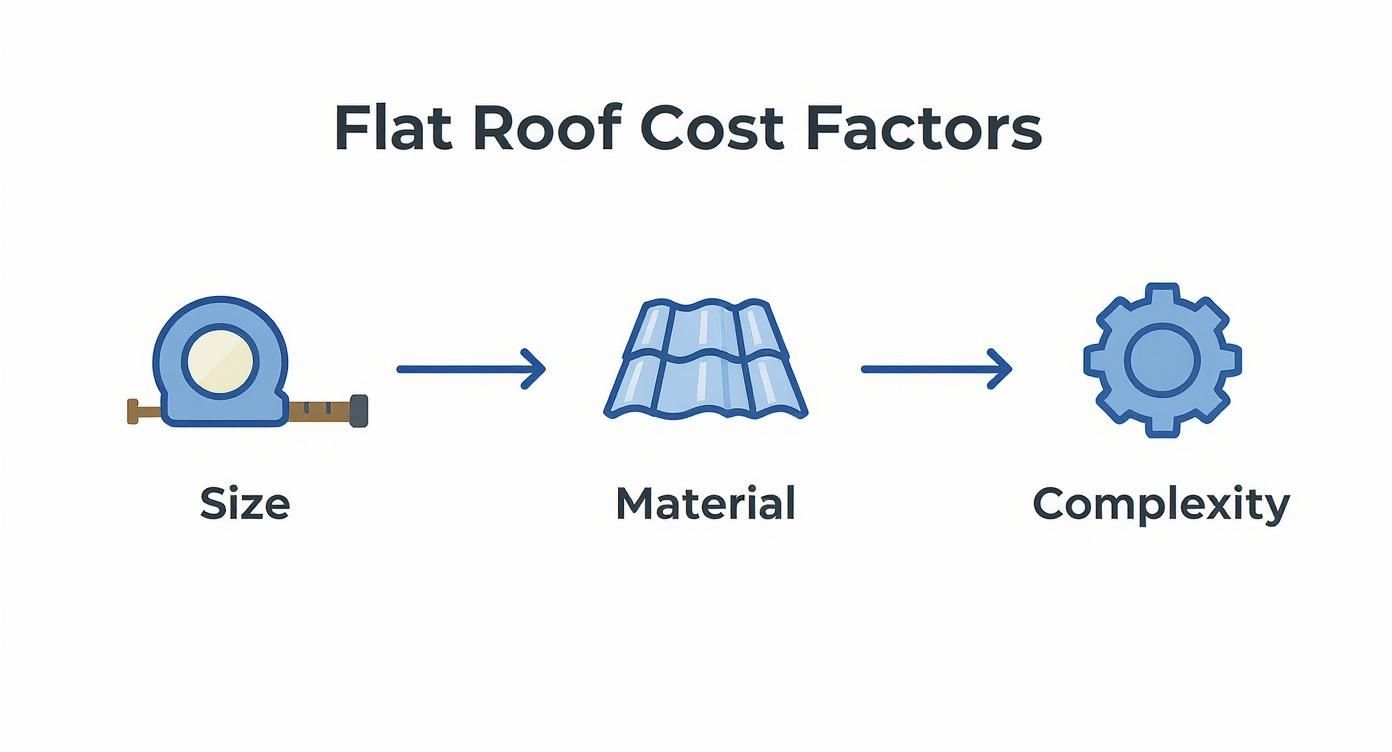
As you can see, the total expense isn't just one thing. It's a combination of all these pieces, and each one plays a part in the quote you'll get from a contractor.
How Your Roof's Material Shapes the Repair Bill
Here in Central Florida, from Pinellas County all the way to Orlando, commercial and residential flat roofs are usually made from one of a handful of common materials. Each one comes with its own typical repair costs and life expectancy, especially in our hot and humid climate.
To make it easier to see how they stack up, let's compare the most common options side-by-side.
Cost Comparison of Common Flat Roof Materials in Florida
| Material Type | Average Repair Cost per Sq. Ft. | Typical Lifespan in Florida Climate | Best For |
|---|---|---|---|
| TPO | $6 – $10 | 20-30 years | Businesses and homes needing high energy efficiency and UV resistance. |
| Modified Bitumen | $6 – $9 | 15-20 years | Roofs that need extreme toughness and resistance to foot traffic or tears. |
| EPDM | $7 – $11 | 20-30 years | Situations where a durable, long-lasting rubber membrane is the priority. |
As the table shows, while costs might seem similar at first glance, the real value comes from understanding what you're getting for your money in our specific environment.
Now, let's dig into the details of each material:
-
TPO (Thermoplastic Olefin): TPO is a huge favorite in Florida for a reason. Its white, reflective surface is fantastic for energy efficiency, bouncing sunlight away and keeping cooling costs down. Repairs usually run between $6 to $10 per square foot. Because it’s built to resist UV rays, it holds up well here, often lasting a solid 20-30 years. If you're curious, you can learn more about what is TPO roofing membrane and see why it’s so common on buildings around here.
-
EPDM (Ethylene Propylene Diene Monomer): You've probably heard this called a "rubber roof." EPDM is a super durable synthetic material that’s been a reliable choice for decades. While the classic black version is still around, you can now get it in white to help with heat reflection. Repair costs are often a little higher than TPO, as it can require more specialized adhesives.
-
Modified Bitumen: Think of this as the heavy-duty, old-school option. It's an asphalt-based material known for being incredibly tough and tear-resistant, often installed in multiple layers with a torch. Because the repairs can be more labor-intensive, the cost usually lands somewhere between $6 to $9 per square foot.
It's worth remembering that spending a bit more on a high-quality, UV-resistant material like TPO might feel like a bigger hit upfront, but it often pays for itself. The longer lifespan and energy savings can deliver a much better return over time, saving you from the headache of frequent and expensive fixes down the road.
Connecting the Type of Repair to Your Budget
Beyond the material itself, the specific problem you're facing will have the biggest say in the final price. It’s simple, really: a small fix will always be cheaper than a major overhaul.
-
Patching Leaks: This is the most straightforward job. For small punctures, cracks, or holes, a simple patch is the go-to solution. It's almost always the most affordable type of repair.
-
Resealing Seams: The seams are where most flat roofs fail. Over years of baking in the sun and getting hit with rain, they can start to pull apart. Having a pro come out to reseal them is a vital bit of preventative maintenance that can save you from a much bigger problem later.
-
Fixing Ponding Water: If you notice puddles or "ponds" of water sitting on your roof long after a storm, that’s a red flag. It points to a deeper issue, like bad drainage or compressed insulation. Fixing this is much more involved because it isn’t just a patch job—it often means rebuilding parts of the roof to create the right slope so water can drain properly.
The Hidden Price of Delaying Roof Repairs
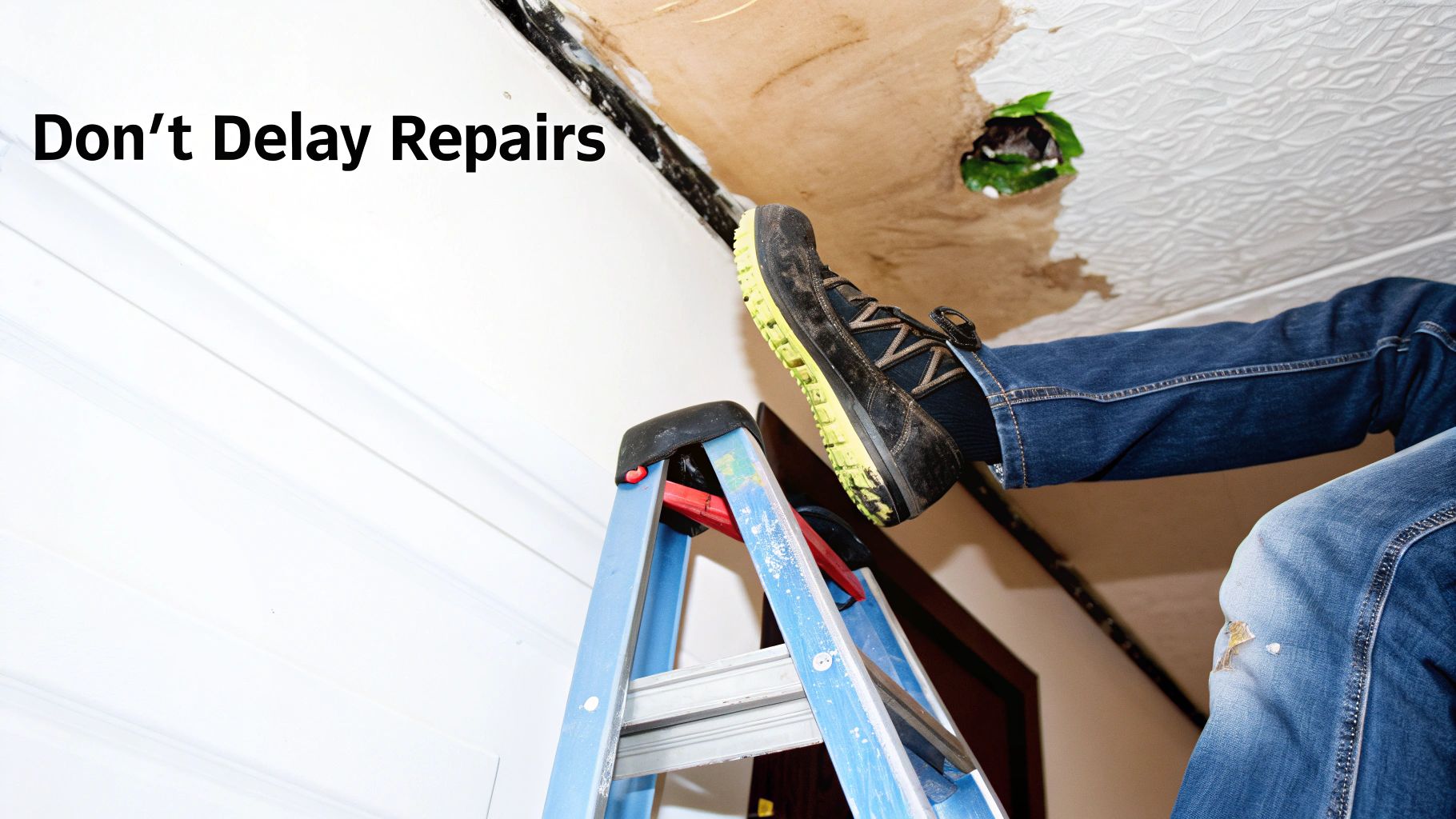
It’s tempting to ignore that small dark spot on the ceiling or a tiny bubble on your flat roof. You tell yourself, "I'll get to that later." But putting off what looks like a minor flat roof repair is a lot like ignoring a small cavity—it never gets better on its own, and the eventual fix will be far more painful and expensive. The initial flat roof repair cost for a small problem is pocket change compared to what comes next.
Here in Central Florida, from Pinellas County clear over to Orlando, our unique climate puts this whole process on fast-forward. The brutal sun, torrential rains, and ever-present threat of hurricane season mean a tiny chink in your roof’s armor won't stay tiny for long. What could have been a simple patch job quickly escalates into a full-blown crisis for your home or business.
The Escalating Domino Effect of Water Damage
A small, persistent leak is a quiet but relentless force of destruction. Once water finds a way past your roof's membrane, it doesn't just hang out. It immediately starts a systematic takedown of your property from the inside out.
First, it soaks the insulation, turning it into a useless, soggy mess that traps moisture against your roof deck. Next, it saturates the wooden decking itself, causing it to rot, warp, and lose all structural integrity. Before you know it, that water has migrated into your building’s interior, painting those tell-tale brown stains across ceilings and walls.
Think of proactive maintenance not as an expense, but as a critical investment in your property's health and value. A timely repair is always the smartest and most affordable path forward.
And this goes way beyond ugly spots. The constant dampness creates a perfect breeding ground for mold and mildew, which can trigger serious health problems for anyone inside the building. That little $500 patch you put off has now morphed into a multi-thousand-dollar nightmare involving structural repairs, new drywall, and professional mold remediation.
From Minor Flaw to Major Failure
The real cost of delay is how quickly the problem multiplies. A single weak point on a flat roof can set off a chain reaction of failures. We've seen this exact scenario play out for property owners all over Central Florida:
- Month 1: A tiny crack in a seam lets in a bit of water during a heavy rain. The fix? A simple resealing job.
- Month 3: That crack has widened. Now, water regularly soaks the insulation underneath, creating a permanently damp spot.
- Month 6: The roof decking starts to rot. The weight of the waterlogged materials causes the roof to sag, creating a pond that lets even more water in.
- Month 9: The first interior water stains finally appear on the ceiling. By now, mold is already thriving in the dark, damp spaces above.
At this point, you're no longer looking at a simple repair. You're facing a major restoration project that could easily top $10,000 or more—all because an affordable, quick fix was put on the back burner. Delaying a roof repair is a gamble, and the house always wins.
Should You Repair or Replace Your Flat Roof?
Every property owner in Central Florida eventually hits this crossroads: do you patch up that flat roof one more time, or is it time to bite the bullet and get a new one? This decision is about more than just the immediate flat roof repair cost. It’s about making a smart financial move that protects your property for the long haul.
It’s like owning an old car. A simple fix, like new brake pads on a low-mileage vehicle, is a no-brainer. But you wouldn't pour thousands of dollars into a car with a failing engine and a shot transmission, right? A roof that needs constant attention is the same kind of money pit, and eventually, a full replacement becomes the only sensible choice.
Key Factors to Help You Decide
So, how do you make the right call? It's not about guesswork. When we consult with property owners from Tampa to Orlando, we walk them through a few critical questions that usually make the answer pretty clear.
- How old is the roof? Here in Florida, most flat roofs have a lifespan of about 15-25 years. If your roof is getting close to that age, a major repair might just be delaying the inevitable.
- How bad is the damage? Is it a small, isolated problem or is it everywhere? A single puncture from a fallen branch is a classic repair job. But if you're seeing widespread blistering, seams pulling apart all over the place, or sagging areas where water pools, you're looking at systemic failure.
- How often are you calling for repairs? If you and your roofer are on a first-name basis, that's a huge red flag. A roof that needs patching after every storm isn't doing its job anymore.
Finding the Financial Tipping Point
Here’s a practical rule of thumb we use in the industry to simplify things: the 30-40% rule. If a repair quote is getting close to 30% or 40% of what a full replacement would cost, it’s almost always smarter to replace the whole thing.
To use this rule, you need a ballpark idea of replacement costs. In 2025, a new flat roof can run anywhere from $5,000 to $30,000. For a typical 2,000-square-foot roof in Central Florida, most people spend around $10,000. So, if you get a repair estimate for $3,000 to $4,000, you’ve hit that tipping point. It’s time to seriously consider a replacement. You can explore more data on replacement costs to get a better handle on the numbers.
The Smart Investment: Opting for a full replacement on an old, failing roof essentially resets the clock. You get a brand-new system, a solid warranty, and the peace of mind that comes with it. Most importantly, you end the frustrating and expensive cycle of endless patch-up jobs.
Choosing the Right Roofing Contractor in Central Florida
You can buy the best roofing materials on the market, but they’re practically worthless if they’re installed poorly. Think of it this way: your final flat roof repair cost is an investment in two things—quality materials and skilled craftsmanship. Getting the second part right is arguably the most critical decision you'll make.
A great roofer makes your repair last for years, giving you peace of mind. A bad one? They can leave you with a bigger, more expensive mess than you started with.
Here in Central Florida, from Pinellas to Orange County, this means you need more than just a handyman. You need a local pro who genuinely understands our climate—the intense sun, the surprise downpours, the humidity. You're looking for a partner who will protect your investment.
Vetting Your Local Options
Before you even think about signing a contract, it’s time to do some homework. This due diligence is your first line of defense against shoddy work and uninsured accidents.
-
Florida Licensing and Insurance: This is non-negotiable. Your contractor must have a current Florida license and carry both general liability insurance and workers' compensation. This protects you if something goes wrong on your property.
-
Recent, Local Reviews: Don't just look at star ratings. Read what actual customers in Tampa, St. Pete, or Orlando are saying. Their recent experiences will give you the clearest picture of what it's like to work with that company.
-
Detailed Written Estimates: A true professional will hand you a clear, itemized quote. It should break everything down—labor, materials, permit fees, and cleanup—so there are no nasty surprises on the final bill.
Red Flag Warning: Be very cautious if a contractor pressures you to sign immediately, demands the full payment upfront, or gives you a price that seems way too good to be true. Those are classic signs of a roofer you don't want on your property.
Asking the Right Questions
Once you’ve narrowed down your list to a few good candidates, it’s time to interview them. The right questions can reveal a lot. It's also a good sign when a company has invested in its own equipment; understanding the world of construction equipment financing shows they are a serious, established business.
For a deeper dive into making the final call, we've put together a guide on how to choose a roofing contractor that covers exactly what to ask. Taking the time to select the right expert ensures the job is done right the first time, saving you money and stress down the road.
Got Questions About Flat Roof Repair Costs? We've Got Answers.
When you're staring down a flat roof repair, a lot of questions pop up. It makes sense—you want to feel confident you're making the right call for your home or business. Let's tackle some of the most common questions we hear from property owners right here in Central Florida.
What’s the Cost for a Flat Roof Inspection in the Orlando Area?
Good news on this front. Most established local roofers, including Hi Low Roofing & Solar, provide complimentary inspections and detailed estimates. Think of it as a necessary first step to get a real, accurate repair cost.
If you'd rather get a third-party opinion from an independent inspector, that's an option too. For that, you're typically looking at a cost between $150 and $400.
Will My Homeowners Insurance Cover Flat Roof Repairs in Florida?
This is the big one, and the honest answer is: it depends. Your specific policy and what caused the damage are the deciding factors.
If a sudden storm rips through or a tree comes down on your roof, you're likely covered. However, damage that happens over time from simple wear and tear or a lack of maintenance usually isn't. The best move is to pull out your policy or give your agent a call to know for sure.
How Can I Make My Flat Roof Last Longer?
A little proactive care goes a long way. Being hands-on with maintenance is your best defense against expensive repairs down the road.
- Schedule annual inspections: Have a pro look at it once a year to spot small issues before they become big headaches.
- Keep it clean: Regularly clear off leaves, branches, and any other debris that can trap moisture.
- Check the drains: Make sure your drains and scuppers are clear. Clogs lead to ponding water, which is a flat roof's worst enemy.
Staying on top of these simple things is truly the best way to keep long-term repair costs in check.
If you have more questions or you're ready for a professional to take a look at your Central Florida property, the team at Hi Low Roofing & Solar is ready to help. Reach out today for a free, no-pressure estimate at https://hilowroofing.com.
