

Think of a flat roof coating as a specialized, liquid-applied membrane that restores, protects, and seriously upgrades your existing roof. When it's applied, it cures into a seamless, waterproof layer—basically, it's like giving your roof a suit of high-performance armor.
This isn't just a fancy paint job. This layer deflects the brutal Florida sun and stops water in its tracks, which can extend the life of your commercial or residential property and make a real dent in your energy costs.
Why Your Tampa Property Needs a Flat Roof Coating
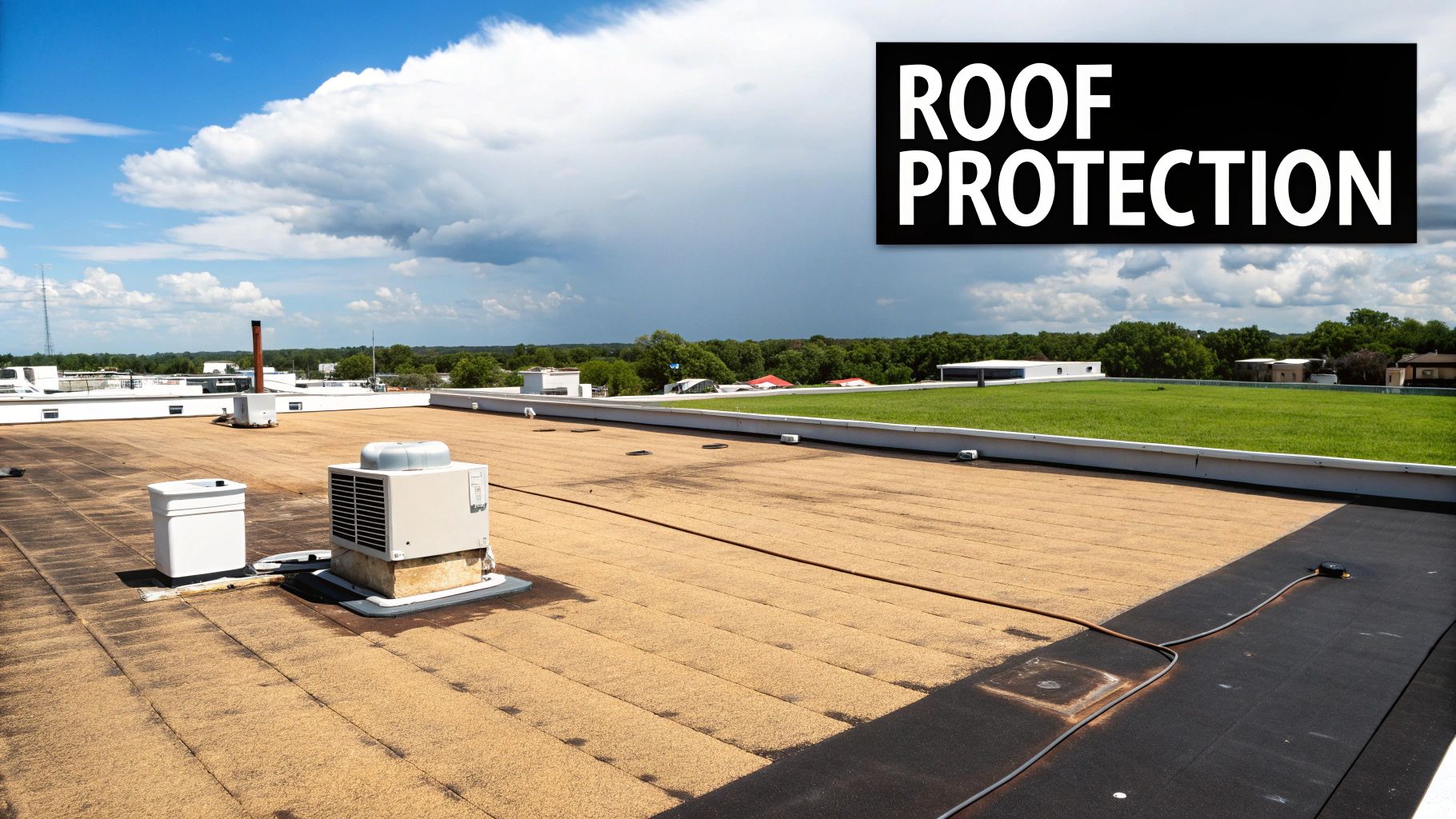
If you own a property in Tampa, you know the climate is relentless. We've got a triple-threat of scorching sun, torrential downpours, and suffocating humidity that puts flat roofs to the test. It's a tough environment, and it’s no surprise that this kind of weather accelerates the aging process of any roof.
Without a solid defense, you're looking at a future of leaks, potential structural damage, and energy bills that just keep climbing. A roof coating isn't just a patch-up job; it's a strategic move to protect your property's long-term health and your bottom line.
Defending Against Florida's Harshest Elements
Imagine leaving bare skin out in the intense Florida sun day after day. It's going to burn, crack, and eventually break down. That's exactly what's happening to your uncoated flat roof. A professional roof coating acts like powerful, industrial-grade sunblock, creating a durable shield against the biggest threats your Tampa property faces.
- UV Ray Protection: The sun's UV radiation is brutal. It breaks down roofing materials, making them brittle and prone to failure. A reflective white coating acts like a mirror, bouncing those harmful rays away and slowing down the wear and tear.
- Waterproofing Power: Tampa's summer storms can find a way into the smallest cracks and weakest seams. A coating creates a single, unbroken membrane across the entire roof. No seams, no entry points for water, and no more leaks.
- Thermal Shock Resistance: Florida’s weather cycle is dramatic—scorching hot days followed by cooler nights. This causes your roof to constantly expand and contract, putting immense stress on seams and fasteners. A flexible coating moves with your roof, absorbing this stress without cracking.
A quality roof coating is one of the most cost-effective ways to add another 10 to 20 years of life to your roof. It turns a vulnerable liability into a tough, energy-saving asset and can help you avoid a premature—and incredibly expensive—full roof replacement.
A Smart Investment with Tangible Returns
Applying a high-quality flat roof coating does more than just protect your building; it delivers real financial benefits you’ll see almost immediately. The biggest impact is usually on the cooling bill. A reflective "cool roof" can lower the surface temperature by 50-80 degrees, which means your air conditioning system doesn't have to work nearly as hard.
This need for smarter roofing solutions isn't just a local trend. The global market for flat roofing systems was valued at USD 59.2 billion in 2024 and is expected to nearly double by 2035. As you can learn on marketresearchfuture.com, areas like Tampa are a huge part of that growth, driven by the demand for weather-resistant and energy-efficient building materials.
Of course, the key to getting these results is hiring a local expert who gets the Central Florida climate. You need a team that knows which materials stand up to our specific brand of heat and humidity. A company like Hi Low Roofing, which serves the entire area from Pinellas County all the way over to Orlando, has the on-the-ground experience to choose the right coating and apply it with precision, ensuring your investment pays off for years to come.
Choosing The Right Coating For Florida's Climate
Not all roof coatings are built to survive the unique punishment a Tampa climate dishes out. Choosing the right material for your flat roof is less like picking a paint color and more like selecting the right armor for battle. Here, you're fighting a combination of intense sun, torrential downpours, and relentless humidity. You need a solution that can win on all fronts.
The key is understanding the real-world differences between the most common types of coatings. Each one has a distinct personality—its own set of strengths and weaknesses. Figuring out which one is right for your commercial or residential building is the first step toward a smart, long-term investment in your property.
Unpacking The Top Coating Contenders
From the beaches of Pinellas County to the heart of Orlando, you'll hear three names come up again and again: Silicone, Acrylic, and Polyurethane. They dominate the market for a reason—they've proven they can handle the pressure. Think of them as specialized tools, each designed for a specific job.
-
Silicone Coatings: When it comes to waterproofing, silicone is in a class of its own. It’s naturally water-repellent and isn’t bothered by "ponding water"—those pesky puddles that stick around for more than 48 hours after a storm. If your roof has some persistent drainage issues, silicone is your best friend.
-
Acrylic Coatings: These are the champions of reflectivity and cost-effectiveness. As a water-based product, acrylics are fantastic at bouncing UV rays away from your building. This keeps the roof surface cooler, which can lead to some serious savings on your energy bills. They just need a roof with good drainage to perform their best.
-
Polyurethane Coatings: Think of polyurethane (or urethane) as the premium, high-performance option. It delivers a powerful combination of toughness and flexibility. It stands up to foot traffic and impacts like a champ, making it perfect for commercial roofs with lots of HVAC units or other equipment that requires regular visits.
The right choice isn't just about one feature. It’s about matching the coating’s main strength to your roof's biggest weakness. A good contractor won't just sell you a product; they'll analyze your roof's condition, slope, and sun exposure to find the material that delivers the best protection and long-term value.
Silicone: The Waterproofing Specialist
Imagine a material that simply doesn't care about water. That’s silicone. Its chemical makeup doesn't allow it to absorb moisture, so it won't get brittle or break down even when it's sitting in a puddle. For a roof in Tampa that gets hit with sudden, heavy downpours, this is a game-changing advantage.
On top of that, silicone is incredibly resistant to UV radiation. It holds onto its flexibility and color for years without chalking up or peeling, ensuring that seamless, protective barrier lasts for more than a decade.
Acrylic: The Reflective Cooler
Acrylic coatings are the heroes of the "cool roof" movement. Their bright white finish is like a mirror for sunlight, reflecting a massive amount of solar heat away from your building. A cooler roof means less heat seeps inside, giving your air conditioning a much-needed break during those brutal Florida summers.
The key with acrylics, though, is positive drainage. Because they are water-based, they need water to shed off the roof quickly. They work beautifully when they can dry out properly, but they aren't the right choice for roofs where water tends to linger.
When looking at your options, it's worth exploring modern formulations like Titan Coatings Elastomer to see how advanced materials can offer both durability and flexibility against Florida's harsh weather.
Polyurethane: The Durable Defender
If your roof sees a lot of action, polyurethane is the heavy-duty armor you need. It’s incredibly tough and resists abrasions, making it the top choice for commercial roofs that have to withstand dropped tools, hail, or constant foot traffic from maintenance crews. That durability makes it a fantastic investment for busy commercial buildings.
Polyurethane also has fantastic elasticity, which allows it to stretch and shrink with the roof as temperatures swing from hot to cold. That combination of raw strength and flexibility creates a resilient, long-lasting barrier that won't crack under pressure.
Comparing Flat Roof Coating Options for Tampa
To really see how these materials stack up for a Tampa property, it helps to put them side-by-side. This table breaks down their performance in the areas that matter most here in Florida.
| Coating Type | Best For | Waterproofing | UV Resistance | Flexibility/Durability |
|---|---|---|---|---|
| Silicone | Roofs with ponding water issues and intense sun exposure. | Excellent | Excellent | Very Good |
| Acrylic | Buildings needing maximum energy efficiency on a budget. | Good | Excellent | Good |
| Polyurethane | High-traffic roofs and protection against physical damage. | Very Good | Very Good | Excellent |
Ultimately, there's no substitute for a professional assessment. A seasoned expert knows exactly what to look for and can evaluate your roof's specific needs, identify hidden problem areas, and recommend the system that will give you the best possible protection and return on your investment.
Your Roof Can Do More Than Keep Out the Rain
What if your roof could do more than just keep you dry? What if it could actively fight back against Tampa's relentless heat and slash your monthly cooling bills? That’s the reality of cool roof technology, a smart move that turns a passive part of your property into an active energy-saving machine.
It’s not some complicated gimmick—it’s just simple, elegant science at work. Think about it: a traditional dark-colored roof acts like a sponge for the sun, soaking up huge amounts of heat and pushing it straight down into your building. This forces your AC to work overtime, burning through electricity and wearing down expensive equipment just to keep things comfortable inside.
The Simple Science of a Cooler Roof
A cool roof, which we achieve with a specialized flat roof coating in Tampa, completely flips that script. Instead of absorbing heat, it reflects it. It’s like wearing a white shirt on a sunny day instead of a black one. The highly reflective materials in the coating bounce a huge chunk of the sun's thermal energy back into the atmosphere before it ever has a chance to heat up your building.
We measure how well a coating does this using two key metrics:
- Solar Reflectance: This is just the percentage of solar energy the roof reflects. The higher the number, the more heat gets bounced away.
- Thermal Emittance: This tells us how efficiently the roof releases any heat it has absorbed. A high number here means the roof cools down fast once the sun sets.
When you put these two properties together, you get a massive drop in the roof's surface temperature. An uncoated, dark flat roof can easily hit a scorching 150-180°F in the middle of a Tampa summer. A proper cool roof coating can keep that very same surface up to 80 degrees cooler, bringing it much closer to the actual air temperature.
By simply changing how your roof deals with the sun, you fundamentally lower the heat load on your entire building. This isn't just a small tweak; it's a strategic upgrade that pays you back in real dollars.
How This Technology Helps Your Bottom Line
That huge drop in temperature has a direct and immediate impact on your property's running costs and overall health. For Tampa business and homeowners, the benefits are crystal clear.
Your HVAC system will thank you first. When less heat is seeping in from the roof, your air conditioning doesn't have to kick on as often or run as long. That means lower energy bills, plain and simple. On top of that, by easing the strain on your AC units, you're also extending their lifespan and cutting down on the odds of needing expensive emergency repairs.
A Smart Investment for Central Florida
The numbers don't lie. For cities across Central Florida, packed with commercial and residential flat-roofed buildings, these coatings make a real difference. They can lower rooftop temperatures by 30-40%, which studies show leads to real energy savings of 10-15% on cooling costs. So, these coatings pull double duty: they make your roof last longer and help you hit your environmental goals.
Beyond the direct savings, choosing a cool roof is simply the responsible thing to do. Lower energy use means a smaller carbon footprint for your property. It’s an investment that often pays for itself over time through utility savings, making it one of the most cost-effective upgrades you can make. As specialists in making buildings more energy-efficient, we've perfected applying these systems all over Central Florida. For those in nearby areas, exploring options for energy efficient roofing in Brandon can provide even more insight. This technology is truly a cornerstone of modern, sustainable property management.
The Professional Roof Coating Application Process
A high-performance roof coating is only as good as the surface it’s applied to. Think of it like painting a car—you wouldn't just spray new paint over dirt and rust and expect a perfect, lasting finish. The exact same principle applies to a flat roof coating in Tampa, where meticulous preparation is the secret to getting a decade or more of leak-free protection.
Skipping steps might save a contractor a few hours, but it’s a surefire way to guarantee premature failure, leaving your property vulnerable. A true professional understands that the painstaking work done before the coating is even opened is what truly defines the quality and longevity of the final job.
The application itself is a systematic journey with several critical phases. This visualization breaks down the core workflow professionals follow to ensure a durable, seamless finish.
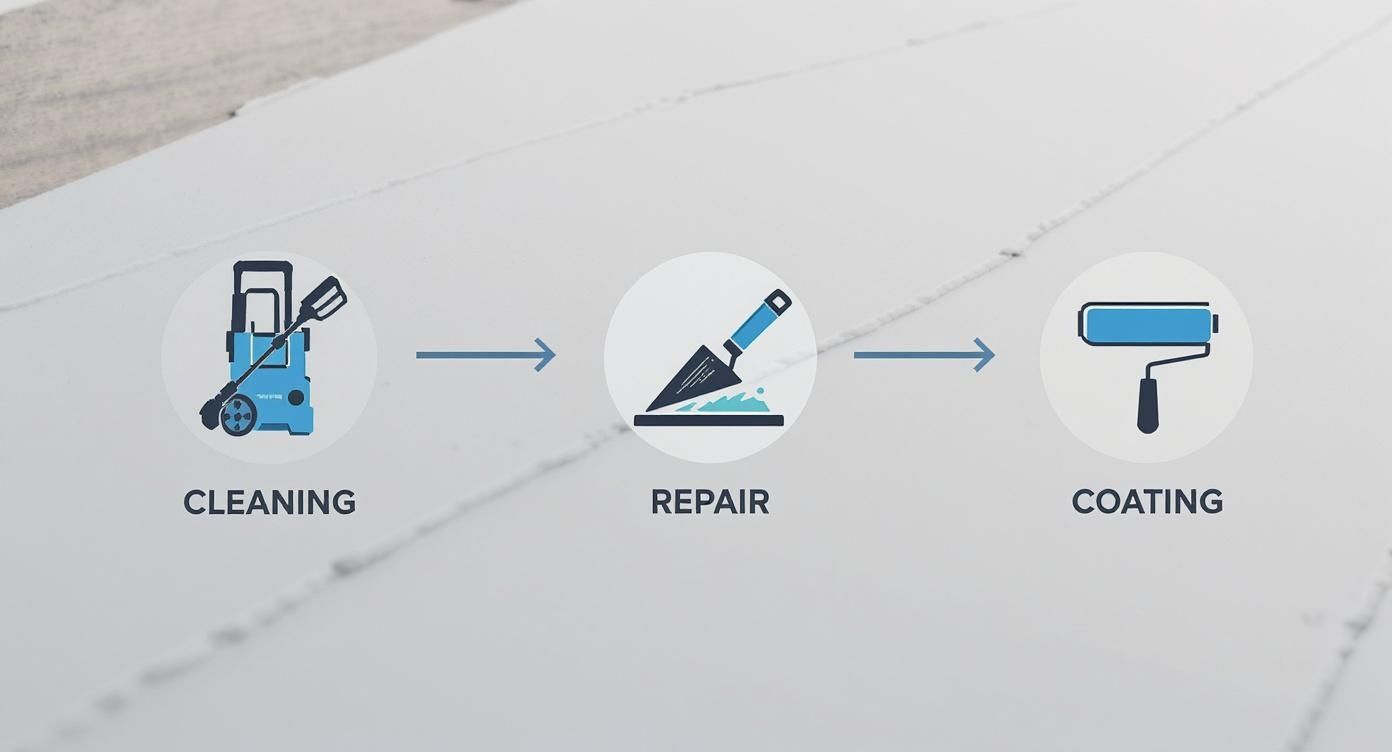
As you can see, a flawless application isn't just about rolling on the final product. It’s a disciplined sequence of cleaning, repairing, and then coating to create a truly monolithic membrane.
Step 1: Thorough Roof Inspection and Cleaning
It all starts with a detailed inspection. A professional roofer, like the teams at Hi Low Roofing who serve areas from Pinellas County to Orlando, will walk every square foot of your roof. They aren’t just looking for obvious leaks; they’re hunting for potential failure points like damaged flashing, failing seams, and hidden areas of trapped moisture.
Once the assessment is done, the cleaning begins. This isn't a quick rinse with a garden hose. We're talking high-pressure power washers to blast away years of accumulated dirt, algae, and any loose, degraded roofing material. The goal is to get down to a clean, stable substrate so the new coating can grab on and form a powerful, permanent bond.
Step 2: Meticulous Repairs and Seam Treatment
With the roof stripped bare and clean, every flaw is exposed. This is where the real repair work happens. Technicians will address every crack, blister, and puncture found during the inspection, often using specialized sealants and reinforcing fabrics to make sure the fix is durable.
This stage is absolutely critical for seams, fasteners, and flashings around vents, drains, and HVAC units. These are the usual suspects for water intrusion. Each one is meticulously treated with seam tape or a thick, brush-grade sealant to create a completely waterproof seal before the main coating ever touches the roof.
A professional roofing team knows that 90% of roof leaks happen at these penetration points. Spending extra time reinforcing these vulnerable areas isn't just good practice—it's non-negotiable for a job that’s built to last through Tampa's storm season.
Step 3: Primer Application for Maximum Adhesion
After the repairs are complete and fully cured, a primer is often applied. The primer acts as a bonding agent, essentially creating the perfect canvas for the topcoat to adhere to. It ensures the coating sticks uniformly across the entire roof, from the main field to the detailed repair spots.
Different roof surfaces—like modified bitumen, TPO, or metal—require different types of primers. A knowledgeable contractor will select the specific primer that is chemically compatible with both your existing roof and the new coating. This step is what prevents the coating from peeling or delaminating down the road.
This focus on advanced materials is driving some serious growth in the industry. The global roof coatings market was valued at USD 6.58 billion in 2024 and is projected to climb to USD 10.33 billion by 2032. As you can see in this Data Bridge Market Research report, this expansion is heavily influenced by the demand in climates like Tampa for reflective coatings that protect against UV damage and lower energy costs.
Step 4: Applying The Final Coating Layers
Finally, it’s time for the main event. The roof coating is applied in at least two separate, uniform layers. Using professional-grade rollers or airless sprayers, technicians lay down the first coat at a specific thickness, which they measure carefully with a wet film gauge.
After that first coat has completely cured, the second coat is applied in a perpendicular direction to the first. This cross-hatch pattern ensures complete, even coverage with no pinholes or thin spots. This two-coat system is what creates the seamless, durable, and reflective membrane that will protect your property for years to come.
Understanding Your Flat Roof Coating Cost
When you start looking into a flat roof coating in Tampa, it's easy to get fixated on the price. But the final number on a quote isn't just pulled out of thin air. It’s a detailed reflection of your roof's specific needs, and knowing what goes into that number is the key to telling a cheap patch-job from a smart, long-term investment.
The total cost is really a sum of its parts. A good contractor will be transparent about these components, so you know exactly where your money is going and why it’s a worthwhile investment in protecting your property.
The Major Cost Factors Explained
Every roof tells a story. A brand-new roof in great shape is a straightforward job, while a ten-year-old roof that's seen a few too many storms will need a lot more attention before any coating goes on.
Here are the main things that will shape your final price:
- Total Square Footage: This one’s the most obvious. A bigger roof simply requires more material and more time to cover, which naturally increases the cost.
- Current Roof Condition: What shape is your roof in right now? If there are blisters, open seams, cracks, or soggy insulation, all of that has to be addressed first. Extensive prep work adds to the labor and material bill, but it's non-negotiable for a successful job.
- Chosen Coating Material: As we’ve covered, different coatings have different price tags. Silicone is a fantastic waterproofing solution, but it costs more upfront than a standard acrylic. The right choice depends on your roof's specific issues, like whether it has problems with ponding water.
- Job Complexity: Think about what’s on your roof. A wide, open expanse is one thing, but a roof crowded with HVAC units, vents, pipes, and skylights is a whole different ballgame. Each of those penetrations needs to be meticulously cleaned, sealed, and coated around, which takes a lot of skill and time.
A suspiciously low bid is almost always a red flag. It usually means the contractor is cutting corners, and the first corner to get cut is proper preparation. Paying for it to be done right the first time is a lot cheaper than dealing with a failed coating and water damage down the road.
Labor and Preparation: The Unseen Value
A huge chunk of what you're paying for is the expert labor that goes into the prep work. This is the bedrock of a successful coating application—you simply can't skip it. We're talking about high-pressure power washing to get the surface perfectly clean, reinforcing every seam, and applying the right primer. It's time-consuming, but it’s what makes the coating stick.
The coating is just the finishing touch. The real strength and longevity of the system comes from the painstaking prep work underneath. This is where a professional crew really earns its keep.
What a Comprehensive Quote Should Include
When a reputable Tampa contractor hands you a quote, it should be clear, detailed, and easy to understand. If you just get a single number with no explanation, be wary.
A proper quote will break down the project into specifics:
- Surface Preparation: A clear description of the cleaning and repair work planned.
- Materials: The exact type, brand, and amount of coating to be used.
- Labor Costs: An estimate of the time and manpower the job will take.
- Warranty Information: The details for both the material manufacturer’s warranty and the contractor’s workmanship guarantee.
Knowing what drives the cost helps you compare apples to apples when looking at different proposals. For a more detailed breakdown of what goes into fixing specific issues, our guide on flat roof repair cost is a great resource. Arming yourself with this knowledge is the best way to find a contractor who will deliver real, lasting protection for your property.
Hiring the Right Roofing Contractor in Central Florida
This is the most important decision you’ll make. A high-performance roof coating is a serious investment, and its success comes down to the skill and integrity of the team you hire to apply it. Here in Central Florida, from the Gulf Coast to Orlando, you need a crew with a deep understanding of our unique climate.
This isn’t about finding the cheapest bid. It's about finding a true expert you can trust to protect your residential or commercial property for years to come. The right partner means peace of mind, knowing the job will be done right the first time.
Non-Negotiable Contractor Credentials
As you start vetting roofers for your project, there are a few absolute must-haves. Think of these as the minimum entry ticket for any company you’d even consider allowing on your roof.
-
Proper Licensing and Insurance: This is non-negotiable. The contractor must hold a valid Florida state license and carry both general liability insurance and workers' compensation. This is what protects you from any liability if an accident happens on your property.
-
Proven Flat Roof Experience: Don't be shy about asking for a portfolio of their completed flat roof coating projects, specifically in the Tampa Bay area. A company that mostly installs shingles on pitched roofs won't have the specialized skills needed for commercial and residential flat roof systems.
-
Strong Local References: A great contractor will be proud to share references from past clients in your area. Nothing gives you better insight into a company's professionalism and quality than speaking directly to someone who has already been in your shoes.
Red Flags to Watch Out For
Knowing what to look for is only half the battle; you also need to know what to run from. Certain behaviors are clear signs of an unprofessional or untrustworthy operation. If you see any of these, be careful.
A vague, handwritten quote or an aggressive, "sign now" sales pitch are huge warning signs. A true professional will give you a detailed, itemized proposal and the breathing room to make a smart decision.
You should also be wary of any contractor demanding a large cash payment upfront or who gets cagey when you ask to see their license and insurance. A transparent, professional company like Hi Low Roofing makes sure all documentation is clear and easy to find. It's what makes us a reliable choice for property owners across Central Florida who expect real expertise.
Choosing the right contractor can feel overwhelming, but focusing on these key points makes it much simpler. For a deeper dive, learn more about how to choose a roofing contractor and ensure you make the best possible choice for your building's future.
Common Questions About Flat Roof Coatings
Even with all the information out there, you probably still have a few questions about flat roof coatings. That's completely normal. Let's walk through some of the most common things people ask us here in the Tampa area so you can feel confident about your decision.
How Long Does a Roof Coating Last in Florida?
This is the big one, and for good reason. A professionally applied flat roof coating isn't a quick patch; it's a serious investment in your building's future. Here in Florida, with our intense sun and heavy rains, you can realistically expect a quality coating to last anywhere from 10 to 20 years.
Of course, that number depends on a few key things:
- The Coating Itself: High-end materials like silicone and polyurethane are built for the long haul and typically outlast some of their acrylic counterparts.
- The Quality of the Work: This is non-negotiable. A coating is only as good as the team that puts it down. Proper prep work and applying the material at the right thickness are what make it last.
- Basic Upkeep: A little maintenance goes a long way. Simply keeping an eye on the roof and making sure drains are clear will dramatically extend its life.
Can a Coating Be Applied Over My Current Roof?
For most commercial and residential properties, the answer is a resounding yes. That's one of the biggest benefits—coatings are designed to restore your existing roof, saving you from the massive cost and disruption of a full tear-off. We can apply them over most common flat roof materials like modified bitumen, TPO, EPDM, and even metal.
But there's a critical catch: the roof underneath has to be in decent shape. Before we do anything, a thorough, professional inspection is the first step. If the existing roof is saturated with trapped moisture, has major structural problems, or is already buried under multiple old layers, a coating isn't the right move. The goal is to restore a solid roof, not just put a bandage on a failing one.
Will a Roof Coating Fix My Current Leaks?
Let's clear this up, because it's a point of confusion for many. A new coating creates a seamless, monolithic membrane that is fantastic at preventing future leaks. However, the coating itself isn't what fixes the leaks you have right now. The real magic happens during the preparation phase.
Think of it this way: the coating is the final, waterproof shield. Before that shield goes on, a skilled crew has to meticulously repair every single crack, split seam, and puncture that's causing your current problems. The repair work stops the leaks; the coating ensures they don't come back.
When Is the Best Time to Apply a Roof Coating in Tampa?
In Florida, timing is everything. You can't just slap a coating on anytime you want and expect it to work. We need the right conditions for the material to cure correctly and bond to the roof surface.
The sweet spot for applying a roof coating in Tampa is during our drier, less humid months. That generally means late fall, through the winter, and into the spring. Trying to do this work in the middle of our summer rainy season is just asking for trouble—one unexpected downpour can ruin the entire job before it has a chance to set. A good contractor lives by the weather forecast and will schedule the work to ensure a perfect, uninterrupted application.
Ready to protect your property and lower your energy bills? The expert team at Hi Low Roofing & Solar has been serving commercial and residential clients from Pinellas County to Orlando for over 15 years. We provide free, no-obligation inspections to determine the perfect coating solution for your building. Contact us today to schedule your assessment!
