

Let's be straight—replacing a tile roof in Kissimmee is a significant project. You're likely looking at a total cost anywhere from $17,500 to $45,000, and sometimes even more. It all boils down to your home's size, the specific tile you fall in love with, and how complex your roofline is.
For a ballpark figure, you can plan on spending somewhere between $8.00 and $20.00 per square foot for a complete tear-off and replacement.
Unpacking the Investment in a Kissimmee Tile Roof
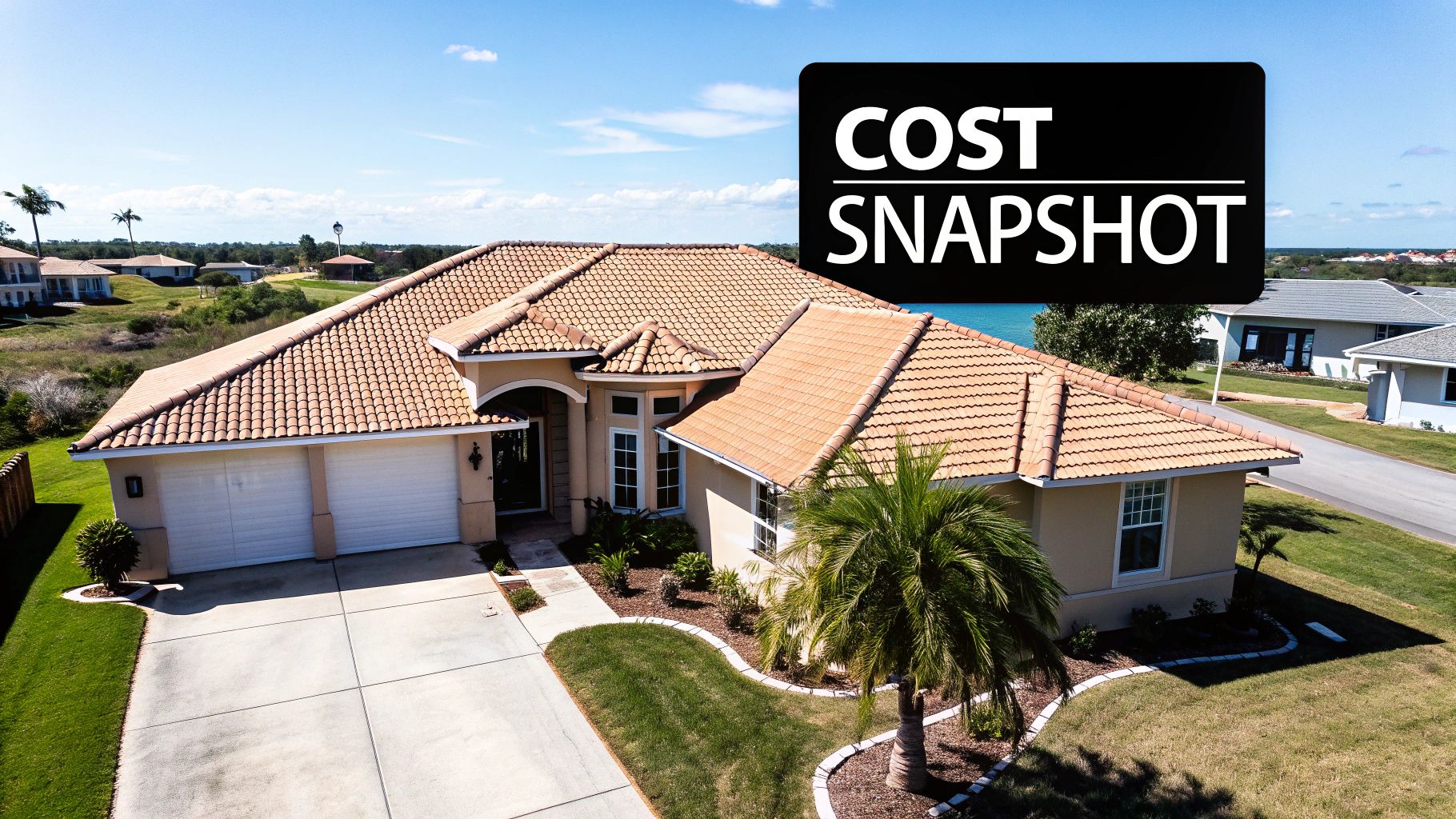
When you see those numbers, it’s easy to get sticker shock. But a new tile roof isn't just an expense; it's a serious, long-term investment in your home's safety, resale value, and overall look. Think of it as a custom-built shield, engineered to handle everything Central Florida's weather can throw at it, from blistering sun to hurricane-season downpours.
There's also a peace of mind that comes with a new tile roof that you just can't put a price on. Knowing your home is protected by one of the toughest roofing materials on the market brings a sense of security that standard shingles can't quite deliver.
A Quick Look at the Numbers
So, what do these costs look like in practice? To give you a clearer idea, here's a quick summary of the average costs homeowners can expect for a tile roof replacement project in the Kissimmee area.
| Cost Component | Estimated Price Range |
|---|---|
| Price Per Square Foot | $8.00 – $20.00 |
| Total Project Cost | $17,500 – $45,000+ |
| Typical Kissimmee Roof Cost | $6,418 – $7,236 (for standard materials) |
| Average Florida Tile Roof | $17,500 (statewide average) |
Table: Estimated Tile Roof Replacement Costs in Kissimmee
As you can see, while a standard asphalt shingle roof might seem cheaper upfront, tile is in a different league because of the specialized materials and the skilled labor required to install it correctly. The numbers reflect a premium product built for the long haul. For more localized figures, you can often find breakdowns of Kissimmee roofing costs on platforms like HomeYou.
A tile roof is not just a covering; it’s a structural upgrade that defends your home against Florida’s harshest weather while boosting its overall market value.
When you see that final invoice, remember what you're really paying for. This isn't just about keeping the rain out; you're investing in:
- Decades of Protection: A properly installed tile roof can easily last 50 years or more, far outliving most other common roofing materials.
- Enhanced Home Value: In Kissimmee, a beautiful and durable tile roof is a huge selling point. It tells potential buyers that the home is well-maintained and built to last.
- Superior Weather Resistance: From high winds and driving rain to the relentless Florida sun, tile is designed to take a beating and still look great.
Key Factors That Influence Your Final Price
Pinning down the exact cost of a tile roof replacement in Kissimmee isn't as simple as just looking at a price per square foot. Think of that number as a baseline. The final quote you receive will be shaped by a handful of critical factors specific to your home.
No two roofing projects are ever the same, and understanding what drives the cost will help you make sense of your estimate. It’s not just about the tiles you see; it's about the entire system and the unique challenges your roof presents.
The Complexity of Your Roof's Architecture
The biggest variable is often the design of your roof itself. A straightforward, low-slope gable roof on a standard rectangular house is the easiest and most affordable to work on. The real cost comes in when you add complexity.
Imagine a roofer walking on a gentle slope versus navigating a steep pitch. Anything over a 6/12 slope is considered "steep," which means more time, more labor, and specialized safety gear. Every valley, dormer, or skylight is a custom job, requiring precise cuts and detailed flashing to make it watertight. These features add hours and a higher level of skill to the project.
- Steep Slopes: These slow down the crew and require extra safety setups, directly increasing labor costs.
- Multiple Valleys and Hips: Every time two roof planes meet, it requires expert craftsmanship to prevent future leaks.
- Dormers and Skylights: Working around these requires meticulous flashing and sealing, which is time-consuming but essential.
The Unseen Condition of Your Roof Deck
One of the biggest wildcards in any roofing job is the condition of the wood decking hidden beneath your old shingles or tiles. Before a single new tile goes on, the crew has to inspect this foundation for any rot, water damage, or soft spots. Even a small, slow leak over many years can wreak havoc on the underlying plywood or OSB.
A new tile roof is only as strong as the deck it rests on. Installing expensive, heavy tiles over a compromised wood structure is a recipe for failure and a waste of your investment.
If the inspection reveals rotten wood, it must be replaced. This isn't an optional upsell; it's a non-negotiable step to ensure the structural integrity of your new roof. While an experienced Kissimmee roofer can often spot red flags during the initial inspection, the full extent of the damage isn't truly known until the old roof comes off.
Underlayment: The Unsung Hero
Here in Central Florida, the underlayment is your roof's secret weapon. This waterproof layer is your home's most important defense against our driving rain and relentless humidity. Trying to save a few bucks on the underlayment is a huge mistake that almost always leads to expensive problems later.
Your contractor might offer a standard felt paper, but it’s worth asking about a high-quality synthetic underlayment. This modern material is far more tear-resistant and offers much better waterproofing. Many synthetic options are also self-adhering, which creates a tight seal around every nail penetration. It might add a bit to the upfront cost, but its superior performance is exactly what a tile roof needs to survive decades in Kissimmee's climate.
Choosing Your Tile: Clay Versus Concrete
When you're gearing up for a tile roof replacement in Kissimmee, one of the first big decisions you'll make is the tile material itself. The two main contenders are classic clay and modern concrete. From the curb, they might look pretty similar, but they have some crucial differences in cost, appearance, and long-term performance that will absolutely shape your budget and your home's future.
Think of it like choosing new flooring. You could go with real hardwood or a high-end luxury vinyl. Both look great, but they come with different price tags, maintenance needs, and they'll age differently. Your choice in roofing tile has the exact same kind of long-term impact.
This decision tree gives you a bird's-eye view of how your roof's size, its complexity, and the type of tile you pick all weave together to determine the final cost of your Kissimmee roof replacement.
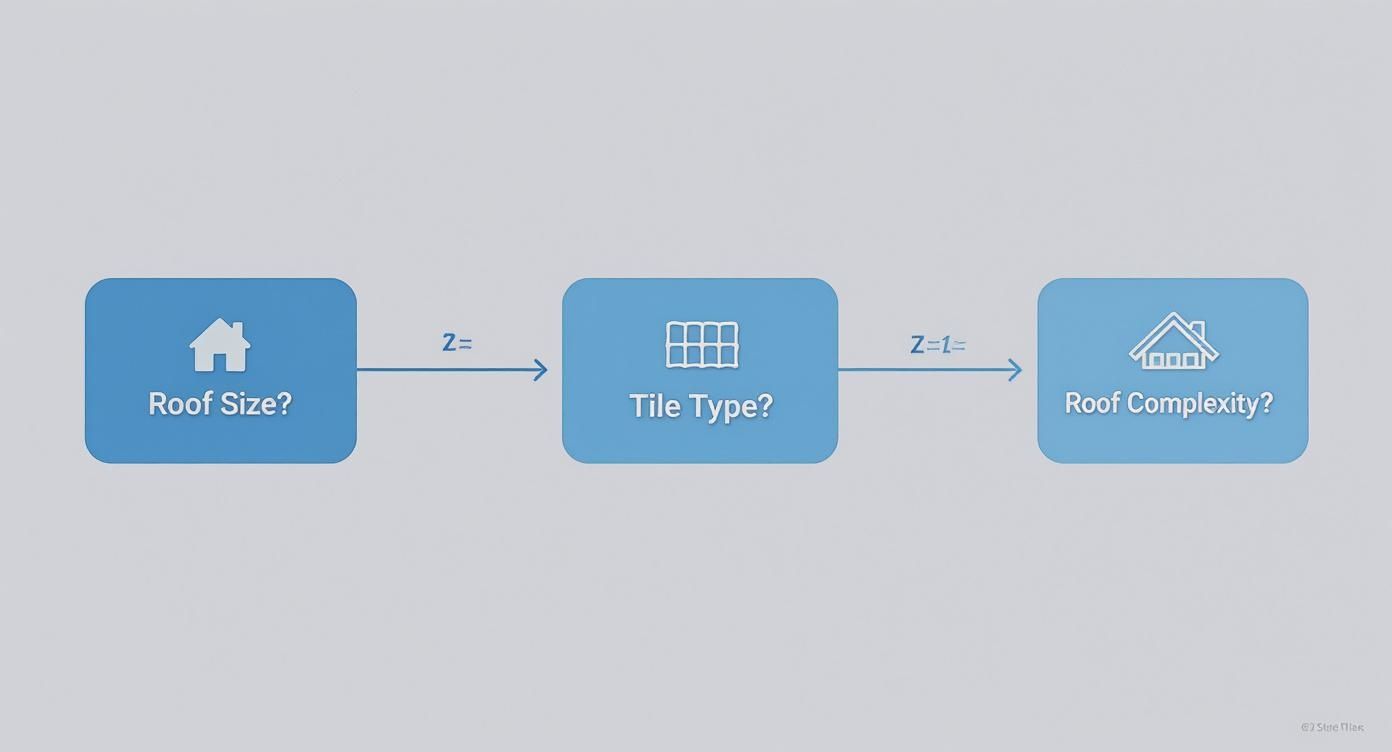
As you can see, your material choice is a major fork in the road. It's one of the earliest decisions that will send your project's budget in one direction or another.
Clay Tile vs Concrete Tile: A Kissimmee Homeowner's Guide
To help you sort through the options, let's break down the key differences. This table offers a quick side-by-side comparison to help you figure out which material is the right fit for your home, your style, and your wallet.
| Feature | Clay Tile | Concrete Tile |
|---|---|---|
| Typical Cost | $9 – $20 per square foot | $7 – $19 per square foot |
| Aesthetic | Classic, Mediterranean, Spanish | Versatile; can mimic clay, slate, or wood |
| Color Longevity | Color is baked in; fade-proof | Surface-coated color; can fade over time |
| Weight | 600 – 850 lbs per square | 820 – 1,200 lbs per square |
| Lifespan | 50 – 100+ years | 30 – 50+ years |
| Durability | Extremely durable but can be brittle | Very durable and less prone to cracking |
Ultimately, both are fantastic, long-lasting options for Florida homes. The best choice really comes down to balancing your initial budget with your long-term aesthetic goals.
The Financial Side of Clay and Concrete
The first thing you'll notice when getting quotes is the price difference. As a general rule, concrete tiles are the more budget-friendly option. They're made from a straightforward mix of sand, cement, and water, which makes them easier and cheaper to mass-produce.
Clay tiles, on the other hand, are a more premium product. They are fired in a kiln at incredibly high temperatures, a process that demands more energy and skilled craftsmanship. This leads to a higher upfront investment, but it also produces a tile with incredible durability and color that simply will not fade.
The cost of tile roof replacement in Kissimmee, Florida, definitely reflects this. Clay tile projects often run from $9 to $20 per square foot, while their concrete counterparts are a bit easier on the wallet, typically coming in between $7 and $19 per square foot. You can dig deeper into local pricing by checking out a breakdown of Kissimmee roofing costs.
Aesthetics and Color That Lasts
Your choice will have a huge impact on your home’s curb appeal. Clay tiles deliver that timeless, authentic look we associate with Mediterranean or Spanish-style homes. Because the pigment is baked right into the material, its color is permanent. That rich terracotta or deep blue you fall in love with today will look just as vibrant 30 years from now, even under the relentless Florida sun.
Concrete tiles offer more versatility. They can be manufactured in a wide variety of profiles to convincingly mimic clay, slate, or even wood shake. The key difference is that the color is usually applied as a surface coating. Over many years of exposure to harsh UV rays, this top layer can begin to fade.
Think of it this way: the color in a clay tile is like a carrot—it’s orange all the way through. The color in a concrete tile is more like a radish—the vibrant color is just on the skin.
Weight and Structural Considerations
Here's something you can't ignore: both tile types are heavy. A professional structural assessment is an absolute must before you commit to either one. Concrete tiles are the heavyweights, generally tipping the scales at 820 to 1,200 pounds per square (a "square" is a 10×10 foot roofing area).
Clay tiles are a bit lighter, usually weighing in between 600 to 850 pounds per square. While that difference might not seem huge on paper, it can be a critical factor for your home. If your roof's existing structure can't support the extra load of concrete without expensive reinforcements, the lighter clay tile might suddenly become the more practical and cost-effective choice.
Understanding Labor and Professional Installation Costs
Picking out the perfect tile is the fun part, but it's only half the story. The real success of your Kissimmee tile roof—how long it lasts and how well it protects your home—comes down to the skill of the people installing it.
This isn't your average roofing job. Installing tile is a specialized craft that demands far more precision than laying asphalt shingles. That's why labor is a more significant chunk of the total cost for a tile roof replacement. It’s an investment in expertise.
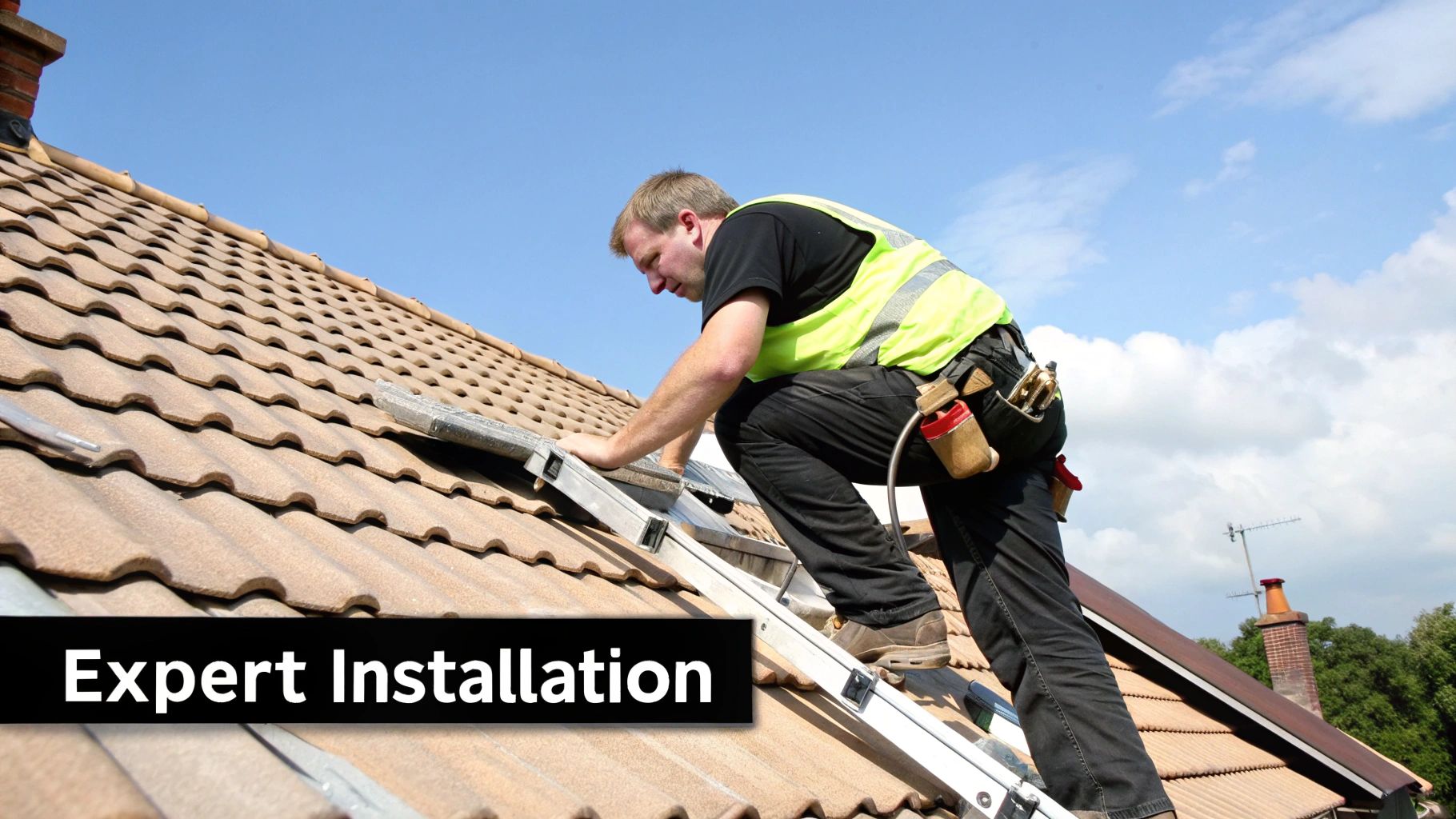
Think of it like this: you wouldn’t trust a general mechanic to work on a high-performance European car. You'd want a factory-trained technician. Tile roofs are the same; they have intricate, interlocking systems that need a specialist's touch to be truly watertight and ready for Florida's wild weather.
What a Professional Installation Quote Actually Covers
When you get a quote from a reputable Kissimmee roofer, you’re not just getting a price. You're getting a detailed game plan for protecting your home. The labor portion of that estimate should always account for these critical steps:
- Safe Tear-Off: The crew will start by carefully removing all the old roofing materials, all the way down to the bare wood deck, while protecting your home and landscaping.
- Deck Inspection and Repair: With the deck exposed, they'll inspect every inch for rot, water damage, or weak spots. Any compromised wood gets replaced to ensure a rock-solid foundation for your new roof.
- Underlayment Installation: This is your roof's hidden line of defense. The team installs a high-quality underlayment system, which is the primary waterproofing barrier. To see just how important this layer is, you can read more about different underlayment choices for Central Florida roofs.
- Precise Tile Layout: Each tile has to be laid in a specific, overlapping pattern and fastened to meet strict building codes for wind resistance and water runoff. There's no room for error here.
- Custom Flashing: The trickiest spots on any roof are around chimneys, vents, and where roof planes meet (valleys). An experienced roofer fabricates and installs custom metal flashing to seal these vulnerable areas, which is where their skill really shines.
The Real Value of a Licensed and Insured Local Roofer
Don't even consider cutting corners here. Hiring a licensed and insured local professional is your best protection. It shields you from liability and guarantees the work meets Osceola County’s tough building codes. A local team knows our climate's challenges inside and out and has a reputation in the community to protect.
Investing in skilled installation is the single best way to make sure your tile roof lives up to its 50+ year promise. Skimping on labor is the fastest way to end up with leaks, premature failure, and a voided warranty.
Ultimately, the labor cost for a Kissimmee tile roof reflects a higher level of craftsmanship. It’s the price you pay for peace of mind, knowing your new roof is built right the first time and will last a lifetime.
Looking Beyond the Obvious: Permits and Surprise Costs
When you're pricing out a new tile roof in Kissimmee, it's easy to focus on the big-ticket items like the tiles themselves and the crew's labor. But a smart budget accounts for the details, the "what-ifs" that can pop up. A truly experienced roofer will walk you through these potential costs upfront, so you're never caught off guard.
Think about it like planning a big vacation. You budget for flights and hotels, but you also need to account for things like airport parking, baggage fees, and maybe even a travel insurance policy. The same logic applies to any major home project, whether it's a new AC unit or even budgeting for major home system replacements. It’s all about seeing the full picture.
Getting the Go-Ahead from Osceola County
Before a single old tile can be removed, your project needs the official stamp of approval from Osceola County. This comes in the form of a building permit, and it’s non-negotiable. It’s the county’s way of ensuring the job is done right and meets Florida's strict building codes—codes designed to keep your roof intact during a hurricane.
This isn't just bureaucratic paperwork; it's your assurance of a safe, professional job. Permit fees usually fall somewhere between $200 and $500, based on the total value of your roofing project. A professional contractor like Hi Low Roofing will manage this entire process for you—from filing the paperwork to scheduling the final inspection—and will clearly list the cost in your estimate.
Think of the building permit as your roof's official safety certification. It's the documented proof that the plans, materials, and installation are all up to code, giving you peace of mind that your home is protected.
The Hidden Problem: Rotted Decking
Here’s the biggest wild card in any roof replacement: the condition of the wood decking underneath your old roof. You can't see it until the tear-off begins. It's incredibly common to find that slow, unnoticed leaks have caused sections of the plywood to rot over the years.
You simply can't put a beautiful, heavy new tile roof on a weak and spongy foundation. It’s a recipe for failure. Any compromised wood has to be cut out and replaced. The cost for a new 4×8 sheet of plywood typically runs between $75 and $125, installed. While nobody likes surprise costs, this is an absolutely essential repair for the structural integrity and long-term health of your new roof. That’s why we always recommend setting aside a contingency fund—about 10% of the total project cost is a safe bet—to handle whatever might be hiding underneath.
Why a Tile Roof Is a Smart Florida Investment
When you're looking at roofing options in Kissimmee, it’s easy to get hung up on the initial price tag. But to really understand the value of a tile roof, you have to shift your thinking from a short-term cost to a long-term investment. Yes, the upfront expense is higher, but a tile roof is genuinely one of the smartest decisions you can make for a home in Central Florida. The returns go far beyond just keeping the rain out.
It's a bit like buying a top-of-the-line tool designed to last a lifetime versus a cheaper one you know you'll have to replace every few years. Those immediate savings on the lesser tool evaporate pretty quickly. A tile roof works on the exact same principle, giving you decades of solid, reliable performance.
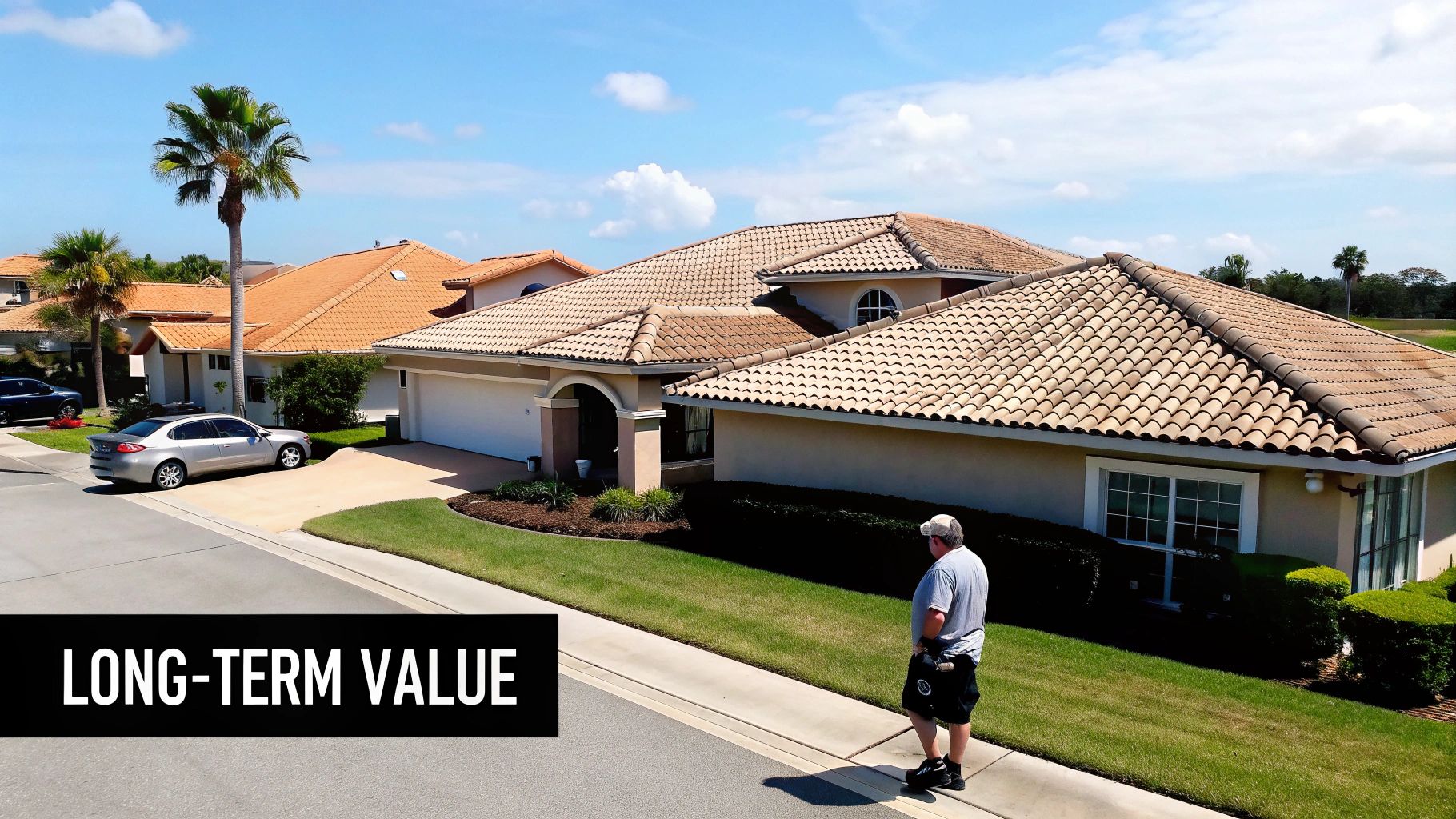
Unmatched Durability and Lifespan
The biggest advantage is, without a doubt, longevity. A properly installed tile roof can easily last 50 to 100 years. Let that sink in. Your standard asphalt shingle roof just can't come close to that kind of lifespan. While tile is considered a premium option in the market, its incredible durability more than justifies the cost.
This resilience is your home's best defense against Florida's wild weather. Tile offers top-tier fire resistance and stands up incredibly well to the hurricane-force winds that are a real and constant threat around here. If you want to dive deeper into how modern roofs are built to withstand storms, our guide on hurricane-proof roofing in Kissimmee has you covered.
Financial and Practical Advantages
The benefits of a tile roof show up directly in your wallet and in your home's future value. The natural thermal properties of clay and concrete tiles act as an insulating barrier, helping to keep your home cooler. That can translate into real savings on your AC bills during those long, sweltering Kissimmee summers.
A tile roof is more than a protective layer; it's a long-term asset that enhances your home’s value, improves energy efficiency, and provides a solid foundation for future upgrades like solar power.
Beyond the energy savings, there's no denying the curb appeal. A beautiful tile roof makes a statement and can significantly increase your home's resale value. It also happens to be the perfect, sturdy platform for a future solar panel installation, combining a century-long lifespan with the modern push for energy independence. This makes a tile roof not just a smart choice for today, but a forward-thinking investment for the future.
Answering Your Kissimmee Tile Roofing Questions
As you get closer to starting your project, you're bound to have a few practical questions pop up. It's completely normal. Getting clear, straightforward answers is the best way to feel confident and ready for the process ahead.
Let’s tackle some of the most common things homeowners ask us.
How Long Will a Tile Roof Replacement Take?
For a typical Kissimmee home, you can expect the entire tile roof replacement to take anywhere from 5 to 14 days.
This window accounts for everything from tearing off the old materials to installing the new system. The final timeline really depends on a few things: your roof's total size, how complex its design is (think steep slopes or lots of dormers), and, of course, the ever-unpredictable Central Florida weather.
Can I Finance The Project to Manage The Cost?
Absolutely. We understand that a new roof is a significant investment for your home or business. That's why Hi Low Roofing offers financing options to help ease the financial burden.
These plans let you spread the total cost over time with predictable monthly payments. It's always a good idea to discuss these options upfront to find a solution that fits comfortably within your family's or company's budget.
Remember, homeowners insurance is designed to cover damage from specific events, like a hurricane or a severe storm. It generally doesn't cover a roof replacement needed simply because of old age or normal wear and tear.
Will My Homeowners Insurance Cover Any of This?
It might, but it all comes down to why you need a replacement. If you believe your roof was damaged by a storm, the very first step is to get a professional inspection. A roofer can document the extent of the damage, which is critical for filing your insurance claim.
Proper maintenance is also a big factor for insurance. Keeping your roof clean is part of that, and you can learn more about how to power wash a tile roof to keep it in great condition.
When you're ready to protect your Kissimmee home or commercial property with a roof built to last, the experts at Hi Low Roofing & Solar are here to help. Serving the entire Central Florida region, from Pinellas County to Orlando, we offer a free, no-obligation inspection and a detailed estimate. Visit us at https://hilowroofing.com to get started.
