

When it comes to commercial roof maintenance in Winter Haven, waiting for a problem to show up is the most expensive strategy you can have. In Central Florida’s unforgiving climate, a scheduled maintenance plan isn’t just another expense—it's a smart investment that protects your entire business from disaster.
Why Proactive Roof Maintenance Is a Smart Business Move
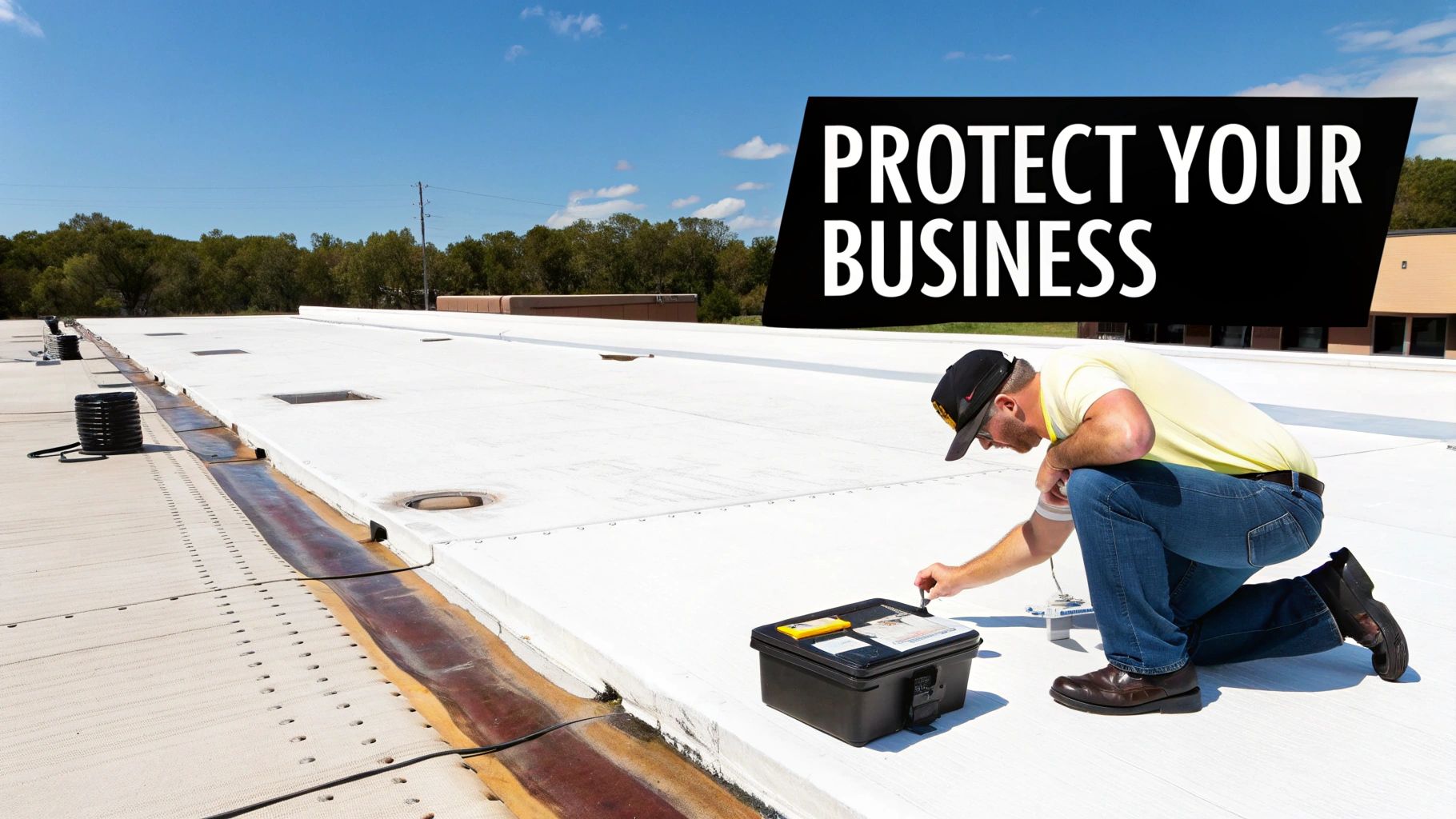
Here in Winter Haven, your commercial roof does more than just keep the rain out. It's the primary shield against Florida’s relentless sun, sudden downpours, and the ever-present threat of hurricane-force winds. That kind of constant stress takes a toll, and ignoring it is a gamble no business owner should take.
Treating roof care as a reactive task—only making a call when water is dripping on your inventory—is a recipe for a financial headache. Think about it: a small, easily fixed issue like a clogged drain can escalate in a hurry. Water that can't escape will pool, adding thousands of pounds of unexpected weight to your building's structure and rapidly breaking down roofing materials.
It's the little things that get you. A minor seam separation on a TPO or modified bitumen roof might not look like much, but that tiny opening is all water needs to get in. From there, it soaks the insulation, encourages mold growth, and eventually damages ceilings, ruins expensive equipment, and destroys stock. Those aren't just repairs; that's operational downtime and a direct hit to your bottom line.
Protecting Your Bottom Line with Consistent Care
A proactive maintenance plan changes the game entirely. Instead of scrambling to manage a crisis, you’re strategically protecting your most important asset. By having a Hi Low Roofing expert regularly inspect your roof, you catch those small vulnerabilities before they turn into major catastrophes. This approach gives any Winter Haven business a serious edge:
- Keeps You Open for Business: No surprise leaks or structural failures means no forced closures.
- Gets More Life Out of Your Roof: Proper care can significantly extend your roof's lifespan, pushing the massive cost of a full replacement further down the road.
- Makes Costs Predictable: Planned maintenance is easy to budget for. Emergency calls? Not so much. They always cost a premium.
When you look at the real-world difference between a proactive and reactive approach, the choice becomes clear.
Preventative Maintenance vs Emergency Repairs
| Aspect | Proactive Maintenance | Emergency Repairs |
|---|---|---|
| Cost | Planned, predictable, and significantly lower over time. | Unpredictable, premium rates for urgent service, often 2-3x higher. |
| Business Impact | Minimal disruption, scheduled during off-hours. | Major operational downtime, potential closure, lost revenue. |
| Scope of Work | Minor repairs, cleaning, and preventative measures. | Large-scale, complex repairs; often involves interior damage. |
| Outcome | Extends roof lifespan, ensures warranty compliance. | A temporary fix that often leads to more issues; may void warranty. |
The contrast is stark. One path involves control and foresight, while the other is a chaotic and costly reaction to failure.
The numbers don't lie. Property owners who stick to a preventative maintenance schedule see a 60-70% drop in emergency repair calls. Those who don't are just waiting for a disaster that risks their operations, their safety, and their revenue.
Ultimately, consistent commercial roof maintenance in Winter Haven is just good business sense. It turns a massive potential liability into a manageable asset. By partnering with a local pro like Hi Low Roofing, you’re not just fixing a roof—you’re protecting your operations, your people, and your long-term financial health. Our guide on the benefits of regular roof inspections dives deeper into how this process shields your investment.
Your Winter Haven Commercial Roof Inspection Checklist
Knowing what to look for is half the battle when it comes to commercial roof maintenance in Winter Haven. Getting up there (or looking from a safe spot) and doing a visual once-over allows you to catch small issues before they spiral into four-figure repairs. We've put together this practical checklist based on the most common roofing systems we see all over Central Florida, from Pinellas to Orlando. It'll help you spot the early warning signs and have a much more productive conversation with your roofing contractor.
Just a quick safety note: this is a visual check. Do it from the ground with binoculars or from a secure roof hatch. Never, ever walk on a roof that's wet, looks damaged, or if you don't have the proper safety gear.
Key Areas for Visual Inspection
First, just get a general feel for the roof's surface. Scan for anything that looks out of place—piles of leaves, dark patches of discoloration, or, most importantly, standing water. After a typical Florida downpour, that water should be gone within 24-48 hours. If you're still seeing puddles after two days, that's a huge red flag that your drainage system isn't keeping up.
Once you have the big picture, zoom in on these critical spots:
- Drains and Scuppers: Make sure they're clear. It’s amazing how quickly leaves, dirt, and even stray trash can clog them up. A blocked drain is the number one cause of ponding water, which puts an incredible amount of weight and stress on your building's structure.
- Seams and Flashing: This is where the majority of leaks start. Look for any place where the membrane sheets are pulling apart, cracking, or peeling. Pay close attention to the flashing—that's the sealant around things that poke through the roof, like vents, pipes, and HVAC units. If you see gaps or rust, you've found a problem.
- Roof Surface: The trouble signs here really depend on your roof type. For a TPO or PVC roof, you're looking for punctures, wrinkles, or seams that are separating. On a modified bitumen roof, keep an eye out for blistering (which looks like bubbles under the surface), alligator-like cracking, or bald spots where the granules have worn away.
Material-Specific Warning Signs
Different roofing systems have their own unique ways of telling you they're in trouble. Learning to spot these signs is key to getting ahead of major damage.
Common Flat Roof Issues in Winter Haven:
- Blistering: This happens when moisture or air gets trapped and expands in the brutal Florida heat, creating ugly bubbles on the surface.
- Punctures: Easily caused by dropped tools from other contractors, heavy foot traffic, or debris kicked up during a storm.
- Separating Seams: The sun's UV rays and age eventually break down the adhesives or welds holding the roof together.
A small blister or a slightly lifted seam might not look like a big deal, but they are wide-open doors for moisture. In our humidity, even a tiny leak can saturate the underlying insulation and start rotting the roof deck much faster than you’d think.
For an even deeper dive, feel free to use our complete commercial roof inspection checklist to guide your own assessments. It covers everything in more detail.
As you're making notes, remember that technology can give you a better view. For instance, exploring innovations in drone technology for commercial inspections can deliver a complete, high-resolution picture of your roof's condition without anyone ever having to set foot on it. Taking this kind of proactive approach is the best way to protect your property.
Choosing the Right Roofing Materials for Florida's Climate
The material you choose to protect your building is a huge decision, one that directly impacts its performance and your bottom line for decades. In a place like Winter Haven, a roof does a lot more than just keep the rain out. It has to fight off blistering UV rays, stand strong against hurricane-force winds, and deal with relentless humidity. Get this choice right, and your roof becomes a durable, energy-saving asset.
Right now, several main types of commercial roofing systems are the go-to options in the Winter Haven market. Getting familiar with the heavy hitters in this lineup is the first step in mastering commercial roof maintenance in Winter Haven.
Top Choices for Winter Haven Properties
For most commercial properties here in Central Florida, the decision usually boils down to a few tried-and-true systems. Each one brings something different to the table, specifically suited for our unique climate.
TPO (Thermoplastic Olefin): Let's be honest, this is the crowd favorite, and for good reason. TPO is a single-ply membrane, and its bright white, reflective surface is its superpower. This "cool roof" technology is a true game-changer for energy efficiency, bouncing the sun's intense heat away instead of soaking it up. That can translate to a serious drop in your cooling costs—a major line item for any Florida business. It also holds up incredibly well against UV degradation. To really dig into the details, you can learn more about what TPO roofing membrane is in our detailed guide.
Modified Bitumen: Think of this one as the tough, reliable workhorse of the roofing world. It’s an asphalt-based system that’s beefed up with polymers and applied in multiple layers. That multi-ply construction makes it exceptionally durable and resistant to punctures, whether from foot traffic or flying debris during a storm—a massive plus during hurricane season. While it used to be just black and heat-absorbent, you can now get it with "cool roof" granules to boost its reflectivity.
This concept map zeroes in on the three most critical areas—drains, seams, and the overall surface—that demand your full attention during any roof inspection.
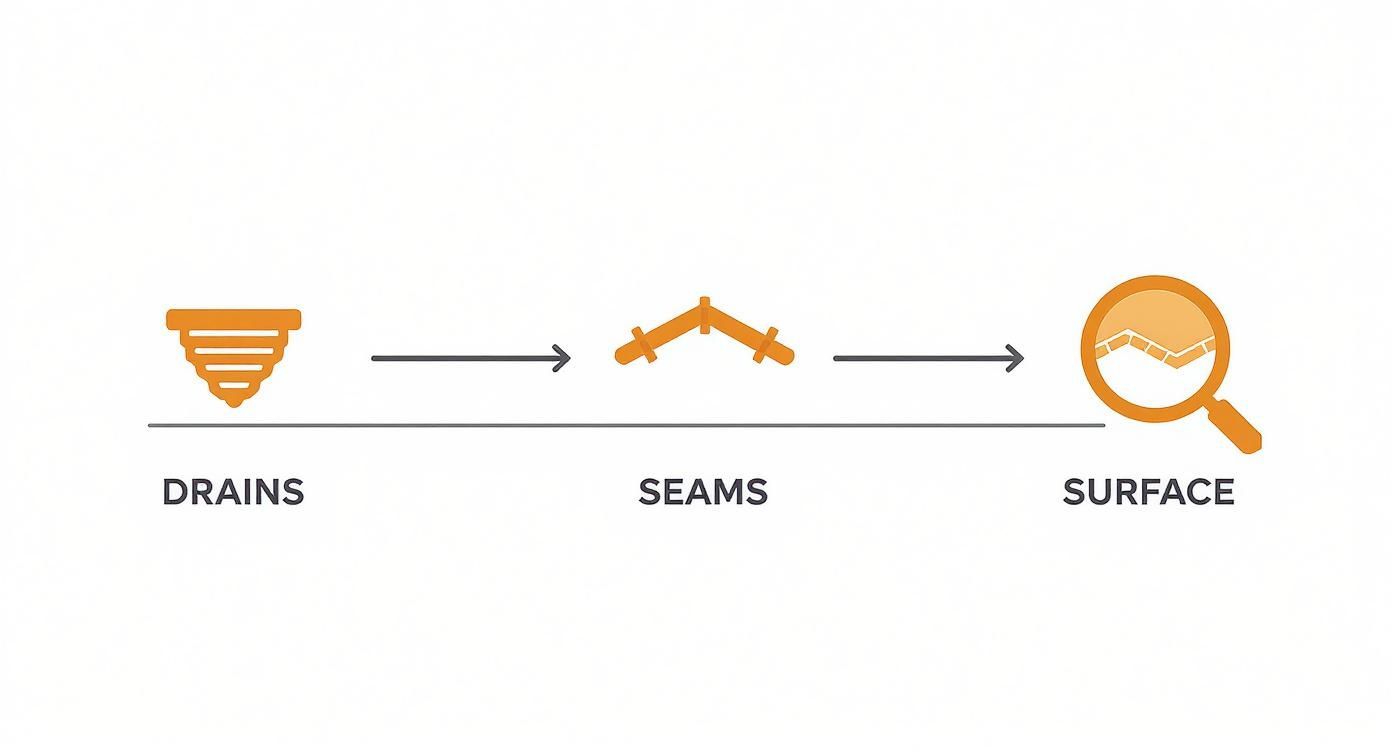
It doesn't matter what material you have; these are the weak points where over 90% of all roof leaks start. That makes them priority number one for your maintenance checklist.
Making the Right Material Decision
EPDM (Ethylene Propylene Diene Monomer): This is an incredibly durable synthetic rubber membrane. While the traditional black version isn't ideal for Florida's heat, it's also available in white. EPDM's real strengths are its amazing flexibility, long lifespan (often 30+ years), and fantastic resistance to hail and the thermal shock that comes with our sudden thunderstorms.
The best material for your property really comes down to your priorities. If slashing energy bills is at the top of your list, TPO is almost always the frontrunner. But if your roof sees a lot of foot traffic from HVAC crews, the sheer toughness of Modified Bitumen is a huge advantage.
Choosing the right material is just the beginning. The real key is understanding its specific maintenance needs to ensure it protects your investment for years to come.
Here’s a look at what a smart, year-round maintenance plan looks like for a commercial roof here in Central Florida.
Keeping a commercial roof in top shape in Winter Haven isn't a one-and-done deal. It’s a year-round commitment that has to account for Florida’s unique and often punishing seasons. We've got everything from the brutal summer sun to the ever-present threat of tropical storms, and each season brings its own set of challenges for your property.
Thinking about your roof maintenance seasonally allows you to get ahead of problems. It turns maintenance from a reactive, emergency expense into a proactive, strategic asset. You can focus your efforts where they matter most, right when they matter most, and stop small issues from turning into business-stopping catastrophes.
Summer: The Season of Heat and Rain
Summer in Central Florida is no joke. It’s a one-two punch of relentless heat and almost daily downpours, and that combination is especially tough on commercial roofing systems. All that intense UV radiation beats down on materials like TPO and Modified Bitumen, causing them to age faster, become brittle, and eventually crack.
Then, just when the sun is at its peak, the afternoon storms roll in, dumping a massive amount of water in a short time. This is when your drainage system is truly put to the test. Even a small clog from a few stray leaves can cause water to pool up, which not only adds immense weight and stress to the roof structure but also acts like a magnifying glass for the sun’s heat. Your summer focus has to be on fighting back against sun and water.
Your Summer Checklist:
- Inspect for Sun Damage: Get up there and look for the tell-tale signs of UV damage. You're looking for chalking, cracks, or any blistering on the roof's surface.
- Check HVAC Drainage: Make sure the condensation lines from your rooftop AC units are flowing freely and not creating little ponds that will wear down that spot over time.
- Confirm Clear Drains: This is non-negotiable. Every drain, scupper, and gutter has to be completely clear and ready to handle a sudden deluge.
Hurricane Season Preparedness
Once we head into late summer and early fall, the game changes. The focus shifts entirely to getting ready for hurricane season. From June through November, the risk of destructive winds and torrential rain is at its highest. This is absolutely not the time to find out you have a loose piece of flashing or a partially clogged drain. Being prepared is your only real defense.
I’ve seen it happen. A single piece of unsecured rooftop equipment or a loose corner of the roof membrane can be ripped off by hurricane-force winds. It acts like a sail, and in a matter of minutes, the wind can peel back the entire roof.
Long before a storm is even a blip on the radar, you need to be sure the entire roofing envelope is locked down tight. That doesn't just mean the membrane itself—it means everything sitting on top of it, too.
Fall and Winter: A Time for Deeper Care
After hurricane season finally winds down, the calmer and drier months of fall and winter are a welcome relief. This is the perfect window to schedule more significant maintenance and handle any needed repairs. The milder weather makes it much safer for crews to work, and it allows sealants and other repair materials to cure properly without being washed away by rain or baked by extreme heat.
This is your time to fix the wear and tear that built up over the summer. It’s also the ideal opportunity to get a more in-depth inspection and finally tackle those bigger projects you had to put on hold.
Spring: Assessing and Preparing
Spring is all about renewal and, for your roof, assessment. As things start to warm up—but before the summer rains become a daily occurrence—it's the perfect time to give your roof a thorough inspection. You're looking for any damage that might have cropped up over the winter so you can get it fixed before the intense weather cycle starts all over again.
Following a simple seasonal plan for your commercial roof maintenance in Winter Haven creates a predictable, manageable routine. It’s the smartest way to protect your property and your budget, all year long.
Knowing When to Call in the Pros
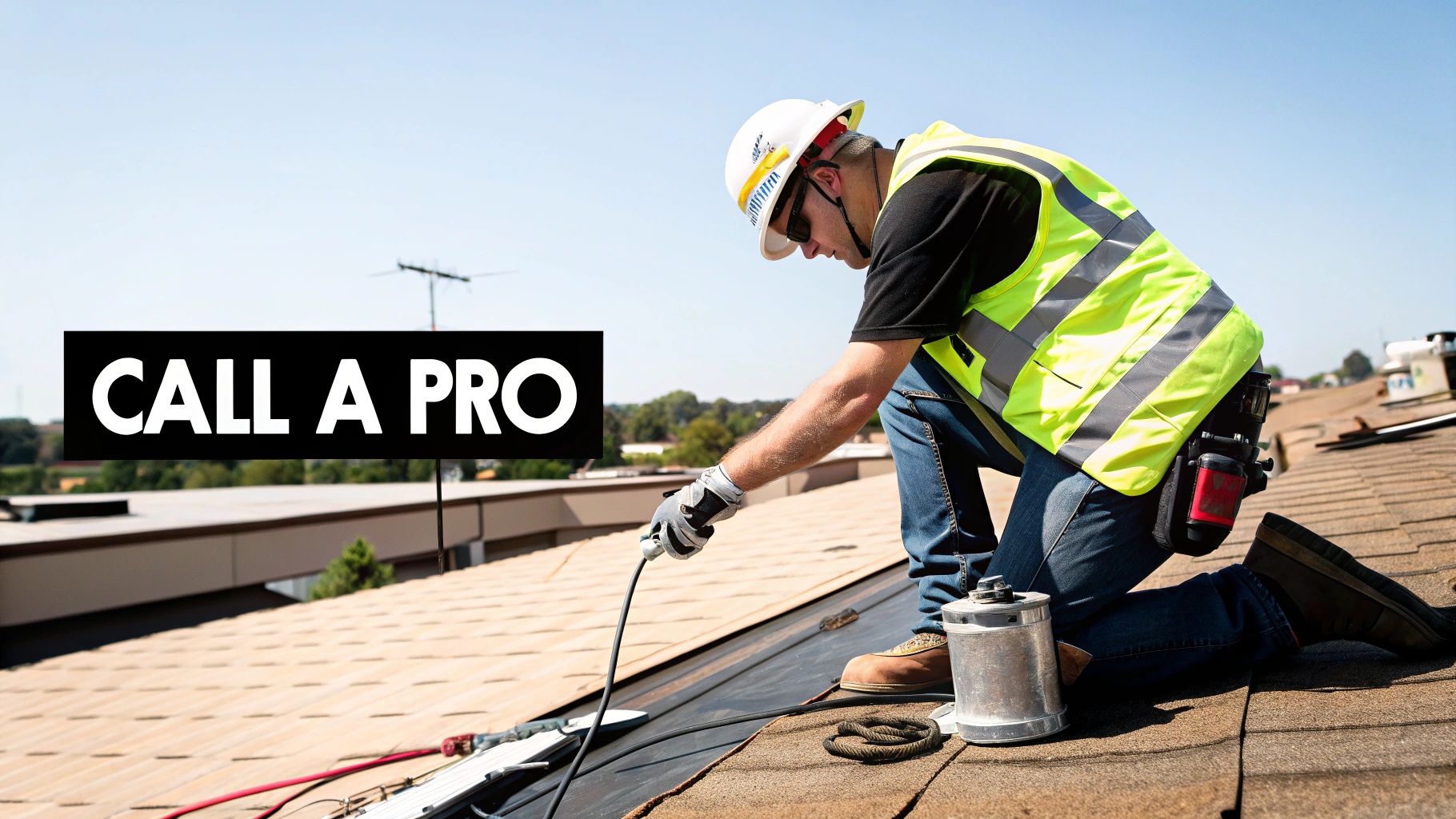
Your own visual inspections are a great first line of defense, but it's crucial to know where your role ends and a professional's begins. Some issues are much more than skin-deep, and trying to handle them yourself can do more harm than good. It's a quick way to turn a manageable repair into a catastrophe—and potentially void your roof's warranty.
Knowing that line is the cornerstone of effective commercial roof maintenance in Winter Haven. A professional doesn't just see the surface; they understand the entire roofing assembly, from the membrane and insulation right down to the structural deck. This expertise lets them find the root cause of a problem, not just slap a patch on a symptom.
Red Flags That Mean "Call a Roofer, Now"
There are a few warning signs that should have you immediately reaching for the phone instead of a ladder. If you see any of these during your walk-through, it's time to bring in an expert.
These aren't just minor blemishes; they're often indicators of serious, underlying issues that could threaten your entire building if ignored.
- Widespread Blistering or Alligatoring: Seeing large patches of bubbles or cracking that looks like alligator skin? That’s a clear sign your roof membrane is breaking down and losing its waterproofing ability.
- Major Punctures or Tears: Any hole or rip that goes through the top layer of your roof is an open invitation for water. This is an urgent problem.
- Structural Sagging or Soft Spots: If you notice dips where water collects, or if the roof feels soft or spongy when walked on (from a safe, designated spot), you could be looking at waterlogged insulation and a failing roof deck. This is a critical structural hazard.
The Professional Advantage
When you bring in an experienced team like Hi Low Roofing, you're getting more than just a repair crew. You're getting access to specialized diagnostic tools, like infrared thermal imaging, which can detect moisture trapped under the roof's surface—something completely invisible to the naked eye.
A professional assessment isn't just about finding leaks; it's about protecting your investment. Certified contractors ensure repairs meet manufacturer specifications, which is essential for keeping your warranty valid. This documentation provides long-term peace of mind and proof of proper care.
And let's not forget safety. Working on a commercial roof is inherently dangerous. Professional roofers are trained and equipped to manage those risks. Always confirm your contractor follows essential safety practices for working at heights. Their commitment to safety protects their crew, your property, and your business from liability.
Bottom line: for anything more serious than a couple of leaves in a drain, calling a pro is the smartest, safest move you can make.
Your Commercial Roof Maintenance Questions, Answered
When you're responsible for a commercial property, the roof is one of your biggest assets—and potential liabilities. We get a lot of the same questions from building owners across Winter Haven and the wider Central Florida area, so let's tackle them head-on with some straight, practical advice.
How Often Should a Pro Actually Look at My Roof?
For any commercial building here in Winter Haven, you need a professional inspection at least twice a year. Think of it as a seasonal check-up. The ideal times are spring, just before the heavy summer rains hit, and again in late fall after the threat of hurricane season has passed. This rhythm lets a roofer catch minor issues before they turn into major headaches.
That said, you should always call for an inspection immediately after a major storm, like a hurricane or a bad hailstorm. Don't just wait for a leak to show up on a ceiling tile. Getting a professional up there to confirm your roof’s integrity is the smartest move you can make. This is the foundation of solid commercial roof maintenance in Winter Haven.
What Are Florida's Top Roofing Threats?
In our experience, the two biggest enemies of a commercial roof in Florida are the relentless sun and constant moisture. The sheer intensity of our UV radiation breaks down roofing materials over time, making them brittle and ready to crack.
Then you have our famous humidity and torrential rains, which are experts at exploiting the tiniest flaw. That leads to leaks, nasty mold growth, and eventually, real structural damage. A very close third is a blocked drainage system. If water can't get off your roof, it pools up. That ponding water adds a huge amount of weight and speeds up the decay of your roofing material like nothing else.
A well-maintained roof does more than just prevent damage; it actually makes your building more energy-efficient. Keeping the surface in top shape and addressing issues promptly can genuinely lower your monthly cooling bills.
Does Regular Maintenance Really Save Money in the Long Run?
Without a doubt. Proactive maintenance is one of the best financial decisions a building owner can make. It’s the difference between a small, affordable fix—like re-sealing a seam or clearing out a drain—and a catastrophic, premature roof replacement, which is a massive capital expense.
And remember, the cost of a major leak isn't just the roof repair. It's the water damage inside, the ruined inventory or equipment, and the disruption to your business operations. A smart, consistent maintenance plan costs a tiny fraction of that nightmare scenario.
TPO vs. Modified Bitumen: What's the Real Difference?
This is a great question, as they're both popular and effective choices for our climate.
-
TPO (Thermoplastic Olefin) is a single-ply membrane. Its main claim to fame is incredible energy efficiency. That bright white surface is highly reflective, bouncing the sun's heat away from your building and seriously cutting down on cooling costs.
-
Modified Bitumen is a different beast altogether. It's a multi-ply, asphalt-based system. Its key advantage is sheer toughness and resistance to punctures. This makes it the go-to for roofs with a lot of foot traffic from HVAC crews or other rooftop equipment.
The right choice really boils down to your specific needs. Are you prioritizing energy savings, or do you need maximum durability to handle constant activity on your roof?
Your property is your livelihood, and protecting it with expert care is simply good business. For a free, no-obligation inspection of your commercial roof, get in touch with the trusted team at Hi Low Roofing & Solar today. We can help you build a maintenance plan that truly safeguards your investment. Schedule your free inspection now!
