

If you're a homeowner anywhere from Pinellas County to Orlando, you've probably wondered what the best roof type for solar panels really is. In my experience, the clear winner is usually a standing seam metal roof. Its incredible lifespan of 50+ years and a simple, no-penetration installation process make it the smartest and most secure long-term investment.
Of course, metal isn't the only game in town. Other materials like asphalt shingles and tile are also fantastic options for solar, it just depends on your budget and the style of your Central Florida home.
Choosing the Right Roof for Florida Solar Panels
Picking the right roof for solar panels in Florida is a balancing act. You have to weigh durability, cost, and how complicated the installation will be, all while keeping our unique climate in mind. Between the intense sun, high humidity, and the ever-present threat of hurricanes, your roof has to be a rock-solid foundation for an energy system that's going to last for decades. The best choice is one that fits your home's structure and your financial picture.
Before you jump in, it's absolutely critical to get a clear picture of your roof's current health. Making sure your roof is truly ready for solar might involve using advanced tools like drone roofing inspection software to get a detailed assessment. This kind of modern approach helps catch any hidden problems that could derail your solar project down the line. It's also vital to understand the full financial picture; you can get a better handle on the costs and benefits in our guide on if solar panels are worth it.
At a Glance Florida Roofs for Solar
To make this a bit easier, I've put together a quick comparison of the most common roofing materials we see here in Central Florida.
| Roof Type | Solar Compatibility | Average Lifespan | Hurricane Resilience |
|---|---|---|---|
| Metal | Excellent | 50+ Years | Very High |
| Asphalt Shingle | Good | 20–25 Years | High |
| Tile | Good | 50+ Years | Very High |
| Flat Roofs | Excellent | 15–30 Years | Moderate to High |
This table gives you a high-level view, but remember that the "best" option always comes down to your specific situation and priorities.
Here’s a simple visual that breaks down how your budget might point you toward the right roofing material for your solar installation.
As you can see, asphalt shingles are the most common entry point if budget is your main driver. However, both metal and tile roofs offer a much longer service life, which aligns perfectly with the 25+ year lifespan you can expect from a modern solar panel system.
Asphalt Shingles: A Practical and Popular Choice
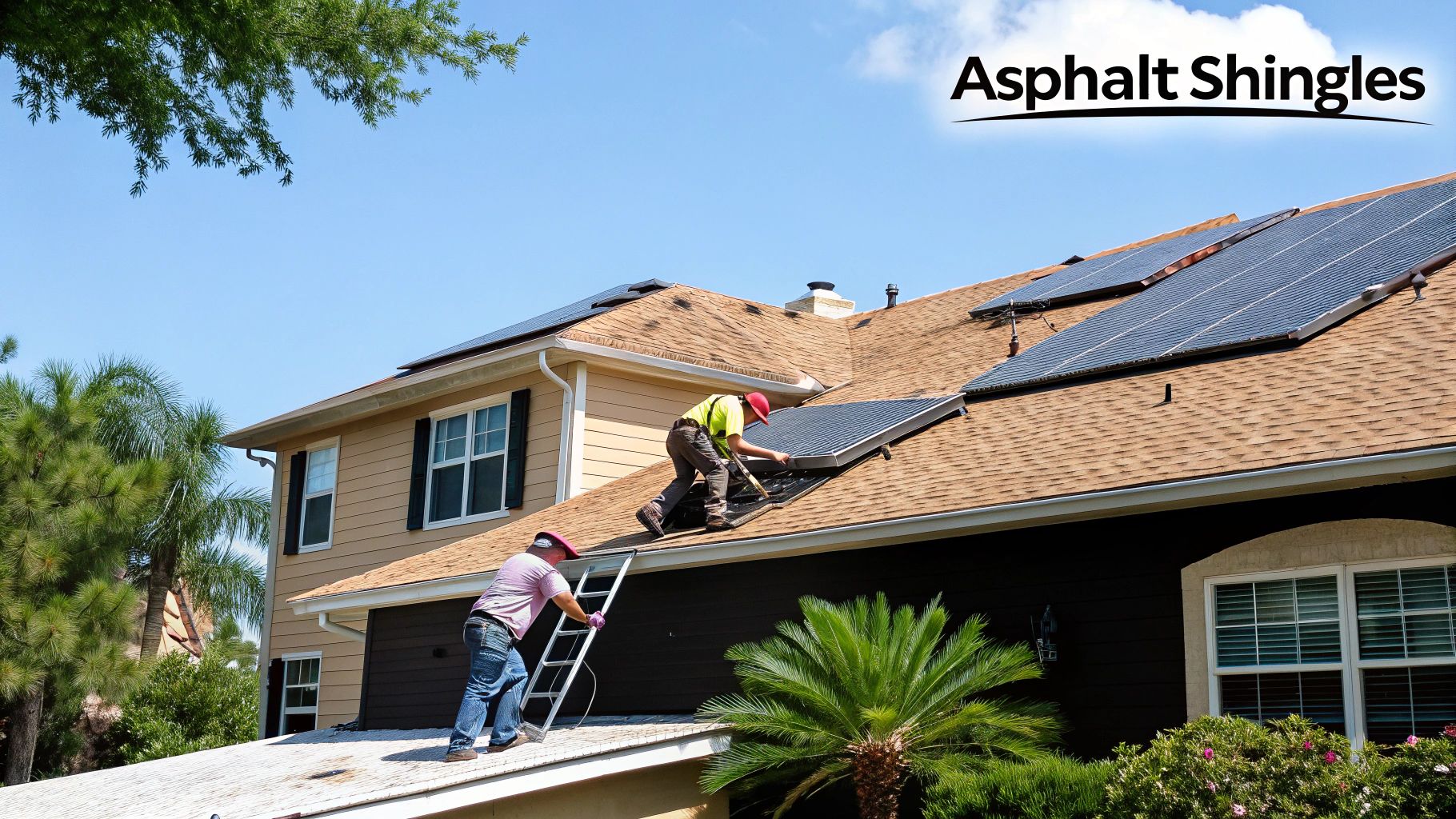
Drive through almost any neighborhood from Pinellas County to Orlando, and you’ll see one roofing material dominate the landscape: asphalt shingles. There’s a good reason for their popularity. They hit a sweet spot between affordability and durability, making them a really practical foundation for a solar energy system.
Because they’re everywhere, you’d be hard-pressed to find a solar installer who hasn’t worked on a shingle roof. This widespread experience is great for homeowners—it means installation timelines are predictable and labor costs stay reasonable. The process is standardized: crews secure mounts straight into your roof's rafters and use flashing to ensure everything is perfectly watertight. It’s a tried-and-true method.
Lifespan and Solar: A Key Consideration
Here’s the main thing you need to think about with shingles: their lifespan. A standard asphalt shingle roof will last you about 20 to 25 years. In contrast, your solar panels come with a 25-year warranty and can easily keep generating power for 30 years or more. That timing mismatch is a critical detail.
If your shingle roof is more than halfway through its life, putting a brand-new solar array on it is a costly mistake waiting to happen. You’re just setting yourself up to pay for the panels to be removed, the roof replaced, and the entire system reinstalled down the road.
This is exactly why we always start with a thorough roof inspection. For homeowners in Tampa or Winter Garden, it’s far more economical to replace an older roof right before or at the same time as the solar installation. Bundling the two projects with one expert team streamlines the entire process and protects your investment for the long haul.
Modern Shingles and Florida Weather
It's also worth noting that today’s architectural shingles aren't the same as the ones from a couple of decades ago. They’re engineered to withstand Florida's relentless heat and can easily handle the weight of a solar system. Their layered construction also provides excellent resistance to wind uplift—a must-have feature during our infamous storm seasons.
This resilience, combined with their cost-effectiveness, makes them a solid choice. In fact, asphalt shingles are a go-to for many solar installations, covering a majority of residential rooftops. Their prevalence is a major reason they are considered a great roof type for solar panels, even with the lifespan challenge. You can explore more about roofing compatibility with solar panels to see how different materials stack up.
Metal Roofs: A Durable and Efficient Investment
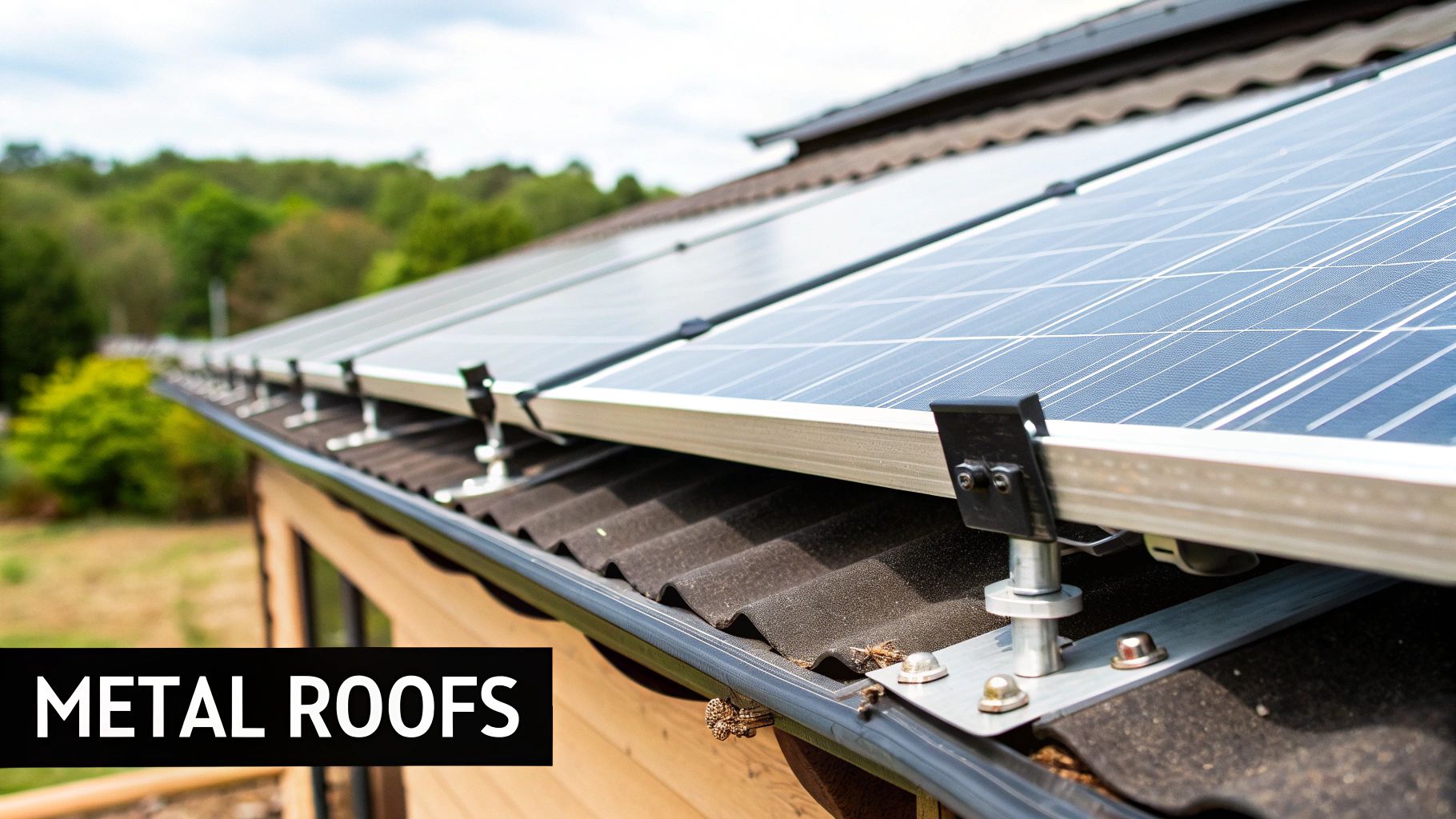
For Florida homeowners looking for a true long-term solution, a metal roof is often the smartest investment you can make. Yes, the upfront cost is higher than shingles, but its incredible durability and solar-friendly design deliver serious value over its lifespan, making it a top contender for the best roof type for solar panels.
Metal roofs are simply built to last. We're talking a lifespan that often exceeds 50 years. This longevity lines up perfectly with modern solar panels, which usually come with a performance warranty of 25 years and can keep producing power for 30 years or more. Going with metal means you likely won't ever have to deal with the massive headache and expense of taking down a solar array just to replace a worn-out roof.
The No-Penetration Advantage
Here’s where metal roofs, specifically standing seam metal, really shine for solar. Instead of drilling dozens of holes into your roof deck, installers use a specialized clamp-on mounting system that attaches directly to the raised seams. For homeowners from Tampa to Orlando, this is a game-changer.
This no-penetration approach all but eliminates the risk of leaks—a massive benefit during Florida’s intense rainy seasons and hurricane threats. It keeps your roof’s integrity intact from day one, so your home stays dry while you generate clean energy.
When you have a standing seam metal roof, the solar installation is less invasive, faster, and inherently more waterproof. This secure, drill-free attachment is really the gold standard for homeowners who want maximum peace of mind.
Built-In Energy Efficiency and Long-Term Value
Beyond just being a great platform for solar, a metal roof offers its own energy efficiency benefits. The material is highly reflective, meaning it bounces solar heat away from your home instead of absorbing it like asphalt does. This "cool roof" effect can put a real dent in your cooling costs, giving you energy savings before your solar panels are even switched on.
While the initial check you write for a metal roof is bigger, the long-term math almost always works out. You're getting a roof that will probably outlast the solar panels on top of it, needs very little maintenance, and offers rock-solid protection against Florida's weather.
When you factor in the lower risk of leaks and the extra energy savings from its reflective surface, the higher upfront cost starts to look like a wise investment. To see a full breakdown, you can learn more about the cost difference between metal roofs and shingles. This combination of durability and efficiency truly solidifies its status as a premier choice for any Central Florida property.
Tile Roofs: Balancing Aesthetics and Solar Logistics
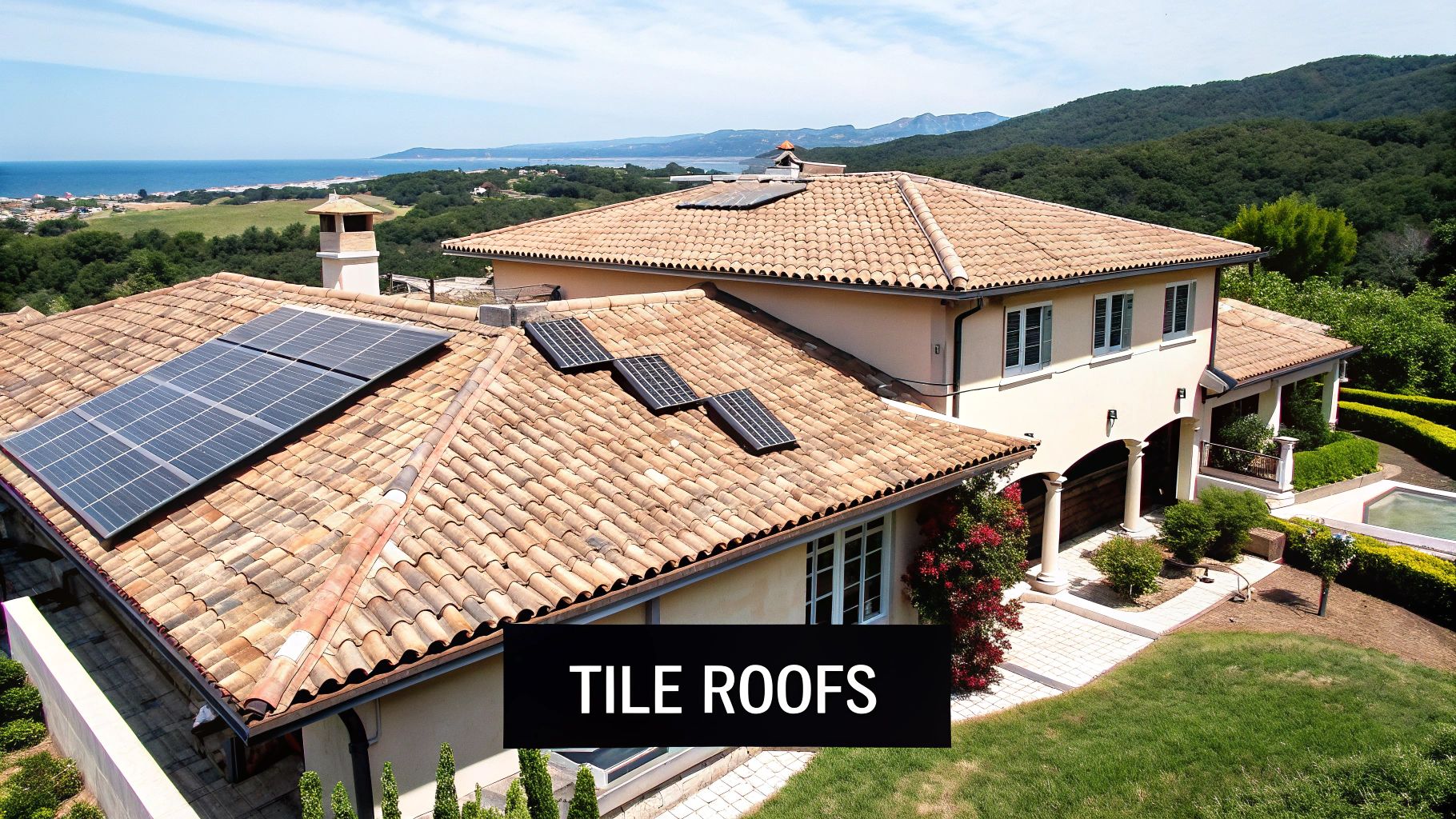
Tile roofs are a classic feature of Florida's architectural style, lending a timeless elegance to homes from St. Petersburg to Winter Park. Crafted from rugged materials like clay and concrete, these roofs are engineered to handle our state's punishing sun and wild weather, often lasting 50 years or more.
That incredible lifespan is a perfect match for solar panels, which are built to generate power for well over 25 years. The logic is simple: you want your roof to outlive your solar array, and with tile, it almost certainly will.
But here’s the catch: putting solar on a tile roof isn't a straightforward job. It’s a specialized skill. The main hurdle is the very nature of the tiles—they're brittle and can easily crack under the pressure and foot traffic of an installation crew. This is definitely not a project for a standard solar installer; it requires a team that has deep, hands-on experience with tile roofing systems.
Specialized Hardware and Installation
Mounting solar panels securely on a tile roof calls for very specific hardware and a meticulous process. Installers can't just drill through the tiles. Instead, they often need to carefully remove individual tiles to access the roof deck below.
A specialized, flashed mounting bracket is then anchored directly to the deck. After that, the original tile is either precisely cut to fit around the waterproof mount or replaced entirely with a custom-flashed component. This is far more labor-intensive and requires more expensive parts to guarantee a leak-proof seal, so the installation cost is naturally a bit higher.
When it comes to tile roofs, the expertise of the installer is everything. An inexperienced crew can cause costly damage, leading to leaks and broken tiles. This is precisely why having a single, trusted company that masters both roofing and solar is so critical for Central Florida homeowners.
The Durability and Aesthetic Equation
Despite the added complexity, a professionally installed solar system on a tile roof is a fantastic investment. The final result looks seamless, preserving your home's curb appeal while delivering all the benefits of clean energy. Better yet, the roof's longevity means you won't have to think about a costly re-roofing project derailing your solar production down the road.
For homeowners along the I-4 corridor who refuse to compromise on aesthetics or long-term performance, a tile roof remains a top contender for the best roof type for solar panels. It just requires the right expertise to merge its classic beauty with the technical demands of a solar installation, ensuring a high-performing system for decades to come.
Flat Roofs: A Prime Opportunity for Solar
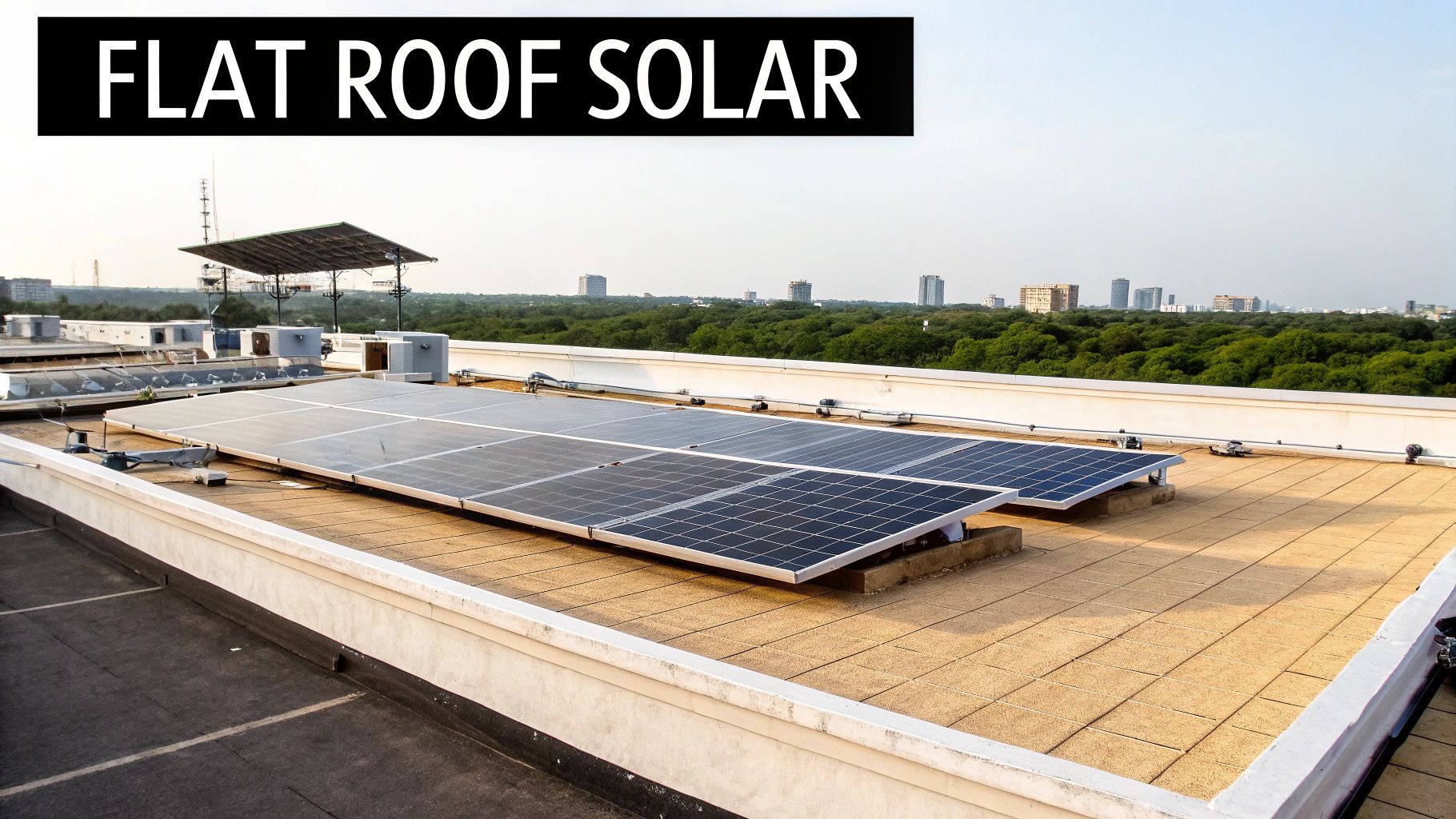
While most homes have pitched roofs, flat roofs open up a massive opportunity for solar power, especially for commercial properties throughout Central Florida. Whether it's a modern home or a large warehouse in Orlando, a flat roof is basically a blank slate just waiting to become a high-performance energy asset.
The single greatest advantage here is control. Unlike a sloped roof that locks your panels into a fixed angle, a flat surface lets us tilt the array to the absolute perfect orientation for maximum sun exposure. This level of precision means more energy production all year long, making flat roofs a genuinely superior choice for solar.
Installation and Protecting Your Roof
On flat roofs, the go-to method is often a ballasted mounting system. This is a non-penetrating technique where the solar array is secured by weighted trays instead of bolts drilled through the roof. By avoiding holes, we dramatically lower the risk of future leaks—a top priority for any property owner.
The secret to a successful flat roof solar project is the roof itself. You need a solid, waterproof membrane underneath it all. Modern materials like TPO or modified bitumen create a tough, reliable foundation that’s ideal for supporting a solar array for decades.
Drainage is another non-negotiable. Before a single panel goes up, we have to confirm the roof can handle the weight and that water has a clear path to the drains. Standing water is the enemy, as it can damage both the roofing material and your solar equipment over time. You can dig deeper into why we trust these materials by learning more about a TPO roofing membrane.
A Smart Investment for Florida Businesses
For any business owner, that empty rooftop is a goldmine. Turning it into a solar power plant is a savvy financial decision that slashes electricity bills, unlocks major tax benefits, and sends a clear message about your commitment to sustainability.
The advantages of flat roofs are especially compelling for commercial solar installations. By working with a contractor who truly understands both commercial roofing and solar systems, businesses in Central Florida can turn their unused space into a dependable, money-saving energy producer. From a strategic standpoint, it’s one of the best moves you can make.
Solar Shingles: The Future of Integrated Roofing
For homeowners in Central Florida who won't compromise on aesthetics, solar shingles are the answer. This isn't about slapping panels on top of your roof; it's about integrating power generation directly into the roofing material itself. Each shingle is a tiny power plant, working double duty to protect your home and produce clean energy.
The result is a sleek, uniform roofline that traditional solar arrays can't touch. From the upscale communities in Windermere to coastal homes in Tampa, this seamless look is often the single biggest draw for choosing such a premium option.
But it’s not just about looks. These shingles are built tough. Many systems come with high wind-resistance ratings—a non-negotiable feature when you’re staring down Florida’s hurricane season. They’re designed to be your primary line of defense against the elements while quietly generating power.
Weighing the Pros and Cons
The sophisticated, low-profile design is the main event here. But anyone considering this cutting-edge technology needs to look at the whole picture.
Let’s break down what makes them so appealing:
- Unmatched Aesthetics: They blend right in, preserving your home's architectural integrity. No bulky panels, just a clean, modern roof.
- Built-in Durability: Because they are the roof, they're engineered for robust protection against wind, rain, and debris.
- A Two-in-One Solution: You’re not just getting a solar system; you're getting a brand-new, high-performance roof at the same time.
While solar shingles come with a significant price tag, they solve a very specific problem for homeowners who demand the benefits of solar without sacrificing curb appeal. It’s where form and function truly meet.
Now for the reality check: the cost. Solar shingles are a premium product, and you'll see that reflected in the price. For 2025, you can expect to pay anywhere from $15 to $35 per square foot. For an average home, that puts the total system cost between $25,000 and $60,000—quite a bit more than installing traditional panels on an existing roof. Learn more about the cost and benefits of solar shingles.
Another thing to consider is installation expertise. Since the technology is still relatively new, finding a roofer with deep experience can be tricky. Here at Hi Low Roofing, we’ve made it our business to stay ahead of roofing innovations, so we can give you honest, expert advice on whether this solution truly fits your home, your vision, and your budget.
Your Top Solar & Roofing Questions Answered for Florida
When you're thinking about a big home improvement project like going solar, you're bound to have questions. It's a smart investment, but you need to get the details right, especially here in Florida where our climate, codes, and insurance rules play a huge role. Let's tackle the most common concerns we hear from homeowners across Central Florida.
Does My Roof Need to Be Brand New for Solar Panels?
Not at all, but it definitely needs to be in good shape. A solar panel system is built to last for 25 years or more, so the roof underneath it should have plenty of life left. We generally look for a roof with at least 10-15 years of solid performance remaining.
Think of it this way: putting a long-term asset on a roof that's nearing its end is just asking for a headache. You'll end up paying a crew to take down all the panels, replace the roof, and then put the whole system back up again in just a few years. That's why we often recommend bundling a needed roof replacement with a new solar installation—it saves a ton of money and hassle down the road.
How Do Solar Panels Hold Up During Hurricane Season?
This is probably the number one question on every Floridian's mind, and for good reason. Today's solar panels and mounting hardware are incredibly tough. They are specifically engineered and tested to withstand hurricane-force winds, often far exceeding the minimum requirements set by local building codes.
But the equipment is only half the story. The quality of the installation is what truly matters. As a contractor with deep expertise in both roofing and solar, we don't just attach panels to your roof. We anchor every single mount directly to the structural supports below and then meticulously seal every penetration to make it completely watertight. This integrated approach ensures your system is ready to face whatever our storm season throws at it.
Will Installing Solar Panels Void My Roof Warranty?
This is a valid concern, and the short answer is: it can, but it shouldn't. A standard solar installer who doesn't specialize in roofing might not know the specific requirements for your type of roof. If they drill into the wrong spots or use improper sealing techniques, they can easily void your manufacturer's warranty.
The best way to protect both of your investments is to work with a single, licensed contractor who is an expert in both roofing and solar. We understand precisely how to install a solar array without compromising your existing roof warranty, and our workmanship guarantees both systems perform perfectly together.
Ready to get straight answers for your home? The Hi Low Roofing team has been serving Central Florida for over 15 years. Schedule your free, no-obligation inspection today!
