

When you're searching for the best solar panels in Florida, you're really looking for a specific kind of workhorse. It needs to have high efficiency, incredible heat tolerance, and a warranty that’s as solid as a rock. For those of us in Central Florida, from the coastal breezes of Pinellas County to the inland heat of Orlando, the best options are always the ones built to handle intense sun, high humidity, and the threat of hurricane-force winds.
The perfect panel strikes a fine balance between peak performance and rugged, long-term durability.
Choosing the Right Solar Panels for the Sunshine State
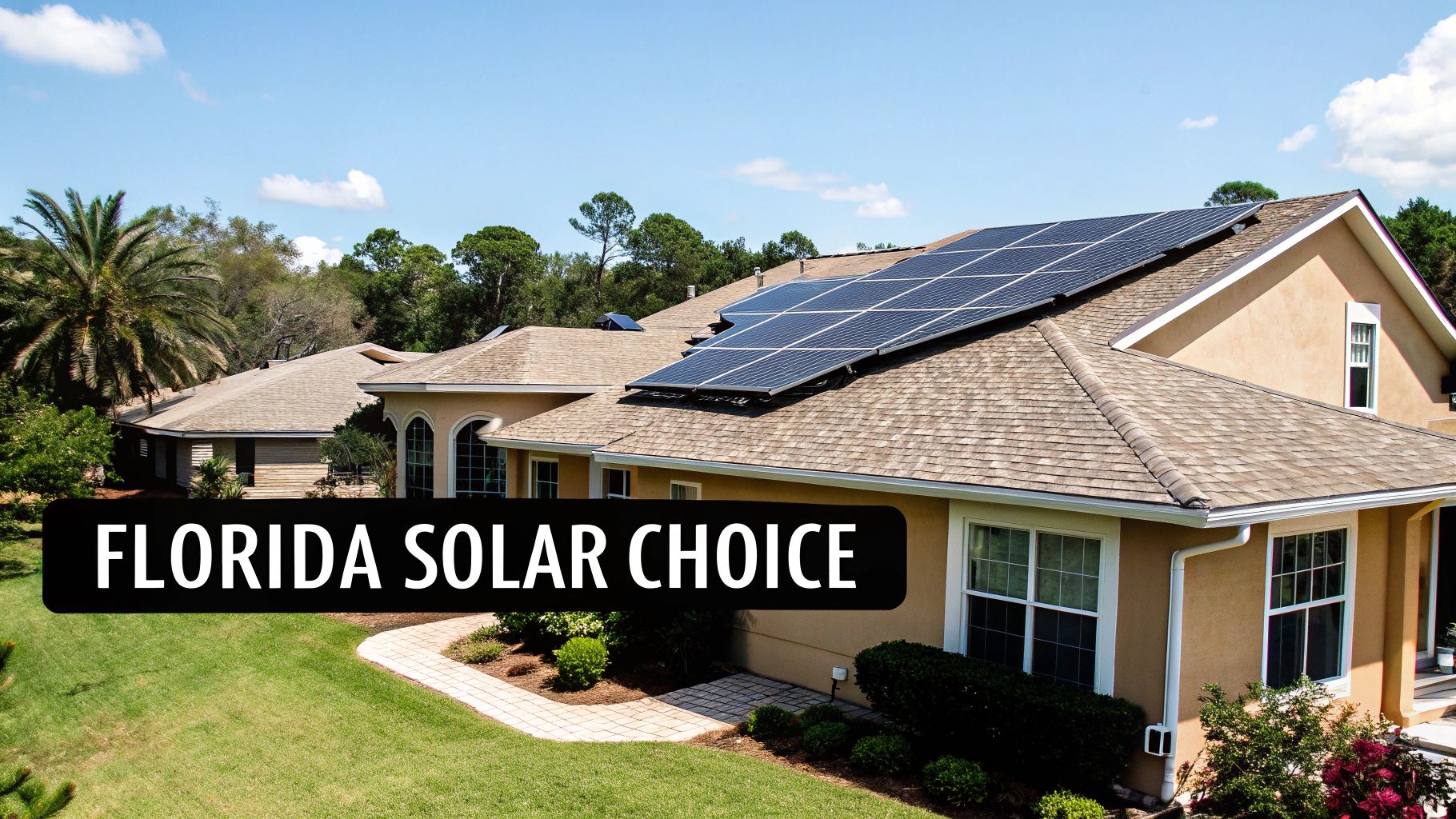
Going solar in Florida is a smart move, promising a future of energy independence and smaller electric bills. But let’s be clear: not all solar panels are built the same, especially when you throw our state's unique climate into the mix. That blistering heat can actually make panels less efficient, and for anyone near the coast, the salty air can corrode poorly made components over time.
This guide is here to help you sidestep the marketing fluff and get straight to what matters for Central Florida property owners. We’ll break down the key factors that distinguish a mediocre panel from the best solar panels for Florida, making sure your investment is a sound one.
Why Florida Is a Prime Location for Solar
There's a good reason Florida is known as a solar powerhouse. Between the abundant sunshine and favorable state policies, the market for renewable energy here is booming. This growth makes it an incredible time for residential and commercial properties to jump in.
In fact, Florida is a top state for solar energy adoption. By 2025, it’s projected to hold its spot as the second-largest solar market in the U.S., with an estimated 8% of all its electricity coming from solar. It’s clear the momentum is here to stay.
Key Considerations for Your Property
Before we even get into comparing brands, let's talk about the foundation of any successful solar project: your property itself. The specific details of your home or business will have a massive impact on which panels will give you the best bang for your buck.
- Roof Condition and Type: First things first, your roof's integrity is non-negotiable. A professional inspection is a must to ensure it can handle the weight and last for decades to come. The roofing material—whether it's shingle, tile, or metal—also dictates the installation method. To learn more, check out our guide on the best roof type for solar panels to see what works best.
- Local Climate Factors: A panel in Orlando is going to bake in some serious, sustained heat. Over in St. Petersburg, that same panel has to fend off corrosive salt spray from the Gulf. We look for panels that are tough enough to handle both environments.
- Energy Consumption Goals: What are you trying to achieve? Do you just want to knock a chunk off your monthly bill, or are you aiming for total energy independence with a battery backup system? Your answer will shape the size of the system you need and how efficient your panels should be.
The best solar strategy for a Florida property isn't just about picking a top-rated panel. It's about selecting the right panel for your specific location and pairing it with expert installation that accounts for our state's demanding weather.
What to Look for When Choosing Solar Panels in Florida
Picking the right solar panels for a Florida property isn't as simple as grabbing the one with the highest power rating. To get the most out of your investment, you have to dig a little deeper and understand the factors that really matter in our unique Central Florida climate. These details are what separate a good panel from a great one, ensuring your system performs reliably whether it's baking in the Orlando summer sun or weathering a storm in Pinellas County.
Before we jump into specific brands, let's lay the groundwork. Knowing what to look for will help you see past the sales pitches and focus on the data that truly impacts performance and longevity here in the Sunshine State.
Panel Efficiency
Efficiency is pretty straightforward: it’s the percentage of sunlight hitting the panel that gets converted into electricity. Since Florida gets an average of 237 sunny days a year, higher efficiency means more power from less space. This is a huge deal if you have a smaller roof or one with tricky angles and limited usable area.
Think of it this way: a 22% efficient panel will generate more power than a 19% efficient panel of the exact same size. While a 3% difference doesn't sound dramatic, it compounds over the 25 to 30-year life of your system. That extra production adds up to real savings and can be the difference between just covering your energy needs and wiping out your power bill entirely.
Temperature Coefficient
Here’s a factor that’s absolutely critical for Florida but often overlooked. We all know panels need sun, but extreme heat actually hurts their performance. The temperature coefficient tells you exactly how much power a panel loses as it gets hotter. It's measured as a percentage drop for every degree Celsius above the standard test temperature of 25°C (that’s 77°F).
For this metric, a lower number is always better. For example, a panel with a coefficient of -0.26%/°C will hold onto its power output far better on a scorching day than one rated at -0.34%/°C. On a Florida roof that can easily hit 150°F, a strong temperature coefficient is your best defense against performance loss right when you need that power the most—smack in the middle of a hot afternoon.
A low temperature coefficient is non-negotiable for Florida. It directly impacts your system's performance during our long, hot summers, protecting your return on investment when energy demand is at its highest.
Durability and Wind Ratings
In Central Florida, durability isn't a luxury—it's a must. Your solar panels need to be tough enough to handle everything our weather throws at them, from torrential downpours to hurricane-force winds. Always check the panel's wind load rating, which is measured in Pascals (Pa). A panel built for Florida should have a high rating (look for 4000 Pa or more) to withstand the intense uplift forces we see in major storms.
If you live in a coastal area like Pinellas County, there's another layer to consider: salt mist corrosion. Salty air can wreak havoc on metal frames and components over time, so look for panels specifically tested and rated for salt mist resistance. First, you need to figure out what size solar system you need, but making sure it's tough enough for our climate is just as important.
Warranties
A warranty is more than just a piece of paper; it’s the manufacturer's promise that your investment is built to last. Solar panel warranties have two key parts you need to look at.
- Product Warranty: This covers the physical integrity of the panel—things like defects in the frame, glass, or wiring. The best panels on the market today come with a product warranty of 25 years or even longer.
- Performance Warranty: This is a guarantee of the panel's energy output over time. A solid warranty will ensure the panel still produces at least 85-90% of its original power after 25 years.
When you have a strong, multi-decade warranty from a financially sound company, you can rest easy knowing your system is protected for the long haul.
Comparing the Best Solar Panel Brands for Florida
When you start digging into the best solar panels for Florida, you quickly realize there's no single "best" brand. It's really about finding the right brand for your specific property. A home on the coast in Pinellas County has a completely different set of challenges than a commercial building in downtown Orlando. That’s why a real head-to-head comparison is so important.
We’re going to move past the generic spec sheets and give you a practical breakdown of the leading brands Hi Low Roofing & Solar trusts and installs. Our goal is to show you exactly how certain models from top manufacturers handle the unique demands of Central Florida—from our relentless heat and humidity to the very real threat of hurricane-force winds. This will help you see which panel is a perfect match for your property and your energy goals.
This brand showdown infographic gives you a quick visual on the key differences between the top contenders here in Florida.
As you can see, each brand has its own strengths, which makes it easier to match a panel to what you need most.
Qcells: A Powerhouse for Efficiency and Reliability
Qcells is a giant in the solar world, and for good reason. They're known for making high-quality, high-efficiency panels that just perform. Their Q.PEAK DUO series, in particular, is a go-to choice for property owners who need to squeeze every last watt out of their system, especially if roof space is tight.
These panels pack some impressive tech, like their Q.ANTUM DUO Z Technology, which helps them grab more sunlight and turn it into power. That focus on efficiency means you can get the job done with fewer panels—a huge plus for smaller residential roofs in places like Tampa or Winter Garden.
Beyond just raw power, Qcells panels are built tough. They come with a solid 25-year product and performance warranty, which gives you real peace of mind. Their durability is a major selling point, as they're engineered to handle the kind of wild weather we often see here in Central Florida.
REC Group: Superior Performance in High Heat
REC is another top-tier brand that consistently gets high praise for its performance, especially in hot climates like ours. Their Alpha series panels are almost tailor-made for Florida, largely because they have one of the best temperature coefficients in the business.
We all know how extreme heat can choke a panel's output. REC’s advanced cell technology is designed to minimize that power loss, so your system keeps cranking out energy even in the middle of a brutal Orlando summer afternoon. This superior heat tolerance means more energy and bigger savings over the long haul.
For Florida property owners, a panel's ability to perform under extreme heat is just as important as its peak efficiency rating. Brands like REC that prioritize a low temperature coefficient offer a distinct advantage in our climate.
REC also stands firmly behind its products with a comprehensive 25-year ProTrust warranty when you use a certified installer like Hi Low Roofing & Solar. This warranty covers the product, its performance, and even the labor, making it one of the most compelling guarantees on the market. It really shows how much confidence they have in their tech.
Silfab: Engineered for North American Durability
Silfab is a North American manufacturer that has earned a rock-solid reputation for producing incredibly durable and reliable solar panels. They are designed from the ground up for the demanding weather conditions we face across the continent, making them an excellent pick for hurricane-prone regions like Central Florida.
Their panels go through intense testing to make sure they can handle extreme wind loads, driving rain, and even impacts from flying debris. This focus on rugged construction gives an extra layer of security to property owners from St. Petersburg to Seminole County who need their investment to survive storm season.
Silfab also offers some of the strongest warranties out there, typically a 25-year product warranty and a 30-year performance guarantee—that’s longer than many of their competitors. This extended performance warranty ensures your panels will keep producing at a high level for decades, locking in your return on investment.
To make it easier to see how these brands stack up on the most critical factors for a Florida property, we've put together this comparison table. It zeroes in on what really matters: efficiency, heat tolerance, and storm durability.
Florida Solar Panel Brand Feature Comparison
| Brand | Key Model | Efficiency Range | Temperature Coefficient | Wind/Snow Load Rating (Pa) | Warranty (Product/Performance) | Best For |
|---|---|---|---|---|---|---|
| Qcells | Q.PEAK DUO | 20.6% – 21.4% | -0.34%/°C | 5400 / 4000 | 25 / 25 Years | Maximizing power on limited roof space. |
| REC | Alpha Pure-R | 21.2% – 22.3% | -0.24%/°C | 7000 / 4000 | 25 / 25 Years (ProTrust) | Properties with high sun exposure and extreme heat. |
| Silfab | Elite SIL-410 | 21.4% | -0.36%/°C | 5400 / 5400 | 25 / 30 Years | Coastal properties needing maximum hurricane durability. |
This table gives you a clear, at-a-glance look at the strengths of each brand, helping you align their best features with your specific needs.
A Situational Showdown: Qcells vs. REC vs. Silfab
So, how do you actually choose between these great options? It all comes down to your priorities and where you live. Let's walk through a few common scenarios for Central Florida residents.
-
For Maximum Power on a Limited Roof: If you have a smaller home or business in a dense Orlando neighborhood and need to get the most electricity out of every square foot, Qcells is often the ideal choice. Its high efficiency allows for a powerful system in a compact footprint.
-
For Beating the Florida Heat: If your roof gets baked in direct sun all day and you're worried about performance loss during our hottest months, REC stands out. Its exceptional temperature coefficient means it will maintain higher output during those brutal summer afternoons.
-
For Ultimate Durability and Coastal Homes: If you live in a coastal area like Pinellas County or simply want the most robust panel available to stand up to hurricanes, Silfab is a top contender. Its rugged, North American-engineered design and strong wind load ratings offer maximum resilience.
Ultimately, the best solar panel for your Florida property is the one that fits your location, energy goals, and budget. The key is to partner with an experienced local installer like Hi Low Roofing & Solar who can give you a detailed assessment of your home or business and guide you to the perfect panel for a successful, long-lasting solar investment.
The solar panel market here in Florida is all about high efficiency and value. As of 2025, the most popular panels can produce about 450 watts of power in full sun, with the average system costing around $2.17 per watt installed. For a typical household, a 14.47 kW solar panel system designed to cover the electric bill costs about $22,231 after the federal tax credit. While a significant investment, it can lead to massive long-term savings, with potential returns topping $74,596 over 25 years, making solar a very compelling choice for Floridians. You can read more about Florida's solar market trends on EnergySage.com.
Calculating Your Solar ROI in Central Florida
Choosing the best solar panels for your Florida property is really a financial decision, not just a technical one. The key is understanding your return on investment (ROI). We always tell clients to stop thinking of a solar system as an expense and start seeing it as a long-term asset that pays you back. For property owners here in Central Florida, from Tampa to Orlando, a few local factors can make going solar an incredibly smart financial move.
This isn't about fuzzy math or vague promises. It’s about looking at the hard numbers—your local utility rates, state policies, and the big federal incentives—to get a clear picture of your solar payback period and what you'll actually save over the long haul.
The Key Factors Driving Your Florida Solar ROI
To figure out your real return, we need to focus on three main financial drivers. Each one dramatically affects how quickly your system pays for itself and how much money stays in your pocket over its lifetime.
- Your Local Electricity Rates: This is the big one. The cost of power in Central Florida, while variable, is on a clear upward trend. Every kilowatt-hour your solar panels generate is one less you have to buy from the utility. So, the higher their rates climb, the faster your ROI.
- The Federal Solar Tax Credit: This is easily the most important incentive. The federal government gives you a credit for 30% of your total system cost right off your federal taxes. It’s a massive discount on the upfront investment that drastically shortens your payback period.
- Florida's Net Metering Policy: This statewide policy is a huge win for property owners. It forces utility companies to give you full credit for any extra electricity your panels produce and push back to the grid. This means you get full value for all the power your system creates, even when you aren't home to use it.
Your solar ROI is a direct reflection of the utility costs you no longer have to pay. With rates from Tampa to Orlando constantly on the rise, the value of each kilowatt-hour you generate yourself just keeps going up.
A Quick ROI Example
Let's walk through a simple example to see how this all comes together for a typical property owner around here. Of course, every home and business is different, but this gives you a solid framework for how the numbers work.
Let's imagine a property in the Orlando area:
- Total System Cost: $28,000
- Federal Tax Credit (30%): $8,400
- Net Cost After Credit: $19,600
- Average Monthly Electric Bill (Before Solar): $200
- Estimated Annual Savings: $2,400
To get the simple payback period, we just divide the net cost by the annual savings:
$19,600 (Net Cost) / $2,400 (Annual Savings) = 8.16 years
In this scenario, the system pays for itself in just over eight years. Since solar panels are warrantied for 25 to 30 years, that leaves you with nearly two decades of what is essentially free electricity. Over time, that adds up to tens of thousands of dollars in savings.
Part of a Bigger Movement
When you invest in solar in Florida, you're not just making a smart financial choice; you're joining a massive national shift toward clean energy. This isn't a fad—it's backed by powerful economic and environmental forces. Projections show that solar power generation in the U.S. is expected to jump by 75% by 2025, reaching an incredible 286 billion kWh. This boom is driven by rising utility costs, federal incentives, and people wanting more control over their power. Florida is right at the heart of this, ranking third in the nation for solar capacity. You can find more details on U.S. solar market predictions on txses.org.
Why Expert Installation Is Non-Negotiable in Florida
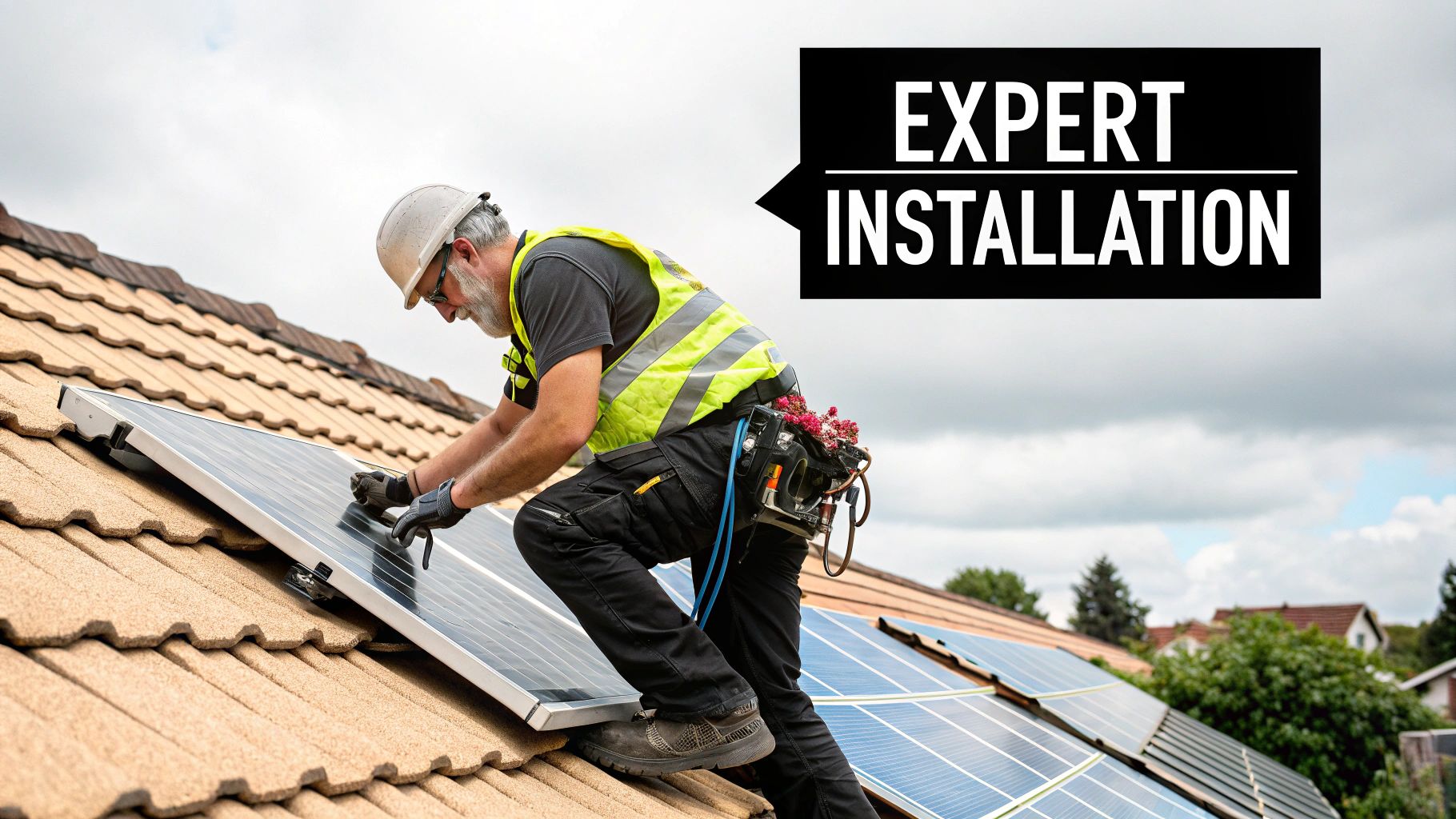
Picking out the right solar panels for your Florida property is a great first step, but it's really only half the battle. You can have the most efficient, toughest panel on the market, but if it’s not installed with precision, it will underperform—or worse, fail completely. Here in Central Florida, professional installation isn't just a nice-to-have; it's what guarantees your system’s safety, performance, and longevity.
Think of it this way: expert installation is the crucial link between a top-tier product and decades of clean, reliable energy. Get it wrong, and you’re not just looking at poor performance. You're risking expensive damage to your most valuable asset: your home or commercial building.
Navigating Florida's Strict Building Codes
Florida’s building codes are no joke. They are some of the most stringent in the country, especially regarding wind resistance. From Pinellas County over to Orlando, every single solar installation has to be engineered to handle hurricane-force winds. This isn't just a recommendation—it's the law, designed to protect you, your property, and your neighbors.
A certified local installer like Hi Low Roofing lives and breathes these codes. We know them inside and out, ensuring every part of your system, from the racking right down to the flashing, meets or exceeds the local requirements.
- Proper Racking and Mounting: The racking is literally the backbone of your solar array. It needs to be anchored directly to your roof's structural frame to withstand massive wind uplift forces without budging.
- Weatherproofing and Roof Integration: A shoddy installation is a roof leak waiting to happen. We meticulously integrate every mounting point with professional-grade flashing and sealants, preserving your roof's watertight barrier for the long haul.
A cut-rate installation that shortcuts Florida's hurricane codes is a gamble you simply can't afford to take. The only way to ensure a safe, compliant, and durable system is to work with a licensed and insured expert who understands both roofing and solar.
The Risks of Improper Installation
The fallout from a bad installation can be severe and costly. What might look like saving a few bucks upfront can quickly spiral into a financial mess. Property owners who go with unqualified installers often find themselves dealing with a whole list of problems that were entirely preventable.
For instance, systems wired incorrectly can become a serious fire hazard or produce far less power than promised, completely destroying your ROI. But maybe the biggest risk of all is voiding your warranties. Top-tier manufacturers like REC and Qcells won't honor their 25-year product warranties if the panels were installed by uncertified technicians. That leaves you on your own if a product defect pops up.
Maximizing Performance and Longevity
A professional installation is about more than just playing it safe—it's about getting the most out of your investment. Expert installers use specialized tools to find the perfect tilt and orientation for your panels, maximizing their sun exposure all day, every day. That small detail is what squeezes every last kilowatt-hour of energy out of your system.
This kind of professional oversight also ensures your system runs smoothly for its entire lifespan. Installers make sure everything works together, especially if you have backup power solutions. Understanding how solar panels perform during a power outage is key for any Florida property owner who wants true energy independence, and a skilled installation paired with a battery is how you get there.
Ultimately, the most important decision you'll make is choosing a trusted, local expert with deep roots in both roofing and solar. It's the difference between a system that delivers on its promise and one that causes nothing but headaches.
Answering Your Florida Solar Panel Questions
When you start looking into solar, a lot of questions pop up. It’s completely normal. We’ve been installing solar systems all over Central Florida, from Pinellas County to Orlando, and we tend to hear the same questions from homeowners and business owners alike. To help you get the clarity you need, we've answered the most common ones we hear every day.
Think of this as the last bit of information you need to feel truly confident about your decision. Let's clear up any lingering doubts.
How Do Solar Panels Withstand Florida Hurricanes?
This is, without a doubt, the number one question on every Floridian's mind. And for good reason. The great news is that modern solar panels are built like tanks. The best panels are engineered specifically for extreme weather and carry high wind-load ratings that meet—and often exceed—Florida’s notoriously tough building codes.
But here’s the real secret: it's all about the mounting system. This is the hardware that physically bolts the panels to your roof's structure. At Hi Low Roofing, we're meticulous about how we anchor these systems. A proper installation is designed to resist the powerful uplift forces from hurricane-strength winds, giving you one less thing to worry about when a storm is brewing.
What Happens to My Solar Power During an Outage?
It’s a common assumption that if you have solar panels, you'll have power during a blackout. That’s not quite how it works. For safety, standard grid-tied solar systems are designed to shut down automatically when the grid fails. This is a critical feature that protects utility workers from the risk of electrocution as they repair the lines.
If you want genuine energy independence, the solution is to pair your panels with a solar battery storage system. The battery stores all the extra energy your panels produce during the day. When the grid goes down, your home seamlessly switches over to run on that stored power.
Solar panels generate power, but a battery system provides resilience. For Florida residents who want to be prepared for outages, pairing the two is the only way to guarantee your home stays powered when the grid is offline.
Are There Local Solar Incentives in Central Florida?
While Florida doesn't offer a statewide rebate program, the financial incentives are still excellent. The single biggest boost is the 30% federal tax credit, which takes a huge chunk off the total cost of going solar. On top of that, Florida’s statewide net metering policy is a major win—it forces utility companies to give you full credit for every bit of excess power your system sends back to the grid.
Every now and then, specific utility companies in our area will offer their own local rebates. Part of our job is to stay on top of these. We’ll make sure you take advantage of every last dollar of savings available for your specific residential or commercial property and location.
How Often Should I Clean My Solar Panels?
This is one area where Florida's climate actually helps you out. Our frequent rain showers do a surprisingly good job of rinsing off the dust, pollen, and other grime that can build up on your panels. For the vast majority of property owners, this means you'll rarely, if ever, have to clean them manually.
If you happen to notice a dip in your system's energy production or see a thick layer of dirt after a long dry spell, a quick spray with a garden hose from the ground is usually all it takes. We typically suggest a professional inspection once a year just to make sure everything is running at peak performance, but constant cleaning just isn't necessary.
Ready to explore how the best solar panels for Florida can work for your Central Florida property? The team at Hi Low Roofing & Solar has the local expertise to design a system that meets your energy goals and stands up to our unique climate. Contact us today for a free, no-obligation consultation.
