
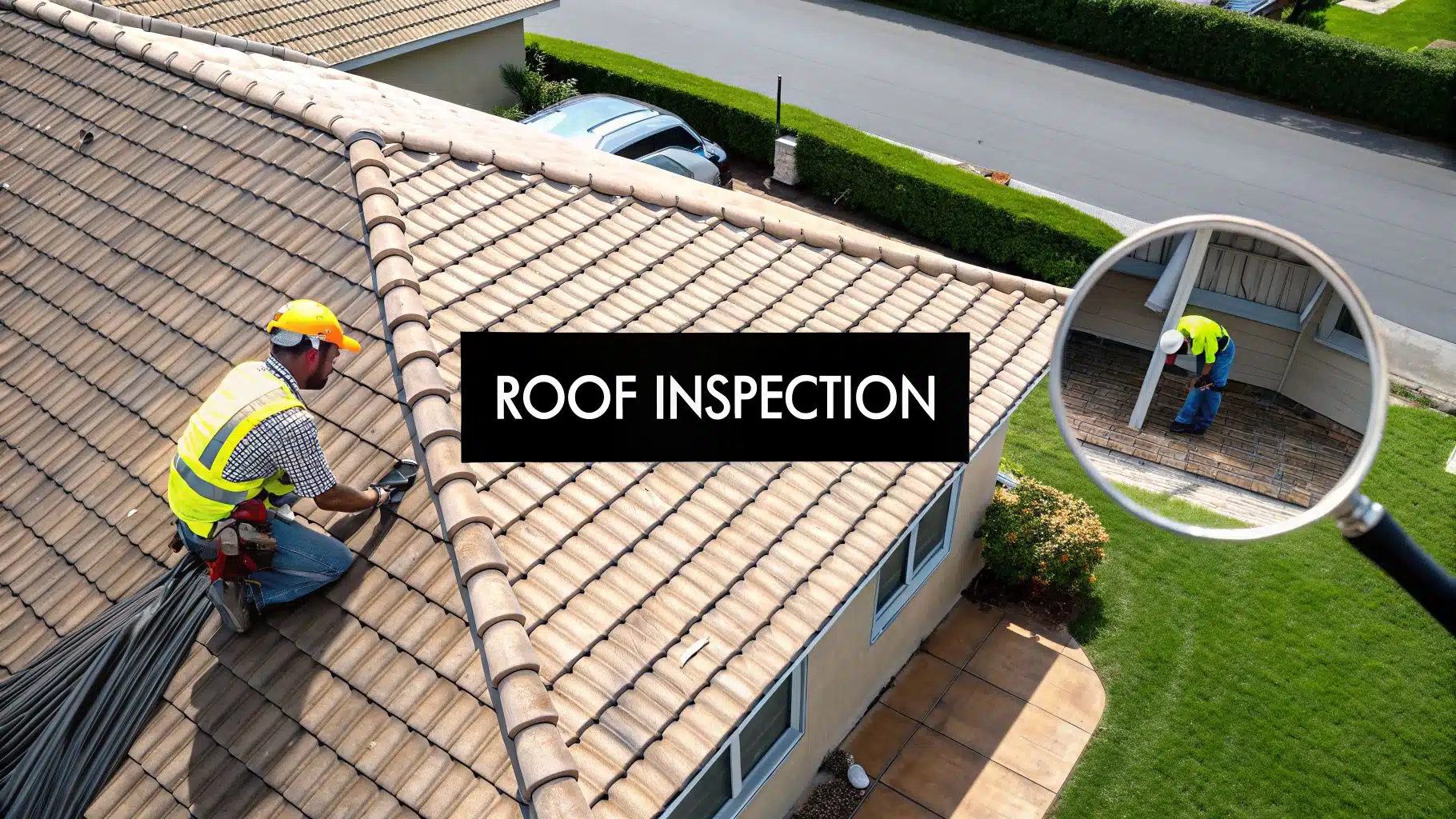
Think of a professional roof inspection in Tampa as a health checkup for your home. It’s a top-to-bottom assessment where a trained expert from a company like Hi Low Roofing looks for hidden problems, checks the condition of your shingles or tiles, and makes sure your home is ready for whatever Central Florida’s weather decides to throw at it.
Why a Roof Inspection Is Crucial for Your Tampa Home

Here in Central Florida, your roof isn't just a roof—it’s the first line of defense against brutal sun, oppressive humidity, and the ever-present threat of hurricane season. Neglecting it is like heading into a storm with a leaky boat. It’s just not something you can afford to ignore.
Having an expert you trust, like our team at Hi Low Roofing, take a look can uncover those small issues before they spiral into disasters. It's a simple step that can literally save you thousands. Think about it: finding and patching one small weak spot today stops a major leak from ruining your attic, ceilings, and everything you own tomorrow.
Navigating Florida’s Unique Challenges
The Tampa Bay climate is notoriously tough on roofs. It’s a relentless combination of intense UV rays that bake materials, thermal shock from our daily afternoon thunderstorms, and high winds that test every nail and seal. This is an environment where even a tiny flaw can become a huge problem, fast.
The numbers speak for themselves. After recent hurricanes, local inspections jumped by 52%, and we found that these proactive checks prevented 70% of minor issues from turning into major structural failures. In a state where roofs are hit by storms 2.5 times more often than the national average, this is just smart homeownership.
Putting off an inspection is a massive financial gamble. Homeowners with undetected storm damage faced repair bills averaging $18,500 per incident. That’s a staggering cost, especially with insurance deductibles on the rise.
To help you understand why these checks are so important, here's a quick look at the main reasons Tampa homeowners call us.
Table: Key Reasons for a Roof Inspection in Tampa
| Inspection Trigger | Why It's Critical in Tampa |
|---|---|
| Routine Maintenance | Identifies wear from sun and humidity before it causes leaks. Recommended annually. |
| After a Major Storm | Finds hidden hail or wind damage that isn't visible from the ground. |
| Buying or Selling a Home | Provides negotiation power and peace of mind for one of life's biggest investments. |
| Insurance Requirements | Many policies now require proof of roof condition to maintain or renew coverage. |
Getting ahead of these issues is always the best strategy.
Protecting Your Investment and Insurance
A professional roof inspection gives you more than just a repair list; it provides official documentation. This report is incredibly valuable when you need to file an insurance claim or just want a clear picture of your home’s health.
A detailed report is also essential for managing your Florida Home Insurance, as it helps you understand your coverage and meet insurer requirements, especially in our hurricane-prone region. You can explore more of the benefits of regular roof inspections in our complete guide. Ultimately, being proactive is the smartest way to handle Florida's climate and its tricky insurance landscape.
What a Professional Tampa Roof Inspection Actually Covers
When you get a professional roof inspection in Tampa, it’s a whole lot more than just a quick look from the driveway. This isn't a casual glance; it's a deep dive into the health of your home's first line of defense. A seasoned expert, like our team at Hi Low Roofing, follows a deliberate process designed to spot the subtle warning signs that most people would never notice.
We essentially work our way through a detailed, top-to-bottom review, covering both the outside and inside of your home. It’s all about finding any weak spots or potential failures before they turn into expensive disasters. This is what truly sets a professional assessment apart from a quick, surface-level look.
The Exterior Walkthrough: A Ground-Up Assessment
Every good inspection starts on the ground. Before even thinking about getting on the roof, an inspector will walk the perimeter of your house. We're looking for the big picture—things like a sagging roofline or evidence of water pooling near the foundation. This initial look gives us crucial context for what we might find up top.
Next, it's time to get on the roof itself for the most critical part of the job. This is where we examine every single component. We’re not just scanning for a few missing shingles; we’re performing a detailed analysis of the entire system.
Here are the key things we focus on outside:
- Roofing Material Condition: For shingle roofs, we're on the hunt for any signs of curling, cracking, or significant granule loss (that sandpaper-like texture). On tile roofs, we check for any tiles that are cracked, broken, or have slipped out of place. With metal, it's all about looking for rust, loose fasteners, or dents from hail.
- Flashing and Seals: If a roof is going to leak, it's almost always at the flashing. We pay extremely close attention to the seals around chimneys, vents, and skylights. Any cracked sealant or visible gaps are immediate red flags.
- Gutters and Drainage: We check your gutters for clogs from leaves and debris, which can force water to back up right under the edge of your roof. We also make sure the downspouts are doing their job and channeling water safely away from the foundation.
The Interior Inspection: Uncovering Hidden Clues
Once the exterior check is done, a true pro always heads inside, usually right into the attic. What we find in the attic often confirms what we suspected from the outside, or sometimes, it reveals issues that were completely invisible from the roof. Think of the attic as your roof's "check engine light"—it tells the real story.
An inspector’s time in the attic is like a mini forensic investigation. We aren't just looking for active drips; we’re searching for the faint, historical evidence of moisture that points to a problem that's been happening for a while.
Inside, we're looking for:
- Faint Water Stains: Dark streaks on the underside of the plywood decking are a dead giveaway that you have a slow, sneaky leak.
- Hidden Mold or Mildew: That telltale musty smell or any visible mold growth means there’s a moisture problem, which is often tied to poor ventilation.
- Poor Ventilation: A hot, stuffy attic traps moisture and heat, essentially cooking your shingles from the inside out and dramatically cutting your roof’s lifespan short.
- Daylight Penetration: This one is simple. If we can see any daylight coming through the roof boards, there’s a hole. And where light gets in, water will, too.
Knowing what’s involved in a real inspection helps you understand its value. For an even more granular look, you can download our complete roof inspection checklist tailored specifically for homes in Central Florida.
So, What Kind of Roof Inspection Do You Actually Need?
Not all roof inspections are created equal. Just like you wouldn't go to the ER for a routine checkup, you need to match the type of roof inspection in Tampa to your specific situation. Getting this right from the start, especially when you call a professional like Hi Low Roofing, saves everyone time and makes sure you get the answers you’re looking for.
Think of it as two different paths: proactive care versus reactive crisis management. One is about staying ahead of problems, and the other is about dealing with a mess that’s already happened. Understanding which path you’re on is key to protecting your residential or commercial property in Central Florida.
To make it easier, here’s a quick breakdown of the common inspection types we handle for Tampa homeowners.
Tampa Roof Inspection Types Compared
| Inspection Type | Primary Purpose | When to Schedule |
|---|---|---|
| Routine Maintenance | Proactive "health check" to catch small issues early and extend the roof's lifespan. | Annually or every two years, especially if your roof is over 10 years old. |
| Storm Damage | Urgent assessment to identify and document damage for insurance claims after a specific weather event. | Immediately after a hurricane, tropical storm, or severe hailstorm. |
| Insurance | To satisfy a carrier's requirement for policy underwriting, renewal, or after a claim. | When requested by your insurance company. |
| Real Estate | To assess the roof's condition and remaining lifespan before buying or selling a property. | During the inspection period of a real estate contract. |
Each of these inspections has a very different focus and provides a different kind of value. Let's dig into what that means for you.
The Routine Maintenance Inspection
This is your roof's annual physical. It’s a smart, proactive move designed to find the small, sneaky problems before they escalate into major disasters. Given Tampa’s brutal combination of intense sun and high humidity, materials can break down quietly over time, making these regular checkups essential for getting the most life out of your roof.
What are we looking for? It's all about the early warning signs:
- A bit of granule loss on your shingles.
- The first hints of algae growth, which looks like dark streaks.
- Sealant around vents and flashing that’s just starting to look cracked and dry.
The whole point is preventative care. This helps you budget for small, manageable repairs now instead of getting hit with a sudden, wallet-emptying roof failure down the road.
Storm Damage and Insurance Inspections
On the flip side, a storm damage inspection is completely reactive and incredibly urgent. This is the "emergency room visit" for your roof, something you schedule right after a hurricane, tropical storm, or nasty hailstorm barrels through the Tampa Bay area. Here, the entire focus shifts to identifying and documenting damage from high winds, flying debris, or torrential rain.
This inspection is the foundation of your insurance claim. A detailed, professional report packed with photos gives your insurance adjuster undeniable proof of what happened. It’s what separates pre-existing wear and tear from new, storm-related damage—a distinction that can literally make or break your claim's approval.
An insurance inspection can also be something your provider requests to simply verify your roof's condition, often for a policy renewal. With the tricky insurance market in Florida, these requests are becoming more and more common.
An inspector's process often follows a logical path, starting with what you can see.

Whether you spot a leak inside your home or notice missing shingles from the street, a professional connects the dots to find the true source of the problem, not just the symptom.
Real Estate Transaction Inspections
When you’re buying or selling a home in Central Florida, a real estate roof inspection is pretty much non-negotiable.
For a buyer, it’s your best defense against post-purchase nightmares. An expert assessment gives you a clear picture of the roof’s remaining lifespan and uncovers hidden issues that could cost you a fortune later. For a seller, a clean report provides transparency, justifies your asking price, and gives you the chance to handle any necessary repairs on your own terms.
Common Roofing Problems Found in the Tampa Climate

Living in the Tampa Bay area is fantastic, but our beautiful climate is incredibly tough on roofs. Your roof is in a constant battle with the sun, humidity, and storms—a fight it can’t win forever without a little help. A professional roof inspection in Tampa is less about just spotting obvious damage and more about recognizing the unique ways our local weather wears down a roof.
Here in Central Florida, from the Pinellas beaches to the inland suburbs of Orlando, your roof is up against a unique combination of relentless sun, thick humidity, and violent storms. This is why you need an inspector who’s seen it all before. The team at Hi Low Roofing has spent years on roofs just like yours, so we know exactly what to look for.
Relentless Sun and Heat Damage
The Florida sun is enemy number one for almost every roofing material out there. Day after day, intense UV rays bake the surface, causing materials to dry out, turn brittle, and weaken. It’s like leaving a plastic toy in the backyard all summer—by September, it’s faded, cracked, and fragile.
This process is especially hard on asphalt shingles. The sun breaks down the asphalt itself, causing it to shed the tiny protective granules that act as its primary shield. Once those granules wash into your gutters, the underlying mat is exposed, and the clock on your roof’s lifespan starts ticking much faster. Add in the daily cycle of intense heat followed by a cool-down from an afternoon thunderstorm, and you get constant expansion and contraction that leads to cracks and broken seals.
High Humidity and Algae Growth
Ever notice those ugly black streaks running down a roof in your neighborhood? That's a direct result of Tampa's humidity. The culprit is an algae called Gloeocapsa magma, and it absolutely loves our warm, damp environment.
At first, it’s just a cosmetic problem. But over time, the algae holds moisture against your roof's surface, which speeds up decay and can even start to lift the edges of your shingles.
Local data starkly illustrates why inspections are so critical. After Hurricane Ian in 2022, Tampa experienced a 45% spike in inspection requests. Properties with undetected leaks faced repair bills 30% higher—averaging $12,000—compared to homes with proactive checks. Discover more insights about roofing trends for Florida homeowners on trustroofing.com.
Storms and Wind-Driven Rain
Our seasonal storms are the final piece of the puzzle. Hurricanes and severe thunderstorms don't just bring rain; they bring powerful winds that pry at your roof, looking for any weakness. They’re notorious for lifting shingles, peeling back flashing, and forcing water into tiny gaps you’d never see from the ground.
During an inspection after a storm, we almost always find one of these issues:
- Missing or Lifted Shingles: It only takes one strong gust to get under a shingle's edge and rip it clean off, leaving the underlayment and your home exposed.
- Cracked Tiles: Tile roofs are tough, but they aren't invincible. Flying debris from high winds can easily crack or shatter tiles, creating a direct path for water to get in.
- Compromised Flashing: The metal strips lining your chimney, vents, and roof valleys are a primary target for wind. If they get bent or lifted, it can cause some of the worst and most destructive leaks.
These are the very reasons a local expert’s eye is so important. A generalist might overlook the subtle blistering caused by thermal shock on a tile roof, but a seasoned Tampa roofer from Hi Low Roofing knows these signs like the back of their hand.
So, What Does a Tampa Roof Inspection Actually Cost?
This is usually the first question homeowners ask, and it's a fair one. Many people put off calling a roofer because they're worried about getting hit with a surprise bill. But letting that fear win can be a far more expensive mistake in the long run.
Here's the good news: getting a professional opinion on your roof's health is often much more affordable than you'd think.
In fact, most reputable local roofers—our team at Hi Low Roofing included—will give your roof a thorough initial inspection completely free of charge. This isn't a sales gimmick. It’s a simple, no-pressure way for you to get an expert assessment of your roof's condition without having to open your wallet.
When You Might Need a Paid Report
While that first look is almost always free, some specific situations do call for a paid inspection. This usually happens when you need official, detailed documentation for a third party, not just a simple diagnostic check.
You'll typically see a fee for inspections related to:
- Real Estate Deals: When you're buying or selling a home, a certified inspection report is often required. It gives the buyer a formal, in-depth analysis of the roof's condition and remaining lifespan.
- Tricky Insurance Claims: For certain underwriting needs or complex claims disputes, your insurance company may require a formal, paid report from a certified inspector.
Even in these scenarios, the cost for a specialized roof inspection in Tampa is very reasonable, generally falling somewhere between $250 and $600. The final price really just depends on the size and complexity of your roof and how much detail the final report needs to include.
The Real Value of an Inspection
At the end of the day, the most important thing to remember is the incredible value you're getting. Whether you get a free preventative check-up or a paid certified report, the cost is tiny compared to the alternative.
A small investment in a professional inspection can help you avoid tens of thousands of dollars in emergency repairs down the road. Catching one failing seal or a few cracked tiles today prevents a catastrophic leak from destroying your attic, ceilings, and personal belongings tomorrow.
Think of it this way: a proactive inspection from a trusted local expert like Hi Low Roofing isn't really an expense. It's one of the smartest investments you can make to protect your home and your family.
What Happens After Your Roof Inspection

Once the roof inspection in Tampa is done, the real work begins: understanding the results. A good inspector doesn't just hand you a confusing document. Instead, you should get a detailed report that gives you a clear picture of your roof's condition—think of it as a health summary for the most important part of your home.
At Hi Low Roofing, our reports are built on clarity. We include high-resolution photos of every single issue we document, whether it’s a tiny crack in a tile or a larger section of compromised sealant. We then explain what you're seeing in plain English, so you’re never left guessing. Most importantly, we prioritize our recommendations, helping you see the difference between "needs attention now" and "something to watch for."
Deciding On The Next Steps
With this information in hand, you're in the driver's seat. Your next move really just depends on what the inspection turned up.
- Minor Repairs: Often, the news is good. The problems might be small, like a few loose shingles or a worn-out seal on a pipe vent. In that case, a straightforward repair is all you need.
- Major Damage or Replacement: If the damage is widespread or the roof is simply past its prime, we’ll start discussing what a full replacement would look like.
- Storm-Related Issues: If it’s obvious that a recent storm caused the damage, your inspection report becomes the cornerstone of your insurance claim.
A professional inspection report is your most powerful tool in the next phase. It provides objective, third-party evidence that clarifies what needs to be done, whether you're talking to a repair team or an insurance adjuster.
If the inspection does point to significant work, finding affordable roofing contractors you can trust is the next critical step. Our team is here to make that transition easy, handling everything from quick fixes to a complete rebuild after a storm. If you find yourself in a situation involving your insurance carrier, our guide on navigating insurance claims for roof damage is a great resource.
It’s becoming more important than ever to act on these reports quickly. Florida's construction industry is projected to lead the entire country in growth by 2026, and that boom puts more pressure on resources here in Tampa Bay. Acting promptly on your inspection findings ensures you stay ahead of the curve.
Frequently Asked Questions About Tampa Roof Inspections
When you’re thinking about your roof, a lot of questions come to mind. We get it. Here are some of the most common things Tampa homeowners ask us about roof inspections, with straight-to-the-point answers from our team.
How Often Should I Get My Roof Inspected in Tampa?
Here in Central Florida, your roof is always in a battle with the elements. We strongly recommend having a professional roof inspection in Tampa at least once every one to two years for general maintenance. But the real non-negotiable is getting an inspection done immediately after a major storm passes through, especially a named hurricane or tropical storm.
Our intense sun and frequent, violent weather mean roofs just don't last as long here. Staying on a regular inspection schedule is the best way to spot small issues—like a cracked tile or a few loose shingles—before they snowball into a massive, expensive problem.
Can I Just Inspect My Own Roof?
You can, and you should, keep an eye on your roof from the ground. Noticing a big tree limb or a glaringly obvious missing shingle is a good first step. But that’s where a DIY inspection ends and a professional one begins. A trained inspector from a company like Hi Low Roofing knows how to spot the subtle, often invisible, signs of trouble.
Think of it this way: you know when you have a cough, but a doctor can hear the faint rattle in your lungs that points to pneumonia. Our experts get up on the roof to look for things you can’t see from the yard, like granule loss, compromised flashing around vents, and hidden water intrusion that signals the real health of your roof system.
An inspection report from a qualified roofer provides crucial documentation. It's objective proof of your roof's condition, which is invaluable if you ever need to file an insurance claim after a storm.
Will a Roof Inspection Make My Insurance Rates Go Up?
This is a common worry, but the answer is generally no. A routine maintenance inspection won't cause your insurance rates to increase. If anything, it shows your provider that you're a responsible homeowner who is proactively taking care of your property.
By finding and fixing small problems early, an inspection helps you prevent the kind of catastrophic failure that leads to a huge claim. If the inspection does uncover significant storm damage, that report then becomes the key piece of evidence you need to get your insurance claim started and approved.
Don't wait for a small leak to become a major disaster. The experienced team at Hi Low Roofing provides free, no-obligation roof inspections for residential and commercial properties across Central Florida, from Pinellas to Orlando. Schedule your free inspection today!
"""
