
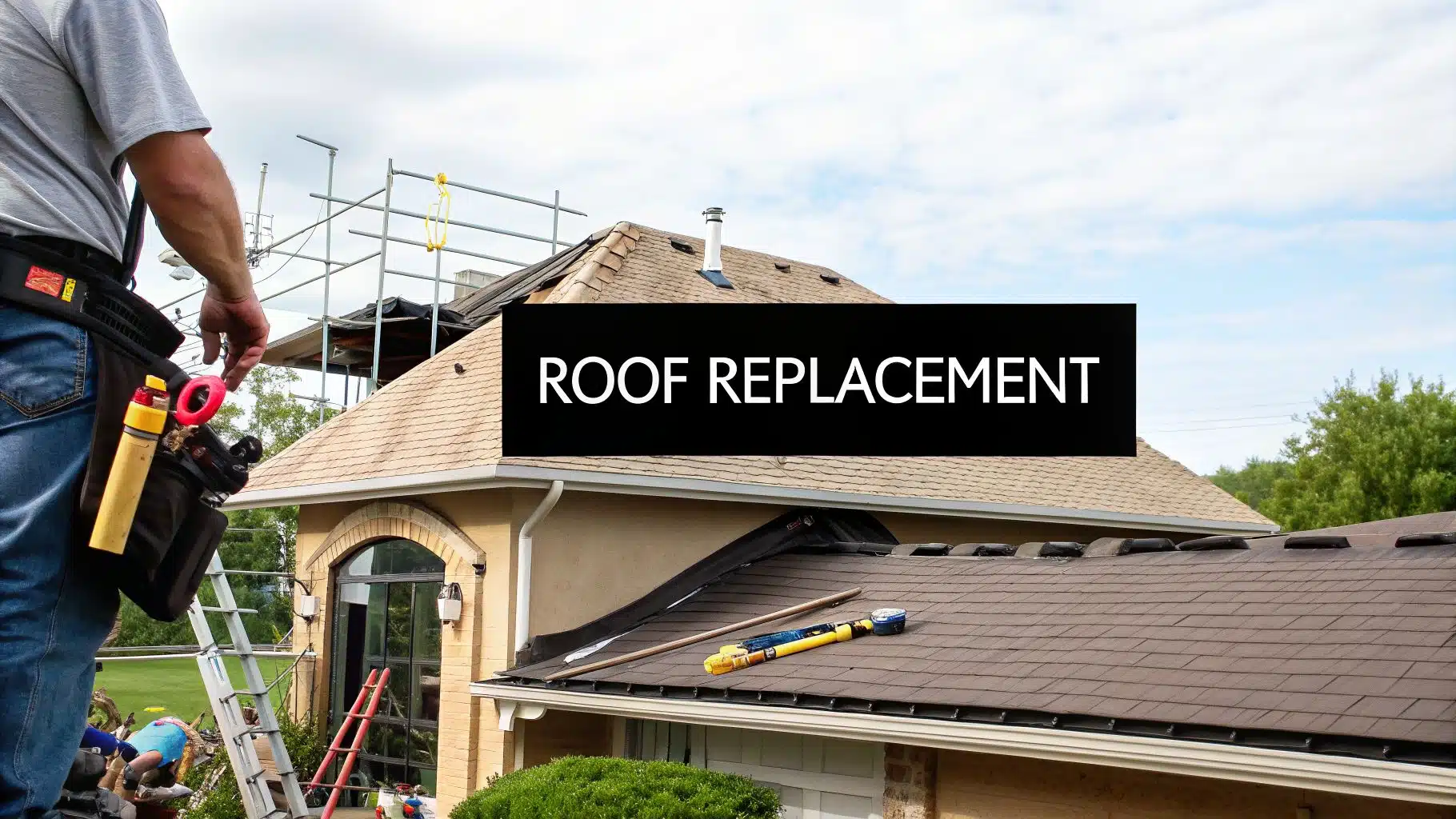
Let's be honest: facing a roof replacement in Tampa feels like a massive undertaking. It’s easy to get overwhelmed, but breaking it down makes the whole process feel much more manageable. A new roof isn't just a repair—it's a critical investment in protecting your home from our unique Central Florida climate, from the intense sun and humidity to hurricane-force winds.
Your Quick Guide to Roof Replacement in Tampa
Here in Central Florida, a roof does more than just keep the rain out. It’s your home’s first line of defense. Whether you’re dealing with the salty air in Pinellas County or the pop-up summer storms in Orlando, having a solid roof over your head is non-negotiable.
A full replacement is a big project, absolutely. But it’s also a huge opportunity. You get to upgrade your home's ability to handle a storm, improve its energy efficiency, and boost its curb appeal all at once. It's about more than just stopping a leak; it's about making a smart choice for the next 20 to 50 years. This is particularly true if you're thinking about adding solar, since a new roof provides the solid foundation needed for a system to last for decades.
Key Factors for Tampa Homeowners
Before you start getting quotes, it helps to understand the main things that drive a roof replacement project. These are the elements that will shape your decisions and, ultimately, the final cost.
- Your Choice of Material: This is the big one. Whether you go with asphalt shingles, tile, or metal will have the largest impact on your budget, how long the roof lasts, and how it looks.
- Storm Resistance: We're in Florida, so this is paramount. The Florida Building Code has strict requirements for wind resistance, which affects everything from the materials used to how they’re installed.
- Energy Efficiency: A new roof can be a secret weapon against high power bills. Lighter-colored or specially designed "cool-roof" materials reflect the sun's heat, which can make a real difference in your cooling costs during those long, hot Tampa summers.
The table below gives you a quick snapshot of what to expect for different roofing materials common in our area.
Tampa Roof Replacement Cost and Lifespan at a Glance (2026)
This summary compares the average costs, lifespans, and primary benefits for the most popular roofing materials in the Tampa area. It's a great starting point for seeing how your options stack up.
| Roofing Material | Average Cost (2,000 sq ft Home) | Expected Lifespan in Florida | Key Benefit |
|---|---|---|---|
| Architectural Shingles | $12,000 – $18,000 | 20-25 years | Excellent value and classic look |
| Tile (Clay or Concrete) | $25,000 – $45,000+ | 50+ years | Superior longevity and hurricane resistance |
| Metal (Standing Seam) | $28,000 – $50,000+ | 50+ years | Outstanding durability and energy efficiency |
| Flat Roof (Modified Bitumen/TPO) | $10,000 – $16,000 | 15-20 years | Ideal for modern architecture and low-slope areas |
Keep in mind these are just averages. The exact size, slope, and complexity of your roof will influence the final price, but this gives you a solid frame of reference for budgeting.

As you can see, your choice of material creates a wide range of costs and lifespans. It’s all about balancing your upfront investment with the long-term value and peace of mind you're looking for.
A new roof is one of the smartest home improvement projects you can undertake. It actively protects your biggest asset while improving its value, appearance, and even its monthly running costs. For those of us living in Tampa, it's a proactive move to secure our homes against whatever the weather throws at us.
Here at Hi Low Roofing & Solar, we've guided countless homeowners through this process, from St. Petersburg to Winter Garden. We live here, we work here, and we specialize in building durable roofing systems for residential and commercial properties that are perfectly matched to our local climate, ensuring your home is safe and sound for years to come.
Breaking Down the Real Cost of a New Roof in Tampa
Trying to figure out the price of a roof replacement in Tampa can feel like you're aiming at a moving target. But it’s a lot simpler once you know what goes into a proper estimate. It’s a bit like taking your car to the shop; the final bill isn't just for a single part, but for the parts, the mechanic’s time, and any surprise issues they find once the hood is up. A roofing quote is no different.
The number you see on an estimate covers so much more than the shingles or tiles you see from the curb. It represents a complete system designed to protect your home from everything our intense Central Florida weather can throw at it, from the moment we tear off the old roof to the final nail and cleanup.

The Main Ingredients of Your Estimate
Because every home has its own personality, every roofing quote is custom-built. Any contractor worth their salt, like us here at Hi Low Roofing & Solar, will give you an itemized breakdown that goes far beyond simple square footage.
- Materials: This is your biggest cost driver, hands down. Choosing between budget-friendly architectural shingles and a premium standing seam metal roof or classic clay tile can literally mean a difference of tens of thousands of dollars.
- Labor: You're not just paying for muscle; you're paying for expertise. A skilled, insured crew knows how to install a roof that meets Florida's notoriously strict building codes—a crucial detail for withstanding hurricane-force winds.
- Roof Size and Complexity: It’s simple math. A straightforward, single-story ranch home is a much quicker job than a two-story house with a steep pitch, multiple dormers, and lots of valleys. The more angles and complex cuts, the more time and specialized work it takes.
A good quote is more than a number—it’s a roadmap. When a local pro gives you a detailed estimate, they’re showing you their exact plan for protecting your home. It’s about total transparency, so you know where every dollar is going and can be sure there are no surprises.
Based on our analysis of local project data, the numbers for 2026 are pretty clear. For a typical 2,000-square-foot home in Tampa, the average cost for a roof replacement ranges from $7,000 to $36,000. That's a wide range, and it all comes down to materials. Asphalt shingles land on the lower end ($7,000-$14,000), while tile ($16,000-$36,000) and metal ($14,000-$24,000) occupy the higher price points. While that's a significant investment, a new roof can provide a 50-60% ROI by boosting your home's value and often lowering your insurance premiums—a huge win for any Tampa homeowner. You can explore the full breakdown of these local cost factors for more details.
What's Hiding in the Fine Print? (The "Hidden" Costs)
Beyond the big-ticket items, a few other essential services make up the final bill. A transparent roofer will list these clearly, but it helps to know what they are so you can spot them.
- Debris Removal and Disposal: All that old roofing material has to go somewhere. This line item covers the cost of a dumpster and the fees for properly disposing of several tons of old shingles, felt paper, and other waste.
- Permit Fees: For a full re-roof, a building permit is non-negotiable in every local municipality, from Pinellas County to Orange County. This fee gets your project on the books and ensures it will pass a final inspection for safety and code compliance.
- Underlying Deck Repair: This is the most common "surprise" in roofing. Once we tear off the old roof, we might find soft, spongy, or rotted wood decking underneath. Replacing those sheets is absolutely critical for your new roof's foundation and is usually billed per sheet of plywood needed.
When you understand these components, you can read any roofing estimate with confidence. You'll know what to look for, the right questions to ask, and how to tell if a quote is cutting corners. A quality roof replacement in Tampa is a complete, integrated system, and every part of that estimate is a piece of the puzzle in building a durable shield for your home.
Choosing the Best Roofing Material for Your Florida Home

Picking the right material for your new roof is probably the biggest decision you'll make during this whole process. It’s about much more than just curb appeal. You're choosing the primary shield that will protect your home from Tampa's very specific brand of weather—from the relentless summer sun to the threat of hurricane-force winds.
Think of it like this: you wouldn't put economy tires on a high-performance sports car. In the same way, you need a roofing material engineered to handle everything Florida can throw at it. For homeowners everywhere from Pinellas County to Orlando, the choice almost always boils down to three excellent options: architectural shingles, tile, and metal. Each has a different story to tell when it comes to looks, cost, and long-term performance.
The Versatile Workhorse: Architectural Shingles
There's a good reason architectural shingles are the most popular roof you see around town. They hit a sweet spot, offering a fantastic blend of durability, style, and affordability that works for a wide range of homes and budgets. Unlike the old, flat "3-tab" shingles of the past, architectural shingles have a thicker, layered design that gives them a dimensional, textured appearance, much like natural wood shakes.
For many Tampa Bay homeowners, this is the go-to material. It delivers solid, reliable protection against our heavy rains and winds without the premium price tag of tile or metal. On top of that, modern shingles are often manufactured with algae-resistant technology, which is a huge plus for fighting off those ugly black streaks so common in our humid climate.
The Classic Storm Defender: Tile Roofing
Drive through some of Florida's most beautiful and established neighborhoods, and you can't miss the timeless, elegant look of tile roofs. Available in both traditional clay and durable concrete, tile is the quintessential storm defender. It’s incredibly tough, capable of lasting 50 years or more with proper care, and provides top-tier resistance to wind, fire, and even hail.
A tile roof is a heavyweight champion in every sense of the word. Its sheer weight helps anchor it against high winds, and its natural material composition means it's immune to rot and insect damage. This incredible longevity and strength make it a premier choice for a roof replacement in Tampa, especially if you're in your forever home and want that classic Mediterranean or Spanish style.
When you're looking at long-term performance here in Florida, it's tough to argue with materials built for pure resilience. We're seeing more and more homeowners looking past the initial price tag and choosing materials that will stand the test of time and weather, making their investment pay off for decades to come.
The Modern Champion: Metal Roofing
If tile is the classic defender, then metal is the modern champion of both brute strength and energy efficiency. Standing seam metal roofs have surged in popularity across Central Florida, and for good reason—they offer a sleek, contemporary look and absolutely phenomenal performance. Engineered to withstand hurricane-force winds, a metal roof is one of the most resilient shields you can put on your house.
But strength isn't its only superpower. Metal's biggest selling point is often its energy efficiency. By reflecting the sun's thermal heat away from your home, metal roofs (especially lighter-colored ones) can dramatically lower your cooling bills during our long, scorching summers. A metal roof is also the ideal foundation for a solar panel system. Its impressive lifespan of 50+ years means it will likely outlast the solar panels themselves, so you won't have to worry about a premature roof replacement halfway through your solar investment. To learn more, check out our guide on the cost difference between metal and shingle roofs.
Recent analysis of Florida roofing trends confirms this move toward stronger materials. While shingles are still common, there's a definite shift toward metal and tile for their superior ability to handle 150 mph winds and intense UV exposure. These premium systems have lifespans of 40-70 years, a huge jump from the 15-25 years typical for shingles. Energy efficiency is also a driving factor, with the right roof potentially cutting cooling costs by up to 25%—a massive advantage when paired with solar to ease the strain on Florida's power grid. Discover more insights about these Florida roofing trends and what they mean for homeowners.
Making Sense of Storm Claims and Florida's Tough Building Codes
Living in the Tampa Bay area is fantastic, but we all know the trade-off: hurricane season is a fact of life. When a big storm rolls through, the aftermath can be chaotic. You’re suddenly faced with a damaged roof, a thick book of local building codes, and the often-confusing world of insurance claims. It’s enough to make anyone’s head spin, but trust me, having a clear plan makes all the difference.
Think of it as tackling two separate but connected challenges. First, you have to satisfy Florida’s incredibly strict construction standards. Second, you have to successfully navigate your insurance claim. Getting both right is the key to getting your home—and your life—back in order.
Why Florida's Roofing Codes Are So Demanding
There’s a good reason the rules are so tough here. After Hurricane Andrew tore through South Florida in 1992, the state completely rewrote the playbook on construction. The result was the Florida Building Code (FBC), which is now one of the strongest in the nation. For us in the roofing world, this isn't just paperwork; it’s a blueprint for building roofs that can actually stand up to a hurricane.
Any roof replacement in Tampa has to meet some very specific, non-negotiable requirements, especially when it comes to wind resistance.
Serious Wind Uplift Standards: Your new roof has to be installed to handle specific wind speeds determined by your home's exact location. This detail dictates everything—from the type of nails we must use to the precise pattern for fastening every single shingle.
Secondary Water Barrier: The code now requires what’s called a sealed roof deck. Before any shingles or tiles go on, we apply a self-adhering membrane directly to the plywood deck. It's a game-changer, acting as a backup waterproof layer to protect your home's interior even if you lose some shingles in a storm.
Bulletproof Flashing: The areas around chimneys, vents, and skylights are naturally weak spots. The FBC mandates stronger flashing materials and installation techniques to stop wind-driven rain from finding its way inside.
Think of the Florida Building Code as a precise recipe for a hurricane-resistant roof. Every single ingredient and step is there for a critical reason. If a contractor cuts corners, it’s like leaving out a key ingredient—the whole thing will fail right when you need it most.
The Insurance Claim Process, Step by Step
Filing an insurance claim can feel like learning a foreign language overnight. The good news is that there's a logical flow to it. Having a trusted local roofer like us at Hi Low Roofing & Solar in your corner from day one is a huge advantage, as we can help document the damage correctly right from the start.
Document Everything, Immediately: Once it's safe, walk around your property and take photos or videos of any visible damage—missing shingles, dented gutters, or tree limbs on the roof. Do this before you clean up or move anything.
Get a Professional Inspection: Call a reputable roofer right away. We can get on the roof and spot the kind of damage you can't see from the ground, like subtle hail impacts or creased shingles that signal wind-lift. This professional documentation is gold for your insurance claim.
File the Claim: Reach out to your insurance carrier to officially open a claim. They’ll give you a claim number and assign an adjuster. We can even help with this initial call to make sure all the right details about the damage and the date of the storm are communicated clearly.
Meet the Adjuster (With Your Roofer): This is probably the most important step. Your roofer should be at your home when the insurance adjuster arrives. We speak the same language as the adjuster, use the same software, and can point out all the damage we documented, ensuring their assessment is fair and complete.
Review the Settlement Offer: The adjuster will file a report, and you’ll receive a settlement breakdown. We’ll sit down with you and go over it line-by-line. Our job is to make sure it covers the full scope of work needed to not only replace your roof but also bring it up to current FBC standards.
Here in Tampa, roofs often don't reach their full 20-30 year lifespan simply because of our intense weather. That constant exposure to high winds and hurricane threats means replacement costs in 2026 can be 20-30% higher than in other parts of the country, largely due to those mandatory code upgrades like ensuring a 150 mph wind resistance. But here’s the upside: a new, code-compliant roof doesn’t just stop leaks; it can also earn you a significant discount on your homeowner's insurance. To see how our local climate plays into pricing, check out this great breakdown of Tampa roof replacement costs at Angi.com.
How to Choose the Right Tampa Roofing Contractor
Let’s be clear: choosing the right contractor for a roof replacement in Tampa is the most critical decision you’ll make during this whole project. The quality of the installation is just as important—if not more so—than the materials you choose. A perfectly installed shingle roof will always outperform a poorly installed metal one.
Think of it like this: if you needed a specialized surgery, you wouldn't pick the cheapest doctor or the one with the flashiest ad. You'd hunt for someone with proven experience and deep expertise. Vetting a roofer demands that same level of care, especially here in a market crowded with so many options.
The Non-Negotiables for Any Tampa Roofer
Before you even glance at a price quote, there are three absolute must-haves for any contractor working in Central Florida. If a company can't immediately show you these, it's time to walk away.
- State License and Full Insurance: Your roofer must have a valid Florida State Certified Roofing Contractor license. No exceptions. Also, ask to see proof of both general liability and workers' compensation coverage. This is what protects you from any liability if an accident happens on your property.
- A Physical Local Office: A company with a real, physical address somewhere in the Tampa area—from Pinellas all the way over to Orlando—is invested here. They aren't "storm chasers" who roll into town, do a quick job, and disappear, leaving you high and dry if a warranty issue pops up later.
- Clear, Separate Warranties: You need to receive two different warranties. One comes from the material manufacturer, and the other is a workmanship warranty from the contractor themselves. That workmanship warranty is your safety net, covering any problems related to the quality of the installation.
Qualities of a Trustworthy Roofing Partner
Once you've confirmed the essentials are in place, it’s time to dig a little deeper. The best roofers all share common traits that signal their commitment to quality work and happy customers. These are the gold standards you should measure every potential contractor against. For a more detailed checklist, check out our full guide on how to choose a roofing contractor.
Look for a company with a long history in the area, a portfolio of completed roofs you can actually see, and a transparent communication style. A roofer who takes the time to explain the process and patiently answer your questions is one who genuinely cares about your peace of mind.
A contractor's reputation is built one roof at a time. Stellar online reviews, an A+ BBB rating, and a willingness to provide references from past clients are powerful indicators of their reliability and craftsmanship. These aren't just nice-to-haves; they are evidence of consistent performance.
When looking for any reputable professional, it's helpful to review general advice on hiring a facility service company, since many of the same principles for vetting and selection apply. At Hi Low Roofing & Solar, we’ve built our business on transparency and a long-term commitment to the communities we call home across Central Florida.
Pairing Your New Roof with Solar for Maximum Savings
Getting a roof replacement in Tampa isn't just about fixing a problem—it's a massive opportunity to rethink your home's energy. If you're already planning to install a brand-new roof, you've got the perfect foundation for a solar panel system. Honestly, it’s the smartest and most cost-effective time to go solar.
Think about it. A new roof has a fresh lifespan of 25 years or more, which lines up almost perfectly with the productive life of a modern solar system. By bundling the two projects, you dodge a huge, expensive mistake we see all the time: homeowners having to pay to remove and reinstall their solar panels just a few years later when their old roof unexpectedly fails.
Turning Sunshine into Serious Savings
Here in the Sunshine State, the idea behind solar is beautifully straightforward. The panels on your roof capture sunlight, convert it to electricity, and power your home. This simple process dramatically cuts down—or sometimes even wipes out—your reliance on the local utility company. The result is real, tangible savings on your monthly bills.
But today’s solar systems offer so much more than just lower bills, especially with the addition of a battery backup. For anyone living through Central Florida's storm seasons, this is a total game-changer.
- Energy Independence: You generate your own electricity during the day and bank the extra power in a battery. You can then use that stored energy at night or on overcast days, all without touching the grid.
- Storm Resilience: When a hurricane or a classic Florida thunderstorm knocks out power, your battery system instantly takes over. The lights stay on, the fridge keeps running, and your A/C keeps you cool. It’s incredible peace of mind for your family.
Pairing a roof replacement with a solar installation transforms two separate, expensive projects into one smart, cohesive home investment. You gain a durable, storm-ready roof and a resilient energy system all at once, maximizing long-term value and peace of mind.
A Smart, Integrated Approach
When we plan a roof and solar installation together, the entire process becomes much more efficient. Our team at Hi Low Roofing & Solar designs the roof from day one to properly support a solar array. We consider everything from the structural supports to the best placement for wiring conduits, ensuring both systems work together perfectly for decades.
You can learn more about which materials are best suited for this by reading our guide on the best roof type for solar panels in our dedicated guide.
And you don't have to stop with just panels. Exploring solar skylight tips can open up new ways to bring natural light into your home, cutting down your electricity use even further. By combining a new roof with solar, you're not just getting ready for the next storm; you’re investing in a more sustainable and cost-effective future.
Common Questions About Tampa Roof Replacements
Alright, we've covered the big stuff—materials, costs, and the whole process. But even with all that information, you probably still have a few practical questions. It's completely normal. Getting these last few details ironed out is what helps you feel truly confident about moving forward.
Here are some of the most common questions we get from homeowners all over the Tampa Bay area.
How Long Does a Full Roof Replacement Take in Tampa?
This is usually the first thing people ask, and the answer is almost always quicker than they expect. For a typical single-family home in the Tampa area, we can complete a full roof replacement in just 2 to 3 days.
Day one is all about the tear-off—getting the old roof completely removed so we can inspect the underlying wood decking for any rot or damage. Day two is when your new roofing system really comes to life as we start the installation.
Of course, a few things can adjust that timeline:
- Weather: We all know how Florida weather works. If an afternoon thunderstorm rolls in, we have to pause for safety. We’re pros at working efficiently around the forecast, but we will never cut corners on quality or put our crew at risk.
- Roof Complexity: A straightforward, low-slope roof is a much quicker job than a steep, two-story roof with multiple dormers, valleys, and angles.
- Inspections: We coordinate with the local building department for mandatory inspections. Sometimes, we have to wait for an inspector to sign off before we can proceed to the next stage, which can add a little time.
Do I Need to Be Home While the Work Is Being Done?
Nope! You don't have to take off work or change your daily routine for us. All we need is access to the exterior of your property and an outdoor power outlet. Our crews are professional and self-sufficient, so you can go about your day while we get the job done.
That said, we do find it's best if you can be there for two key moments: the project kickoff and the final walkthrough. This just ensures we're all on the same page before we start and gives you a chance to inspect the finished work with our project manager and ask any last-minute questions.
A professional roofing contractor respects your time and property. Our goal is to make this process as painless as possible, handling all the details so you can carry on with your life while we secure your home.
How Can I Tell if My Roof Has Storm Damage or Is Just Old?
From the ground, it can be tough to tell the difference between normal aging and actual storm damage. Think of it like a car. An old roof is like a car with high mileage—the wear is predictable and uniform. You’ll see faded color, brittle shingles, and widespread granule loss across the entire surface.
Storm damage, on the other hand, is like getting into a fender bender. The damage is often chaotic and concentrated in specific areas.
- Wind Damage: Look for shingles that are creased, bent back, or completely missing. This damage is often on one side of the roof—the side that took the brunt of the storm.
- Hail Damage: This looks like random pockmarks or bruises on the shingles, vents, and soft metal flashing. It can be incredibly difficult to spot from the ground unless you know exactly what you’re looking for.
The only way to know for sure is to have a trained professional take a look. A qualified roofer can identify the tell-tale signs of a storm and give you the right documentation if you need to file an insurance claim.
What Does a Roofing Warranty Actually Cover in Florida?
In Florida, your new roof is protected by two different warranties, and it’s crucial to understand both.
- Material Warranty: This warranty comes straight from the manufacturer. It covers defects in the shingles or tiles themselves. If the materials fail before their expected lifespan, this is the warranty that kicks in.
- Workmanship Warranty: This is the warranty from your contractor, and honestly, it’s the more important one. It covers everything related to the installation. If you get a leak because of improperly installed flashing or fasteners, this warranty protects you. A reputable roofer will always offer a strong workmanship warranty because they stand behind the quality of their work.
When you're ready to get clear, honest answers and start your project with confidence, trust the local experts who have been protecting Central Florida homes for years. Hi Low Roofing & Solar is ready to help with a free, no-obligation inspection. Schedule your free inspection today!
