

For property owners from Pinellas County to Orlando, a reliable roof is the first and most critical line of defense against Central Florida's intense sun, torrential rains, and hurricane-force winds. Many homeowners and commercial property managers wait for a catastrophic leak to signal a problem, but by then, significant and costly structural damage may have already occurred. Proactively identifying the early signs of wear and tear is the key to avoiding emergency repairs, protecting your property’s structural integrity, and preserving its value.
This guide is designed to empower Central Florida residents by detailing the six critical signs you need a new roof. We will move beyond generic advice to provide actionable insights tailored to our unique climate. Understanding these specific indicators, from subtle granule loss on your shingles to the first signs of a sagging roof deck, helps you make a timely and informed decision. It equips you to partner with a trusted local expert like Hi Low Roofing to secure your property. By learning to spot these warning signs early, you can ensure your home or commercial building is fortified and ready for whatever the next storm season brings. Let's dive into the specific signals your roof is sending.
1. Age of Your Roof (20-25+ Years)
While leaks and visible damage are obvious red flags, one of the most reliable yet often overlooked signs you need a new roof is its age. Materials don't last forever, and even a roof that looks fine from the ground could be on the verge of systemic failure. Decades of exposure to Florida's intense UV radiation, torrential rain, and high humidity degrade the essential components that keep your home protected.
Most homes in the Orlando area use asphalt shingles, which have an expected lifespan of 20-25 years. Once a roof passes this threshold, the granules that protect the asphalt from the sun have worn away, the shingles become brittle, and the adhesive seals begin to fail. This isn't just a cosmetic issue; it's a fundamental breakdown of your property's first line of defense against the elements.
Key Insight: Proactively replacing an aging roof is a strategic investment in your property. It allows you to avoid the costly emergency repairs, water damage, and interior mold growth that often accompany a sudden, age-related roof failure.
Why Age Is a Critical Factor
Think of your roof's lifespan like the mileage on a car's tires. Even if the treads look okay, the rubber compound becomes hard and brittle over time, losing its grip and becoming susceptible to blowouts. Similarly, an old roof can no longer effectively flex with temperature changes or withstand impacts, making it highly vulnerable during Florida's hurricane season.
- A 1998 home in Winter Park with its original roof is now well past its prime and should be professionally inspected for replacement, even without obvious leaks.
- Coastal commercial properties in Pinellas County face salt spray and higher winds, which can accelerate shingle deterioration, often requiring replacement closer to the 15-18 year mark.
How to Determine Your Roof's Age
If you don't know when your roof was installed, a little detective work can save you thousands in potential damages.
- Check Property Records: Your property's closing documents or the original building permit filed with the county should list the installation date.
- Consult a Professional: A reputable Central Florida roofer like Hi Low Roofing can estimate a roof's age based on the condition of the materials and a thorough attic inspection. Schedule a professional assessment around the 15-year mark to start planning.
- Ask Your Neighbors: If you live in a planned community where homes were built around the same time, ask neighbors when they replaced their roofs. This can provide a reliable timeline for your own property.
This infographic provides a quick reference for the average lifespans of common roofing materials found in Florida.
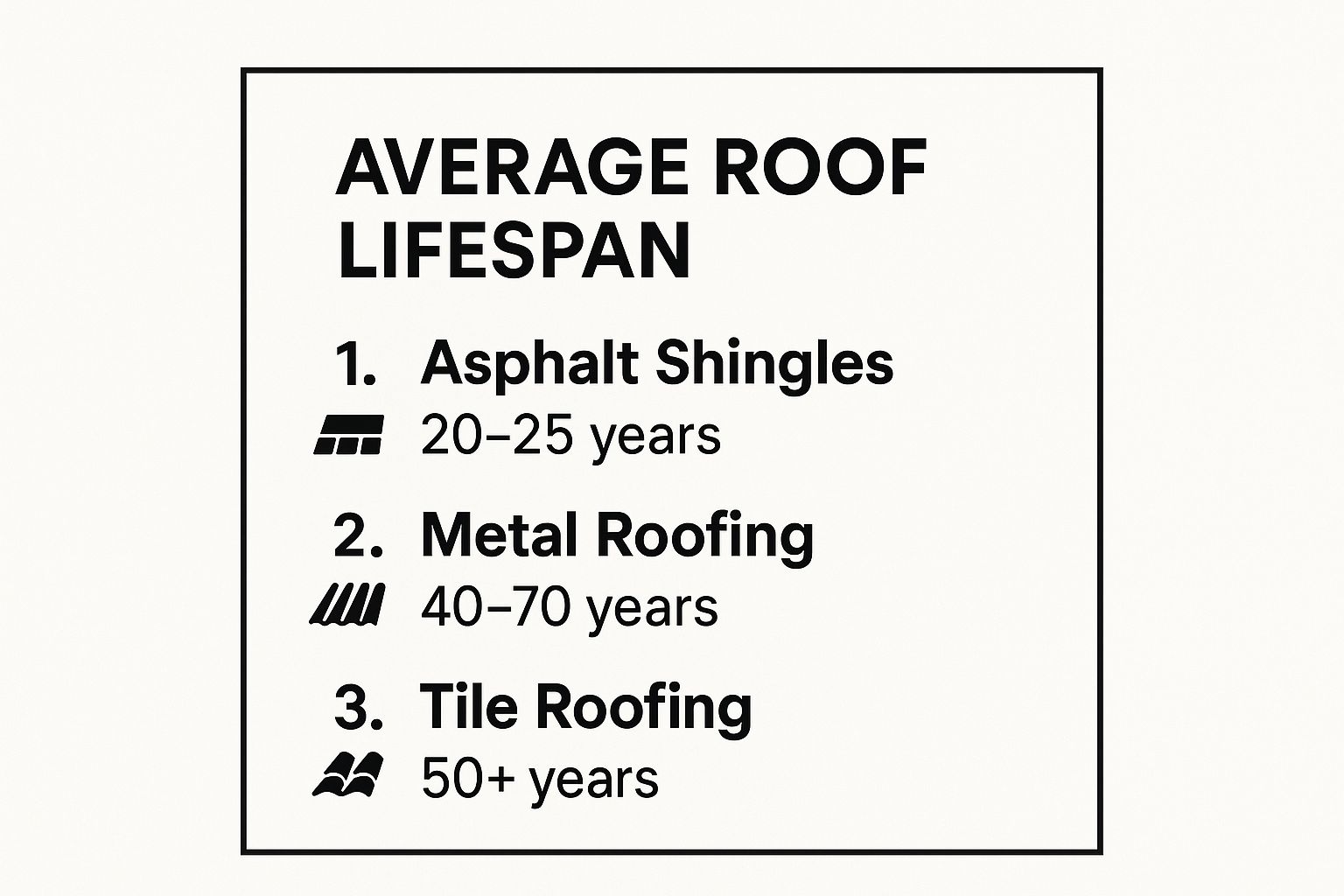
As the data shows, while asphalt shingles are the most common, other materials like metal or tile offer significantly longer lifespans, making them a worthwhile consideration for long-term property owners in the region.
2. Curling, Cracking, or Missing Shingles
Visible damage to your shingles is one of the most direct signs you need a new roof. While a single damaged shingle can often be repaired, widespread curling, cracking, or missing sections indicate that the entire roofing system is compromised. These are not minor cosmetic flaws; they are clear evidence that the shingles have lost their integrity and can no longer protect your Central Florida property from water intrusion and UV damage.
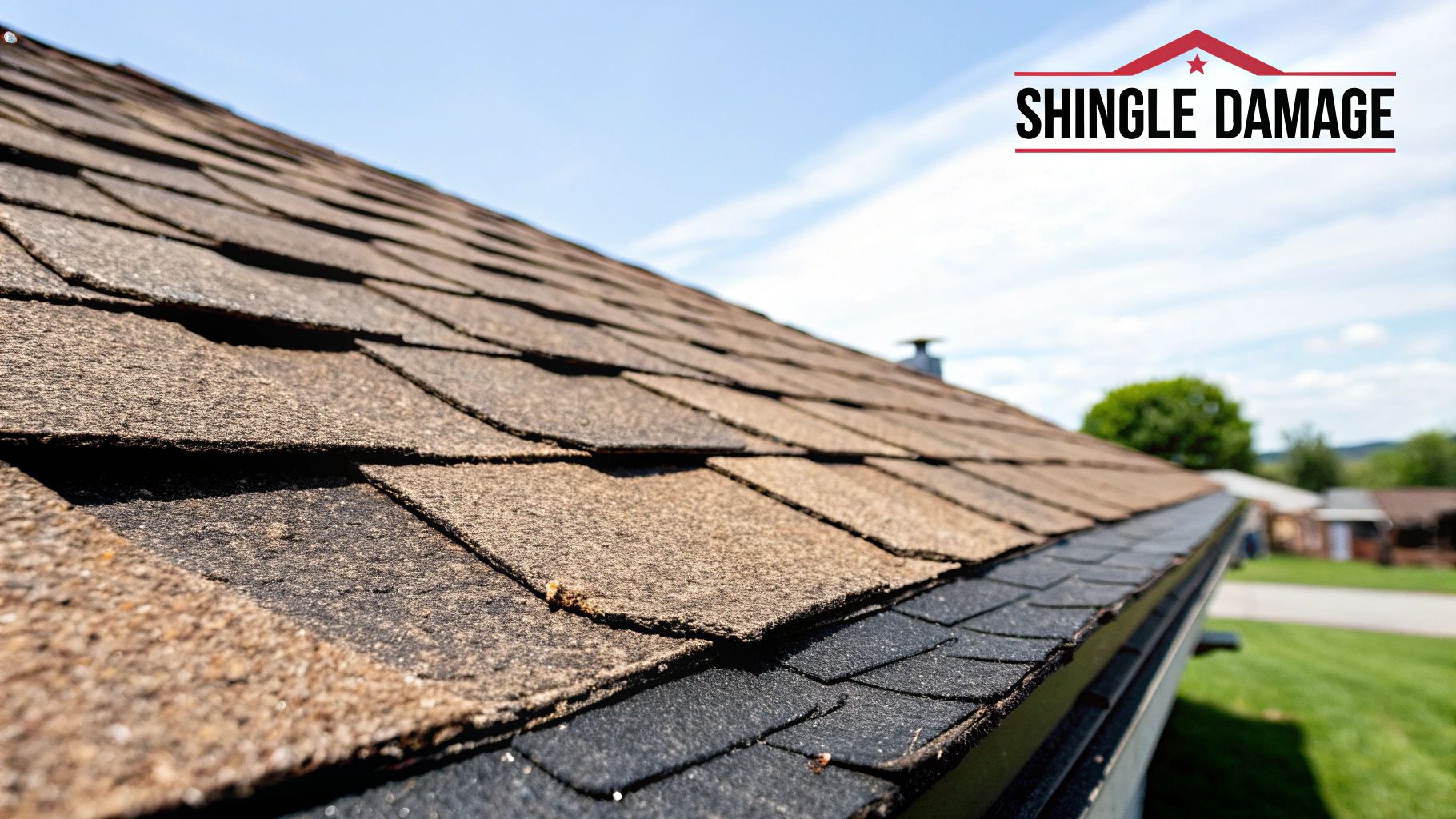
This type of deterioration happens as the asphalt and protective oils within the shingles break down over time, making them brittle and unable to withstand Florida’s intense heat and powerful storms. Curling edges, known as "cupping" or "clawing," lift away from the roof deck, creating an easy entry point for wind-driven rain. Cracks expose the underlying layers, and missing shingles leave your property's structure completely vulnerable.
Key Insight: Widespread shingle damage is a symptom of systemic failure. Patching individual spots on a failing roof is a temporary fix that can lead to more significant, costly water damage down the line. A full replacement is often the most cost-effective long-term solution.
Why Shingle Condition Is a Critical Factor
Think of your shingles as overlapping scales on a suit of armor. When some scales curl up, crack, or fall off, the armor's defensive capability is severely weakened. For a roof, this means even a moderate Orlando rainstorm can force water underneath the damaged areas, leading to wood rot, attic mold, and interior leaks that might not become apparent for months.
- A home in Tampa with a south-facing roof slope often shows severe curling first, as that side endures the most direct, intense UV exposure throughout the day.
- Following a tropical storm in Kissimmee, a roof that loses more than a few shingles is a strong indicator that the remaining shingles are also weakened and their seals have failed, making the entire roof susceptible to the next storm.
How to Inspect Your Shingles for Damage
Regularly checking your shingles from a safe vantage point can help you identify these critical signs you need a new roof before major damage occurs.
- Use Binoculars: Safely inspect your roof from the ground with a pair of binoculars, especially after major weather events. Look for shingles that are lifting at the edges or corners.
- Check for Patterns: If damage is concentrated on just one slope, it might indicate an installation issue or focused weather exposure. However, if curling and cracking are visible across multiple sections, it usually signals that the entire roof is reaching the end of its life.
- Document and Monitor: Take dated photos of any concerning areas. This helps you track the progression of the damage and provides valuable evidence for any potential insurance claims. When you see a significant decline, it’s time to call a professional.
If your inspection reveals extensive wear, you might consider upgrading to more durable materials. You can explore the cost difference between metal roof and shingles to see if a longer-lasting option fits your budget and long-term plans for your property.
3. Granule Loss and Bald Spots
Finding a collection of sand-like particles in your gutters or at the end of your downspouts is one of the most visible signs you need a new roof. These are not just debris; they are the protective granules from your asphalt shingles. These ceramic-coated granules shield the underlying asphalt from Florida's harsh UV radiation, add color, and provide a degree of fire resistance. When they begin to wash away in large quantities, your roof's protective layer is literally eroding.
While a small amount of granule loss is normal for a brand-new roof as loose particles shed, significant and ongoing loss indicates that the shingles are reaching the end of their functional life. The adhesive holding the granules weakens over time, and severe weather accelerates the process. Once the black asphalt substrate is exposed, these "bald spots" are highly susceptible to direct sun damage, which causes the shingle to become brittle, crack, and ultimately fail, leading to leaks.
Key Insight: Widespread granule loss is a clear indicator that your roof's UV protection has been compromised. Addressing this issue proactively prevents the rapid deterioration of the underlying shingle mat, which can quickly lead to costly water intrusion and structural damage.
Why Granule Loss Is a Critical Factor
Think of shingle granules as a powerful sunscreen for your roof. Without them, the asphalt layer is exposed to the full force of solar radiation, which bakes out the volatile oils that keep it flexible and waterproof. An asphalt shingle with heavy granule loss becomes as fragile as a dry leaf, easily cracking or breaking during a Central Florida thunderstorm or high winds.
- A South-facing roof on a commercial building in Orlando often shows accelerated granule loss compared to the North-facing slope due to more direct sun exposure, highlighting the damaging effect of UV rays.
- A homeowner in Kissimmee cleaning their gutters might find handfuls of granules, a tell-tale sign that their roof is well into its decline and needs a professional evaluation.
How to Identify and Address Granule Loss
Spotting this problem early can help you plan for a roof replacement before a minor issue becomes a major emergency.
- Inspect Your Gutters: The easiest place to spot the problem is in your gutters and at the base of your downspouts. If you see significant accumulation of these coarse, sand-like particles, it’s a cause for concern.
- Look for Bald Patches: Use binoculars to safely inspect your roof from the ground. Look for areas that appear darker, inconsistent in color, or have visible black "bald" spots where the asphalt is exposed.
- Check for Warranty Issues: If your roof is relatively new (under 10-12 years) and showing severe granule loss, it could be a sign of a manufacturer's defect. Document the issue with clear photos for a potential warranty claim.
A roof showing more than 40% granule loss across its surface often requires immediate replacement planning. The increased heat absorption from the exposed black asphalt can also lead to higher attic temperatures and increased cooling costs, making a new, more reflective roof a smart investment.
4. Sagging or Drooping Roof Deck
While many roofing issues are related to surface materials like shingles, a sagging or drooping roof deck is a severe structural red flag that demands immediate attention. This problem manifests as a noticeable dip, curve, or "saddleback" in your roofline, often visible from the street. It’s one of the most serious signs you need a new roof because it points to a failure within the foundational structure, not just the protective covering.
A sagging roof indicates that the underlying sheathing, rafters, or support trusses are compromised. This is typically caused by persistent moisture exposure from an old leak, the immense weight of multiple shingle layers from past re-roofs, or even an improperly ventilated attic where condensation has caused the wood to rot and weaken over many years. Ignoring this issue jeopardizes the integrity of your entire property and is a significant safety risk.
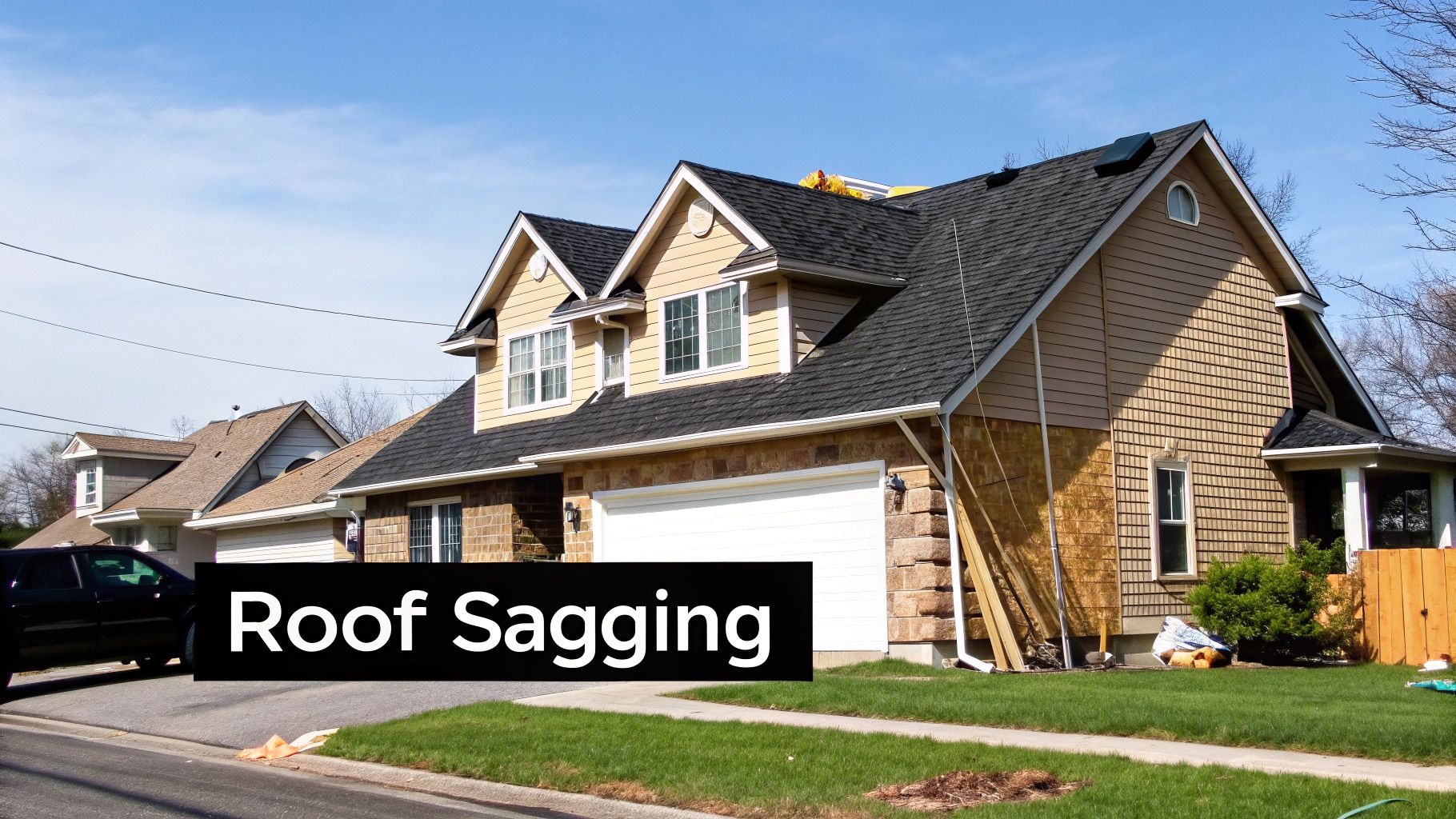
Key Insight: A sagging roof is never just a cosmetic problem; it's a symptom of a critical structural failure. Addressing it will likely involve more than just new shingles, often requiring decking replacement and repairs to the underlying framework, which is why immediate professional assessment is crucial.
Why Sagging Is a Critical Factor
Think of your roof's decking and rafters as the skeleton that supports the entire system. When that skeleton weakens, the whole structure is at risk of collapse, especially under the stress of a Central Florida thunderstorm or hurricane-force winds. The weight of the roofing materials alone can be substantial, and a compromised frame cannot bear that load safely.
- An older commercial building in Kissimmee with multiple layers of asphalt shingles may begin to sag under the sheer weight, causing the original roof deck to delaminate and fail.
- A property with poor attic ventilation in a humid area like Tampa can develop rot in the roof sheathing over 15-20 years, leading to a noticeable droop in the roofline.
- A residential home with a history of slow leaks might show sagging in valleys where water repeatedly pooled and saturated the underlying wood.
How to Identify and Address a Sagging Roof
Catching a sag early can prevent catastrophic failure. You don't need to be a professional to spot the initial warning signs.
- View from a Distance: Stand across the street or in your yard and look at your roof's ridgeline and planes. Check for any areas that appear wavy, bowed, or lower than the rest. Observe from multiple angles.
- Inspect the Attic: On a sunny day, go into your attic with the lights off. Look for any areas where the roof deck is visibly bending inward between the rafters. Also, check for corresponding water stains or damp, rotting wood, which confirms moisture is the root cause.
- Call a Professional Immediately: Because sagging indicates structural compromise, it's not a DIY situation. Contact a trusted Central Florida roofing contractor like Hi Low Roofing for an emergency inspection. They can assess the extent of the damage to the trusses and rafters before quoting the necessary repairs and roof replacement.
5. Interior Water Damage, Leaks, or Stains
While many signs of roof trouble appear on the exterior, some of the most urgent red flags show up inside your property. Water infiltration is the ultimate sign of a roof's failure, indicating its primary function of keeping your property dry has been compromised. These interior symptoms, from subtle ceiling stains to active drips, signal an immediate need for professional attention.
A discolored brown ring on a ceiling or a musty smell in your attic isn't just a cosmetic problem; it's evidence that water has breached your property's defenses. Even a seemingly minor leak can silently cause extensive damage to drywall, wooden support structures, and insulation. In Florida's humid climate, this moisture intrusion creates a perfect breeding ground for mold, which can compromise the health of occupants and lead to costly remediation efforts.

Key Insight: Interior water damage is a critical symptom of a roof in distress. Acting quickly not only prevents further structural and cosmetic damage but also protects your property's air quality and overall value.
Why Interior Leaks Demand Immediate Action
Ignoring a small stain is a costly mistake because water travels. By the time you see a drip in your living room, the water may have saturated a large area of insulation, rotted roof decking, and run along rafters. This is one of the most definitive signs you need a new roof, as it confirms a breach in the waterproofing system.
- A brown ceiling stain in an Orlando home that appears after a heavy thunderstorm often points to failed flashing around a chimney or vent pipe.
- Widespread dampness or mold in a Tampa attic can be caused by wind-driven rain getting under old, lifted shingles, a common issue after a major storm. Getting prompt storm damage roof repair can prevent these leaks from escalating.
How to Identify and Respond to Interior Leaks
Proactively checking for interior signs of water can help you catch a roof problem before it becomes a catastrophe.
- Inspect Your Attic: After a significant rain, safely inspect your attic with a good flashlight. Look for wet or compressed insulation, dark stains on the underside of the roof deck, or active drips.
- Document Everything: As soon as you spot a stain or leak, take clear photos. This documentation is crucial if you need to file an insurance claim.
- Don't DIY the Source: Water can enter at one point and travel ten feet before it shows up on your ceiling. A professional roofer has the expertise to trace the leak back to its origin point, which could be anything from deteriorated rubber boots around vent pipes to compromised roof valleys.
- Prioritize Safety: If you have an active leak, place a bucket underneath it to protect your floors. If water is near light fixtures or electrical outlets, turn off the power at the breaker and call an electrician as well as a roofer.
6. Daylight Through Roof Boards or Compromised Flashing
One of the most definitive signs you need a new roof is finding daylight where it shouldn't be: piercing through the boards in your attic. This isn't just a minor issue; it's a direct breach in your property's primary protective layer, signaling that holes, gaps, or severe material failure has occurred. These gaps often point to compromised flashing, which is the metal material installed around roof penetrations to prevent water intrusion.
Flashing seals the most vulnerable parts of your roof, such as around chimneys, vent pipes, skylights, and valleys where roof planes meet. Over time, exposure to Central Florida’s harsh sun and heavy rains causes flashing to rust, crack, or lift away from the roof deck. When flashing fails, it creates a pathway for water to seep under your shingles, leading to rot, leaks, and structural damage long before you notice a stain on your ceiling.
Key Insight: Visible daylight from your attic is an urgent warning sign. It confirms a direct opening to the outdoors, meaning if light can get in, water is already getting in or will during the next Orlando rainstorm. This requires immediate professional attention.
Why Daylight and Flashing Are Critical Indicators
Think of flashing as the essential sealant around your home's windows. If the caulk cracks and peels away, rain will easily get inside. Flashing serves the same critical purpose for your roof. When it degrades, it exposes the underlying roof deck and your property’s interior to the elements. Catching this from the attic is a proactive way to identify one of the most common signs you need a new roof before catastrophic water damage occurs.
- A 1990s home in Kissimmee may have chimney flashing that has rusted through, allowing water to saturate and rot the surrounding wood deck, which is easily spotted as a hole from the attic.
- A property in Lakeland with an 18-year-old roof could have dried and cracked vent pipe boots, creating gaps that appear as small circles of light from below.
How to Inspect for Light Penetration and Flashing Failure
A safe and simple attic inspection on a bright day can reveal significant problems that are invisible from the street.
- Perform a "Lights-Off" Test: On a sunny day, go into your attic and turn off any lights. Let your eyes adjust to the darkness. Any visible pinpricks or beams of daylight are clear signs of holes in the roof.
- Examine All Penetrations: Bring a powerful flashlight and closely inspect the areas around chimneys, plumbing vents, and skylight shafts. Look for rust stains, water marks, or damp insulation, which indicate past or current leaks.
- Check for Cracks and Gaps: Look at the flashing material itself. If you see cracks, lifted edges, or deteriorated sealant, the seal has been compromised. This damage is a clear indicator that a full replacement is a more reliable solution than a temporary patch.
Addressing these issues with a full roof replacement not only stops leaks but also improves your property's overall integrity. A modern, well-sealed roof system can significantly enhance your home's insulation, which is a key part of having an energy-efficient home in Florida. For more information, explore some options for energy-efficient roofing in Brandon.
6 Key Signs You Need a New Roof Comparison
| Issue / Indicator | 🔄 Implementation Complexity | ⚡ Resource Requirements | 📊 Expected Outcomes | 💡 Ideal Use Cases | ⭐ Key Advantages |
|---|---|---|---|---|---|
| Age of Your Roof (20-25+ Years) | Low – Determined by documentation and inspection | Low – Requires review of permits or reports | Predictable replacement timeline, planning | Routine maintenance scheduling and budgeting | Easy to verify, prevents emergency repairs |
| Curling, Cracking, or Missing Shingles | Low to Moderate – Visual and occasional roof access | Moderate – Inspection and possible repair materials | Early warning of shingle failure, need for replacement | Visual roof monitoring, insurance claims | Easily identified, warns before full failure |
| Granule Loss and Bald Spots | Moderate – Gutters check, possible roof inspection | Moderate – Access to gutters and roof | Indicates accelerated shingle aging and UV damage | Monitoring wear and warranty claims | Detectable early, tracks deterioration rate |
| Sagging or Drooping Roof Deck | High – Structural assessment and engineering needed | High – Structural repairs and permits | Structural integrity compromised, safety risk | Serious damage detection, structural repair | Forces necessary structural intervention |
| Interior Water Damage, Leaks, or Stains | Moderate to High – Attic and interior inspection | Moderate to High – Roofing and interior repairs | Indicates roof failure, potential mold and wood rot | Urgent leak detection and remediation | Clear indicator of leaks, prevents further damage |
| Daylight Through Roof Boards or Flashing Failure | Moderate – Requires attic inspection and flashing repair | Moderate – Flashing repair or replacement | Pinpoints leak sources and vulnerable points | Attic inspections, preemptive repairs | Specific problem identification, early prevention |
Your Next Step: Securing Your Central Florida Property
Recognizing the signs you need new roof is more than just an item on a maintenance checklist; it’s a crucial step in protecting your most significant investment. Throughout this guide, we've detailed the critical indicators that your roof's integrity may be compromised. From the subtle warning of granule loss in your gutters to the unmistakable evidence of water stains on your ceiling, each sign tells a story about your roof's health and its ability to shield your property from Central Florida’s demanding climate.
Ignoring these warnings, like curling shingles or a slightly sagging roofline, can transform a manageable project into a catastrophic failure during the next tropical storm or hurricane. The key takeaway is proactive awareness. Your roof provides constant protection, and understanding its condition empowers you to act before minor issues escalate into costly structural damage, mold infestations, or ruined valuables. This isn't about finding problems; it's about preserving your property's safety, value, and your own peace of mind.
From Identification to Action
The journey from identifying a potential problem to implementing a solution should be clear and stress-free. For property owners and managers from the Pinellas County coast to the heart of Orlando, the definitive next step is a professional evaluation. An expert assessment will confirm your suspicions and provide a detailed roadmap for the future.
Here’s what you should expect from a comprehensive inspection:
- A Detailed Condition Report: A professional will document not just the obvious issues but also the underlying causes, giving you a complete picture of your roof's system.
- Honest Recommendations: A trustworthy roofer will differentiate between issues that require immediate replacement and those that can be safely and effectively repaired, saving you money in the short term.
- Future-Proofing Solutions: This is an opportunity to discuss modern materials. You can explore options like high-performance architectural shingles, durable metal roofing, or even an integrated solar system that turns your roof into an energy-producing asset.
By taking this step, you transition from worrying about potential signs you need new roof to confidently securing your property. A strong, reliable roof isn't just a structural component; it's the foundation of a secure and comfortable property, protecting your family or business and enhancing your curb appeal and market value for years to come. Don't wait for a leak to force your hand; take control of your property’s future today.
Don't let roofing worries hang over your head. If you’ve spotted any of these warning signs, the expert team at Hi Low Roofing provides free, no-obligation inspections for residential and commercial properties across Central Florida. Schedule your consultation today to protect your investment with a team you can trust.
