
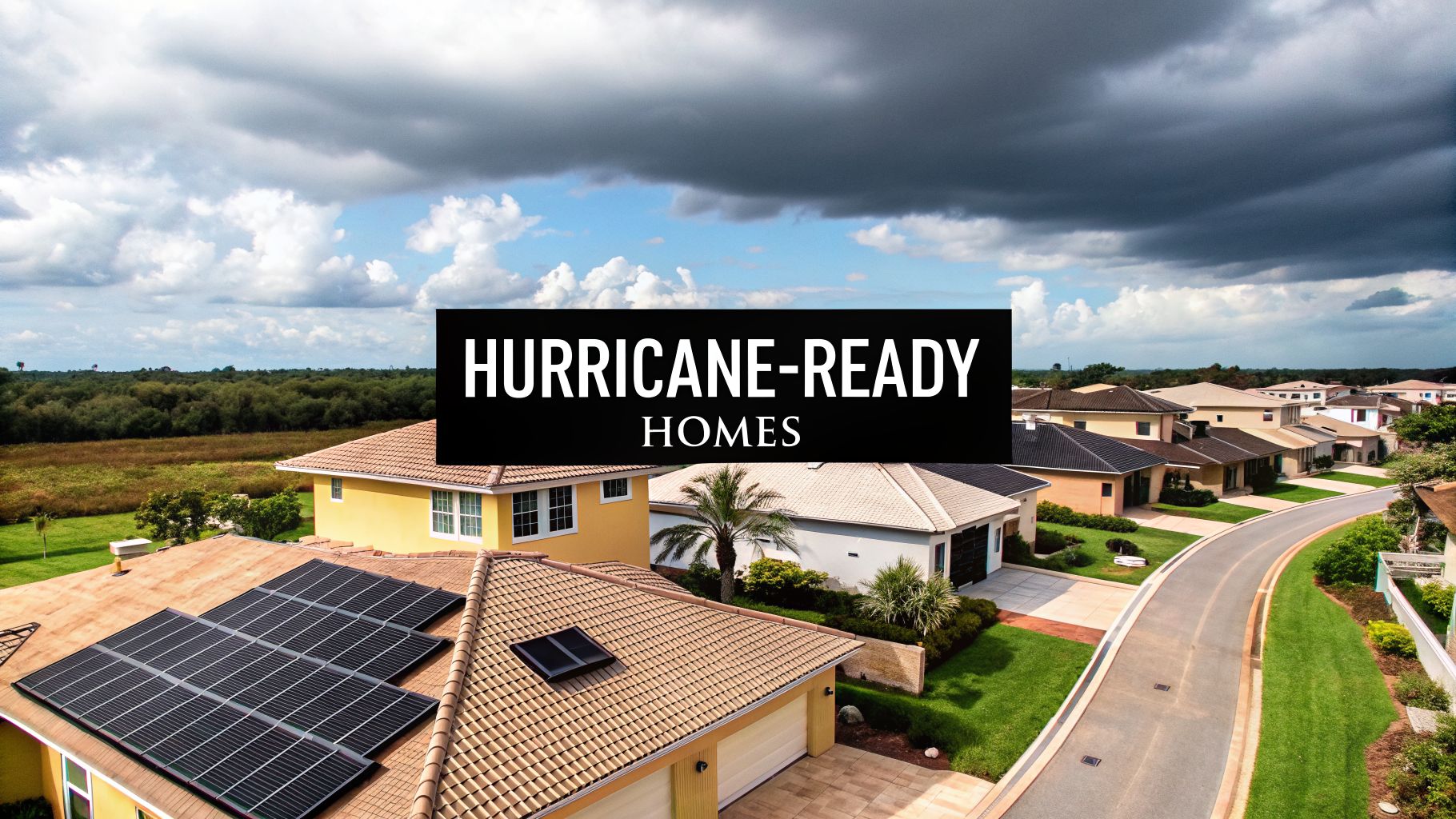
For anyone living between Tampa and Orlando, finding true roofing and solar experts is about more than just getting shingles nailed down or panels bolted on. It’s about securing a system that protects your home or business and powers your life, designed specifically for the unique demands of Central Florida, from Pinellas County all the way to Orlando.
Let's walk through what really matters when you’re looking to protect and power your property.
Why a Local Expert Matters for Tampa to Orlando Homes and Businesses

When you're protecting your home or commercial property here in Central Florida, choosing a contractor isn't just about finding someone who can do the work. You need a team that actually lives here—a partner who gets the daily challenges of our region, from the brutal summer sun to the unpredictability of hurricane season.
A real local expert knows the ins and outs of regional building codes, which can change quite a bit from Pinellas County over to Orange County. That familiarity means your project gets done right the first time, without the headaches of failed inspections or costly delays. As a Central Florida-based company, Hi Low Roofing & Solar has built its business on providing that exact kind of specialized insight for both residential and commercial clients.
The Advantage of Regional Experience
Central Florida's weather is a beast of its own. The mix of intense humidity, frequent downpours, and the constant threat of high winds means your roof and solar setup need to be built to a much higher standard. A local company like Hi Low Roofing & Solar knows which materials hold up and which installation methods are non-negotiable for long-term survival in our climate.
This is where having a dedicated, local contractor changes the game. Their expertise isn't just about the basics; it’s about:
- Storm-Ready Solutions: Knowing which residential and commercial roofing systems are engineered to handle hurricane-force winds and flying debris.
- Climate-Specific Materials: Guiding you to options like metal roofing or specific architectural shingles that reflect the intense heat and resist the algae growth so common in our humidity.
- Insurance Claim Advocacy: Having the experience to help you navigate the often-confusing insurance claims process after a storm rolls through.
When you're vetting any service professional in the Tampa to Orlando corridor, looking into their local service area coverage is a smart move. It shows they're committed to and familiar with the community's specific needs.
Choosing a contractor with a permanent local office, like Hi Low Roofing & Solar's headquarters in Winter Garden, guarantees they will be here to stand by their work and warranties for years to come—long after storm-chasing companies have left.
A Growing Market Demands True Professionals
It’s no secret that the demand for skilled roofers is booming across Central Florida. This surge makes it more important than ever to pick an established, professional contractor. As you start your search, knowing how to spot a properly licensed roofing contractor in Central Florida is your first and most critical step.
Choosing the Right Roof for the Florida Climate
Picking the right roof for your property along the I-4 corridor is a big decision. Think of it less like a simple purchase and more like choosing the right partner for a long-term commitment—one that has to stand up to Florida's intense sun, pounding rain, and hurricane season year after year. The wrong choice can mean constant worries and costly repairs, but the right one gives you peace of mind for decades.
As experts in roofing and solar from Tampa to Orlando, we've helped countless homeowners and property managers navigate this process. The best material for you really boils down to your budget, the look you want, and your long-term plans. Whether you're in a quiet Pinellas County neighborhood or managing a commercial building in the heart of Orlando, knowing your options is the first step toward a smart investment.
Asphalt Shingles: The Versatile Standard
Architectural asphalt shingles are, without a doubt, the most common sight on residential roofs across Central Florida, and for good reason. They hit that sweet spot between affordability, performance, and style, making them a go-to choice for many homeowners.
But don't mistake them for the flimsy shingles of the past. Today's materials are engineered specifically for our climate. They’re built to handle high winds, resist those ugly algae stains, and even reflect more of the sun's heat, which can make a real difference in your cooling bills.
- Cost-Effective: Shingles give you rock-solid protection without the higher price tag of metal or tile.
- Aesthetic Variety: They come in a huge range of colors and profiles, so you can easily find a look that complements your home.
- Proven Performance: When installed correctly by a skilled team, a quality shingle roof will serve you well for 20-30 years.
Metal Roofing: The Fortress of Durability
If you're looking for the ultimate in strength and longevity, a metal roof is your answer. This is the heavyweight champion of roofing materials. Yes, the upfront investment is more than shingles, but a metal roof is often the last one you'll ever have to install, with a lifespan that can easily top 50 years.
For anyone whose top priority is maximum protection, especially during storm season, metal is an outstanding choice. It's surprisingly lightweight, completely fire-resistant, and can stand up to wind speeds well over 140 mph—a critical feature for any Florida property. If you want to get into the nitty-gritty of storm protection, check out our guide on what makes a roof truly hurricane-proof.
A lot of people think metal roofs are loud when it rains. That’s a common myth. With proper underlayment and modern installation, a metal roof is just as quiet as any other roof.
Tile Roofing: The Timeless Classic
There's nothing quite like the look of a tile roof. Whether you choose classic clay or durable concrete, tile offers a sense of timeless beauty and permanence that perfectly captures the Floridian and Mediterranean aesthetic. But it’s not just about looks—tile is incredibly tough, fireproof, and provides fantastic insulation from our relentless sun.
This is a premium material that adds significant curb appeal and value to a home. While it's one of the more expensive options and needs a roof structure sturdy enough to handle its weight, a well-maintained tile roof can last for 50 years or even a lifetime. Of course, our humid climate can lead to algae growth, which makes knowing about safe algae removal for a longer-lasting roof crucial for protecting that investment.
Flat and Low-Slope Roofing for Commercial Properties
Commercial buildings in Tampa, Orlando, and everywhere in between often have flat or low-slope roofs. These require entirely different materials, like TPO, PVC, or modified bitumen, which are designed to create a seamless, watertight membrane over a huge surface area. For business owners and property managers, the name of the game is leak prevention, energy efficiency, and straightforward maintenance to keep the assets inside safe and dry. Hi Low Roofing & Solar specializes in these commercial systems, ensuring businesses from Pinellas to Orlando have reliable protection.
The Perfect Match: How Roofing and Solar Work Together to Power Your Home
Thinking about putting a brand-new solar system on an old, worn-out roof? It’s a common thought, but it’s like putting a state-of-the-art engine in a car with a rusted-out frame. It just doesn't make sense. The real, lasting value comes when you treat a new roof and a new solar array as a single, integrated project.
When you install them together, they’re no longer just two separate upgrades. They become one high-performance system designed to protect your home and power it for decades. For any property owner in the demanding Central Florida climate, this is the smartest way to invest in your home's future.
Why Your Roof’s Health Is Step One for Solar
Before we even think about mounting panels, we have to talk about your roof's structure. It's an absolute must. An expert has to get up there and confirm that your roof can handle the added weight of a solar array, not just today, but for the entire 25+ year lifespan of the panels.
Ignoring this step is asking for trouble—think sagging, leaks, or worse, a major structural failure down the road. When you work with a team that specializes in both roofing and solar, like Hi Low Roofing & Solar, this crucial inspection is baked right into the process. We make sure your new roof provides a solid, warrantied foundation that protects your big investment in solar energy.
The biggest mistake you can make is putting solar on an old roof, only to tear it all down in a few years to replace the failing shingles underneath. Bundling the two projects from the start saves you thousands in future labor costs and a massive headache. It’s simply the most logical and cost-effective path forward.
This decision tree gives you a quick visual on how your main priority—whether it’s budget, longevity, or pure curb appeal—points to the right roofing material for you.

As you can see, if keeping costs down is your top concern, asphalt shingles are a great fit. But if you’re looking for maximum resilience against Florida storms, metal roofing is hard to beat. It all comes down to what matters most for your home and your peace of mind.
Deciding on the when can be just as important as the what. This table breaks down the best timing for your project based on your roof's current age and condition.
Roof and Solar Project Timing Decision Guide
| Roof Age & Condition | Recommended Action | Key Benefit |
|---|---|---|
| New or < 5 years old | Go solar now. Your roof is ready. | Maximize your solar savings immediately with a solid foundation already in place. |
| 5-15 years old | Bundle roof and solar. | Avoid the future cost of removing/reinstalling panels when your roof needs replacing in a few years. |
| > 15 years old or showing wear | Replace the roof and install solar at the same time. | You get a brand-new, fully warrantied system from top to bottom, plus a huge boost in property value. |
Ultimately, if your roof has any significant age on it, bundling the projects is almost always the most financially sound decision.
The Financial Upside of a Combined Project
Pairing a new roof with solar panels is more than just good engineering; it’s a brilliant financial move. From the day your solar system is turned on, it starts generating electricity and, more importantly, saving you money. That immediate, ongoing reduction in your power bill can actually help cover the cost of your brand-new roof.
Here’s how the numbers work in your favor:
- Slash Your Power Bill: Your solar panels dramatically reduce or even eliminate your monthly payment to the utility company.
- Cover Your Investment: The money you're no longer spending on electricity can go directly toward the financing payment for the entire roof and solar package.
- Boost Your Property's Value: A new roof and solar system is a major selling point. Studies show this combination can increase a home’s resale value by an average of $15,000.
It’s a smart, self-funding cycle. The solar system helps pay for the new roof that’s protecting it. If you're wondering how this all comes together, you can see how our team of roofing and solar experts from Tampa to Orlando manages solar panel and roof integration for a perfectly seamless result.
True Energy Independence with Battery Backup
Living in Florida means you know the power grid is fragile. Between summer lightning storms and the annual threat of hurricanes, power outages are just a part of life. This is where a battery backup system takes your home from being energy-efficient to truly energy-independent.
A solar battery acts like a personal power reserve, storing the extra energy your panels produce during sunny days. When the grid goes dark, your home’s power supply automatically and instantly switches over to your battery.
What a Battery Backup Does for You:
- Uninterrupted Comfort: Keep your lights on, the refrigerator cold, the AC running, and any critical medical devices powered up during an outage.
- Power Through the Night: Use your own stored solar energy after the sun goes down instead of buying it from the utility.
- Total Storm Readiness: Face hurricane season head-on, knowing your family won't be left in the dark.
When you combine a new, storm-rated roof, a high-efficiency solar array, and a battery backup, you’ve created the ultimate modern Florida home. It's a home that's protected from the elements, powers itself with clean energy, and stays running when the rest of the neighborhood goes dark. That’s the definition of security and self-reliance.
What to Do After the Storm: A Homeowner’s Guide to Claims and Permits

When a big storm finally moves on, the real work begins. Looking at the damage to your property is stressful enough; the last thing you want is to face a mountain of insurance paperwork and confusing county permit applications all by yourself.
Honestly, this is where having a local expert in your corner makes all the difference. For anyone with property between Tampa and Orlando, knowing how to handle storm claims and project permits is the key to getting things back to normal, fast. A seasoned partner like Hi Low Roofing & Solar can walk you through it all, taking the stress off your shoulders so you can focus on what matters.
Your First Moves After the Storm
What you do in the first few hours after a storm can make or break your insurance claim. Before you even think about calling your insurance provider, your very first call should be to a trusted local roofer for an emergency inspection.
Why? A good roofer does more than just spot damage—much of which you can't even see from the ground. They’ll also help you take immediate steps to stop the problem from getting worse, like preventing a small leak from turning into major interior water damage.
Your Post-Storm Checklist:
- Stay Safe: Look at the damage from the ground only. A storm-damaged roof is no place to be walking around.
- Get a Professional Inspection: Call a contractor you trust, like us at Hi Low Roofing & Solar. We offer free, no-obligation inspections to give you a clear picture of the full damage.
- Document Everything: Snap clear photos and videos of every bit of damage before any temporary fixes are done. Get pictures of missing shingles, dented gutters, and especially any water spots on your ceilings.
This evidence, combined with a professional's report, is the foundation for a solid insurance claim.
Making Sense of the Insurance Claim Maze
Let's be frank: dealing with an insurance adjuster can feel intimidating. Their goal is to assess the damage according to your policy, but they might not see everything required for a proper, code-compliant repair that will last. This is precisely why having your contractor meet with the adjuster is a game-changer.
Think of it this way: having a roofing expert meet your adjuster isn’t about starting a fight; it’s about getting everyone on the same page. We speak the same language as the adjuster, and we can point out specific types of damage and cite local building codes to make sure their assessment is complete and fair. It’s how a small repair job often gets correctly upgraded to a full roof replacement when it’s truly needed.
This kind of advocacy is critical. An expert from Hi Low Roofing & Solar, a company that works all over the Tampa to Orlando corridor, knows exactly what to look for. We provide the detailed proof needed to get your claim approved for what you’re actually owed, not just the cheapest patch job.
We’ll Handle the Permit Paperwork
Whether it’s a new roof after a hurricane or a brand-new solar installation, you can’t just get to work. Every single city and county, from Pinellas to Orange, has its own unique building codes and permit rules. Trying to navigate that bureaucracy on your own is a surefire way to get hit with delays and headaches.
A professional contractor takes all of this off your plate. At Hi Low Roofing & Solar, we manage the entire process—from the initial paperwork and engineering plans to scheduling the final municipal inspections for both roofing and solar jobs.
- Roofing Permits: We ensure your new roof is built to handle Florida's intense weather, meeting or exceeding all local wind-load requirements.
- Solar Permits: This is even more detailed. It involves submitting engineering schematics, electrical diagrams, and structural plans to prove the system is safe, secure, and up to code.
By handling the permits from start to finish, we get rid of a massive source of stress for you. It means your project kicks off on schedule, sails through inspections, and is 100% compliant with all local laws. All you have to do is look forward to the peace of mind that comes with a secure new roof and lower power bills.
How to Vet Your Roofing and Solar Contractor
Picking the right contractor is hands-down the most important decision you'll make. After a big storm rolls through Central Florida, our neighborhoods get flooded with out-of-state "storm chasers." They knock on doors, promise the world, do a fast, shoddy job, and then they're gone—leaving you with a leaky roof and a warranty that isn't worth the paper it's printed on.
Knowing how to spot a true professional is the key to protecting your home or business. It’s not hard, but you have to know what to look for. Here’s how you can tell the difference between a dependable local partner and a fly-by-night operator. As you'll see, a company like Hi Low Roofing & Solar, who are established roofing and solar experts from Tampa to Orlando, checks all these boxes for a reason.
Confirm Florida State Licensing and Full Insurance
This is your first line of defense, and it’s not negotiable. Any legitimate Florida contractor will have a Certified Roofing Contractor license (look for a "CCC" or "CRC" number) and carry both general liability and workers' compensation insurance. Don't just take their word for it—ask to see the actual documents.
Here's why this is so critical:
- Licensing: This proves they’ve passed the state's rigorous exams and are held accountable by the Florida Construction Industry Licensing Board. It's the baseline for competence.
- General Liability: This protects your property. If a truck backs into your garage door or a ladder falls on your prize-winning rose bushes, their policy covers it, not your homeowner's insurance.
- Workers' Compensation: This one is huge. It protects you. If a worker gets injured on your property and the contractor doesn't have this coverage, you could be on the hook for their medical bills.
A true pro will have these documents ready and will be happy to let you verify them. Anyone who gives you the runaround or gets defensive is a major red flag. This simple check weeds out a shocking number of unqualified crews right away.
Verify They Have a Physical Local Office
This is a dead giveaway. A lot of out-of-towners will rent a P.O. Box or a tiny desk in a shared workspace to pretend they're local. A real, committed local contractor has a physical headquarters—an office and warehouse you can actually drive to.
For example, Hi Low Roofing & Solar is based right in Winter Garden. Our physical presence isn't just for show; it means we're part of the community. We're not disappearing after the work is done. We live here, we work here, and we'll be here to answer your calls and honor our warranties for years to come.
Read Recent Google Reviews from Your Area
Online reviews are a great tool, but you need to read them with a discerning eye. Zero in on reviews from the last 6-12 months from people in your general area—Tampa, Lakeland, Kissimmee, or Orlando. This tells you the company is active and keeping local customers happy right now.
Go beyond the star rating and read the comments. Are people talking about the crew’s professionalism? Do they mention clean job sites and clear, consistent communication? These details paint a much more vivid picture of what it's actually like to work with them.
Insist on a Detailed, Itemized Estimate
Never, ever accept a handshake deal or a vague, one-page quote. A professional proposal is a detailed document, often several pages long, that breaks down every single cost. It’s a sign of transparency and good business.
Your Estimate Should Clearly List:
- The exact roofing materials or solar panels being installed (brand, model, and color).
- The specific underlayment, flashing, and ventilation products.
- Line items for labor, materials, and city or county permit fees.
- A clear plan for debris removal and how they'll protect your property.
- The payment schedule and a projected timeline for the work.
This level of detail protects you from surprise fees and ensures everyone is on the same page about what's being done. It’s the difference between a guess and a plan.
Understand the Workmanship Warranty
Finally, you need to ask about the workmanship warranty. This is completely separate from the manufacturer's warranty that covers the shingles or panels themselves. A workmanship warranty is the contractor's promise that their installation work is solid.
It’s their guarantee against leaks, mistakes, and poor craftsmanship. A company that believes in its work will back it up with a strong warranty, often for 10 years or more. It shows they’re confident enough in their team’s skill to stand behind your roof long after they've packed up their tools.
Making Your Project Affordable with Smart Financing
Let's be honest: a new roof or solar system is a significant investment. But the price tag shouldn't be what stops you from protecting your home or taking control of your energy costs. For property owners all along the Tampa to Orlando corridor, we've found that smart financing is the key that makes these crucial upgrades possible right now.
Hi Low Roofing & Solar has helped countless Central Florida families and businesses who thought they'd have to drain their savings to get the job done. The good news is, you don't. We can help you find straightforward financing that turns a daunting, one-time expense into a simple and predictable monthly payment.
Turn a Big Project into a Small Monthly Payment
Most of us wouldn't buy a new car with cash from our checking account, right? We get a loan and make manageable payments. Financing a roof or solar system works exactly the same way. It takes a project that costs thousands of dollars and breaks it down into a monthly figure that actually fits into your budget.
This approach means you don't have to wait for years, watching your old roof get worse or your power bills climb higher and higher. You can get the work done immediately.
Homeowners are often surprised when they see the final numbers. With options like 0% interest financing for a limited time or other low-interest loans, the monthly payment is almost always much lower than they expected. It’s what turns the dream of a secure, modern home into a reality you can enjoy today, not someday.
Let Your Solar Savings Pay for the Project
Now, here’s where the math gets really interesting, especially when you bundle a new roof with a solar installation. From the moment your new solar panels are switched on, they start generating savings. The money you're no longer paying the utility company can often offset—or even completely cover—the new monthly payment for your roof and solar package.
Think about it. If your power bill drops from $250 a month to just $25, that’s $225 in savings you can put directly toward your home improvement loan. In essence, the project starts paying for itself while you get all the benefits of a brand-new roof and clean, reliable energy.
Don't Forget the Federal Solar Tax Credit
On top of everything else, the federal government offers a powerful incentive for homeowners who go solar. The Solar Investment Tax Credit (ITC) isn't just a minor write-off; it's a major credit that directly reduces what you owe on your federal taxes.
- Direct Savings: This is a dollar-for-dollar credit against your tax liability. It can literally slash thousands off the net cost of your project.
- Time-Sensitive: Government incentives like this can and do change. Acting now ensures you can lock in this substantial financial benefit before it's potentially reduced or eliminated.
When you combine flexible financing, the immediate energy savings, and the federal tax credit, you create a financial picture that makes a top-tier home upgrade surprisingly attainable. Our goal is to show you that the best roofing and solar experts from Tampa to Orlando don’t just deliver outstanding work—they make it fit your budget.
Answering Your Top Questions
When you're considering a major home project like a new roof or a solar installation, you're bound to have questions. And you should! We’ve been helping homeowners and businesses from Tampa to Orlando for years, and we've heard just about everything. Here are some straightforward answers to the questions we get asked most often.
How Long Will My Roof Replacement Take?
We know your life doesn't hit pause for a construction project. Our crews are absolute professionals who work efficiently to get the job done right, and fast. For most residential homes, a full roof replacement takes just 1-3 days. Commercial projects vary based on size and complexity, but we always prioritize minimizing disruption to your operations.
From the moment the materials arrive to the final nail and cleanup, our project manager keeps the entire process running smoothly. Our goal is to get you back to your routine as quickly as possible, but with the added security and beauty of a brand-new roof over your head.
Can Solar Panels Actually Survive a Hurricane?
That’s the million-dollar question in Florida, isn't it? The answer is a firm yes, but with a critical caveat: they must be installed by experts who understand hurricane-force winds. The solar panels we use are impressively tough, but the real secret is in the installation.
We don't just attach panels to the surface of your roof. We use heavy-duty mounting hardware that anchors directly to the structural framing of your home or building. This method is specifically engineered to handle the extreme uplift forces of a hurricane, ensuring your investment stays put when the weather gets rough.
Will You Handle the HOA Approval Process?
Dealing with a Homeowners Association can feel like a full-time job. The good news? It's our job, not yours. We handle the entire HOA approval process for you.
We’ve worked with dozens of HOAs across Central Florida, from Pinellas County to Orlando, and know exactly what they need. Our team prepares and submits all the paperwork, from the initial application to the specific shingle colors or panel layouts, making sure everything is fully compliant. You can relax while we manage the red tape.
What Happens During a Free Roof Inspection?
Think of our free inspection as a complete health check-up for your roof—with no strings attached. We don’t just eyeball it from the street. One of our experts will get up on your roof for a detailed, hands-on assessment.
Here’s a quick look at what we’re checking for:
- Shingle/Material Condition: Looking for any curling, cracked, or missing shingles, and checking for excessive granule loss.
- Potential Leak Points: We pay close attention to the flashing around chimneys, vents, and skylights, as these are common trouble spots.
- Structural Integrity: We're on the lookout for soft spots, sagging, or any other signs of underlying moisture damage.
- Attic & Ventilation: A quick peek inside the attic tells us if your ventilation is working properly and if any hidden leaks are present.
After the inspection, we’ll walk you through photos of everything we found and give you an honest, clear summary. You'll have all the facts you need to decide what’s best for your home or business.
Ready to get clear answers for your property? The team at Hi Low Roofing & Solar is here to provide a free, no-obligation inspection and answer any other questions you may have. Visit us at https://hilowroofing.com to schedule your appointment today.
