The question of roof repair or replace usually comes up late, after visible wear appears or a leak reaches the ceiling. For asphalt shingle roofs common across Orlando, Winter Garden, Ocoee, and Apopka, the right choice depends less on one symptom and more on age, damage pattern, storm exposure, and how much useful life the roof still has.
Repair or replace: the decision starts with roof age, damage pattern, and storm exposure
The National Association of Home Builders places the expected life of asphalt shingle roofs at roughly 20 years under typical conditions, while major manufacturers such as GAF and CertainTeed publish limited warranties that can extend longer but do not guarantee field life in Florida heat, UV exposure, and storm seasons. That distinction matters. A roof can still be repairable at 16 years, and a roof at 10 years can still justify replacement if damage is widespread or the system underneath has failed.
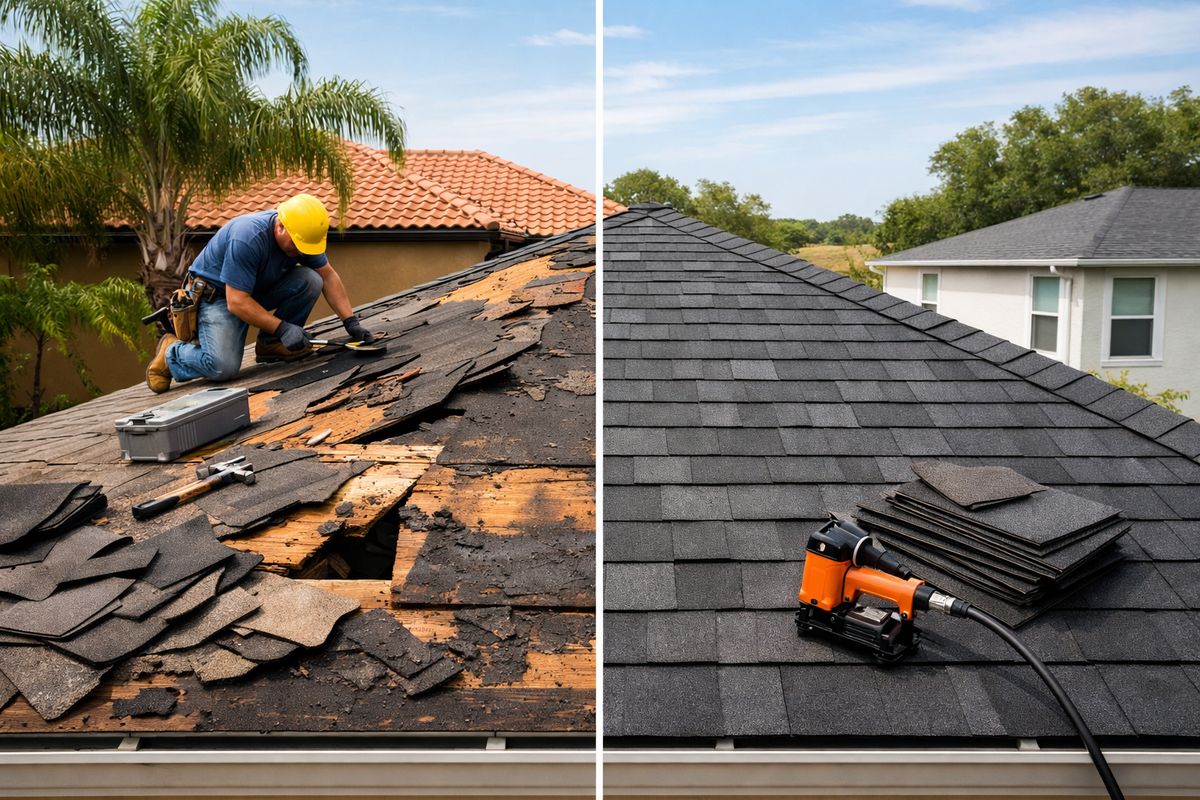
In practical terms, roof repair means correcting a localized failure without replacing the full roofing system. That might involve shingles, flashing, underlayment in one area, or limited decking. Replacement means removing enough of the existing roof to install a new system across the affected roof plane or the entire roof, usually because wear or damage is no longer confined.
Age is only one input. Leak location, attic moisture, soft decking, ventilation problems, and the number of prior repairs often change the recommendation. A roof with one lifted shingle near a vent stack is a different case from a roof with brittle tabs, patchwork repairs, and recurring water intrusion after every summer storm.
Finding: Roof age sets the baseline, but the decision turns on whether damage is isolated or systemic.
What counts as a repairable roof problem
Manufacturer repair guides and standard field practice indicate that isolated missing shingles, limited flashing failure, and a small leak tied to a single penetration often support repair if surrounding materials remain serviceable. In those cases, the objective is to restore continuity in a roof system that is otherwise intact.
You can usually think in terms of concentration. If the problem is confined to one area, the shingles around it still hold granules, the seal strips remain functional, and the deck under that section stays solid, repair often makes sense. A plumbing vent boot failure or one wind-damaged slope after a localized event can fit that pattern.
The limitation is material match and deck condition. If replacement shingles cannot integrate well because the existing roof is brittle, discontinued, or heavily weathered, a technically possible repair may still perform poorly or look visibly uneven. If moisture reached the decking and softened it, the scope can expand quickly.
Finding: Repair is usually justified when the defect is localized and the surrounding roof system remains sound.
What usually pushes a roof into replacement
Repeated leaks, widespread granule loss, brittle shingles, soft decking, and multiple past patches usually point toward replacement. Insurance inspections and contractor assessments often focus on functional damage across multiple roof sections, not just the leak location, because the visible entry point is not always the full extent of failure.
A roof with several patched areas often signals that individual repairs are treating symptoms rather than solving the root condition. The same is true when shingles crack during handling, ridge caps deteriorate across the roof, or sagging suggests substrate problems. Once multiple components have declined at the same time, replacement tends to be the more stable solution.
The counterpoint is straightforward: some older roofs still qualify for repair if damage is genuinely isolated. Age raises the threshold for confidence, but it does not automatically eliminate repair.
Finding: Replacement becomes more likely when deterioration affects multiple components or large roof sections.
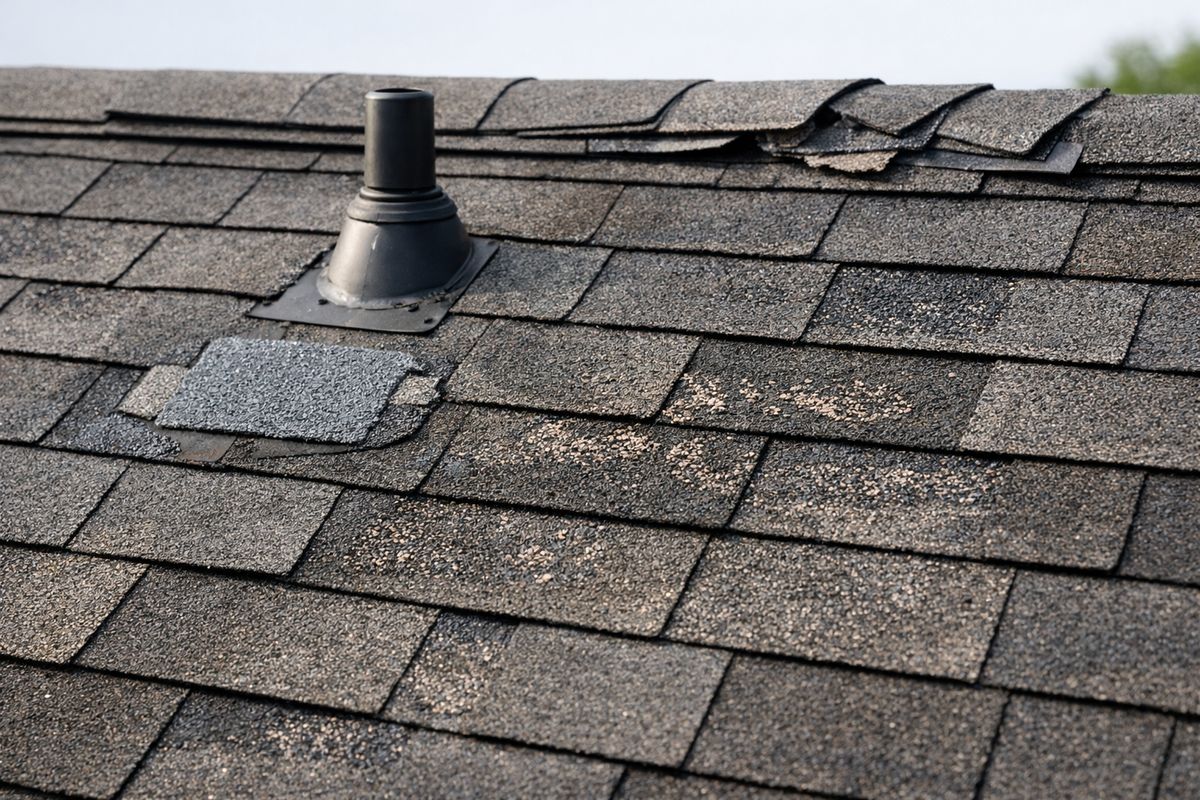
How roof age changes the economics of repair vs replacement
The Florida climate compresses roofing life compared with milder regions. The Asphalt Roofing Manufacturers Association and manufacturer literature consistently indicate that sun exposure, heat cycling, rain, and wind affect service life, especially for asphalt shingles. For an estimate decision, remaining useful life matters more than original warranty length.
If your roof is relatively early in its service life, a repair can preserve value because the corrected area may help the rest of the roof continue performing for years. If your roof is nearing end of life, a repair may only delay replacement while leaving you exposed to more leaks, more interior risk, and more service calls.
That is why estimate requests on older Orlando-area roofs need a simple framework: how old is the roof, how broad is the damage, and how many usable years are realistically left after repair?
Finding: The fewer serviceable years a roof has left, the weaker the financial case for major repair.
Typical lifespan ranges for orlando-area roofing materials
NAHB life-expectancy tables place asphalt shingles around 20 years, metal roofs around 40 to 70 years, and clay or concrete tile significantly longer, often 50 years or more, though underlayment life can be shorter. In Central Florida, real-world performance can run below national ranges because of UV intensity, storm seasons, humidity, and thermal expansion.
Architectural shingles generally outlast 3-tab shingles because the construction is thicker and wind resistance is often higher. Tile and metal can last longer, but both depend on details beyond the surface material, including fastening, flashing, underlayment, and maintenance. If you are comparing materials for a future project, a closer look at how Florida roof types differ in practice helps clarify those tradeoffs.
Warranty length is not the same as expected field life. Manufacturer warranties often contain prorated terms, installation requirements, and exclusions tied to ventilation or storm damage.
Finding: Material type changes lifespan expectations, but Florida conditions often shorten the useful life suggested by national averages.
When a new repair adds value and when it becomes short-term spending
A repair adds value when it restores a roof that still has meaningful life left. That usually means the roof is not broadly deteriorated, the leak source is identifiable, and the corrected area is unlikely to be followed by another failure nearby in the next season or two.
A repair becomes short-term spending when each fix is chasing a roof already nearing systemic decline. If one leak is repaired but the shingles are brittle, flashing is aging in multiple areas, and attic moisture indicates more than one pathway, the money spent may not preserve much future performance.
Budget still matters. An interim repair can be reasonable if you need time to plan for replacement, especially when the work is framed correctly as stabilization rather than a long-term reset.
Finding: Repair creates the most value when it extends a roof with real remaining life, not when it postpones an already near-term replacement.
The damage checklist: what to inspect before choosing either option
A pre-estimate check should focus on observable conditions, not self-diagnosis from the roof surface. The main categories are shingles, flashing-related signs, roofline shape, interior staining, attic moisture, and any indication that water traveled beyond a single entry point.
Ground-level exterior observations help identify visible wear, while attic and ceiling evidence often reveals how long the issue has been developing. That combination gives better context before a professional inspection. For a broader look at warning signs that often appear before failure becomes obvious, compare visible wear with any interior moisture evidence.
Do not treat this as a substitute for inspection. Flashing details, underlayment condition, and deck integrity usually cannot be confirmed from the yard.
Finding: The most useful pre-inspection notes combine visible exterior wear with interior moisture evidence.
Exterior signs visible from the ground
Curling tabs, cracking, bald spots from granule loss, displaced shingles, exposed nail heads, and sagging roof lines are the clearest exterior indicators. Dark streaking alone can be cosmetic algae staining, but bald areas, uneven roof planes, and missing pieces suggest functional decline.
The distinction matters. Cosmetic aging may support maintenance or limited repair, while deformation or missing materials points to water-shedding problems. Ground views can also show where storm damage may have concentrated, especially along eaves, ridges, and roof penetrations.
The limitation is simple: you cannot confirm flashing failure or soft decking from the ground. A roof can look acceptable from the street and still have water intrusion around a vent, valley, or wall intersection.
Finding: Ground-level wear is useful for spotting patterns, but it cannot confirm how deep the damage goes.
Interior and attic signals that change the recommendation
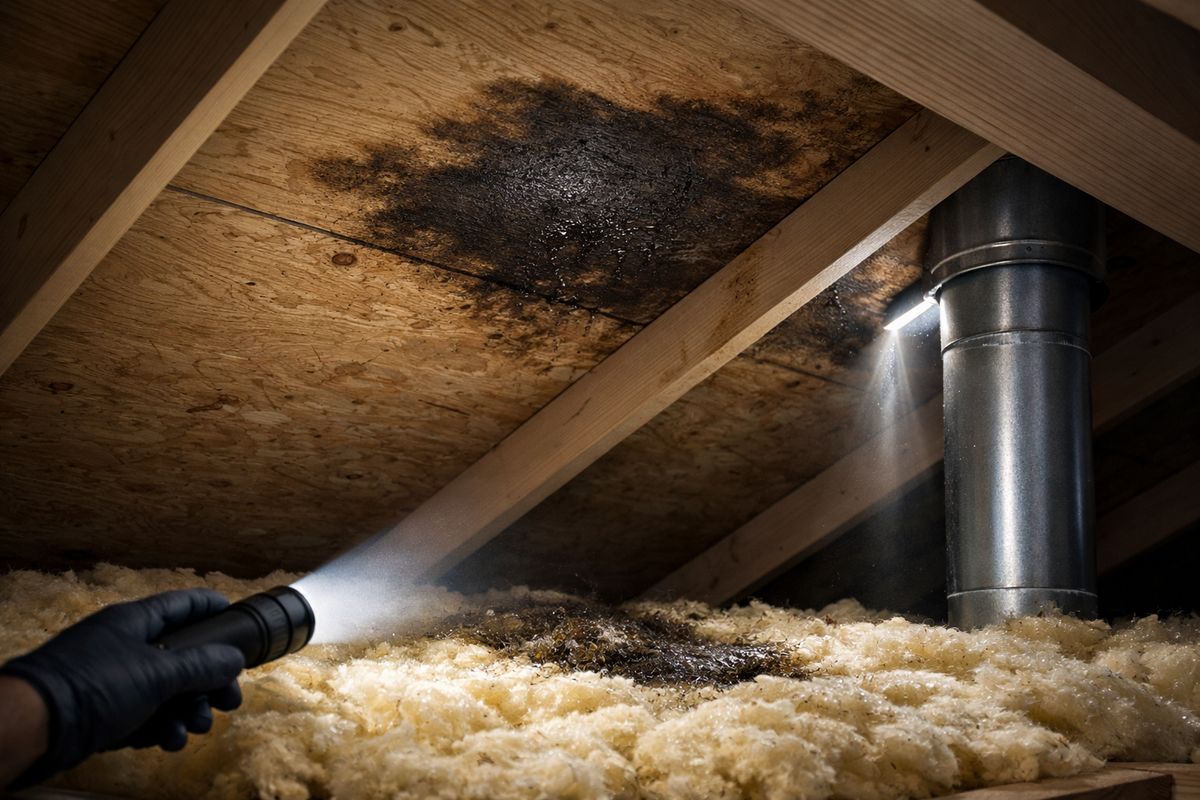
Ceiling stains, recurring spots after heavy rain, attic humidity, mold-like growth, damp insulation, and daylight at penetrations usually change the analysis. Once moisture appears inside, the concern is no longer only the shingle surface. It extends to deck condition, insulation performance, and how long the issue may have been active.
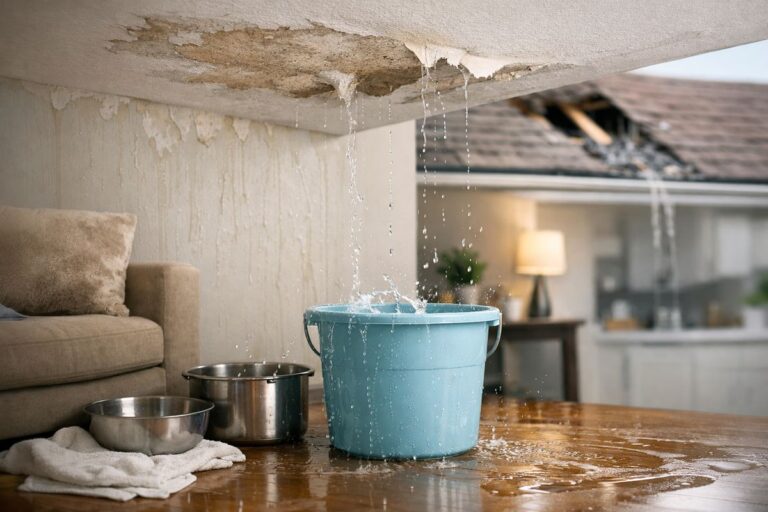
Recurring stains are especially important because they suggest either an unresolved source or multiple entry points. If water has moved along rafters or underlayment before dripping into living space, the leak origin may be several feet away from the visible ceiling mark. Guidance on what to check immediately after a leak starts can help you document these conditions before an estimate visit.
Finding: Interior and attic evidence often shifts a simple repair conversation into a broader system assessment.
Florida and orlando-specific factors that can tip the decision
Florida roofs handle a harsher mix of wind-driven rain, uplift pressure, UV exposure, humidity, and code oversight than roofs in many inland markets. The Florida Building Code and local permitting practices can affect scope, especially when a large percentage of a roof section is damaged or replaced.
In Orlando, Winter Garden, Ocoee, and Apopka, a repair decision that looks straightforward on a dry day can become less clear after summer storm patterns are factored in. Water intrusion in Florida often follows wind direction, flashing laps, and underlayment breaks, not just the obvious missing shingle.
Insurance and documentation also matter more in storm-prone markets. Photos, moisture evidence, and written scope can influence both claim review and estimate comparisons.
Finding: In Central Florida, climate exposure and code context often push the decision beyond visible surface damage alone.
Storm damage, wind uplift, and water intrusion risk
NOAA documents that Florida remains one of the highest-risk states for severe convective storms, tropical systems, and wind-driven rain. On asphalt shingle roofs, wind uplift can break seal strips or lift tabs without tearing them off completely. That kind of damage is easy to miss from the ground, but it can reduce the reliability of a spot repair.
Water also travels unpredictably after storms. A single displaced shingle may not be the only issue if wind loosened adjacent tabs or moisture entered beneath underlayment laps. If storm exposure is part of the timeline, compare visible conditions with common post-storm roof damage patterns before assuming the problem is isolated.
The counter-finding is that not every storm issue requires replacement. If the affected area is verifiably limited and the remaining roof is in good condition, a targeted repair can still be appropriate.
Finding: Storm-related roof problems often extend beyond the visibly damaged spot, but isolated storm damage can still be repairable.
Building code and insurance considerations
Florida code and carrier standards can affect roof scope, documentation, and timing. Permits may be required for repair or replacement, and code-related upgrades can become relevant depending on the extent of work. Insurance carriers may also ask for photos, age information, inspection findings, and cause-of-loss detail when a leak follows a storm event.
For that reason, written estimates should do more than list a price. They should identify the damaged area, the proposed remedy, and any uncertainty tied to hidden conditions. If coverage may be part of the decision, a review of how Florida roof claims are commonly evaluated adds useful context.
Carrier rules and code enforcement can change, so project-specific verification is still necessary at the time of work.
Finding: Documentation quality matters because code and insurance requirements can influence scope as much as the roof condition itself.
Cost comparison: when repair is lower total cost and when replacement wins
The lower upfront number is not always the lower total cost. A repair usually costs less at the start, but repeated leak calls, interior drywall work, and incremental patching can make an aging roof more expensive over time. Replacement costs more initially, yet it can reduce maintenance risk if the existing roof is near end of life.
| Scenario | Repair often wins | Replacement often wins |
|---|---|---|
| Roof age | Mid-life | Near end of life |
| Damage area | Localized | Widespread |
| Leak history | First incident | Recurrent |
| Shingle condition | Flexible, matching available | Brittle, worn, mismatched |
| Deck condition | Sound | Soft or deteriorated |
| Expected follow-up work | Low | High if repaired |
Exact pricing varies by access, materials, deck repairs, and permit scope in Central Florida. If you are comparing local service ranges, what tends to shape repair pricing in Orlando provides a more detailed cost framework.
Finding: Repair has the lower total cost only when it solves a limited problem on a roof with usable life left.
Cost drivers behind a roof repair estimate
Repair estimates usually rise or fall based on access, roof pitch, leak location, material availability, flashing complexity, and whether decking replacement is needed once the area is opened. Emergency tarping and storm-response timing can also affect cost.
A small ceiling stain does not guarantee a small repair. Water may enter at one penetration, travel along underlayment or decking, and appear indoors far from the source. Once wet decking, chimney flashing, or valley metal is involved, the scope expands beyond replacing a few shingles.
Finding: Repair pricing is driven less by the size of the stain and more by how far the failure extends through the system.
Cost drivers behind a full roof replacement estimate
Replacement estimates depend on square footage, material type, tear-off complexity, number of existing layers, underlayment selection, ventilation updates, flashing replacements, permit handling, and any decking repairs found during tear-off. Material choice matters significantly, especially if you are weighing shingles against longer-life systems such as metal or tile.
The higher upfront cost of replacement often buys predictability. On an aging roof, that can mean fewer maintenance visits and a cleaner baseline for insurance and future resale documentation. Still, replacement estimates can remain partly provisional until hidden deck conditions are exposed.
Finding: Replacement cost reflects full-system renewal, not just new surface shingles.
Best choice by use case for orlando-area homeowners
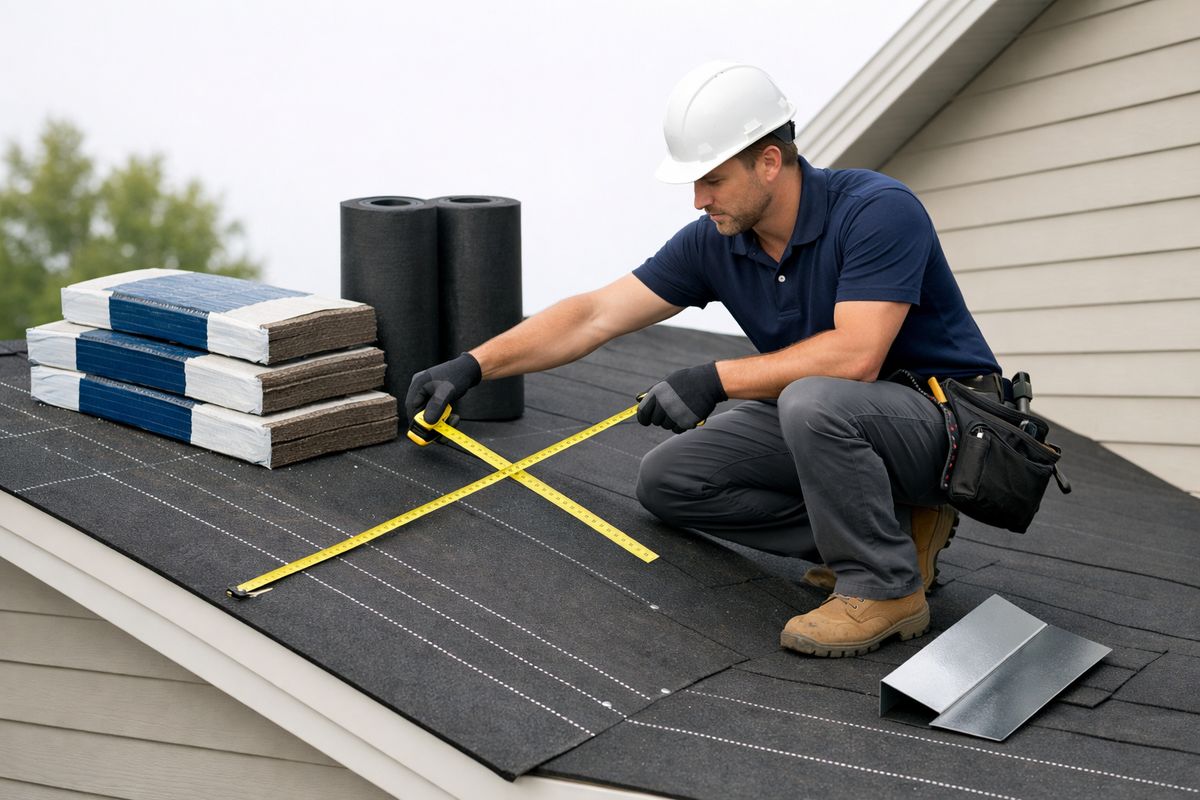
The most useful decision framework is situational. Older roofs without active leaks, sudden post-storm leaks, and roofs with multiple prior repairs do not belong in the same category, even if all require estimates.
Finding: The best choice usually becomes clear once your roof is grouped by age, leak history, and damage concentration.
If your roof is older but not actively leaking
If your roof shows visible wear but no active leak, the decision usually depends on inspection findings, remaining shingle flexibility, attic conditions, and insurance posture. Minor repair or monitoring can be reasonable if the wear is limited and the roof still has serviceable years left.
Replacement planning becomes more efficient when visible wear is broad, granule loss is advanced, or brittle shingles make future repairs less reliable. In that setting, waiting for the first interior leak can turn a controlled project into a reactive one.
Finding: On an older roof without leaks, broad wear and low remaining life usually favor planning for replacement rather than waiting.
If you have a leak after a storm
After a storm leak, the sequence matters: document the damage, protect the interior, arrange inspection, and determine whether the problem is isolated or part of broader storm impact. Immediate mitigation protects the home, but it does not answer the repair-versus-replace question by itself.
A leak tied to one damaged area may support repair. A leak that accompanies lifted tabs, broken seals, or moisture in multiple areas often points toward larger scope. If insurance may be involved, separate emergency protection from final scope review.
Finding: A post-storm leak should be evaluated as a damage pattern, not just a single wet spot.
If you have multiple prior repairs or recurrent leaks
Recurring leaks usually indicate a broader failure pattern, aging materials, or a flashing strategy that no longer performs consistently. At that point, each new repair should be measured against the cumulative cost of prior service calls and the risk of continued interior damage.
One-time repairs still have value when a cause is clear and isolated. But repeated repairs on the same roof section, or on several sections over time, often signal that replacement will produce a more stable long-term result.
Finding: Multiple prior repairs shift the economics toward replacement because recurring service rarely resets overall roof condition.
Common mistakes that lead to the wrong decision
The most common decision errors are choosing by lowest headline price, ignoring attic evidence, delaying action after visible wear, and assuming every leak can be permanently patched. Each mistake narrows the decision to one variable when roofing outcomes depend on system condition.
A cheap repair can be expensive if it omits wet decking. A delayed estimate can increase interior damage. A clean-looking exterior can hide attic moisture. The error is not lack of urgency, but lack of scope accuracy.
Finding: The wrong roofing decision usually starts with incomplete information, not the wrong material choice.
Mistaking a temporary fix for a long-term solution
Sealants, tarps, and quick patches serve a purpose. They reduce immediate water entry and buy time for inspection or scheduling. But temporary work is not the same as long-term restoration, especially on older asphalt roofs with widespread wear.
If the surrounding roof remains strong, short-term protection can bridge to a proper repair. If the roof is already deteriorated across multiple areas, temporary work may only postpone a more cost-effective replacement decision.
Finding: Temporary mitigation protects the home, but it should not be mistaken for durable repair on a failing roof.
Comparing estimates without matching scope
One estimate may include flashing replacement, permit handling, ventilation correction, and deck repairs up to a stated allowance. Another may include only surface shingles. Without matching scope line by line, price comparisons become misleading.
Useful estimate review means checking what is included, what is excluded, and what conditions can change the total. Headline price alone is not a reliable decision tool.
Finding: Scope differences, not contractor pricing alone, often explain large estimate gaps.
How to evaluate an estimate before you approve repair or replacement
A sound estimate should identify the source area, document visible conditions, describe materials, explain whether decking damage is included, and note any variables that could change the price after tear-off. It should also distinguish workmanship warranty terms from manufacturer material warranties.
Timeline, permit handling, cleanup, and ventilation treatment matter because they affect both project quality and final cost. The clearest estimates make the reasoning visible rather than asking you to infer it from one total number.
Finding: A reliable estimate explains the roof condition, the proposed scope, and the uncertainties that remain.
Questions to ask on every roof estimate
Ask where the leak appears to originate, whether the price includes deck replacement if damaged wood is found, which shingles or underlayment are specified, how flashing and ventilation are being addressed, what photos support the recommendation, and what conditions could change the final invoice.
Those questions do not make the project adversarial. They make the scope testable, especially when deciding between repair and replacement on an older roof.
Finding: Good estimate questions focus on diagnosis, scope boundaries, and price-change triggers.
What a clear recommendation should include
A clear recommendation should document current roof condition, explain why repair is feasible or why replacement is more rational, identify the limitations of the proposed fix, and state the expected timeline for action. If replacement is recommended, the estimate should explain what conditions make repair unreliable, not just assert that a new roof is needed.
One limitation remains in every case: hidden deck damage may not be fully known until tear-off or selective opening occurs. That uncertainty should be stated upfront rather than treated as a surprise later.
Finding: The best roofing recommendations are specific about condition, rationale, and uncertainty.
Frequently asked questions
How old is too old for a roof repair?
There is no single cutoff, but asphalt shingle roofs approaching 20 years usually need closer scrutiny. If damage is isolated and the surrounding roof remains flexible and intact, repair may still be reasonable. If the roof is brittle, patched repeatedly, or showing broad wear, replacement often makes more sense.
Can one leak mean you need a full roof replacement?
Not always. One leak can come from a single flashing failure or a localized storm-damaged area. A full replacement becomes more likely when the leak is part of broader wear, repeated water intrusion, or multiple failing roof components.
Is it cheaper to repair a roof several times or replace it once?
Repair is cheaper only when each repair solves a limited problem on a roof with useful life left. If service calls keep repeating, total cost can exceed the value of replacement because interior damage and added labor continue to accumulate.
Will insurance decide whether you repair or replace?
Insurance can influence scope, especially after storm damage, but coverage does not replace a condition-based assessment. The roof still needs evaluation for age, repairability, and hidden moisture damage before the best option becomes clear.
Should you replace a roof if it is not leaking yet?
Sometimes, yes. If visible wear is widespread, shingles are brittle, or inspection findings show low remaining life, replacing before active leakage starts can reduce the risk of interior damage and emergency work.
What matters most when comparing repair and replacement estimates?
Scope detail matters most. Look for documentation of the damaged area, material specifications, flashing treatment, deck inclusion, ventilation handling, permit responsibility, and the conditions that could change final pricing.
Ready to protect your home? Get in touch with the Hi Low Roofing team for your free estimate. https://hilowroofing.com/free-estimate/