
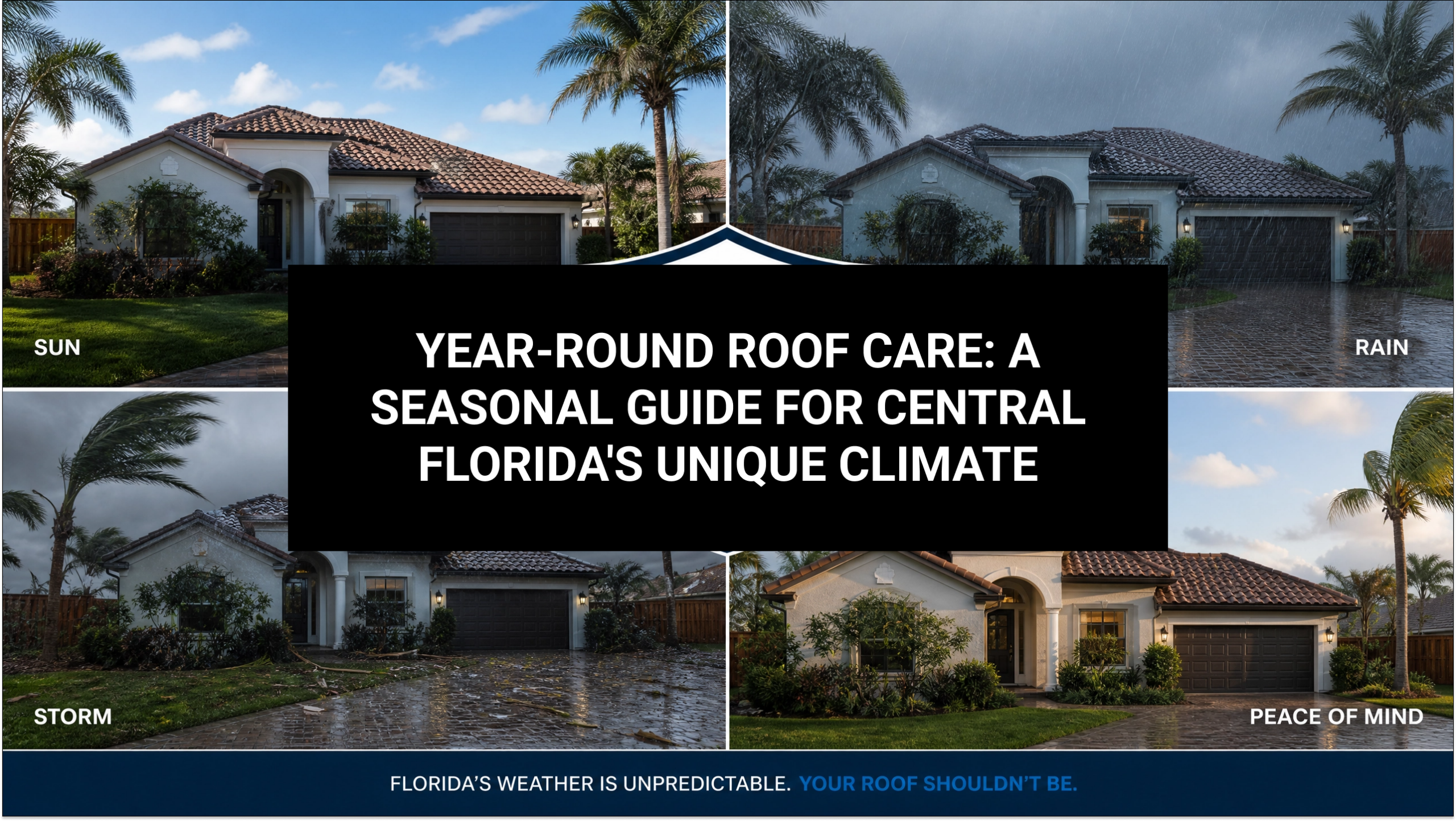
Central Florida’s climate is a beautiful but challenging environment for your home’s roof. With intense sun, frequent heavy rains, high humidity, and the annual threat of hurricanes, your roof endures a constant barrage of elements. Unlike regions with four distinct seasons, Central Florida’s weather patterns demand a specialized, year-round approach to roof care. A proactive maintenance schedule is crucial for extending your roof’s lifespan, preventing costly repairs, and ensuring your home remains protected.
The Impact of Florida’s Climate on Roofs
Florida’s unique climate accelerates wear and tear on roofing materials. The relentless UV radiation from the sun can degrade shingles and sealants, while high humidity promotes the growth of algae, moss, and mildew. Frequent thunderstorms and tropical systems can cause immediate damage from wind, hail, and heavy rainfall. Understanding these challenges is the first step to effective roof maintenance.
A Seasonal Guide for Central Florida Roof Care
While Florida doesn’t have traditional seasons, we can break down roof care into periods aligned with our weather patterns:
Spring Roof Care (Post-Winter, Pre-Rainy Season)
As the cooler, drier months give way to warmer temperatures and increasing humidity, it’s an ideal time for a thorough roof check-up.
•Inspection for Winter Damage: Even mild Florida winters can bring unexpected cold snaps or strong winds. Look for any loose, cracked, or missing shingles, especially after any significant weather events.
•Gutter Cleaning: Clear out any debris that has accumulated over the drier months. Clogged gutters can lead to water overflow and fascia damage once the rainy season begins.
•Minor Repairs: Address any small issues found during inspection promptly. Small cracks or loose flashing can quickly become major leaks during heavy rains.
Summer Roof Care (Rainy Season, Hurricane Season)
This is arguably the most critical period for roof maintenance, as your roof will be put to the ultimate test.
•Hurricane Preparedness Checks: Before hurricane season peaks (June 1 – November 30), ensure your roof is ready. Trim overhanging tree branches, secure any loose elements, and consider a professional inspection to identify vulnerabilities.
•Monitoring for Leaks: Be vigilant for any signs of water intrusion, such as water stains on ceilings or walls, especially after heavy downpours. Address these immediately.
•Vegetation Trimming: Keep trees and shrubs trimmed away from your roof to prevent branches from scraping the surface or falling during storms. This also reduces debris accumulation.
Fall Roof Care (Post-Hurricane Season)
After the intensity of summer and hurricane season, a post-storm assessment is vital.
•Post-Storm Inspection: Even if your home wasn’t directly hit by a hurricane, strong winds and rain can cause subtle damage. A professional inspection can uncover hidden issues that might lead to future leaks.
•Debris Removal: Clear any leaves, twigs, or other debris that may have accumulated on your roof or in your gutters during the stormy season.
•Checking Flashing and Seals: Pay close attention to the flashing around chimneys, vents, and skylights, as well as any sealants, to ensure they are intact and watertight.
Winter Roof Care (Cooler, Drier Months)
While less demanding, winter is still an important time for general upkeep.
•General Inspection: Conduct a visual inspection from the ground, looking for any signs of wear or damage that may have occurred during the year.
•Moss/Algae Treatment: If you notice green or black streaks (algae) or moss growth, consider a gentle cleaning or treatment. These growths can retain moisture and degrade roofing materials over time.
Conclusion: A Proactive Approach Extends Roof Life
Your Central Florida roof is a hardworking component of your home, constantly battling the elements. By adopting a year-round, seasonal approach to roof care, you can stay ahead of potential problems, extend the life of your roofing system, and avoid costly emergency repairs. Partnering with a trusted roofing professional like Hi-Low Roofing for regular inspections and maintenance can provide the expertise and peace of mind you need to keep your home safe and dry, no matter what Florida’s weather brings.
