
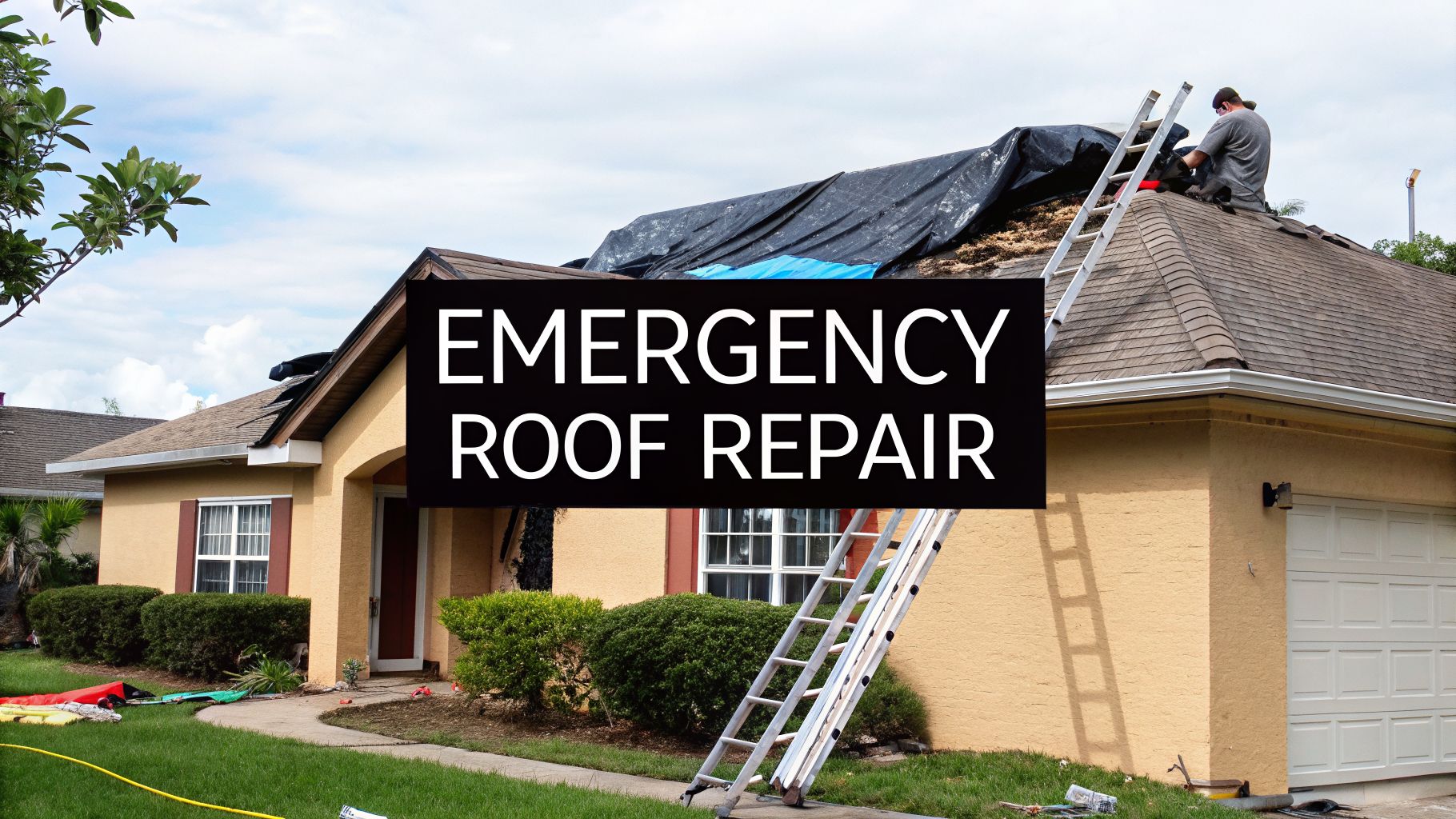
When a Florida storm rolls through, your first instinct is to check for damage. But in the chaos that follows, it can be tough to tell what's a real crisis and what can wait until morning.
A true roofing emergency isn't just a few shingles in the yard. It's when your home's safety is actively compromised. We're talking about situations with significant water pouring into your living space, obvious structural damage like a bowing ceiling, or a gaping hole where a tree branch used to be. These are the moments that require an immediate call to a 24/7 professional for emergency roof repair orlando services.
How to Identify a True Orlando Roofing Emergency
After a Central Florida thunderstorm, your adrenaline is pumping. A quick scan might reveal a small water spot on the ceiling or some loose debris on the lawn. While you should absolutely get those checked out, they aren't necessarily "drop everything" emergencies.
The real key is knowing the difference between a problem that can wait for a scheduled inspection and one that’s putting your family and home at immediate risk. It’s the difference between a slow, annoying drip and a steady, destructive flow. One is a nuisance; the other is a catastrophe in the making, capable of ruining drywall, insulation, and wiring in a matter of hours.
Clear Signs of a Roofing Emergency
Not all roof damage looks the same from the ground. Knowing these undeniable red flags will help you make a fast, smart decision when every minute counts.
Here's what our team at Hi Low Roofing tells homeowners to look for:
- Active, Uncontrollable Leaking: If you're running out of buckets and water is flowing steadily into your home, don't hesitate. This much water can lead to a ceiling collapse and thousands in damages very quickly.
- Visible Structural Sagging: A drooping, bowing, or bulging ceiling is one of the most serious warning signs. It means water has pooled and is putting immense weight on the drywall, which could give way at any moment.
- Major Punctures or Holes: If a tree branch has punched through your roof and you can see the sky, your home is wide open to the elements. This isn't something that can be ignored for even a few hours.
- Significant Missing Roof Sections: Hurricane-force winds are notorious for peeling back huge sections of shingles or tiles. If you can see large patches of the dark underlayment from your yard, your roof's primary defense is gone.
Here's a simple rule of thumb we've shared for years: if the damage makes you question whether it's safe to stay inside your house, treat it as an emergency. Your safety always, always comes first.
Emergency vs Non-Emergency Roofing Issues
Knowing when to make that urgent call versus when to schedule a visit can save you a lot of stress and money. A few missing shingles might look bad, but if it’s not raining, it’s not an immediate crisis. On the other hand, waiting too long on a serious issue will only make the final repair bill bigger.
To make it easier, here's a quick cheat sheet we use to help homeowners decide on their next move.
| Symptom | Urgency Level | Recommended Action |
|---|---|---|
| Major Water Intrusion (Steady Stream) | Emergency | Call a 24/7 emergency roofer immediately. |
| Sagging Ceiling or Roof Deck | Emergency | Evacuate the area below and call for help now. |
| Large Hole from a Fallen Tree/Debris | Emergency | Call for immediate professional assistance. |
| Small, Contained Drip (1-2 Drips/Minute) | High Priority | Place a bucket; call a roofer for a scheduled visit. |
| Water Stains on Ceiling (Not Wet) | Standard Priority | Monitor the area and schedule an inspection soon. |
| A Few Missing Shingles (No Leaks) | Standard Priority | Schedule a repair to prevent future issues. |
Ultimately, it all comes down to assessing the immediate threat. For anyone living in Central Florida, from Pinellas County all the way to Orlando, learning to spot these differences is the first and most critical step in protecting your residential or commercial property during our wild storm seasons.
Immediate Steps to Protect Your Home Before Help Arrives
The moment you spot a major roof leak, the clock is ticking. While you’re waiting for our emergency roof repair Orlando team to get there, what you do in the next few minutes can literally save you thousands in repairs. It’s all about two things: keeping your family safe and containing the damage.
It’s easy to feel a surge of panic—that’s natural. But taking a deep breath and following a clear plan is your best bet. The goal is to manage the mess inside your house and leave the dangerous work on the roof to the pros.
Prioritize Safety Above All Else
Before you even touch a piece of furniture, think about electrical safety. Water plus electricity is a deadly mix, and it’s no joke.
If you see water dripping anywhere near light fixtures, outlets, or your circuit breaker, you need to move fast. Head to your home's main electrical panel and shut off the power to those areas. If you’re not sure which breaker goes to which room, or if the panel itself is damp, play it safe. Shut off the main power to the entire house.
A flickering light under a wet ceiling isn't just an inconvenience; it's a serious fire and electrocution hazard. We've seen it happen. When in doubt, kill the power.
Once the electricity is off, look up. Is the ceiling noticeably sagging or bulging with water? If so, that area is officially a no-go zone. The drywall is waterlogged and could collapse at any second. Block off the room, get everyone out, and make sure you mention the sagging ceiling when you call us.
Mitigate Interior Water Damage
With the immediate safety hazards handled, it's time to shift your focus to damage control. You need to stop the water that's already inside from spreading and ruining your floors, furniture, and valuables.
Here's a quick, practical checklist to run through:
- Move Your Valuables: Get electronics, rugs, photo albums, and any important items out of the way immediately. If you can’t move a heavy couch or table, cover it completely with thick plastic sheeting.
- Contain the Drips: Grab buckets, trash cans, or any large container you can find and place them directly under the leaks. A great pro tip: put a towel or a small piece of wood in the bottom of the bucket. It’ll stop that maddening dripping sound and prevent water from splashing out.
- Protect Your Floors: Lay down old towels, tarps, or plastic sheeting on the floor all around your buckets. Water can get under laminate or into hardwood in a flash, leading to much bigger problems down the road.
Redirect Water Flow with Plastic Sheeting
For a more aggressive leak or one that's spread out, you can set up a simple indoor diversion system. It sounds complex, but it's a clever trick that can save your ceiling.
Carefully use a thumbtack to poke a small hole right in the middle of the wettest part of the ceiling. This gives the trapped water a single, controlled point to drain from. Then, using painter's tape or a few staples, attach a large plastic sheet to the ceiling around the leak, funneling it down into your bucket. For more tips, our guide on what to do when you discover a leaking roof has you covered.
This flowchart breaks down that initial response into three simple stages: Assess the scene, Identify the risks, and Act to get help and mitigate the damage.

It’s all about a safety-first approach. Address the immediate dangers before you start protecting your property. And if the emergency was caused by something like a fallen tree, your first priority is different. You should consult an emergency guide for a tree that fell on your house to ensure the structure is safe before worrying about the roof itself.
Documenting Roof Damage for a Smooth Insurance Claim
Once the storm is over and you've managed the immediate chaos inside your house, it’s time to shift gears. The next step is all about documentation, and frankly, how well you do this can make or break your insurance claim. Think of yourself as a crime scene investigator. Your job is to build an undeniable case for your insurer, and every photo and note is a critical piece of evidence.

Here in Central Florida, insurers get absolutely slammed with claims after a big storm. A meticulously documented claim is the one that gets an adjuster’s attention and a swift approval. Your objective is to paint a picture so clear that there are simply no questions left to ask.
Capture Everything with Photos and Videos
First thing's first: pull out your smartphone and start creating a visual record of absolutely everything. Don't just snap a few quick pictures—get methodical. Be thorough.
Here’s your shot list:
- Exterior Damage: From the ground or a second-story window (stay safe!), take wide shots that show the entire roof. This gives a sense of scale. Then, zoom in on the details: missing shingles, lifted flashing, punctures from flying debris, and any dents in your gutters.
- Interior Damage: Head inside and photograph the water stains spreading across your ceilings and down the walls. Capture any standing water on the floor and document damage to your furniture, electronics, or personal items. A video walkthrough is even better here; you can narrate what you're seeing and capture the sound of active dripping.
- The Cause of Damage: If a massive oak branch is lying on your roof, get photos of it from multiple angles. You want to clearly show the branch, the hole it made, and its position relative to your house. This connects the storm event directly to the resulting damage.
As you’re filming, make sure to state the current date and time out loud. This timestamps your evidence, which is incredibly powerful when you file your claim for an emergency roof repair in Orlando.
Pro Tip: We always tell homeowners to immediately create a dedicated album on their phone or a computer folder named something like "Roof Damage – [Date of Storm]." Upload everything there and then back it up to Google Drive or iCloud right away.
Maintain a Detailed Communication Log
Your photos and videos are only half the battle. You also need a written log of every single conversation and interaction related to the damage. This notebook or digital file will become your single source of truth throughout the entire claims process.
Start a new document and make sure you log:
- The Date and Time of the Storm: Be precise about when the damage occurred.
- Every Phone Call: Note who you spoke with (your insurance agent, the roofer), the date and time of the call, and a quick summary of what was discussed.
- All Emails and Texts: Simply save a copy of every digital message into that folder you created earlier.
This level of organized detail is what separates a frustrating claim from a smooth one. To get your claim approved, you need to provide the technical proof your insurer expects for insurance claims, and this log is a core part of that proof.
Don’t Throw Anything Away
After a storm, your first instinct is probably to start cleaning up the yard. You'll want to toss out the broken shingles, pieces of underlayment, and other roof debris you find scattered around. Don't do it. Those items are physical evidence.
Just leave them where they fell until after your insurance adjuster and a professional roofer have had a chance to see everything. This debris helps them confirm the type and quality of your old roofing materials and provides clues about the force of the wind or hail that tore them off. If you want a deeper dive into this, check out our guide on handling insurance claims for roof damage in Winter Haven.
Working with a local, experienced contractor like Hi Low Roofing gives you a huge advantage here. We know the ins and outs of Florida's insurance headaches and can supply the professional estimates and reports needed to back up your claim. Having an expert on your side is not a luxury—it's a necessity.
How to Choose a Trustworthy 24/7 Orlando Roofer
When water is coming into your house, the panic to find someone—anyone—to help is overwhelming. Unfortunately, that sense of desperation is exactly what predatory "storm chasers" prey on. Choosing the right contractor for an emergency roof repair in Orlando isn't just about speed; it's about protecting your home and your wallet from a potentially devastating scam.
It’s tough to think clearly with a leak overhead. That's why having a mental checklist of non-negotiables is your best defense. It helps you make a confident choice instead of a desperate one.
The Roofer's Must-Have Credentials
Before you even think about letting a roofer on your property, a few things are absolutely mandatory. These are the deal-breakers that separate a true professional from a costly mistake.
Florida Licensed & Fully Insured: This isn't just a good idea—it's the law. You need to ask for their Florida state license number and see proof of both general liability and workers' compensation insurance. If someone gets hurt on your property and they aren't properly insured, you could be on the hook for it.
A Real Local Presence: After a hurricane, out-of-state "storm chasers" flood Central Florida, do quick, shoddy work with cheap materials, and then vanish when the work fails a few months later. Look for a company with a physical office and a long history right here in Central Florida. A P.O. box is not a local office.
Proven 24/7 Availability: A lot of companies put "24/7 service" on their website, but what happens when you call at 2 a.m. during a tropical storm? A real emergency roofer has crews on standby, ready to dispatch, not just an answering machine that promises a callback in the morning.
We always tell homeowners: a legitimate company will be proud to show you their credentials. If a roofer gets defensive or evasive when you ask for their license and insurance info, that’s your cue to hang up and call someone else.
How to Spot the 'Storm Chasers' and Scammers
After a major storm, you can bet your neighborhood will be crawling with contractors knocking on doors. Some are legit, but many are just looking for a quick payday at your expense.
Here’s how to spot the red flags:
High-Pressure Sales Tactics: If a roofer pushes you to sign a contract on the spot or offers a "today only" price, show them the door. A reputable company will provide a detailed estimate and give you the space to review it properly.
Demands for Big Upfront Payments: A reasonable deposit for materials is normal. But if a contractor demands a huge chunk of the total cost—or worse, the full amount in cash—before work even starts, that’s a classic scam. They’re likely planning to take your money and disappear.
Vague or Non-Existent Contracts: Never, ever agree to work without a detailed, written contract. It should clearly spell out the full scope of the repair, the specific materials they'll use, a clear payment schedule, and an estimated completion timeline.
Key Questions to Ask Before You Sign Anything
Once you’ve found a company that seems solid, a few direct questions can confirm you’re making the right move. Their answers (or lack thereof) will tell you everything you need to know.
Do you provide separate estimates for the temporary tarping and the permanent repair? This is critical. You need to know the cost of the immediate mitigation for your insurance company, as well as the projected cost for the full, permanent fix.
Can you show me examples of recent emergency repairs you've done in my area? A real local pro will have a portfolio of work they're proud of from Orlando, Winter Garden, Tampa, and nearby communities. They should have no problem providing addresses or photos.
How will you document the damage for my insurance claim? An experienced roofer understands that a smooth insurance process depends on detailed photos and a professional report. They should act as your partner in documenting everything correctly, not just as a repair person.
In the end, you're looking for a roofer who is a stable, reliable part of the Central Florida community—not someone who just blew in with the last storm. For a deeper dive into vetting professionals, you can learn more about how to choose a roofing contractor in our full guide. A smart decision now will save you a world of trouble down the road.
From Emergency Tarping to Permanent Repair
When your roof is suddenly damaged, understanding what a professional roofer does can turn chaos into a clear plan. A true emergency service isn't just one phone call and a quick fix. It’s really a two-part process: first, we stop the bleeding, and second, we provide the permanent cure. It all starts with getting your home protected immediately and ends with a fully restored roof you can trust.

Knowing what to expect from that first call to the final sign-off helps you feel in control and confident that your residential or commercial property is in good hands.
Phase 1: The Immediate Stabilization
When an emergency crew from Hi Low Roofing shows up at your Orlando home, their only goal is to stop the damage in its tracks. This is all about mitigation. They aren't there to start ripping off shingles in the middle of a thunderstorm; they're providing critical first aid for your roof.
The go-to method for this is emergency roof tarping. This isn’t just tossing a cheap blue tarp over the hole. We use heavy-duty, reinforced tarps designed to hold up to Florida weather, securing them tightly with wood battens and specialized fasteners. The whole point is to create a watertight barrier that can survive wind and rain until we can schedule the real repairs.
Here’s what that looks like:
- Safety First: The crew’s first move is always to assess the roof’s structural safety. They need to make sure it's safe to even be up there.
- Securing the Tarp: They’ll strategically fasten the tarp to channel water away from the damaged section and safely off the roof.
- Preventing Further Damage: A properly installed tarp is what keeps water from destroying your insulation, ceiling drywall, and even the wooden frame of your house. It stops a bad leak from becoming a catastrophic failure.
This stabilization is absolutely crucial. It’s also exactly what your insurance company expects you to do—it shows you took responsible steps to prevent more extensive (and expensive) damage.
Phase 2: The Comprehensive Repair Plan
Once the storm has passed and your home is protected, we can move on to planning the permanent fix. This always starts with a much more thorough inspection than the initial emergency assessment.
Our certified roofers will get on the roof and examine everything, looking for the full extent of the damage—both obvious and hidden. We check for lifted shingles far from the main leak, damaged flashing around your chimney or vents, and inspect the underlying wood deck for any softness or rot caused by water.
With a complete picture of the damage, we build out a detailed repair plan. This is completely customized to your roof and the specific damage it sustained.
- For Shingle Roofs: This might mean replacing an entire section of shingles, the felt underlayment, and any rotted plywood decking underneath.
- For Tile Roofs: The plan could involve replacing cracked or shattered tiles, fixing the wooden batten system, and ensuring the waterproof membrane below is still sound.
- For Flat Roofs: We might need to patch punctures, reseal seams that have failed, or apply a new coating to the entire surface to restore its waterproof barrier.
A detailed repair plan is your roadmap to restoration. It should clearly outline the scope of work, the specific materials to be used, and a transparent cost breakdown. This document is essential for both your understanding and your insurance claim.
Navigating Material Selection and Local Permitting
Choosing the right materials is key to a repair that will last, especially with Central Florida's brutal sun and hurricane seasons. An experienced local roofer will guide you to materials that not only match your current roof but also provide the best defense against our climate.
This is also where building codes become a big factor. In Orange, Polk, and Hillsborough counties, most significant roof work requires a permit. A reputable emergency roof repair Orlando company like Hi Low Roofing will manage that entire permitting process for you. They make sure every aspect of the repair is compliant with the Florida Building Code, which protects you from liability and guarantees the work meets strict safety standards.
The journey ends with a final inspection, giving you official confirmation that your home is secure, watertight, and ready for whatever the weather throws at it next.
Your Top Questions About Orlando Emergency Roof Repair Answered
When you’re staring at a water stain spreading across your ceiling during a Florida downpour, it's easy to feel helpless. The sound of dripping water, the frantic search for buckets—it’s a stressful situation we see all the time. Your mind is probably racing with questions.
Let’s cut through the noise. Here are the straightforward answers to the questions our Central Florida customers ask most when they're in the middle of a roofing emergency.
Will My Homeowners Insurance Cover an Emergency Tarp?
Yes, almost always. Insurance companies view emergency tarping as a necessary step to mitigate further damage, which is actually part of your responsibility as a homeowner. By spending a few hundred dollars on a professionally installed tarp now, they avoid a potential five-figure claim for interior water damage, collapsed drywall, and ruined belongings later.
Just be sure to document everything. Snap photos of the roof damage before the tarp is placed and keep a copy of the invoice from your roofing contractor. Having that paperwork ready will make your insurance claim go much smoother.
How Quickly Can an Emergency Crew Really Get Here?
When you call a 24/7 roofer, our goal is to get to you as fast as humanly and safely possible. Here at Hi Low Roofing, we have crews staged across Central Florida, from Pinellas County all the way to Orlando, to cut down on travel time.
That said, a few things can affect our arrival time:
- A Major Storm Event: After a hurricane or widespread tropical storm, the phones ring off the hook. We dispatch crews continuously, but you might be placed in a queue based on when you called.
- Safety First: We can't put our crews on a slippery roof in the middle of a lightning storm or during dangerously high winds. They will be on their way the second it's safe to do so.
When you call, we'll give you an honest and realistic ETA based on the current situation. A good company won't overpromise—they'll communicate clearly about any delays.
The most important thing you can do is call for emergency roof repair Orlando services the moment you know you have a problem. The sooner your name is on the list, the sooner a truck is heading to your house.
Should I Get on My Roof to Check the Damage Myself?
Let me be blunt: absolutely not. Getting on a roof, especially a wet one after a storm, is one of the most dangerous things a homeowner can do. You’re risking a serious fall.
Beyond the slipperiness, you have no idea what’s hiding underneath those shingles. You could easily step on a section of plywood that’s been rotted through by water and is ready to give way. And don't forget the risk of downed power lines you might not see. Leave the inspections to trained and insured professionals with the right safety gear. Your life isn't worth the risk.
What’s the Difference Between a Temporary and a Permanent Repair?
This is a critical distinction every homeowner needs to understand. They are two completely different services with two different goals.
| Repair Type | Purpose | Timeline |
|---|---|---|
| Temporary Repair | To immediately stop water from getting into your house. This is usually a heavy-duty tarp or a quick sealant patch. | Done right away, often within hours of your call. We can do this even if it's still raining, as long as it's safe. |
| Permanent Repair | To fully restore your roof's integrity according to Florida's building codes. This involves replacing damaged materials for a long-term solution. | Scheduled for a clear day after the storm passes, once we can perform a full, detailed inspection of the entire roof system. |
Think of it this way: the temporary tarp is the bandage you put on a bad cut to stop the bleeding. The permanent repair is the stitches and proper medical care that ensures it heals correctly and doesn't leave a scar.
When a storm hits and your residential or commercial property is on the line, you need a team you can trust to show up. For fast, reliable, and professional emergency roofing and solar services across Central Florida, count on the experienced crew at Hi Low Roofing. We're on call 24/7 to protect your property. Contact us now for a free inspection and immediate assistance.
