Florida roofing materials matter most when an older roof in Winter Garden, Ocoee, Apopka, or Orlando starts showing wear and an estimate is already on the table. According to Florida code requirements, manufacturer approvals, insurer standards, and local contractor guidance, the strongest choices usually narrow to metal, tile, composite, and asphalt shingles.
Florida roofing materials ranked by storm performance, lifespan, and cost
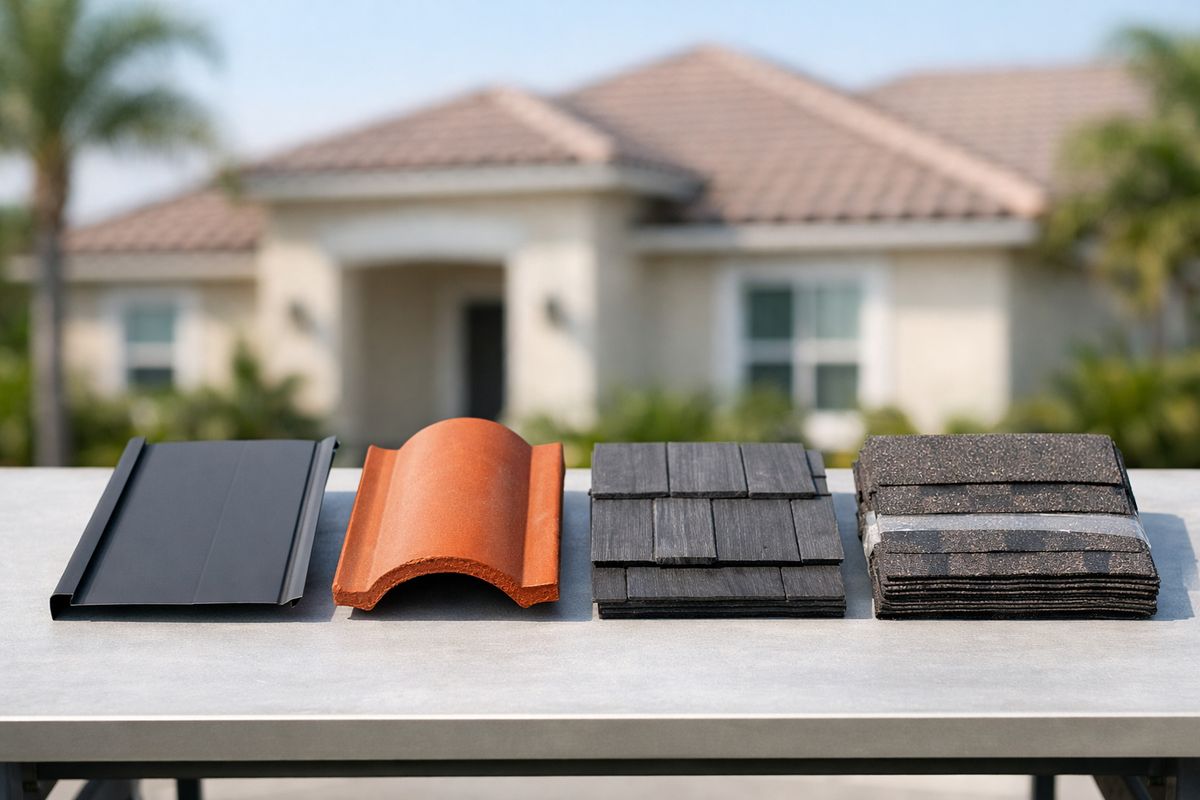
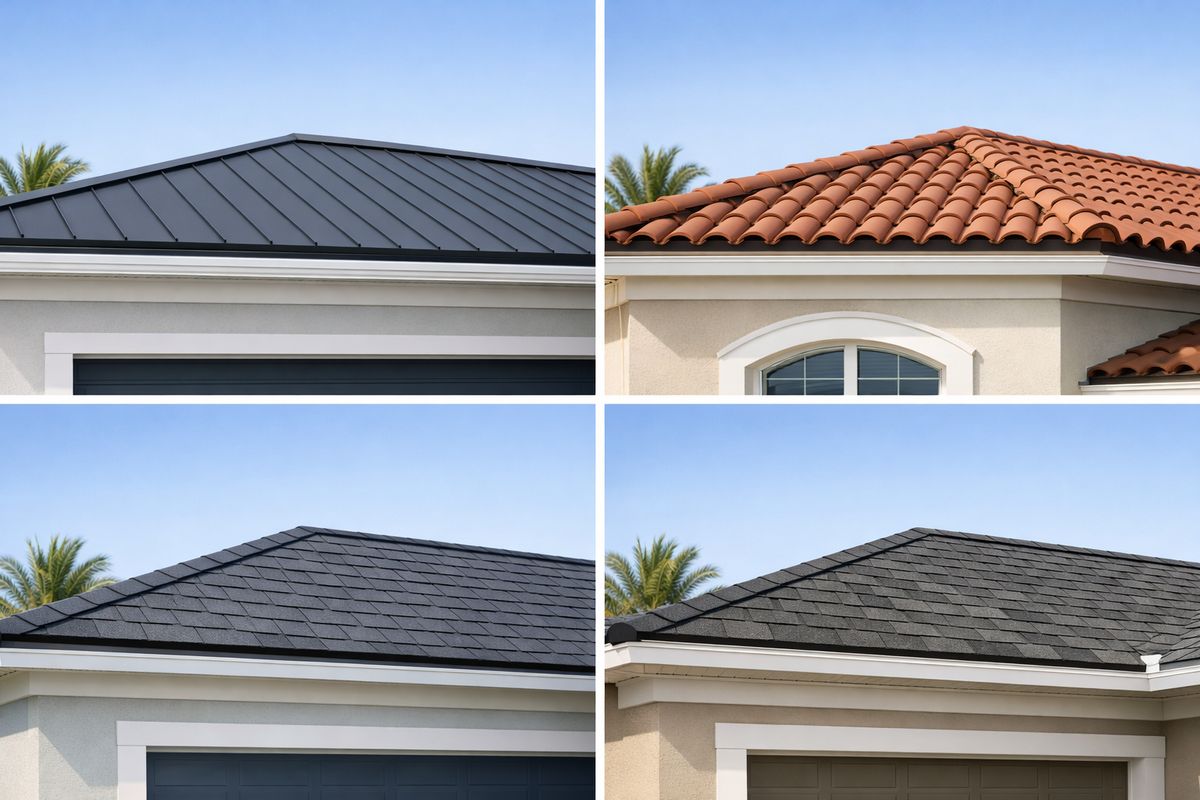
For Central Florida homes, the market leaders are clear. According to the Florida Building Code and the Florida Product Approval system, metal roofing leads on wind resistance and long service life, tile follows for longevity and heat performance, composite fills the gap for lighter-weight premium looks, and asphalt shingles remain the volume leader on price and replacement practicality. Local contractors reported that older single-family homes requesting estimates most often compare these four because they cover the main tradeoffs that matter in Orange County.
Why florida demands a different roofing standard
Florida roofs face a harsher job than roofs in milder climates. The Florida Building Code, 8th Edition requires attention to wind loads, roof assemblies, and water barriers because storm exposure, wind-driven rain, UV radiation, and attic heat drive early failure when materials or installation fall short. The Asphalt Roofing Manufacturers Association and the Metal Roofing Alliance both reported that heat and moisture cycles accelerate wear, especially on older systems.
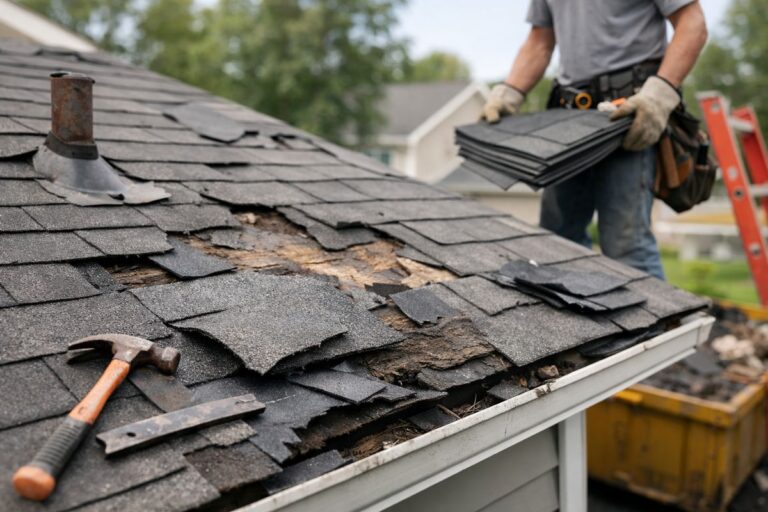
In older Orlando-area neighborhoods, visible deterioration usually appears first at the surface and edges. Contractors reviewing roof replacement warning signs consistently note granule loss, curled tabs, cracked underlayment, lifted flashing, and soft decking around penetrations.
The four materials most often considered
Asphalt shingles are the standard value option. According to national market data from the National Roofing Contractors Association, they dominate residential reroofing because they install faster and cost less upfront.
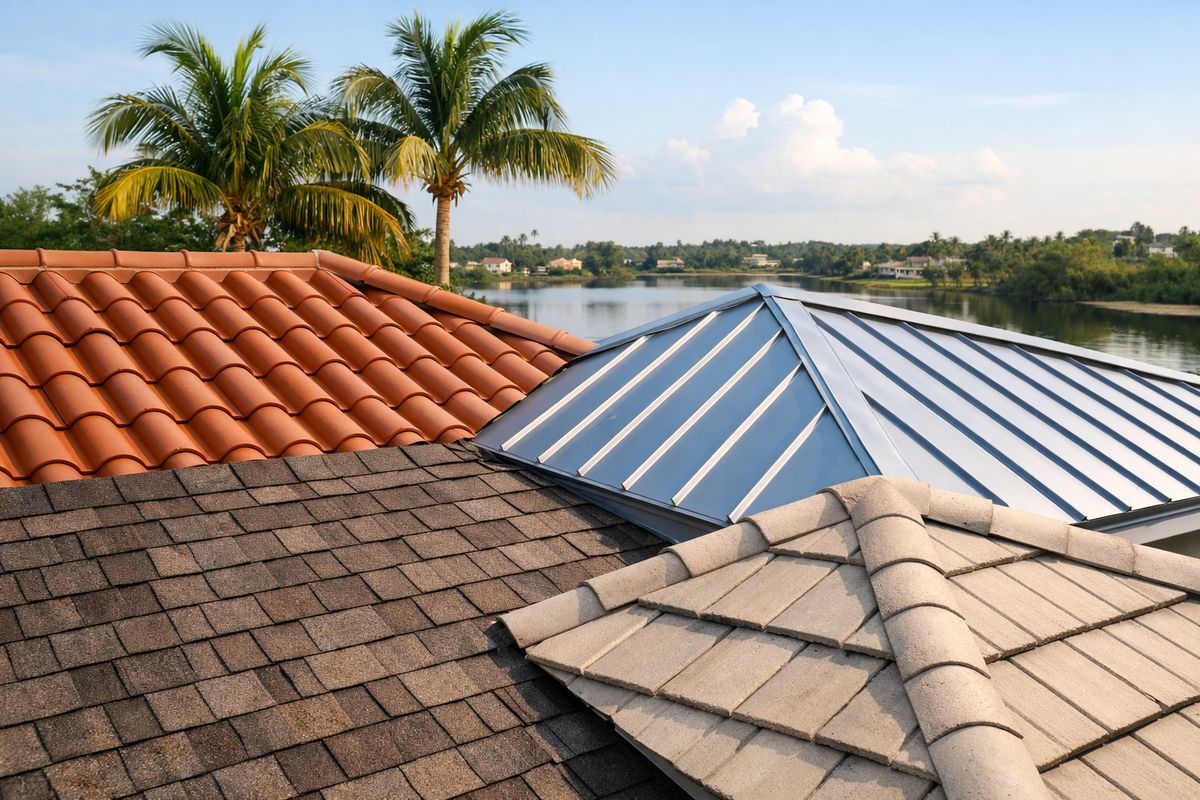
Metal roofing, including standing seam and exposed-fastener panels, sits at the durability end of the market. Tile roofing, usually clay or concrete in Florida, remains common on Mediterranean-style and higher-end homes because of its appearance and thermal stability. Composite and synthetic roofing products are designed to deliver a tile- or slate-style profile at lower weight, according to manufacturer specifications and regional contractor comparisons.
How each roofing material performs on florida homes
The practical comparison comes down to lifespan, wind approval, maintenance, structural demand, and replacement complexity. Homeowners already weighing Florida roof types side by side usually find that the top material is less about branding and more about matching the house to the full roof system.
Metal roofing: strongest case for hurricane resistance and long life
Metal roofing offers the strongest overall case for Florida homes focused on storm resistance. Manufacturer testing and Florida approvals regularly show high wind ratings when panels, clips, and fastening patterns are installed as tested. The Metal Roofing Alliance said metal systems also keep weight low, which makes them especially attractive on older homes that cannot carry tile without structural work.
The main drawback is price. Standing seam systems cost more than shingles, and even exposed-fastener systems sit above entry-level reroofing. But the long service life changes the math over time. “Properly installed metal roofs are one of the best-performing systems in high-wind regions,” said Renee Ramey, executive director of the Metal Roofing Alliance, in industry guidance published by the organization.
Noise is often overstated. Contractors and manufacturers reported that modern underlayment, decking, and attic insulation reduce rain noise to levels many occupants barely notice.
Tile roofing: heat resistance, longevity, and structural limits
Tile remains a Florida staple for a reason. Clay and concrete tile hold up well under sun exposure, maintain appearance over long periods, and fit the regional architecture seen across Orlando-area subdivisions. According to the Tile Roofing Industry Alliance, tile systems also create an air space that can support thermal performance.
The balancing fact is structural load. Tile is heavy, and older homes often require framing review before replacement. Roofing companies and engineers consistently report that a house built for shingles cannot simply switch to tile without verifying capacity. Tile also breaks differently from metal or shingles, which can make spot repairs more specialized.
Composite roofing: tile appearance with less weight
Composite roofing occupies the middle ground. Synthetic slate and composite tile products deliver a premium look with less weight than concrete or clay, according to manufacturer literature and Florida contractor comparisons.
That advantage comes with a quality-control issue across the category. Product durability, warranty terms, and local installer familiarity vary more than they do in mature categories like metal and asphalt. Some products have shorter field histories in Florida, which makes manufacturer track record a real buying factor, not a sales talking point.
Asphalt shingles: best value for many replacement projects
Asphalt shingles remain the most common reroofing choice because they are the most budget-accessible and the easiest to repair. The NRCA and contractor volume data both show architectural shingles leading residential replacement work across the state.
They also have the shortest service life among the four major options in Florida conditions. High heat, algae exposure, and repeated storm cycles wear shingles faster than premium systems. Still, for older homes where budget, neighborhood consistency, and straightforward installation lead the decision, shingles stay firmly in the race. Households comparing repair-versus-replacement decisions often land here when the structure does not justify a premium jump.
The buying factors that actually decide the right roof
The “best” roof is not a universal answer. According to contractor estimate patterns and Florida-specific guidance, the real decision points are wind rating, structural compatibility, heat performance, insurance considerations, and expected ownership timeline.
Wind rating is the number that matters most in florida
In Florida, wind rating carries more weight than brochure language. Product approval documents show how a system performed in testing, but fastening pattern, underlayment, edge securement, and deck attachment determine whether that rating holds on the house. Contractors said estimate reviews should confirm the approval, not just the material name.
Home structure, roof slope, and age of the house
Older homes in Orlando, Ocoee, Apopka, and Winter Garden need more scrutiny before any material is selected. Inspectors and engineers reported that aging decking, prior leak repairs, framing condition, and roof pitch all affect what the house can support and how reliably the new roof will drain. That is why understanding how long a Florida roof really lasts matters less than knowing the condition of the current deck and structure.
Color, reflectivity, and attic heat
Reflective finishes and lighter colors help, according to ENERGY STAR roof product guidance. They reduce heat absorption at the roof surface, which supports lower attic temperatures.
But the balancing point is just as important. Building-science guidance and contractor experience show that insulation, ventilation, and installation quality often affect indoor comfort as much as roof color. A poorly vented attic under a light roof still runs hot.
Insurance, maintenance, and resale impact
Insurance carriers, HOAs, and resale expectations all shape material choice. Carriers often ask about roof age, type, and condition, and underwriting standards change over time. Households reviewing what Florida policies actually pay for roof claims usually discover that documentation, inspections, and roof age matter almost as much as the material itself. Longer-lasting materials also support resale appeal, though buyers still judge visible condition and neighborhood fit.
Budgeting for the right material, not only the cheapest bid
Price matters, but initial bid price is not the full cost. Contractors said older roofs with visible wear often reveal hidden conditions during tear-off, especially around valleys, flashing points, and decking seams.
Upfront price tiers by material
Regional estimate patterns place asphalt shingles at the entry level, composite in the middle to upper range, and metal and tile at the higher end. Within those bands, roof complexity, slope, penetrations, and labor availability move pricing quickly. Households examining what drives metal roof pricing in Florida often find that trim detail and attachment method account for large swings.
Long-term value over a florida roof’s service life
Lower upfront cost does not equal lower lifetime cost. Shingles generally require replacement sooner, while metal and tile spread a larger investment over more years. Composite lands between them. Premium systems also demand more specialized repairs, which raises service costs later, but they usually offset that with longer replacement cycles.
Costs that estimates often leave out
The most commonly omitted line items are rotten decking replacement, upgraded underlayment, flashing replacement, permit fees, ventilation changes, disposal, and structural reinforcement for heavier systems. Contractors reported that older roofs with visible wear trigger these additions often, especially after leak history or storm exposure is confirmed.
Common selection mistakes on older florida roofs
Estimate-driven projects repeat the same errors. Most are avoidable once the roof is evaluated as a system instead of a surface product.
Choosing by material label instead of installation system
A roof succeeds or fails as an assembly. Manufacturers and inspectors agree that underlayment, flashing, fastening, ventilation, and workmanship carry as much weight as the visible material. A poorly installed metal roof underperforms a properly installed shingle roof.
Ignoring structural load and existing deck condition
Heavy systems require proof, not assumptions. Engineers and roofing contractors said older homes often hide weakened decking or framing issues below weathered coverings. Visible wear is frequently a signal of deeper substrate damage.
Comparing bids without matching scope
A cheaper bid often leaves out tear-off details, flashing replacement, code upgrades, disposal, or warranty coverage. Contractors noted that estimate comparisons only mean anything when the scope is matched line by line. Households responding to storm-related warning signs on the roof face this issue often after multiple bids arrive quickly.
Best roofing material by florida homeowner use case
The strongest material choice depends on the household’s actual priority, not the loudest sales pitch.
Best for maximum storm protection and longest lifespan
Metal roofing leads when wind resistance, lower weight, and long service life rank first. Manufacturer testing, Florida approvals, and contractor guidance all support that conclusion. The tradeoff is higher initial cost.
Best for high-end curb appeal and heat performance
Tile fits homes prioritizing regional style, long lifespan, and strong sun performance. Florida design patterns support its continued popularity. The tradeoff is weight, structural review, and higher replacement cost.
Best for value-focused replacements on aging homes
Architectural asphalt shingles remain the leading fit for budget-sensitive reroofing on older homes. Contractors reported that they align well with common neighborhood standards and simpler repairs. The tradeoff is a shorter service life than metal or tile.
Best for lighter-weight premium appearance
Composite roofing makes the strongest case for homeowners seeking a tile-like or slate-like profile without the full structural burden. Manufacturer positioning and contractor comparisons support that role. The tradeoff is the need to vet brand quality, warranty strength, and installer experience carefully.
Frequently asked questions
What is the single best roofing material for florida homes?
According to Florida-focused contractor guidance and product approval data, metal roofing delivers the strongest overall combination of wind performance, low weight, and long life. Tile ranks high where structure and budget support it.
Are shingles a bad choice in central florida?
No. Asphalt shingles remain the most common replacement material because they offer solid value, easier repairs, and broad installer availability. They simply do not last as long as metal or tile in Florida conditions.
Can an older home switch from shingles to tile?
Yes, but only after structural review confirms the framing and decking can carry the added weight. Contractors and engineers said that step is non-negotiable on older single-family homes.
Does roof color make a big difference in florida heat?
Color and reflectivity help, especially with lighter finishes. According to energy-efficiency guidance, ventilation, insulation, and installation quality still play a major role in attic heat and indoor comfort.
What should be checked before comparing roofing estimates?
The estimate should confirm product approval, underlayment type, flashing replacement, ventilation scope, tear-off details, decking allowances, permit costs, and warranty terms. Without matched scope, price comparisons are misleading.
Ready to protect your home? Get in touch with the Hi Low Roofing team for your free estimate. https://hilowroofing.com/free-estimate/