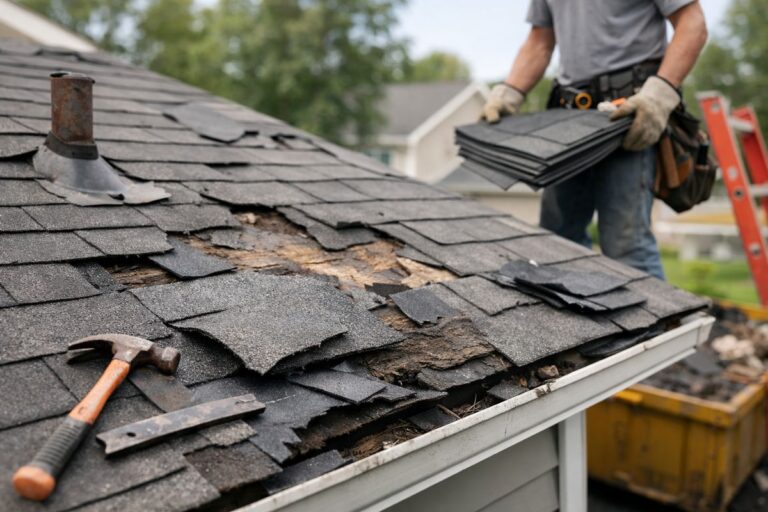
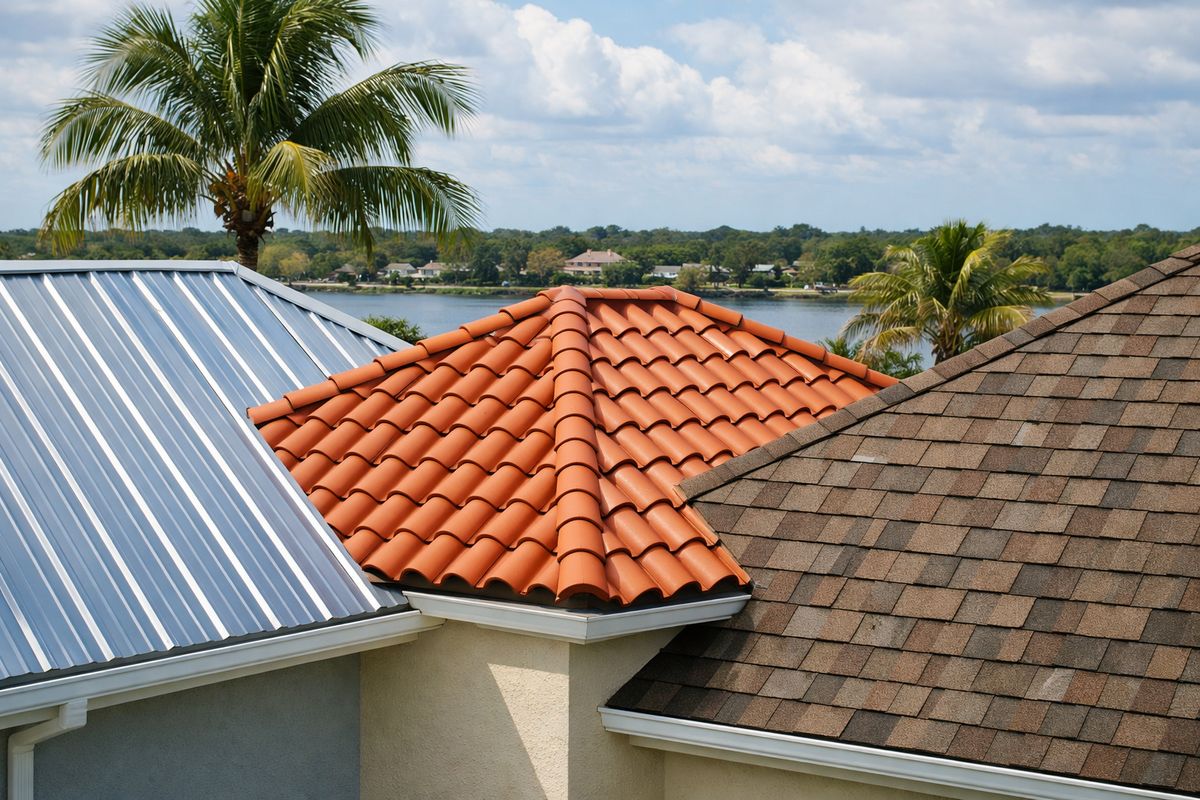
If your roof is faded, streaked, curling, or dropping granules into the driveway, “someday” turns into “right now” fast in Central Florida. The best roofing material Florida homeowners can choose usually comes down to three options, metal, tile, or shingles, and the right pick depends on how long you plan to stay, how much storm protection you want, and what your budget can actually handle.
Quick overview: metal vs. tile vs. shingles in florida
For most homes in Winter Garden, Ocoee, Apopka, and Orlando, metal is the best overall choice. It handles Florida weather well, lasts a long time, and usually gives you the strongest mix of storm performance, energy benefits, and long-term value.
Tile is the premium style choice. It looks right at home on many Florida houses, especially Mediterranean and higher-end suburban designs, and it can last a very long time. The catch is weight, cost, and the fact that repairs can get tricky as roofs age.
Shingles are still the most common because they cost less upfront and fit almost any neighborhood. But if your roof is already older and showing wear, shingles also tend to be the option that ages out first under constant sun, rain, and storm cycles.
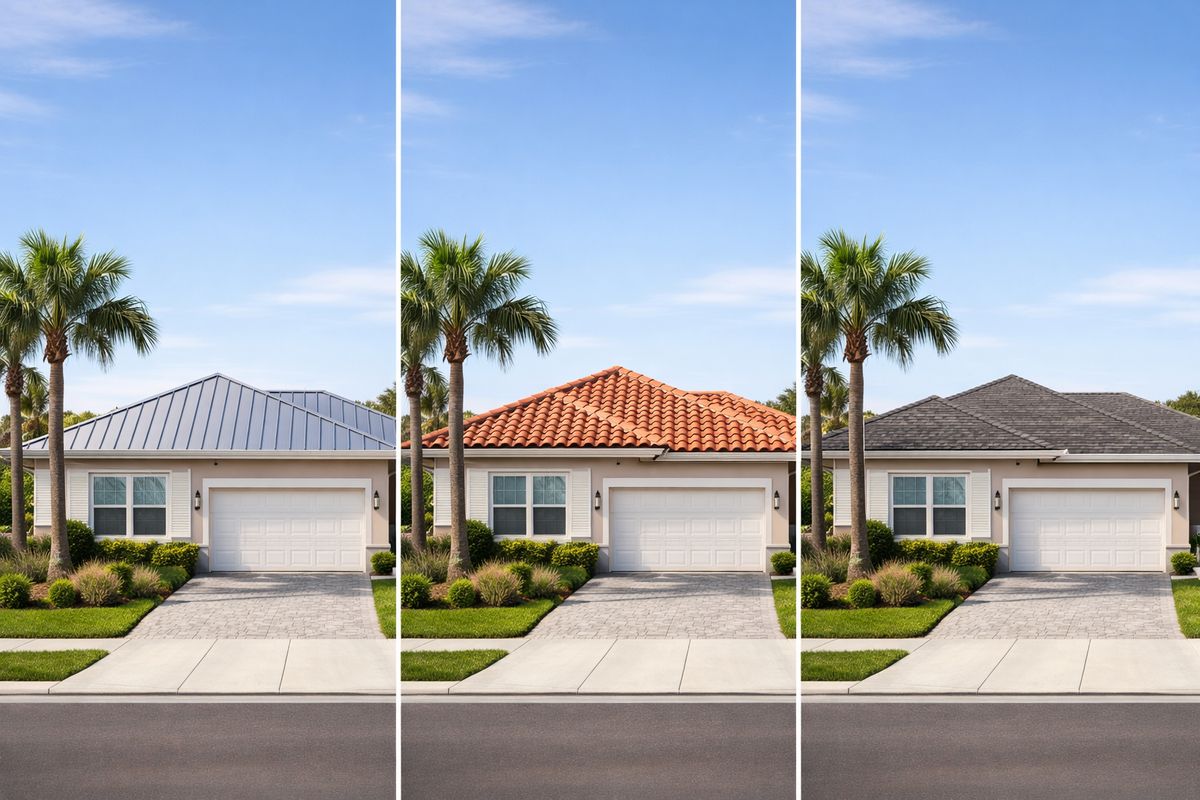
That is the snapshot. Metal wins for most people. Tile makes sense when looks and lifespan matter more than budget. Shingles fit best when replacement cost is the main pressure point.
How florida weather changes the roofing decision
Florida is not a normal roofing market. A roof here takes a beating from every angle: blazing UV exposure, heavy afternoon rain, high humidity, algae growth, and the yearly stress of storm season.
That changes the decision more than many homeowners expect. A material that performs well in a milder climate can age faster here. A roof that looks fine from the street can still have weakened seals, worn underlayment, or storm fatigue from years of wind-driven rain.
In places like Orlando and Apopka, the issue is not just one big hurricane. It is the repeated cycle of heat, expansion, cooling, moisture, and wind. Your roof gets cooked, soaked, and tested over and over. That is why generic roofing advice does not help much. Local weather changes everything.
Storm and wind resistance
Storm resistance is where the three-way comparison starts to separate.
Metal usually performs best in strong wind when installed correctly. Tile can be durable, but individual tiles are vulnerable if something shifts or breaks. Shingles can do well when new and high-rated, but older systems often show damage sooner after repeated storm exposure.
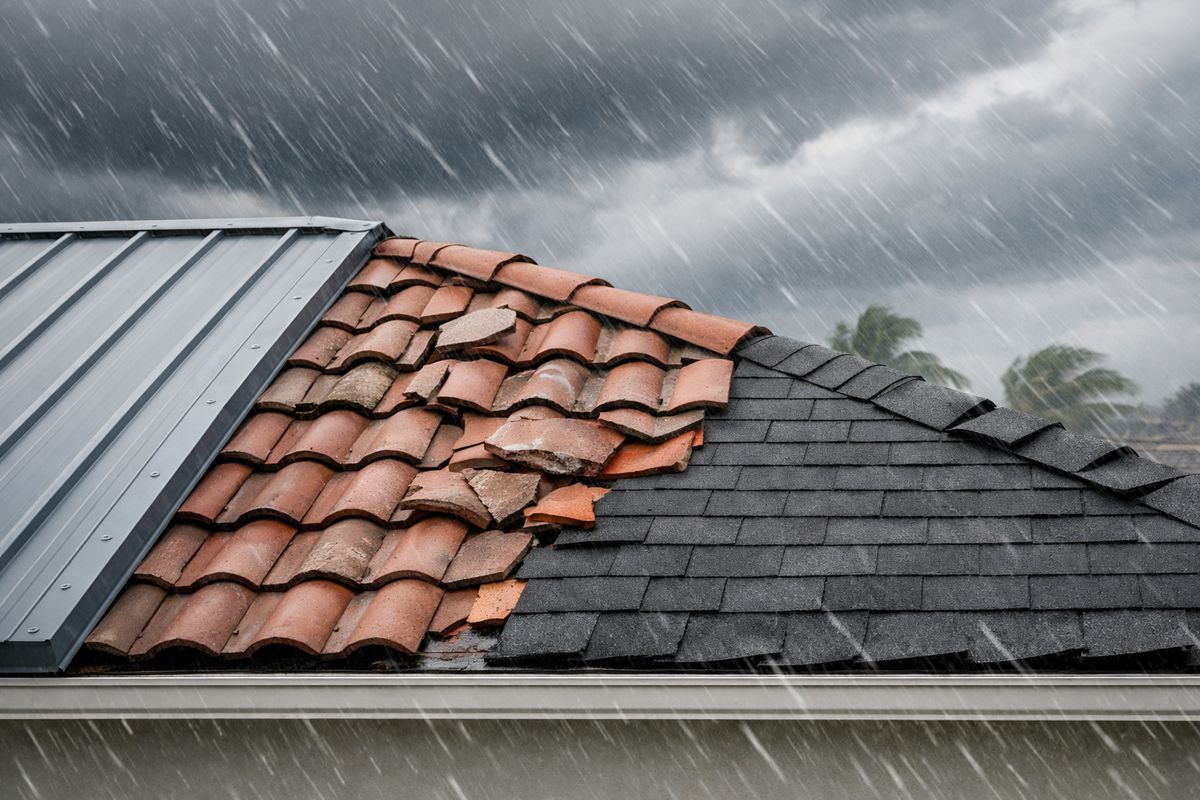
What usually fails first is not always the whole roof. Sometimes it is the edges, ridge caps, fasteners, underlayment, or a few vulnerable sections near valleys and penetrations. If you have already noticed lifted tabs, cracked tiles, or odd wear after a storm, it helps to know the signs that often show up after high wind and rain.
Metal in high wind
Metal roofing is a strong wind performer because large panels or interlocking systems can create a tight, durable surface. But installation matters a lot. The fastening pattern, attachment method, edge detailing, and panel style all affect how well it resists uplift.
Standing seam systems often perform especially well because the fasteners are concealed and the panels lock together in a way that limits weak points. Even so, a badly installed metal roof is still a badly installed roof. The material helps, but workmanship decides whether that advantage actually shows up in a storm.
Tile in high wind
Tile is tougher than it looks, but it is not invincible. The system can last for decades, yet individual tiles can crack, slide, or break loose if wind gets underneath or debris hits the surface.
Another issue shows up on older tile roofs: the tile may still look decent while the underlayment below it is aging out. That hidden layer is what stops water, so a tile roof can appear solid but still be vulnerable during a hard Florida storm.
Shingles in high wind
Shingles vary more than the other two options. Basic three-tab shingles are not in the same class as higher-end architectural shingles with stronger wind ratings. That said, shingles have more exposed edges by design, and those edges are where trouble often starts.
As the roof ages, adhesive strips weaken, tabs become brittle, and storm wear shows up faster. On a 15 to 20 year old shingle roof in Ocoee or Orlando, one rough storm can be the moment when a repair conversation becomes a replacement conversation.
Heat, sun, and energy efficiency
Florida sun is relentless, especially on a roof that gets direct afternoon exposure. Roofing material affects attic temperatures, but not in a simple “cool roof equals low bill” way. Color, ventilation, insulation, and attic design matter too.
Still, some materials clearly handle heat better than others. Metal tends to reflect more solar energy. Tile helps by slowing heat transfer. Shingles, especially darker ones, absorb more heat and can make the roof surface much hotter.
Metal and reflective performance
Metal often leads this category, especially in lighter colors or with reflective coatings. Instead of soaking up heat the way darker asphalt surfaces do, metal can reflect a meaningful share of solar radiation.
That does not mean every metal roof feels dramatically cooler inside the house on day one. The bigger win is usually reduced attic heat load over time, especially when paired with good ventilation. If you are sorting through value and cost together, it helps to compare the bigger picture around what Florida homeowners weigh before choosing metal.
Tile and natural thermal performance
Tile performs well in heat for a different reason. It has thermal mass, meaning it takes longer to absorb and transfer heat, and the air space beneath many tile systems adds another buffer.
Think of it like a shaded gap between the sun and your ceiling. Heat still hits the roof, but it does not move through as quickly. That can help on brutal summer afternoons when the garage side of the house feels like an oven by 4:30.
Shingles in full florida sun
Shingles usually run hotter, especially dark shingles on low-shade roofs. Asphalt absorbs heat, and once that surface gets hot, the attic below feels it.
The difference is not always dramatic enough to make or break the decision on its own. But over many years, more heat exposure can contribute to faster aging, curling, and wear. In Florida, that matters.
Lifespan and long-term durability
If your goal is to replace the roof once and not think about it again for a long time, metal and tile stand above shingles.
Metal roofs often last 40 to 70 years depending on system type, coating quality, and installation. Tile roofs can also last for decades, sometimes longer than the underlayment beneath them, which means the system may still need major work before the tile itself is “done.” Shingle roofs usually have the shortest service life in Florida, often around 15 to 25 years in real-world conditions rather than best-case brochure conditions.
That is why upfront price can be misleading. A cheaper roof is not necessarily the cheaper roof over time. If you want a closer look at replacement timing, there is a helpful breakdown on how roof lifespan really plays out in Florida weather.
Resistance to moisture, algae, and humidity
Florida roofs stay damp more often than many homeowners realize. Morning dew, shaded spots, afternoon downpours, and sticky air all create the perfect setup for algae and moisture problems.
Shingles often show dark streaking first. That is usually algae staining, which looks bad but is mostly cosmetic at first. Tile can also show staining, especially on lighter colors. Metal generally resists algae growth better on the surface, though dirt, mildew, and runoff staining can still happen.
The bigger concern is moisture getting where it should not. On shingles, that can mean underlayment wear or failed flashing. On tile, it often comes back to the underlayment beneath the tile field. On metal, the weak points are usually seams, penetrations, and aged sealants rather than the panels themselves.
Maintenance and repairs
Every roof needs maintenance. The difference is what maintenance looks like, how often repair issues show up, and how easy those repairs are to handle.
Shingles are the most familiar and often the simplest to patch in the short term. Metal needs fewer routine repairs in many cases, but when repairs do come up, the fix can be more specialized. Tile repairs can be the most delicate because walking the roof carelessly can create more damage.
If you are already weighing age and condition, it helps to sort out when a roof can still be repaired and when replacement makes more sense.
Metal roof repair reality
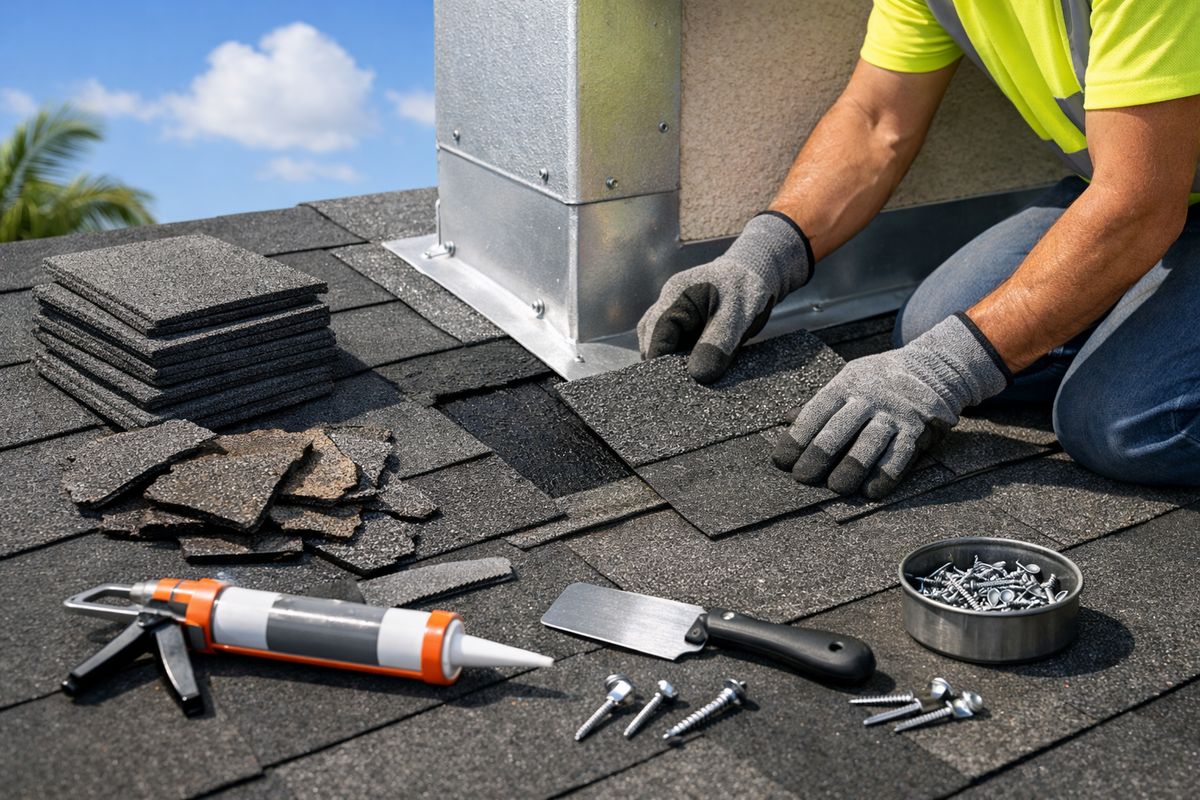
Metal roof repairs usually involve fasteners, flashing details, sealant aging, or damage to a specific panel area. On exposed-fastener systems, screws and washers can become a maintenance point over time. On concealed-fastener systems, the issues may be less frequent but more technical.
Straightforward repair is possible when the problem is isolated. The challenge comes when matching panels, dealing with custom profiles, or correcting an installation problem that affects a larger section.
Tile roof repair reality
Tile repair sounds simple until you try to match older tile. Color fade, discontinued profiles, and fragile surrounding pieces can turn a small repair into a bigger project.
Another catch is that the visible tile is only part of the system. If water is getting through because the underlayment below has failed, replacing one or two cracked tiles does not solve much. That is why older tile roofs need careful inspection, not just surface patching.
Shingle roof repair reality
Shingle repairs are common because shingle damage is common. Replacing a few tabs, resealing a lifted section, or patching around flashing is familiar work.
But repairs tend to get more frequent as the roof gets older. Once the shingles become brittle or start losing granules heavily, each repair can feel like taping up a worn-out box. It may hold for a while, but nobody mistakes it for a long-term answer.
Weight and structural impact on your home
Weight matters more than many homeowners expect.
Shingles are usually the lightest of the three. Metal is also relatively light, often even lighter than a traditional shingle system depending on the product. Tile is much heavier, and that can affect whether your home is a good candidate without structural review.
If your home currently has shingles and you want to switch to tile, do not assume it is a simple swap. Older homes in Central Florida may need framing evaluation before that change makes sense. This is one reason tile costs more than the material alone suggests.
Curb appeal, style, and neighborhood fit
Looks matter. Not in a superficial way, in a “you see this every day and so does the next buyer” way.
Tile has the strongest visual presence. It fits Mediterranean, Spanish-style, and many upscale Florida homes beautifully. Metal has come a long way and works especially well on ranch homes, modern farmhouses, coastal-influenced designs, and houses that need a cleaner, sharper look. Shingles are the most flexible visually because they fit almost everything without drawing much attention.
HOA expectations can also shape the decision. Some neighborhoods strongly favor one look over another. In a subdivision outside Winter Garden, the roof that fits best is often the one that looks like it belongs there, not the one trying hardest to stand out.
Installation complexity and roof replacement disruption
Roof replacement is not just about material. It is also about how involved the job becomes while your home is an active work site.
Shingles are usually the fastest and most familiar installation. Metal takes more precision, especially around valleys, flashing, and panel layout. Tile is the most labor-intensive because of the weight, handling, underlayment details, and breakage risk.
The crew matters as much as the product, honestly maybe more. A great shingle roof outperforms a sloppy metal or tile job every time. Tear-off, deck condition, ventilation corrections, and flashing details all shape the final result. If your current roof is worn enough that you are already seeing curling edges or recurring leaks, a local guide to the warning signs that replacement is getting close can help confirm the timing.
Insurance, code, and inspection considerations
Insurance conversations in Florida can feel like a moving target. Material matters, but age, documentation, condition, and installation quality matter too.
A newer roof that meets current code standards may help with wind mitigation and make inspections smoother. Metal, tile, and quality shingles can all perform well in that context when installed properly. The catch is that insurance carriers often care just as much about the roof’s age and remaining useful life as the material itself.
That is why paperwork counts. Permit records, product information, inspection reports, and proof of updates can all help. If insurance questions are already part of your replacement decision, it is worth reading more about how roof claims and policy language often work in Florida.
Pricing and long-term value
Shingles usually cost the least upfront. Metal lands in the middle to upper range. Tile is often the highest initial investment.
But cheapest today is not always best value across 20 or 30 years. You have to think about replacement cycles, repairs, storm performance, energy impact, and how long you plan to stay in the home.
Lowest upfront cost
Shingles almost always win on starting price. That makes them appealing when the roof needs attention now and budget is tight.
The tradeoff tends to show up later through shorter life, more weather-related wear, and the possibility of replacing the roof sooner than you would with metal or tile.
Mid-to-high investment range
Metal often sits in the middle to upper tier depending on panel type and design. It costs more than shingles, sometimes a lot more, but many homeowners feel the value works out because of the longer service life and stronger storm performance.
If pricing is one of your deciding factors, it helps to review what drives the real cost of a metal roof in Florida.
Highest upfront cost
Tile usually costs the most because the material is heavier, labor is more involved, and structural considerations may add another layer of expense.
For the right house, that cost can still make sense. But tile is rarely the “save money now” option.
Best fit by homeowner priority
Once you strip away marketing language, the decision gets simpler. The best roof is the one that matches what matters most to you right now: longevity, appearance, or budget.
Choose metal if you want longevity and storm performance
Metal is the best fit if you want a long-lasting roof that stands up well to Florida weather and you plan to stay in your home for years. It is especially appealing when your current roof is already showing visible wear and you do not want to repeat this project sooner than necessary.
Choose tile if you want premium looks and long life
Tile makes the most sense when curb appeal is high on your list and your home’s structure, style, and budget support it. You get long life and a classic Florida look, but you pay for it upfront and repairs can be more specialized.
Choose shingles if you need the most budget-friendly replacement
Shingles are the practical choice when cost is the main driver and you want a familiar roofing option with broad color and style choices. A good shingle roof can still serve you well, especially if installation quality is strong and you stay on top of maintenance.
Which roofing material is best for older homes in central florida?
Older homes often force a more practical decision because the roof is already telling you something. Maybe the shingles are curling near the garage. Maybe the tile looks fine from the ground but leaks show up after a hard rain. Maybe the metal roof has fastener issues that have started to repeat.
In Winter Garden, Ocoee, Apopka, and Orlando, older roofs usually need a decision based on remaining life, not just appearance. If the structure can support it and the budget is there, metal is often the smartest upgrade because it gives you durability without the weight concerns of tile. Tile still makes sense for certain homes, especially if the style calls for it. Shingles stay in the conversation because they are affordable and familiar, but they are usually the shortest-term play of the three.
If your roof is no longer a “someday” project, start with condition, age, and how long you plan to stay. That usually points the answer in the right direction fast.
Verdict: the best roofing material for florida
Metal is the best roofing material for Florida overall. That is the clear answer.
It gives you the strongest balance of storm resistance, heat performance, lifespan, and long-term value for most single-family homes in Central Florida. If you want one material that fits the biggest share of homes and priorities, metal is it.
Tile is the best alternative when premium appearance matters most and your home can handle the weight and cost. Shingles are the best budget option when you need a replacement now and keeping upfront spending lower is the deciding factor.
If you want the simplest decision rule, use this: choose metal for performance, tile for style, shingles for price.
What to do next if your roof is showing wear
If you have noticed curling shingles, cracked tile, dark streaks, soft spots, or wear that stands out after a hot Orlando afternoon, do not wait for the next major storm to make the decision for you. Get the roof looked at while you still have options, because repairs, replacement timing, and insurance documentation are easier to handle before a small issue becomes an interior leak.
If water has already made it inside, start with the first steps that help limit damage after a leak. Then get a replacement estimate if the roof is aging out, especially if visible wear is spreading across multiple sections.
Frequently asked questions
What roofing material lasts the longest in florida?
Tile and metal both last longer than shingles in Florida, but metal is usually the better all-around choice because it combines long life with strong storm performance and lower weight. Tile can last a very long time too, though underlayment often becomes the deciding factor before the tile itself wears out.
Is a metal roof better than shingles in florida?
Yes, for most homeowners. Metal usually holds up better against wind, sun, and long-term weather exposure. Shingles cost less upfront, but metal often wins over time if you plan to stay in your home and want fewer replacement cycles.
Are tile roofs good for hurricanes in florida?
Tile roofs can perform well, but the system has to be installed properly and kept in good condition. Individual tiles can crack or shift in severe storms, and older underlayment can become a weak point even when the tile still looks fine.
What is the cheapest roof to replace in florida?
Shingles are usually the cheapest roof to replace upfront. That lower cost is the main reason so many homes still use them, even though metal and tile often deliver more value over a longer period.
Does roof color matter in florida heat?
Yes, especially on roofs with full sun exposure. Lighter colors generally reflect more heat, while darker colors absorb more. The full picture also includes attic ventilation and insulation, but color still makes a real difference.
When should you replace an older roof instead of repairing it?
If damage is spread across multiple areas, leaks keep coming back, or the roof is near the end of its expected life, replacement usually makes more sense than ongoing patchwork. That is especially true in Florida, where one more storm season can turn a tired roof into an urgent problem.
Ready to protect your home? Get in touch with the Hi Low Roofing team for your free estimate. https://hilowroofing.com/free-estimate/