

Navigating roof leak detection in Lakeland often starts with understanding why our homes are so susceptible in the first place. Living here in Central Florida means dealing with a unique climate that's tough on roofs. The combination of blistering sun and sudden, heavy downpours puts constant stress on your roofing materials, making proactive checks a non-negotiable part of home maintenance.
4 Signs of a Roof Leak: What Every Lakeland Homeowner Should Know
Florida's intense sun is your roof’s biggest enemy. The relentless UV radiation essentially bakes asphalt shingles, stripping away their protective granules and leaving them brittle and prone to cracking.
Then comes the thermal shock—the daily cycle of intense heat followed by a rapid cool-down from an afternoon thunderstorm. This constant expansion and contraction is brutal on your roof, weakening the seals around vents, chimneys, and skylights until a tiny gap appears.
It doesn't take much. A small crack in a pipe boot’s sealant or a single shingle lifted by a gust of wind is an open invitation for water to begin its silent, destructive journey into your home's structure.
Don't Underestimate a "Small" Leak
That tiny drip you noticed might seem harmless, but ignoring the earliest signs of a leak can spiral into major problems that go far beyond a simple water stain on the ceiling.
A slow, persistent leak will saturate your attic insulation, completely destroying its R-value and driving up your energy bills. Worse yet, that trapped moisture creates a dark, damp environment—the perfect breeding ground for mold and mildew. This can seriously compromise your home's air quality and even pose health risks to your family.
The damage doesn't stop there. Over time, that moisture will rot the wooden roof deck, weaken the rafters, and cause ceiling joists to swell. What began as a minor nuisance can quickly escalate into a massive structural repair, costing thousands to fix. It’s a textbook case of how a small, unchecked problem becomes a costly catastrophe.
By the time you see a stain on your ceiling, the leak has likely been active for a while, potentially causing unseen damage to insulation, wood, and drywall along the way.
The Big Picture on Leak Detection
This focus on catching leaks early isn't just a local concern; it’s part of a global trend. The worldwide leak detection market is on track to grow from $2.92 billion in 2025 to $5.65 billion by 2032, fueled by better technology and a growing awareness of how much damage prevention can save.
You can find more industry insights on Data Bridge Market Research. This growth underscores a simple truth: identifying issues before they become disasters is critical, especially for property owners in storm-prone places like Lakeland.
I've put together a quick-reference table to help you spot both the subtle clues and the clear warnings of a roof leak. Knowing what to look for inside and outside your property is the first step in catching a problem early.
Hidden and Obvious Signs of a Roof Leak
| Location | What to Look For | What It Could Mean |
|---|---|---|
| Attic | Damp or wet insulation, dark stains on wood, musty odors. | This is often the first place a leak shows up. The water is directly entering your property's structure. |
| Interior Ceilings & Walls | Water stains (often yellowish or brown), peeling paint, sagging drywall. | Water has already saturated the materials above and is now damaging your living or working space. |
| Exterior Roof | Missing, cracked, or curling shingles; damaged flashing; granules in gutters. | These are direct signs of roof wear and tear, indicating vulnerabilities where water can get in. |
| Around Vents & Chimneys | Cracked sealant, gaps in flashing, rust stains. | These penetration points are common failure areas. A compromised seal is a direct path for water. |
Keep this table in mind during your routine property inspections, particularly after a heavy storm. Catching any of these signs early can save you a world of headache and expense down the road.
Finding Leaks Inside Your Property
When you think of a roof leak in Lakeland, you probably picture a big, ugly water stain suddenly appearing on your living room or office ceiling. That definitely happens, but the real first clues are almost always quieter and sneakier. To catch a leak early, you need to know where to look for these more subtle signs inside your property.
Your attic is ground zero for this investigation. After the next big Central Florida downpour, grab a powerful flashlight and safely head up there. You're not just looking for active drips. Scan the insulation—is it matted down, damp, or discolored? That’s a huge red flag. Shine your light along the rafters and the underside of the roof sheathing. Any dark streaks or black stains on the wood are dead giveaways that water has been seeping in for a while.

Look Beyond the Ceiling
Water is tricky. It almost never travels in a straight line. A leak can find its way in at one point, run sideways along a rafter or a pipe, and finally show up as a stain feet away from the actual problem spot on the roof. That's why a full interior check is so critical.
Keep an eye out for trouble in these less-obvious places:
- Around Light Fixtures and Ceiling Fans: Water loves the path of least resistance, and the hole cut for a fixture is a perfect escape route. Check for rust on the fixture’s base or a faint ring of discoloration on the drywall right around it.
- Near Bathroom or Kitchen Vents: Exhaust fans that vent through the roof are another common exit point for leaks. Look for paint that's bubbling or peeling on the ceiling or walls directly around the vent cover.
- At the Top of Your Walls: The stain might not even be on the ceiling. Check for faint, brownish streaks running down the wall right where it meets the ceiling. This tells you water is seeping in at that joint.
One of the most overlooked clues we see is a persistent musty smell you just can't place. If a closet or small room smells earthy or damp right after it rains, it often means there's hidden moisture and mold starting to grow behind the drywall.
Common Misconceptions About Interior Leaks
It’s easy to look at a small, dry spot and dismiss it as an old stain. This is a common mistake. Many roof leaks are intermittent, only showing up when the rain is heavy and driven by strong winds. That stain might look dry for weeks, but it's just waiting for the next big storm to grow and cause more hidden damage.
Another myth is that if you don't see a drip, you don't have an active leak. The truth is, a slow leak can soak insulation and rot wood for months—or even years—without a single drop ever hitting your floor. By the time you actually see it drip, the damage is already well underway.
The bottom line? If you see a stain, no matter how small, it's time to act. Knowing the right first steps is key, which is why our guide on what to do when you have a leaking roof is a great resource to have on hand.
How to Safely Inspect Your Roof's Exterior
When you're trying to find a roof leak in Lakeland, your best first move is always the safest one: a detailed inspection with both feet on the ground. You really don't need to get up on the roof yourself. A good visual scan, maybe with a pair of binoculars, can help you spot the most common culprits before they cause serious water damage.
The key is to get familiar with what your roof looks like on a normal day. That way, you’ll notice when something is off. After a big storm, or at least once a season, just take a slow walk around your property and look up. You're hunting for the tell-tale signs of wear that mean your roof's defenses are getting weak.
What to Look for from the Ground
Think of this as a quick health checkup for your roof. You're basically looking for anything that seems damaged, out of place, or just plain worn out. These are often the first hints that your roof is struggling with the intense sun and heavy downpours we get here in Central Florida.
Here’s what to keep an eye on:
- Shingle Problems: Look for shingles that are curling up at the edges, look cracked, or are gone altogether. Any of these create a direct path for water to get in.
- Granule Loss: See a bunch of coarse, sandy grit in your gutters or on the ground where your downspouts empty? Those are the protective granules from your asphalt shingles. Losing them is like your roof losing its sunscreen, leaving it exposed.
- Damaged Flashing: Pay close attention to the spots where your roof meets a wall, the chimney, or a vent pipe. The metal flashing there should be totally flat and sealed tight. If you see rust, cracks, or gaps, that’s a major red flag.
- Moss or Algae: Those dark streaks or patches of green you see aren't just an eyesore. They signal that moisture is being trapped, which can slowly eat away at your shingles and lead to rot.
This kind of proactive check is becoming more common everywhere. It’s part of a bigger shift toward smart property maintenance. In fact, the global market for roof leak detectors is expected to jump from $2.5 billion in 2025 to over $4.2 billion by 2033, all because more people are trying to prevent expensive water damage before it starts. You can see more on this trend in this detailed market analysis.
The infographic below breaks down the most common issues we find during these exterior checks.
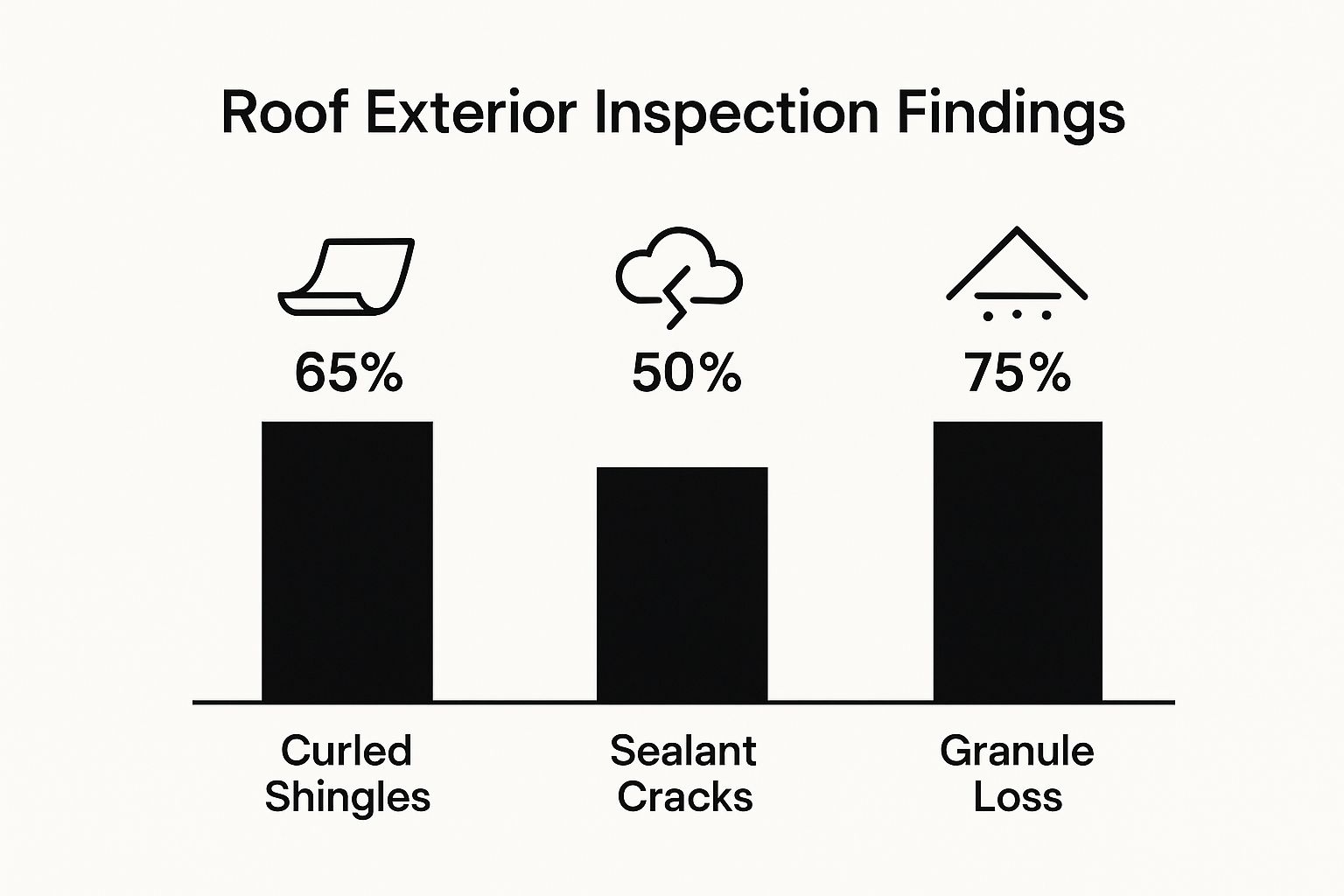
As you can see, granule loss and curled shingles are incredibly common problems. They’re a clear sign of the kind of widespread wear and tear that almost always comes before a leak.
The whole point of a ground inspection is just to gather clues, not to start fixing things yourself. If you spot a few missing shingles, a lot of granule loss, or obvious damage around flashing, it's time to put down the binoculars and call in a pro.
Common Causes of Roof Leaks in Florida
When you're trying to track down a roof leak in your Lakeland property, knowing why it's happening is just as crucial as finding where it's coming from. Most leaks aren't the result of some big, dramatic event. Far more often, they're the slow-burn result of persistent wear and tear on your roof's most vulnerable spots, thanks to Central Florida's unique brand of weather.
The biggest culprit? Our relentless, year-round sun. It bakes roofing materials day in and day out, making them brittle over time. This is especially tough on the parts designed to seal gaps and joints. Imagine leaving a rubber band out in the sun—it dries up, cracks, and loses its stretch. That's exactly what happens to the seals on your roof.
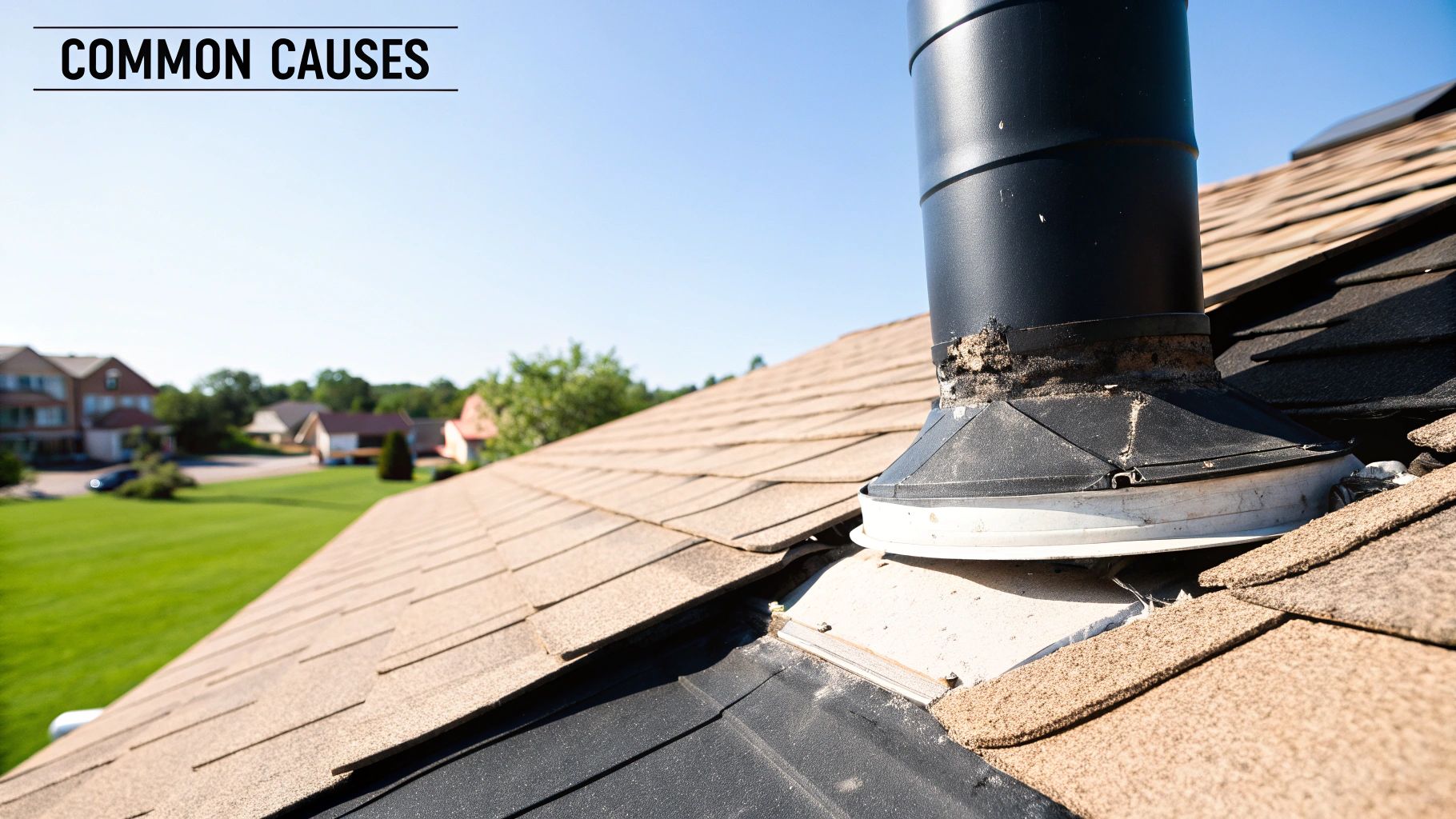
Deteriorated Flashing and Boots
From our experience across Central Florida, from Pinellas County to Orlando, the most common failure points are almost always around roof penetrations. These are the spots where things like vents, chimneys, or skylights poke through your roof deck. To keep them watertight, we use metal flashing and rubber boots.
Under that intense Florida sun, the sealant around the flashing eventually cracks and pulls away, opening up tiny channels for water. The rubber boots that fit around plumbing vents are especially notorious for this. After just a few years of constant UV exposure, they develop fine cracks that let rainwater trickle right down the pipe and into your attic.
Damage from High Winds and Debris
We all know Central Florida gets its fair share of wicked thunderstorms and tropical storm-force winds. Even when a full-blown hurricane isn't on the radar, those powerful gusts can get under the edges of asphalt shingles and break the sealant strip holding them down.
Once that seal is broken, wind-driven rain has an easy path up and under the shingle, where it can find nail heads and the wood sheathing below. It's a classic case of a roof looking perfectly fine from the street but hiding a serious leak. And of course, flying debris during these storms can cause direct damage, cracking a tile or puncturing a shingle in an instant.
A single shingle with a broken seal can allow gallons of water into your attic during a heavy, wind-driven rainstorm. It’s a subtle vulnerability that leads to significant damage over time.
For any Lakeland property owner, knowing how storms affect your roof is non-negotiable. If you think recent wind or hail has taken a toll, you have to act fast. Getting familiar with the process for professional storm damage roof repair will give you a clear game plan when severe weather hits.
Clogged Gutters and Poor Drainage
It's easy to forget, but your gutters are a critical part of your roofing system. Their job is to guide thousands of gallons of water safely away from your property. When they get clogged with leaves, pine needles, and other gunk, that water has nowhere to go but up.
This backup essentially creates a dam along the edge of your roof. Water pools there, seeping under the shingles and eventually rotting out the fascia board and roof decking. In a place like Florida with such frequent, heavy downpours, a clogged gutter can spring a leak in just a few weeks. It's one of the most preventable causes of roof leaks we see, yet it's also one of the most common.
Knowing When to Call a Roofing Professional
Doing your own visual checks from the ground is a fantastic first step. Seriously, it's more than most property owners do. But every DIY investigation has its limits, and knowing when to put down the binoculars and pick up the phone is what saves your Lakeland home or business from serious, expensive damage.
There are a few red flags that should have you calling a pro right away. If you’re seeing water stains pop up on multiple ceilings or in completely different rooms, that's not just a single, rogue shingle. It’s a sign of a much bigger problem.
Even more urgent? A visible sag in your roofline. Don't wait on that one. A sagging roof points to potential structural failure, and that’s a problem that needs an expert on-site, immediately.
Why a Professional Diagnosis is Worth It
When a professional roofer shows up, they bring a lot more to the table than just a good eye and a tall ladder. We’re equipped with technology that finds the exact source of a leak without tearing your property apart. It's the difference between targeted surgery and just guessing.
Here’s a look at what an expert brings to your roof leak detection in Lakeland:
- Thermal Imaging Cameras: These are a game-changer. They show us temperature differences inside your walls and ceiling caused by trapped moisture. We can literally see the extent of water damage that's completely invisible to the naked eye.
- Moisture Meters: We use these specialized tools to get exact readings of moisture levels in your drywall, insulation, and wood framing. This doesn't just confirm a leak; it helps us trace the water's path right back to the entry point.
This kind of tech-driven approach is why the global market for water leak detection systems is expected to hit $8,430.91 million by 2032. As this market research on water leak detection systems shows, property owners everywhere are realizing that precision diagnostics prevent catastrophic costs.
Calling a professional isn’t admitting defeat—it's making a smart, strategic move. A small investment in an expert diagnosis can save you thousands in structural repairs and, just as importantly, restore your peace of mind.
When a Leak Signals a Bigger Problem
Sometimes, that persistent drip isn't just a leak. It's a symptom. If your roof is getting up there in years, shows widespread granule loss, or has taken a beating from a few too many storms, a simple patch might just be a temporary fix for a terminal problem.
The leak is your roof’s way of telling you that the entire system is failing.
Recognizing this tipping point is crucial. Our guide on the signs you need a new roof dives deep into this, helping you see when a full replacement is a much smarter long-term investment than an endless cycle of repairs.
An honest roofer will give you a straight assessment of your roof's overall health, laying out all the options so you can make the best decision for your property’s safety and value.
Got Questions About Your Lakeland Roof Leak? We've Got Answers.
As a roofing company serving the entire Central Florida region, from Pinellas to Orlando, we get a lot of the same questions from property owners who are stressed out about a leak. It's totally understandable. Finding a water stain on your ceiling is unnerving. Let's walk through some of the most common concerns we hear and get you some straight answers.
One of the biggest questions is about prevention: "How often should I really have my roof checked out?" Here in Florida, with our brutal sun and torrential downpours, you can't just set it and forget it. We tell our clients to aim for a professional inspection at least once every two years. If your roof is creeping past the 15-year mark, you really need to make that an annual check-up. It's the single best way to catch a small problem before it becomes a massive headache.
Will My Insurance Cover This? And When is it Time to Replace, Not Repair?
This is the million-dollar question, isn't it? Property owners always want to know if their insurance will pick up the tab for water damage, especially from a slow, nagging leak.
The answer is… it's complicated. Insurance is really there for sudden, accidental damage—think a hurricane tearing off shingles or a tree limb crashing through. A slow drip that's been happening for months because of old, worn-out materials? That's usually seen as a maintenance issue, and unfortunately, it's often not covered.
Insurers expect you to maintain your property. This is precisely why having a pro out for roof leak detection in Lakeland is so valuable. It creates a paper trail showing you've been responsible, which can be a lifesaver if you ever need to file a claim.
The hard truth is that homeowner's insurance is meant for disasters, not for putting off necessary upkeep. Keeping a record of your inspections is the best tool you have to protect yourself.
So, at what point do you stop patching and start thinking about a full replacement? If you're starting to recognize our Hi Low Roofing truck because it's parked in your driveway after every big rainstorm, that's a major red flag. Other signs include widespread granule loss (those little sandpaper-like bits from your shingles) or multiple leak spots.
It can feel like a smarter move to just pay for another small repair, but those costs add up quickly. A full roof replacement is a bigger investment upfront, absolutely. But it also buys you decades of security and a solid warranty. Constantly patching a failing roof is like putting band-aids on a sinking ship—eventually, you're going to face a catastrophic failure, and the water damage will cost far more than a new roof ever would.
Deciding between another repair and a full-blown replacement is a huge call. A trustworthy roofer won't just push the most expensive option. They'll get up there, take a hard look, and give you an honest opinion on how much life your roof really has left. They should lay out the pros and cons clearly so you can make a decision that protects your property and your wallet.
When you need straight answers and solutions you can count on, you need a local expert who gets what Florida roofs go through. For a free, no-pressure inspection and an honest assessment of your residential or commercial roof's health, give us a call at Hi Low Roofing & Solar. Let us help you protect your property with confidence. Find out more at https://hilowroofing.com.
