
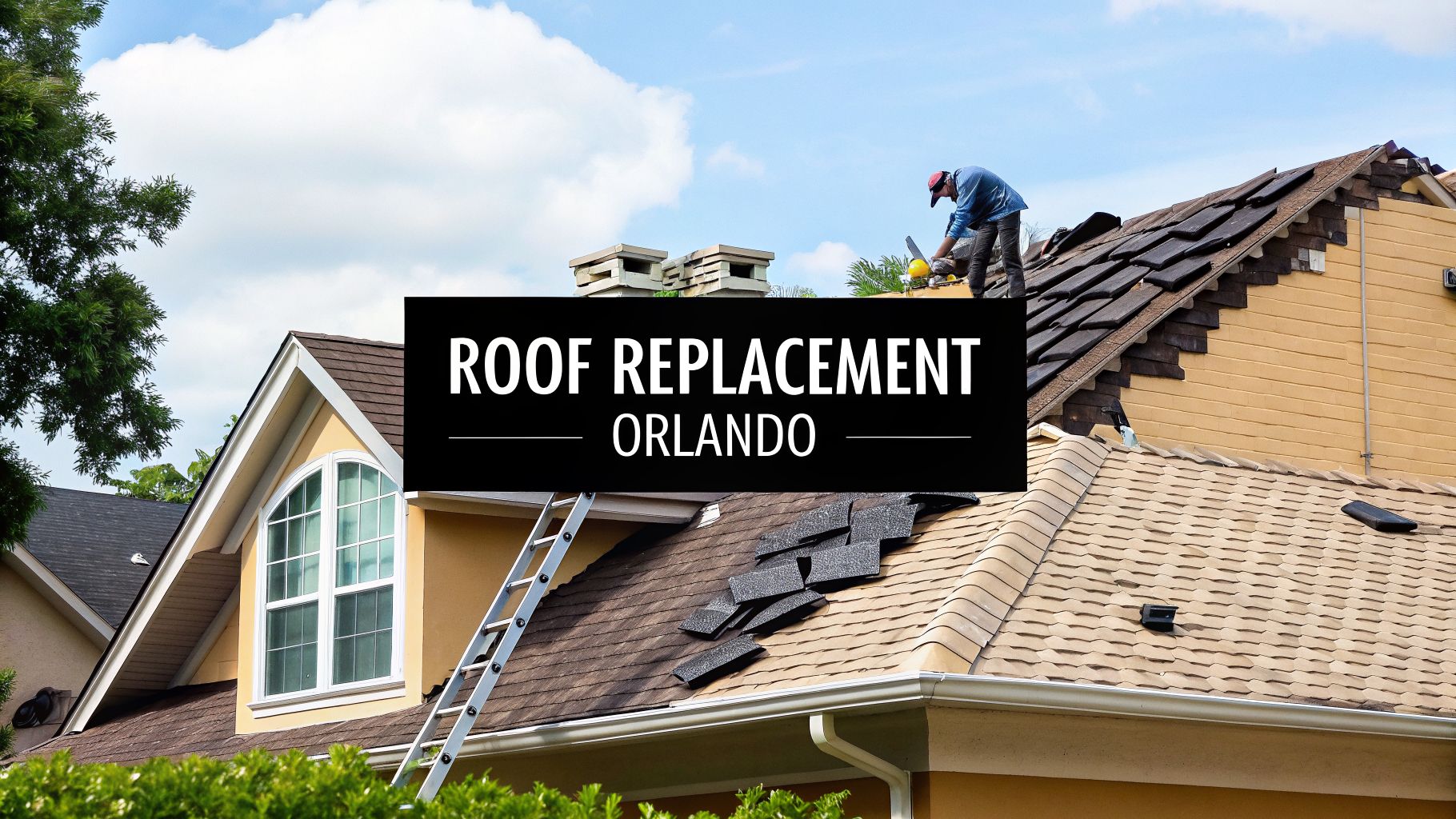
Replacing a roof in Orlando isn't just about swapping old shingles for new ones. It’s about building a shield against our unique brand of Florida weather—the intense sun, the daily downpours, and, of course, hurricane season. A new roof is one of the most important investments you'll make in your home, and this guide is here to walk you through the entire process, step by step.
Your Essential Orlando Roof Replacement Guide
Tackling a full roof replacement can feel like a massive undertaking, but it doesn’t have to be. We’ve put together this guide to give you the confidence you need to make smart, informed decisions for your Central Florida home. Think of it as having an experienced roofer in your corner, from the first sign of trouble to the final inspection.

What This Guide Covers
We're focusing specifically on what homeowners from Pinellas County all the way over to Orlando need to know. We’ll dive into all the key topics to get you ready for your project.
- Spotting the Warning Signs: Learn to recognize the tell-tale signs of roof failure that are common in our hot and humid climate before a small issue becomes a catastrophe.
- Choosing Your Materials: We'll break down the pros and cons of asphalt shingles, classic tile, and modern metal roofing to see which holds up best to the Florida sun and storms.
- Navigating Costs and Insurance: Get a realistic look at local costs, Orlando-area permits, and how to handle an insurance claim after a storm hits.
- Adding Solar: Find out why a roof replacement is the perfect time to add solar panels with Hi Low Roofing and how it can be a brilliant financial move.
Finding a Contractor You Can Trust
No matter how great the materials are, your new roof is only as good as the team that installs it. Finding a trustworthy local contractor is absolutely critical for a roof replacement in Orlando. The best companies are often the easiest to find online, partly because they understand the value of effective SEO for roofing companies to build a strong local presence and showcase a long history of happy customers.
A new roof isn't just shingles and nails—it's a complete system built to protect your most valuable asset. Choosing an experienced local expert like Hi Low Roofing ensures every component works together perfectly to shield your residential or commercial property from whatever Florida weather throws at it.
Signs Your Orlando Home Needs a New Roof
How do you know if your roof is just aging gracefully or sending out an SOS? Here in Orlando, the line between normal wear and tear and a real problem can be surprisingly thin, thanks to our relentless sun and surprise afternoon downpours. Learning to spot the warning signs early is the best way to keep a small issue from becoming a costly catastrophe inside your home.
Think of it this way: your roof gives you plenty of hints long before it fails completely. You just have to know what you’re looking at. Some of the biggest red flags are easy to spot right from the street, while others require a bit of detective work up in your attic.
Obvious Signs You Can See From the Ground
Years of being baked by the Florida sun and drenched by heavy rains take a visible toll on a roof. All that UV exposure literally cooks the flexibility out of asphalt shingles, causing them to break down and fail.
Keep an eye out for these tell-tale signs:
- Curling or Clawing Shingles: When shingle edges start to curl upwards or the centers begin to buckle, they're no longer sealed flat against your roof. This makes them easy targets for high winds to rip off and creates a direct path for rainwater to seep underneath.
- Cracked or Missing Shingles: A few missing shingles after a hurricane is one thing, but if you're seeing widespread cracking or entire "bald spots," it's a clear sign your roof is on its last legs. Your home's main shield has been breached.
- Dark Streaks or Algae Growth: Those ugly black streaks are incredibly common in our humid climate. While not always a five-alarm fire, heavy streaking can mean that moisture is getting trapped and the protective granules on your shingles have worn away.
One of the surest signs of a failing roof is finding piles of shingle granules in your gutters and downspouts. These granules are like sunscreen for your roof, protecting the asphalt underneath from the sun. When they start washing away, your roof is losing its most important defense.
Hidden Dangers Lurking in Your Attic
What you can see from the ground is often just half the story. Some of the most serious problems are hiding right over your head. A quick trip into the attic with a good flashlight can uncover issues that need immediate attention before they lead to rot, mold, or structural damage.
Checking your attic for leaks is crucial. Water is sneaky; it rarely drips straight down. It can run along rafters and soak into insulation far from the actual entry point, causing major damage long before you ever see a spot on your ceiling.
Here’s what to look for up there:
- Water Stains or Drips: Scan the underside of the roof deck, the wooden rafters, and your insulation for any dark spots, streaks, or active dripping. The best time to check is right after a strong rain.
- Sagging Roof Deck: If the plywood sheathing between the rafters looks like it's bowing or drooping, that’s a critical warning sign. It means moisture has weakened the wood, and it may no longer be strong enough to support the roof's weight.
- Outside Light Showing Through: On a bright day, head into the attic and turn off your flashlight. If you see even the smallest slivers of daylight peeking through the roof boards, you’ve found a hole. And if light can get in, so can water.
Finally, just consider your roof's age. An asphalt shingle roof in Central Florida works a lot harder than one in a milder climate. Many here only last 15-20 years. If your roof is getting up there in age and showing any of these symptoms, it's definitely time to start planning for a full roof replacement in Orlando.
You can also read about the definitive signs you need a new roof on our blog for an even deeper dive into what to look for.
Choosing The Right Roofing Material For Our Florida Climate
Picking a new roof in Orlando is a lot like choosing tires for your car. You wouldn't put summer slicks on a vehicle you drive through a blizzard, right? The same logic applies here. You need a roof that can stand up to everything Central Florida throws at it: blistering sun, torrential downpours, and the ever-present threat of hurricane-force winds.
This isn't just about curb appeal; it's a major investment in your home's safety and integrity. Let's walk through the most common materials we see here in Orlando—asphalt shingles, tile, and metal—so you can understand how each one really performs when the weather gets rough.
Asphalt Shingles: The Go-To For A Reason
Asphalt shingles are, by far, the most popular roofing choice across the country, and for good reason. Think of them as the reliable family sedan of the roofing world. They offer a fantastic blend of performance, style, and affordability that just works for many homeowners.
We're not talking about the old, flat "3-tab" shingles anymore. Today's architectural shingles are much thicker and designed with a layered, dimensional appearance that gives them the look of more expensive materials like wood shake.
- Affordability: They are the most budget-friendly option upfront, which puts a high-quality roof replacement within reach for many families.
- Quick Installation: For a seasoned crew, installing shingles is a straightforward process, which helps keep labor costs down and gets the project finished faster.
- Endless Style Options: They come in a huge variety of colors and profiles, so it's easy to find a look that complements your home's design.
The trade-off, though, is how they handle the relentless Florida sun. The constant UV beating can take a toll, often shortening their lifespan compared to what you'd see in cooler climates. While you can expect a good 15-25 years from a modern shingle roof, they remain more susceptible to wind damage during a major storm.
Tile Roofing: The Timeless, Tough-As-Nails Choice
Drive through some of Orlando's most beautiful neighborhoods, and you'll see one material dominate: tile. Whether it’s classic clay or durable concrete, tile is the luxury SUV of roofing—heavy, exceptionally tough, and a perfect aesthetic match for the Mediterranean and Spanish-style homes popular in our area.
Tile is practically engineered for Florida. Its sheer weight gives it incredible resistance to wind uplift, and the material itself is immune to fire and rot.
The real story with tile is its incredible longevity. A properly installed and maintained tile roof can last 40-100+ years. For many people, it’s the last roof they will ever need to buy, which makes the higher initial cost a very smart long-term play.
While it’s incredibly resilient, tile isn't indestructible. It can crack from a severe hailstorm or a heavy, falling tree branch, and repairs really need to be done by a specialist. Its weight is also a major factor; your home's structure has to be strong enough to support it from the get-go.
No matter the material, you have to know when it's time to call in a pro. The image below shows some of the classic warning signs that your roof is nearing the end of its life.

When you see curling shingles, a buildup of granules in your gutters, or water stains in the attic, that's your roof's way of telling you it's tired and needs help before a small problem becomes a catastrophe.
Metal Roofing: The Ultimate Shield Against The Storm
If you're looking for a roof that's built like an armored truck—ready for absolutely anything—then metal is your answer. Once reserved for commercial buildings, modern standing-seam metal roofs are now a top-tier choice for homeowners, especially in hurricane zones like ours.
Metal is a fascinating material because it's both incredibly lightweight and ridiculously strong. It provides unparalleled protection against high winds and driving rain. When installed correctly, the panels interlock to create a nearly impenetrable shield over your home.
This blend of durability and aesthetics comes at different price points. Below is a quick comparison of how the most common materials stack up in the Orlando market.
Orlando Roofing Material Comparison (2026 Estimates)
| Material Type | Average Cost (per sq ft) | Estimated Lifespan | Hurricane Resistance | Energy Efficiency |
|---|---|---|---|---|
| Asphalt Shingle | $4.50 – $8.00 | 15-25 Years | Good | Fair to Good |
| Concrete/Clay Tile | $9.00 – $18.00 | 40-100+ Years | Excellent | Good |
| Metal (Standing Seam) | $8.00 – $15.00 | 40-70 Years | Superior | Excellent |
As you can see, while shingles are the most affordable upfront, both tile and metal offer significantly longer lifespans and better storm performance, justifying their higher initial investment for many homeowners.
But strength isn't metal's only superpower. It's also a champion of energy efficiency. Many metal roofing systems have special reflective coatings that bounce solar heat away from your house. This keeps your attic cooler and can lead to real savings on your air conditioning bills—a huge plus in our climate. For those focused on green building, you can explore more in our guide on sustainable roofing materials in Orlando, where metal is often highlighted for its efficiency and recyclability.
The Business Side: Costs, Permits, and Insurance in Central Florida
Choosing the right shingles or tiles is the fun part. But for most Orlando homeowners, the real questions start when it's time to talk about the budget, the paperwork, and the insurance. It can feel a little overwhelming, but with a clear understanding of how it all works, you can navigate the financial side of your roof replacement with confidence.
A great contractor won't just hand you a bill; they'll walk you through the entire process. Let's break down what goes into a roofing estimate, why Florida's permit process is so important, and how to handle an insurance claim after one of our infamous storms.
Decoding Your Roofing Estimate
A good estimate is more than just a single number at the bottom of a page—it's a detailed road map for your project. If a contractor gives you a quote on a handshake or a cocktail napkin, that's a red flag. You want an itemized document so you know exactly what you're paying for.
Here’s what you should expect to see on a professional estimate for a roof replacement in Orlando:
- Materials: This lists the specific shingles, tiles, or metal panels you chose, plus all the supporting players like underlayment, flashing, and vents.
- Labor: This covers the skilled crew who will tear off the old roof and install the new one. It’s a major part of the total cost for good reason—quality installation is everything.
- Tear-Off and Disposal: This is the cost to safely remove your old roofing materials and haul away the debris for proper disposal.
- Permit Fees: Every city and county has its own fees for issuing a building permit. Your contractor will pull this on your behalf, and the cost will be included in the estimate.
- Decking Replacement Allowance: Underneath your shingles is a layer of plywood called decking. It's common to find a few soft or rotted spots once the old roof is off. Most estimates include an allowance for replacing a certain number of sheets. If more are needed, it’s handled with a simple change order you approve.
Permits and Florida’s Strict Building Codes
Here in Florida, a roof isn't just for keeping the rain out; it's a structural system designed to stand up to hurricane-force winds. That’s why a building permit is non-negotiable for almost every roof replacement. It’s the law, and it’s there to protect you.
A permit isn't just bureaucracy. It's your guarantee that a county or city inspector will visit the job site to verify your new roof meets the latest, most rigorous safety codes. Skipping this can lead to huge fines, major problems when you sell your home, and even give your insurance company a reason to deny a future claim.
Working with a licensed and insured contractor is the only way to go. They handle the entire permitting process, from the initial application to scheduling the final inspection. It takes all of that stress off your plate and ensures your home is protected and fully compliant.
Handling Homeowner's Insurance After a Storm
Storm damage is a fact of life in Central Florida. If your roof has been hit by high winds, hail, or a fallen tree, your homeowner's insurance policy is your first line of defense. The claims process can be tricky, though, and having an expert in your corner makes a world of difference.
While a roofer legally can't act as your public adjuster or negotiate your claim, they play a critical role. They can provide your insurance company with the detailed damage reports, photos, and professional assessments needed to validate your claim. To see how this plays out in a real-world scenario, you can learn more about managing insurance claims for roof damage on our blog.
If you suspect you have storm damage, here’s what to do:
- Document Everything (Safely): From the ground, take plenty of photos and videos of the damage you can see. If water is getting inside, be sure to document the interior leaks, too.
- Call for a Professional Inspection: Contact a roofer you trust for a thorough inspection. They know what to look for and can identify damage that isn't obvious from the ground, creating a detailed report for your insurer.
- File Your Claim: Call your insurance company to open a claim. They’ll give you a claim number and assign an adjuster to your case.
- Meet the Adjuster with Your Roofer: Whenever possible, have your contractor present when the insurance adjuster inspects your roof. Your roofer can point out all the documented damage and explain from a technical standpoint why a repair isn't sufficient or why a full replacement is necessary.
While some roofing choices carry a higher price tag, they can be a smart long-term investment. For instance, the metal roofing market in Orlando has grown significantly. As of 2026, installation costs average $16,021, with most homeowners paying between $8,084 and $24,891. Labor costs make up a substantial portion of this, averaging $4 to $8 per square foot, due to the specialized skills needed. Despite this, metal's incredible durability—lasting 40 to 70 years—and superior hurricane resistance give it a strong return on investment of around 60% to 70% at resale. You can find more data on Orlando metal roofing costs and see why it's a popular choice for durability.
A Step-by-Step Look at Your Roof Replacement
Getting a new roof is a big deal, we get it. But knowing exactly what to expect can take a lot of the stress out of the equation. At Hi Low Roofing, we’ve built our process around total transparency, so you’re never left in the dark. Here’s a breakdown of how we turn a major project into a smooth, predictable experience for Orlando homeowners.

Step 1: The Initial Inspection and Plan
It all starts with a simple conversation. After you reach out, we’ll schedule a free, no-pressure inspection of your property. One of our experienced technicians will do a deep dive into your entire roofing system, checking everything from the ground level to inside your attic and documenting what they find with clear photos.
This isn't just a quick walk-around. We're looking for signs of storm damage, age-related wear, and hidden leaks to give you a complete and honest picture of your roof's health. Afterward, we'll sit down with you and go over a detailed, itemized estimate—no surprises, no hidden fees. We explain every line so you know precisely what's involved in your roof replacement Orlando project, helping you choose the right materials for your budget and home.
Step 2: Site Prep and Tearing Off the Old Roof
On the first day of the job, our number one priority is protecting your home and yard. We take the time to cover your landscaping, AC units, and any other delicate features with heavy-duty tarps. Our crew then sets up a safe, organized work zone to keep things running efficiently.
With your property protected, we begin the tear-off. This is where we systematically remove every layer of old roofing material right down to the bare wood decking. It’s a messy but absolutely essential step because it lets us see what’s really going on underneath.
A complete tear-off is the only way to truly inspect the structural integrity of your roof deck. Covering old problems with new shingles is a shortcut that licensed, reputable contractors will never take. It’s essential for a long-lasting, code-compliant roof.
Step 3: Decking Repairs and New Roof Installation
Once the old roof is gone, we can properly inspect the exposed wood decking. We're looking for any soft spots, rot, or damage that could compromise your new roof. Any weak panels are cut out and replaced to ensure we have a perfectly solid and stable foundation to build on.
Next, our certified crew gets to work installing your new roofing system. This is a precise, multi-layered process that follows a strict order:
- First, we roll out a high-quality synthetic underlayment, which acts as your roof's crucial secondary water barrier.
- Then, we install all-new metal drip edge and flashing around the roof perimeter and any penetrations like vents or chimneys to channel water away.
- Finally, we meticulously install your chosen shingles, tiles, or metal panels, following both the manufacturer’s exact specifications and Florida’s demanding building codes.
Step 4: The Final Cleanup and Walkthrough
We’re not the kind of crew that leaves a mess behind. As we finish up the installation, our team does a thorough cleanup of the entire property. We even use large magnetic rollers to sweep the yard, driveway, and garden beds for any stray nails or metal scraps. Our goal is to leave your home looking better than when we arrived.
The very last step is a personal walkthrough with your project manager. We’ll inspect the beautiful new roof together, answer any final questions you might have, and go over the details of your product and workmanship warranties. We consider the job complete only when you are 100% satisfied with the result.
Pairing Your New Roof With Solar Energy
Getting a new roof is already a major investment in your home. But if you've ever thought about going solar, doing both at the same time is one of the smartest moves a Florida homeowner can make. Think of it as laying the perfect groundwork for your home's energy future.
The last thing you want is the headache of juggling a roofer and a separate solar company. Bundling the two projects means one team, one point of contact, and one streamlined timeline. We handle everything. More importantly, we can integrate the solar panel mounts during the roofing installation, ensuring a flawless, watertight seal that fully protects your new roof's warranty.
Go Beyond Savings and Gain Energy Independence
A new roof keeps the rain out, but adding solar protects your wallet from unpredictable power company rate hikes. For many Orlando homeowners, a properly designed solar system can slash your monthly power bill, sometimes eliminating it entirely. You're no longer just renting your power; you're producing it yourself.
But the real peace of mind, especially here in Central Florida, comes from adding a battery backup. Think about what happens when a hurricane or a nasty summer thunderstorm knocks out the grid. While the rest of the neighborhood is dark, your home can keep running.
- Continuous Power: A battery system keeps your lights on, the refrigerator humming, and any essential medical devices powered up during an outage.
- Hurricane Resilience: You'll have peace of mind knowing your family has power, even if the grid is down for days after a major storm.
- Total Control: You generate your own power during the day and store the excess to use at night or when the grid is down. It's true energy independence.
Bundling a roof replacement in Orlando with a solar installation isn't just an upgrade; it’s a strategic investment in your home’s resilience and long-term value. You’re creating a modern, energy-efficient property prepared for whatever comes next.
Smart Financial Incentives for Florida Homeowners
Combining your roof and solar projects isn't just a practical move—it's a financially savvy one. The available incentives can seriously cut down the overall cost and help you see a return on your investment much faster.
The biggest one is the Federal Solar Tax Credit. This allows you to claim a credit for a significant percentage of the total solar installation cost directly on your federal taxes. To be clear, this isn't a simple deduction—it’s a dollar-for-dollar reduction of the taxes you owe, making the whole project far more affordable.
When you finance the new roof and solar system together, you can often roll the entire cost into one simple monthly payment. This turns two huge expenses into a single, manageable investment that starts paying for itself the moment you flip the switch.
Frequently Asked Questions About Orlando Roof Replacement
When you're facing a roof replacement, the questions can start piling up fast. As your local Central Florida roofer, we hear the same concerns from homeowners all the time. Let's walk through some of the big ones so you know exactly what to expect.
How Long Does a Typical Roof Replacement Take in Orlando?
For a standard-sized home around here, a professional crew like ours at Hi Low Roofing can usually tear off the old roof and install the new one in just 1 to 3 days.
Of course, that's just an estimate. A few things can stretch the timeline:
- Your Roof's Size and Shape: A sprawling, two-story house with steep pitches and lots of dormers is going to take more time than a simple ranch-style roof.
- The Material You Choose: Installing architectural shingles is a pretty quick process. Heavy-duty materials like concrete tile, on the other hand, are more labor-intensive and take longer.
- Florida Weather: We’re all used to those afternoon thunderstorms. A good crew watches the forecast closely and plans the work in stages to keep your home protected, but a full day of rain can cause delays.
We know having work done on your house is a disruption, so we always map out a clear schedule and keep you in the loop every step of the way.
Do I Need a Permit for a Roof Replacement?
Yes, you absolutely do. Getting a building permit is a mandatory step for almost every roof replacement in Orlando and the surrounding counties like Orange, Pinellas, and Seminole. Think of it as a crucial layer of protection for you as a homeowner.
Florida has some of the toughest building codes in the country for a reason—hurricanes. A permit ensures your new roof is built to withstand those powerful winds. It also means a city or county inspector has to sign off on the work, verifying it was done right and giving you peace of mind.
Any reputable, licensed roofer will manage the entire permitting process for you. It's part of our job to handle the paperwork, schedule the inspections, and make sure your new roof is 100% compliant and safe.
Will My Homeowner's Insurance Cover a New Roof?
This is a big one, and the answer is: it depends. Your homeowner's insurance policy is designed to cover damage from a specific event, like a hurricane, major hailstorm, or a tree falling on your house. It's not meant to pay for a new roof simply because the old one has reached the end of its lifespan due to age and normal wear.
If you think a storm is to blame for your roof's condition, the first step is a professional inspection. We can come out and thoroughly document any wind-lifted shingles, hail impacts, or other specific damage. That detailed assessment is the evidence you'll need to build a strong insurance claim.
Our state’s weather keeps the roofing industry busy. In fact, Florida is #1 in the U.S. for residential roof replacements, with over 25,000 roofers employed here as of May 2023. It’s no surprise when you consider the $2 billion in average annual economic losses from storm damage. You can read more roofing industry statistics to understand just how critical a solid roof is in our state.
Ready to get answers for your specific home? Hi Low Roofing provides free, no-pressure inspections across Central Florida. Contact us today to schedule a visit and get an honest assessment from a team you can trust.
