
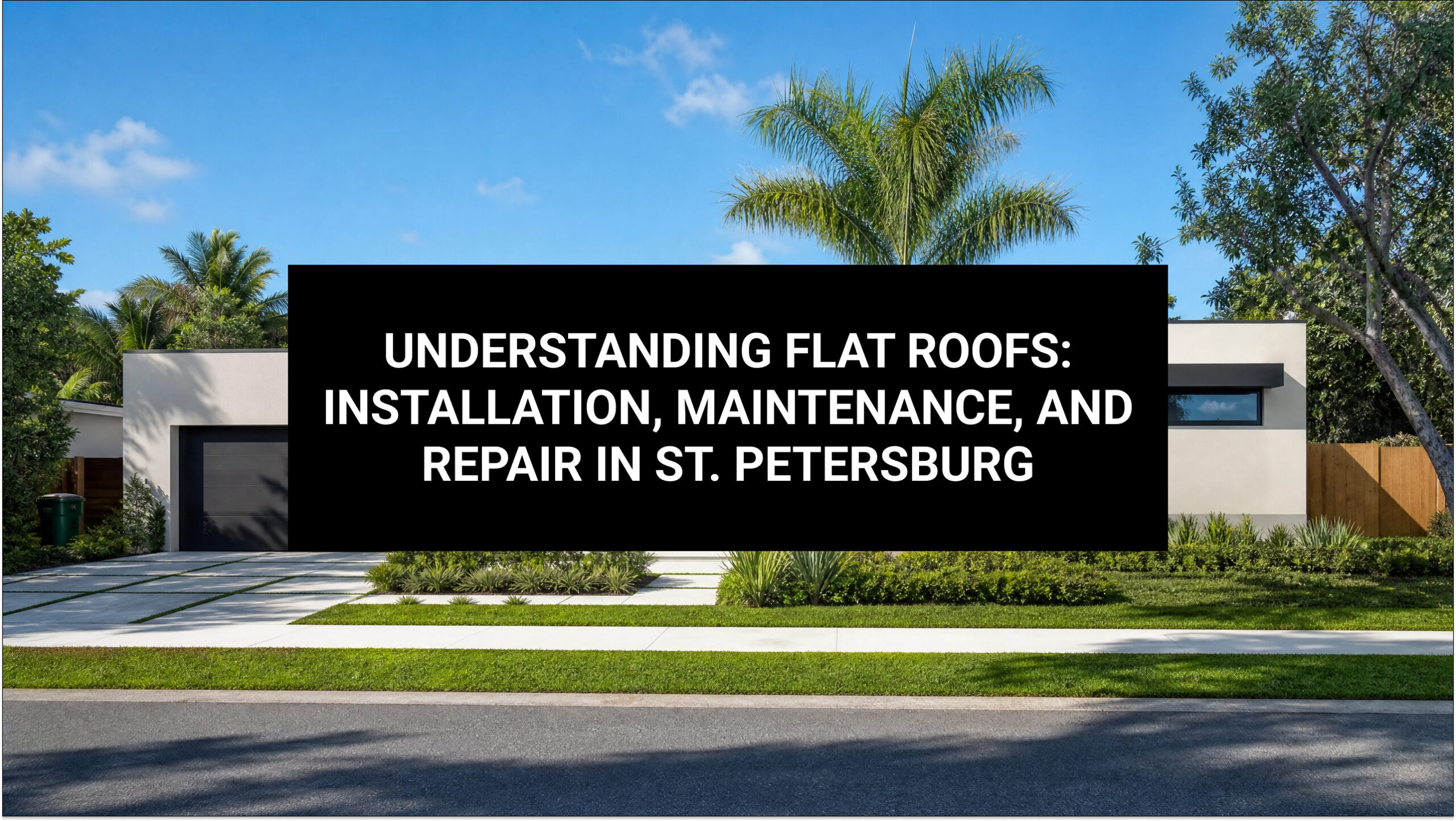
In St. Petersburg, Florida, where architectural styles often embrace modern and minimalist designs, flat or low-slope roofs are a common sight on both residential and commercial properties. While they offer a distinct aesthetic and practical advantages, flat roofs also present unique challenges in terms of installation, maintenance, and repair, especially in a climate characterized by heavy rainfall and intense sun. Understanding these nuances is key to maximizing the lifespan and performance of your flat roofing system.
The Prevalence and Unique Characteristics of Flat Roofs
Unlike pitched roofs that rely on gravity to shed water, flat roofs, despite their name, are not perfectly flat. They incorporate a slight slope (typically 1/4 inch per foot) to direct water towards drains or scuppers. This design is popular for its clean lines, efficient use of space (e.g., for rooftop HVAC units or green roofs), and often lower initial installation costs compared to complex pitched designs.
Types of Flat Roofing Systems
Several materials are commonly used for flat roofs, each with its own set of advantages and considerations:
•TPO (Thermoplastic Polyolefin): A single-ply membrane known for its durability, energy efficiency (due to its reflective surface), and resistance to UV radiation and punctures. It’s a popular choice for both commercial and residential flat roofs.
•Modified Bitumen (Mod-Bit): An asphalt-based membrane reinforced with polymers, offering enhanced flexibility and durability. It’s typically installed in layers, often with a granular surface for added protection and reflectivity.
•Built-Up Roof (BUR): One of the oldest flat roofing systems, BUR consists of multiple layers of felt or fabric saturated with asphalt or tar, topped with a layer of gravel or reflective coating. It’s known for its robustness and waterproofing capabilities.
•PVC (Polyvinyl Chloride): Another single-ply membrane, similar to TPO, but often offering superior chemical resistance and flexibility, making it ideal for roofs exposed to oils or chemicals.
Advantages and Disadvantages of Flat Roofs
Advantages:
•Cost-Effective: Often less expensive to install than pitched roofs due to simpler construction.
•Usable Space: Can accommodate rooftop equipment, gardens, or even patios.
•Energy Efficiency: Many modern flat roofing materials are highly reflective, reducing heat absorption.
•Aesthetic: Provides a sleek, modern look.
Disadvantages:
•Ponding Water: If not properly sloped or drained, water can accumulate, leading to premature material degradation and leaks.
•Vulnerability to Leaks: While designed to be waterproof, flat roofs can be more susceptible to leaks if not meticulously installed and maintained.
•UV Exposure: Constant exposure to the sun can degrade some materials over time.
Common Issues with Flat Roofs
In St. Petersburg, flat roofs commonly face issues such as:
•Ponding Water: Standing water puts continuous stress on the membrane and can lead to leaks.
•Membrane Damage: Cracks, punctures, or tears from foot traffic, debris, or UV exposure.
•Flashing Failures: Deterioration or improper installation of flashing around penetrations (vents, skylights) or at edges is a common source of leaks.
•Blistering/Bubbling: Trapped moisture or gases beneath the membrane can cause blisters.
Essential Maintenance Tips for Flat Roofs
Regular maintenance is paramount for extending the life of a flat roof:
1.Regular Inspections: At least twice a year, and after any significant storm, inspect the roof for debris, ponding water, cracks, or punctures.
2.Clear Debris: Remove leaves, branches, and other debris that can clog drains or trap moisture.
3.Maintain Drains and Scuppers: Ensure all drainage points are clear and functioning properly to prevent water accumulation.
4.Address Ponding Water: If ponding water persists for more than 48 hours, it indicates a drainage issue that needs professional attention.
5.Trim Overhanging Branches: Prevent branches from scraping the roof surface or falling onto it.
Repair Considerations and When to Seek Professional Help
While minor issues might seem manageable, flat roof repairs are often best left to professionals. Improper repairs can lead to more extensive damage and void warranties. A qualified roofing contractor can accurately diagnose the source of leaks, recommend the appropriate repair methods, and ensure the work is done to industry standards.
Conclusion: Maximizing the Lifespan of Your Flat Roof
Flat roofs offer a practical and aesthetic solution for many properties in St. Petersburg. However, their unique design requires a proactive approach to maintenance and a thorough understanding of their specific needs. By choosing the right material, adhering to a regular maintenance schedule, and partnering with experienced professionals like Hi-Low Roofing for installation and repairs, you can ensure your flat roof provides reliable protection and performance for decades to come.
