
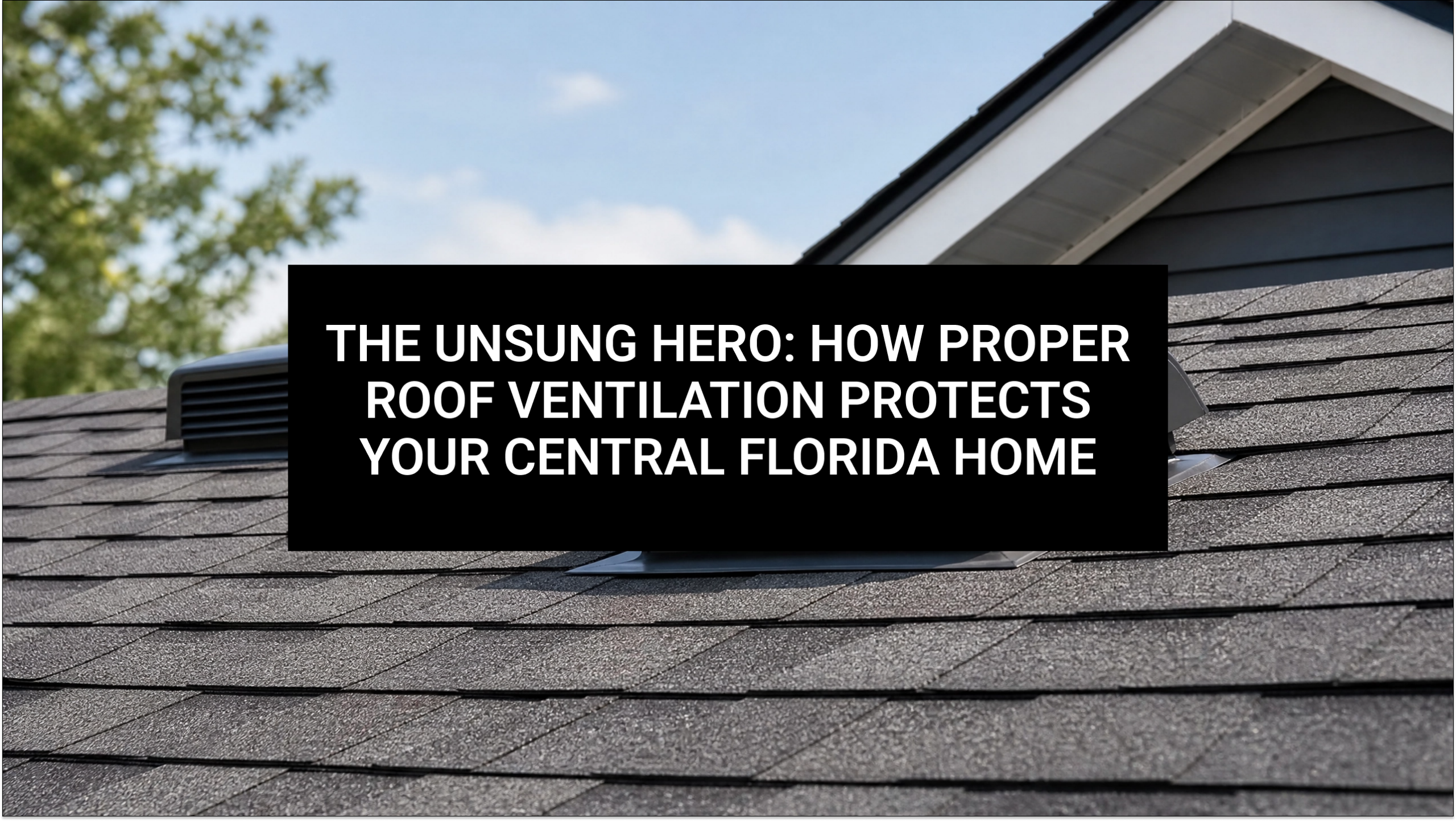
When homeowners think about their roof, they usually focus on the shingles, tiles, or metal panels that provide the visible layer of protection. However, beneath the surface lies a critical component that often goes unnoticed: roof ventilation. In Central Florida’s hot and humid climate, proper attic ventilation is not just an option; it’s an essential requirement for maintaining energy efficiency, preventing structural damage, and extending the lifespan of your entire roofing system.
The Critical Role of Roof Ventilation
Roof ventilation is the process of allowing air to circulate through the attic space. It works on a simple principle: drawing fresh, cooler air in from the outside (intake) and expelling hot, stale air from the inside (exhaust). This continuous airflow is vital for regulating temperature and moisture levels within the attic.
How Ventilation Works
A balanced ventilation system relies on two main components:
•Intake Vents: Typically located at the lowest part of the roof, such as the soffits or eaves, these vents allow cooler outside air to enter the attic.
•Exhaust Vents: Positioned near or at the peak of the roof (the ridge), these vents allow the hot air that naturally rises to escape.
This natural convection process ensures a steady flow of air, preventing the attic from becoming a stagnant, superheated environment.
Benefits of Proper Ventilation
Investing in adequate roof ventilation offers significant benefits for Central Florida homeowners:
•Lower Energy Bills: In the summer, an unventilated attic can reach temperatures exceeding 150°F. This extreme heat radiates down into your living space, forcing your air conditioning system to work harder. Proper ventilation reduces attic temperatures, leading to lower cooling costs.
•Preventing Moisture Buildup, Mold, and Mildew: Florida’s high humidity can lead to condensation in the attic, especially during cooler nights. This moisture can saturate insulation, reducing its effectiveness, and create an ideal environment for mold and mildew growth, which can compromise indoor air quality and structural integrity.
•Extending Roof Lifespan: Excessive heat in the attic can literally bake your roofing materials from the inside out, causing shingles to blister, curl, and age prematurely. Ventilation helps keep the roof deck cooler, protecting your investment.
Signs of Poor Ventilation
If your home lacks adequate ventilation, you might notice several warning signs:
•Unusually high energy bills during the summer months.
•A noticeable temperature difference between the upper and lower floors of your home.
•Condensation or frost on the underside of the roof deck (more common in cooler climates, but possible in Florida during cold snaps).
•Mold or mildew growth in the attic.
•Premature deterioration of roofing shingles.
Types of Ventilation Systems
There are various types of vents used to achieve proper airflow:
•Soffit Vents: Intake vents located under the eaves.
•Ridge Vents: Exhaust vents installed along the peak of the roof.
•Gable Vents: Vents located on the exterior walls of the attic.
•Turbine Vents: Wind-powered exhaust vents.
•Powered Attic Fans: Electrically powered fans that actively draw hot air out of the attic.
Conclusion: A Small Investment for Big Returns
Proper roof ventilation is an unsung hero that plays a crucial role in protecting your home, improving energy efficiency, and extending the life of your roof. If you suspect your attic is inadequately ventilated, consulting with a professional roofing contractor like Hi-Low Roofing is a wise step. They can assess your current system and recommend the best solutions to ensure your home breathes easy, saving you money and preventing costly damage in the long run.
