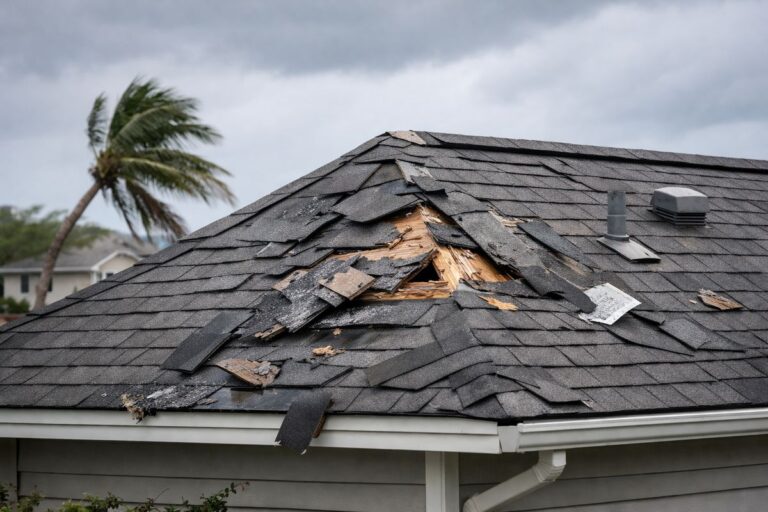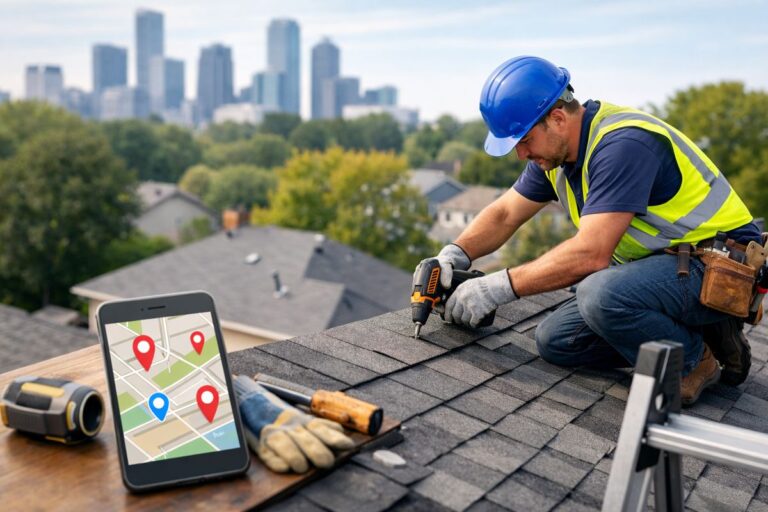
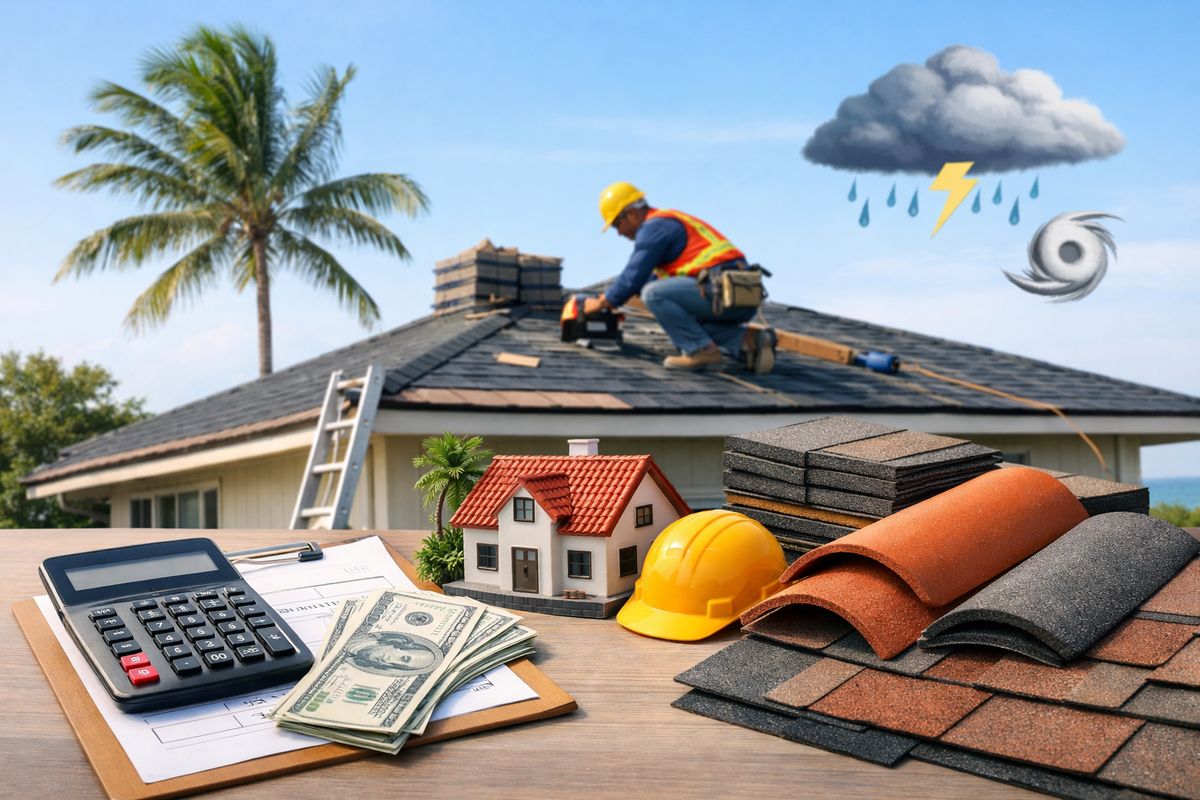
Florida roof replacement cost factors are the pieces of the job that push your price from manageable to painful, and it almost never comes down to shingles alone. In Florida, a roof quote can climb fast because code rules, permit steps, storm-ready details, and hidden damage all show up where you least want surprises.
What actually drives florida roof replacement costs up
“Cost factors” simply means everything that changes your roof price up or down. Some are obvious, like the size of your roof or the material you pick. But in Florida, the bigger story is compliance and complexity.
That’s the direct truth: Florida roofs get expensive fast when the job involves more paperwork, more technical details, and more risk. A simple-looking replacement can turn into a larger project once permit requirements, inspections, product approvals, and weather-resistant upgrades enter the picture. If you have been wondering why the price climbs so quickly in Florida, this is usually where the answer starts.
The base price vs. the real final price
A base quote usually covers the obvious parts: labor, roofing materials, and basic tear-off. The real final price is the full project cost after permits, disposal, decking repairs, flashing updates, inspections, and closeout paperwork.
Picture a house in Orlando that looks straightforward from the driveway. The surface seems tired but not disastrous. Then the old roof comes off, soft decking shows up around a vent pipe, the permit requires certain documents, and the inspection schedule stretches the timeline. Same house, very different final number. That is how roofing prices jump from “pretty reasonable” to “wait, what?”
Roof size, shape, and pitch: the first big price jump
The physical roof is still the first place pricing starts. More roof usually means more cost, but tricky roof design can raise the bill almost as much as extra square footage.
Square footage is only the starting point
More roof area means more shingles or panels, more underlayment, more fasteners, more labor, and more debris to haul away. That part is simple.
The catch is that square footage does not tell the full story. Two homes with the same footprint can have very different roofing costs once overhangs, attached sections, and layout complexity are measured. If you want a clearer sense of what a typical home size can cost, it helps to look at a price breakdown for a common Florida roof size.
Complex rooflines cost more than simple ones
A simple roof is easier to install, easier to waterproof, and faster to finish. A complex roofline with valleys, hips, dormers, multiple slopes, and tie-ins creates more cuts and more transition points. Those transitions matter because each one needs careful flashing, which is the metal or waterproof detail that seals joints and edges.
Think of it like wrapping a plain box versus wrapping a bicycle. Same basic task, very different effort.
Complex roofs also have more places where leaks can start later if details are rushed. That extra labor and extra precision show up in your quote.
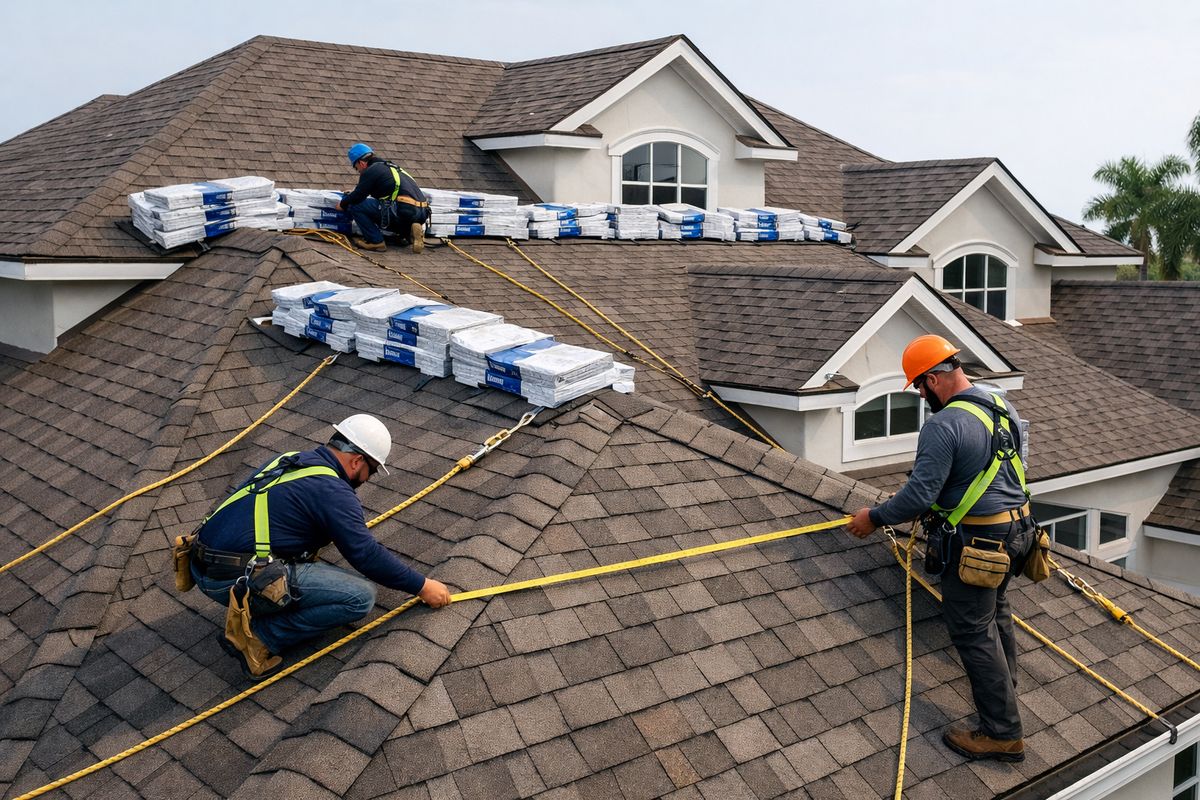
Steeper roofs raise labor and safety costs
Pitch is just the steepness of your roof. A low-slope roof is easier to move around on. A steep roof slows everything down.
Steeper roofs need more safety setup, more careful staging, and more time for every step. Crews cannot move as quickly, materials are harder to handle, and certain installation methods become more demanding. Even if the material itself is not premium, the labor often is.
Roofing material matters, but the system underneath matters too
Most people focus on the visible roof covering first. That makes sense, because asphalt, metal, and tile look different and carry very different price tags. But your roof is a system, not just a surface.
Asphalt shingles, metal, tile, and flat-roof systems
Asphalt shingles usually cost less upfront and stay popular for that reason. In Florida, though, the exact shingle system, attachment pattern, and underlayment matter just as much as the brand name.
Metal roofs cost more upfront, but they are attractive for heat, heavy rain, and wind exposure. Tile roofs often cost even more because the material is heavier, the installation is slower, and the structure may need to support the load. Flat-roof systems, common on some additions or low-slope sections, come with different membranes and waterproofing details that can also raise cost.
If you are comparing surface materials, this side-by-side look at metal and shingles in Florida helps sort out the tradeoffs.
Why metal roofs cost more upfront
This question comes up constantly, and the answer is pretty straightforward. Metal costs more because the panels or profiles are pricier, the trim pieces are more specialized, and installation takes more skill. Fastening details, edge conditions, penetrations, and waterproofing all have to be done correctly or the roof will tell on you later.
That extra cost can make sense in Florida, especially if your priorities include durability, wind performance, and long-term ownership. But the material alone is not magic. A badly installed metal roof is still a bad roof.
Underlayment, waterproofing, and attachment methods
Underlayment is the water-shedding layer beneath the visible roofing material. If your shingles are the jacket, underlayment is the rain layer underneath. You hope it never has to do all the work, but you definitely want it there when the weather turns ugly.
In Florida, upgraded underlayment, secondary water barriers, and stronger attachment methods often raise the quote. That can feel annoying in the moment. But this is one of the smartest places for money to go, because wind-driven rain does not care how nice your shingles look from the street.
Florida codes, permits, and product approvals add real cost
This is where generic roofing advice falls apart. Florida roofing jobs are not just construction projects. They are also paperwork projects.
Permits and inspections are part of the price
Most reroofs require permits, and in most cases your contractor pulls them. Permit fees, filing time, inspection coordination, possible reinspection fees, and delays all carry a cost, even if that cost is not listed in a flashy way on page one of the estimate.
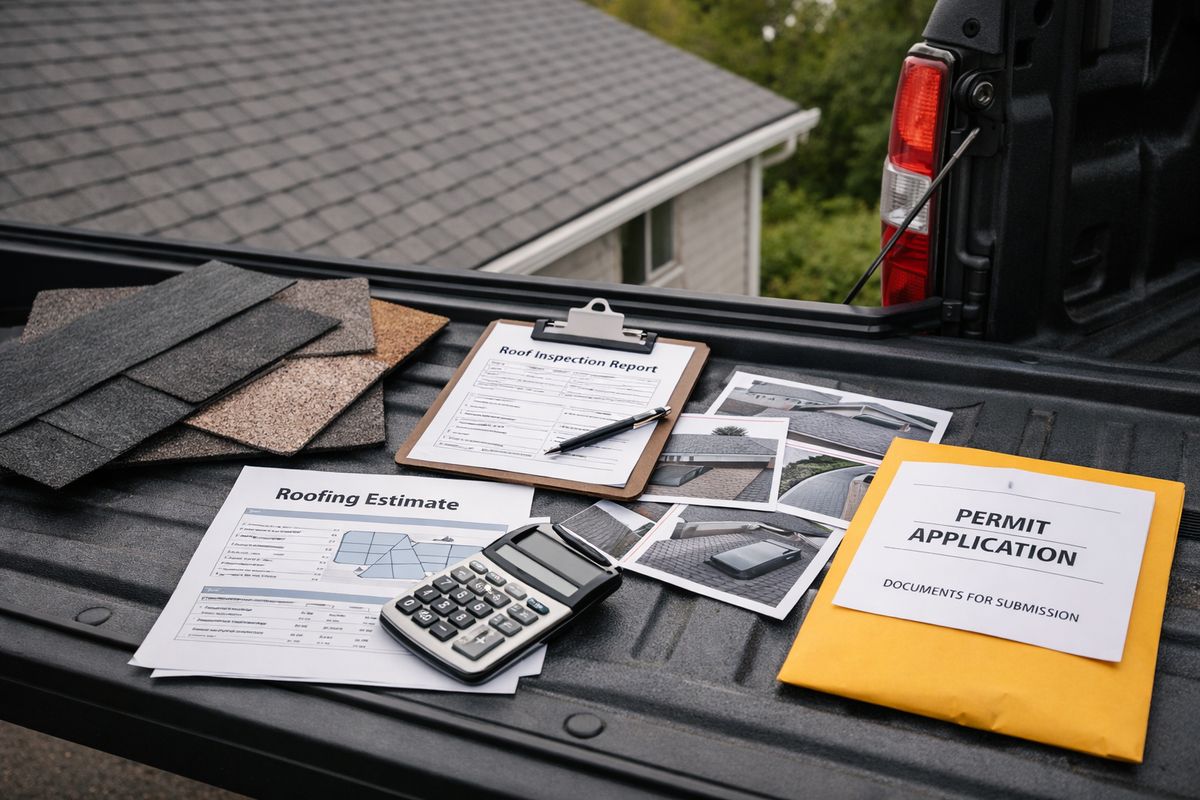
A roof job usually moves through a sequence: inspection and photos, scope planning, permit submission, system choices, dry-in, then final inspection and closeout documents. Every step takes time, and time costs money.
Local rules can change from one city to the next
Florida has a statewide building code, but local permit procedures vary by jurisdiction. One city may require a smoother online portal process. Another may want more supporting documents or have tighter inspection scheduling windows.
That means the same roof on two homes in nearby cities can move at different speeds and produce different administrative costs. Annoying, yes. Real, absolutely.
Florida product approval and matching documents
Certain roofing components in Florida need to match approved product documents. That can include roof coverings, underlayment types, and system details.
Here’s where it gets expensive: if the listed materials, fastening method, or assembly details do not line up with the approved documents, the project can stall. That can lead to corrections, revised paperwork, delayed inspections, or change orders. It is one reason understanding what actually drives a roofing quote matters more than just comparing the bottom line.
The 25% rule and why scope classification matters
The 25% rule is one of those details that sounds minor until it changes your budget. In simple terms, if too much of the roof area is being repaired or replaced within a certain time window, the job may no longer be treated as a small repair. It can become a larger reroof scope instead.
That matters because permit classification affects requirements, inspections, and cost. A leak that starts as “just patch this section” can become a much bigger job once the scope is reviewed properly.
Hidden damage is where “simple” roof jobs get expensive
A roof can look decent from the ground and still have expensive problems underneath. This is where many low estimates fall apart.
Damaged decking, rot, and moisture problems
Decking, sometimes called sheathing, is the wood base under the roof covering. It can look fine before tear-off and fail the moment the old material comes off.
If parts of that wood are soft, rotted, or moisture-damaged, replacement adds labor, material, and time. No contractor can honestly price every hidden board in advance without opening the roof. That is why change orders happen, and why a very cheap estimate can be misleading.
Flashings, edges, penetrations, and leak-prone details
Most roof leaks do not start in the middle of a big open field of shingles. They start at the details: around vents, walls, skylights, chimneys, edges, and transitions between roof sections.
Flashings are the metal pieces that seal those spots. Penetrations are the holes and openings for vents, pipes, and similar features. These are the places that demand careful work, and replacing them properly costs more than patching around them. If your roof has recurring leaks, it helps to read through how to decide between another fix and a full replacement before paying for one more patch.
Ventilation and heat management
Ventilation is not just about making the attic less miserable in August. In Florida, attic airflow helps your roof deal with heat and moisture. Poor ventilation can contribute to premature wear, trapped heat, and moisture issues that affect the whole roofing system.
If your replacement includes new intake vents, exhaust vents, or layout changes, the quote may rise. That extra work often improves roof performance in a way you actually feel later, both above your ceiling and on your energy bill.
Storm resistance and insurance work can raise the scope
Florida roofs are built for more than sunny postcards. Wind, heavy rain, and storm claim paperwork all add complexity.
Hurricane-ready upgrades
Higher wind performance usually means better attachment methods, stronger edge metal, upgraded underlayment, and tighter system details. Those are not cosmetic add-ons. They are part of what helps your roof stay attached and stay drier in rough weather.
This is where “cheapest” often turns into “most expensive later.”
Insurance claims add documentation and coordination
Insurance-related roofing work can involve photos, inspection notes, adjuster coordination, revised scopes, and timing delays. Insurance does not automatically make the job simpler, and it definitely does not guarantee a smooth process upfront.
A storm claim roof often needs more documentation before work begins and more coordination while the project is moving. That can affect both timeline and cost, especially if the approved scope changes after additional damage is found.
Repair or replace? the price question behind every leak
Every leak brings the same question: fix the problem area, or stop throwing money at an aging roof and replace it?
When a repair is usually enough
A repair usually makes sense when the damage is isolated, the leak source is clear, and the rest of the roof still has solid remaining life. A few missing shingles after a storm, one flashing issue, or a small localized problem can often be handled without replacing the whole roof.
Even then, permit classification still matters. A “small repair” still needs to be handled the right way on paper.
When replacement saves more money in the long run
Replacement is often the smarter move when leaks keep coming back, wear is widespread, storm damage affects multiple areas, or code-related scope issues push the job beyond a simple fix. Patching the same aging roof over and over is like patching the same tire every month. At some point, you are paying for delay, not value.
How to compare roofing quotes without getting fooled by a low number
A low quote can be real, or it can be incomplete. Usually, the difference comes down to scope.
Check whether the written scope matches the permit scope
The proposal and the permit should tell the same story. If the contract says one thing and the permit classification says another, trouble tends to show up mid-project.
Ask for clarity in writing on whether your job is being handled as a repair or a reroof. That simple step can prevent some very expensive confusion.
Look for what is included and what is excluded
Read past the top-line number. Does the quote include tear-off, disposal, permit handling, underlayment type, flashing replacement, ventilation work, cleanup, and an allowance for possible decking replacement? If it does not say, do not assume.
A detailed quote is usually more honest than a short one. If you want a fuller pricing picture before signing anything, this breakdown of what Florida homeowners really pay gives useful context.
Ask what documents you get at the end
Ask for the closeout packet before the job starts, not after the truck leaves. That packet should include warranty information, permit records, final inspection signoff, material details, and relevant product documents.
It sounds boring. It is also the kind of boring detail that saves major headaches later when you sell your home, file a claim, or need future repairs.
Questions worth asking before you sign
A good roofing conversation should not feel rushed. These questions help you spot trouble before your roof is halfway off.
“What inspections are expected, and what gets submitted with the permit?”
This question tells you quickly whether the contractor has planned for local requirements. A solid answer should cover permit submission, likely inspection stages, and the supporting documents tied to the roof system.
“What could raise the price after tear-off?”
Ask this directly. Likely triggers include bad decking, flashing replacement, ventilation changes, and code-required upgrades. You are not looking for a perfect guarantee. You are looking for honesty about where surprises usually come from.
“Do the materials in the quote match the approved system?”
This is one of the smartest questions you can ask. The listed materials should align with the approved product documents and with the actual roof assembly being installed. If that answer gets fuzzy, slow down.
Frequently asked questions
What is the biggest reason florida roof replacement prices go up?
Most price increases come from scope changes. Hidden decking damage, upgraded underlayment, permit requirements, flashing replacement, and product approval paperwork can all push the project beyond the original base quote.
Are metal roofs worth the extra cost in florida?
Often, yes, if long-term durability, wind resistance, and heat performance matter to you. But the value depends on proper installation and the full roof system, not just the metal panels themselves.
Can a roof repair turn into a full replacement in florida?
Yes. If the damaged area is large enough, if repeated repairs trigger broader code issues, or if the 25% rule affects the project scope, a repair can shift into a reroof.
Why do permits affect roof replacement cost so much?
Permits bring filing fees, inspections, scheduling, documentation, and the risk of reinspection if something does not line up. In Florida, that administrative side is a real part of the project, not a side note.
What should your roofing contract include?
Your contract should clearly list materials, underlayment, flashing work, ventilation scope, tear-off, disposal, permit handling, cleanup, warranty terms, and what happens if hidden damage is found after tear-off.
What changes once you understand the real cost drivers
Once you understand Florida roof replacement cost factors, low bids stop looking automatically better. You start looking for clear scope, matching paperwork, and a roof system that can actually handle Florida heat, rain, and wind.
Ready to protect your home? Get in touch with the Hi Low Roofing team for your free estimate: https://hilowroofing.com/free-estimate/