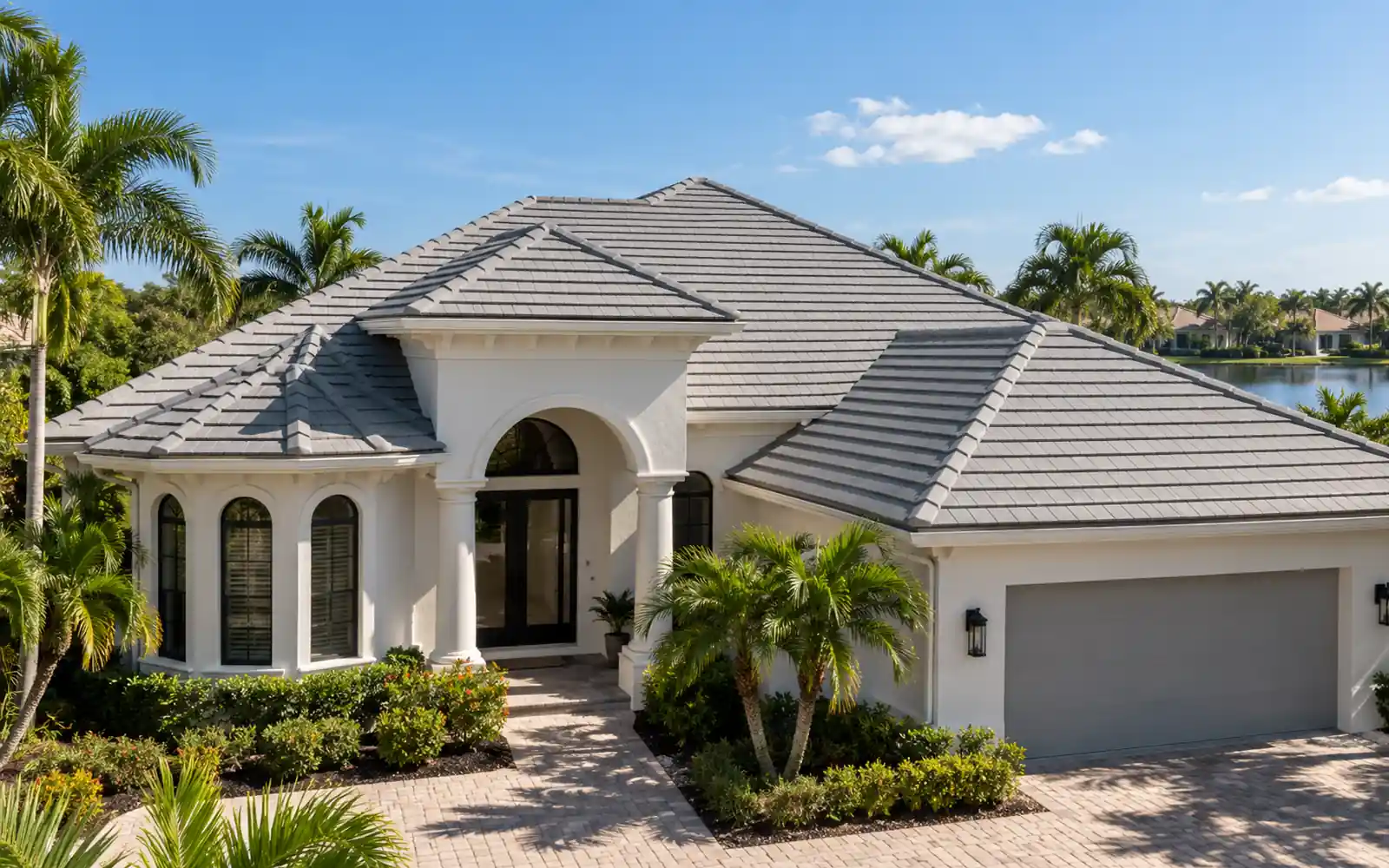
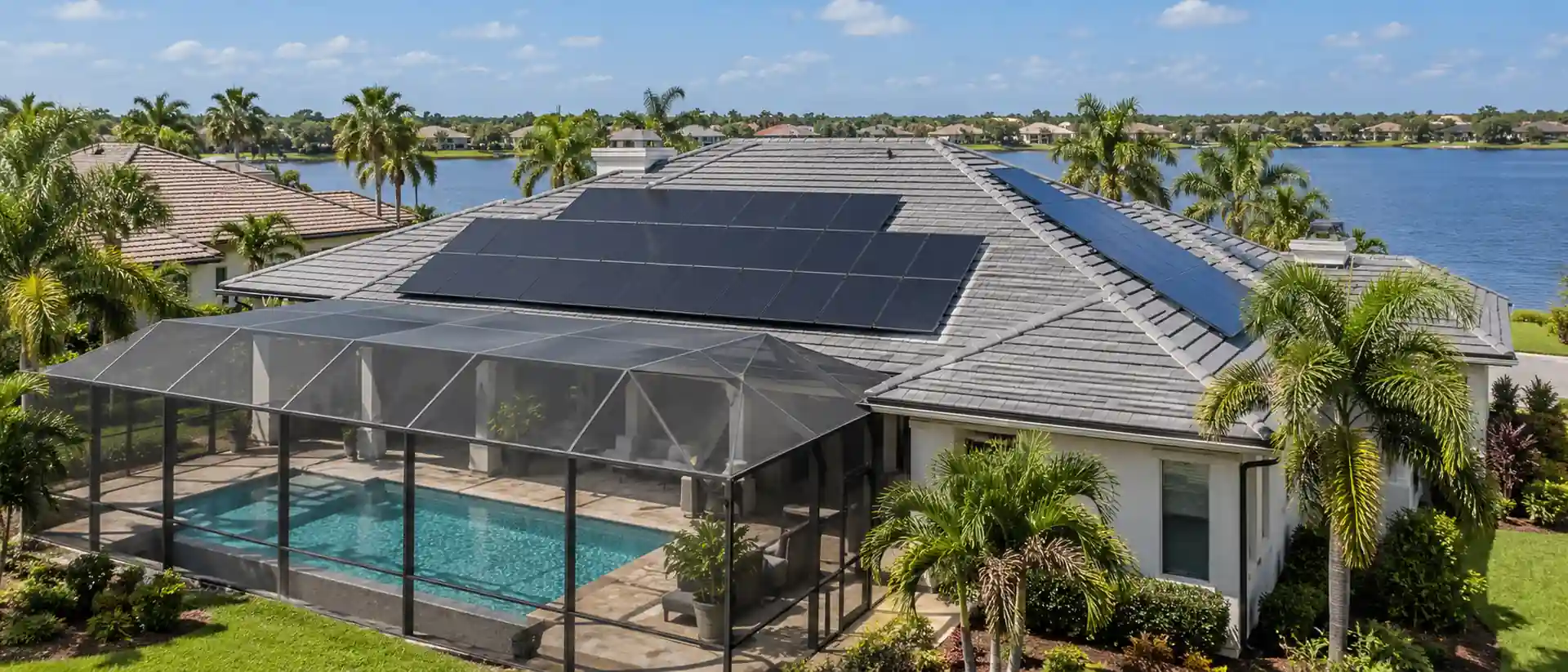
Florida home with a new light gray concrete tile roof

Residential roof replacement · Orlando

Roof replacementin Orlando, FL.

A new roof built for Florida: shingle, tile or metal, chosen for your home and installed to the current Florida Building Code. Hi Low’s crews bring more than 100 years of combined roofing experience to every replacement across Orlando and Central Florida.

Inspection & estimate
Free
Financing
Ask about 0% for 12 months
Google rating
5.0 · 300+ reviews

SIGNS IT’S TIME

How to tell
a roof is done.

Roofs rarely fail all at once. These are the signals we look for during an inspection, and the ones you can spot from the ground or the attic.

Think it just needs a repair?
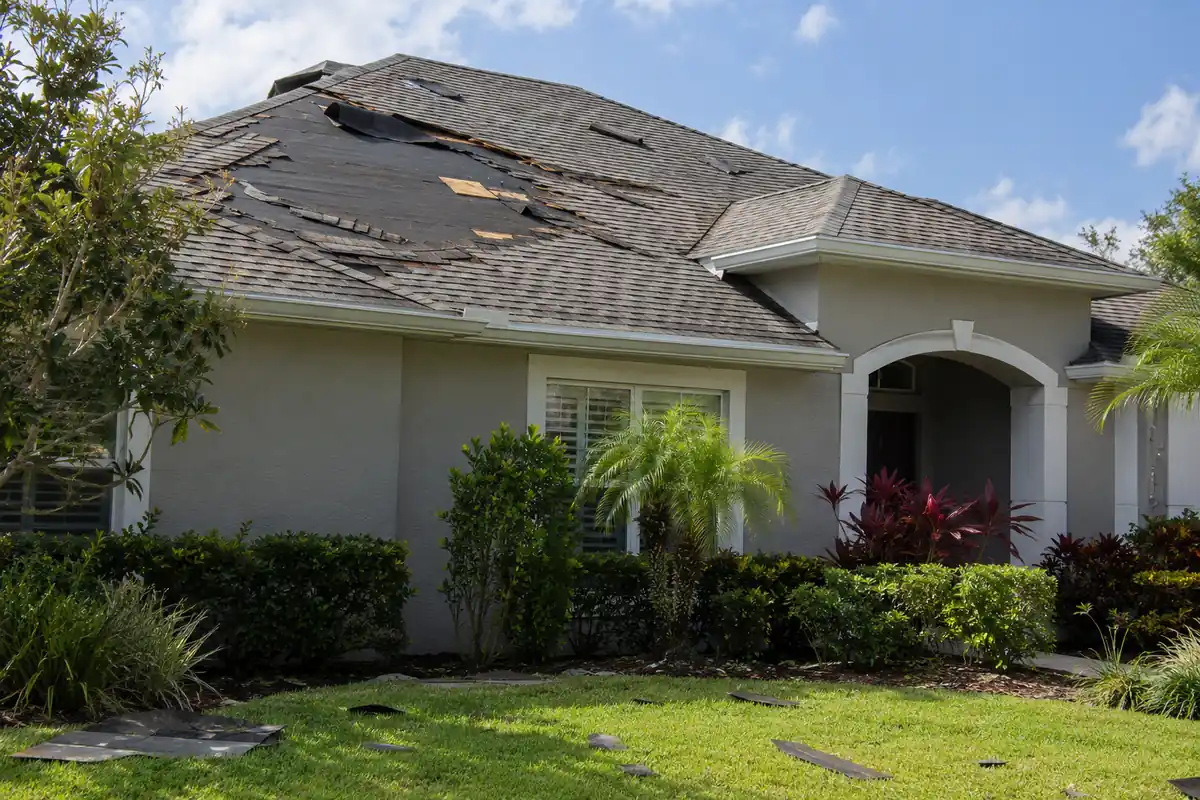
Worn asphalt shingles with curling edges and granule loss
The roof is 15 to 20 years old
Asphalt shingle roofs in Central Florida often reach the end of their service life somewhere in this range. Heat, UV and storm seasons wear them faster than the same shingle would wear in a milder climate.
Curling, cracking or missing shingles
Shingles that cup at the edges, crack across the tab or keep blowing off after storms have lost the flexibility and seal strength that keep them in place.
Granules in the gutters
The ceramic granules on a shingle protect the asphalt from the sun. When gutters and downspouts fill with them and dark bare patches show on the roof, the shingles are wearing out.
Leaks in more than one place
One leak usually means one failed detail. New leaks in different rooms, season after season, point to a roof that is failing as a whole.
Soft or sagging areas
A roof deck that feels spongy underfoot or a ridge line that dips has likely absorbed water over time. Damaged decking has to be replaced, and that is done most efficiently during a full reroof.
Tile underlayment past its prime
Concrete and clay tiles can last for decades, but the underlayment beneath them usually does not. Tile roofs around 20 to 25 years old often need the underlayment replaced, which means lifting the tiles.
Your insurer is asking questions
A request for a roof inspection, a renewal tied to the roof’s condition or a failed four-point or roof certification inspection is often the moment homeowners start planning a replacement.

THE MATERIAL SELECTOR

Four roofs.
One right fit.

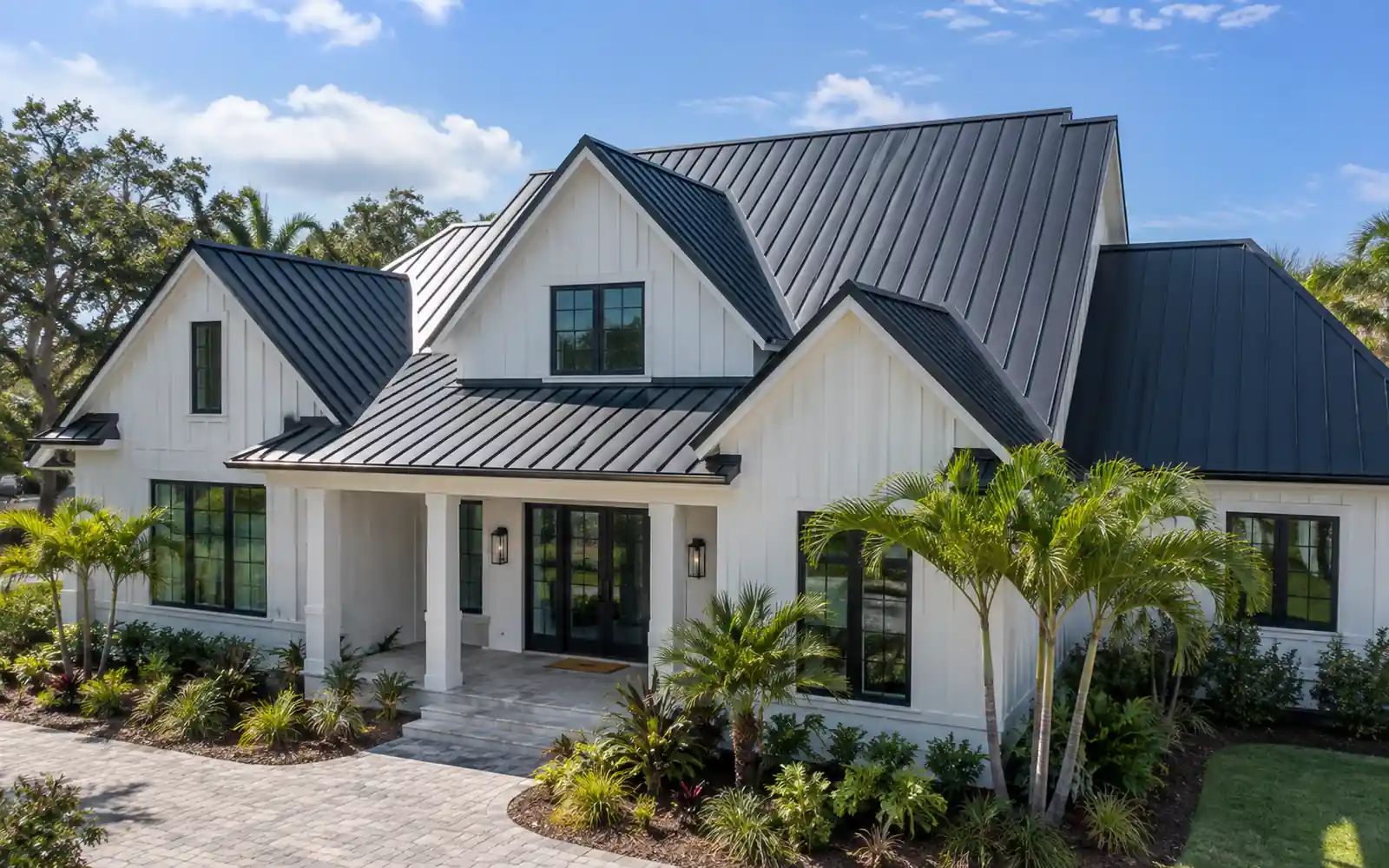
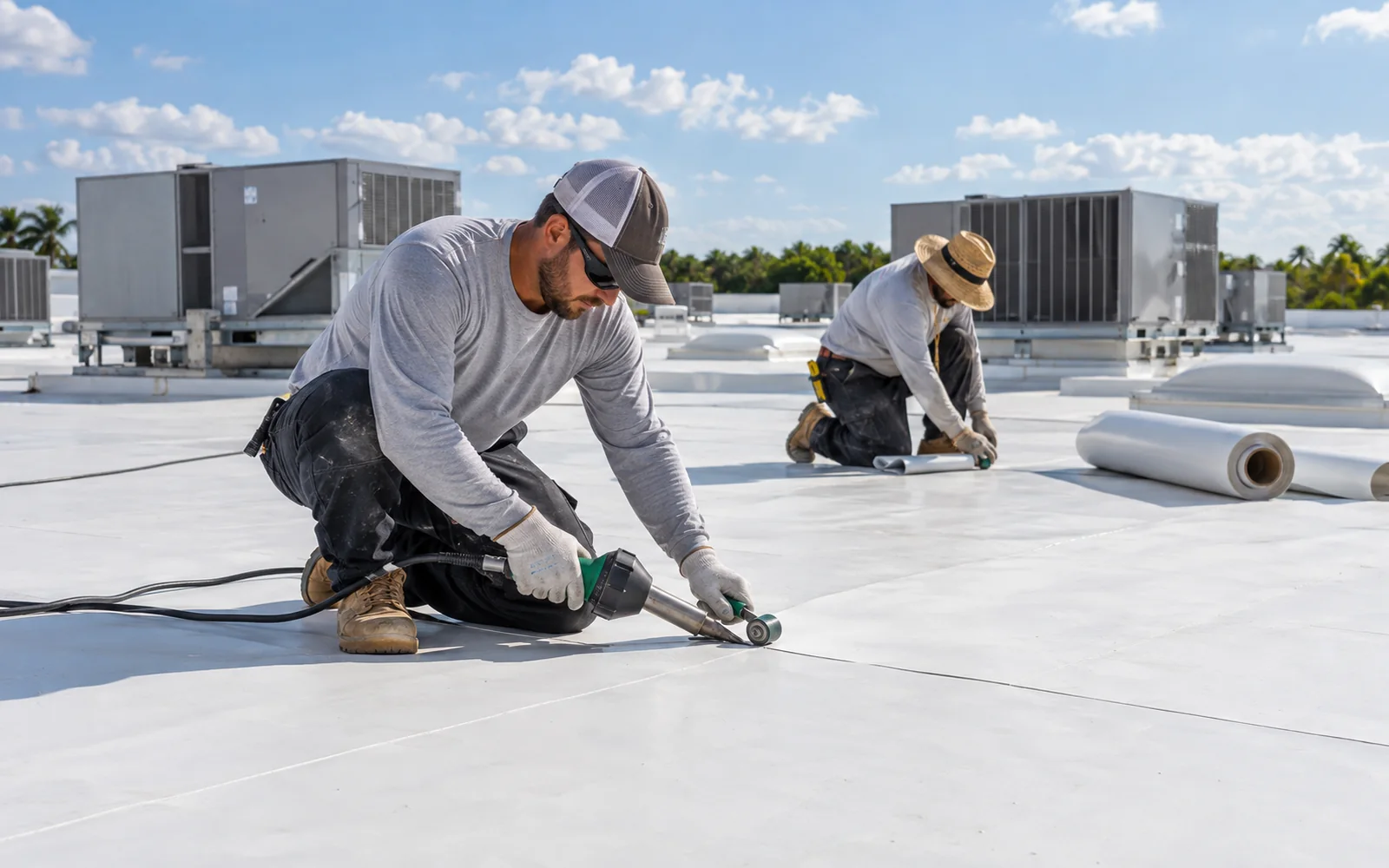
Hi Low installs architectural shingle, concrete and clay tile, metal and flat roofing systems. Choose a material to see how it performs in Central Florida and how long it typically lasts.

New architectural shingle roof on a Central Florida home

Architectural shingle roofs

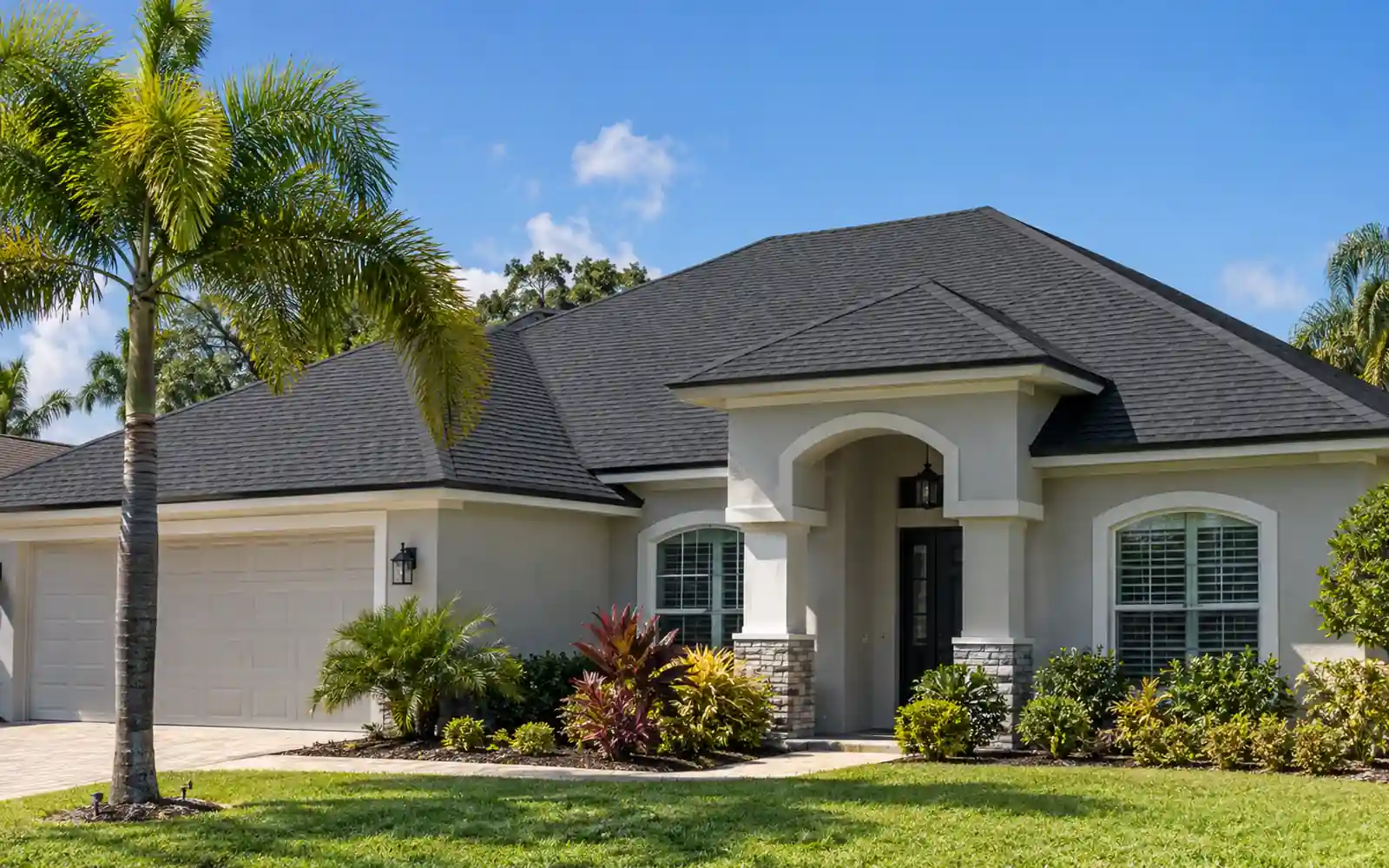
Architectural, or dimensional, asphalt shingles are layered for a thicker profile and better wind resistance than older three-tab shingles. They are the most common roof on Central Florida homes because they balance appearance, performance and cost, and they come in a wide range of colors.

Hi Low holds manufacturer credentials with GAF, CertainTeed and TAMKO, the shingle brands most often installed in Florida. Proper installation matters as much as the product: nailing pattern, starter strips, sealed edges and attic ventilation all affect how a shingle roof handles wind and heat.

Typical service life
About 15–25 years in Central Florida
Relative investment
The most affordable of the four
Weight
Light; suits almost any home
Storm notes
Modern shingles carry high wind ratings when installed to the manufacturer’s specifications
Best for
Most homes, and homeowners who want flexibility on color and budget

Service-life ranges are typical figures, not guarantees. Actual life depends on the product, installation, ventilation, maintenance and storm exposure.

Side by side
FeatureArchitectural shingleConcrete & clay tileMetalFlat · modified bitumen
Typical service life15–25 yearsTile 40–50 years; underlayment 20–2540–50 years15–20 years
Relative investmentLowestHigherHigherModerate
WeightLightHeavyLightestLight
MaintenanceLowReplace broken tiles; underlayment renewalVery low; check fasteners on exposed systemsKeep drains clear; check seams
Heat and sunGood, better with lighter colors and ventilationVery goodExcellent with reflective finishesGood with reflective surfacing
Pairs well with solarYesYes, with tile-specific mountsYes, often without roof penetrations on standing seamYes, with ballasted or attached racking

WHAT A FULL REPLACEMENT INCLUDES

More than
what you see.

The roof covering is the last layer. A replacement done right rebuilds everything beneath it, from the deck up.

Roof tear-off showing the bare deck and new underlayment
  1. Roof covering

    Shingles, tile or metal installed to the manufacturer’s specifications and the Florida Building Code, including the fastening pattern required for wind.

  2. Ridge, hips & ventilation

    New ridge and hip caps, with ridge or off-ridge vents balanced against soffit intake so the attic can release heat and moisture.

  3. Flashing & penetrations

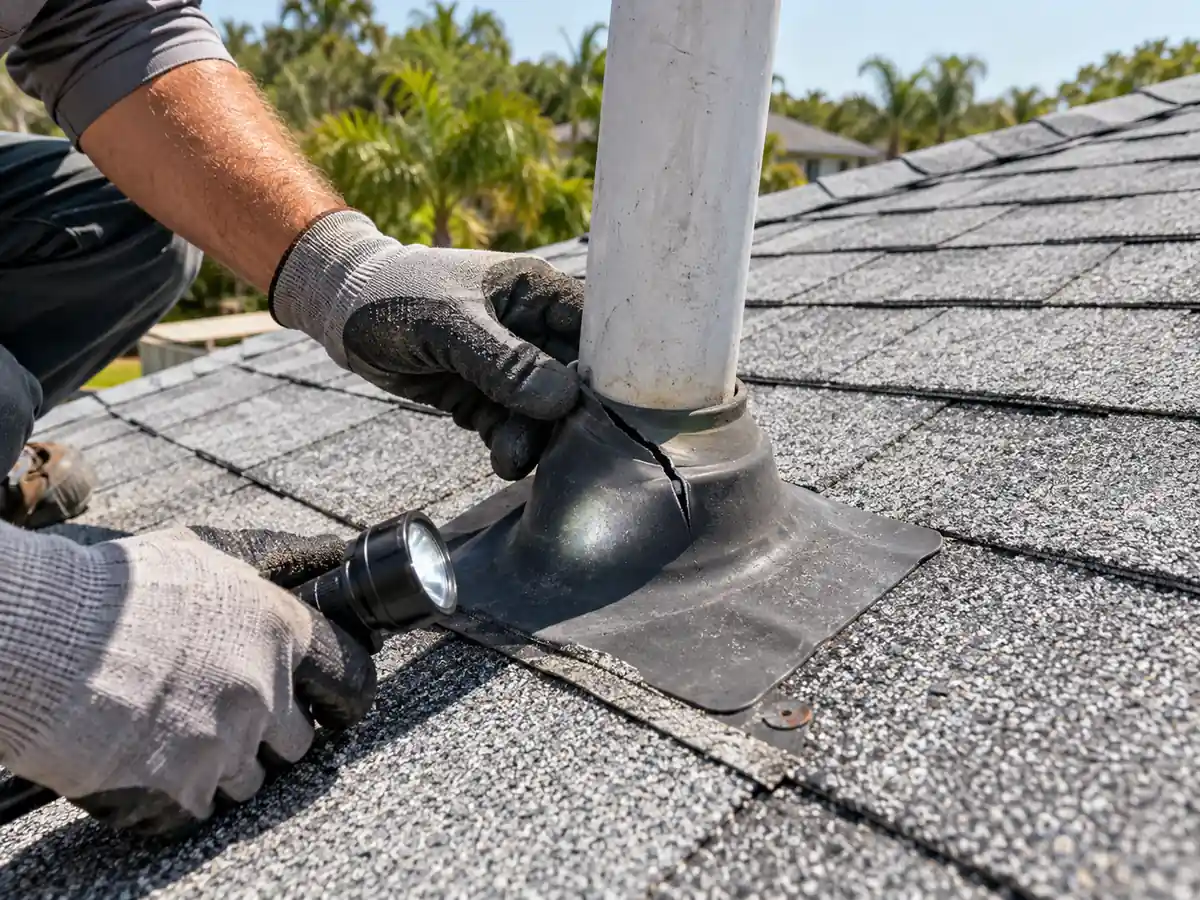
    New valley metal, wall and step flashing, kick-outs and pipe boots. Reusing old flashing is a common shortcut that leads to early leaks.

  4. Underlayment & water barrier

    The waterproof layer beneath the covering, installed over the whole deck, with additional protection in valleys and at edges where water concentrates.

  5. Drip edge

    Metal edging at the eaves and rakes that carries water into the gutters and protects the fascia and the edge of the deck.

  6. Roof deck

    Once the old roof is removed, we inspect the decking, replace damaged or rotted boards and fasten the deck to current code before anything goes on top.

  7. Tear-off, permit & cleanup

    Removal and disposal of the old roof, the reroof permit and required inspections, and cleanup of the property when the job is complete.

FLORIDA SPECIFICS

Insurance, code
and your new roof.

Florida Statute 627.7011

The 15-year roof rule

Insurers can’t refuse to write or renew a homeowners policy solely because a roof is less than 15 years old. For roofs 15 years or older, the homeowner can have an authorized inspection; if it shows at least five years of useful life left, the insurer can’t refuse based on age alone. Roof age is counted from the last time 100% of the roof was replaced under the building code in effect at the time.

Form OIR-B1-1802

Wind mitigation credits

Florida insurers offer premium discounts for features that reduce wind damage, documented on a wind mitigation inspection. The form looks at the roof covering, how the deck is attached, how the roof is attached to the walls, roof shape and whether there is secondary water resistance. A new roof installed to current code can change several of those answers, so ask your insurance agent about a new inspection after your replacement.

Florida Building Code

Permits and inspections

A full reroof in Central Florida requires a permit and inspections from your city or county. The new roof has to meet the current Florida Building Code, including requirements for underlayment, fastening and flashing. Hi Low pulls the permit and schedules the inspections as part of the job.

Community rules

HOA approval

Many Central Florida communities have rules on roof material and color. If your home is in an HOA, check whether you need approval before work begins. We can provide product information and color samples for your application.

HOW IT GOES

Your roof,
start to finish.

Most of the work happens before the crew arrives. Here is the full sequence, so you know what is coming and when.

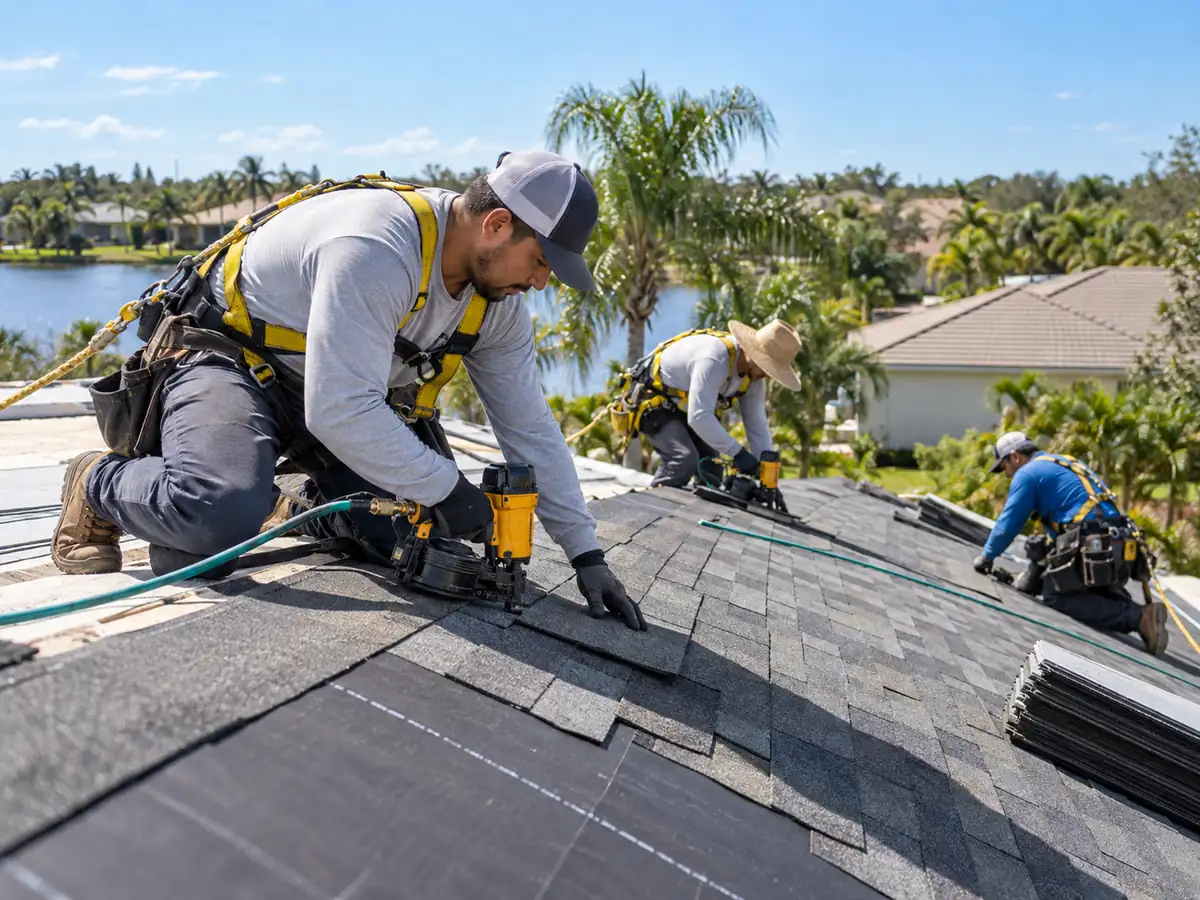
Roofing crew installing architectural shingles

Before install day

  1. Free inspection and consultation

    We inspect the roof and attic, measure the roof and talk about how you use your home, how long you plan to stay and what you want the roof to look like.

  2. Material, color and a written estimate

    You choose the system and color with samples in hand. The estimate spells out the materials, the scope and the price.

  3. Financing, HOA and permit

    If you are financing, we help you through the application. You secure any HOA approval, and we pull the reroof permit.

Install days

  1. Tear-off and deck inspection

    The old roof comes off, the deck is inspected and damaged boards are replaced. Landscaping, pools and driveways are protected throughout.

  2. Dry-in

    Underlayment and drip edge go on, and the roof is protected from rain. Some jurisdictions inspect at this stage before the covering is installed.

  3. Roof covering, flashing and ventilation

    The crew installs the shingles, tiles or panels, new flashing, ridge caps and vents. We keep you updated on progress each day.

After

  1. Final inspection and cleanup

    The building department completes the final inspection. We clean up the job site and walk the property with you.

  2. Warranty and records

    You receive your warranty information and project records, useful for your insurer, a wind mitigation inspection or a future sale.

FINANCING

A new roof, on a schedule that works for you.

Financing options are available for roof replacements, including promotional plans such as no interest for 12 months for qualified buyers. Ask our team about current programs, eligibility and terms when you schedule your inspection.

Explore financing options

Manufacturer credentials

Certified by the
brands we install.

Manufacturer certifications require training and a record of quality installations. They can also make enhanced manufacturer warranty options available on qualifying roof systems, including GAF, CertainTeed and TAMKO shingle systems. Ask which warranty applies to the system you choose.

GAFCertified · Weather Stopper
CertainTeedMaster Craftsman · Select ShingleMaster
BBB A+Accredited business
LicensedRoofing CCC1332547 · GC CGC1529815

ROOF REPLACEMENT QUESTIONS

Know before
you reroof.

What Central Florida homeowners ask us about cost, materials, timing, insurance and permits before replacing a roof.

Call 407-287-6171 15 questions answered
How much does a roof replacement cost in Orlando?

The price depends mainly on the size and pitch of the roof, the material you choose, how many layers have to come off, how much decking needs replacing and details such as skylights, chimneys and flat sections. Shingle is generally the most affordable option; tile and metal cost more up front and usually last longer.

Every Hi Low estimate is based on an inspection and measurements of your roof. It’s free, it’s in writing, and it lists the scope and materials so you can compare it fairly with other quotes.

What is the best roofing material for a Florida home?

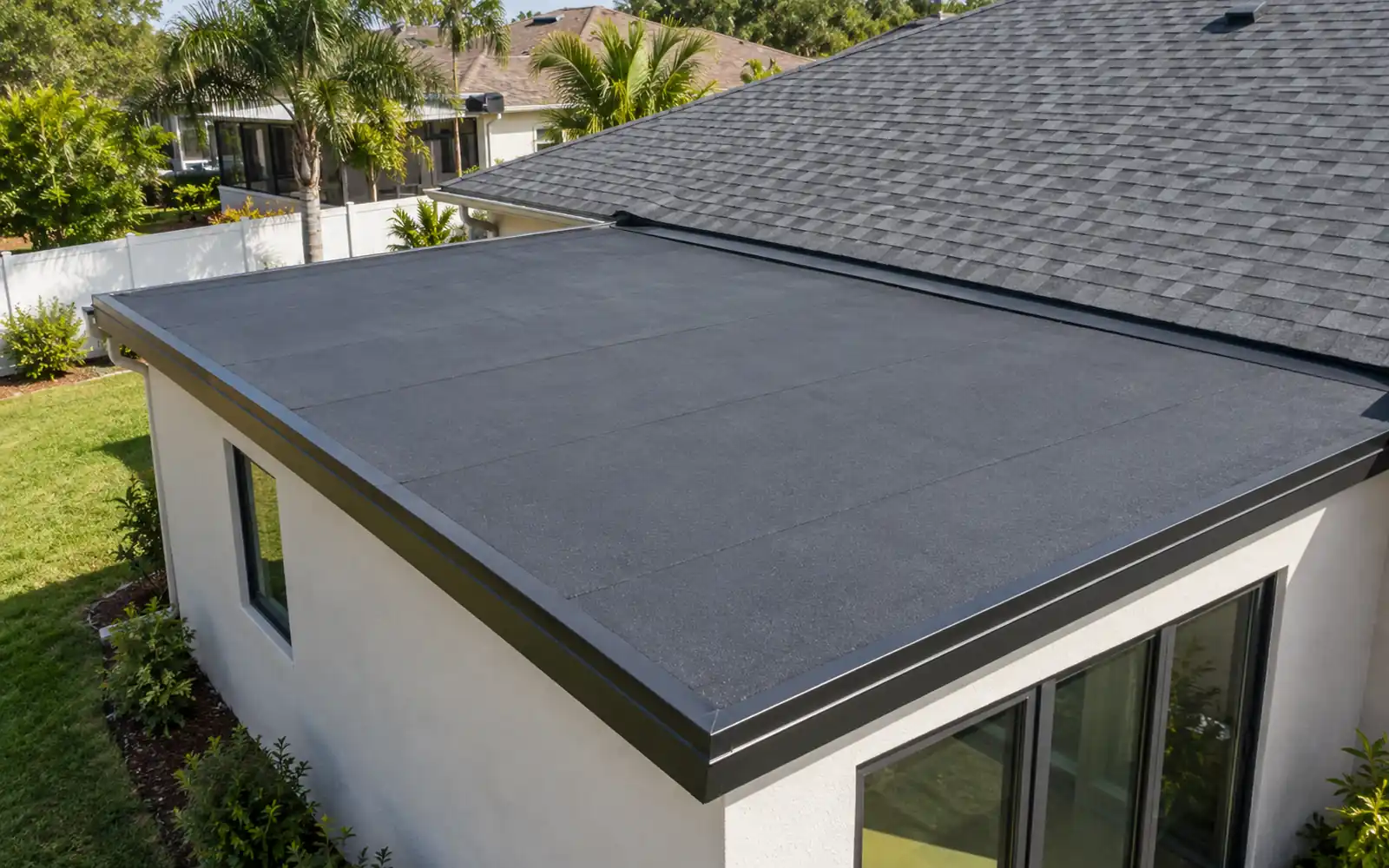
There isn’t one answer. Architectural shingles suit most homes and budgets. Concrete and clay tile fit Mediterranean and Spanish-style homes and last for decades, but they are heavy. Metal is light, reflective and very long-lasting. Flat sections need a low-slope system such as modified bitumen. The right choice depends on your home’s structure, your HOA, how long you plan to stay and your budget, and we walk through those trade-offs during the consultation.

How long does a roof replacement take?

On site, many shingle replacements take one to a few days once materials are delivered and the permit is issued. Tile and metal roofs, large or complex roofs, and jobs with extensive deck repairs take longer. Weather, permit timing and HOA approvals affect the overall schedule, so we give you a realistic timeline with your estimate.

Do I need to be home during the replacement?

You don’t need to be home the whole time, but we ask that someone be available at the start so we can confirm details, and that vehicles are moved out of the driveway and work areas. Pets and children should stay indoors or away from the work area while the crew is on the roof. Expect noise during tear-off and installation.

Can you install a new roof over my existing shingles?

The Florida Building Code only allows a roof re-cover in limited situations, and in most cases a full tear-off is the better choice. Removing the old roof lets us inspect the deck, replace damaged boards and fasten the deck to current code before the new roof goes on.

Can I switch from shingle to tile?

Often, yes, but tile is much heavier than shingle, so the roof structure has to be able to carry the load. We look at your home before recommending a switch and tell you if additional engineering or structural work would be required.

Will a new roof lower my homeowners insurance?

It can. A newer roof can help with insurability, and a roof installed to current code may qualify for wind mitigation discounts documented on Florida’s OIR-B1-1802 form, which looks at roof covering, deck attachment, roof-to-wall attachment, roof shape and secondary water resistance. Discounts vary by insurer, so ask your agent and consider a new wind mitigation inspection after the replacement.

What is Florida’s 15-year roof rule?

Under Florida Statute 627.7011, an insurer can’t refuse to issue or renew a homeowners policy solely because the roof is less than 15 years old. If the roof is 15 years or older, the homeowner can have it inspected by an authorized inspector, and if the inspection shows at least five years of useful life left, the insurer can’t refuse to issue or renew solely because of roof age.

Do I need a permit to replace my roof?

Yes. A full reroof in Central Florida requires a permit and inspections from your city or county, and the new roof must meet the current Florida Building Code. Hi Low obtains the permit and schedules the required inspections as part of your project.

What happens if you find rotted decking?

Damaged decking is replaced before the new roof is installed, because a new roof is only as solid as the deck beneath it. We document what we find with photos and explain how deck replacement is handled in your estimate before work begins, so it doesn’t come as a surprise.

What warranty comes with a new roof?

Your roof is covered by the manufacturer’s product warranty and by Hi Low’s workmanship coverage. Because Hi Low holds manufacturer credentials with GAF and CertainTeed, enhanced manufacturer warranty options may be available on qualifying systems. Warranty terms vary by product and system, and our team spells them out in writing before you sign.

Can you replace my roof and install solar at the same time?

Yes. Hi Low is a roofing and solar company, so we can plan the roof replacement and the solar installation together. Installing solar on a new roof avoids removing and reinstalling panels later, and the roof penetrations are handled by the same team that installed the roof.

My home is in an HOA. What do I need to do?

Many Central Florida HOAs require approval of roof material and color before work begins. Check your community’s guidelines and submit any required application. We can provide product specifications and color samples to include with it.

Do you offer financing for roof replacement?

Yes. Financing options are available, including promotional plans such as no interest for 12 months for qualified buyers. Ask our team about current programs, eligibility and terms.

Which areas do you serve for roof replacement?

Hi Low replaces roofs throughout Greater Orlando, including Orlando, Winter Garden, Windermere, Ocoee, Apopka, Winter Park, Maitland, Horizon West, Dr. Phillips, Lake Nona, Kissimmee, St. Cloud, Clermont, Davenport, Sanford, Lake Mary, Altamonte Springs, Oviedo, Winter Springs, Casselberry, Longwood and Deltona, and in Tampa Bay: Tampa, St. Petersburg, Clearwater, Brandon, Riverview, Wesley Chapel, Largo, Palm Harbor, Plant City and Lakeland. Call 407-287-6171 to confirm service at your address.
START WITH THE FACTS

Your new roof starts
with an inspection.

We’ll look at your current roof, talk through materials and colors that suit your home, and give you a free written estimate. If a repair would do the job, we’ll tell you that too.

Schedule my free inspection

Prefer to talk? 407-287-6171
13330 W Colonial Dr, Suite 110
Winter Garden, FL 34787