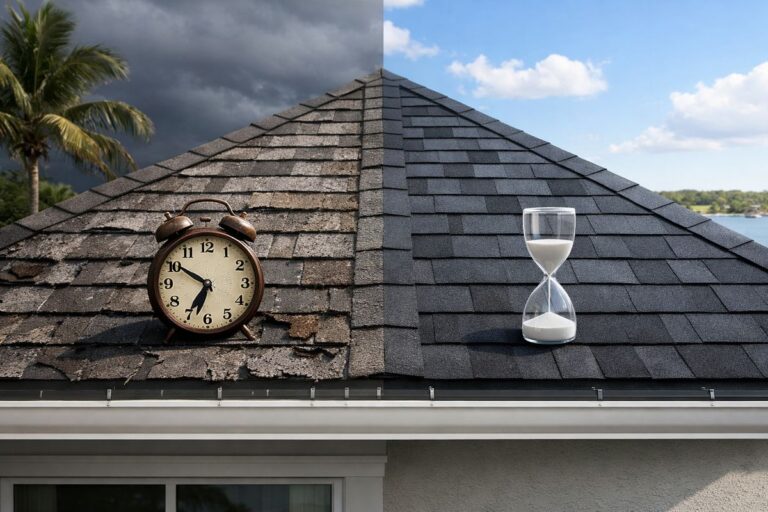
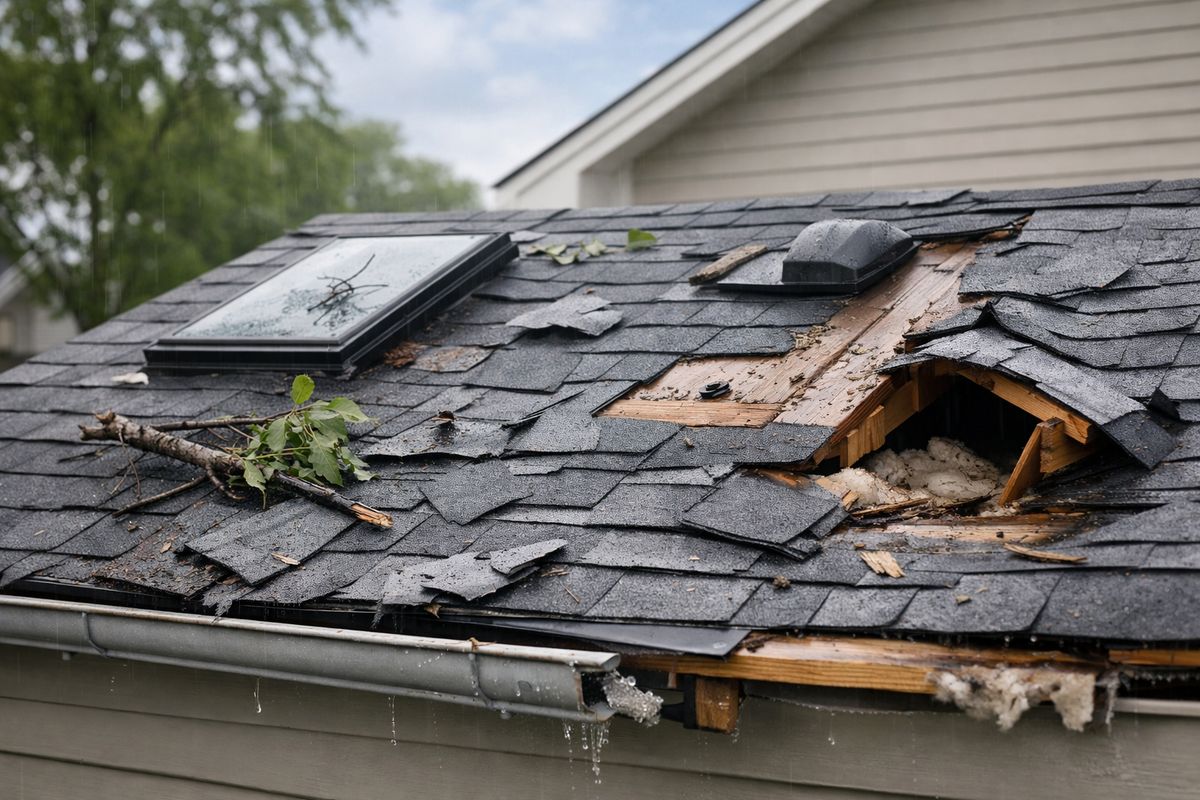
Signs of roof damage are the visible clues that your roof or drainage system took a hit from wind, rain, hail, or flying debris. After a hard Florida storm, that moment usually looks the same: you step outside, glance up at the roofline, and wonder if everything is still where it should be. Catching damage early matters, because a small problem on the roof can turn into a much bigger repair once water gets underneath it.
Signs of roof damage you can spot from the ground
A lot of roof trouble shows up before you ever see a drip inside. That is the good news. You can catch plenty of warning signs just by walking the perimeter of your home and looking carefully at the roof, gutters, and yard.
In plain English, signs of roof damage are anything that suggests the surface of the roof, the edges, or the drainage path got knocked out of shape by weather. Sometimes it is obvious. Sometimes it is more like noticing your front door suddenly sticking after a humid week, something feels off even before it fully fails.
Missing, lifted, or crooked shingles
Shingles should sit flat, even, and lined up. If you notice bare patches, tabs sticking up, corners curling, or sections that suddenly look uneven after a storm, that is a real warning sign.
A missing shingle leaves the layer underneath exposed. A lifted or crooked shingle can be just as risky, because wind may have broken the seal that helps keep water out. From the ground, this can look like a dark patch, a section that catches the light differently, or a row that looks slightly out of line compared with the rest of the roof.
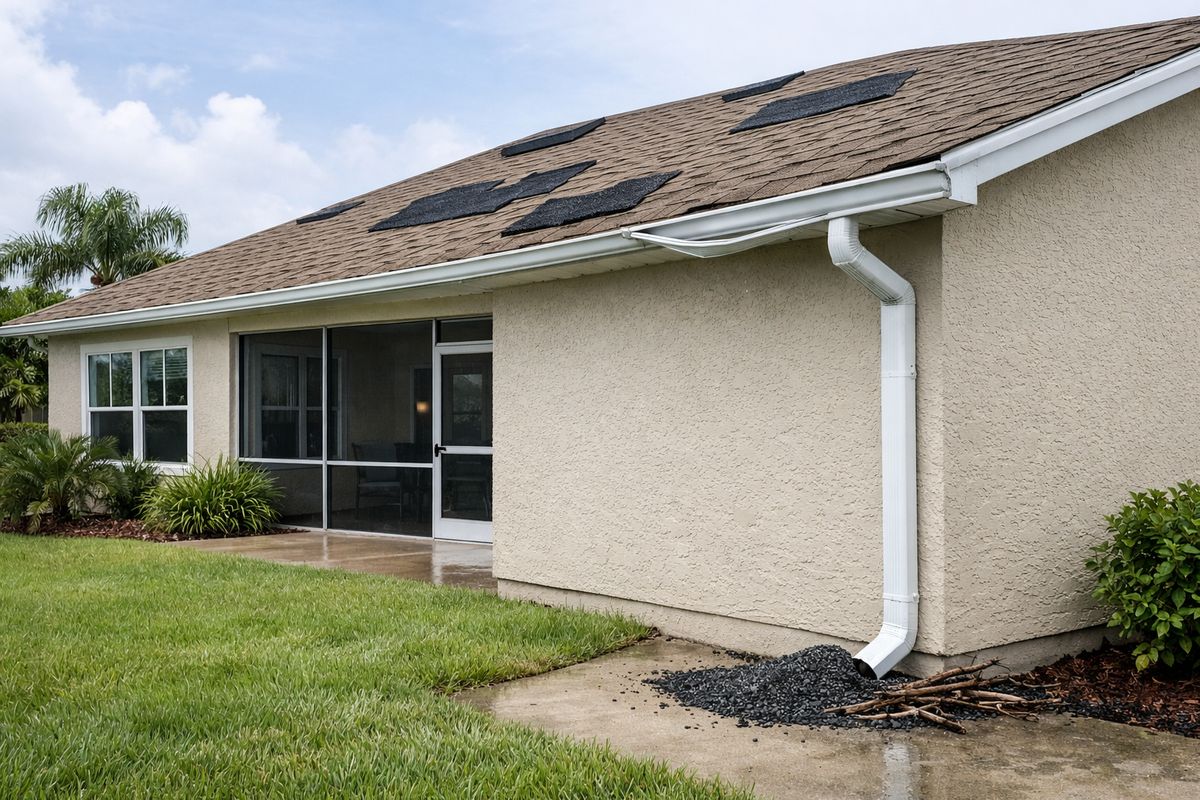
Granules in gutters or downspouts
Granules are the sandy coating on asphalt shingles. They protect the shingle from sun exposure and help it shed water. If you find a pile of gritty material in your gutters or around the bottom of a downspout, your roof may be losing that protective layer.
On an older roof, this matters even more. Some granule loss happens over time, but a noticeable dump of grit after a storm can mean the surface got worn down fast. If your roof already has some age, it helps to know how long roofing materials usually hold up in Florida weather, because storm damage often shows up right where normal wear was already creeping in.
Debris, branch strikes, and visible impact spots
Sometimes the evidence is sitting right in front of you. A tree limb on the roof, fresh dents on metal parts, scraped shingles, or a puncture from flying debris all count.
In places like Winter Garden, it is not unusual to find a branch in the driveway after a rough afternoon storm and then realize part of that same limb clipped the roof on the way down. Look for impact spots near the roof edge, crushed gutters, or damage where branches dragged across the surface. Even if the mark looks small from the ground, the force behind it may have loosened shingles or cracked the area underneath.
Indoor clues that your roof may be damaged
Roof damage does not always introduce itself with water pouring into a bucket. More often, your ceiling or attic starts dropping hints first.
That is why a storm check should not stop at the curb. If the outside looks mostly fine, the inside may still tell a different story.
Water stains on ceilings or walls
Yellow, brown, or slowly expanding spots on ceilings and upper walls are classic roof warning signs. Corners, ceiling seams, and areas around light fixtures tend to show the problem first.
The tricky part is that the stain may not sit directly under the roof damage. Water travels. It can run along framing, drip in a different room, and make the source seem farther away than it really is. If you already have an active drip or fresh stain, it helps to know what to do the moment a leak shows up so the damage does not spread while you sort out repairs.
Drips, damp insulation, or a musty attic smell
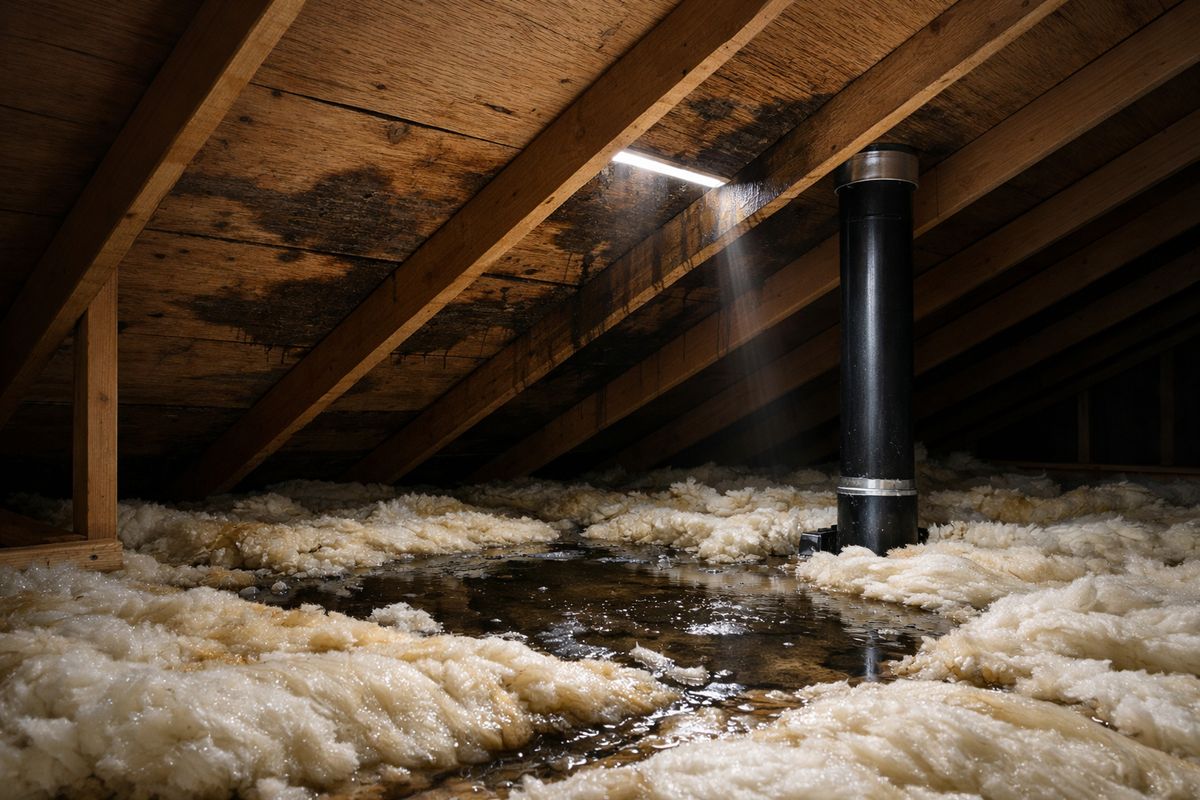
If your attic is easy and safe to access, take a careful look. Wet insulation, damp wood, dark spotting, or a stale, musty smell can all point to a roof leak.
You may also hear the term decking, which simply means the wood layer under the shingles. If the decking feels damp, looks discolored, or shows soft spots, water has likely made it past the outer roof surface already. That smell alone can be a clue, honestly. A healthy attic should not smell like a forgotten towel.
Sudden light through the roof boards
If you can see daylight through the attic ceiling boards or around vents, water has a path through too. It does not need to be a big opening to become a problem during the next storm.
This is one of the clearest signs that the roof system has a gap somewhere. Keep the check simple. If light is getting in where it should not, the area needs attention.
The storm-related roof problems homeowners notice most in central florida
Central Florida storms have a pattern. Wind usually hits first, rain follows, and then heat bakes the weakened area day after day until a small issue turns into a much bigger one.
That is why roofs in Orlando, Ocoee, Apopka, and Winter Garden often show similar trouble spots after storm season.
Wind damage after afternoon thunderstorms
Strong gusts can lift shingle edges, loosen flashing, and break the adhesive seal that helps shingles stay put. Flashing is the metal installed around roof edges, joints, and penetrations to keep water from slipping in.
The frustrating part is that wind damage can leave a roof looking mostly fine from the yard. A shingle may still be there, but no longer sealed. That means the next hard rain can work underneath it. If your storm was especially rough, it also helps to understand the bigger pattern behind serious weather-related roof damage in Florida, because not all storm damage looks dramatic right away.
Hail dings and soft impact marks
Hail damage is easy to miss if you are not looking for it. On shingles, it can show up as bruised spots, small circular marks, or areas where granules got knocked off. On gutters, vents, and metal trim, it often looks like little dents.
Those marks may seem minor, but they weaken the surface and create entry points for water over time. Think of it like dropping your phone and cracking only the corner of the screen. The whole thing still works, but the damage rarely stays only in that one spot.
Damage around roof valleys, vents, and chimneys
Leaks often begin at the roof features, not in the wide open middle of the roof. Valleys are the lines where two roof slopes meet, and they channel water quickly during heavy rain.
Vents, chimneys, and other penetrations also create seams, and seams are where water likes to test your roof first. If shingles look worn or metal flashing appears bent or loose around these areas, the roof may be vulnerable even if the rest of the surface looks decent.
What normal roof aging looks like vs. storm damage
Not every roof issue came from the last storm. That is where a lot of homeowners get stuck.
An older roof can already have wear, then one rough weather event pushes it over the edge. The trick is to look for sudden change, not just general age.
Signs of wear on an older roof
Normal aging tends to look gradual. Shingles fade over time. Granule loss appears more evenly across larger sections. Edges may curl slowly, and older shingles can become dry or brittle.
If your roof has been showing visible wear for a while, the storm may not be the whole story. In that case, it helps to compare current symptoms with broader signs that a roof may be nearing the end of its life, especially if the wear has been building year after year.
Signs the storm made an existing problem worse
Storm damage usually looks sharper and newer. A fresh tear, a sudden leak, newly missing shingles, or damage that showed up right after bad weather points to a storm making an existing weak spot worse.
That matters because an older roof can go from hanging in there to needing prompt repair after one rough afternoon. If the roof already had age-related wear, the storm may have simply exposed how little margin was left.
What you should check right after a storm
You do not need to turn this into a full roof inspection. You just need a smart, safe look around.
The goal is to spot what changed after the storm and document anything that looks off.
Safe walkaround checklist
Start at ground level and circle the house. Look for shingles in the yard, sagging gutters, bent metal, fallen limbs, water marks near the soffits, and indoor stains. Soffits are the underside of the roof overhang, the finished surface you see when you stand near the exterior wall and look up.
Also pay attention to anything that suddenly looks uneven. A gutter pulling away from the house or a roof edge that seems wavy after a storm is worth noting, even if you do not see an obvious hole.
Photos to take before anything gets moved
Take clear photos of the roofline, any debris on or near the house, gutter damage, ceiling stains, attic spots, and anything else that appears new after the storm. Get a few wide shots and a few close-ups.
This is useful for repair estimates and insurance conversations. If the damage does lead to a claim, having early documentation helps. For a better sense of what policies sometimes pay for, read how Florida coverage can apply when a roof starts leaking.
What not to do
Do not climb onto a wet roof. Do not tug on lifted shingles, poke soft spots, or try to move heavy branches off the roof yourself.
The trick is to document what you can safely see, not turn a roof problem into a trip to urgent care. A ground check and attic look are enough for a first pass.
When roof damage means It’s time to get an estimate
Some problems can wait a day or two for a closer look. Some should move to the top of your list right away.
If your roof already had visible wear before the storm, the threshold for getting an estimate is lower. That is just reality.
Signs you need a roof inspection soon
Active leaks, missing shingles, damaged flashing, impact from debris, recurring ceiling stains, and any fresh issue that appeared right after a storm all deserve quick attention.
The same goes for roofs that were already aging before the weather rolled through. If you are weighing likely repair costs, it helps to review what usually drives the price of fixing a leak so you know what questions to ask when estimates come in.
Repair vs. replacement on an older roof
Small, isolated damage can sometimes be repaired without much trouble. But if the roof is older and the damage is spread across multiple areas, replacement may be the smarter move.
That decision usually comes down to age, extent of damage, and how much useful life the roof still has. If you are stuck between patching and starting over, this guide to fixing versus replacing a worn roof gives a clear way to think about it.
Common questions about signs of roof damage
Uncertainty is normal after a storm, especially when the roof looks mostly okay from the ground. These are the questions that come up most often.
Can a roof be damaged even if it Isn’t leaking yet?
Yes. Lifted shingles, broken seals, loose flashing, and hail impact can all damage a roof before any water makes it indoors. A leak is often a late sign, not the first one.
How soon should you check for damage after a storm?
A same-day walk around the house is a smart move once conditions are safe. Then check ceilings and, if possible, the attic after things have dried enough to look around without rushing.
Do gutters and ceiling stains count as roof damage signs?
Yes, often they do. Gutters, downspouts, and ceiling stains are common warning signs that something on the roof system is no longer shedding water the way it should.
What’s One good first step to try today?
Walk the perimeter of your house and take a few photos of anything that looks off. Pay extra attention if your roof already has some age, visible wear, or a recent history of small leaks.
Frequently asked questions
What does storm roof damage look like from the ground?
It often looks like missing shingles, lifted edges, crooked rows, dented gutters, fallen branches, scraped roof areas, or piles of shingle granules near downspouts. Sometimes the biggest clue is simply that one section of the roof looks different from the rest.
Can heavy rain damage a roof by itself?
Yes. Rain can exploit weak spots around flashing, valleys, vents, and worn shingles. Wind usually starts the problem, but heavy rain is often what pushes water through it.
Are older roofs more likely to show storm damage?
Yes. Older roofs already have some wear, so a storm has less to overcome. A roof that looked passable last month can show fresh leaks or missing shingles after one rough storm.
Should you check the attic after noticing a ceiling stain?
Yes, if the attic is safe and easy to access. Damp insulation, dark wood, musty smells, or visible light through boards can confirm that moisture is getting through the roof system.
Is one missing shingle a big deal?
Yes. Even one missing shingle can expose the layer beneath it and create a path for water. Small roof problems have a bad habit of becoming expensive ones.
Ready to protect your home? Get in touch with the Hi Low Roofing team for your free estimate. https://hilowroofing.com/free-estimate/