
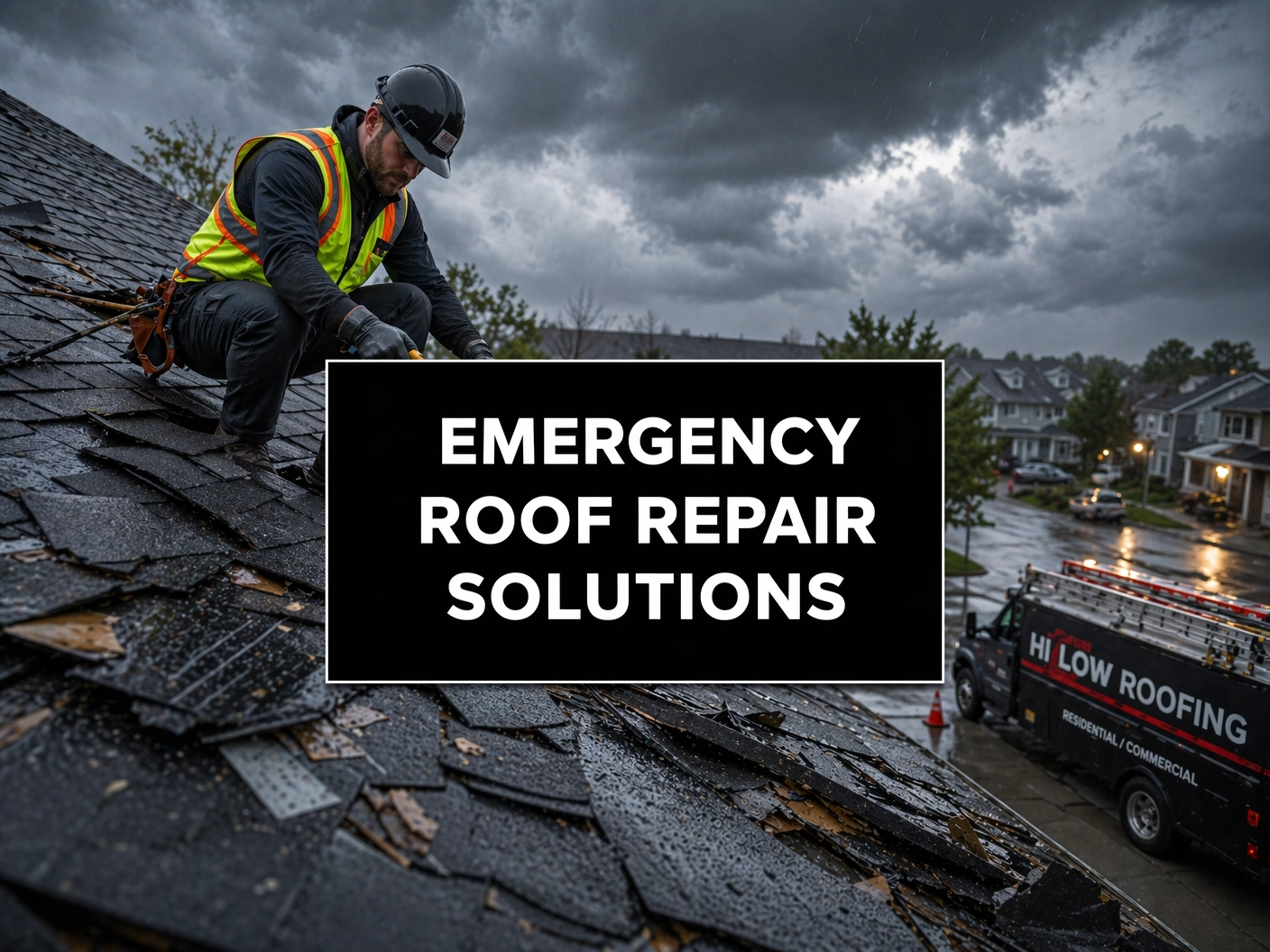
A step-by-step guide for Central Florida homeowners facing urgent roof damage — from the team that’s there when it matters most.
There’s no good time for a roof emergency. But if you’ve ever been jolted awake at 2 a.m. by the sound of water dripping into your home, or stepped outside after a storm to find shingles scattered across your yard and a gaping hole where your roof used to be solid — you know that some situations simply can’t wait until Monday morning.
Emergency roof damage is more common in Central Florida than almost anywhere else in the country. Our hurricane season, violent afternoon thunderstorms, and intense wind events mean that homeowners here face roof crises that their counterparts in calmer climates rarely encounter. Knowing what to do in those first critical hours can mean the difference between a manageable repair and a disaster that spreads through your entire home.
This guide is designed to walk you through exactly what to do — step by step — when your roof needs immediate attention.
What Qualifies as a Roof Emergency?
Not every roof issue is an emergency, but some absolutely are. Understanding the difference helps you respond proportionately and avoid both panic and dangerous complacency.
A roof situation qualifies as an emergency when it poses an immediate threat to the safety of your family or the structural integrity of your home. This includes active water intrusion during or after a storm, large sections of roofing material that are missing or displaced, visible holes or openings in the roof surface, a roof that is visibly sagging or has partially collapsed, or any situation where the structure above your living space feels genuinely compromised.
Situations that are urgent but not necessarily emergencies — meaning they need attention within days rather than hours — include a handful of missing shingles with no active leak, minor flashing damage, or surface-level storm debris that hasn’t caused penetration. These still need prompt professional attention, but they don’t require middle-of-the-night action.
When in doubt, treat it as an emergency. The cost of an after-hours call is always less than the cost of unchecked water damage spreading through your home overnight.
Step One: Prioritize Safety Above Everything Else
Before you do anything else, make sure your family is safe. This sounds obvious, but in the chaos of a storm emergency, people make dangerous decisions — climbing onto wet roofs in high winds, entering rooms with compromised ceilings, or handling electrical hazards near standing water.
If a storm is still active, stay inside and away from windows. Do not attempt to access your roof or attic while wind or lightning is present. No temporary repair is worth a serious injury.
Once conditions are safe enough to move around your home, check for any immediate structural concerns. If a section of ceiling is visibly bulging or sagging under collected water, stay out of that room. A saturated ceiling can collapse without warning. If you can safely do so, place a bucket under the drip and use a broom handle or similar tool to puncture the lowest point of the bulge — this releases the collected water in a controlled way rather than allowing it to build until the ceiling gives way.
Check for any electrical hazards. If water is near electrical panels, outlets, or fixtures, do not touch them and consider turning off power to affected areas at the breaker. If there is any doubt about electrical safety, evacuate and call a professional.
If the structural damage is severe — a tree has fallen through your roof, a large section has collapsed, or the home feels unsafe to occupy — leave the property and call emergency services. Your home can be repaired. Your family cannot be replaced.
Step Two: Stop the Water From Spreading
Once you’ve confirmed your family is safe and conditions allow you to move through your home, your next priority is limiting water damage. Water is destructive and fast-moving — it follows gravity into every crack, gap, and porous surface it encounters. Every minute you can slow its spread is damage you’re preventing.
Move furniture, electronics, valuables, and important documents away from the affected area. Lay down towels, mops, or any absorbent material you have on hand. If you have a wet/dry shop vacuum, use it to remove standing water from floors.
In your attic, if it’s safe to access, look for where water is entering and place buckets or containers under active drip points. If you have plastic sheeting or tarps, spreading them across the attic floor can protect insulation and the ceiling below from further saturation.
Document everything as you go. Take photos and video of all visible damage — the roof exterior if visible from the ground, the attic if accessible, and every room affected inside the home. Do this before any cleanup or temporary repairs. This documentation is critical for your insurance claim and will help your roofing contractor fully understand the scope of damage before they arrive.
Step Three: Apply Temporary Protection If Safe to Do So
In some situations, a temporary protective measure applied before a professional can arrive will significantly reduce the damage your home sustains. The key word here is “safe.” Temporary repairs should only be attempted when the storm has fully passed, the roof surface is dry enough to walk on safely, and you have the right materials and a second person present.
The most effective temporary measure is a heavy-duty polyethylene tarp — at least 6 mil thickness — secured over the damaged area. A good tarp applied correctly can prevent thousands of dollars in additional water damage while you wait for professional repairs.
To apply a tarp safely: identify the damaged area from the ground first so you know exactly where you’re going. Use a sturdy ladder and have someone hold it at the base. Carry the tarp and enough sandbags, bricks, or wood boards to weigh it down. Lay the tarp so it extends at least four feet beyond the damaged area on all sides and reaches over the roof ridge if possible — this prevents water from flowing underneath the edges. Weight the edges down securely. Never use nails to attach a tarp to your roof, as this creates additional penetration points.
If you are not comfortable working at height, have any physical limitations, or conditions are anything less than fully dry and calm — do not attempt this. Call a professional instead. Hi Low Roofing is available 24/7 for emergency situations, and getting a trained crew on your roof safely is always the better choice.
Step Four: Call Your Emergency Roofing Contractor
Once your family is safe and you’ve done what you reasonably can to limit water spread, call a licensed emergency roofing contractor. This is not the time to spend hours researching options or waiting for business hours — a reputable roofing company serving Central Florida will have emergency response capability around the clock.
When you call, be ready to describe what happened, what you can see from the ground or from safely accessible areas, whether there is active water intrusion, and the approximate size of the affected area. This helps the contractor dispatch the right crew with the right materials and prioritize your situation appropriately.
A few important things to keep in mind when calling for emergency roof service. First, verify that the contractor you’re calling is locally licensed and insured. Florida requires roofing contractors to hold a state license — ask for the license number before agreeing to any work. Second, be cautious of contractors who show up unsolicited after a storm. Storm chasing is unfortunately common in Florida, and unlicensed crews take advantage of homeowners in vulnerable moments. Stick to established local contractors with a verifiable history in your community.
At Hi Low Roofing, our team is available 24 hours a day, 7 days a week, specifically because we know emergencies don’t follow business hours. We’ve been serving Central Florida for over 15 years and our team arrives with the equipment, materials, and expertise to assess and stabilize your roof quickly and safely.
Step Five: Contact Your Insurance Company
As soon as you’ve made contact with a roofing contractor, call your homeowner’s insurance company to report the damage. Most policies require prompt notification of damage, and delaying this call can complicate your claim.
When you report the damage, use the photos and video you took during your initial assessment. Provide as much detail as possible about what caused the damage and when it occurred. Your insurance company will likely schedule an adjuster to inspect the property — ask for a timeline on that visit and make sure you or a trusted representative is present when the adjuster arrives.
One important note: your insurance company works for your insurance company, not for you. Their adjuster’s job is to assess the claim accurately, but their interpretation of damage scope and covered costs may not align with reality. Having a licensed roofing contractor who has already assessed the damage walk through the inspection with the adjuster — or having a separate contractor estimate to compare — ensures that nothing is missed and that you’re receiving the full scope of coverage you’ve paid for.
Hi Low Roofing works with insurance claims regularly and can help you navigate this process. We’ll document the damage thoroughly, provide a detailed scope of work, and communicate directly with your adjuster to make sure the full extent of the damage is properly represented.
Step Six: Understand the Repair Process
Once your contractor has assessed the damage and your insurance claim is in motion, you’ll move into the actual repair phase. Understanding what to expect helps you stay informed and avoid surprises.
For emergency roof repairs, the first visit is typically focused on stabilization — stopping active water intrusion and securing the roof against further damage until a full repair can be completed. This may involve tarping, temporary flashing, or partial material replacement depending on the nature of the damage.
Full repairs are then scheduled based on the scope of work, material availability, and weather conditions. A reputable contractor will give you a clear timeline and keep you informed throughout. Be wary of contractors who pressure you to make immediate decisions about full replacements during an emergency — the stabilization visit is about stopping the damage, and thorough replacement decisions should be made calmly, with full information, after the immediate crisis has passed.
Ask your contractor to walk you through exactly what they found, what they’re proposing to do, and why. A trustworthy contractor will explain everything in plain language and answer every question you have without rushing you.
Common Causes of Emergency Roof Damage in Central Florida
Understanding what typically causes emergency roof situations in our area helps homeowners recognize risk factors and take preventive steps.
Hurricane and Tropical Storm Winds are the most dramatic cause of emergency roof damage in Florida. High sustained winds and gusts can lift entire sections of roofing material, carry debris into roof surfaces, and stress the structural connections between your roof and the walls of your home. Roofs that are older, have pre-existing damage, or were not installed to current Florida Building Code wind resistance standards are most vulnerable.
Severe Thunderstorm Damage is actually more common than hurricane damage simply because severe thunderstorms occur throughout our entire rainy season. Large hail, falling tree limbs, and localized wind gusts during afternoon storms account for a significant portion of the emergency calls our team receives each year.
Fallen Trees and Branches are a serious risk for any home surrounded by mature trees. A large limb or full tree falling on a roof can cause catastrophic structural damage that requires immediate professional response. If you have large trees close to your home, having them assessed and trimmed by an arborist is one of the most effective preventive investments you can make.
Sudden Failure of Aging Roofs happens when a roof that has been quietly deteriorating finally reaches the point where it can no longer function under normal conditions. A heavy rain that a newer roof would handle easily overwhelms a compromised older roof, resulting in sudden and significant leakage. This type of emergency is almost always preventable with regular professional inspections.
Flashing Failures During Rain Events occur when the sealant around chimneys, vents, and skylights has deteriorated to the point where a heavy enough rain pushes water past the compromised seal. What appears suddenly as an emergency leak has typically been building for months or years.
After the Emergency: Planning for the Future
Once your roof has been repaired and the immediate crisis is behind you, the experience is worth learning from. Most emergency roof situations have warning signs that, in hindsight, were present long before the emergency occurred. A proactive maintenance plan going forward dramatically reduces your likelihood of facing another middle-of-the-night roofing crisis.
Schedule annual professional inspections — ideally in spring before hurricane season and again in fall after it. Keep gutters clean and clear. Trim trees away from your roofline before storm season. Address small repairs the moment they’re identified rather than deferring them.
If your roof sustained emergency damage and repairs were made, make sure you understand the full condition of your roof going forward. Ask your contractor directly: is this roof in good shape for the next several years, or are we managing a roof that’s nearing the end of its useful life? That honest answer helps you plan financially and avoid being caught off guard again.
Hi Low Roofing offers free post-repair follow-up inspections and will always give you a straightforward assessment of your roof’s overall condition and remaining lifespan. We believe the best thing we can do for our customers is make sure they have the information they need to make smart, confident decisions about their homes.
We’re Here When You Need Us Most
Roof emergencies are stressful, disorienting, and expensive. Having a trusted local contractor you can call — one who picks up the phone at any hour, arrives quickly, and handles the situation with skill and honesty — makes an enormous difference in how those moments unfold.
Hi Low Roofing has served Central Florida homeowners and businesses for over 15 years. With more than 100 years of combined team experience, full state licensing, comprehensive insurance, and a reputation built on over 200 five-star reviews, we’re the team Central Florida calls when it counts.
Whether you’re dealing with an active emergency right now or simply want to make sure you have a trusted contractor’s number saved before you ever need it — we’re here.
Call Hi Low Roofing 24/7 at 407-287-6171 or visit hilowroofing.com to schedule your free roof inspection.
